Unmistakable: Why Only is Better than Best by Srinivas Rao

Unmistakable: Why Only is Better than Best by Srinivas Rao
unmistakable

A call-to-action for artists and business people of all types to create the work that only they can create which makes them irreplaceable and also Unmistakable.

“When you’re the only person who could have created a work of art, the competition and standard metrics by which things are measured become irrelevant because nothing can replace you. The factors that distinguish you are so personal that nobody can replicate them.” pg 2.

That makes sense to me. You’re essentially writing the book so no one can tell you how it’s supposed to go.

The theory of becoming Unmistakable is fairly simple but the journey to that place is not. There are no maps to this realm because it is different for everyone and the paths to that place vary as widely as the talents that people bring with them.

As Srinivas reminds us: “Unmistakable work is a process of self-discovery. We start our ride not knowing what it is that makes us unmistakable, and a thread reveals itself through the creation of a body of work. Dots connect, patterns emerge, and our unmistakable gift is revealed. Time is the critical ingredient required for this to take place, hence the role of longevity and commitment in the quest to become unmistakable.” pgs 56-57

So, you can’t give up. Create and fail and try again. That is as hard and as easy as it is.

“…creating unmistakable work might be one of the hardest things to do: you have to look into the depths of who you are, explore what matters to you, and infuse that into every element of your work until it can’t possibly be mistaken for something anybody could have done but you.” pg 68.

The messages contained within Unmistakable become repetitive after a few chapters, but Srinivas threads some of the stories and artists from his podcast to break up the material as well as his personal testimony.

Unmistakable encourages creation even in areas that you may have no prior experience: “Lack of formal instruction might keep us from attempting some sort of creative pursuit or starting anything in which we don’t have experience. … When we lack experience, we also have the advantage of lacking preconceived notions of what’s possible.” pg 113.

And, you don’t know what you’re capable of until you get started. So, what are we waiting for!

As Srinivas writes from an interview with Seth Godin: “The enemy of creativity is fear; that seems pretty clear. The enemy of fear is creativity; that doesn’t seem that obvious.” The antidote to our fear is to put our heads down, do our work, and make something each day.”pg 189.

Let’s all become Unmistakable.

Some further reading: Creativity: The Perfect Crime, Do the Work, and How to Fly a Horse: The Secret History of Creation, Invention, and Discovery.

Thanks for reading!

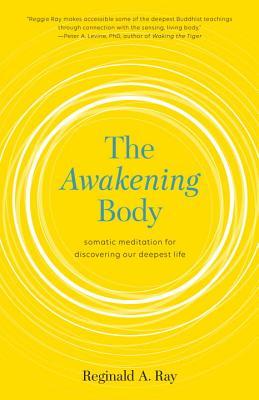
The Awakening Body: Somatic Meditation for Discovering Our Deepest Life by Reginald Ray

The Awakening Body: Somatic Meditation for Discovering Our Deepest Life by Reginald Ray
theawakeningbody

I picked up The Awakening Body because of a conversation I had with a friend last week. He said that when he sits down to meditate, that his mind won’t shut off, and it ruins the experience for him.

I gave him a technique about focusing on the space between thoughts, but decided that I needed something more concrete to give him. This book is perfect for anyone who feels like they can’t escape from his or her own mind.

The Awakening Body is a series of progressive meditations that take the practitioner out of “thinking” and into “experiencing”.

It’s as easy as focusing on your own toes: “In contrast to contrived conventional approaches that emphasize entry into the meditative state through the intentional thinking of the conscious mind… Somatic Meditation develops a meditative consciousness that is accessed through the spontaneous feelings, sensations, visceral intuitions, and felt senses of the body itself. … Put in the language of Buddhism, the human body, as such, is already and always abiding in the meditative state, the domain of awakening- and we are just trying to gain entry into that.” loc 110, ebook.

The teachings themselves are Buddhist in origin but you don’t have to be a practicing Buddhist to receive benefit from them. If you have a body, you can successfully do these meditations.

And the benefits from them could be enormous: “It is as if we are waking up, within our Soma (body consciousness), and we suddenly find ourselves in a new world. … We begin to see that what we formerly took to be our body was just a made-up version with little correspondence to anything real. We find in our body previously unimaginable vistas of spaciousness, experience arising that is ever surprising and fresh, an endless world of possibilities for ourselves and our lives.” loc 329, ebook.

Photo by Pixabay on Pexels.com

This book includes a link to access the guided meditations online so that you can completely focus on the practice as it unfolds. I am just beginning to work with these, but I am encouraged by my progress so far.

When I started, I couldn’t sense my big toes at all, which kind of freaked me out. Logically, I knew they was there, but I couldn’t feel them.

Ray says that this isn’t uncommon: “When we arrive at the first instruction, “pay attention to your big toe on each foot,” at first, practitioners may not be able to do this because, they often report, they have no feeling not only of their toes, but often of their feet, their legs, or even the lower half of their body. … “Keep trying,” I tell them. For even directing our attention to the vicinity of where we think the toes should or might be is already transforming our neurological wiring.” loc 1215, ebook.

That was a big wake up call for me. I’m so glad I picked this book up.

The last part of the book was the most challenging for me to understand because Ray begins to speak directly to those who have had experience with Somatic meditation. I read the words, but I can’t say that I grasped their meaning… yet. With time, perhaps I will.

I recommend The Awakening Body to anyone who is looking for a slightly different technique to begin or improve his or her meditation practice. Beginners to advanced practitioners will find this book useful.

Some further books to explore if you are interested in using/sensing the body in meditation: Ecstatic Body Postures: An Alternate Reality Workbook or Meditations for Breaking the Habit of Being Yourself.

Thank you to NetGalley and Shambhala Publications for a free digital copy of this book! And, thank you for reading!

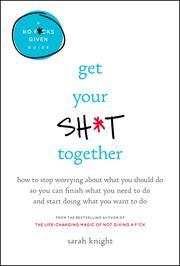
Get Your Sh*t Together: How to Stop Worrying About What You Should Do So You Can Finish What You Need to Do and Start Doing What You Want to Do (A No F*cks Given Guide) by Sarah Knight

getyoursht

Knight is an acquired taste, but I generally enjoyed Get Your Sh*t Together. Her self help books are full of useful tips, profanity, and irreverent humor so don’t pick this title up if you’re easily offended.

If you know someone who seriously needs to get their you-know-what together, this could be the title you’ve been waiting for!

Knight keeps it real from the first page: “(This book) is more of a let-me-help-you-help-yourself-help book, with “me” here to “help” when your “self” gets in the way. Let’s face it- if you could help yourself, you’d have done it by now, right? Also, unlike many traditional self-help authors, I am going to use the word sh*t 332 times (including several sh*tmanteaus of my own invention), so please do not go on Amazon saying you were expecting sunshine and kittens and got sh*tstorms and sh*ttens.” loc 31, ebook. And so on, and so forth.

I’ve also enjoyed The Life-Changing Magic of Not Giving a F*ck: How to Stop Spending Time You Don’t Have with People You Don’t Like Doing Things You Don’t Want to Do and I felt as if Knight shared more of herself in this offering than that one.

We learn that she had/has anxiety attacks and had to pull her life together because it was falling apart. Not many self help authors display their humanity and imperfections like that and I really appreciated her honesty.

Photo by Suzy Hazelwood on Pexels.com

Plus, readers get to reap the benefits of her hard won wisdom and we know it works because she got her stuff together enough to write the book.

I really like Knight’s various life philosophies, which she sprinkles throughout.

Here’s one of my favorites: “In my book- and in the Game of Life- you’re competing exclusively against yourself. Not other players, not even the computer. … Winning is getting what you want out of your time on planet Earth, whatever that entails. It could be the house, job, car, partner, or hairstyle of your dreams.” loc 502, ebook.

Be the best you that you can be and forget about the rest. Good advice.

Knight also gives a ‘nod’ to Marie Kondo’s internationally best selling title and Knight’s thoughts about it may appeal to more readers than the original material: “At this point, we’re living in a post-tidying society. … People get their tidying groove on for a few months, or even just a few weeks, and then… kinda lose the thread. … Why is that? Well, I submit that if they had their sh*t together in the first place, the tidying bug would have stuck.” loc 2547, ebook. Sound familiar to anyone?

Among the many life issues that Knight tackles, her thoughts on perfectionism struck particularly close to home for me: “When you accept that failure is an option, you move it from the realm of anxiety-inducing anticipation into a reality that you’ll deal with when (and more importantly, IF) that ever happens. Your energy is better spent on accomplishing goals in the here and now than on worrying about failure in the abstract.” loc 3049, ebook.

Recommended for people who need self help but don’t like reading self help, probably 18+ because of the language.

Sarah Knight will give you some life changing tips and along the way, you may learn some unique new uses for the word: sh*t. Some further reading: The Life-Changing Magic of Not Giving a F*ck: How to Stop Spending Time You Don’t Have with People You Don’t Like Doing Things You Don’t Want to Do, The Joy of Leaving Your Sh*t All Over the Place: The Art of Being Messy, and How to Be Dull: Standing Out Next to Genius.

Thank you to NetGalley and Little, Brown and Company for a free ARC of this book! And, thank you for reading.

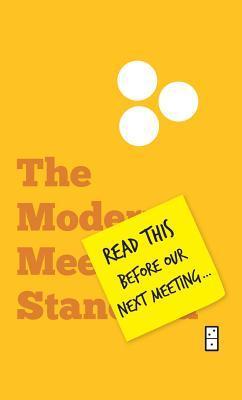
Read This Before Our Next Meeting by Al Pittampalli

Read This Before Our Next Meeting by Al Pittampalli
readthis

Endless meetings have you down? Pittampalli has a solution to your woes. He claims that modern meetings should only be held to solve specific problems and the only people who should be required to attend are those who could take direct action to solve that problem.

I think that the idea is a solid one.

It does take some internal mindset changes by the folks who call meetings. The first step, like with any problem, is to admit that you even have a problem.

“Over time, we’ve become nonchalant about bad meetings. If an operating room were as sloppily run as our meetings, patients would die.” pg 7.

Overly dramatic, perhaps, but true. And also keep in mind: “Change is never met with open arms. Great decisions involve risk and risk scares people; it’s natural for great ideas to get attacked or, worse, ignored. I can think of no single great innovation that has ever happened without the presence of opposition.” pg 15

So, there may be an uphill battle over this, but, Pattampalli thinks, it is worth it.

The end goal: “Meetings need to be less like the endless commercial breaks during a football game and more like pit stops in the Daytona 500.” pg 20.

So, they’re necessary, but they should run quickly because: “Meetings are too expensive and disruptive to justify using them for the most common types of communication, such as making announcements, clarifying issues, or even gathering intelligence. Like war, meetings are a last resort.” pg 23

Photo by Christina Morillo on Pexels.com

This strict definition of a meeting means that there is going to be some major preparatory work since communication isn’t going to be a part of the show. The person calling the meeting has to distribute information about the issue so that those who are attending can contribute.

“Every meeting should require pre-meeting work. Any information for getting attendees up to speed should be given out beforehand. If the attendee doesn’t have time to read and prepare, she doesn’t have time to attend.” pg 37.

But, this preparation pays off when, after the meeting, the business should have created a concrete ‘action plan’ that includes: “What actions are we committing to? Who is responsible for each action? When will those actions be completed?” pg 39. Thus addressing the problem that the meeting was called to solve and serving its function.

Most of the meetings that I’ve attended in my life have been rambling, unfocused affairs that were called to fill the monthly meeting quota that was arbitrarily chosen by management- a touch-base, if you will.

Pittampalli is adamant that this is a waste of time. I never really saw it that way because I didn’t have any expectations that meetings were supposed to accomplish anything at all. We’d meet, then get on about our business. This book has shown me that I should expect more.

Recommended for anybody who wants to learn more about the benefits of “modern meetings”. This short book has everything that you need to start changing the world, one meeting at a time.

Thanks for reading!

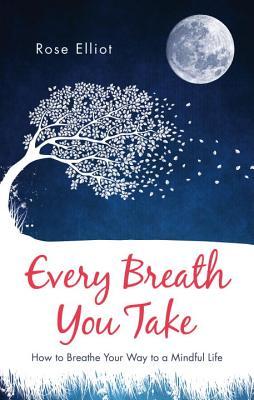
Every Breath You Take: How to Breathe Your Way to a Mindful Life by Rose Elliot

Every Breath You Take: How to Breathe Your Way to a Mindful Life by Rose Elliot
everybreath

Every Breath You Take is one of the finest mindfulness manuals that I’ve ever had the pleasure to pick up.

Practice by practice, Elliot takes the reader from the simple and concrete observation of the breath to the complex and abstract juggling of mind stuff. Along the way, she provides stories and anecdotes of those who have walked these paths before us and shows that, no matter where you are in your life, you can become more aware and grounded in the present moment and how beneficial that can be for you.

She began her journey like most of us- convinced that mindfulness was too difficult: “I struggled with the practice. I found it dreary, dull and boring- all that ‘notice-what-you’re-doing-while-you-clean-your-teeth’- I just couldn’t get to grips with it at all. … when I was on the point of giving up altogether, I met a monk… and he quietly suggested that it is helpful to link mindfulness practice to breathing. This really helped.” loc 16.

Elliot is so relatable that she made me feel like, if she could do this, I could do it too.

A reminder that mindfulness isn’t just a ‘Buddhist’ thing: “…it is to the Buddha that we owe mindfulness, but that does not mean you have to ‘be a Buddhist’ (whatever that may mean), or indeed of any religion at all to practise it. The breath is universal, as is spirit, so we can all benefit.” loc 46. If we can breathe, we can watch the breath. We just need to remember to do it.

Photo by Pixabay on Pexels.com

I loved Elliot’s gentle humor which was evident throughout: “You can use the irritations of daily life as reminders to take a mindfulness breath- and this way you’ll certainly get plenty of practice! For instance, such reminders might be: Being held up in traffic or a red light when you are driving. Waiting for the kettle to boil or for a bus or a train that’s late- waiting for almost anything. Lining up at the bank or at the grocery store checkout, or anywhere, for that matter. When someone is being really irritating, how great to know you have your own inner source of peace so they can’t bother you.” loc 237.

It is as if life is chock full of opportunities to take mindful breaths 🙂

My favorite part of the book was the many teachings about attachment. “When we can accept things as they are now, but recognize that they will change, and accept that too, we will know peace.” loc 793. I feel more peaceful already!

The Epilogue where Elliot talks about grieving for her husband and using these breathing exercises to make it through is especially touching. This is not just someone who talks the talk- she’s out there walking the walk. Highly recommended for anybody at any level of ability who wants to learn more about mindfulness.

Some further reading: How to Relax, The Wisdom of the Breath: Three Guided Meditations for Calming the Mind and Cultivating Insight, or Being Peace.

Thank you to NetGalley and Watkins Publishing for a free digital copy of this book!  And, thank you for reading.

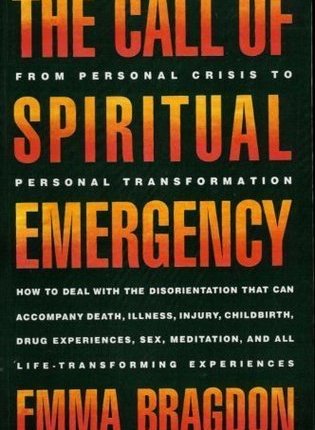
The Call of Spiritual Emergency: From Personal Crisis To Personal Transformation by Emma Bragdon

The Call of Spiritual Emergency: From Personal Crisis To Personal Transformation by Emma Bragdon

Though a bit dated (written in 1990), Emma Bragdon presents information about “spiritual emergencies,” what they are and how to help your loved ones or yourself through it.

Photo by Pixabay on Pexels.com

To begin, what is a “spiritual emergency”? : “Spiritual emergence is a natural process of human development in which an individual goes beyond normal personal feelings and desires-ego- into the transpersonal, increasing relatedness to Higher Power, or God. … When spiritual emergence is punctuated by profound emotions, visions, psychosomatic illness, and compelling desires to behave in unusual ways, including suicidal thoughts, the spiritual emergence becomes a crisis, a spiritual emergency.” pg 1.

This process can be absolutely terrifying if the person has no idea what is going on and is surrounded by professionals who are also clueless.

I think that the main problem with integrating such experiences is that modern society neither supports or recognizes them as valid: “People in our culture are afraid of speaking openly about spiritual experiences, because psychic phenomena… have been considered symptomatic of psychosis. Most psychiatrists, psychologists, and even clergy have believed that most spiritual experiences are indicative of either retarded development or emotional disease.” pg 12.

The clergy part of that passage is particularly interesting to me. These are the so-called experts on the spiritual realm, yet, when something breaks through into reality, they’ve got nothing.

Photo by cottonbro on Pexels.com

And humanity is the poorer for it.

Bragdon then relates numerous instances of men and women from all over the world who have gone through this process and reminds us: “In all the major religions of the world can be found examples of people … who have been through intense and sometimes physically and emotionally debilitating periods of spiritual experiences and ultimately attained transpersonal levels of consciousness.” pgs 81.

It makes one wonder, if Jesus, Mohammed, Moses, or pick-your-prophet had been born in the modern era, would his/her vision just been medicated into oblivion?

Bragdon points out that the problem is in the attitudes of the religious and medical establishments- the places that should be the most educated and accepting of these sorts of troubles: “The administrators of (religious) institutions are inconsistent in their view of spiritual experience as part of spiritual growth. The conventional religious establishment is similar to the conventional medical establishment, which is so ambivalent about the reality of spiritual experiences that it doubts their validity altogether.” pg 101.

When did we completely separate the health of the body from that of the soul? After all, one won’t work without the other.

Photo by Retha Ferguson on Pexels.com

Then, she goes on to talk about all of the different ways that these sorts of experiences emerge from drug use, sex, stress, and just life.

It is so pervasive that it seems that it must be a part of the human experience, but it is hard to study and come to grips with in scientific terms because the phenomena can’t be forced or replicated.

Despite these difficulties to categorize and treat it, Bragdon suggests that being present for the person going through it is enough: “What these people do want is acknowledgement, recognition that they aren’t crazy, and the companionship of others who know what they have experienced is real.” pg 113

So, even though this book was written 26 years ago, I don’t think that we’ve really made that much progress in that time- at least not in the arena of holistic medicine or transpersonal psychology.

Some further reading: Polishing the Mirror: How to Live from Your Spiritual Heart, Dreambody: The Body’s Role In Revealing the Self, or The Power of Myth.

Thanks for reading!

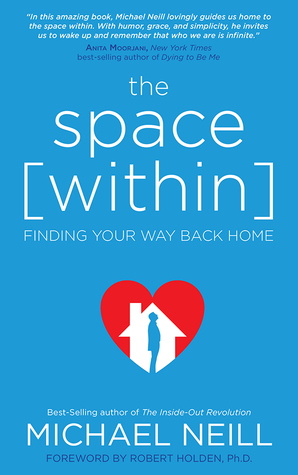
The Space Within: Finding Your Way Back Home by Michael Neill

The Space Within: Finding Your Way Back Home by Michael Neill
thespacewithin

No matter how many books I read on meditation, I always seem to learn something new when I pick another one up.

The Space Within is one of the more excellent books that I’ve discovered- not pushing any particular way of being, just quietly encouraging the reader to go within and embrace what’s there.

On separating our consciousness from the universal energy that surrounds it, Neill compares the mind to a book and I’m sure most Goodreads users, like me, could easily connect with the metaphor:“Think of ‘quiet’ not as an absence of thought but as the space inside which the noise of your thinking arises. What makes this tricky, at least to begin with, is that at first glimpse the noise is more interesting than the quiet …look at the white background of this page. Chances are you can still see the words, and even read them, but without noticing it, at some point you will once again become absorbed in the words and stop seeing the white of the page.” loc 192, ebook.

Why bother to meditate? : “There is a space within you where you are already perfect, whole, and complete. It is a space of pure Consciousness- the space inside which all thoughts come and go. When you rest in the feeling of this space, the warmth of it heals your mind and body. When you operate from the infinite creative potential of this space, you produce high levels of performance and creative flow.” loc 207

And more, promises Neill. I’ve meditated for many years and I’ve experienced some extraordinary things. It wasn’t always easy and it didn’t happen all at once, but I can say, from personal experience, that this particular claim is absolutely true.

Photo by Samuel Theo Manat Silitonga on Pexels.com

Thoughts are incredibly powerful things. I think we forget just how life changing your personal perspective can be: “… we live in a world of unrecognized thought. Thought is the architect of both hope and despair, the source of every color in the emotional rainbow. … But unrecognized thought demands our attention and fills our consciousness. And when we get caught up in thought, we lose our way.” loc 324, ebook.

And also: “We live in a world of thought, but we think we live in a world of external experience. The mind is not a camera, it’s a projector. We can’t tell the difference between an imagined experience ‘in here’ and what’s going on ‘out there’- and that confusion creates a lot of confusion.” loc 375, ebook.

You create your own reality- but it’s easy to forget that and blame other people for your circumstances.

When I read this next passage, I thought of How The Secret Changed My Life and the incredible importance that people placed on feeling good.

Neill points out that it isn’t anything to get wound up about: “There’s no such thing as a solution to a feeling. Because we don’t recognize this fact, we spend huge chunks of our time and energy trying to ‘solve’ our feelings by changing them to ‘better’ ones or eliminating them altogether. … When it’s okay to feel good when you feel good and bad when you feel bad, recognizing that as thoughts change, the feelings change with them, there’s no need to prefer one feeling over another, let alone attempt to fix it. And when you really see that for yourself, you being to experience more of the deeper feelings that make life worth living.” loc 457, ebook.

This is a great place to start if you’re just learning about meditation/mindfulness but it’s also appropriate for more experienced practitioners- if you breathe or think, you could probably learn something from this book. Some suggestions for further reading: Buddha’s Brain: The Practical Neuroscience of Happiness, Love, and Wisdom, Meditations for Breaking the Habit of Being Yourself, or Happiness: A Guide to Developing Life’s Most Important Skill.

Thank you to NetGalley and Hay House Publishing for a digital copy of this book! And, thank you for reading.

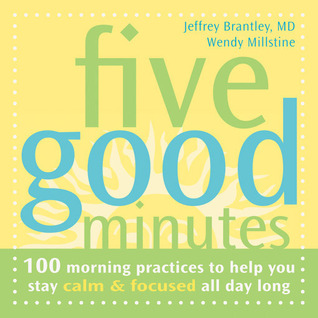
Five Good Minutes: 100 Morning Practices to Help You Stay Calm and Focused All Day Long by Jeffrey Brantley, Wendy-O Matik, Wendy Millstine

Five Good Minutes: 100 Morning Practices to Help You Stay Calm and Focused All Day Long by Jeffrey Brantley, Wendy-O Matik, Wendy Millstine
fivegoodminutes

Things have been stressful in my neck of the woods, so I picked up Five Good Minutes to help me cope.

I’m in the fourth month of having my house on the market and my husband has been looking for employment for over a year. Yeah, I’m feeling it…

Five Good Minutes is simple enough for beginners to the mindfulness/meditation practice and filled to the brim with suggestions for ways to focus in the morning and get your day off on the right foot.

The best part of this book is that there is something for everyone- it is that broad. The techniques that it uses varies from visualizations to mindfully drinking your morning cuppa.

The worst part of the book is that, because it covers so much, that it doesn’t really talk about anything in depth. If you’re looking for detailed methods of meditation and relaxation, this is not the book for you.

Why the focus on early in the day?: “The morning is the best time to break away from old habits of thinking and feeling and to set a new direction for yourself and how you will be in your day. Any exercise in this book- done in the morning- has the power to impact greatly on your experience throughout the day, if you allow it!

Photo by Felipe Borges on Pexels.com

Personally, I’ve found that I’m at my best in the mornings- well, once I blink the sleep out of my eyes. My mind is clearer and I can focus for longer periods of time.

But, if you’re more an afternoon/evening type person, don’t let the title of this book stop you. I think that these practices could be beneficial at any time of the day.

My favorites were- the Five-Fingered Peace pg 32: In which you use your hands almost as a rosary and remember awesome things that have happened to you.

Freedom from Tension pg 58: In which you scan your body and focus your relaxation on the stressed out bits.

Photo by Alexandr Podvalny on Pexels.com

Your First Sip of Tea pg 94: or coffee, for me. Take your time and mindfully drink your morning pick-me-up.

A Shot of Faith pg 186: You use visualization to picture a problem turning out perfectly.

And finally, Cultivate Gratitude pg 206: “This practice invites you to turn toward the good in your life and to express gratitude as recognition grows.”.

If none of those spoke to you, there are 95 others for you to choose from.

Recommended for stressed out people everywhere and those who are interested in bringing a bit of mindfulness or meditation to their day but don’t know where to start. Some further reading: Thank & Grow Rich: A 30-Day Experiment in Shameless Gratitude and Unabashed Joy, Meditations for Breaking the Habit of Being Yourself, or 10% Happier: How I Tamed the Voice in My Head, Reduced Stress Without Losing My Edge, and Found Self-Help That Actually Works. Peace and thanks for reading!

How to Be Dull: Standing Out Next to Genius by Basil Morley, Esq.

How to Be Dull: Standing Out Next to Genius by Basil Morley, Esq.
howtobedull

How to Be Dull: Standing Out Next to Genius is one of the funniest books I’ve read this year.

I read a lot of self help, self improvement, self actualization books and How to Be Dull shines a hilariously dark spotlight on the myriad benefits of staying just as you are. The humor is dry and the delivery is completely serious and matter-of-fact, rather like a Monty Python classroom sketch.

It is also surprisingly educational.

Do you know why we remember Chaucer’s name but so very few of his contemporaries? : “…Chaucer succeeded by adapting Italian masters, appropriating a wide range of old folk tales, mixing them with Greek myth, writing in the vernacular rather than hoity-toity Latin or snooty French, and adding a wide range of characters to represent the whole of modern 14th century life from the top to the bottom… He was a true original, though one must admit his originality was made of things familiar mixed up, changed, innovated and slapped together in wholly unexpected ways.” loc 68, ebook.

It’s so true! People don’t want new stuff- they want old stuff repackaged to look new. How dull is that. Chaucer knew what was up.

This whole dull thing is very appealing to introverts: “Be dull. Be boring. Make no splash. Make no waves. Put your head down and do the work you wish to do and present such a bland face to the world that they leave you in peace to get on with it. Do not make the mistake of seeing this as some kind of capitulation. You are not defeated if you are dull. You merely refuse, wisely, to spend your precious time convincing others of your originality.” loc 105.

Photo by Pixabay on Pexels.com

Being left in peace to do what I want to do- now there’s a philosophy I can get behind.

If you were curious as to the enduring popularity of socialites who don’t seem to contribute in any meaningful way to society, Morley suggests that it is because of dull people just like you and me.

Imagine our importance! : “Be below notice. For you will find it easy to make your way unseen into important places, for the truth is the appeal of these ‘personalities’ is their true blandness. They are screens upon which we project our home movies of illusion. And they need dull people to make them sparkle.” loc 168, ebook.

I do enjoy an author who isn’t afraid to put in a good word for themselves: “How to explain this conundrum without falling into dullness myself and losing your attention? I do wish to teach you to be dull, but you must attend to my brief lesson long enough to say, ‘Yes I read that book and I rather liked it’ so you can recommend it on ReadGood or whatever those places are before you go back to sipping your own martini and forget all about my delicious tome.” loc 796, ebook.

Photo by MART PRODUCTION on Pexels.com

Ah, self promotion, the height of dullness. Now, back to my martini…

Let’s end with Morley’s exhortation to be a “shining example” to those who try to stand out from the crowd: “It helps one to know that whilst one appears to be useless and idle, one can congratulate him or herself on being a shining example to those who would wish to be extraordinary. It is the normal thing, or should I say the usual thing.” loc 923, ebook.

Know anybody who forgets to laugh about the silliness that is the self improvement rat-race? I have just found the perfect Christmas present for them. You’re welcome. 🙂

Photo by mentatdgt on Pexels.com

Some more humorous books about popular culture: The Joy of Leaving Your Sh*t All Over the Place: The Art of Being Messy or The Life-Changing Magic of Not Giving a F*ck: How to Stop Spending Time You Don’t Have with People You Don’t Like Doing Things You Don’t Want to Do. But, How to Be Dull is superior to either of those books because the author never wavers from his/her beautifully worded, high brow observations or resorts to vulgarity to make a point.

Thank you to NetGalley and Women’s League of Ale Drinkers Publishing for a free digital copy of this book. (What a great name for a publishing firm, by the way.) And, thank you for reading!