Mastering Civility: A Manifesto for the Workplace by Christine Porath

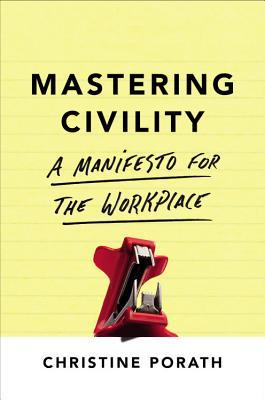
Mastering Civility: A Manifesto for the Workplace  by Christine Porath

I think we’ve all, at one time or another, worked with one of “those” people- the ones who are rude, who take all the credit, who won’t look up from their phones during meetings, send an email when they should call, or make you do work that they find boring or unimportant.

Before I read Mastering Civility, I assumed that this was behavior I had to endure until the perpetrator got another job or experienced a spontaneous personality overhaul.

Author Christine Porath asserts that tolerating incivility in the workplace is a bad idea because it spreads like a virus. Once rudeness or intolerance enters the scene, it effects everyone it touches and can sink the ship causing everything from profit loss to poor job performance.

Photo by Fox on Pexels.com

Throughout the book, Porath teaches the reader how to recognize incivility in oneself, how to assist coworkers in reforming poor behavior, and how to end working relationships with employees who either can’t or won’t toe the line. Sounding a clarion call for employers and employees alike, Porath rallies readers everywhere to join her in making the workplace civil again.

“Incivility usually arises not from malice but from ignorance. I started my research thinking that jerks out there were intentionally ruining workplaces; I now see that most bad behavior reflects a lack of self-awareness. We don’t want to hurt others, but we do.” pg 12. Until I read this book, I thought that too.

“…incivility has a way of pulling people off track and preventing them from doing their best. I’ve found this to be true in every study I’ve conducted. Even witnesses working around incivility take a hit.” pg 24.

I thought that was especially chilling because Porath ran a bunch of studies. “Many people think of rudeness as a self-contained experience, limited to one person or interaction. In truth, incivility is a virus that spreads, making the lives of everyone exposed to it more difficult. … Left unchecked, incivility can drag down an entire organization, making everyone less kind, less patient, less energetic, less fun- simply less.” pg 39.

Photo by Kate Trifo on Pexels.com

Ewww, you got your incivility all over my desk.

Those are the don’ts. Here are a few do’s: “If you want to connect with your employee or team, lead with warmth. Most of us are in a hurry to prove our competence, but warmth contributes significantly more to other’s evaluations. .. It facilitates trust, information, and idea sharing.” pg 71

“… the single biggest complaint I hear from employees about their bosses is that they fail to tune in. Do yourself and others a favor: When you speak or meet with someone, put away your smartphone. Make others the priority.” pg 114. Amen.

I laughed when Porath suggested eating well, exercising, and getting enough sleep to help foster a civil atmosphere in the workplace. Common sense stuff, yes, but how many of us have lashed out because we’re “hangry”? Change starts with you so: eat breakfast, people.

Recommended for people experiencing or who have experienced incivility in the workplace. Porath gives you some concrete methods to turn it all around. Some further business related reading that I’ve enjoyed: Do the Work, The Happiness Advantage: The Seven Principles of Positive Psychology That Fuel Success and Performance at Work and The Art of Exceptional Living.

Thanks for reading!

The Optimistic Workplace: Creating an Environment That Energizes Everyone by Shawn Murphy

The Optimistic Workplace: Creating an Environment That Energizes Everyone by Shawn Murphy

The Optimistic Workplace is a complex but useful manual on how to shift the environment at work. Shawn Murphy talks about all aspects of business from the individual to management to all the levels in-between. There weren’t many surprises in these pages, but the advice was solid.

I knew that leadership was important to the overall vibe in the work space and Murphy does say that it’s important: “…your leadership style impacts climate by up to 70 percent. Think about that 70 percent. It’s mostly how you show up and interact with others that shapes the climate that influences your team’s performance.” pg 9 But, it isn’t the only thing that matters.

Photo by Yan Krukov on Pexels.com

There are also ways in which the individual can change the work space. It all starts with greater self knowledge: “Workplace optimism thrives when people understand why they show up to work. Not only is the purpose and meaning of work important, but so, too, are the personal implications. … Personal expression through work is a major contributor to your employees’ well-being. Doing work that matters facilitates the expression of one’s talents.” pg 19 Makes sense. Know thyself does seem to be the foundation of most major life-changing movements.

“..the benefit to positively shaping the climate for your team is getting to know yourself better and discovering how to fulfill your own potential. You position yourself to love your work. In doing so, you set the tone and lead the way to help your employees realize their own potential and find greater meaning in their work and life.” pg 48 Sort of a trickle-down effect of optimistic workplace awesomeness.

Photo by Mikhail Nilov on Pexels.com

Of all of the myriad of studies included in this book, my favorite was the study of “ikigai” : “Your health is linked to a sense of purpose in life, or, as the Japanese all it, ikigai. … A 2008 study in Japan by Toshimasa Sone and his colleagues sought to understand how, if at all, ikigai contributed to longevity in life. … Mortality risks were higher in those who did not have a sense of being and of joy. Those lacking clarity in intentional living had a higher incidence of cardiovascular disease and other life-threatening illnesses.” pg 89 Purpose or death.

The only critical thing I have to say about The Optimistic Workplace is that it’s so broad. Towards the end, I despaired of ever having the time to implement all of the changes suggested, even though they seem like good ones. My boss suggested that I take my favorites and start there. I think I will.

Recommended for those who have plenty of time for reflection and transformative meetings- I think that this book has huge potential. I just wonder how many businesses would be able to take the time and actually work their way through it. Some further reading: Mastering Civility: A Manifesto for the Workplace, The Happiness Advantage: The Seven Principles of Positive Psychology That Fuel Success and Performance at Work, and Work Rules!: Insights from Inside Google That Will Transform How You Live and Lead.

Thanks for reading!

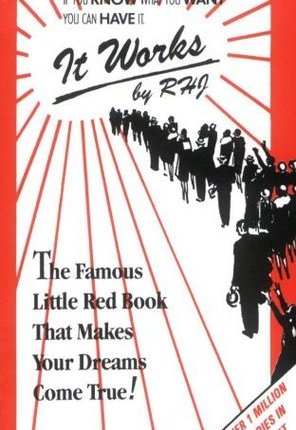
It Works: The Famous Little Red Book That Makes Your Dreams Come True! by RHJ

It Works: The Famous Little Red Book That Makes Your Dreams Come True! by RHJ

It Works by RHJ is a short book, pamphlet really, on the Law of Attraction. I was fortunate enough to pick up the deluxe version that not only had the text of the original work, but also a PDF of the way it appeared in its first printing.

A short chapter was also included that discussed the nearly-anonymous author.

Photo by Nilina on Pexels.com

I’ve read a lot of New Age/New Thought material, but I focused on this one because a certain loved one of mine is struggling. I won’t mention him by name because he says that I talk about him too much in my reviews, but suffice to say, I see him every day. Over a year and a half ago, he was laid off from a job that he enjoyed, had worked at for more than a decade, and he hasn’t found anything else yet to occupy his time. Part of the trouble, I think, is that he doesn’t know what he wants in a new occupation. It Works addresses that directly.

The mechanics of it are simple. Make a list of what you want, think about it every day, don’t tell anybody that you’re doing it. The assumption is that there is a force beyond our comprehension that responds to our thoughts and directs our lives based on what we choose to turn our thoughts towards.

Photo by Suzy Hazelwood on Pexels.com

The Abraham Hicks materials cover this in depth, but It Works was published in 1926, long before Abraham and The Secret burst into popular consciousness. This was, in fact, one of the first published books of its kind and even influenced the writings of that titan of new age thought, Napolean Hill.

To get what you want is no more mysterious or uncertain than the radio waves all around you. Tune in correctly and you get a perfect result…” pg 14.

“(Write down exactly what you want and the date you want it.) This may seem very foolish at first, but you can never realize your desires if you do not know positively and in detail what you want and when you want it. If you cannot decide this, you are not in earnest. You must be definite, and when you are, results will be surprising and almost unbelievable.” pg 20.

Photo by Kaboompics .com on Pexels.com

So, let’s cut to the chase. Does it really work?

The jury is still out. I made my list. 🙂 I guess we’ll see.

Recommended for fans of Abraham Hicks, Napoleon Hill and Pam Grout.

Thanks for reading!

Don’t Let Anything Dull Your Sparkle: How to Break Free of Negativity and Drama by Doreen Virtue

Don’t Let Anything Dull Your Sparkle: How to Break Free of Negativity and Drama by Doreen Virtue

This book wasn’t for me.

Don’t get me wrong, I love sparkling.

Photo by Hope Aye on Pexels.com

But, what dulls my sparkle is considering all of the ways in which the world raises my histamine levels, which seems to be Doreen Virtue’s thesis for this book: “…the next day as I was walking along Post Street in Union Square, I heard the inner message that is the basis of this book. … “The reason why you and so many people are experiencing life drama is because you’re addicted to histamine.” loc 81, ebook.

She goes on to list various ways that one may lower this including: major dietary changes, laundry detergent, cleaning supplies, certain types of exercise, therapy, dry cleaning chemicals, what types of plastic bottles to drink from, what types of television programs to expose yourself to, what types of make up to wear and much, much more.

I hope that the readers who are looking for this type of information find Don’t Let Anything Dull Your Sparkle because it is one of the most complete types of books of this kind that I’ve ever read.

Photo by Matheus Bertelli on Pexels.com

The thing is, I could make myself crazy if I tried to control all of that stuff.

I’ve discovered, through my own life, that if I do the inner work of feeling better then external circumstances sort of fall into place on their own without me dancing around trying to make it so.

Don’t get me wrong- I am all for self care. Regular massages, aromatherapy, professional therapy, organic foods, support groups, whatever you need to make yourself feel better, do it.

I just don’t need to adjust those things to sparkle. I feel innately sparkly. I am a veritable disco ball of sparkles.

Photo by NEOSiAM 2020 on Pexels.com

Beyond the histamine issue, it is clear that Dr. Doreen Virtue had another career in psychotherapy. If you’ve experienced drama of any kind, trouble finding that special someone or encountered difficult personalities, she will help you get past that in this book.

There again, my significant other and friends are all quite normal and low drama- sparkling, if you will.

But, if you’ve had relationship troubles, this could be the book that you’re looking for. So, seriously, don’t let me deter you if you feel you need to read it.

“Remember, it’s not about how many friends you have; it’s the quality of the friendships that matter. Even one good friendship, built upon mutual respect and other healthy qualities, will help you sparkle throughout the day.” loc 2034, ebook.

Photo by fauxels on Pexels.com

Meditation and yoga, two of my favorite things, are highlighted in this book as ways to improve your life. I couldn’t agree more!

In this passage, Doreen is talking about dealing with potential drama in your family or with in-laws: “…any way you slice it, the situation will bring up stress hormones in your brain and body, and part of being responsible is taking care of yourself. So, go do yoga as soon as you can. Play gentle music, meditate, eat a low-histamine diet, and avoid chemicals.” loc 1961, ebook.

The trouble is: brownies are not low-histamine. That’s a deal breaker for me.

Photo by Jhon Marquez on Pexels.com

I recommend this book if you’re sick and fed up with the way life is going and you want to try something drastic to turn it all around. Otherwise, I’d have to suggest borrowing this one from the library.

I’ve heard that high library usage lowers histamine levels and makes you sparkle too. Kidding.

Thank you to NetGalley and Hay House publishing for a free digital copy of this book. And, thank you for reading!

The Age of Cosmic Consciousness: Discover Your True Identity & Accelerate Your Evolution by Transform Publishing

The Age of Cosmic Consciousness: Discover Your True Identity & Accelerate Your Evolution by Transform Publishing
ageofcosmic

Time for the hippie librarian to get a little New Age-y!

The Age of Cosmic Consciousness is a bunch of different metaphysical concepts strung together sort of like Ram Dass’ Be Here Now but written on regular paper instead of- I don’t know what that stuff is- let’s say brown paper bags.

The first thing to know about this book is that it is written in a flow of consciousness style. I found it very difficult to get into, but then hypnotic once I got reading, and thus it became difficult to put dow

. I found it similar to Kelly Howell’s Secret of the Universal Mind Meditation in that one idea leads to the next idea in a very natural and linear fashion.

A lot of the concepts in here have been covered by The Secret and various other authors. There’s a good bit about the Law of Attraction, but there’s so much more than that.

What I loved about this book can be summed up in this quote: “Do not overly focus on the inaccessible gurus and unapproachable enlightened people. Recognize and accept that a higher consciousness can be attained by anyone who proactively pursues its realization.” pg 136 I truly believe that enlightenment is for everyone and possible for everyone. This book really puts that idea forward.

That being said, I don’t know that I was prepared for the “other beings of light consciousness” mentioned in this book or the section that purports to have information directly from them but not “channeled”. Or the other section about aliens tampering with human DNA in the dawn of time. My inner self doesn’t necessarily “resonate” with those ideas yet, but some readers out there may feel it and understand it.

Photo by Julia Volk on Pexels.com

In conclusion, The Age of Cosmic Consciousness is worth the read for anyone interested in improving themselves and the world through inner transformation. Remember to keep an open heart and mind because some of the ideas presented are fairly “evolved”. Some similar books are: Be Here Now and Gateway to the Heavens: How Simple Shapes Mould Reality and the Fabric of Your Being.

I received a free copy of this book through the Goodreads First Reads program. Thanks for reading!

How to Talk About Places You’ve Never Been: On the Importance of Armchair Travel by Pierre Bayard

How to Talk About Places You’ve Never Been: On the Importance of Armchair Travel by Pierre Bayard
armchairtravel

How to Talk About Places You’ve Never Been is a funny little non-fiction book about the skill of conversing about places you’ve never actually been.

At first, I couldn’t figure out what tone the author was wanting to convey because he, quite seriously, discusses why and how to describe places that the reader has never been- a topic that I, before I read this, didn’t take seriously at all.

I eventually settled my inner dialogue’s tone to “slightly grizzled professor who is smiling while lecturing” and that seemed to fit the bill.

There’s a lot to enjoy in here like Marco Polo’s hilarious description of unicorns.

Polo is presented as an armchair traveler because he left out so many important details about the area he was describing (like the Great Wall) and, quite brazenly, made other stuff up: “They have great numbers of elephants and also great numbers of unicorns, which are not smaller than the elephants. Here is what they look like: they have the same hide as a buffalo, feet like an elephant, and they have very thick, black horns in the middle of their foreheads.” pg 9

Photo by mark glancy on Pexels.com

Oddly enough, that sounds rather like the Siberian unicorn, doesn’t it? Only problem is- they became extinct so long ago, that Polo would have never seen one.

The character Phileas Fogg from Around the World in Eighty Days by Jules Verne, goes around the world and never leaves his cabin to see the sights.

Bayard thinks this is an excellent strategy: “The idea of staying in your cabin for the entire journey highlights the importance of the imagination and reflection in our approach to place. These are activities that Fogg is able to commit himself to completely vis-a-vis the places passed through, with all the more energy because he doesn’t waste precious time visiting them.” pg 29

Chateaubriand went beyond simply trying to describe his travels in Ohio, he put an island into the middle of it in his “memoir.”

Photo by Ron Lach on Pexels.com

Bayard applauds his imaginative creation as precise accuracy of physical locations is not what is necessarily important to an armchair traveler:“As Jean-Claude Berchet recalls, (the island) was first situated in what is now Florida at the time of Travels in America. Migrating, it then made a foray into the Mississippi at the time of an 1834 manuscript, before, following its movement northward, it found itself here in Ohio, several thousand kilometers away, clearly justifying the epithet of “a floating island.” pg 57

Bayard’s reasons why the reader may, one day, have to convince someone that they had been somewhere that they actually had not been: “The first is adultery. … The second, murder, is fortunately less common, but any one of us might become confronted with the necessity of having to take this route to ensure our peace and quiet one day. pg 103

How exciting and dramatic! And here I thought this book was just about sitting in your chair and day dreaming. 🙂

Photo by cottonbro on Pexels.com

“It is impossible to hope to speak with any conviction of places you haven’t been to without a vivid imagination. The capacity to dream and to make others dream is essential to anyone wanting to describe an unknown place and hoping to capture the imagination of their readers and listeners.” pg 123

Dream on, readers, dream on!

If you enjoyed How to Talk About Places You’ve Never Been, you may want to pick up The Art of Travel by Alain de Botton or The Art of Non-Conformity: Set Your Own Rules, Live the Life You Want, and Change the World by Chris Guillebeau but, keep in mind, these books recommend that you actually go to the places, not just dream it.

I received this book through the Good Reads First Reads program. Thanks for reading!

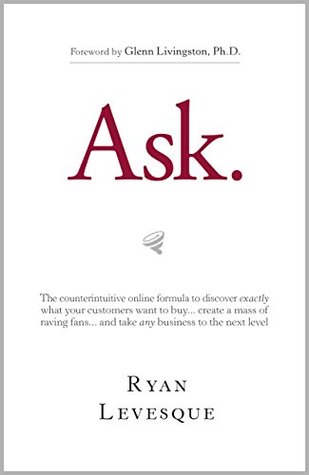
Ask: The Counterintuitive Online Formula to Discover Exactly What Your Customers Want to Buy…Create a Mass of Raving Fans…and Take Any Business to the Next Level by Ryan Levesque

Ask: The Counterintuitive Online Formula to Discover Exactly What Your Customers Want to Buy…Create a Mass of Raving Fans…and Take Any Business to the Next Level by Ryan Levesque
ask

Quite the title, isn’t it?

I picked this up a few months ago because I was looking for some pointers on creating online surveys for the public library. It has some excellent ideas, but they’re buried beneath the coils of a very aggressive marketing formula.

Levesque coaches businesses to send twelve follow up emails to customers, whether they purchase the product or not. Can you imagine?

It’s no wonder that people don’t like giving their emails out, if that is the manner in which they will be used. I have to give it to Levesque- the man certainly doesn’t take no for an answer.

He describes the unique circumstances that gave him this fierce business drive and, unlike other reviewers on this book, I actually liked the autobiographical portion of Ask.

It made me view Levesque as a regular guy before he presented his over-the-top marketing strategies. I mean, perhaps if you were running your own business and needed absolutely every customer who strayed to your webpage, Ask would be invaluable to you. As it is, if the library were to employ this system, I think it would just seriously piss everybody off.

So, anyway, the some gems I pulled out of the mess:
“…people essentially are only good at answering two basic types of questions when they don’t know what they want: what it is they don’t want and what they’ve done in the past.” pg 10

Bring clarity to your business through stat analysis: “We discovered that by paying attention to the right information (provided by the market), you could not only identify what sub-segments exist in your market, but you can also identify which ones are worth focusing on.” pg 53

Put the important questions first: “Generally speaking, you should expect to see a degradation in response the deeper you get into your survey. So, for this reason, it’s essential to prioritize the importance of your questions beyond the initial questions in your survey.” pg 87

When evaluating survey responses: “The reason why response length is vitally important is because it’s an indication of hyper-responsiveness, which is a leading indicator of how likely someone is to purchase a paid solution for the problem or challenge about which we’re asking.” pg 92

Why to use an “open-ended Single Most Important Question”: “To determine what buckets naturally emerge in your market. To identify what people’s hot buttons are. To identify what their objections are. To identify what their biggest challenges are. To use in concert with their demographic information. pg 97

So anyway, to get all of these tidbits in context, pick up Ask and dig through it. But please, if I ever, for whatever reason, give you my email, do not send me 12 follow up emails. Please. And thanks for reading.

Creativity: The Perfect Crime by Philippe Petit

Creativity: The Perfect Crime by Philippe Petit

In Creativity, Philippe invites the reader into his mind and attempts to dissect his creative process. For this to make any sense, you sort of have to let go of reality as you know it and step into his pipe dream world for the duration of the read.

Sometimes I was able to do this and followed his twisting train of thought to some fascinating conclusions, but other times I couldn’t. So, if you pick this one up, prepare yourself. It’s not for everyone.

I marked a couple of his ideas that resonated with me:“If you are an artist, you want to create a giant wall around yourself and, inside that wall, to follow your honesty and your intuition. What the audience will see is a man or woman who is a prisoner of his or her passion, and that is the most inspiring performance in the world.” pg 16 “To be a prisoner of passion”- I’ve never heard an artist described that way before.

Photo by ShonEjai on Pexels.com

In pages 20 to 26, Philippe essentially describes his brainstorming process as a paper version of Pinterest (my comparison, not his). He takes all of these words and pictures and files them according to some associations that his mind makes, then reassembles the results into art… somehow.

Read these pages if you want to explore how difficult it is for a creative type to write down his process in a manner that makes sense to anyone other than him or herself. It’s interesting but baffling.

“Another theory of mine: turning in circles and getting lost is important! You find yourself when you get lost.” pg 28 I embrace that theory as well.

“Go to school if you want to learn. Go to life if you want to feel.” pg 85 Loved that.

“Use your creative paranoia to be on the lookout for negativity; observe with a positive spirit: “What a beautiful disaster!” uttered the French architect Le Corbusier when he visited Manhattan for the first time.” pg 100

Photo by Trev Adams on Pexels.com

“Even if you are not a performer, even if you don’t have an act, do not think that you have nothing to rehearse! The art of living makes a performing artist out of you.” pg 122 We are all creators, painting our lives in wide strokes around us, even those of us who can’t draw a stick figure or walk on a rope between skyscrapers.

“Look in the mirror of fear and focus beyond it. What appears in the background is your path, awaiting.” pg 149 Something to keep in mind when life’s anxieties and impossibilities assail you.

Creativity: The Perfect Crime is one of a kind but if you liked it, I’d recommend reading PostSecret: Extraordinary Confessions from Ordinary Lives by Frank Warren (hundreds of people around the country decorate plain postcards with a secret that they’ve never revealed to another person- it shows the heights and depths of creativity and artistic catharsis) or How to Fly a Horse: The Secret History of Creation, Invention, and Discovery by Kevin Ashton (a more logical than emotional book about the creative process, how it works, and how everybody can create).

thewalkfilm

Speaking of Philippe Petit, did anybody else watch The Walk with Joseph Gordon-Levitt which was about his famous tight rope walk between the Twin Towers? 

If you read this book first, it makes so much more sense.

Thanks for reading!

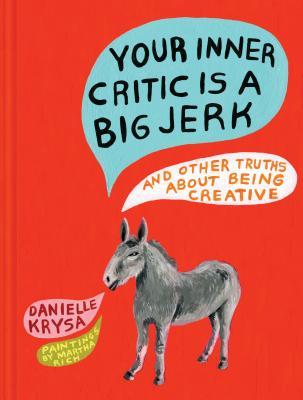
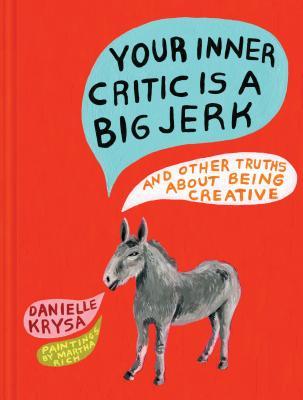
Your Inner Critic Is a Big Jerk: And Other Truths About Being Creative by Danielle Krysa

Your Inner Critic Is a Big Jerk: And Other Truths About Being Creative by Danielle Krysa
yourinnercritic

A quirky little book about how to inspire your own creativity and how to use your inner negative voice to its best advantage. Martha Rich’s art elevates what is actually rather simple text, but, on a more positive note, it is a quick read for those who may be short on time.

I couldn’t help but draw similarities between this book and Unmistakable: Why Only Is Better Than Best, which I read last week. Your Inner Critic is a Big Jerk deals with the sensitive parts of the creative process and breaking through your fears about how your art will be received.

Unmistakable is more about why you need to create the art that only you can create and how a bunch of different artists have managed to do just that. But, if you’re looking to jump start your creativity this year, pick up both of these because they actually complement each other fairly well.

One of my take-aways from Your Inner Critic is that it is never too late to start doing what you do: “Far too often, people tell me, “I wish I hadn’t given up on art [or dancing, acting, writing, music], but it’s too late now.” What! Why? I don’t believe that for a second. Many amazingly talented people didn’t hit their stride until their thirties, forties, or later.” pg 20

And Krysa goes on to list such luminaries as van Gogh, Money, and Julia Child. Can you believe that!

Even if you didn’t go to school to learn whatever art you feel compelled to create, you are still an artist. I’ve been pricked by that negative inner whisper once or twice and it was cathartic to learn that I’m not alone in that struggle and to finally put it to rest: “If you want to learn something new, go learn something new. Set yourself up to get this new skill in whichever way suits you best. You are what you know, regardless of when and where you did the learning.” pg 45

Some further reading: Unmistakable: Why Only Is Better Than Best or Creativity: The Perfect Crime

Thanks for reading!