Art and Practice of Getting Material Things Through Creative Visualization by Ophiel

Art and Practice of Getting Material Things Through Creative Visualization by Ophiel

Originally published in 1967, the Art and Practice of Getting Material Things Through Creative Visualization arrived nearly three decades before The Secret.

With more of an occult than a New Age twist, the one-name author, Ophiel, talks readers through what is essentially the Law of Attraction, but he never calls it that.

Photo by Egor Kamelev on Pexels.com

Ophiel tends to write portions of the book that he thinks are most important in all caps. LIKE THIS. It can be annoying.

Another interesting quirk, Ophiel talks about him/herself in the third person, at all times.

In this passage, he’s talking about why he wrote this book, and you get to see the author’s style in action: “Ophiel’s defect consists of not being about to accept self-styled prophets’ sayings, and teachings, without raising the following awkward question- and making the following embarrassing test. The question is IS WHAT THEY SAY TRUE? and the test is DOES WHAT THEY SAY WORK, AND PRODUCE RESULTS? And if what they SAY DOES NOT WORK THEN IT IS NOT TRUE, and into the garbage can with it!!” pg iii

Ophiel claims that creative visualization techniques don’t always work for a variety of reasons. He gives the reader exercises and suggestions for improving their results.

“In Creative Visualization work all the planes involved in our cosmic existence are used, the Etheric, the Lower Astral, The Higher Astral, the Mental Plane, and the Causal Plane, AND ALL THESE PLANES HAVE DEFINITE RULES AND LAWS FROM WHICH THEY WILL NOT DEVIATE ONE IOTA.” pg 5.

Again, with the capitalization.

Photo by stein egil liland on Pexels.com

He also has interesting ideas about reasons why beginners fail out of the gate.

He cites something called “the sphere of availability”: “The new student then proceeds to visualize for LARGE THINGS. BIG THINGS. VALUABLE THINGS. Things that are far beyond his ability- not to visualize-imagine-desire, BUT FAR BEYOND HIS PRESENT ABILITY TO DEMONSTRATE-VISUALIZE.” pg 31.

Ophiel uses different words, but essentially he says, start small, celebrate the small victories and increase your “sphere of availability” in that manner. He also gives practices to improve your visualization skills.

Honestly, if asked to recommend a teacher for creative visualization, I’d say skip Ophiel and read Abraham Hicks. They’re a lot more fun.

Thanks for reading!

10% Happier: How I Tamed the Voice in My Head, Reduced Stress Without Losing My Edge, and Found Self-Help That Actually Works by Dan Harris

10% Happier: How I Tamed the Voice in My Head, Reduced Stress Without Losing My Edge, and Found Self-Help That Actually Works  by Dan Harris
10 happier

Dan Harris had problems, like all of us, but unlike all of us, he was beginning to experience some of the messier symptoms of his dysfunctional inner world in front of millions of people.

He sought help and jumped into the meditation world with both feet. I think its why most people find their way into spiritual practices- something isn’t working quite right in their life and they need to change from the inside out. So, they look for a process of inner change and run smack into meditation.

However, Dan isn’t drinking the kool-aid of the new age movement. He questions every practice for its practical benefits and searches for scientific experimentation to back up those benefits.

In essence, he brings the investigative skills that he applies to his job as a news anchor to the practice of meditation and it’s a delight to read.

I loved this. Dan had the same initial reaction to Eckhart Tolle and Deepak Chopra that I did. One of them seems too mellow to be real and the other seems to market himself too well to be that spiritual.

Over time, I’ve come to love both of those authors/gurus for their wisdom, but they are both just out of this world. Harris isn’t afraid to point that out.

In conclusion, I’d recommend 10% Happier to anyone who wants to become 10% happier- isn’t that all of us?

Also, anyone who has read Eckhart Tolle or Deepak Chopra may also enjoy this, if only for the surprisingly accurate descriptions of their foibles. Anyone who wants to try meditation but feels like they don’t have time, couldn’t do it if they tried, or doesn’t know where to start may find some inspiration from this book.

And, finally, anyone who is fed up with the hippie-dippie-trippie feeling that most spiritual memoirs give them, will find a kindred soul in Dan Harris.

Thanks for reading!

Art Of Possibility by Rosamund Stone Zander, Benjamin Zander

Art Of Possibility by Rosamund Stone Zander, Benjamin Zander
art of possibility

The Art of Possibility takes a psychologist and a musician and smooshes their ideologies together to create a self help program.

“Our premise is that many of the circumstances that seem to block us in our daily lives may only appear to do so based on a framework of assumptions we carry with us. Draw a different frame around the same set of circumstances and new pathways come into view.” pg 1.

The various practices that are discussed in The Art of Possibility seek to create those new frames.

One of my favorite chapters was: Being a Contribution. In it, the authors suggest playing life like a game. “The purpose of describing, say, your professional life or your family traditions as a game is twofold. You instantly shift the context from one of survival to one of opportunity for growth. You also have the choice of imagining other games you might prefer to play in these realms.” pg 59.

As a gamer, that’s an idea that I can easily assimilate into my life. 🙂

I also enjoyed: The Way Things Are“Being present to the way things are is not the same as accepting things as they are … It simply means, being present without resistance: being present to what is happening and present to your reactions, no matter how intense.” pg 100.

Photo by David Bartus on Pexels.com

A little bit of Buddhist philosophy can go a long way.

One of my complaints about this book is that I don’t think that it fit together as seamlessly as they were hoping it would.

Also, I feel like non-musicians may not get as much out of this book as I did. It is rather heavy on the music stories and metaphors.

But, like many self-help books, it is packed with actionable suggestions and feel-good stories. Recommended for those looking to inject a little more possibility into their lives.

Thanks for reading!

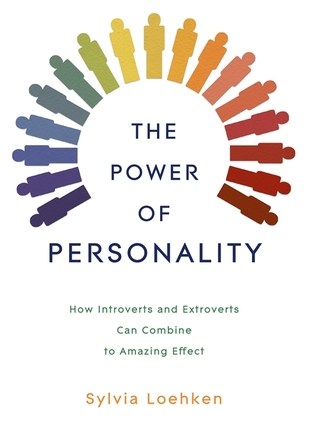
The Power of Personality: How Introverts and Extroverts Can Combine to Amazing Effect by Sylvia Loehken

The Power of Personality: How Introverts and Extroverts Can Combine to Amazing Effect by Sylvia Loehken
powerpersonality

The Power of Personality is more than just another book that picks apart the obvious differences between introverts, centroverts, and extroverts. It delves very deeply into the strengths and possible hurdles that each face in business, social situations, and with each other.

Loehken presents management techniques for the different personality types and how one might leverage innate characteristics for the most positive outcome possible in a variety of ways. I found the book to be very helpful in explaining my own reactions to most perceived conflicts.

I hope to utilize what I’ve learned in the future to harness my strengths while minimizing the others. Some of my more damaging introverted tendencies are that I’m conflict/contact adverse and easily overstimulated in every day life.

I thought when Loehken discusses how the different personality types view each other that her descriptions were spot on. I think I do tend to categorize most extroverts as loud, unthinking buffoons. My mistake.

I suppose that extroverts view me as “boring, lame duck, sensitive flower, unsociable, professional worrier, reader, timid”pg 51. I never considered why.

Photo by Armando Are on Pexels.com

Perhaps now with a more educated mindset, I can embrace personality differences and work more smoothly with extroverts. Rather than, in my previous experience, pushing them away so that I can have some peace and quiet.

The other portion of the book that I enjoyed is Chapter 8: Stressful Encounters: Status Games pg 161. It reminded me of a book on body language, I Can Read You Like a Book: How to Spot the Messages and Emotions People Are Really Sending with Their Body Language. But, instead of just focusing on body language, Loehken goes into all manner of status symbols, interactions, and conversational cues.

She dissects how, particularly introverts, do themselves a disservice in their professional and personal lives because of how they perceive and react to conflict. It blew my mind.

It may be because this is a European book (the price on the back is listed in pounds) but I have never read anything like this in an American business book. Loehken talks about the unwritten rules of polite society and how, in sometimes subconscious ways, we shape our relationships and our status to the people around us.

Photo by fauxels on Pexels.com

One of her tips for dominating or owning space that I’m going to integrate into my life (right now!) is to sit fully on an office chair instead of perching on the edge. “If you take the whole seating area of a chair, this has a higher status effect than someone who only takes up half the seat or sits on the edge.”pg 175. Lesson learned.

The weak part of this book was any of the bits that dealt with centrovists. Basically, Loehken kept saying (paraphrasing in my own words) ‘If you’re a centrovist, you enjoy the benefits from both types of personalities and will therefore be more successful in whatever it is that we’re talking about in this section.’

It got kind of annoying after awhile because Loehken tells us that everyone exists on a scale of personality (we’re rarely entirely one type or another from situation to situation) so the centrovist advice could have been most applicable for every reader. Unfortunately, it felt more like a ‘Captain Obvious’ moment every time it came up rather than a revelation.

If you enjoyed The Power of Personality, I’d suggest reading I Can Read You Like a Book: How to Spot the Messages and Emotions People Are Really Sending with Their Body Language. It deals with body language rather than the driving personality behind the body, but it is still illuminating. It helps readers monitor the involuntary signals that we send out in our day to day interactions, how to leverage your movements and to send the message that you want to send, rather than broadcasting your internal mindset unintentionally.

I received a free copy of this book through Goodreads First Reads. FTC guidelines: check! Thanks for reading!

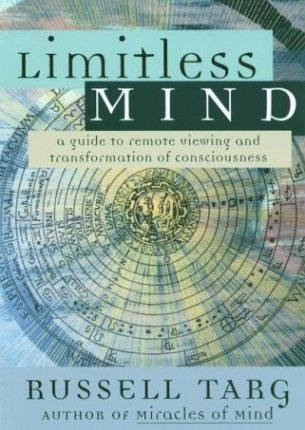
Limitless Mind: A Guide to Remote Viewing and Transformation of Consciousness by Russell Targ

Limitless Mind: A Guide to Remote Viewing and Transformation of Consciousness by Russell Targ
limitless mind

Russell Targ is one of the founding members of the Stanford Research Institute’s studies of psychic phenomena. He worked with Hal Puthoff and Ingo Swann to develop the remote viewing protocols for the CIA.

Remote viewing, though lambasted in popular culture in such films as “Men who Stare at Goats,” is an actual practice. It was utilized by United States and Russian militaries with some success or complete failure- depending on who you ask.

I thought that a handbook on remote viewing from this seminal scientist would delve more into the nitty-gritty of the practice. But, it doesn’t.

Targ does give a broad outline of what remote reviewing is. He also give examples of his research, but it wasn’t all that I had hoped it would be.

Limitless Mind is, however, packed with information about psychic studies from the late 1800’s until the current time. Targ discusses the studies from multiple countries covering such diverse topics as spoon bending, distance healing and psychic diagnosis.

If the reader is looking for remote viewing techniques only, I’d recommend Remote Viewing: The Complete User’s Manual for Coordinate Remote Viewing or The Seventh Sense: The Secrets of Remote Viewing as Told by a “Psychic Spy” for the U.S. Military.

Thanks for reading!

Time in a Bottle: Mastering the Experience of Life by Howard Falco

Time in a Bottle: Mastering the Experience of Life by Howard Falco
timeinabottle

Time in a Bottle is a self help book about changing your perceptions to improve your life. Though not a new message, some readers may find this book worth the time.

Howard Falco presents this knowledge with a spiritual slant. Readers who are turned off by that kind of thing may want to choose another book.

The main premise: “Our misunderstanding of time- how our thoughts relate to time, how time is actually created, and how time seems limited- is one of the biggest reasons we suffer and at times feel hopeless or powerless in our lives.” pg 1, introduction.

One of the ways to “master the experience of life” is to realize that you are infinite potential like the universe itself: “You are a part of infinity. To the degree that you feel that life is finite and limited, you will act out of this fear, and work to create an experience that is a result of this fear.” pg 33.

I agree that mindset is important to determining your life’s path. Love and fear seem to be the two driving forces of our world. Wonder why that is…

Photo by Nacho Juu00e1rez on Pexels.com

Falco also discusses giving up resistance to how life is: “It is critical that you know that the ending of your resistance toward any particular thing (sickness, layoffs, war, family, financial trouble, death, political chaos, natural disasters, etc.) is not in anyway condoning these terrible things or giving up on change. It is simply the full acknowledgment that for the moment this is what is happening.” pg 40

He talks about giving up regrets about the past that could potentially be holding you back: “This is not about accepting that something had to happen to you; it is about acknowledging that it did happen and standing in front of the universe saying, “I trust that there is perfection and a specific, divine purpose for my past and the exact way it unfolded. Because of this, I am realizing more of my unlimited potential for the future.”

So then, unburdened, you step into your future with faith.

Falco incorporates quotes from famous philosophers and scientists along with anecdotal stories to illustrate his points. As I said, no new wisdom here, but plenty of good reminders to trust, forgive and move forward to a life outside of time.

Thanks for reading!

Dreams 1-2-3: Remember, Interpret, and Live Your Dreams by J.M. DeBord

dreams

J.M. DeBord starts his book about dreams with the idea that dream interpretation used to be the job of a wise man or woman in the community. Dreams were an integral part of living a fully conscious and realized life.

Now, dream interpretation experts charge for their services and not everyone has access to their skills.

This clever little book opens the doors of dream interpretation so that average people can again know the meaning of their dreams. It doesn’t stop there- J.M. DeBord also provides suggestions for integrating the dreams into your daily life.

Finally, in Dreams 1-2-3, DeBord empowers readers by reminding us that no matter how expert the dream interpreter, the final meaning for any dream really rests in the hands of the dreamer herself. Only she can feel the “ringing of truth” in the interpretation.

This is by far the best book that I have ever read on dream symbolism. DeBord doesn’t provide lists of animals/colors/scenarios and their most common meanings. He ties whatever shows up in the dream to the rest of its contents and the dreamer’s own internal and external world.

Photo by Ylanite Koppens on Pexels.com

In this way, each dream can be understood and applied in as unique a way as the dream itself.

My one critique of Dreams 1-2-3 is that DeBord made the process seem so simple. I’d read the dream example and think, I have absolutely no clue what that one means, and then DeBord would go on to provide a crystal clear interpretation.

See how simple it is?… he seems to say. Perhaps not.

DeBord may have a gift for it, honed by practice, and he doesn’t realize that what he is doing is rather amazing. I suppose he gives me a goal to strive towards.

I have had a few dreams since completing this book and, with DeBord’s method, have been able to wring some meaning from what I otherwise would have assumed to be nonsense. Dreams 1-2-3 has already changed my life. Read it if you want to change yours too.

Thanks for reading!

Linchpin: Are You Indispensable? by Seth Godin

Linchpin: Are You Indispensable? by Seth Godin
linchpin

Seth Godin draws on his experiences in business and life to convince the reader to be a linchpin rather than a cog in the machine of work.

He says it better than I did: “This book is about love and art and change and fear. It’s about overcoming a multigenerational conspiracy designed to sap your creativity and restlessness. It’s about leading and making a difference and it’s about succeeding.” pg 2

You have our attention, Godin. What do we do?

Through a series of blog-like sections, Godin explains that there is no road map or simple answer. “Our world no longer fairly compensates people who are cogs in a giant machine. … Leaders don’t get a map or a set of rules. Living life without a map requires a different attitude. It requires you to be a linchpin.” pg 19

Essentially, you have to embrace the uniqueness and drive that is inside of you. You have to create a platform of work rather than a resume. You have to decide to discard mediocrity.

“The very system that produced standardized tests and the command-and-control model that chokes us also invented the resume. … Great jobs, world-class jobs, jobs people kill for- these jobs don’t get filled by people e-mailing in resumes.” pg 72

That’s so outside the usual paradigm of work, for most of us, that it can sound scary.

Photo by Andrea Piacquadio on Pexels.com

“Often, when people hear about my radical ideas for how you should train for a career, as well as the best way to present yourself, they object. They point out that not fitting in is certainly going to be an ineffective way of getting one of these average jobs. … If you need to conceal your true nature to get in the door, understand that you’ll probably have to conceal your true nature to keep that job. … The linchpin says, “I don’t want a job that a non-linchpin could get.” pgs 78-79

It seems like he’s asking a lot, but the alternative is to give up and conform. Godin says that this mindset isn’t impossible: “My fundamental argument here is simple: In everything you do, it’s possible to be an artist, at least a little bit.” pg 94. We can do that, right?

I didn’t agree with everything in Linchpin. I thought that Godin was far too hard on journalists… it is easy to look at an industry, or any situation really, from the outside and criticize the people in the thick of it.

News agencies know that they have to embrace the future or die. Just how to do that is up for grabs and adding Godin’s toolbox of how to excel at work couldn’t hurt. I don’t think that reinvention or evolution is an impossible task. It’s just tricky because, as Godin noted, “there is no roadmap.”

Recommended for people who may be bored with where they are and can see a glimmer of where they want to be- but aren’t sure how to get there. Also recommended for those who work in the newspaper business because we clearly need more linchpins.

The Eight Human Talents: The Yogic Way to Restore the Balance and Serenity Within You by Gurmukh Kaur Khalsa

The Eight Human Talents: The Yogic Way to Restore the Balance and Serenity Within You by Gurmukh Kaur Khalsa

The Eight Human Talents is part-story and part-instruction manual for the practice of Kundalini yoga. I’ve only ever practiced hatha yoga and this is very different from what I’ve learned. I’ve tried a couple poses and this is definitely going to take some practice.

Photo by Elly Fairytale on Pexels.com

If I learned anything from this book, it is to breathe deeply. One of Gurmukh’s main points is that by connecting with the breath, we reconnect with ourselves.

Also, don’t be afraid to try, even if you fail. “If we can make one step towards happiness, towards healing, towards change, miracles begin to happen. The Kundalini Yoga and Meditation in this book are a way of making those small steps towards happiness. If you will try even one thing from this book-one breathing exercise, one stretch, one meditation- know that somewhere I am cheering right out loud for you, because I know that making that first step is the hardest thing to do…” introduction, xxii.

Some of Gurmukh’s stories were saccharine sweet, but I enjoyed most of them. “We are powerless over every other person on the planet, and we only have power over our own lives. No matter how problematic the people in your life are, you are always the solution.” pg 125.

I’ll have to get back to you on if these exercises deliver on the myriad of promises that Gurmukh makes. So far, I’ve discovered that my lower back needs to be strengthened and I should work on my neck flexibility.

Photo by Chermiti Mohamed on Pexels.com

She ties all of her suggested poses to different chakras and energies found within the body. If that concept is too far out for you, you may be better served with a different introduction to Kundalini yoga.

Recommended for beginners to moderately experienced practitioners.

Thanks for reading!