You Do You: How to Be Who You Are and Use What You’ve Got to Get What You Want by Sarah Knight

You Do You: How to Be Who You Are and Use What You’ve Got to Get What You Want by Sarah Knight

The self-styled “anti-guru” Sarah Knight adds another volume to her quirky, profanity-laden self-help series with You Do You.

The focus, as you can guess from the title, is the art of allowing your authentic self to shine through without feeling guilt or being so far out of the social norms that you border on “psychopath.”

You Do You is about accepting your strengths and your flaws, whether those flaws are self-identified, or just things that you’re perfectly happy about but that other people seem to have a problem with. Or, should I say, that you WOULD be happy about, if you felt a little more confident in yourself…” loc 146, ebook.

Photo by Kat Jayne on Pexels.com

And, like the previous books, Knight doesn’t stint on the bad words. She admits she kept the title clean so a certain publication *cough* New York Times *cough* would print the all the words of the title in their sought after Best Seller list.

Which Knight has made before… but had her titles censored for their content.

“The advice in this book boils down to one simple mantra: Stand up for who you are and what you want. How do you do that? Stop letting other people tell you what to do, how to do it, or why it can’t be done.” loc 188, ebook.

I enjoyed You Do You, but I felt it wasn’t as strong as Knight’s other titles because she spends so much time rehashing material she has already covered elsewhere.

That being said, I like Knight’s style, her famous diagrams and her illuminating stories. This is an author who has been there, done that and cussed about it.

Photo by Anna Nekrashevich on Pexels.com

My favorite diagram in You Do You is Knight’s “ouroboros” or symbolic, conjoined serpent of wisdom picture. The text with the cute doodle says: “Is it right or wrong? You won’t know unless you have the confidence to take a risk and find out. If you regret your decision, then accept the consequences, swallow the lesson, and start over. With confidence.” loc 1995, ebook.

Verges on mystic Eastern wisdom, doesn’t it?

She encourages all readers everywhere to let the strange sides of yourself out- within certain boundaries. Don’t hurt anybody. Don’t take advantage of people. Be reasonable within your freakishness.

“Now, with those ground rules established, I do declare that we, as a society, should celebrate weirdness in all its forms- and that the right to be weird should be inalienable- just like the right to life, liberty, and the pursuit of happiness.” loc 2130, ebook.

Photo by Gratisography on Pexels.com

“You do you” and let everybody else do them. It’s that simple. It’s that hard.

Sarah Knight may be a bit of an acquired taste. Please don’t read unless you have a high tolerance for bad words and, dare I say, mild snark.

But, if you are someone in need of encouragement to let your freak flag fly, look no further.

Thank you to NetGalley and Little Brown and Company for a free digital copy of this book. And thank you for reading!

Read my reviews of Sarah Knight’s other titles:

The Life Changing Magic of Not Giving a F*ck by Sarah Knight

Get Your Sh*t Together by Sarah Knight

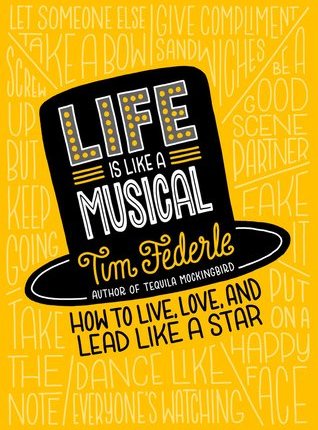
Life Is Like a Musical: How Broadway Can Help You Live Your Best Life by Tim Federle

Life Is Like a Musical: How Broadway Can Help You Live Your Best Life by Tim Federle

Life is Like a Musical is a cute, self-helpish book, full of the wisdom Tim Federle gleaned from years of experience on the stage.

“Basically, think of this book as ‘Don’t Sweat the Small Stuff’ with jazz hands.” Introduction.

Photo by Anastasiya Gepp on Pexels.com

Tim’s advice is common sense, but I appreciated it anyway. Make your weaknesses your strengths. Be nice to everybody. Pay attention. Don’t try to be a perfectionist, and so on.

He pairs these nuggets with his life stories. So, it’s part-memoir, part-self help.

“When Bob Fosse had a bald spot, he put on a stylish hat. Where’s your bald spot? Or blind spot? Or thing that you can barely accept about yourself? Go put a hat on it, and make it something wonderful.” pg 23. There’s nothing wrong with advice like that.

Photo by cottonbro on Pexels.com

First off, the key to approximately 90 percent of adulthood is appearing more interested in something than you actually are. Seriously.” pg 31.

Truth bombs, people.

Don’t give your power away. Remember who you are: “Please, never forget you’re the leading character in your own life. Read that sentence again: You aren’t the supporting cast. You’re it, baby.” pg 48.

And most importantly of all, have a sense of humor about the whole thing.

“Forgive yourself when you screw up. Develop a sense of humor that allows you to snort-giggle before anyone else can.” pg 139.

Photo by Tim Mossholder on Pexels.com

None of us are getting out of this thing called life alive. We may as well make the most of it.

I enjoyed this book. I was also a huge fan of his drink recipe book mixed with classic book titles: Tequila Mockingbird: Cocktails with a Literary Twist.

Recommended for people who are looking for a peppy voice to get them back on track and singing throughout the soundtrack of their own lives. This read will do the trick.

Thanks for reading!

Remodelista: The Organized Home by Julie Carlson

Remodelista: The Organized Home by Julie Carlson
remodelista

Remodelista is another de-cluttering book. This one encourages readers to utilize storage containers made out of natural materials, to hang items in unexpected places and to make your space functional and beautiful.

Maybe I’ve reached my limit on these types of books. For example, I loved The Life Changing Magic of Tidying Up, but that was one of the first books of this kind that I read.

I know not everyone responds well to Marie Kondo’s philosophy of considering the spirit of your stuff, but that clicked with me, for whatever reason. Must be a hippie thing.

I thought this one was a bit ridiculous. It just wouldn’t work for me in my real life with my crazy pets, busy family and serious amounts of stuff.

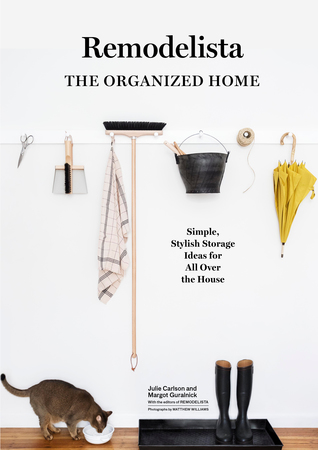
My main problem with this one is illustrated quite clearly on the cover. We’ve got two brooms, a towel, an umbrella, some string and a large bucket hung right over a cat drinking from a water bowl.

I can think of a hundred reasons why that wouldn’t work for me, but let’s start with three:

First of all, the kitties would think I was trying to kill them- hanging menacing items over the watering hole. And, let’s be honest, with my poor hanging-things-up skill, it just might.

Photo by Pixabay on Pexels.com

Second, putting string high up but visible is inviting a kitty disaster. They would hunt the heck out of that string, probably using the umbrella as a climbing wall to get to it, destroying my artfully arranged buckets and mops in the process.

Third, where would I put the rest of my family’s entryway stuff? We’ve got a lot more than that in just umbrellas, not even counting the brooms, swiffer mops, you-name-it.

The result: easy-to-maintain spaces that are both orderly and artful, personal and purposeful. Because, ultimately, the goal isn’t a flawless, impossible-to-maintain showcase. The aim is an unencumbered life in a house that makes you happy.” pg 9.

All of the rooms and cabinets in this book had like three things in them. It’s just not realistic.

Photo by Anastasia Shuraeva on Pexels.com

That being said, I did like the “Daily Rituals” on pg 18. The authors included “seven simple habits” to adopt every day to make your life easier. They include activities like making your bed and opening the mail.

I can handle that.

I also liked the ‘Herb and Spice Drawer’ suggestion on page 70. My spices are a jumble of bottles and sizes and it’s nearly impossible to find anything quickly.

Photo by monicore on Pexels.com

The authors suggest storing herbs and spices in: “Uniform glass jars- we like small paint jars from the art supply store.”Then, label the tops. It’s a simple solution but one that never occurred to me.

Only recommended for people who have calm cats and very few items. Other than the suggestions mentioned, I can’t see myself using very many of the tips from Remodelista.

Thanks for reading!

How to Be Happy, Dammit: A Cynic’s Guide to Spiritual Happiness by Karen Salmansohn

How to Be Happy, Dammit: A Cynic’s Guide to Spiritual Happiness by Karen Salmansohn

How to Be Happy, Dammit is a succinct, brightly colored treatise on enlightenment. Coming in around 230 pages with only a few words per page, this is a book that can be read over the course of a lunch hour or *ahem* during other short breaks in your life on a porcelain throne.

Photo by Andre Furtado on Pexels.com

It doesn’t use an abundance of coarse language (see title), but it does utilize a few words to get the point across.

The book is broken down into short life lessons that feed into the next. “Life Lesson 1: Pain exists. Life can hurt. Like a lot. Even when you’re good, you can get whacked. Without apology. Without explanation.” pgs 14-15.

That’s the life lesson about being born. Can’t really argue with that.

My child was born wailing before she was even entirely out. I was wailing too, for different reasons of course, but life can hurt. No doubt.

I found meaning in “Life Lesson 6: Never go shopping for kiwis in a shoe store. Some people just don’t have what you need. So why waste time, banging on their doors, ringing their bells, demanding service?” pgs 38-39.

Photo by PhotoMIX Company on Pexels.com

I think I’m still learning that one.

“Life Lesson 19: This is a world of duality: of good and bad, yin and yang, decaffeinated and caffeinated. So you must always be prepared!” pg 112. Decaffeinated? Poor souls…

In the chapter on self-programming, we get this wisdom: Life Lesson 27: The world is your mirror.” pg 174.

Photo by Mauru00edcio Mascaro on Pexels.com

I don’t think folks realize that either.

Recommended for people who are interested in spirituality, but don’t necessarily have a lot of time or patience for more touchy-feely books.Β How to Be Happy, DammitΒ delivers on its title. Now let’s all go be happy. Dammit. πŸ™‚

Thanks for reading!

Level Up Your Life: How to Unlock Adventure and Happiness by Becoming the Hero of Your Own Story by Steve Kamb

Level Up Your Life: How to Unlock Adventure and Happiness by Becoming the Hero of Your Own Story by Steve Kamb
levelup

Steve Kamb, the creator of nerdfitness.com, offers behavioral games and community support to assist readers in becoming their best self. It’s the self help genre meets gamification.

Steve was addicted to video games, miserable at his job and disappointed with life. “I still love those games and movies and enjoy the entertainment they provide. They’re a part of who I am as a person. The problem was that they had become a way to avoid the unhappiness in my real life while also allowing me to continue doing nothing about it.” pg xi

The game that had him hopelessly hooked was EverQuest. “What had begun as a fun way to blow off some steam after school or work quickly became an addiction.” pg 5.

So, Steve took what he loved best about the game- the levels, the endless quests, the secrets- and created an online community in which the members support each other to become the best whatever-it-is you want to be through just those things.

Photo by RODNAE Productions on Pexels.com

Essentially, Steve takes the hero’s journey, as described by Joseph Campbell, and crafts a way to implement that into your life through your own preferences. “Life is meant to be lived on your own terms.” pg 23

I picked this up because I recently read a behavioral game book and I wanted to see what the theory would look like in action. Steve has done a solid job making his game completely customizable.

He provides examples between the chapters of people who have used his game to “level up” their lives. The results are impressive.

“The truth is that most people fear change. They, themselves, might want to change but don’t want to put forth the effort and energy to make it happen.”pg 57.

With Level Up Your Life, Steve gives readers the tools to make their lives into a game of their choosing. Recommended for gamers and the young at heart.

Thanks for reading!

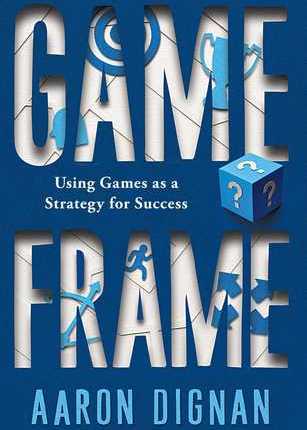
Game Frame: Using Games as a Strategy for Success by Aaron Dignan

Game Frame: Using Games as a Strategy for Success by Aaron Dignan

InΒ Game Frame, Aaron Dignan outlines what games are, their components and how to create behavioral games to change your own and others behavior.

He clearly states his goals for the book in the introduction:Β “The truth is, we are born knowing how to play, and how to invent games where none exist. I’m convinced that there is a role for games and play in reshaping the world around us.”Β introduction, xiii.

Photo by lilartsy on Pexels.com

Dignan goes on to do just that. His detailed breakdown of the components of games and why we think they’re fun was particularly good.

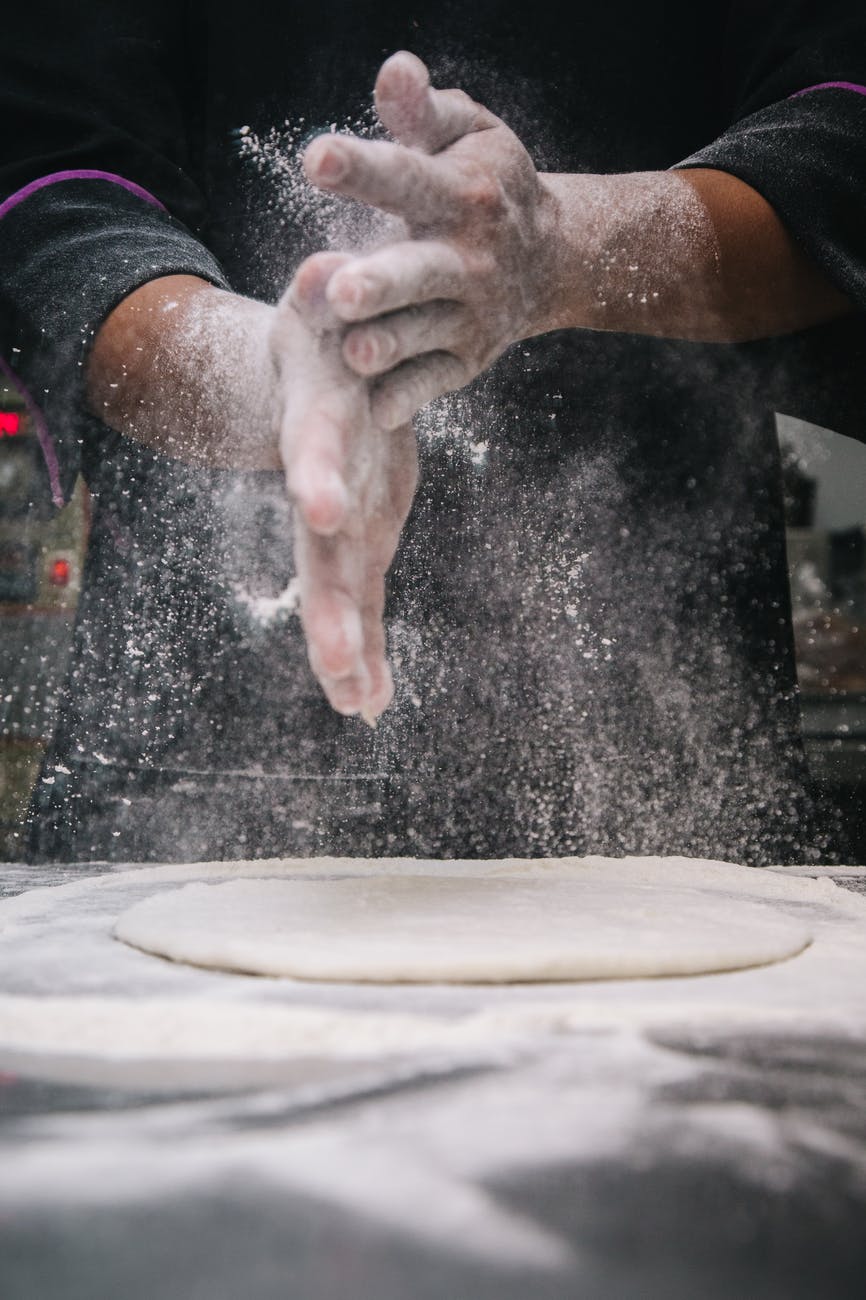
I also agreed with his assertion that “play is a state of mind”:Β “…when a chef cooks something new, it feels like play. When I cook something new, it feels like work. Both of us are making a meal, but we’re not experiencing the same thing. Play is a state of mind.”Β pg 26.

Photo by Malidate Van on Pexels.com

My quibble with this book is that he didn’t convince me that games are the best way to change behavior. In Level 5 (Chapter 5), Dignan describes a speech given by Professor Jesse Schell at the D.I.C.E. conference in 2010 that scared the crap out of me.

Essentially, Professor Schell outlines how businesses and the government could use behavioral games to create a dystopian world in which our every action is analyzed and nudged towards consumerism.

“You’ll get up in the morning to brush your teeth and the toothbrush can sense that you’re brushing your teeth. So hey, good job for you, 10 points for brushing your teeth. And it can measure how long, and you’re supposed to brush your teeth for 3 minutes. You did! Good job! … And who cares? The toothpaste company. The toothbrush company. The more you brush, the more toothpaste you use. They have a vested financial interest.”Β pg 58

Photo by Karolina Grabowska on Pexels.com

After that chapter, I couldn’t shake the feeling that Dignan is inviting us to open a Pandora’s box.

“My challenge to you is simple: I believe that a million behavioral games could change everything, but they must be imagined and realized soon.” pg 169.

Hypothetically, say I design a game with the best intentions, but then, at some point, it’s taken over by the government and forced on people. Suddenly, it stops becoming a game and ruins the world.

Who wants to take the risk to potentially be the person who destroys society because of an ill-conceived behavioral game? Not me.

Recommended only for the truly brave gamers.

Thanks for reading!

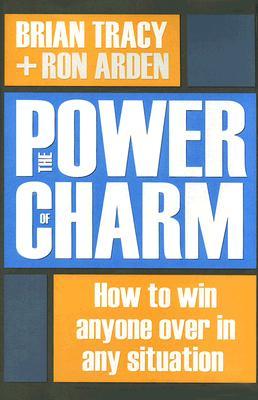
The Power of Charm: How to Win Anyone Over in Any Situation by Brian Tracy and Ron Arden

The Power of Charm: How to Win Anyone Over in Any Situation by Brian Tracy and Ron Arden

The Power of Charm is a book written for business professionals, who want to give themselves a bit of a leg up, by increasing their charm potential.

I found the book to be interesting, but it also flirts with the line between charming and manipulating. I suppose we could ask ourselves if, at the end of the day, there is any difference between the two.

Personally, I think there is.

Photo by Kat Smith on Pexels.com

In my mind, charm is unrehearsed, natural and springs from a genuine interest in others. Manipulation is ego-driven scheming. But, both can get you what you want.

I’m torn as to how this book actually fell on that scale. Some of the exercises feel like charm practices- others, like manipulation strategies.

Essentially, Brian Tracy and Ron Arden give listening and speaking tips to better understand whoever it is you’re interacting with. There’s nothing all that manipulative about polishing your communication skills.

On the other hand, in the chapter entitled: “Do Your Homework” in which the authors say,Β “Anytime you are getting together with someone, socially or professionally, whom you particularly want to impress, do your homework. Learn what you can about that person before you actually meet. It’s the best way to be charming and interesting to others.”Β pg 107. It didn’t sit so well with me.

Photo by Eduardo Dutra on Pexels.com

Here’s why- Tracy gives the following story as an example: “I learned of a successful business owner with a crack sales team who was discontented with the company he was representing. … In asking around, I discovered that he was heavily into numerology and made all his decisions based on the numbers of the birth dates of potential business partners… One of his first questions of me was my birthday. I was prepared. I told him that it was a certain day, month, and year that added up to a ‘lucky number’ for business relationships. … The preparation was the key.” pg 108.

That smacks to me of manipulation rather than charm. What do you think?

On the other hand, I seriously appreciated the tips on how to become a better conversationalist. I’ve got some work to do there.

Generally, I let my fast-talking husband take the lead in social conversations because he always has something to say. I see now how that may be a disservice to others who may want to get to know me better.

“The Secret of Charm: The deepest craving of human nature is the need to feel valued and valuable. The secret of charm is therefore simple: make others feel important.” pg 12.

It is as simple and powerful as that. I’d also recommend being kind. The world could use more charm and kindness.

Recommended for readers who understand the difference between charm and manipulation. I’m not sure that includes me, but I’ve already read it so… sorry.

And thanks for reading!

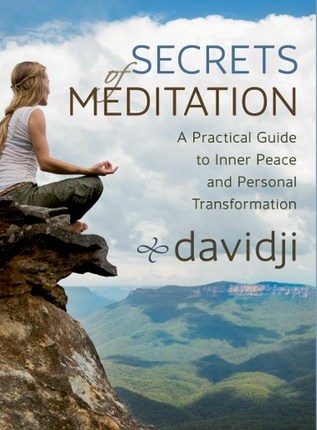
Secrets of Meditation: A Practical Guide to Inner Peace and Personal Transformation by Davidji

Secrets of Meditation: A Practical Guide to Inner Peace and Personal Transformation by Davidji

Secrets of Meditation is one of the clearest and beginner friendly meditation manuals that I’ve ever read.

Davidji breaks practices down not only into type and step-by-step instructions with examples, but also by lineage and development over time and place.

Davidji provides enough background on himself to establish his bona fides but not so much as to overpower the instruction with meaningless chatter about himself.

Photo by Spencer Selover on Pexels.com

He intersperses the text with helpful advice, additional authors to explore, and a myriad of ways to connect with him online for some meditation freebies.

Though it’s clear that he’s immersed himself in Eastern culture and practices (having traveled extensively in the East and studied under various gurus), Davidji hasn’t adopted an insider’s way of talking about meditation.

Sometimes, and maybe this is just me, it feels like meditation instructors go so far out into the “oneness” that they never come back fully into the real world. That’s not Davidji at all. I loved this text mainly because of how he could keep one foot “over there” and the other firmly planted “back here”.

Admittedly, my daily meditation practice has lately fallen somewhat on my priority list. This book makes me want to head back to the mat.

If you enjoyed Secrets of Meditation, you may want to read 10% Happier: How I Tamed the Voice in My Head, Reduced Stress Without Losing My Edge, and Found Self-Help That Actually Works which is not so much meditation instruction as a memoir from someone beginning meditation. I recommend it a lot because Dan Harris seemed so relatable to me.

And also,Β Seeking Heaven.Β Eben Alexander is a neurosurgeon who had a near death experience turned it into guided meditations. I think they’re easy enough for beginners to use.

Thanks for reading!

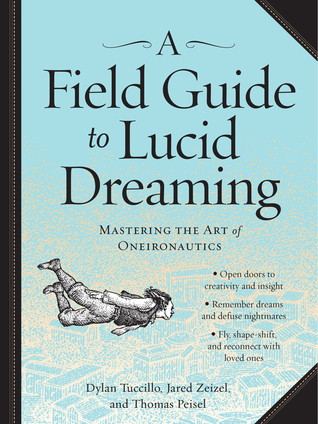
A Field Guide to Lucid Dreaming: Mastering the Art of Oneironautics by Dylan Tuccillo

A Field Guide to Lucid Dreaming: Mastering the Art of Oneironautics by Dylan Tuccillo
luciddreaming

An excellent guide to experiencing or deepening lucid dreams, A Field Guide to Lucid Dreaming is filled with tips, tricks and advice to explore your dream world.

My husband and daughter experience lucid dreams all the time and I don’t or, at least, haven’t yet. It’s embarrassing.

It’s as if they have access to worlds that I can only dream about, literally. I picked this book up because I wanted to develop this skill too.

So far, with the advice contained within this Field Guide, I’ve realized that I was dreaming once, became lucid and immediately woke up. But, that’s progress.

I’m encouraged actually. If I can go lucid once, I can do it again.

“Lucid dreaming is the ability to know you’re dreaming while you’re dreaming. A lucid dreamer is able to go to sleep at night and wake up within his or her dream. With this unique awareness, you can generally behave like someone who is awake, exercising the free will, imagination, and memory of waking life.” introduction. How fun would that be?

Ever wanted to fly? Face your nightmares? Talk to a deceased loved one? The authors of this book claim that it is all possible.

Photo by Ron Lach on Pexels.com

They addressed some of my problems directly: “Quite often, the amateur lucid dreamer’s early exploits in lucidity last only a few moments. If you’ve become lucid already but lost your awareness very quickly, don’t worry. This is common. In the next chapter we’ll look at ways in which you can stabilize the dream and stay lucid for long stretches of time.” pg 106.

Practice makes perfect, it seems.

The shamanistic beliefs about the dream world are intriguing:“…shamans of indigenous cultures understood that in order for something to be created in the physical world (such as that kitchen you’ve been meaning to remodel, or this book), it must first be constructed in the “imaginal realm.” In other words, lucid dreaming might be a tool in creating our physical reality.”pg 151.

Life is like a dream and we are the dreamers, whether asleep or awake:“This world can be a nightmare or a nice dream. It’s full of friends or enemies, success or failure, meaning or nihilism. We’re headed toward destruction or we’re headed toward rebirth. There are many viewpoints on Earth as there are people. And just like the dream, we shape our experience with our thoughts, emotions, and expectations. pg 246.

Recommended for anyone who, like me, wants to master lucid dreaming. I think that this book will help you find your way.

Sweet dreams πŸ™‚

Thanks for reading!