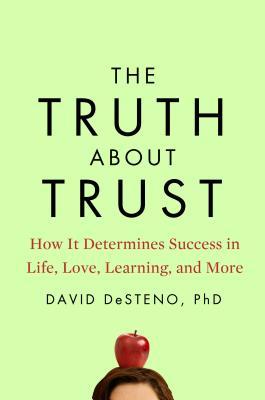
The Truth About Trust: How It Determines Success in Life, Love, Learning, and More by David DeSteno

The Truth About Trust: How It Determines Success in Life, Love, Learning, and More by David DeSteno

“Deciding to trust someone, more than almost any other decision we make, holds the keys to how resilient we, both as individuals and as a society, will be.” pg 241

Trust is one of the things that makes society work. We trust that our taxes will go towards making our society better. We trust we will be paid for the jobs we perform. We trust in contracts, news agencies and family members. Sometimes it seems this trust is misplaced. David DeSteno examines trust, what is it and how or why you decide to give someone all your trust or not.
Photo by Karolina Grabowska on Pexels.com

I held as true many of the fallacies that DeSteno deconstructs in The Truth About Trust. That was disturbing, in a way, but I also enjoyed it because I learned new ways to approach trust issues and even to define what trust is. Although it may seem like a simple concept, I realized that I didn’t know the basic definition of trust. I knew what it felt like, but not the mechanics behind it.

Tell me: what do you think trust is?

“There are two facets to trust: integrity and competence. Some of the best partners or teachers you may ever have had may not be the warmest people in the world, but they knew their stuff.” pg 33

DeSteno reminds readers that beyond examining a new business or potential romantic partner to determine their trustworthiness, you need to remember your own perceptions color your reality.

If you want to be able to trust as you should, take a moment before negotiating with someone new to allow any feelings from a previous event to dissipate. pg 60

Photo by fauxels on Pexels.com

I liked that DeSteno waded into the potentially thorny world of cyberspace and who or what to give your trust to in the technological age. It seems that is going to be the future — programs, applications and machines.

…the basic issue of whether to trust technology has in fact been around for thousands of years. What makes it feel new now, however, is that technology is beginning to encroach on what had until recently been a solely human domain — sociality. pg 183

DeSteno gave me plenty to think about including why I sometimes place great trust where it has not necessarily been earned. Recommended for readers who want to ask themselves the same types of questions.

If you enjoyed The Truth About Trust, I’d suggest also picking up Terms of Service: Social Media and the Price of Constant Connection (DeSteno deals with trust in cyberspace and the two books complement each other nicely) or The Happiness Advantage: The Seven Principles of Positive Psychology That Fuel Success and Performance at Work (which discusses the issue of trusting yourself to do the things that will benefit you most in the future and why we don’t always do those things).

Thanks for reading!

inGenius: A Crash Course on Creativity by Tina Seelig

inGenius: A Crash Course on Creativity by Tina Seelig

As my mentor pointed out to me a couple years ago, creativity is one of the most important skills to master and develop throughout your career. No matter what you’re doing, in your professional or personal life, creativity provides the answers and greases your wheels to whatever goal you desire.

inGenius is Tina Seelig’s offering to those interested in learning about creativity. She is a professor at Stanford University and these chapters are like talking points from her class.

Photo by Tima Miroshnichenko on Pexels.com

Granted, some of these tips seem like common sense. But if that’s the case, then why aren’t we all creative geniuses who have solved all of our problems? In my mind, there’s plenty still to be learned from the topic or, if you’ve already heard it, reiterating the important points.

What is that saying… your thoughts become actions, become habits, become your life? Or some such. Well, it’s true.

“With enhanced creativity, instead of problems you see potential, instead of obstacles you see opportunities, and instead of challenges you see a chance to create breakthrough solutions.” pg 4

Photo by Allan Mas on Pexels.com

It’s more than a positive mind-set, it’s a way of viewing your reality. And, as Seelig points out in this book, your attitude at any given moment affects your creativity. You have to view any problem as solvable — you just haven’t found the solution yet.

Seelig says anyone can be creative: “There is a concrete set of methods and environmental factors that can be used to enhance your imagination, and by optimizing these variables your creativity naturally increases.” pg 9

I figure it’s a bit like exercise. Flex those creative muscles on a regular basis and they’ll get stronger.

Photo by nappy on Pexels.com

Seelig brought my attention to the fact that our environment affects our creativity. She cites studies with the way classrooms are set up and how those changed the results of experiments. I had no idea.

She also reminded me that one does not have to re-invent the wheel to be creative: “Building upon existing ideas and inventions is another way to foster innovation.” pg 41

inGenius offers readers a clear path to creativity. Recommended for anybody who wants to up their creative game.

Thanks for reading!

Money, and the Law of Attraction: Learning to Attract Wealth, Health, and Happiness by Esther Hicks

Money, and the Law of Attraction: Learning to Attract Wealth, Health, and Happiness by Esther Hicks

Esther Hicks channels the wisdom of her inner being, called Abraham, to write these books. It sounds kind of far out there if you’ve never been exposed to that type of teaching before, but I have to say, I like it. If you’re in to self help and new age books, you may want to give them a try.

The majority of her (their) message seems to be to find joy. They teach that the purpose of life is to do what makes you happy as often as you can. Interestingly enough, that was the same lesson my grandfather taught me before he passed on. “Whatever you do in life, Heidi, be happy. The most important thing is to be happy.”

Photo by Sam Lion on Pexels.com

Maybe it is in memory of him that I connect so easily with these teachings. I don’t know.

I’ve really taken to heart her encouragement to start out your day in the proper mindset. Lately, I’ve been chilling in bed for a few minutes rather than jumping right into my day. I don’t really have the words to explain why this is making a difference, but it is. I take a second to think about something awesome, even if its as banal as, “My pillow is so soft.” Try it and let me know how it works out for you.

“So as you awaken, open your eyes and say Today I will look for reasons to feel good. Nothing is more important than that I feel good.” pg 37

Also, she’s a big proponent for imaging and living your own life to its fullest and not comparing yourself to others. In the new age of social media and twitter where it seems like everybody is into everybody else’s business, it’s refreshing.

Photo by Tim Samuel on Pexels.com

Do not write your story like a factual documentary, weighing all the pros and cons of your experience, but instead tell the uplifting, fanciful, magical story of the wonder of your own life and watch what happens. pg 81

Overall, these teachings have changed my life. I can’t really say enough positive things about her books, of which there are several best sellers. She also does a bustling business of hosting workshops, which she does across the United States and on a few different cruises.

Last month, I went to an Abraham Hicks workshop for the first time. I’ve enjoyed her videos on YouTube for a long time and thought I might shake things up and see what she’s like in person. This was kind of a production because Esther doesn’t come to the St. Louis area. So, I went out west and heard her speak in Phoenix.

The papers for the workshop registration encourage attendees to write down questions about life, whatever comes into your mind that you’re curious about. I brainstormed with my husband and came up with about a dozen different things I’d talk about if I got to the “hot seat”. (That’s what she calls the chair up front.)

I arrived about 15 minutes before the whole thing started, which seemed like ample time to me, only to discover the auditorium was nearly filled! That was fine because I wanted a seat towards the outside anyway. If things gave me a weird vibe, I wanted to be able to get the heck out as fast as possible.

Photo by Paula Schmidt on Pexels.com

In the moments before Esther emerged, this music started up about “Joy, joy, joy. Joy is the key” and almost half the crowd got up and started dancing. I nearly bolted. It felt rather cultist in those moments.

But then the music cut and there she was and things settled down somewhat. What followed was a lot of laughs and learning about topics ranging from relationships to illness to someone’s dog. The whole day ended with a marriage proposal from one of the attendees to another. In fact, I enjoyed it so much, I’m kicking around the idea of going again next year.

I never made it to the hot seat and felt rather disappointed. But, later, as I was reading over the questions I took to the workshop, I found, to my surprise, that she had directly addressed every single one of them in other people’s questions. And then, that night, I dreamed I was back at the workshop. I was sitting in the chair and asking any question that came to my mind.

So, that’s my personal experience with this author and the “magic” of Abraham. I know these teachings aren’t for everyone. But they’re for me. And that’s pretty cool.

Thanks for reading!

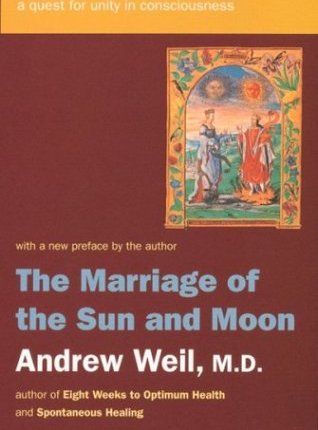
The Marriage of the Sun and Moon: A Quest for Unity in Consciousness by Andrew Weil

The Marriage of the Sun and Moon: A Quest for Unity in Consciousness by Andrew Weil

Andrew Weil travels around the world taking conscious-altering drugs or participating in mind-altering experiences (like a solar eclipse) to see what happens.

And to think, I assumed this book would be about meditation. 🙂

I recently read Weil’s Breathing: The Master Key to Self Healing and I really liked the way he presented Eastern teachings and techniques for a Western audience. I also like his mind-set, that practical knowledge is better than mere theory.

“I must emphasize at the outset my prejudice that the experience of an altered state of consciousness is intrinsically more valuable than any amount of theorizing about it, unless the theory helps individuals to make more and better use of the states available to them.” pg 241

Andrew Weil
Photo by Pixabay on Pexels.com

Similar to Tim Ferriss (the self help/improvement guru who brought us such works as The 4-Hour Body: An Uncommon Guide to Rapid Fat-Loss, Incredible Sex, and Becoming Superhuman), Weil is focused on collecting actual experiences and he uses his own body and mind as a test subject.

This book is a collection of newsletters that Weil wrote for the Institute of Current World Affairs. They offered him a fellowship after the publication of his book The Natural Mind: A Revolutionary Approach to the Drug Problem, to further test his theories about consciousness in the real world. I think his results are fascinating.

All of the chapters converge toward the idea of unifying consciousness. pg 5

Photo by Jonas Ferlin on Pexels.com

The dual consciousness Weil is talking about is the active mind, represented in ancient alchemy by the sun, and the subconscious mind, represented by the moon. Within each of us, both minds operate more or less in balance. Though many of his studies involve the conscious use of drugs to achieve that balance, Weil promotes natural methods above all else. He believes that though drugs may be used ritualistically and responsibly, that any state they reveal was already a latent potential in the mind.

Basically, you can get there without the drug.

The highs of altered states of consciousness such as those of trance and meditation are similarly related to the focusing of awareness. When we learn to bring about this kind of concentration at will, we can be independent of external triggers for highs, whether drugs, sex or mangoes. pg 26

Yes, according to Weil, mangoes, the fruit, have been used by mystics for millennia to unify the conscious and subconscious minds through a type of ecstasy of the mouth. Who knew?

Weil exposes himself some far out stuff. He has three different chapters about his experiences with mushrooms.

“In other words, there is no line between poisonous and psychedelic mushrooms. Mushrooms are a pharmacological continuum, from the white cultivated variety that has no action as a drug to species like the Death Cup that can easily kill. If one likes to get high by eating mushrooms, he can choose species over a wide range of toxicity.” pg 47

Photo by Pixabay on Pexels.com

In addition to all kinds of drugs, there’s consciousness altering through purposeful vomiting in Mexico, chili eating, personally observing Uri Geller doing his metal-bending thing and more.

This book is perfect for readers who are interested in varying states of consciousness but, for whatever reason, aren’t able to make the trips or take the risks themselves. And there are risks because not everything that Weil tries is safe. At one point, he’s riding waves of nausea in the rain in the middle of the jungle while his friend vomits again and again an arm’s length away and there’s nothing he can do about it. Certainly doesn’t sound like something I’d want to attempt.

Though these newsletters were written in the ’70s and this book was published in 1980, I feel that it still has applicable uses for today. Just look at all of the states that are legalizing marijuana (and our Canadian friends!). Questions about altered states of consciousness and addiction are going to crop up that society, after decades of avoidance, is going to have to answer.

“Sooner or later we will learn that plants with effects on the body and mind, such as marijuana, are what we make of them. Used intelligently and carefully they can help us. Used irresponsibly they can harm us.” pg 98

Good thing we have trailblazers like Weil showing us a middle way.

Thanks for reading!

This Is Why You’re Sick and Tired: (And How to Look and Feel Amazing) by Jackie Warner

This Is Why You’re Sick and Tired: (And How to Look and Feel Amazing) by Jackie Warner

Jackie Warner sets the gold standard for diet and exercise books with This is Why You’re Sick and Tired. She starts out with the science of nutrition, exercise, and rest then goes into custom diet and weekly exercise suggestions. It’s easy to see why she’s so sought after by Hollywood stars — this lady knows her stuff.

Photo by Karl Solano on Pexels.com

I first saw Jackie in action on her, now ended, Bravo show, Work Out. At the time, I had just had a baby and was awake at all hours of the night doing the infant-feeding dance. Work Out was a nice escape from the spit up, exhaustion-filled reality that I was living at the time.

Jackie looked pretty serious about her business, but Work Out mainly focused on the drama between Jackie, her trainers, and the folks who came to her for help. It’s nice to see that she actually knows what she’s doing as a trainer and she’s not just another reality show poser.

The exercises that Jackie suggests are intense. They can be executed with hand weights, but by the fourth set, I’m so wobbly that it’s comical. We’ll see if I ever reach the heights of fitness put forth in This is Why You’re Sick and Tired. At this point, I’d be happy to finish her workout strong rather than falling apart in the last few reps.

Photo by Karolina Grabowska on Pexels.com

Recently, I saw on Jackie’s Facebook page that she intends to lose 30 pounds in the coming weeks. She has shared that her fitness and nutrition has spun a bit off the rails in the last year. But, using what she knows about the body, Jackie intends to get herself back on track and fast.

I think it was brave of her to share that struggle in such a public manner. She’s as human as the rest of us and I think I like her even more since she’s admitted that. Here’s hoping Jackie accomplishes everything she sets out to do.

And you do too, dear readers. I’m not big into New Year’s resolutions, but this book may be a help to you if you’re looking to jump start your fitness and diet plans in the new year.

Photo by Mikhail Nilov on Pexels.com

If you enjoy This is Why You’re Sick and Tired, I also suggest reading Reboot with Joe: Fully Charged: 7 Keys to Losing Weight, Staying Healthy and Thriving by Joe Cross (instructions on how to add juicing to your daily diet) and Down Size: 12 Truths for Turning Pants-Splitting Frustration into Pants-Fitting Success by Ted Spiker (to keep you laughing through any ups and downs of your new diet and exercise routine).

I received a free copy of this book through Goodreads First Reads.

Thanks for reading!

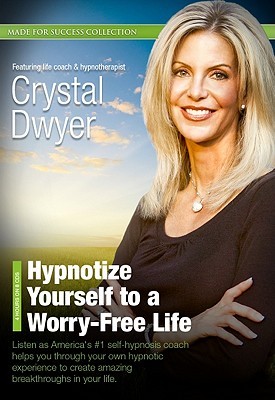
Hypnotize Yourself to a Worry-Free Life by Crystal Dwyer

Hypnotize Yourself to a Worry-Free Life by Crystal Dwyer

Crystal Dwyer, a new age instructor, has developed a set of guided meditations to enable listeners to improve their lives in a variety of ways. These tracks address issues from insomnia to anxiety. She has a pleasant voice and the meditations are enjoyable.

If you’re not into new age themes, you may want to try another hypnosis program. At the beginning of the audiobook, Dwyer is straight forward with her beliefs about God being within each of us and our individual power as creators. I could see that being problematic with those who don’t connect with those teachings.

Photo by Pavel Danilyuk on Pexels.com

I feel that the title of this work is a bit misleading. There are going to be ups and downs in any life. To suggest that you can eliminate anything seems suspect and sort of pie-in-the-sky. It reminds me of books that tout “read this and lose ten pounds in three weeks” and things of that nature. These meditations are valuable enough without the publisher (or author) making promises that perhaps they can’t keep.

That being said, I don’t think many people know what hypnosis is. In my experience, hypnosis, similar to a trance-state, just feels like deep relaxation. Everyone is different, but when I’m under, my body feels heavy but light, which seems impossible. My limbs sort of disappear and I feel as if I’m floating.

Once I’m there, in that relaxed state, then I let the meditation I’m listening to just wash over me. It feels really good actually. Generally, at the end, the hypnotist will say something like, “You’re coming back and you’ll feel entirely refreshed.” And, wouldn’t you know it, I do.

I think popular culture hasn’t done hypnosis any favors with people’s expectations about how it works. (The film “Office Space” comes to mind.) You don’t turn into some suggest-able zombie person when you’re under. Like most things, hypnosis and relaxation are a choice. Worry is a choice. It’s all about controlling that inner narrative and changing your inner thought processes to ones that are pleasing to you.

Photo by Maria Orlova on Pexels.com

A child once asked me to teach her about hypnosis so she could “control her brother”, which cracked me up. But then I explained to her that hypnosis isn’t a tool for controlling other people. The name of the game is improving and controlling yourself.

It’s like Marcus Aurelius said: “You have power over your mind – not outside events. Realize this, and you will find strength.”

Recommended for seekers looking for another tool to help them on their path to self knowledge.

Thanks for reading!

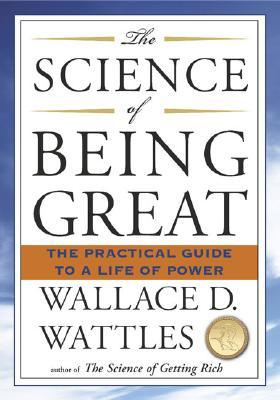
The Science of Being Great: The Practical Guide to a Life of Power by Wallace D. Wattles

The Science of Being Great: The Practical Guide to a Life of Power by Wallace D. Wattles

In the latest installment of “Heidi re-listens to all the old audiobooks on her hard drive”, I gave The Science of Being Great another chance to share its wisdom with me.

Couched in religious language, Wallace Wattles shares his new age viewpoint long before modern audiences became enamored of it with the mammoth success of The Secret. In fact, that’s how the publisher marketed this older manuscript, as source material for The Secret.

Photo by Maria Orlova on Pexels.com

I suppose it could be considered “source material” in that Wattles teaches enlightenment is to be found within. But he has very little in it about the guiding power of emotions, which was a cornerstone of The Secret. Wattles book is more along the lines of: You are a god walking among gods and should act accordingly. And don’t stick your nose into other people’s business.

Some of his advice is more tricky, such as: see the world in a perfect state of becoming. Nothing has gone wrong or could go wrong. Everyone and everything is perfect for where they are and everything has the chance to get better.

That’s hard stuff to swallow if you take a second to think about it. “The world is in a perfect state of becoming.” Maybe I’ve become too accustomed to looking for problems rather than relying on faith that everything is working out how its supposed to.

Photo by Pixabay on Pexels.com

Other parts of this book sounded similar to more modern new age authors with these ideas: Books and people will be drawn to you when you need them. Go where your inner feelings tell you to go. As you think, so you will become. Thoughts are things, etc.

By comparing and contrasting this book with other authors, I’m not intending to denigrate those teachings. I wouldn’t want to dismiss the power of the mind and emotions. Using just those things, people can certainly change their lives.

It’s just that the way they are packaged in The Science of Being Great may make it difficult for some readers to absorb it. Take the word “God” for example or “the Father”. Wattles throws those two around in every other sentence or so. That could be problematic for people who have struggled with religion or have involving it. Or those who don’t believe religion and science can mix.

Photo by Flickr on Pexels.com

And the whole book takes itself so seriously. Even the title “The Science of Being Great”, reminds me of an encyclopedia entry or something. I’ve had the most success in my own personal life when I’ve lightened up and stopped making such a big deal out of things.

In conclusion, is there helpful information in this book? Yes. Would I recommend taking the time to go through it to find those gems? It depends on how you learn best, I guess. Personally, I’d recommend Esther Hicks if you want the same sort of new age teachings with less religious trappings and a bigger dose of fun.

Thanks for reading!

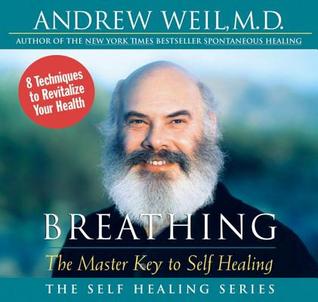
Breathing: The Master Key to Self Healing by Andrew Weil

Breathing: The Master Key to Self Healing by Andrew Weil

Andrew Weil presents pranayama, Eastern breathing techniques for health and well being, for a Western audience. If you have never tried meditation or deep breathing before, this would be a good place to start.

Weil talks about how breathing is one of the only bodily functions that can be performed both consciously and automatically. That unique control allows for a bridge to be made between the conscious and subconscious minds. Ever notice how people who are upset breathe faster? There’s reasons for that.

Photo by Karolina Grabowska on Pexels.com

The first disc of this audiobook is almost unbelievable in Weil’s claims of healing mental and physical disorders through simple breathing, but I don’t think he’d lie about it. I guess our culture has always put so much belief in Western healing through the use of medicines and concrete therapies, that we haven’t always entertained other types of healing.

Of particular interest to me was Weil’s testimony about a patient of his with anxiety disorders that were so severe that they were causing heart palpitations. His patient was given medications to suppress the anxiety, but after awhile they stopped working and Weil’s patient was forced to find something else. He approached all manner of doctors and psychologists, but didn’t see any movement forward on his problems until he began to practice Weil’s breathing techniques.

I know a few people in my own life who might find that story interesting too. Couldn’t we all use tools to increase our inner peace and decrease those pesky anxieties?

Photo by Harry Cooke on Pexels.com

The second disc is half a dozen or so different breathing exercises. They’re all fairly simple and you can do them in minutes.

I listened to this audiobook years ago and, honestly, forgot everything I learned. But I explored it again last week and realized that it was never too late to get back on track. Recommended self help book for anybody who breathes. 🙂

Thanks for reading!

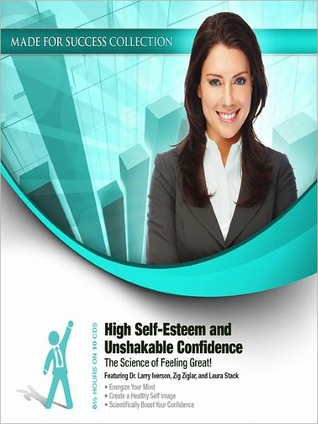
High Self-Esteem and Unshakable Confidence: The Science of Feeling Great! by various authors

High Self-Esteem and Unshakable Confidence: The Science of Feeling Great! by various authors

High Self-Esteem and Unshakable Confidence is a mixed bag of self help and psychology tips from half a dozen different speakers. Some of the speakers are good, but some are mediocre at best. Almost all talked about common sense things.

Larry Iverson approaches this topic from a psychologist’s point of view. He wants you to get up from your desk and get exercise. Watch how you talk to yourself.

Photo by Tirachard Kumtanom on Pexels.com

Bob Proctor, one of the featured speakers from the new age blockbuster The Secret, is more of a motivational speaker who uses anecdotal stories to encourage listeners towards their goals of self confidence. If I had to pick a favorite out of the bunch, I think Proctor would be my pick. I like how approachable he sounds and as if he’s just having a chat with a friend or mentor.

Lorraine Howell uses visualization techniques to nurture self confidence. It’s very short and some-what helpful if you have trouble picturing yourself as a confident person.

Laura Stack’s disc is about “Stopping Your Stinking Thinking” and it kind of felt like the type of speech you’d hear at a motivational meeting for women. It was cutsie, but not necessarily my favorite.

Kimberly Alyn reminded me of Stack. It was a good motivational speech, but I didn’t get much out of “Stress Management for Better Life Balance”. In fact, the two were rather similar in my mind.

Photo by Olya Kobruseva on Pexels.com

Crystal Dwyer’s contribution is a guided hypnosis and new age take on confidence and life creation. She had the most “hippie” feel of the group. I’m rather fond of both hypnosis and new age topics, but for those who are looking for a straight business presentation, this may come off as too granola or religious. She reminds listeners that our ability to create our own reality is a gift from God and we’ll find our confidence by embracing our own power.

Finally, Dr. Mache Seibel, now at Harvard Medical School (not certain where he was during the recording of this CD), presents common psychological problems through song. I’m not going to lie — very cringey. The spoken parts between the songs were actually very informative and managed to convey what could be complex topics in a simple and understandable manner.

The songs themselves were just painful and I found myself skipping through most of them. Dr. Seibel explains that he prefers to sing songs because sometimes that helps people recall what to do when they’re triggered and it brings a smile to people’s faces. His method just wasn’t for me. Maybe it’ll work for you.

Thanks for reading!