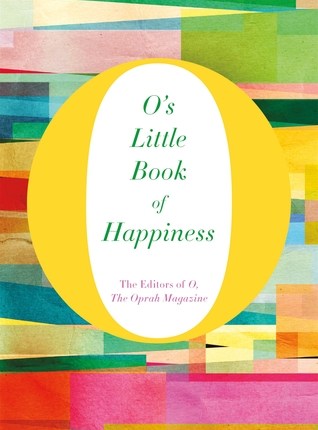
O’s Little Book of Happiness by O, The Oprah Magazine (Editor), Thelma Adams (Contributor)

O’s Little Book of Happiness by O, The Oprah Magazine (Editor), Thelma Adams (Contributor)

This collection of essays from the pages of O are wonderful. Through memories and insights, the writers of each chapter have something uplifting and inspiring to share.

My favorite was the chapter entitled “My Unplanned Adventure” by Catherine Price, pgs 88-99. It’s about an uptight traveler who planned every aspect of her trips around the world until she came to the conclusion that she was overthinking it.

Photo by Andrew Neel on Pexels.com

Once she figured this out, she walked up to a person, asked them where they would travel if they could go anywhere, and went there. I won’t ruin the essay by relating all of it here, but it resonated with me. I also have to remind myself that going with the flow is always more desirable than white-knuckling intricate plans and time tables.

I have to confess: I am not a reader of magazines. I find them to be filled to the brim with advertisements for things I neither want nor need and, after I’ve dug through the pages of stuff for sale, I find the writing to be insipid. “Six new sex positions!” “Keep your romance alive!” blah, blah, blah…

Photo by KoolShooters on Pexels.com

That being said, O’s Little Book of Happiness was totally different from my expectations of what a magazine is and introduced to me the idea of what a magazine could be. (And there were no advertisements!)

A couple of the essays felt too short- one page or one paragraph in some instances- but for the most part I enjoyed their length and the order they are arranged in.

There’s something very powerful in reading back-to-back essays about happiness and accounts of people finding their path in life. I read this through in almost one sitting but it could also be savored slowly like a-chapter-a-day devotional guide.

Photo by Andre Furtado on Pexels.com

I enjoyed this very much. And I hope you will too.

If you like O’s Little Book of Happiness, I would also recommend Happiness: A Guide to Developing Life’s Most Important Skill by Matthieu Ricard and Living Oprah: My One-Year Experiment to Live as TV’s Most Influential Guru Advises by Robyn Okrant.

I received a free copy of this book through Goodreads First Reads. FTC guidelines: check! And thank you for reading.

Work Rules!: Insights from Inside Google That Will Transform How You Live and Lead by Laszlo Bock

Work Rules!: Insights from Inside Google That Will Transform How You Live and Lead by Laszlo Bock

Work Rules!: Insights from Inside Google That Will Transform How You Live and Lead by Laszlo Bock is a behind the scenes glimpse into the “People Operations” of Google, the mammoth internet company.

Laszlo explains Google  wasn’t always a global leader. It started out like every other company- with a couple of dedicated people and a big dream.

Photo by Karolina Grabowska on Pexels.com

After some background, Laszlo gives step-by-step ways to improve your own business, whatever that may be, from the inside-out while remaining true to the mission that led to the creation of your company in the first place.

It’s clear from this book that Google is an engineer-dominated workplace. Every decision from hiring to employee perks is tested and the numbers are crunched to justify the expense, time spent, etc.

Photo by Anna Nekrashevich on Pexels.com

To be honest, psychology tests, graphs, and in-depth analysis isn’t really my thing. I enjoy a more artsy approach to the world and so the nitty-gritty of Laszlo’s work wasn’t that interesting to me.

In <i>Work Rules</i>, I was hoping for more insider stories than engineering problems, but that’s not how the book was written.

That’s not to say that there isn’t value to be had in this read. My take-away chapters were “It’s Not All Rainbows and Unicorns” and “What You Can Do Starting Tomorrow.”

Photo by Steve Johnson on Pexels.com

In ‘It’s Not All Rainbows and Unicorns,’ Laszlo gives the reader moments in Google’s history when their policies didn’t really work and how they got through the crisis. It was heavy on dramatic stories and I enjoyed it quite a lot.

In ‘What You Can Do Starting Tomorrow,’ Laszlo boils down his previous chapters into ten steps for businesses to take right now. If you don’t have time to dig through the entire book, ‘What You Can Do Starting Tomorrow’ gives you a pretty thorough overview.

If you enjoyed <i>Work Rules!</i>, you may enjoy The Happiness Advantage by Shawn Achor. Shawn explains, in an engaging manner, many of the principles that Google has adopted to improve their employees’ quality of life.

I received a free advanced reader’s copy of this book through Goodreads First Reads. FTC guidelines: check! And thank you for reading.

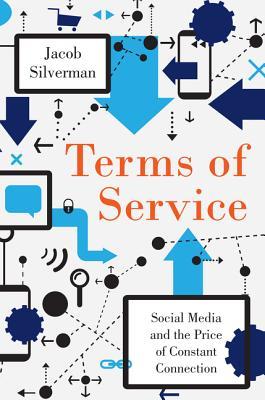
Terms of Service: Social Media and the Price of Constant Connection by Jacob Silverman

Terms of Service: Social Media and the Price of Constant Connection by Jacob Silverman

Author Jacob Silverman digs deeply into various social media platforms and uncovers not only privacy violations but also underlying attitudes adopted by the platform owners that point towards a future that is completely controlled by digital government watchdogs and technological elites.

Terms of Service is a terrifying book to me in many ways.

Photo by ThisIsEngineering on Pexels.com

I knew some of the pitfalls of the big networks like Facebook, but I didn’t know all of them. This book changed the way that I view the portable devices that everyone carries around with them. Instead of helpful tools, I now see that they can be a chilling and impersonal form of control and surveillance, if we let them.

Terms of Service isn’t all doom and gloom though. Silverman gives the reader innovative ways to buck the bland, over-sharing majority and examples of creative hackers and programmers who are doing just that.

Photo by Designecologist on Pexels.com

He also suggests some sweeping societal changes within the government like a twenty-first century Bill of Rights to address the troubles and privacy challenges of technology and a universal minimum wage to unlock the chains of digital serfdom.

It’s an exciting possible vision for the future. I wonder if we will ever manage to do any of that.

This is the part of the review where I try to list read-alikes or books with a similar theme, but I think that Terms of Service is in a class all of its own. I think parents, educators, politicians, and anyone who uses the internet should read and discuss this book.

Photo by Vanessa Garcia on Pexels.com

It is only through knowing the dangers of constant connection that we can begin to address them. Terms of Service provides an eye-opening and disturbing view of how far we have let the situation go.

But, never fear, with proper education- like reading this book- anything is possible.

I received a free advanced reader’s copy of this book through Goodreads First Reads. FTC guidelines: check! And thanks for reading.

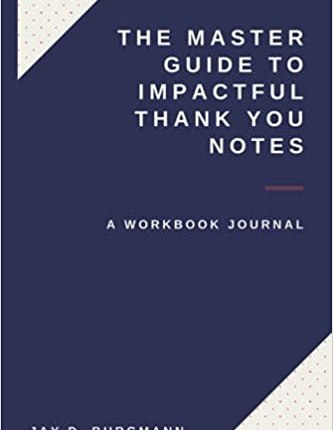
The Master Guide to Impactful Thank You Notes by Jay D. Burgmann

The Master Guide to Impactful Thank You Notes by Jay D. Burgmann

“An effective follow-up with a prospect, client, boss, work associate, friend, or even relative accomplishes two things; first, it gives you the occasion to recap your event, and second, provides the opportunity to celebrate actions or accomplishments from it.”

Photo by cottonbro on Pexels.com

Thank You notes are a big deal for me during the month of December. At the beginning of the month, I have my birthday and at the end there’s Christmas- the mother of all holidays that require thank you notes.

For full transparency, I received a free copy of this book from the author Jay D. Burgmann after his brother conducted a lovely and gratis ‘understanding Medicare’ event at my local library. Afterwards, Jay suggested I schedule an event based off his book and I just may.

The book itself is clearly self published. The author didn’t chose a font that appeals, at least to me. Occasionally, when he wants the reader to know the text is important, he goes into the faux pas of all caps.

I don’t know about you, but I personally don’t like being shouted at- even in literature form.

Photo by Andrea Piacquadio on Pexels.com

Like this: “KEY POINT- IT DOESN’T HAVE TO BE PERFECT. SAYING THANKS IS MOST IMPORTANT. A WELL WORDED MESSAGES MAKES IT EVEN MORE POWERFUL. BEAUTIFYING IT WITH GOOD STATIONARY IS A NICE TOUCH”

Beyond the superficial, this self-described “workbook journal” is very helpful, especially for younger readers who have either never been educated about the importance of saying thank you, or don’t care.

Burgmann highlights the note as an important networking tool. He recalls a visit to the office of someone he wrote a thank you note to and says the client framed his handwritten note and had it on the wall of her office.

It was that impactful. And it’s easy to understand why.

Photo by u0158aj Vaishnaw on Pexels.com

Beyond the emotional appeal which Jay focuses on, expressing gratitude is one of the great strategies in the New Age law of attraction. What you think and speak about, so the teachers say, you bring about- perhaps in ways and means you never could imagine.

Burgmann, with this short book, joins the ranks of these educators and gurus. Saying thank you is important. Knowing how to write it is important.

Highly recommended for everyone. Don’t be put off by the format, focus on his message.

Lauren Berger the ‘Intern Queen’ shares how to write an excellent Thank You note. You can find internships and read her blog at http://Internqueen.com

And thanks for reading!

Random House Word Menu: New and Essential Companion to the Dictionary by Stephen Glazier

Random House Word Menu: New and Essential Companion to the Dictionary by Stephen Glazier

Random House Word Menu is a useful reference tool for anyone looking to be precise in her writing or conversation.

The book is divided into subject areas like ‘the sciences,’ ‘social order,’ ‘cognition,’ and much more. After each word, a brief description is given.

In some ways, Random House Word Menu feels quite similar to the ubiquitous Dewey Decimal system used by librarians.

With this book in hand, I could see researchers being able to find specific volumes more easily because the search terms are at his fingertips. He would then be able to give that information to a librarian, or utilize it himself if he knows the library system, in order to find exactly what he needs.

However, I tried to look up the word, ‘librarian,’ in the Word Menu and it wasn’t there! Oversight or purposeful act- you tell me.

I suppose author Stephen Glazier wouldn’t want to give too many tools to those book dragons. Who knows what they would do next…

Photo by Leah Kelley on Pexels.com

Highly recommended for reference purposes. The only thing that would make this better would be if the book was digital and could be updated with minimal time, effort and resources. Until then, the physical tome will have to suffice.

Thanks for reading!

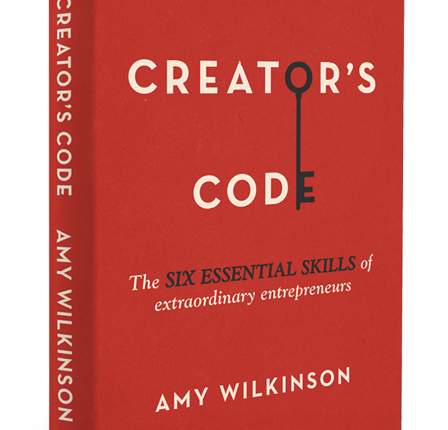
The Creator’s Code: The Six Essential Skills of Extraordinary Entrepreneurs

The Creator’s Code: The Six Essential Skills of Extraordinary Entrepreneurs

For The Creator’s Code, Amy Wilkinson interviewed over 200 wildly successful entrepreneurs and narrowed down the skills that they used to create their businesses to an “essential” six.

These essentials are the keys to the “creator’s code,” she writes.

Photo by Canva Studio on Pexels.com

My favorite chapter from The Creator’s Code is Chapter 5: Network Minds- Solve Problems Collectively. We’ve recently instituted some collaborative projects where I work and I’m excited to see this creative skill in action.

Also, I enjoyed the portion of the book where Wilkerson explored businesses trying to integrate computer games into the work day in order to encourage co-workers to help each other as well as to instill a sense of play into the creation process.

Photo by Garrett johnson on Pexels.com

I wish that my library management system could be tweaked to do something like that. Imagine how fun that would be! Playing computer games in order to boost productivity.

In some ways, this book reminded me of Napoleon Hill‘s Think and Grow Rich. He also interviewed hundreds of wealthy people to understand their mind set. However, unlike the New Age, positive thinking slant of Hill’s work, Wilkinson relies on scientific studies as well as real world results.

Of the two approaches, I personally favor Napoleon Hill’s, but readers of a more scientific mind-set might enjoy this book more.

Photo by Pixabay on Pexels.com

While we’re on the subject of read-alikes, I also read [book:How to Fly a Horse: The Secret History of Creation, Invention, and Discovery|20342540] by Kevin Ashton and it shared some of the stories from The Creator’s Code.

It felt slightly repetitive because of this. Otherwise, I may have given The Creator’s Code five stars instead of four. It felt like I was covering the same material. Despite this bookish deja vu, The Creator’s Code is very well researched.

Photo by Pixabay on Pexels.com

So, if you’ve already read the other book, don’t be hesitant to pick this one up too. It was just not ground-breaking reading for me- my reviewer’s bias, I suppose.

There are some differences between the two works: How to Fly a Horse focuses on the history of the creative process and uses that knowledge to encourage the average Joe to be creative today.

The Creator’s Code has distilled the essential nature of creation and lists guidelines that can be used for success in business, art, science, whatever.

Though both encourage creation, Wilkinson gives actionable steps to take at the individual level whereas Ashton focuses more on the big picture.

If you enjoyed The Creator’s Code, I highly recommend How to Fly a Horse by Kevin Ashton and Think and Grow Rich by Napoleon Hill. Both of these works share the themes of success in business through creativity exploration.

I received a free copy of this book through Goodreads First Reads. FTC guidelines: check! And thank you for reading!

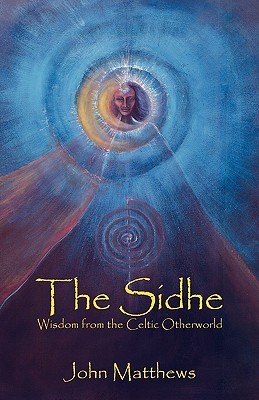
The Sidhe: Wisdom from the Celtic Otherworldby John Matthews

The Sidhe: Wisdom from the Celtic Otherworldby John Matthews

“I knew then that something was going to happen in Ireland. I had no idea then just what an enormous and irrevocable change it was going to make to my life.” pg 5, ebook

John Matthews received a call from a friend whose occupation is archaeology. The friend showed John into a barrow where he first saw the glyph that is on the cover of this book.

John claims that through meditation upon the glyph, he communicated with other beings whom he believes are ‘the Sidhe.’

“To truly know a thing is to become one with it. Just as to become one with it is to truly know it.” pg 27, ebook

Photo by cottonbro on Pexels.com

He shares the communications that he had through the glyph throughout the text. At the end, he includes six exercises that the beings gave him and encourages readers to try the practices for themselves.

Readers could potentially experience the connection John felt.

“Drawn by this feeling, I lay down beneath the branches of the old oak, and, as I had done countless times before, stared up through the branches at the patches of blue sky that showed through. As I did so a sense of stillness and peace descended upon me.” pg 36, ebook

Photo by Magda Ehlers on Pexels.com

The Sidhe: Wisdom from the Celtic Otherworld reminded me of the multiple works of Abraham Hicks or Seth Speaks: The Eternal Validity of the Soul. There’s probably a reason for that.

It could be that the channelers are tapping into a similar place. In this book, John calls it the “great net” of creation. I’ve heard it called, “Indra’s net,” among other names in other sources.

Whatever it may be, I find it interesting that the communications received are similar enough to draw comparisons.

“Among the greatest gifts we have observed in your race is the desire to know and to explore. This hunger has propelled you far along the path of the day and the path of the night. Hence, your journey is indeed one of exploration, not only in time and space, but in the dimensions of Spirit.”

Photo by Stefan Stefancik on Pexels.com

Of course, I had to try John’s method for myself. I’m always so curious about these kind of things.

Unfortunately, I fell asleep rather than having a memorable experience. I expect the fault was on my side, but perhaps I experienced something in my sleep- I just failed to remember it.

I do plan to give the meditation a try again in the future, when I’m not so sleepy.

I was fascinated with the way the glyph looks like a treble clef with multiple circles. When John began to describe the Sidhe’s connection to music, I felt that comparison made sense.

“Much of our time is spent in the making of music- though for us it is more serious than a pleasant pastime, since it is part of our creative process in more than an abstract fashion.” pg 69

Playing music is one of the few activities that put me into a flow state. Perhaps I should try meditating that way.

Anyway, I recommend this book for the curious or spiritual seekers. If you try the exercises within, please do share your results. Maybe some day, the world will have more answers than questions about these ineffable things.

Or, maybe, we’ll open yet another door for endless discoveries. Either way, I’ll be interested to see what comes next.

Thanks for reading!

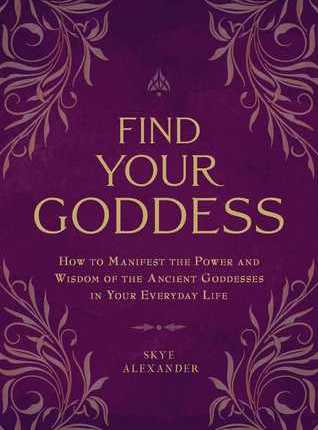
Find Your Goddess: How to Manifest the Power and Wisdom of the Ancient Goddesses in Your Everyday Life by Skye Alexander

Find Your Goddess: How to Manifest the Power and Wisdom of the Ancient Goddesses in Your Everyday Life by Skye Alexander

Find Your Goddess by Skye Alexander is a compendium of goddesses and their various aspects as well as attributions from all over the world. She covers the well-known goddesses from the Roman, Greek, Egyptian and Norse pantheons, and also delves into the lesser known (at least to me) Shinto, Hindu, and Native American deities.

And more.

Photo by Pranjall Kumar on Pexels.com

Some of the entries have corresponding artwork opposite the deity information- but not all. I wish every listing had some artwork because, as they say, a picture is worth a thousand words.

Though I picked this book up for entertainment’s sake, I could see this being a useful tome for spiritual seekers who are looking for a tradition that fits their inner reality.

On a different note, I could see gamers discovering the information contained in Find Your Goddess quite handy. Anyone looking to roleplay characters in their tabletop games or dungeon masters who want to craft a scene with new (to players) world powers could utilize this book.

Photo by lilartsy on Pexels.com

This could also be a useful reference book for pagans on the forefront of recreating rituals and knowledge bases from long ago. I find it interesting that once upon a time the goddesses in this book were recognized and worshipped, and now society has forgotten not just about the deity herself but also how she was honored or her role in keeping civilization together.

Many of the goddesses have roles in the home or schools- goddesses of the hearth, learning or heart. But some have spheres of influence that were primarily held by male gods, at least in the western world.

One of these that comes readily to mind is Amaterasu Ōmikami, a goddess of the sun and the Japanese imperial family. The Greek and Roman god Apollo has always occupied that role in my classically-educated mind.

Japanese Sun goddess Amaterasu emerging from a cave.

I enjoy considering other viewpoints because my own biases come to the forefront when I do so. Though I may not be able to rid myself completely of these biases, knowledge and wisdom helps me to see the blind spots. My hope is to know where they reside so I may easily brush them aside when they raise their ugly heads.

Highly recommended for pagans, spiritual seekers or readers with a curious mind, like me.

Thanks for reading!

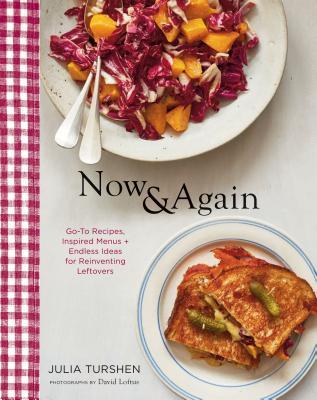
Now & Again: Go-To Recipes, Inspired Menus + Endless Ideas for Reinventing Leftovers by Julia Turshen, David Loftus (Photographer)

Now & Again: Go-To Recipes, Inspired Menus + Endless Ideas for Reinventing Leftovers by Julia Turshen, David Loftus (Photographer)

Now & Again is a cookbook that utilizes leftovers from the dishes within its pages to create new and exciting meals using the same ingredients in different ways.

I thought the premise was a good one. People who find themselves cooking meals for one or for a large family may have trouble with wasting perfectly good food. Not because the meal isn’t tasty, but because it is tricky to get the proportions correct during the preparation.

Photo by Monserrat Soldu00fa on Pexels.com

I liked the pork chop recipe from Now & Again. By following the written instructions, the meat was juicy when I ate it, which is a fair indicator of the skill of the chef who authored the book. At least, that’s what I believe.

However, the apple cake I attempted from this book was probably one of the worst things I’ve ever baked. The author said the cake should have the texture of banana bread. That was not the case for me.

To borrow a term from The Great British Baking Show, the cake was stodgy. The texture was all wrong. And it seemed to stick going down my throat. I took one bite and threw the rest away.

Photo by Kristina Kozlova on Pexels.com

Banana bread, as most lovers of baked goods are aware, has a moist and cake-like texture rather than the feel of traditional grain-based bread.

So, other than a failed baked good, I recommend this cookbook for anyone looking to make the most of their grocery budget and prepared portions.

Happy eating and thanks for reading!