Most of his advice on how to improve your focus was common sense: drink a cup of coffee, rid your environment of distractions, only check your email once an hour.
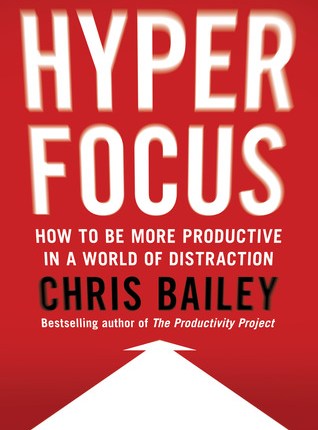
The brilliance of this book is his method of codifying attention. He compares two types of attention, hyperfocus and scatterfocus.
Hyperfocus is fairly self explanatory – you only focus on one thing and redirect your attention if it wanders.
Scatterfocus is the mode that most of us wander around in every day. But, Bailey says, you can harness this type of focus too.
Use this method of focusing when you’re trying to be creative or looking for connections between seemingly unrelated ideas. It is the focus that sometimes hits in the shower, a ah-ha moment that changes the way you view reality.
I feel like there’s no real way to control that type of focus, other than to be self aware while you’re in it. However, I found Bailey’s suggestion intriguing. Perhaps if I set aside time each day to consciously let my mind wander, I will have a different view on it.
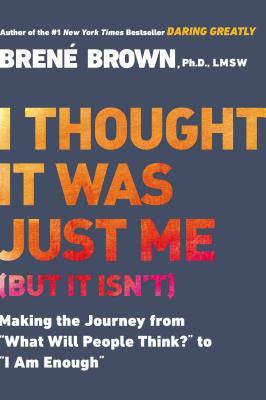
Researcher Brené Brown gives readers another self help title on how to handle the difficult emotion called shame.
“This book offers information, insight and specific strategies for understanding shame and building “shame resilience.” We can never become completely resistant to shame; however, we can develop the resilience we need to recognize shame, move through it constructively and grow from our experiences.” pg xiv
It’s not easy to handle shame. In fact, it’s not that easy to read about it.
But Brown says the way through is sharing those uncomfortable feelings with others. One of the solutions to shame is empathy and another is self awareness.
Other attributes shared by those with high shame resilience are:
“The ability to recognize and understand their shame triggers. High levels of critical awareness about their shame web. The willingness to reach out to others. The ability to speak shame.” pg 67
Part of her work in psychology has been to define what shame is. Brown writes everyone has different triggers based on unique childhood and adult experiences. Therefore, it is impossible to name universal shame triggers which can make it difficult to study shame.
Her studies have led her to believe the opposite of shame is self esteem, which was an interesting aspect I had never considered. Other aspects of shame include: feeling like you’re not good enough or don’t belong.
Brown has discovered another hurdle in her research- it can be difficult to speak about shame as words sometimes fail us when we experience visceral feelings.
“Sharing our shame with someone is painful, and just sitting with someone who is sharing his or her shame story with us can be equally painful.” pg 147
On a more positive note, Brown writes everyone has experienced this at some point or another. She uses this universality of experience to issue a clarion call for change. To foster shame resilience, we should build networks of support and be kind to each other by showing our own vulnerability. We’re all in this together.
And I couldn’t agree more.
Recommended for anyone who has ever felt shame. That’s everybody.
The title, Big Book of Family Games: 101 Original Family Group Games that Don’t Need Charging, pretty much says it all.
The games are divided into different categories: predictions, discovery, creativity, performance, deception, strategy, speed, memory, puzzle solving, and athletic. So, you can pick the game that the group is feeling like playing or is appropriate for your work, classroom, etc.
Others have gone on about the disconnected scourge of modern living, especially since the advent of this pesky virus. These games build bridges and help players get to know each other and themselves, if he or she is really honest about it.
“What you have in your possession is a book of games that accomplishes three of my main goals when bringing people together: disconnection from technology… convenience… adaptability.” pg 6, ebook.
I’d like to add – this book of games only works if others are really into it. Otherwise, you just ask the question, which is most of these games, and get met with a blank stare.
I think one of the next challenges facing society after the pandemic will be reestablishing social conventions. Or perhaps we will all be forever changed. Here’s hoping it’s for the better.
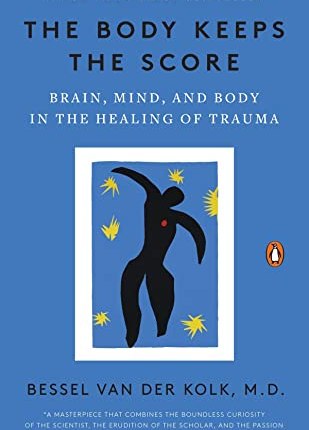
The Body Keeps the Score is a non-fiction book about how the body stores trauma and what you can do about it.
My most distressing take-away from this book was how common trauma is. Author Bessel van der Kolk discusses how people from all walks of life suffer from trauma.
People suffering from these kinds of afflictions believe they’re the only ones. They try to numb the pain with drugs or alcohol and are easily triggered which brings back the pain of the traumatic events again and again.
This affects their lives, relationships and ability to trust others.
Kolk details how traumatic memories can be triggered by smells, touch and taste. He explains how powerful emotions remain behind, even after the logical mind has processed the event.
He suggests you can’t think your way out of strong emotions.
What do we do about this?
Form a strong community around yourself with supportive relationships. Practice mindfulness and yoga- exercises that explore the mind and body connection.
Also, find a therapist who practices eye movement desensitization and reprocessing (EMDR). The author records amazing recoveries by sufferers who utilized this therapy.
Personally, I’ve practiced EMDR with a therapist and the results were astounding. I left the session feeling lighter than I have in years, having released trauma I didn’t realize I was carrying.
But, like others, I still struggle with powerful emotions stored in my body. It is a process, not a cure. And I’ve learned to take life one day at a time.
Highly recommended for readers looking for scientifically-proven ways to handle trauma.
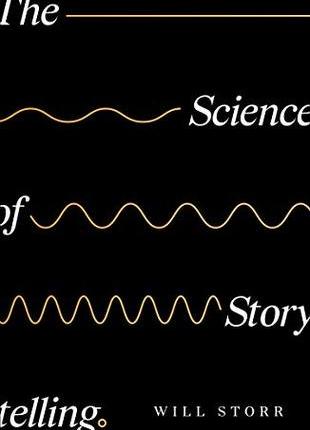
In The Science of Storytelling, Will Storr reminds readers our brains are hard-wired for stories and how best to utilize this in our own writing endeavors.
Through the use of various writing tools based on scientific research, Storr demonstrates how to appeal to an audience, keep them hooked and connected to the characters.
For example, Storr writes the use of change in storytelling grabs readers’ attention because human beings are always on the look out for it. Change can be good or bad- it’s life itself. Our brains look for change as a survival mechanism and this trait can be used to entice readers so they come back for more story.
“This is what storytellers do. They create moments of unexpected change that seize the attention of their protagonists and, by extension, their readers and viewers.” pg 13, ebook
Change is also something that people try to control (they can’t but they try). This universal pattern is called, ‘the theory of control’. When readers see traits they share with characters in stories, they become invested in the outcome which keeps them reading. Or when readers see traits they don’t believe they have, but do, they’re hooked.
There’s a lot of hooking going on, which is a good thing when you’re writing a story. 🙂
“A character in fiction, like a character in life, inhabits their own unique hallucinated world in which everything they see and touch comes with its own unique personal meaning.” pg 41, ebook
Storr suggests creating complex characters and writes that the story almost creates itself with a properly drawn character. A complex character has flaws, a personality, misunderstandings with others in the story.
Also, going back to the ‘change’ theme, complex characters are generally passing through a ‘change of status’ of some kind. This ignites curiosity in the reader. It makes readers ask themselves, ‘What’s going to happen next?!’
“The place of maximum curiosity- the zone in which storytellers play- is when people think they have some idea but aren’t quite sure.” pg 18, ebook
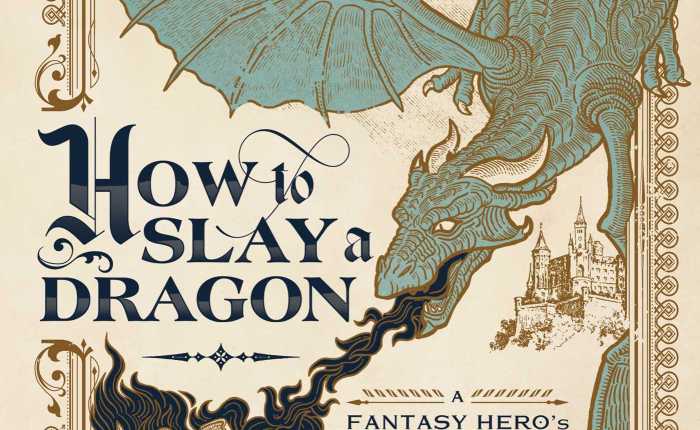
How to Slay a Dragon is a humorous look at medieval history with a running, stand up-esque commentary by a nameless narrator.
“…this is still a book to guide heroes who are setting off to slay a dragon, steal the throne, and defeat a few hordes of supernaturally evil creatures along the way.” pg xv, capitulum infodumpium. (Not real Latin, but amusing all the same.)
Cait Stevenson divides the history into broad categories like: preparing for your quest, hazards along the way and winning the war. Then there are subcategories like: how to not marry the prince, how to win the bar fight, and how to outwit a genie.
My favorite was “How to Put Up with the Bard” because I tend to play that class of character in role-playing games. 🙂
“When William Porland recorded the names of fifty taverns in the fifteenth century, six of them were called the Swan. … There was no reason to distinguish an inn by a written-out name when literacy rates maxed out in the 30 to 40 percent range, which meant a 60 to 70 percent chance that the clientele couldn’t read… pg 27 How to Find the Inn
Cait uses actual events and historical figures to make the past come alive. I found the whole book very entertaining and I learned so much- a hallmark of a successful history book.
She even includes fantastical beliefs and superstitions like: “The most important thing to know is that medieval dragons usually kill with venom, not fire. They breathe thick clouds of deadly smoke in all directions at once.” pg 93
In the modern era, I think we dismiss historical figures as unapproachably different from us because technology wasn’t as developed as it is now. This book makes readers realize that there is very little difference between a historical figure and a modern one. People are people- with their flaws and strengths.
Now, they just happen to walk around with iPhones.
“Snowball fights in fifteenth-century Germany were apparently so common that priests classified them as a sin. Or perhaps the real problem was that priests were getting smacked in the face with snowballs.” pg 117
Highly recommended for readers who love history and humor in one convenient package. This book might fit the bill for reluctant readers as well.
Author Elaine Aron defines “highly sensitive persons” (HSPs) and gives a plethora of coping mechanisms as well as case studies to support the definition. She also includes tests so you can discover where you are in the HSP world.
“The trait was always there, of course, just called by other names. But its essential elements were not known, so it was described by external behaviors only, such as ‘shy’ or ‘introverted.'” pg 54, ebook
This was only the second book I’ve read about HSPs. Prior to this, I have heard HSPs being described as having sensory processing disorders, which exist on a spectrum like most everything else in the psychology universe, or simple shyness.
“My term for it is sensory processing sensitivity, but the same trait is also called environmental sensitivity or reactivity; biological sensitivity to context; differential susceptibility or vantage sensitivity; or identified by the names of certain genetic variations or as in animals, sometimes termed behavioral plasticity or flexibility.” pg 82, ebook
Despite my lack of background in the topic, there was very little new information in this book. A big take-away was to improve your communication style and keep in touch with the people in your life who love you. So many problems can be cleared up with clear, concise communication.
Also, attempt to address any troubles you may have from a dysfunctional childhood or relationships prior to embarking on a new relationship. Healer, heal thyself.
Another coping mechanism I use regularly, but didn’t realize I did, is handling over arousal. Whenever I find myself being overwhelmed by life, I find a backroom and take a minute or two to myself. Sometimes I just breathe. If I’m not at work, I pick up a book or get a hot drink.
“Anger is a highly stimulating emotion. HSPs are strongly affected by it, even when we just witness it. pg 77, ebook
Aron encourages readers to find their “optimal level of arousal” since it varies from person to person. Know yourself and your limits, and tell your loved ones. Also, give yourself permission to turn off your sensitivity. It may seem silly- but that never occurred to me.
“All HSPs, men or women, are more aware of what other people are feeling, what they want and need. Thanks to your spontaneous deep processing, you also can sense what will happen if others don’t receive what they need- they may suffer, fail at what they want to do, become angry with you, feel disappointed with you. And being more sensitive, when they feel bad, you will be bothered too… pg 56, ebook
I tried to treat everyone the same and it led to some serious problems in my personal as well as professional life.
One of the most helpful parts of this book was Aron’s invitation to reframe my past in light of my new self knowledge. Prior to learning about HSPs, I was barely functioning in a world that didn’t necessary make room for me. Now I know I’m not alone in this- and have more tools in my metaphorical belt to help me get through the day.
I’m not entirely convinced by the final section of The Highly Sensitive Person in Love that discusses HSPs being more spiritual or falling harder in love than non-HSPs. It’s a romantic sentiment perhaps, but I was unconvinced by the evidence. I think we’re all in this love game together.
Recommended for readers who are or have a loved one who is a highly sensitive person. I’m curious to know what others in the community think about this book. If you do have a chance to pick it up, please write a review and let me know. 🙂
While I was on my daily walk, I listened to “The Everyday and the Transcendent” a podcast on Spotify in Eckhart Tolle’s “Essential Teachings” series.
Was it worth the listen? I say yes.
I enjoy learning from Eckhart occasionally but not all the time. He has a soothing voice and his stream-of-consciousness delivery style is hypnotizing.
However, after a couple hours of his teachings, they all begin to sound exactly the same. And that’s because his core message never changes- which isn’t a bad thing.
Beware self help or spiritual gurus who hold up a carrot of further secrets. As my hairstylist said after visiting an aura cleanser for the first time, “You can overdo stuff like that.” By which she meant, pouring piles of money into someone’s hands to “fix” something you can’t even perceive.
The cool thing about Eckhart’s teachings is you can begin practicing and perceiving what he’s talking about right this second, no matter your situation or state-of-mind.
For example, in this podcast, a practical tool he offers for spiritual insight is to simply observe what he calls your “inner body”. His focus, which he says he’s used over the years to great success, is to monitor what the energy of his hands are doing.
How do you do that? Simple- feel your hands. Act like you’re going to pick up a pencil, but don’t move. There! You can feel that can’t you.
Do this multiple times a day or just once in awhile and you’ll begin taking your focus away from what Eckhart calls “thought forms” and enter the state of “the now”.
This particular podcast deals with “the everyday” which Eckhart describes as your job, your family, your home, all of the trappings of the physical life. He says most people never move beyond the everyday. We can get lost in the world around us, which he reminds us, are simply projections that we create through our perceptions.
He describes the everyday as a horizontal line- a visualization that I found very helpful.
When you are lost in anxiety or fear, you’re moving either forwards or backwards on this line and not staying in the present moment, which is where the second part of his visualization comes in.
Eckhart describes “the transcendent” as a vertical line that intersects the horizontal line of daily living. He says we travel upwards and downwards on this line through our thoughts as we go about our lives.
The thing is: most of humanity isn’t aware that we’re doing this. We unconsciously move about our day, responding in a kneejerk way to things we perceive as “happening to” us. And, Eckhart says, they actually are “happening to” us because we aren’t aware we are doing it.
If only we could realize our own internal processes, then, he says, we would realize that nothing really “happens to” you. It is all movement along the metaphorical everyday and the transcendent lines of our lives.
Israel Regardie is a little-known thought leader of western occultism. In this book, “The Art of Healing,” Dr. Regardie explains a few meditation techniques in a way that anyone from beginners to advanced practitioners can understand.
I remember reading somewhere (not this book) about Dr. Regardie’s internship with Aleister Crowley and how he realized Crowley wasn’t teaching him anything beyond the superficial when it came to occult matters.
He ended up breaking away and being one of the leaders of a new approach to occultism- which brings me back to this book.
The meditation techniques will feel quite familiar to anyone who has practiced chakra meditations or color visualizations on the body.
“By these means, the healing force is distributed to every part of the body. No single atom or cell in any organ or limb is omitted from the influence of its healing, regenerative power.”
The curious part of this book is that Dr. Regardie uses five centers of energy down the center of the body instead of the more standard seven of eastern occultism.
Of course, as Dr. Regardie states, these exercises are in no way a substitution for competent medical care or therapy when necessary – but they are a wonderful addition to it, for they are able to aid the healing process in a great many mysterious, profound, and positive ways. intro
I’m not entirely sure why he does this though I am familiar with the Middle Pillar exercise (which is what the technique is called). Perhaps he’s basing the whole practice off of a teaching Crowley created for his occult studies.
Dr. Israel Regardie and the Middle Pillar exercise.
Whatever the reason, I think it is a noteworthy and definite change from other meditations I’ve practiced.






























 The Help Desk Book Blog