The Accidental Masterpiece: On the Art of Life and Vice Versa by Michael Kimmelman

The Accidental Masterpiece: On the Art of Life and Vice Versa by Michael Kimmelman

Michael Kimmelman, art critic for the New York Times, gives art trivia and philosophic insights in The Accidental Masterpiece.

… I have come to feel that everything, even the most ordinary daily affair, is enriched by the lessons that can be gleaned from art: that beauty is often where you don’t expect to find it; that it is something we may discover and also invent, then reinvent, for ourselves; that the most important things in the world are never as simple as they seem but that the world is also richer when it declines to abide by comforting formulas.” pg 5

Photo by Anthony on Pexels.com

Though, at times, I felt as if he was getting too deep into the art “appreciation” portions, I learned a great deal about not just unconventional forms of art, but how art can be found in your every day life. It is all a matter of adjusting how you view reality.

There were some historical tidbits I particularly enjoyed. For example, did you know that when Kodak film was invented and made the art of photography available to the general public, that some professional photographers believed the medium was doomed?

“The placing in the hands of the general public a means of making pictures with but little labor and requiring less knowledge has of necessity been followed by the production of millions of photographs,” wrote Alfred Stieglitz in 1899. “It is due to this fatal facility that photography as a picture-making medium has fallen into disrepute.” pg 32

Photo by Flora Westbrook on Pexels.com

Wonder what Stieglitz would have made of Instagram.

Or this other bit of trivia, which seemed particularly apropos with the news reporting today that so many people are climbing Mount Everest that they’ve become a danger to themselves and others: humankind didn’t always find mountains beautiful or worthy of appreciation. The Romans hated the mountains — they were difficult to maneuver armies across and also enemies had a nasty habit of popping out of them. (Think Hannibal.)

Here’s a young Thomas Hobbes’ view of mountains:

“Behind a ruin’d mountain does appear
Swelling into two parts, which turgent are
As when we bend our bodies to the ground,
The buttocks amply sticking out are found.”
 pg 55

Hilarious. And now we highly value mountain views and the sublime feeling of ascending a mountain’s peak.

“The evolution of the whole modern worldview, including the notion of beauty, you might even say, is exemplified by the evolution of our feelings toward mountains.” pg 56

Photo by eberhard grossgasteiger on Pexels.com

I also enjoyed Kimmelman’s thoughts on the art of collecting objects, every day and otherwise. I live with someone who has serious collecting tendencies — notably a large military hat collection. It made me appreciate my husband even more when I found out there are people in the world who collect things like light bulbs to the extent where they’ve set up light bulb-themed museums. In their own homes.

We’ve agreed (so far) to keep the collection in one room. So, comparably, I’m doing pretty well. 🙂

Recommended for readers who enjoy non-fiction reads about art, philosophy and a curious mix of the two.

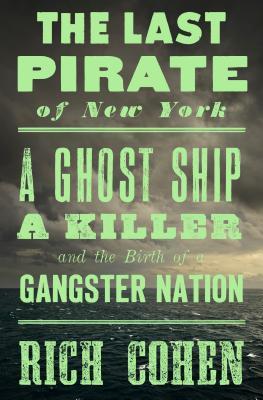
The Last Pirate of New York: A Ghost Ship, a Killer, and the Birth of a Gangster Nation by Rich Cohen

The Last Pirate of New York: A Ghost Ship, a Killer, and the Birth of a Gangster Nation by Rich Cohen

A fantastic and non-fiction account of Albert Hicks, the last man to be publicly executed in New York City and also one of the last to be tried and convicted for piracy. For fans of history, this is a must-read.

“Albert Hicks is the closest thing the New York underworld has to a Cain, the first killer and the first banished man, carrying that dread mark: MURDER. He operated so long ago, in a city so similar to and yet so different from our own, the word gangster had not yet been coined. He was called a pirate.”

Photo by Pixabay on Pexels.com

Beyond the fascinating true crime story about Hicks, Rich Cohen, the author, has brought New York City, mere years before the Civil War, to life. You get to learn about the streets, the notable people, the attitudes, the newspapers and more. It is a fun and, occasionally serious, romp through the past.

“New York Harbor is a network of islands and coves, seabirds and arsenical green marshland, the sort that looks solid until you step on it. … In the old days, every road on the island ended at the water, the sun rose at the foot of every street. Even now, when the fog rolls in, the waterfront is a sailor’s dream.”

Cohen doesn’t tell his story through the dry recitation of facts and figures. He has a storyteller’s way of weaving the details into the larger narrative. This is history as it was meant to be told.

“An 1850 police report estimated the presence of between four hundred and five hundred pirates in New York City. To the police, a pirate was any criminal who made his living on the water, attacking and robbing ships beyond the jurisdiction of the landlocked coppers…”

Photo by Chris Schippers on Pexels.com

Four and five hundred pirates! In New York City! This book changed my view of “The City So Nice They Named It Twice.” I suppose everybody and everything comes from somewhere. The early years of the city had more story to it than I imagined it could.

“Why had he killed everyone on the ship if money was his object? Because, he later explained, “Dead men tell no tales.”

Part of the reason why Albert Hicks may have been so forgotten is because of the extraordinary events that occurred just a short time later, the Civil War. It overshadowed everything that came before it, and, also, time moves on. I think about what was in the news last week and how our attention will already have moved on by next week.

As much as Cohen was able to discover about Hicks, his trial and what came next, I wish more had existed in the historical record about Hicks’ wife. I get that, beyond a few details, she basically disappeared from the record and that’s such a shame.

It made me wonder if Hicks has any descendants out there and if they know the story of one of their most notorious ancestors… I have relatives a few generations back who were adopted in New York City. Hicks’ history could belong to any of us who have question marks in our family tree.

As Cohen points out in his book, Hicks’ history, as shocking as it is, is also the early history of our country. Any shining point of light casts a shadow. This is one of those stories that took place in the shadows — a nightmarish memory from early New York City.

Photo by TheUknownPhotographer on Pexels.com

Recommended for readers of history and true crime. The Last Pirate of New York is brilliant.

Thank you to NetGalley and the publisher for a free digital, advance reader copy of this book. Please note that the brief quotations I cited in this review may change in the final printed version. The estimated date for publication is June 2019.

Thanks for reading! #TheLastPirateOfNewYork #NetGalley

Update June 21, 2019: The Last Pirate of New York is on sale now. The History Guy made an episode about Albert Hicks, the subject of this book. You can see the short documentary-style YouTube video here:

Who Put the Rainbow in The Wizard of Oz?: Yip Harburg, Lyricist by Harold Meyerson

Who Put the Rainbow in The Wizard of Oz?: Yip Harburg, Lyricist by Harold Meyerson

An informative non-fiction biography about Yip Harburg, the little-remembered lyricist, who is responsible for, among other notable works, writing the lyrics to “Somewhere Over the Rainbow”.

Similar to Malcolm Gladwell’s “successful hockey players who were born in January” thesis, Yip was among an extraordinary group of lyricists, all born within a short time of each other, who wrote for Broadway and Hollywood. It wasn’t just talent, of which Yip had a great deal, it was also opportunity.

Photo by Pixabay on Pexels.com

A myriad of different factors came into play in just the right way at the perfect time to create musical theater and a chance for lyricists to make a huge impact on the national consciousness. Prior to this time period, that type of entertainment, musical theater, didn’t even exist.

Yip grew up in poverty but claimed that didn’t affect him all that much. Children are surprisingly resilient.

“You lived from month to month. But youngsters didn’t feel the sting of it because everyone else was poor, too. We knew no other way of life, and it didn’t mean much to a kid who turned the street into an exciting playground.” pg 9

The Great Depression hit Yip hard and he lost everything. He decided, when the chips were down, to try his hand at a new career. And so, he began writing lyrics for composers. It’s a curiously difficult profession.

Photo by Joshua Woroniecki on Pexels.com

“The challenge of becoming a lyricist involves not only perfecting individual writing skills but also learning to be an effective collaborator, one of the most demanding of human relationships. … The theater lyricist must also be collaborating with the book writer of a musical, as well as directors, actors, designers, and producers who impact the lyric-writing process.” pg 32

Beyond the life of Yip Harburg, this book gives the ins-and-outs of the lyric writing business. It is a tricky art, limited by not only the written music but also the demands of the show or song in which the words are appearing.

“The word rainbow never appears in L. Frank Baum’s book, “The Wizard of Oz”. It was lyricist Yip Harburg who put it in the film.”From the introduction.

“Somewhere Over the Rainbow” is arguably one of the most recognizable Hollywood songs of all time and most people don’t remember the man who made it possible. Yip was also responsible for the almost “operatic” flow of the music during Dorothy’s time in Oz. In fact, Judy Garland wanted Yip to write the lyrics for her turn in “A Star is Born” but her husband, the producer, was unable to get Yip under contract because of his blacklisting during the McCarthy-era.

Photo by Evgeny Tchebotarev on Pexels.com

But Yip didn’t let it get him down. He kept writing even though some of his friends completely fell apart when they couldn’t get a contract.

I enjoyed learning about not just the difficulties of lyric writing, including the plot lines and back stories of some of Yip Harburg’s most popular works, but also learning about the life of this man who affected so many people by putting thoughts into words. He encapsulated dreams. And that’s not an easy thing.

“I think everybody, not only every artist, but every person who thinks, is confronted with… — his drive to be related to the universe, but that’s a hard thing because there are so many stars and it’s very hard to grasp that relationship. … But, if he can identify himself, and relate really with one other person, he will relate with all of humanity and he will relate with all the universe.” pg 69

Thank you, Yip, for giving Dorothy rainbows. The world would have been a darker place without you.

Recommended for fans of Broadway shows and musicals, but also for readers who enjoy learning forgotten history about people who deserve to be remembered.

Thanks for reading!

Here’s The History Guy episode about Yip Harburg:

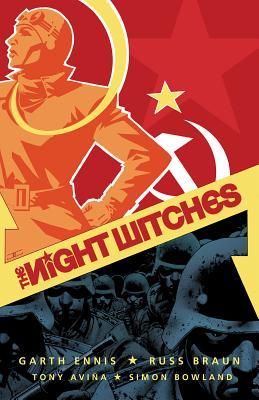
The Night Witches by Garth Ennis

The Night Witches by Garth Ennis

Though the main characters in The Night Witches are a work of fiction, Garth Ennis based them on real-life women, the female-Russian aviators who flew for their country during WWII. Their older airplane engines were too loud and alerted the Germans before their aerial night attacks, so the aviators developed a technique of cutting the engines and gliding over their targets before dropping their bombs.

“You know what it’s like when a P.O.-2 comes along, if you’re on the ground you can hear it for miles, that pop-pop-popping the engine makes… Two more missions like that and we’ll all be done with, unless we can magically stop them from hearing us coming.”

Photo by Pixabay on Pexels.com

Their method of attack was unique and terrifyingly effective at robbing the invading troops of sleep and peace of mind. The Germans called these pilots, because they were women and attacked at night, “Nacht Hexen” or the “Night Witches”.

This graphic novel is filled with violent warfare, rape, loss, heartache and other dangers the women faced during their service, including male counterparts who didn’t want their help. But Russians were so hard-pressed in their fight against the Nazis, that they had no choice.

“I think the notion of women aircrew is a joke; I think women combat fliers are a worse joke; I think women assigned to this base alongside my fighter squadron are the worst joke of all.”

It is a sad but true chapter of history. The Russians lost more troops than any other country in the conflict, a staggering twenty seven million dead.

Photo by Gladson Xavier on Pexels.com

They didn’t have time to properly train or equip the people they were throwing at the Germans. It was a bloodbath. But the women flew and fought all the same. They were the most decorated female combat unit of WWII and their service is worth being remembered.

Recommended for adult readers who enjoy military history and aviation. 

Thank you to the publisher for a free copy of this book for review purposes.

If you’re interested in more non-fiction information about the Night Witches, check out The History Guy’s video “The Night Witches and World War II”:

The History Guy remembers the service and courage of the Night Witches.

And thanks for reading!

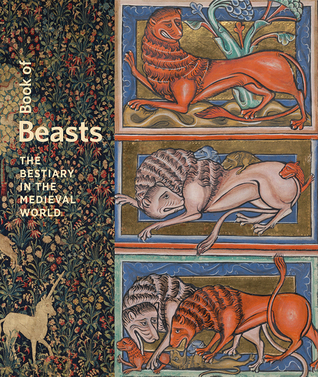
Book of Beasts: The Bestiary in the Medieval World by Elizabeth Morrison

Book of Beasts: The Bestiary in the Medieval World by Elizabeth Morrison

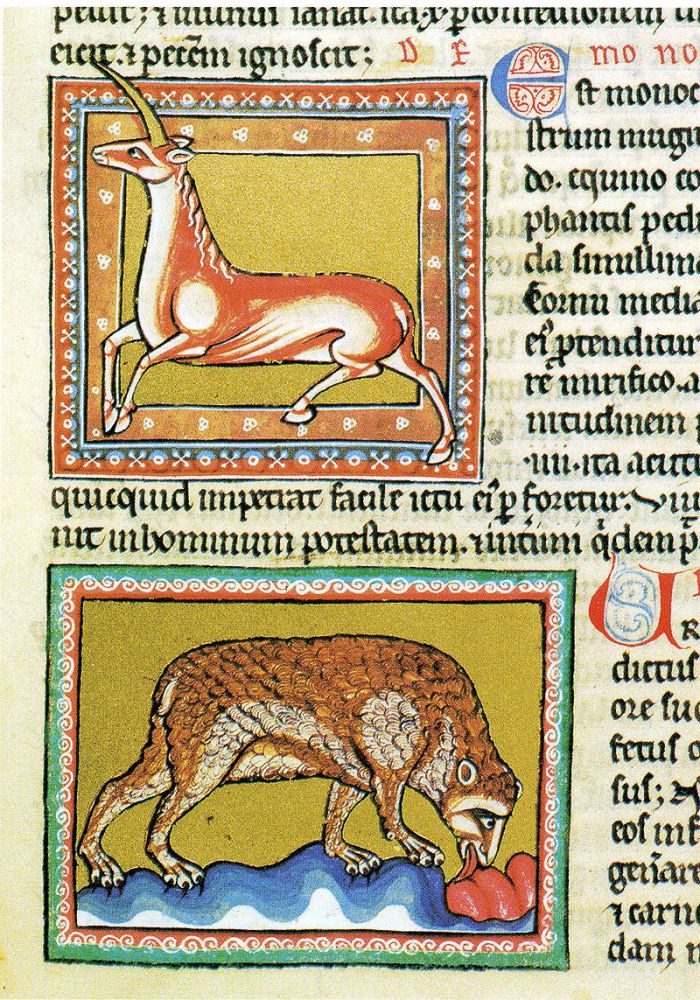
Books of Beasts is a scholarly examination of medieval texts called “bestiaries”. These curious works consisted of lists of animals with accompanying pictures and traditional stories. Sometimes they were printed alongside other works, like the Bible, sometimes not.

Elizabeth Morrison and twenty six other medieval scholars assert that these were the second most popular texts in the medieval world. They weren’t concerned with accuracy or science, part of the purpose of the books were to use creation as a window to contemplate the mysteries of God.

This particular book, Books of Beasts, was made to accompany a ground-breaking exhibition at The J. Paul Getty Museum. You can learn more about the exhibition here: http://www.getty.edu/art/exhibitions/…

I also used the information in this book to write a script for The History Guy YouTube Channel.

“Book of Beasts: The Bestiary in the Medieval World” presents the largest number of medieval bestiaries ever gathered together, representing one third of the known surviving illuminated bestiaries, including some that have never before left their countries of origin.”

The stunning portion of this book are the bestiaries themselves. The colors and the animals in their various tableau are simply beautiful. When you consider how old the artwork is, it’s staggering that something that fragile has survived so long.

“Animals both real and fantastic parade by the dozens, and sometimes hundreds, across the pages of these remarkable works. Their stories were among the most familiar and beloved of the time, and many survive today, though their origins in medieval and earlier times have, sadly, been largely forgotten.”

My favorite part of this book were the stories attached to the animals. Everyone in the medieval world knew them and so, when that animal appeared somewhere else say, for example, on a tapestry or dish, it was a hidden code of sorts, imparting meaning that the modern reader has never learned.

Consider the lion: “The natural philosophers say that the lion has three principal natures. His first nature is that he likes to walk on the mountain heights. And if it should happen that he is sought by hunters, the odor of the hunters reaches to him and with his tail he covers the trail of foot prints he left behind…. And thus our Savior… covered over the foot prints of his love in Heaven, until sent by the Father, he might descend into the womb of the Virgin Mary, and save the human race that was lost.”

The lion was always presented first in the bestiaries and was given the name “the King of Beasts” not only for its position on the food chain but also for its association with Jesus Christ. These associations have bled over to today, and I had no idea that’s where they came from.

Fascinating, isn’t it?

But as interesting as the stories and images were, this book suffers from some serious academia-itis. The various scholars, the only experts on the topic in the world I’m sure, have different writing styles and some are far more palatable than others.

By the time I got to my fifth or sixth explanation why this text was related to that text and may or may not have come first, my brain was glazing over a little bit. Other sections read more like dissertations than material that someone would pick up for fun.

That criticism aside, the topic itself is absolutely worthy of investigation, if for nothing else than these stories that were, as one of the authors said, as popular as a “viral meme” that some of their meanings are still in use today. Isn’t it cool how history haunts us in ways that we may be unaware of?

Thank you to NetGalley and the publisher for a free digital advance reader copy of this book. The projected publication date is in June 2019. The short quotations I cited in my review may change in the final version. 

Thanks for reading! #BookOfBeasts #NetGalley

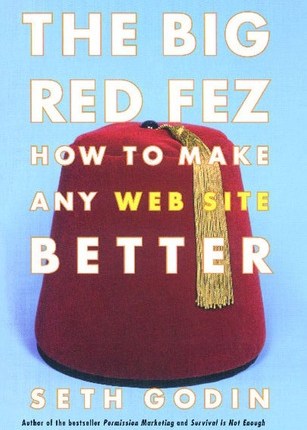
The Big Red Fez: How To Make Any Web Site Better by Seth Godin

The Big Red Fez: How To Make Any Web Site Better by Seth Godin

The premise of Seth Godin’s non-fiction book about how to improve business websites is this: imagine consumers as a monkey in a big red fez looking for a banana, i.e., whatever it is you’re selling or promoting. You want whatever the “banana” is to be as big and bright as possible because if the consumer can’t find it, like right now, they’re going to go somewhere else.

“Some people might object to the characterization of web surfers as monkeys. After all, they say, we’re smarter than that. No, actually, we’re not. We’re not smart because we’re busy, or we’re distracted, or we’ve never been to a particular site before and and we’re not mind readers.” pg 8

Photo by Junior Teixeira on Pexels.com

Yes, the specific information about how to lay out your website is outdated. (The examples he uses for newsletters are too.) But, if you take his general business advice and apply it in broad strokes to your blog or social media accounts, it is still incredibly useful.

For example, I don’t answer all of the messages my business account receives on its Facebook page because we get too many. I had a generic robot response set up that said something like “thank you for your interest, we can’t get back to you right now”. Godin pointed out that most websites lose an opportunity to further connect with the consumer by not utilizing the “thank you” portion of the interaction. The consumer has already reached out to you through a sale, or in this case, a message. Why not direct them back to other items or services your business sells when replying?

As I said, he was applying this idea to the sales portion of a website, but I started thinking about other potential applications and realized that I was missing a golden opportunity to share further information about our business.

I now use the automated message response to thank the person for contacting us AND providing the links to our YouTube page and Patreon account. I may have never come to the realization — that the person reaching out to the business wants more than just a thank you note — if Godin hadn’t pointed it out. Thanks Seth!

He also had some interesting ideas about what kinds of things to post on your website/social media accounts. Sometimes, he asserts, you just need to strike up a conversation.

“The biggest win you can create when you interact with a customer is actually not closing a sale. The biggest win is getting someone to tell ten friends, who then come do business with you.” pg 75

Photo by Negative Space on Pexels.com

Good business is about how valued you make the consumers feel. Make the interactions about them and their needs.

Don’t read this book if you’re actually interested in website design. I’m afraid you’ll be sorely disappointed.

Do read this book if you’re interested in general business principles that you can apply to your digital interactions. I’ve generated a half dozen different ideas on how to improve my online business presence, all thanks to The Big Red Fez.

Thanks for reading!

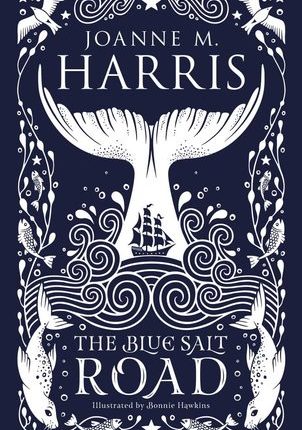
The Blue Salt Road by Joanne M. Harris

The Blue Salt Road by Joanne M. Harris

The Blue Salt Road is where the selkies dwell as kings and queens of the deep. When a young woman named Flora needs to find a husband, she despairs of choosing any of the men on the small island where she lives. They’re hardened by work on the whaling ships and unrefined.

Photo by Andre Estevez on Pexels.com

But when Flora’s grandmother teaches her a secret about mysterious beings called the selkies, she knows her search will soon be over.

“In tears he was summoned, salt as the sea,
In silver was his binding. In blood and betrayal, his calling he found.
In cedar, his salvation.”
 pg 87

Unlike other selkie stories I’ve read, like Sealskin, the person summoned from the waves is male, not female. I’m sure the fairytale has been told both ways, but it’s a nice change from other versions.

Joanne Harris writes interesting and nuanced fantasy in which she takes a look at older stories and puts her own spin on them. If you haven’t had a chance, you may want to read her duology about the Norse god, Loki. (The Gospel of Loki and The Testament of Loki)

“This is my story. The story of the land-folk and the seal-folk, and of treachery, and of the call of the ocean.” pgs 4-5

Photo by Skitterphoto on Pexels.com

There’s quite a lot to unpack in the symbols of The Blue Salt Road and the selkie myth. (Warning, spoilers ahead for those unfamiliar with the selkie myth.) In Jungian psychology and dream interpretation, water is a common symbol for the subconscious mind. What floats or comes to the surface is what you’re aware of. Swimming about in the depths of the ocean, are the feelings or situations you’re perhaps unwilling to confront.

In the sad fairytale of the selkie, the fairytale creature emerges from the ocean as a free being, but then is prevented from returning to the depths where it belongs. He or she forced to live a life on land unless she can find the magical item, her sealskin, that allows her to return to the waves.

The added twist to the tale, sometimes, is the selkie has a child that either gets abandoned when he eventually returns to his home or he takes the child with him and the land-bound parent never gets to see the child again.

Photo by Simon Clayton on Pexels.com

So, we have a fairytale examining the complex relationship between men, women, and how people handle having a child together. In addition, it looks at the loss of freedom some experience when a single person adopts a life with a family and how some people can’t deal with it.

It also speaks to the individual ways that people deal with growing up and choosing a trade or growing old and growing apart from the people and things they used to cherish.

In Joanne Harris’ version, there’s a family component with the secret passed between mothers and daughters, grandmothers and grandchildren.

“I told you that within the year I should catch myself a prince, and bear him a pretty princeling,” she said. “Now I shall be the envy of all the maids on the island, and all the young men who missed their chance will curse their evil fortune.” pg 44

Photo by Ruvim Miksanskiy on Pexels.com

These secrets that we carry are unique as well and help create cultures among family groups. Sometimes, the spouses we choose to add to the mix don’t adapt well to these cultures and eventually leave, not because there’s a loss of love, but because they are never truly accepted into the family group.

All of this is symbolic goodness is packed into a story that is appropriate for young adults to read. There is nothing overly graphic in here, just layers of complexity that a tween might not be able to grasp.

Highly recommended for young adult and adult readers of fantasy fiction and mythology.

Thanks for reading!

The Alchemist’s Kitchen: Extraordinary Potions & Curious Notions by Guy Ogilvy

The Alchemist’s Kitchen: Extraordinary Potions & Curious Notions by Guy Ogilvy

The Alchemist’s Kitchen is an examination of alchemy — what it is, what symbols it uses and includes a cookbook of various recipes to use and practice the art on your own.

For as confusing a topic as alchemy is for me, Guy Ogilvy has put together the most succinct explanation of it I have ever read. I still don’t completely get it, but for the first time I was able to follow the general idea of it from beginning to end rather becoming completely lost and giving up in the middle.

Photo by Rodolfo Clix on Pexels.com

“The story of alchemy, at least in the West, is, in a nutshell, the story of gold and our relationship with it.” pg 2

Let’s not forget spiritual gold. The search for the Philosopher’s Stone seems to entail something of both the physical and the mystical, a curious mixture of both.

Ogilvy uses each section, which consists of one page, to completely explain a concept and then, on the opposite page, provides alchemical artwork to illustrate the concept. It is clear, concise, and it makes me crazy that I still don’t get most of it.

The most fascinating part to me was the author’s description of colors, planetary correspondences, and their purposeful arrangement in famous works of art like Raphael’s “The Crucifixion”. You can see it here: 
https://www.nationalgallery.org.uk/paintings/raphael-the-mond-crucifixion

Who knew Raphael was an alchemist? I didn’t.

Photo by Steve Johnson on Pexels.com

“There is a way of manipulating matter and energy so as to create what modern science calls a force-field. This force-field acts upon the observer and puts him in a privileged position in relation to the universe. From this privileged position, he has access to realities which are normally concealed from us by time and space, matter and energy. This is what we call the Great Work.” pg 38

Some of this book sounds like nonsense. But then I wonder why so many people have been obsessed with these practices for so long if there’s nothing to them? Oh right, probably because of the creating gold from dross part of it.

Photo by NaMaKuKi on Pexels.com

I’m still not one hundred percent convinced that alchemy isn’t anything other than a misunderstood metaphor for purely spiritual practices. But I’m still willing to dream and explore and entertain the idea that the magical might be concretely possible.

Recommended for readers who are dreamers, like me.

Thanks for reading!

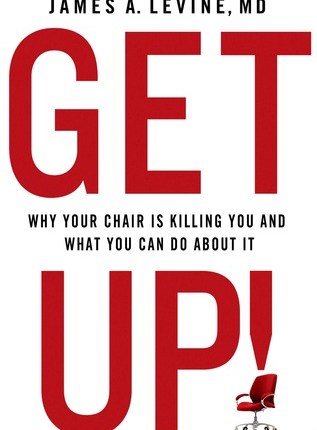
Get Up!: The Dire Health Consequences of Sitting and What We Can Do About It by James A. Levine

Get Up!: The Dire Health Consequences of Sitting and What We Can Do About It by James A. Levine

James Levine shares the disastrous consequences of a sedentary lifestyle and has created a clarion call for the modern world.

“When you first contemplate a book about the harm of sitting, you may view it as absurd. How can chairs possibly kill anyone? … However, this book summarizes 40 years of science — the work of scores of scientists and physicians from around the world. The scientific conclusion is clear: Humans are not designed to sit all day long, from a physiological, medical, creative or psychological perspective.” pg 4

Photo by Andrew Neel on Pexels.com

This book scared me. Levine provides study after study proving his hypothesis and the results are shocking.

“From birth through death there is a predictable, programmed timetable of movement. We transition from the frenetic nature of childhood, to the organized movement of adulthood, through the stillness of aging.” pg 13

But don’t worry. The body and mind are more flexible than people realize.

“Because the brain is constantly adapting, it takes about three weeks for brain change to occur. A chairaholic can become a walker in three weeks. But watch out! A walker who begins to sit can just as easily become a chairaholic.” pg 46

Photo by Daniel Reche on Pexels.com

There are concrete steps you can take to incorporate more movement into your life. The first step is to realize there’s a problem.

Next, look for ways to increase your “NEAT” energy. NEAT stands for “non exercise activity thermogenesis”. Basically, it means, make an effort to move more during your every day routine — cleaning the house, running after the kids, walking the dog, etc.

That seems to be a key for kicking the sitting problem to the curb. In Levine’s studies of urban life compared to agriculture living, that was the difference he noted between the two populations. People living the agriculture lifestyle move all the time. The urban lifestyle… not so much.

“The differences were so large that it staggered us — when you live in an urban setting, even if you are lean, you move half as much as people living in agricultural regions. The decline in calorie burn with urbanization could entirely explain the obesity epidemic worldwide.” pg 60

Photo by Maria Orlova on Pexels.com

Fear not, urban dwellers. There are solutions to upping your NEAT energy, even if you are required to be at a desk for the majority of the day. One of these, that I invested in the moment I finished reading this book, is the desk treadmill. Another option is the standing desk.

Both of these tools help you move while still getting your job done.

This book contains more helpful suggestions than simply buying new lifestyle equipment. For example, Levine also suggests a leisurely walk after every meal.

“If people sit after a meal, their blood sugar peaks like a mountain for about two hours. If, however, people take a 15-minute walk at 1 mph after a meal, the mountains become safe, gentle, rolling hills. With a 1-mph walk after a meal, blood sugar peaks are halved.” pg 68

Photo by Daria Shevtsova on Pexels.com

I think I can manage that.

The line that firmly established Levine’s hypothesis in my mind is: “If you see a saber-toothed tiger charging toward you, you don’t fire off an email, you get up and run!” pg 81

It’s that simple. Humans did not evolve to live the way that we’re living. I’m taking steps to change that now. Who’s with me?

Thanks for reading!