The Botany of Desire: A Plant’s-Eye View of the World by Michael Pollan

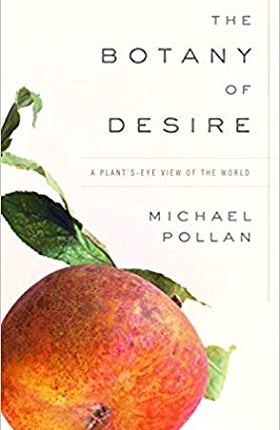
The Botany of Desire: A Plant’s-Eye View of the World  by Michael Pollan

Packed with food-related history, trivia and stories, Michael Pollan attempts to explain how four types of plants have had such a large effect on humanity.

“We automatically think of domestication as something we do to other species, but it makes just as much sense to think of it as something certain plants and animals have done to us, a clever evolutionary strategy for advancing their own interests.”

Photo by John Finkelstein on Pexels.com

I believe that our lives are intimately intertwined with our environment, even if we can’t quite see how. Pollan removes the veil between apples, tulips, marijuana, potatoes, and mankind in order to illustrate how the plants evolved and what kinds of shenanigans they’ve brought on civilization in the process.

“Our grammar might teach us to divide the world into active subjects and passive objects, but in a coevolutionary relationship every subject is also an object, every object a subject. That’s why it makes just as much sense to think of agriculture as something the grasses did to people as a way to conquer the trees.”

My favorite chapter was about the tulips. Did you know at one point in the Dutch Republic a tulip bulb cost as much as a house? It was called “tulipmania” and it caused enormous havoc in the local economy when the tulip bubble burst.

I also learned about the evolution of flowers, which I didn’t know anything about before reading this. I had only ever considered them from a spiritual perspective — I think it was Eckhart Tolle who talked about flowers being the “spiritual evolution of plants”. It’s rather interesting actually if you’re into that kind of thing.

“But I do wonder if it isn’t significant that our experience of flowers is so deeply drenched in our sense of time. Maybe there’s a good reason we find their fleetingness so piercing, can scarcely look at a flower in bloom without thinking ahead, whether in hope or regret.

Photo by James Wheeler on Pexels.com

Pollan’s writing style wanders no where quickly, so readers who have little patience for storytelling non-fiction may want to choose a different book. I rather liked it.

I think he may have oversimplified the plants and humanity relationship by picking only one motivating desire per plant. Let’s be real, things are never as simple as that. But for the premise of this book, it worked well enough.

Basically, The Botany of Desire encourages readers to consider what plants get from us as much as what we get from them. It’s a different perspective, like looking at your home from the level of a toddler rather than your usual height. There’s things to learn and puzzle out and discover that you may have never even imagined.

Recommended for readers interested in botany and different worldviews. Thanks for reading!

Zen Cat by Judith Adler

Zen Cat by Judith Adler

Judith Adler matches peaceful pictures of cats with various quotations from throughout history to create “Zen Cat”.

It’s funny, even though I consider myself a “cat person”, I liked Adler’s Zen Dog more than this feline version.

Photo by Amir Ghoorchiani on Pexels.com

Cats are so contained. When you’re looking at the photos of the dogs, there’s an exuberance or bottled energy there that just doesn’t seem to show up for the cats. 

However, the book does have beautiful photos and quotations. Take this one from Rumi that is arranged next to a photo of a black cat viewing itself in a mirror: “We are the mirror as well as the face in it. We are tasting the taste this minute of eternity.

Or this one by Buddha which is paired with a cat on an urban street: “There are only two mistakes one can make along the road to truth: not going all the way, and not starting.”

Photo by Miguel u00c1. Padriu00f1u00e1n on Pexels.com

And finally, a simple photo of a grey cat looking directly at the camera: “I love all solitary places, where we taste the pleasure of believing what we see is boundless, as we wish our souls to be.” by Percy Bysshe Shelley.

Even though I found the dog version more compelling, cat lovers may still feel the need to have this as a coffee table book. For everybody else, I recommend borrowing it from the library.

Thanks for reading!

The 4-Hour Workweek by Timothy Ferriss

The 4-Hour Workweek by Timothy Ferriss

“I’ve spent the last three years traveling among those who live in worlds currently beyond your imagination. Rather than hating reality, I’ll show you how to bend it to your will. It’s easier than it sounds.”

Photo by Ronu00ea Ferreira on Pexels.com

Timothy Ferriss promises the stars in the sky in his new-classic business/self help book, The 4-Hour Workweek. Though he gives some good productivity tips, he fails to provide a true road map to freeing yourself from the 9-to-5 grind. Partially, this is because there is no real road map to doing this.

But he does detail how he found his way into a life of his dreams. Readers can take whatever lessons and information from that as they will.

After Ferriss relates a timeline of his life story, he begins by detailing his “DEAL” plan to a four hour work week which consists of “definition, elimination, automation and liberation”. Each step of this process, he says, helps guide the reader to a new world of free time. Though, he admits, traditional bosses may have serious problems with your new program and, perhaps, you should go more “DELA”. Yes, understatement.

“Resolve now to test the concepts as an exercise in lateral thinking. If you try it, you’ll see just how deep the rabbit hole goes, and you won’t ever go back.”

Photo by Anna Shvets on Pexels.com

He examines the concepts of “busy work” and suggests boiling your workload down to the most important tasks you complete. Then, just do those as fast as possible. Don’t allow yourself to be derailed by the internet or chatty coworkers. (Not a friendly method, but Ferriss seems to have his eyes on the prize rather than concerning himself with making friends.)

Out of everything he suggests in the first part of this book, I was most taken with the idea of only checking your email once a day or week. There is a definite time-suck there that maybe I have been blinding myself to.

After that, Ferriss enters more conceptual territory with an idea about creating a business for yourself that essentially runs itself or can be run by someone else, cheaply. For example, a website that sells something awesome. But, what exactly that something or muse is, that’s for you, the reader, to discover on your own.

It reminded me of Godin’s Purple Cow: Transform Your Business by Being Remarkable. You know an awesome product or “purple cow” when you see it, but how exactly to make one isn’t a clear thing. Interesting idea, but necessarily helpful for those looking for actionable items to improve their work life.

The most useful part of the book, in my opinion, is his encouragement to create a dream plan by “dreamlining”. Write down what you want to do. Create a timeline. Crunch the numbers. It may cost less than you thought and, with it on paper, it takes on a bit of reality already. If you don’t get started, how do you know what you might accomplish.

Photo by Negative Space on Pexels.com

“It’s lonely at the top. Ninety-nine percent of people in the world are convinced they are incapable of achieving great things, so they aim for the mediocre. The level of competition is thus fiercest for ‘realistic’ goals, paradoxically making them the most time-and energy-consuming. It is easier to raise $1,000,000 than it is $100,000.”

Ferriss’ tone in this book has been criticized by readers and I see what they mean. Some of his ideas are alienating. Sometimes he seems to say: I’ve done this-this-this and this, and it’s so easy that if you can’t figure it out too, especially with the book I’ve put in your hands, then you must be either complacent or dumb.

But I took this book to be written by someone who dared, a nod to Brené Brown, greatly. Ferriss believed his life could be something other than a slog and yours could too. He’s written down some tips to help you along the way that he discovered through real life trial and error. Read it or not. He’ll be over there, living the life of his dreams.

Photo by Alex Fu on Pexels.com

Recommended, with reservations, to folks interested in life-hacking their work/life balance. I think we can achieve whatever dreams we set our minds to while still being friendly.

Thanks for reading!

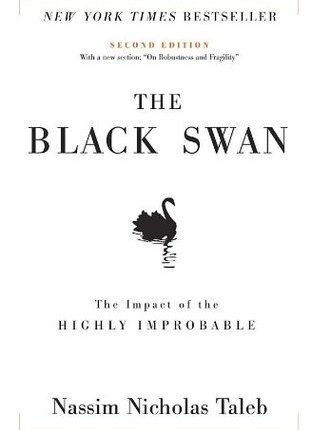
The Black Swan: The Impact of the Highly Improbable by Nassim Nicholas Taleb

The Black Swan: The Impact of the Highly Improbable by Nassim Nicholas Taleb

Nassim Nicholas Taleb discusses “black swans”, unexpected and life-changing events, and how life is far more uncertain than most believe it to be. He also examines, in-depth, how we fool ourselves into believing reality is otherwise by various means like confirmation bias (we look for evidence to support our existing beliefs) and narrative fallacies (the tendency to describe existence using linear stories when reality is far more complicated).

Mix in a heaping dose of storytelling and autobiographical information and you get The Black Swan.

Photo by Takeshi Arai on Pexels.com

“This combination of low predictability and large impact makes the Black Swan a great puzzle; but that is not yet the core concern of this book. Add to this phenomenon the fact that we tend to act as if it does not exist!” Prologue xxii

This is a dense read, full of philosophical references and terminology. Basically, beyond black swans having a larger impact on reality than we realize they do, this book can be simplified way down to “beware of because” and “know what you don’t know”.

“Beware of because” because (tee-hee) reality is far more random than most believe it to be. And we suck at predicting the future, for a variety of reasons, but partially because it is impossible to project future events from historical ones.

“Note here that I am not saying causes do not exist; do not use this argument to avoid trying to learn from history. All I am saying is that is it not so simple; be suspicious of the “because” and handle it with care — particularly in situations where you suspect silent evidence.” pgs 120-121

Photo by Karolina Grabowska on Pexels.com

“Silent evidence” is the information not readily apparent for whatever reason. Taleb gives an illustrative example of silent evidence from ancient history of a philosopher being presented an argument that a group of sailors survived a shipwreck because they prayed. The philosopher wonders how many of the sailors who drowned were also praying. The drowned sailors, you see, are the silent evidence.

Biologically, Taleb says, human beings are not set up to be deep thinkers and are fooled by a variety of logical fallacies. This is only a problem because, as time goes on, humanity has less running away to do from things trying to eat us and more dealing with the complexities of modern existence.

But by remembering “to know what we don’t know” and understanding some of the limitations built into our brains by memory and logical fallacies, we can be prepared to make better decisions than before. Or, at least, we’ll have a better grasp on how risky and unknown life is.

Photo by Marlene Leppu00e4nen on Pexels.com

Anyway, this book certainly gave me a lot to think about. The part that struck me the most is when Taleb applies his black swan idea to careers and how this uncertainty applies particularly to authors and artists. For every J.K. Rowling, there will be thousands of writers who never make that break through. I started wondering how many extraordinary books I will never get to read because of this phenomena.

The author’s tone throughout the book, slightly irreverent, didn’t annoy me as much as it seems to have bothered other readers. I enjoyed learning a new way to look at reality, but, as I mentioned before, this is a dense read and I wouldn’t consider it “fun” reading either.

It may appeal most to philosophers and anyone who wants to consider new ways to view reality.

Thanks for reading!

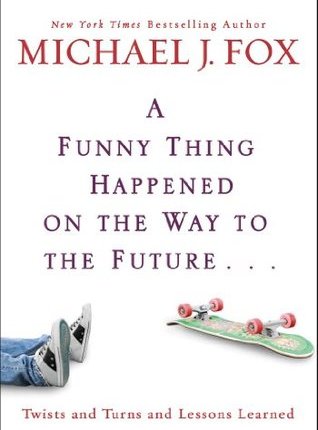
A Funny Thing Happened on the Way to the Future: Twists and Turns and Lessons Learned by Michael J. Fox

A Funny Thing Happened on the Way to the Future: Twists and Turns and Lessons Learned by Michael J. Fox

Michael J. Fox talks about his life, career and health. There’s nothing world-shattering in here, but if you enjoy watching Fox as an actor, you’ll probably like this book too.

A Funny Thing Happened on the Way to the Future reminded me strongly of Steve Job’s 2005 commencement address at Stanford. Both of these men chose not to pursue higher education. They both also found, through their own meandering ways, fulfilling, purposeful, and powerful lives that were rich in meaning for themselves and those who were fortunate enough to fall in with them.

Photo by Arturo EG on Pexels.com

Personally, I don’t think that the messages of “find your passion and live it”, “keep learning even if you’re not in a classroom”, and “fall but get back up” can be repeated enough. Life is filled with unexpected twists and turns — I guess the trick is to view these moments as opportunities instead of stumbling blocks. Fox’s book helps the reader do just that.

Though Fox isn’t a graduate, it would potentially make a good gift for a graduate. It might also be a good gift for anybody who is at a crossroads and needs a bit of a boost to proceed with not only courage but also hope.

Also, if they haven’t seen it yet, play Job’s Stanford address for them. It is available for free off of TED talks: https://www.ted.com/talks/steve_jobs_…

Thanks for reading!

Purple Cow: Transform Your Business by Being Remarkable by Seth Godin

Purple Cow: Transform Your Business by Being Remarkable by Seth Godin

The world has changed. There are far more choices, but there is less and less time to sort them out.” pg 13

Seth Godin, prolific author of business blogs and books, shares his insights about why a product must be remarkable to cut through the noise and get an audience’s attention. He opines that this remarkable “Purple Cow” quality is the only way a business can succeed in the modern world, as the old methods of mass marketing through expensive television ads is going the way of the dodo.

Photo by Jan Koetsier on Pexels.com

“Something remarkable is worth talking about. Worth noticing. Exceptional. New. Interesting. It’s a Purple Cow. Boring stuff is invisible. It’s a brown cow.” pg 3

The trouble with this remarkable stuff is that there is no clear method to create it. It is a “I’ll-know-it-when-I-see-it” type situation. For businesses looking to up their Purple Cow-factor, there are very few directions in this book, other than, it’s important to be a purple cow. I could see that unclear quality being frustrating for some readers.

“The old rule was this: Create safe, ordinary products and combine them with great marketing. The new rule is: Create remarkable products that the right people seek out.” pg 21

The “right people” being the influencers or the early adoptors of whatever type of product it is that you’re selling. Marketing to the niche, rather than mass marketing to the crowd, is, according to Godin, the best strategy for the new world of marketing.

Photo by Mike Chai on Pexels.com

Take Goodreads, for example. Publishers want to get their advance reader copies into the hands of those who talk to their friends about what they’re reading and are passionate about books, the readers who exhibit “otaku”. Godin defines “otaku”: “Otaku describes something that’s more than a hobby but a little less than an obsession.” pg 94

The obsessed, passionate readers talk about what they’re reading to the extent that they start an “ideavirus”, which Godin talks about in another book. In this way, Godin says, you build momentum for whatever remarkable product you’re selling. They can’t help but talk about it because of its fascinating qualities. As this movement builds, the books end up on readers’ favorite shelves, eventually becomes a Reader’s Choice pick, and then the book sells itself.

The products that aim for the largest audience are bland and have had their remarkable edges filed off. And, that’s bad, according to Godin.

“The system is pretty simple: Go for the edges. Challenge yourself and your team to describe what those edges are (not that you’d actually go there), and then test which edge is most likely to deliver the marketing and financial results you seek.” pg 101

Photo by Christina Morillo on Pexels.com

There are definitely dated portions of this book and, as I said, it is nebulous. To get meaning out of it, readers need to distill the underlying ideas and apply them to your unique business. But, I still learned things.

The reason I read Godin is he encourages readers to think differently. He gets my creative circuits firing. I like that.

Recommended for readers who may need a creative jump-start for whatever remarkable product they’re creating. This book isn’t a road map, but it could be a compass.

Thanks for reading!

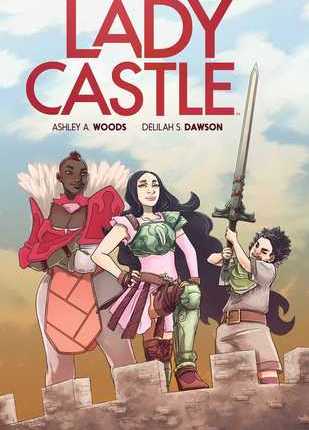
Ladycastle by Delilah S. Dawson

Ladycastle by Delilah S. Dawson

Aeve, a princess of Mancastle, is locked in a tower by her father, King Mancastle, for her refusal to chose a husband. Aeve’s younger sister, Gwyneff, is free to roam the castle, until she turns twelve and is subjected to the same fate as Aeve.

But Gwyneff doesn’t understand her sister’s choice and blames her for their father’s time-consuming efforts to find a new husband for Aeve and his absence.

“Aeve ruins everything. If she’d married, father wouldn’t go out hunting new princes. He’d be here. All the men would.”

Photo by Jeffrey Czum on Pexels.com

When King Mancastle and his men venture out to find a more suitable groom, and meet a foe they cannot overcome. One of the men returns to report to the women left behind — a curse has been laid on the castle and monsters will “be drawn as to a beacon”.

“For not only was King Mancastle cursed, but so was his domain. This castle shall be a beacon to terrifying monsters until the wizard’s curse is lifted.”

The blacksmith’s wife, Merinor, takes up the Lady of the Lake’s sword and becomes king. She and the women begin preparations to defend themselves from the approaching monsters. And thus our tale begins…

The artwork in Ladycastle is beautifully drawn with bright colors. I enjoyed the premise of the story. But Ladycastle doesn’t quite fulfill its promise in this volume.

Photo by Felix Mittermeier on Pexels.com

In the beginning of each section, the ladies’ inner monologue reads like a Disney or classic Broadway song, purposefully so. It’s distracting and derivative. I get that this work was attempting to point out the inherent bias of the other works, but I feel it takes away from the originality of this one.

The dark ages were brutal on women. I get it. Each lady in Ladycastle has a backstory of abuse or neglect from the man who ran her life, except for Gwyneff who hadn’t yet attained an age to be given away by her father for political purposes.

I liked how this comic flips that gender-issue on its head, the women rule the roost now. But the delivery of the lesson is heavy-handed, especially in the first two sections of the book.

Photo by Engin Akyurt on Pexels.com

As other readers have noted, there is a stab at diversity in this book, but no inclusion of LGBTQ characters. I can’t see any reason for this over-sight.

Recommended for readers who enjoy graphic novels, but with the reservations listed above. I felt like this topic was handled more deftly in the graphic novel for children, Princeless, Vol. 1: Save Yourself.

Thanks for reading!

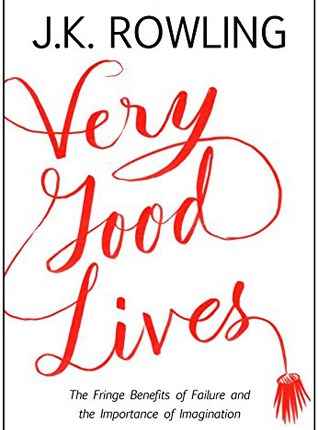
Very Good Lives: The Fringe Benefits of Failure and the Importance of Imagination by J.K. Rowling

Very Good Lives: The Fringe Benefits of Failure and the Importance of Imagination by J.K. Rowling

“It is impossible to live without failing at something, unless you live so cautiously that you might as well not have lived at all – in which case, you fail by default.”

J.K. Rowling gave the commencement speech at Harvard in 2008 and the result was a mini-masterpiece about life, the power of imagination, and failure.

Photo by Joe Digital & Co on Pexels.com

Though we all know now what a mammoth success she would go on to be, at one time, she was experiencing failure and poverty.

“Now, I am not going to stand here and tell you that failure is fun. That period of my life was a dark one, and I had no idea that there was going to be what the press has since represented as a kind of fairy tale resolution.”

I’ve had my own handful of rock bottom moments and, she’s right, it is no fun. But I too have found resilience and creativity that emerged from that darkness. It’s strange, when you’re pushed to your limits, you suddenly discover that there’s more to yourself than you ever realized.

“One of the many things I learned at the end of that Classics corridor down which I ventured at the age of 18, in search of something I could not then define, was this, written by the Greek author Plutarch: What we achieve inwardly will change outer reality.”

Photo by Pavan Maruvada on Pexels.com

Like Rowling, I studied the Classics because something about it spoke to me. When I told my dad that I was adding that course of study to my degree, he laughed and said, “Well, at least it will look impressive on your resume.” Even though I knew he was right in that there were very few jobs where I could use it, having a background in the Classics has taught me a lot about modern life.

I learned that people in antiquity, though they lacked the technology and lifestyle we enjoy today, still had the intensity of emotions and civilizations struggles that persist in the modern era. There were those who had and those who had not. There were crimes of passion, acts of kindness, politicians both corrupt and extraordinary.

Struggle, stress and failure is not something mankind invented when we produced the first smart phone. Classics gives you a long view on humanity and how far, or not far, we’ve come since.

We do not need magic to change the world, we carry all the power we need inside ourselves already: we have the power to imagine better.

Photo by josue Verdejo on Pexels.com

Brilliant. I recommend this small book as a graduation gift or for anyone who is having a bad day. It can act as a reminder that anyone can succeed at whatever their heart tells them is their path, despite any evidence to the contrary. And don’t be afraid of failure. Everyone will experience it at one time or another, but what matters most is what you chose to do next.

Thanks for reading!

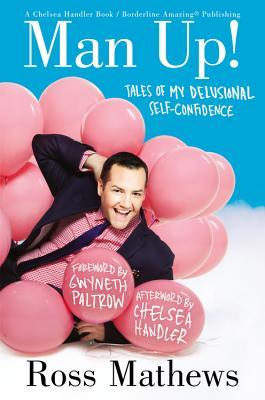
Man Up!: Tales of My Delusional Self-Confidence by Ross Mathews

Man Up!: Tales of My Delusional Self-Confidence by Ross Mathews

Ross Mathews is perhaps best known for how he got started in the entertainment business — as “Ross the Intern” on “The Tonight Show” with Jay Leno. If you’ve never seen any of his segments, I think you can catch some of them on YouTube. I think they’re worth a few minutes of your time as I found him funny.

This book is a little slice of Mathews’ personality. Nothing deep or earth-shattering, but bit after bit of light and amusing self deprecation.

Sometimes after reading a bunch of serious books, I need a bit of fluff. I’d venture to say that there are very few books as fluffy as this one. 🙂 It’s one silly thing after another and could be just what you need to make you smile.

Mathews skates across deeper issues a couple of times. For example, he mentions that he lost his father at a young age but he doesn’t go into depth about his feelings of loss. Instead, he talks about overdosing on THC while his father was dying in the hospital.

Photo by Pixabay on Pexels.com

Though there are no great introspective moments in Man Up!, it could be perfect for reading next to a pool, on a plane, or while you’re sitting in a doctor’s office.

Between the laughs, he does have a good message about self acceptance and living your dreams. It’s not a subtle delivery, but that’s not who Mathews is. And, I think he’s just fine with that.

If you enjoyed this book, you might want to try Sleepwalk With Me and Other Painfully True Stories or It’s All Relative: Two Families, Three Dogs, 34 Holidays, and 50 Boxes of Wine.

Thanks for reading!