37 Seconds: Dying Revealed Heaven’s Help—A Mother’s Journey by Stephanie Arnold

37 Seconds: Dying Revealed Heaven’s Help—A Mother’s Journey by Stephanie Arnold

37 Seconds is a fascinating account of Stephanie Arnold’s near death experience. She had a premonition that she was going to die having her second child.

Photo by Pixabay on Pexels.com

Stephanie did die for 37 seconds and had an amazing spiritual experience.  Her religious upbringing is in Judaism which makes for a totally different lens of perception than other NDEs (near death experiences) that I have studied.

I like reading books about near death experiences and examinations of consciousness.  So far, I’ve read twenty one books by folks from different religions and parts of the world about their NDE and what they’ve brought back with them to their normal, every day lives.

I found it interesting that the focus of Stephanie’s consciousness during the event was on her deceased relatives and their support of the physical world rather than on a location on a higher level where people go to hang out around their G-d for the rest of eternity.

Photo by Pixabay on Pexels.com

Another portion of the account that made it different than others that I’ve read on the topic is that Stephanie accessed her memories of the time during her 37 second death through hypnosis.

Other NDE writers (Piper, Moorjani, Burpo, et al) came out of their NDEs with memories of what went down. Stephanie, because of the extreme trauma and the premonitions about her death that haunted her for months before the actual event, repressed her NDE.

Isn’t it fascinating?  The study of consciousness never ceases to surprise me. It seems that not only do our lenses of perception create what we see in other modes of existence, but we can choose whether to access those perceptions or not.

I also liked Stephanie’s repeated message through 37 Seconds of trusting your own intuitions and believing in that inner voice. I feel that in modern society, we’ve advanced in so many ways both scientifically and technologically, that we discount simpler modes of understanding and knowledge.

Why try learning about why your body is presenting symptoms of anxiety and stress when we can just medicate it away? Why believe in your dreams and intuitions when educated doctors and scans show that nothing is wrong?

Photo by alleksana on Pexels.com

If Stephanie had listened to the experts, she would be dead. She is a great role model for a return to trusting ourselves. Doctors, medicine, and therapy have their place but so do dreams, intuitions, and the inner voice.

If you enjoyed 37 Seconds, try Wisdom of Near-Death Experiences: How Understanding NDEs Can Help Us Live More Fully by Penny Satori or Journey of Souls: Case Studies of Life Between Lives by Michael Newton.

Thank you for reading!

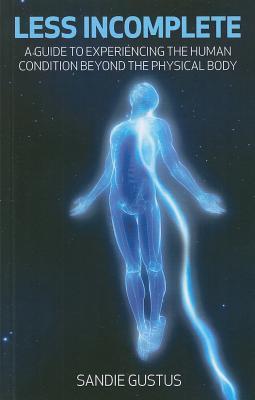
Less Incomplete: A Guide to Experiencing the Human Condition Beyond the Physical Body by Sandie Gustus

Less Incomplete: A Guide to Experiencing the Human Condition Beyond the Physical Body by Sandie Gustus

Like Journeys Out of the Body by Robert Monroe, Less Incomplete is about out-of-body experiences and how to have them.

Unlike Monroe’s book, there’s less personal narrative in this one and more about ethics and practical exercises for the out-of-body state.

So, in that way, it wasn’t as fun to read, but for people who are just starting out, I could see this book being an excellent place to start. I had never heard of Dr. Vieira and his work with the IAC (International Academy of Consciousness), so now, I have another resource to investigate too. Hooray!

Sandie’s reasons for writing the book: “…Vieira’s own books are notoriously sophisticated, technical and intellectual in style… My endeavor, with this book, is to make his work available to a wider nonacademic audience by presenting it in a language and format that everyone can understand follow, without compromising the integrity of his ideas in any way.” pgs 14-15

I feel like she really succeeded at that.

Photo by Cup of Couple on Pexels.com

A simple explanation of other dimensions: “… when thinking about where the extraphysical dimensions are, we can say that many of them coexist and share space with the physical dimension. They are all around us. They are right here, right now. This fact is much easier to understand when we remember that we are also sharing space with innumerable invisible artificial electromagnetic waves, such as those used to broadcast television and radio and to transmit data across mobile phone networks and between aircraft and military installations.” pg 39

Other dimensions sound so normal when she puts it that way.

Sandie stresses the importance of exploring consciousness for evolutionary reasons: “If we take into account the broader, more detailed picture of what it means to be a consciousness… it is clear that physical life, rather than being meaningless or arbitrary, provides us with a sophisticated, challenging environment that is rich in opportunities to better ourselves and to mature- in other words, to evolve.” pg 162

I think it’s fun too.

Consciousness exploration is a chance to evolve, certainly, but it’s also a way to play, explore, and simply exist in a way that is entirely different from regular reality. That’s my only criticism of this book, I feel like it takes itself too seriously at times.

Photo by Felix Mittermeier on Pexels.com

I was having trouble fitting my visions/meditations into the paradigm provided by this book until the chapter on Lucid Projection Techniques, section Projection through the Mental Body Technique: “Targets for a projection in the mental body are notional concepts that are outside the boundaries of ordinary life. The point of them is to break out of the boundaries of what’s known. The experience is epitomized by having an epiphany- suddenly you consider the concept of infinity or spirituality or oneness and you have an expansion of consciousness in which you grasp the whole idea. pg 254 Bingo.

Vieira doesn’t seem to have a high opinion of remote viewing: “Vieira describes it in Projectiology as “a daydream with some flashes of awareness or clairvoyance at a distance.” pg 270

I was surprised by that. It seems like, in this sort of research, one would want to consider all modalities for their possible contributions to the topic.

If you’re looking for more books on how to do out-of-body experiences, you may want to consider Soul Flight: Astral Projection & the Magical Universe by Donald Tyson, Soul Traveler: A Guide to Out-of-Body Experiences and the Wonders Beyond by Albert Taylor, and, one of my favorites, Otherwhere: A Field Guide to Nonphysical Reality for the Out-of-Body Traveler by Kurt Leland.

Thanks for reading!

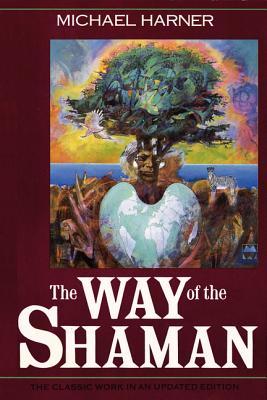
The Way of the Shaman by Michael Harner

The Way of the Shaman by Michael Harner

The Way of the Shaman says the practice of shamanism isn’t a cultural thing- it’s a “human” thing.

Michael Harner gives a brief biography of his own beginner experiences, then a very short history of shamanism, what it is, and how the experiences during the shamanic vision walks compare to ordinary reality.

He goes on to give a few practices for beginners to experience those states of consciousness for themselves as well as methods for contacting your “power animal” and some basic healing techniques.

I valued this book most for its discussions of shamanistic consciousness rather than the practices, but I could see both being of value for the proper audience.

Photo by Abet Llacer on Pexels.com

On shamanism across cultural boundaries: Shamanism represents the most widespread and ancient methodological system of mind-body healing known to humanity. Archaeological and ethnological evidence suggests that shamanic methods are at least twenty or thirty thousand years old… One of the remarkable things about shamanic assumptions and methods is that they are very similar in widely separated and remote parts of the planet, including such regions as aboriginal Australia, native North and South American, Siberia and central Asia, eastern and northernmost Europe, and southern Africa.”pg 40-41

One of Harner’s reasons for writing this book is to encourage everyone to deeper self knowledge: “…truly significant shamanic knowledge is experienced, and cannot be obtained from me or any other shaman. Shamanism is, after all, basically a strategy for personal learning and acting on that learning.” pg xxiv of introduction.

The world could use more self knowledge.

Photo by Mikhail Nilov on Pexels.com

How Harner has experienced the ineffable nature of shamanic consciousness: “His experiences are like dreams, but waking ones that feel real and in which he can control his actions and direct his adventures. While in the shaman state of consciousness, he is often amazed by the reality of that which is presented.” pgs 21-22

I find it interesting how various religious practices and occult teachings mix, blend, and borrow from each other. Or perhaps, at their base, they’re all just the same thing- various ways of experiencing the non-ordinary consciousness from which all humanity springs.

I read a book by practicing shaman, James Endredy, called The Flying Witches of Veracruz back in December of 2014 and it seemed to be a total pipe dream. It was filled with amazing creatures and impossible actions, like flying, shape shifting, and jumping higher than humanly possible.

Photo by Rakicevic Nenad on Pexels.com

James talked about the magical in the same breath that he talked about what he ate for breakfast.

Harner explains in this book why it reads like that: “The emphasis I make here on drawing a distinction between the experiences one has in (ordinary consciousness) and the (shaman consciousness)…is not a distinction that is usually noted in the conversations of shamans among themselves or even with Westerners. Thus, if you were to listen to a Jivaro shaman talk, you might hear in his everyday conversation accounts of experiences and deeds which could seem to you, as a Westerner, to be patently absurd or impossible…” pg 47-48.

That whole book makes so much more sense to me now.

In the afterword, Harner closes with thoughts about why shamanism works: “Albert Schweitzer reportedly once observed, “The witch doctor succeeds for the same reason all of the rest of us (doctors) succeed. Each patient carries his own doctor inside him. They come to us not knowing this truth. We are at our best when we give the doctor who resides within each patient a chance to go to work.”

Be a healer by reminding people that they have the power to heal themselves.

If you’re looking for more books like The Way of the Shaman, try The Flying Witches of Veracruz: A Shaman’s True Story of Indigenous Witchcraft, Devil’s Weed, and Trance Healing in Aztec Brujeria by James Endredy or Active Dreaming: Journeying Beyond Self-Limitation to a Life of Wild Freedom by Robert Moss.

Thanks for reading!

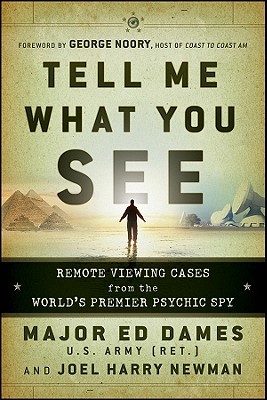
Tell Me What You See: Remote Viewing Cases from the World’s Premier Psychic Spy by Edward Dames

Tell Me What You See: Remote Viewing Cases from the World’s Premier Psychic Spy by Edward Dames

Tell Me What You See: Remote Viewing Cases from the World’s Premier Psychic Spy  is a book about remote viewing written by Edward Dames.

Remote viewing is a military protocol by which a “viewer” goes into a meditative state, sends his or her consciousness “out” to a target, and then reports on what he or she perceives while there.

In this book, Dames writes story after story about using this protocol for the government. And, later, cases that he and his group worked on, as a private company.

Confession time again: I love to read fringe-y non-fiction.  From the paranormal to the other worldly, I can’t get enough of it.

Books by former remote viewers from the military are such a trip to read.

These guys were/are on the cutting edge of consciousness exploration. It makes me wonder what humans are potentially capable of, but we don’t know it yet.

It also makes me wonder what else is out there to be perceived.

Don’t go to these books for feel good stories. I’m sure that it is because remote viewers were all trained as human weapons to root out threats to the government, but they all seem so dark and obsessed with shadows.

Even when Dames sets out to have a “fun” RV session on the Ark of the Covenant, his viewers see mainly blood shed and despair.

The methods used in Dames’ sessions were different from others that I’ve read.

David Morehouse and Lyn Buchanan, also former military RVers, described RV sessions in which separate viewers with handlers would run through coordinates. They would do this in completely secluded rooms. Later, the different sessions would be put together to try to create a complete picture.

Dames, on the other hand, described group RV sessions in which he’d act as the handler and give out the coordinates to the group. Then, his viewers would sit in a group setting and say what they were seeing, as they saw it.

I found this approach to be interesting. I wonder which technique had more accurate results.

What is RV?: “Remote viewing is about reaching beyond the five senses into the unconscious mind, to look inside and miraculously gather information stored like web pages on a cosmic computer. Even more miraculous is that we all have the innate potential to do this, a prescient sixth sense.” pg 16

The way the mainstream considers RV: “It’s part of my regular curriculum to discuss how badly the authorities treat remote viewing. … What people can’t pigeonhole they often reject. We were dealing with a system that treats what we do like watching someone have a seizure from behind a two-way mirror- uninvolved yet shamefully fascinated.” pg 27

Which is why I was surprised when he so vehemently rejects the contributions of the natural psychics, mediums, channelers to his military unit: “Gauvin and his broomstick pals were running us into the ground… Angela’s channeling was bound to be judged useless and scrapped and then maybe she’d go back to her crystal ball. … Who knew, by participating in an actual session maybe she’d catch on to how remote viewing really works. Maybe.” pg 120-121

Unlike mainstream folks, those types of spiritual “witches”, as Dames describes them, don’t need to be convinced that there are levels of perception beyond those utilized in day-to-day life.

If he had taken the time to look beyond their strange methods and encourage them to organize their natural talents within developed protocols, I think Dames could have found some powerful allies within the military RV program.

But, that’s not how he played it. Instead, you were either completely with Dames or against him. I suppose it goes back to his role as a soldier.

Dames’ comparison of RV to out-of-body experiences: “OBEs aren’t anything new. The concept has been around and practiced for thousands of years, dating back to the monks of ancient China and India. Their wizened mystics called it “astral projection,” a practice where, either awake or dreaming, certain adept individuals could cast off their earthly skin and propel their consciousness- astral body- into unknown spirit dimensions across time and space.” pg 153

And possibilities for RV in the future: “The ability to remote view is the next step in the evolution of the mind… What started out as a military tool based on the desperate need of warriors seeking to destroy their enemies in battle has now developed into an invaluable instrument in the search for enlightenment. Remote viewing is a teachable psychic-like skill anyone can learn. What is often overlooked is its potential to help us more deeply experience life.” pg 257 I would say so.

If you’re interested in more books like Tell Me What You See, you may want to look into The Seventh Sense: The Secrets of Remote Viewing as Told by a “Psychic Spy” for the U.S. Military by Lyn Buchanan or Remote Viewing: The Complete User’s Manual for Coordinate Remote Viewing by David Morehouse.

Thanks for reading!