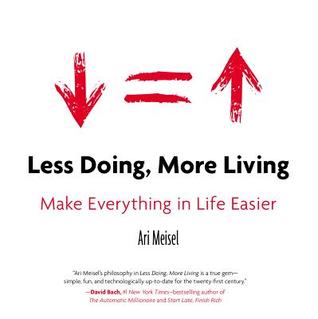
Less Doing, More Living: Make Everything in Life Easier by Ari Meisel

Less Doing, More Living: Make Everything in Life Easier by Ari Meisel

“The idea of Less Doing is to reclaim your time and- more important- your mind, so you can do the things you want to do.” pg xv

Ari Meisel, a self-professed “achievement architect”, outlines ways to streamline your chores, finances, and more in order to free up time for the activities, and people, that are most important to you.

“I don’t want you to run errands, ever ever ever again. They’re not efficient, and there’s no way to make them efficient.” pg 69
Photo by cottonbro on Pexels.com

Many of his suggestions are common now, like setting up an automatic delivery from Amazon for your regularly needed household items like toilet paper and paper towels. But when I considered that this book was published in 2014, then it seemed like a stroke of genius.

However, that won’t necessarily be useful to readers who are looking for more updated suggestions to make their lives that much more efficient- except for a few of his timeless strategies. For example, measure and monitor how much time it takes you to do things so then you can figure out where your time is going to.

Not rocket science, but helpful.

The one suggestion of his that I found most intriguing was his idea of creating an ‘external brain’. Basically, you write notes, diary entries, clip electronic articles and organize it in a program (he likes Evernote) so that you can access it again quickly if you would like.

Photo by David Cassolato on Pexels.com

“… you can create an ‘external brain’ that stores everything reliably, offers instant access, and frees your mind for more interesting work.” pg 18

I thought this approach could be very helpful for someone like me who reads and researches different topics all the time, for the fun of it, but also for professional content creators who are looking for their next blog post or YouTube video, etc.

How much easier would it be to be able to access all of your previous research rather than having to start over from scratch each time?

Photo by cottonbro on Pexels.com

On the other hand, there is a massive amount of time required to both create this external brain and keep it updated. I suppose the investment only makes sense depending on what you’re eventually going to use the database for.

Recommended with reservations for readers who are looking for ways to streamline their lives.

Thanks for reading!

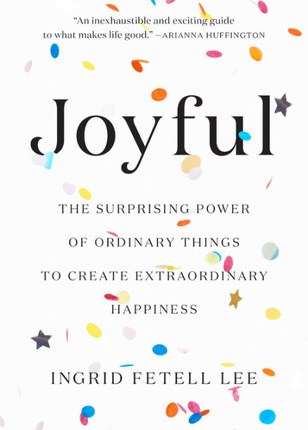
Joyful: The Surprising Power of Ordinary Things to Create Extraordinary Happiness by Ingrid Fetell Lee

Joyful: The Surprising Power of Ordinary Things to Create Extraordinary Happiness by Ingrid Fetell Lee

Ingrid Fetell Lee shares how to bring more joy into your life through the appreciation of ordinary things. Using tools like color selection, feng shui, gardening and room design, you can utilize your environment to foster an inner sense of joy and well being.

I think anything that increases joy and appreciation in my life is a good thing. I found it interesting almost every other book I’ve read on this subject focuses on the inner aspects of joy, the ones that won’t fade. But Lee convinced me there is something to appreciate and cultivate in the outer world as well. We may all be spiritual beings but we’re living very physical lives.

Photo by Rodrigo Feksa on Pexels.com

I knew little to nothing about interior design or some of the more troubling aspects of minimalism. But I do like to move through spaces that feel warm and lived in.

I can see the appeal of simplifying a space down to just a few items, but I wouldn’t want to stay there very long. Lee helped me understand some of my intuitive feelings about minimalism and why maximalism has the opposite effect, at least on me.

Lee also talks about the joy one can find in quirkiness versus convention. The caveat being that you have to be in a space or group of people who allow such things to exist rather than quashing them at the start. Different colors, unexpected materials, strangely-shaped furniture — if introduced to your every day environment can bring joy and a sense of relief from staid normalcy.

Photo by Pixabay on Pexels.com

This book really got me thinking about what joy I take in my surroundings and why or why not. Recommended for readers interested in interior design, gardening, or those looking for small ways in which to introduce a little more joy into their every day lives.

Thanks for reading!

Remodelista: The Organized Home by Julie Carlson

Remodelista: The Organized Home by Julie Carlson
remodelista

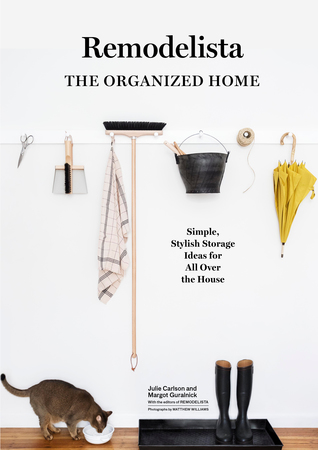
Remodelista is another de-cluttering book. This one encourages readers to utilize storage containers made out of natural materials, to hang items in unexpected places and to make your space functional and beautiful.

Maybe I’ve reached my limit on these types of books. For example, I loved The Life Changing Magic of Tidying Up, but that was one of the first books of this kind that I read.

I know not everyone responds well to Marie Kondo’s philosophy of considering the spirit of your stuff, but that clicked with me, for whatever reason. Must be a hippie thing.

I thought this one was a bit ridiculous. It just wouldn’t work for me in my real life with my crazy pets, busy family and serious amounts of stuff.

My main problem with this one is illustrated quite clearly on the cover. We’ve got two brooms, a towel, an umbrella, some string and a large bucket hung right over a cat drinking from a water bowl.

I can think of a hundred reasons why that wouldn’t work for me, but let’s start with three:

First of all, the kitties would think I was trying to kill them- hanging menacing items over the watering hole. And, let’s be honest, with my poor hanging-things-up skill, it just might.

Photo by Pixabay on Pexels.com

Second, putting string high up but visible is inviting a kitty disaster. They would hunt the heck out of that string, probably using the umbrella as a climbing wall to get to it, destroying my artfully arranged buckets and mops in the process.

Third, where would I put the rest of my family’s entryway stuff? We’ve got a lot more than that in just umbrellas, not even counting the brooms, swiffer mops, you-name-it.

The result: easy-to-maintain spaces that are both orderly and artful, personal and purposeful. Because, ultimately, the goal isn’t a flawless, impossible-to-maintain showcase. The aim is an unencumbered life in a house that makes you happy.” pg 9.

All of the rooms and cabinets in this book had like three things in them. It’s just not realistic.

Photo by Anastasia Shuraeva on Pexels.com

That being said, I did like the “Daily Rituals” on pg 18. The authors included “seven simple habits” to adopt every day to make your life easier. They include activities like making your bed and opening the mail.

I can handle that.

I also liked the ‘Herb and Spice Drawer’ suggestion on page 70. My spices are a jumble of bottles and sizes and it’s nearly impossible to find anything quickly.

Photo by monicore on Pexels.com

The authors suggest storing herbs and spices in: “Uniform glass jars- we like small paint jars from the art supply store.”Then, label the tops. It’s a simple solution but one that never occurred to me.

Only recommended for people who have calm cats and very few items. Other than the suggestions mentioned, I can’t see myself using very many of the tips from Remodelista.

Thanks for reading!

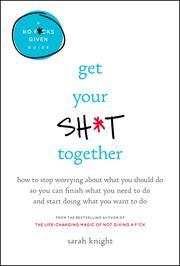
Get Your Sh*t Together: How to Stop Worrying About What You Should Do So You Can Finish What You Need to Do and Start Doing What You Want to Do (A No F*cks Given Guide) by Sarah Knight

getyoursht

Knight is an acquired taste, but I generally enjoyed Get Your Sh*t Together. Her self help books are full of useful tips, profanity, and irreverent humor so don’t pick this title up if you’re easily offended.

If you know someone who seriously needs to get their you-know-what together, this could be the title you’ve been waiting for!

Knight keeps it real from the first page: “(This book) is more of a let-me-help-you-help-yourself-help book, with “me” here to “help” when your “self” gets in the way. Let’s face it- if you could help yourself, you’d have done it by now, right? Also, unlike many traditional self-help authors, I am going to use the word sh*t 332 times (including several sh*tmanteaus of my own invention), so please do not go on Amazon saying you were expecting sunshine and kittens and got sh*tstorms and sh*ttens.” loc 31, ebook. And so on, and so forth.

I’ve also enjoyed The Life-Changing Magic of Not Giving a F*ck: How to Stop Spending Time You Don’t Have with People You Don’t Like Doing Things You Don’t Want to Do and I felt as if Knight shared more of herself in this offering than that one.

We learn that she had/has anxiety attacks and had to pull her life together because it was falling apart. Not many self help authors display their humanity and imperfections like that and I really appreciated her honesty.

Photo by Suzy Hazelwood on Pexels.com

Plus, readers get to reap the benefits of her hard won wisdom and we know it works because she got her stuff together enough to write the book.

I really like Knight’s various life philosophies, which she sprinkles throughout.

Here’s one of my favorites: “In my book- and in the Game of Life- you’re competing exclusively against yourself. Not other players, not even the computer. … Winning is getting what you want out of your time on planet Earth, whatever that entails. It could be the house, job, car, partner, or hairstyle of your dreams.” loc 502, ebook.

Be the best you that you can be and forget about the rest. Good advice.

Knight also gives a ‘nod’ to Marie Kondo’s internationally best selling title and Knight’s thoughts about it may appeal to more readers than the original material: “At this point, we’re living in a post-tidying society. … People get their tidying groove on for a few months, or even just a few weeks, and then… kinda lose the thread. … Why is that? Well, I submit that if they had their sh*t together in the first place, the tidying bug would have stuck.” loc 2547, ebook. Sound familiar to anyone?

Among the many life issues that Knight tackles, her thoughts on perfectionism struck particularly close to home for me: “When you accept that failure is an option, you move it from the realm of anxiety-inducing anticipation into a reality that you’ll deal with when (and more importantly, IF) that ever happens. Your energy is better spent on accomplishing goals in the here and now than on worrying about failure in the abstract.” loc 3049, ebook.

Recommended for people who need self help but don’t like reading self help, probably 18+ because of the language.

Sarah Knight will give you some life changing tips and along the way, you may learn some unique new uses for the word: sh*t. Some further reading: The Life-Changing Magic of Not Giving a F*ck: How to Stop Spending Time You Don’t Have with People You Don’t Like Doing Things You Don’t Want to Do, The Joy of Leaving Your Sh*t All Over the Place: The Art of Being Messy, and How to Be Dull: Standing Out Next to Genius.

Thank you to NetGalley and Little, Brown and Company for a free ARC of this book! And, thank you for reading.

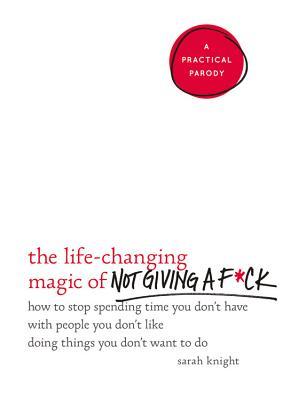
The Life Changing Magic of Not Giving a F*ck: How to Stop Spending Time You Don’t Have with People You Don’t Like Doing Things You Don’t Want to Do by Sarah Knight

The Life Changing Magic of Not Giving a F*ck: How to Stop Spending Time You Don’t Have with People You Don’t Like Doing Things You Don’t Want to Do by Sarah Knight

Since I just posted on Spark Joy, I thought that it was the appropriate time for a review of this one.

Full title, it’s a whopper and very descriptive of the book’s contents: The Life-Changing Magic of Not Giving a F*ck: How to Stop Spending Time You Don’t Have with People You Don’t Like Doing Things You Don’t Want to Do.

F-bombs aplenty in this parody of Marie Kondo’s international best seller about tidying. If you can look past the obvious language thing, Knight gives some fairly solid advice. She counsels readers to not care so much about what others think and give that mental energy to yourself. You’ll be surprised what you can accomplish.

“Please listen when I say that the shame and guilt you feel when you’re trying so hard to not give a f***? It’s usually not because you are wrong to not give that f***. It’s because you’re worried about what other people might think about your decision. And guess what? You have no control over what other people think.”pg 26

See? She reminded me of a more foul-mouthed Byron Katie.

Sometimes she manages to string together two whole sentences without the F-word. Check it out: “You can sidestep the prospect of hurt feelings entirely when you view your conflict through the lens of simple, emotionless opinion. NotSorry (Knight’s method) is all about simple, emotionless opinions.” pg 31.

Beyond managing your own mind, she branches out to give advice to parents: “One mother responded from the perspective of teaching her own kids what to give a f*** about: As someone who grew up in a household full of guilt, I think it’s important for our kids to know that they can make decisions about what to care about, and that they don’t need to pay attention to the approval or condescension of other people in deciding how to live their lives.”pg 92.

I can get behind that idea.

Then we move right along to shades of Eckhart Tolle and The Power of Now: A Guide to Spiritual Enlightenment with contemplating the meaning of existence and its temporariness: “The reality is, unless we’ve been given a ballpark figure by a reputable physician (and sometimes not even then), not a single one of us knows when we’re going to shuffle off this mortal coil. It’s morbid, but it’s true. Tomorrow you could get hit by a bus, or mauled by a pack of wolves, or be scared to death by a clown. When you think about it like that, don’t you want to make every second count? pg 184.

Sarah Knight’s book, in my opinion, doesn’t have the life-changing magic of the other book, but she’s got some interesting thoughts that I believe are true and, sometimes, rather funny. But make sure to bring your sense of humor with you when you pick this one up because the author doesn’t give a … well, you know.

Thanks for reading!

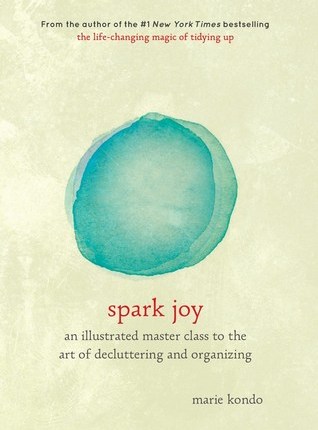
Spark Joy: an illustrated master class on the art of organizing and tidying up by Marie Kondo

Spark Joy: an illustrated master class on the art of organizing and tidying up by Marie Kondo

Spark Joy is author Marie Kondō’s follow up to her internationally best-selling title, The Life-Changing Magic of Tidying Up: The Japanese Art of Decluttering and Organizing.

Kondo’s not for everyone — some of her ideas are very different like treating your possessions as if they have spirits of their own and sorting items by smell — but I like her.

I think it’s because she is obviously very passionate about what she teaches. Her excitement seems to seek from the pages of her book.

This companion novel is an excellent book by itself, but, in my opinion, you won’t be able to fully appreciate it unless you’ve read Kondō’s first title. She doesn’t as completely explain her tidying methods in this book as she took the time to in the last. But there was still so much to enjoy here.

She encourages individuals to embrace what they love, even if society doesn’t love it too, like in this section called Save Your Cosplay for Indoors“…a surprisingly high percentage of my clients have costume-like clothes. To name just a few, I have encountered a Chinese dress, a maid’s outfit, and a belly-dancing costume. … If it brings you joy, but you can’t see yourself wearing it outside, there’s no reason you shouldn’t wear it inside.” pg 25-26

Kondo has a pretty philosophy of living: “I’m convinced that things that have been loved and cherished acquire elegance and character. When we surround ourselves only with things that spark joy and shower them with love, we can transform our home into a space filled with precious artifacts, our very own art museum.” pg 47

One of my favorite parts of both books is Kondo’s theory about socks. It makes me smile: “The socks you wear at home are particularly important because they are the contact point between you and your house, so choose ones that will make the time you spend there even more enjoyable. Balling your socks and stockings, or tying them into knots, is cruel. Please put an end to this practice today.” pg 98 🙂

As much as I enjoy Kondo’s quirkiness, I don’t embrace all of her theories.

For example, I’m still trying to talk myself out of the mountains of books that I have around the house. I have this dream that one day, I’ll have an enormous library with shelves so high that I’ll need a ladder with rollers to climb up and reach the books at the top.

Here’s what Kondo has to say about tidying up the books: “When you’re left with only those books that you love, you’ll discover that the quality of information you receive changes noticeably. The room you make by discarding books seems to create space for an equivalent volume of new information. You’ll soon see that the information you need comes just when you need it, and when it does, you’ll find that you respond to it immediately in a new pattern of behavior that wasn’t possible when you were hoarding books and neglecting the information they contained.”pg 126

Sigh.

Here’s a helpful tip for sorting piles of stuffed animals: “Energy resides in the eyes, which is why it’s best to cover them when discarding something. Once their eyes are hidden, stuffed toys and dolls look much more like objects, and that makes it far easier to part with them. The simplest solution is to place a cloth or piece of paper over their faces.” pg 164-165

Consider some of the most used items in your life for the royal treatment: “…my criterion for deciding which items require royal treatment… is this: the item’s proximity to your body. Items such as forks or undergarments, which come in direct contact with delicate parts of our bodies, should be treated as a rank above the rest whenever possible.” pg 183

Good to know.

And finally: “Tidying is a special event. If you give storage your best effort, experimenting with different ideas and enjoying the whole process, you’ll find that it goes very smoothly. Treat it like a game. Each idea you try will bring immediate results, and you can readjust anytime you like.” pg 206

If only I had that sort of passion for tidying…

Marie Kondo is inspiring but I don’t know if I will ever achieve the emotional highs that she seems to find from it. The best part of this book is: she makes me willing to try.

Other tidying (or anti-tidying) books I’ve reviewed can be read here:

Remodelista: The Organized Home by Julie Carlson

The Joy of Leaving Your Sh*t All Over the Place by Jennifer McCartney

Thanks for reading!