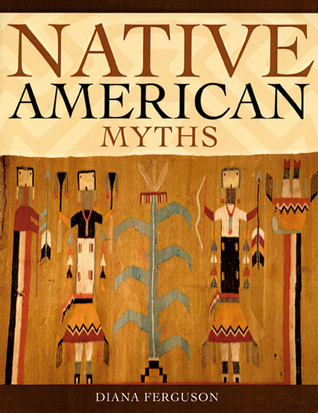
Native American Myths by Diana Ferguson

Native American Myths by Diana Ferguson

Native American Myths is an excellent collection of stories from different cultures gathered into a few categories: “How the world was made,” “Tricksters and Culture Heroes,” “Earth Sea and Sky,” “Quests and Sacred Gifts,” and “Ghosts and the Supernatural”.

“In the beginning, people lived at peace with the Earth and all her creatures. The Great Spirit had said that it should be so.” pg 34

One of my favorite stories from the collection is “The Buffalo Skin Sky” which tells the tale of a buffalo skin saving humanity from drowning in a great flood. It reminded me of the Biblical tale of Noah and the ark.

“Coyote stood alone, holding the sacred gift of fire. But he had no one to give it to, so he passed it to the nearest tree.” pg 50

I also enjoyed the stories that had the trickster Coyote in them. There were a couple different cultures who shared tales about him. He must have tricked a lot of people to have such a reputation… 🙂

Recommended for anyone who enjoys mythology. This book would be a wonderful choice for bedtime story reading.

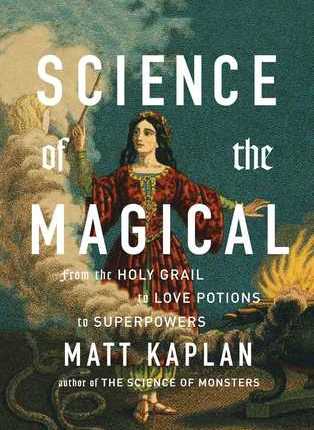
Science of the Magical: From the Holy Grail to Love Potions to Superpowers by Matt Kaplan

Science of the Magical: From the Holy Grail to Love Potions to Superpowers by Matt Kaplan

“Does knowing how something magical works make it into something other than magic?” pg 7

In Science of the Magical, science correspondent Matt Kaplan examines phenomena from prophecy to immortality and more, seeking the science behind the magic. The result is a compelling look at life and humanity’s beliefs around such things.

“Our ancestors had a magical worldview. … For the Viking berserkers, no biochemistry was behind their rage; Odin was casting a spell. For pilgrims visiting the oracle at Delhi, no ethylene vapors were creeping up the fault below the temple; the spirit of Apollo was coming to force the priestess to speak with his voice.” pg 212

Photo by cottonbro on Pexels.com

You would think these activities would lose their magical feeling under Kaplan’s microscope, but the opposite is true. I felt more wonder learning the studies about Buddhist monks who can sit wrapped in wet sheets and not freeze or the symbiotic relationship between ravens and wolves, which was immortalized in the stories about Odin.

“… Dr. Stahler suspects that because wolf kills are considerably larger than those made by coyotes, the birds have more food to feed on. The ravens seem to have the ability to differentiate between the animals and selectively follow only wolves.” pg 102

Photo by Pixabay on Pexels.com

Though I knew some of what Kaplan reports in these pages, other ideas were totally new to me. Highly recommended for readers who enjoy non-fiction.

Thanks for reading!

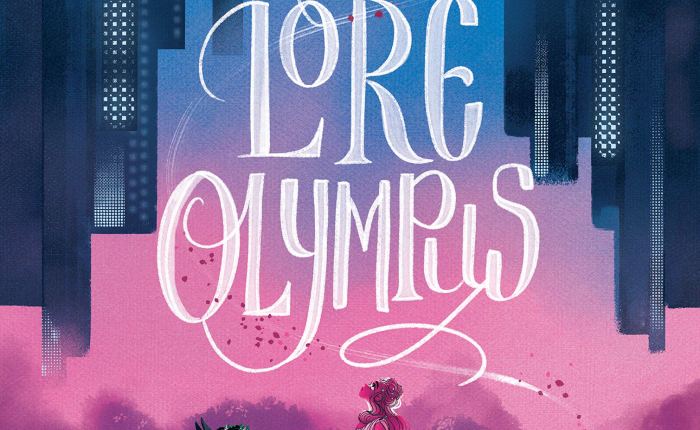
Lore Olympus: Volume One (Lore Olympus, #1) by Rachel Smythe

Lore Olympus: Volume One (Lore Olympus, #1) by Rachel Smythe

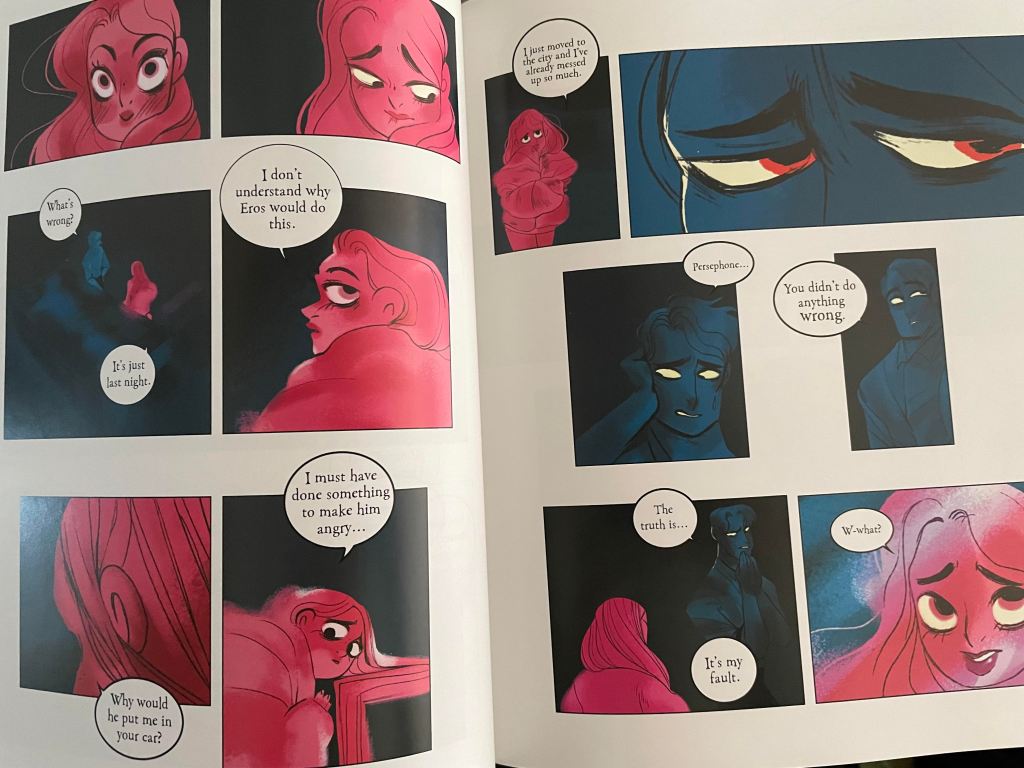
Rachel Smythe has created a cotton-candy colored, contemporary re-telling of Hades and Persephone. It is a very pretty creation but, like the start of most graphic novel series, lacks a little in the storytelling.

I also had trouble telling some of the characters apart. In some panels their features were so blurred that it was impossible to tell who was who.

That being said, I’m not sure that I am the intended audience for this work. The bright colors and quick pacing make me think this may be more appropriate for young adults.

It is shelved with the adult selections at my library, but nothing in the story is inappropriate for teens 14+.

I enjoyed the artwork more than the story itself. It is very pretty and stylized with flourishes and smooth edges.

Recommended for readers who enjoy their mythology being told with a fresh new voice and perspective.

Thanks for reading!

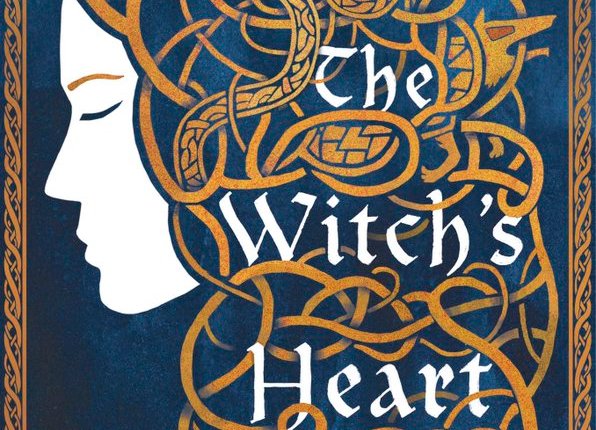
The Witch’s Heart by Genevieve Gornichec

The Witch’s Heart by Genevieve Gornichec

“The third time she was reborn, Gullveig fled, though she left something behind: her speared heart, still smoking on the pyre.” pg 4

Angrboda, the Norse witch formerly known as ‘Gullveig’, is hiding from the Aesir when the trickster god Loki finds her. And changes her life (or in her case: lives) forever.

“Although her memories as Gullveig were vague enough, she recalled feeling like she didn’t belong – and the moment they’d turned on her, burned her, she’d felt a lot of things. But the emotion she could recall most distinctly was not fear or anger, but the feeling of being used.” pg 43

Photo by Jeremy Bishop on Pexels.com

The gods kill Angrboda because of her refusal to share the secret of her scrying power, called ‘seid’. She will not look into the future and give Odin the mysteries that reside at the end of all things.

Odin does not take no for an answer.

Genevieve Gornichec reimagines the shadowy character of Angrboda in this Norse myth-filled retelling. Maybe it’s because I’m a classics major and gravitate towards mythology, but it seems to me that it has become somewhat popular to do so – think The Song of Achilles or Circe.

Photo by Bakr Magrabi on Pexels.com

In this case, I feel like Gornichec didn’t go far enough in her imagining. She gave Angrboda a voice, a rare talent, and a fierce love for her children, but, beyond that, the witch remains a fairly passive character.

Part of this could be due to the fact that the Aesir are such powerhouses in the old myths. They hog the spotlight and the action. But still, I believe there’s enough room around the stories to give a figure whose mythology has been largely forgotten a new legacy.

I think the biggest missed opportunity for this is in Angrboda’s relationship with Loki.

“She would do anything for him, she realized then… And for some reason, this scared her, as if the thought itself were a promise she knew that she couldn’t hope to keep.” pg 74

Photo by Liza Summer on Pexels.com

Like the other major players in the mythology, readers will be familiar with many of Loki’s hijinks. He is constantly in action, tricking people or becoming the victim of his own cleverness. What readers have never really gotten to see is his interior world. What is he thinking when he pulls his legendary stunts? What are his secret motivations?

One would think this is something he might share with a lover. But the storytelling never quite got there and I found The Witch’s Heart to be rather a disappointment in that way.

That being said, if you’re a reader who enjoys mythological retellings, there is still much to enjoy in this story. It is well-written if fairly limited in scope.

Thanks for reading!

The Song of Achilles by Madeline Miller

The Song of Achilles by Madeline Miller

Madeline Miller brings her incomparable talent for rewriting ancient myths for the modern audience to the tale of the Greek hero, Achilles, and his lover, Patroclus.

“For many years now, Achilles, I have urged companions on you and you have turned them away. Why this boy?” … “He is surprising.” pg 26, ebook

Photo by Bakr Magrabi on Pexels.com

Readers don’t have to be familiar with the mythology behind the story to enjoy it. In addition, Miller includes a helpful guide of figures from classical myth at the back of the book in case you are in need of a refresher course.

Here’s a brief summary: Helen, the most beautiful woman in the world, is kidnapped (or leaves of her own accord, it’s unclear) and taken to Troy. Warriors around the globe gather to fight on one side or another because of this inciting incident, and the gods do as well.

As told in The Illiad, it is a struggle between mortals, immortals, and those who stand inbetween those two- the demi-gods, children of both worlds.

Among this special group, there is the son of Thetis, a sea nymph, and Peleus, the king of a small Grecian country. His name is Achilles. There is a prophecy, a couple in fact, about Achilles and that plays a large part in the story that follows.

Photo by GEORGE DESIPRIS on Pexels.com

The part of the story that has not been told before, and that Miller illustrates with such brilliance, is the life of Patroclus, the man whose death is so central in the myth but who is rather ancillary to the other heroes in the original telling.

“This was more of the gods than I had ever seen in my life. He made it look beautiful, this sweating, hacking art of ours.” pg 32, ebook

Miller also brings attention to the shadowy figure of Thetis, Achilles’ mother. Her role in the story was marginalized as well, but in The Song of Achilles she comes to the forefront.

Like parents throughout history, she wants her son to succeed to the best of his ability. In this particular case, she thinks he should shed his mortality take his place among the gods.

To do so, he has to achieve godlike status on earth. Falling in love with a mortal does not fit into Thetis’ plan for Achilles’ future.

Photo by Hernan Pauccara on Pexels.com

“There is no law that gods must be fair, Achilles,” Chiron said. pg 55

I read Miller’s Circe prior to this story and so wasn’t surprised that I enjoyed this tale as much as I did. As I mentioned before, she excels at taking old themes and making them feel new again.

This cultural development is important for humanity, as I recently read in Antigone Rising: The Subversive Power of the Ancient Myths. There is power in the stories we tell and the manner in which we tell them. It helps to shape the future.

Highly recommended for readers who enjoy mythology or a simply well-told tale.

Thanks for reading!

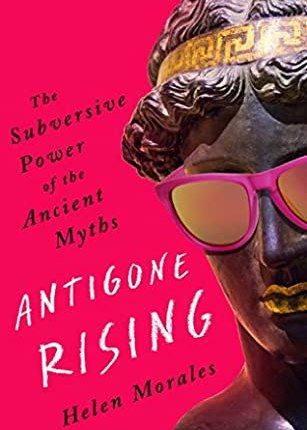
Antigone Rising: The Subversive Power of the Ancient Myths by Helen Morales

Antigone Rising: The Subversive Power of the Ancient Myths by Helen Morales

Helen Morales highlights troubling aspects of Greek and Roman mythology in a call-to-action to analyze and reimagine those myths for modern times.

As a classicist, I was familiar with most of the myths Morales examined. However, I was unaware of some of the toxic sub-context contained within them.

“My hope is that by tracing patterns and connections between ancient and modern beliefs and practices it will become easier to understand how misogyny operates and the ways in which classical antiquity plays a role (although it is not the only player and this is not its only role) in legitimating how misogyny operates today.” pg 14

Photo by Miggy Rivera on Pexels.com

The stories we tell ourselves are powerful. It shapes our expectations for our communities and the roles we occupy within them. Joseph Campbell pointed this out for the last generation. Perhaps Helen Morales will be the one to point it out for this one.

“The problem is that misogynist myths are more strongly culturally entrenched in our societies than myths that subvert them.” pg 148

But all hope is not lost. Creators from books to film to music videos are taking these myths and making them their own. With time, new interpretations will take hold.

Antigone is rising. Antigones (and Ismenes and Haemons) are rising.” pg 150

Photo by cottonbro on Pexels.com

Lest we forget, Morales reminds readers that ancient myths have been the inspiration for, among other things, “the Declaration of Independence and the US Constitution, trades union movements, Marxism, and the gay rights movement.”

It is all about how we interpret and tell the myths with each passing generation. Let’s choose carefully.

Thanks for reading!

Pathways to Bliss: Mythology and Personal Transformation by Joseph Campbell

Pathways to Bliss: Mythology and Personal Transformation by Joseph Campbell

“Each entered the Forest Adventurous at that point which he himself had chosen, where it was darkest and there was no way or path.” You enter the forest at the darkest point, where there is no path. Where there’s a way or path, it is someone else’s path; each human being is a unique phenomenon. The idea is to find your own pathway to bliss.” pg xxvi

Pathways to Bliss is a collection of Joseph Campbell’s writings and lectures, expanding upon the theory he put together in The Hero With a Thousand Faces. Namely, that myths serve a psychological function to help individuals safely traverse the various stages of his or her life.

Photo by Elina Sazonova on Pexels.com

That statement is over simplifying Campbell’s complex and richly-developed discussions of mythology, but it’s the basic building blocks of the thing.

“If it is a living mythology, one that is actually organically relevant to the life of the people of the time, repeating the myths and enacting the rituals center you. Ritual is simply myth enacted; by participating in a rite, you are participating directly in the myth.” pg xix

Campbell talks about not only the importance of the myths throughout generations of humankind, but the idea that it is a living, breathing system. He believes there is trouble on the horizon if society’s myths don’t change and evolve to keep up with the challenges of the current day.

He also stresses the need for the individual to find their own meanings in the stories and symbols of the mythology. The pathway to that which you are here to live is something that only you can find for yourself.

Though, he does point out, you could experience your unique pathway through ritual and communion with a community of like-minded believers. Campbell applies his mythological lens to the world religions, to life stages, to everything in-between to see what universal truths he can pull out of the stories and the common experience of humanity.

“And my little sermon to the churches of the world is this: you have got the symbols right there on the altar, and you have the lessons as well. Unfortunately, when you have a dogma telling you what kind of effect the symbol is supposed to have upon you, you’re in trouble. It doesn’t affect me that way, so am I a sinner?” pg 43

Photo by Pixabay on Pexels.com

I found this book easier to understand than The Hero With a Thousand Faces, which I read a few months ago. Despite this, I suggest you read Hero first, because it’ll give you a better contextual base to understand what the heck Campbell is going on about.

I had some issues with his concluding chapter of this book, Dialogues. In an open discussion with some female attendees of one of his seminars, Campbell and the women try to define how the woman’s heroic journey is different than a man’s.

I didn’t agree with some of their conclusions. Maybe you had to be there to truly grasp the essence of what he was saying.

“The suffering overtakes women – it is part of the nature of womanhood. Whereas the man has to undertake suffering – it’s a big difference.” pg 153

Photo by João Jesus on Pexels.com

Women’s life is suffering? hmmmm…

Recommended for readers interested in more of the musings of Joseph Campbell or for people interested in mythology and its practical applications. Beware that some of the material may be somewhat dated.

The Hero With a Thousand Faces by Joseph Campbell

The Hero With a Thousand Faces by Joseph Campbell

“Throughout the inhabited world, in all times and under every circumstance, myths of man have flourished; and they have been the living inspiration of whatever else may have appeared out of the activities of the human body and mind.” pg 1

Joseph Campbell presents his, now classic, thesis of comparative mythology and psychology. By examining different myths from all around the world, he outlines the hero’s journey. The journey has many different steps and elements to it, but beneath it all, Campbell believes, through all the many stories, the journey is one.

Photo by Maria Pop on Pexels.com

“Furthermore, we have not even to risk the adventure alone; for the heroes of all time have gone before us; the labyrinth is thoroughly known; we have only to follow the thread of the hero-path.” pg 18

I think in different circumstances I may have enjoyed this book very much. The topic, comparative mythology, is one I find particularly fascinating. I also like to see how humankind incorporates the mythical not just in our stories, but in the way we set up our societies.

“… every failure to cope with a life situation must be laid, in the end, to a restriction of consciousness. Wars and temper tantrums are the makeshifts of ignorance; regrets are illuminations come too late.” pg 101

Photo by Pixabay on Pexels.com

But honestly, I had trouble focusing because of certain current events. Campbell presents the different myths in pieces organized by his heroic stages rather than in one flowing story. Between the trouble focusing and the bouncing around from myth to myth, this was a difficult read for me. Perhaps I’ll try this book again in the future, when my life doesn’t feel so off-kilter.

I think it has plenty of treasures to be discovered for spiritual seekers of every kind. It also demonstrates that though we look different and live very different lifestyles, at our soul level, there are many similarities to humanity. We find these similarities mirrored through our stories, our life stages, how we live and how we dream.

“Those who know, not only that the Everlasting lives in them but that what they, and all things, really are is the Everlasting, dwell in the groves of the wish-fulfilling trees, drink the brew of immortality, and listen everywhere to the unheard music of eternal concord. These are the immortals.” pg 142

Photo by Gabriel Peter on Pexels.com

I sincerely hope you all live and dream sweetly, immortals, wherever on the hero’s journey you may be: sheltering-in-place or braving the world, and that I will live and dream sweetly, too.

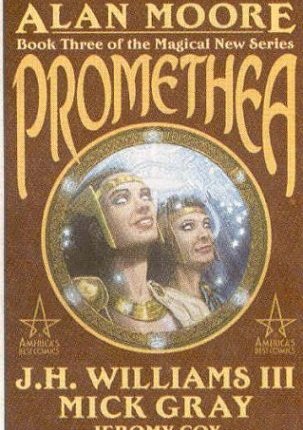
Promethea, Vol. 3 by Alan Moore

Promethea, Vol. 3 by Alan Moore

The saga of Promethea continues in Volume Three of the five book series.

Promethea, the version embodied by Sophie Bangs, has embarked on an adventure through the myriad worlds of the Tree of Life. She seeks another of the avatars of Promethea who recently died. Together, they hope to find the deceased woman’s husband and learn about the occult on the way.

Photo by Stacey Gabrielle Koenitz Rozells on Pexels.com

Meanwhile, back in the real world, Sophie has left someone unexpected in charge of keeping the baddies at bay while she’s away. Is Stace up to the task?

The artwork of the series continues to impress with its beauty and ingenuity. I especially enjoyed the mobius strip path of the world of Hod.

Alan Moore’s writing is at its best when he’s waxing on about the complexity of the universe and delivering punchy one-liners ending those conversations.

Photo by Pixabay on Pexels.com

However, he takes the characters through so many different places so quickly that the adventures themselves end up feeling rather stilted. I think I may have enjoyed this entry more if he had spent a little more time exploring the worlds rather than simply explaining them.

I get that Promethea has places to be. But she could have savored the journey along the way.

Recommended for graphic novel readers who enjoy a mix of fantasy and occult in their stories. Thanks for reading!

Here are links to the other two reviews I’ve written for this series:

Book One

Book Two