In the Skin of a Jihadist: Inside Islamic State’s Recruitment Networks by Anna Erelle

In the Skin of a Jihadist: Inside Islamic State’s Recruitment Networks by Anna Erelle
jihadist

This book was scary.

First of all, I had no idea how widespread the problem of young men and women leaving their home country to wage jihad had become. Anna Erelle was almost effortlessly sucked in to a horrific situation that has actually happened to hundreds of young people from Europe.

She demonstrates how easily a young woman, who may be lonely, marginalized, or searching for meaning, could be swept away by a religious fanatic so that she could never return home.

Once these young people hit the Syrian border, their passports are taken so that, even if they changed their minds, they couldn’t go back. And, the worst part is that it happened so quickly. The events of In the Skin of a Jihadist occur over the course of one month.

Reading this as a parent, this book was a nightmare. One minute, your child is home with you- the next they’re on a one-way flight to Turkey and they’re never coming back.

As compelling as the story was, it suffered from some small translation problems. (It was originally written in French.)

Why, for example, did Anna get into that fight at the photojournalist party? I know that she was under pressure and had had too much to drink, but, if it had been me, I wouldn’t have punched a bouncer because I was upset about how my story was going. When everything soured, I would have packed my bags and taken the first flight home.

That probably only shows how she’s a more serious journalist than I am, but still. I felt as if I was missing some details about why she was behaving how she was and how the French police used her contacts and information to prosecute terrorists.

Overall though, it was a harrowing read. I learned more about Sharia law than I had known before I read this book and also about why people would chose that type of lifestyle- it was all profoundly disturbing.

Read In the Skin of a Jihadist if you want to know more about this issue but prepare yourself for some eye-opening revelations.

If you want to learn more about this topic, I’d recommend reading The Terrorist’s Son: A Story of Choice by Zak Ebrahim or I Am Nujood, Age 10 and Divorced by Nujood Ali.

I received a free copy of this book through GoodReads First Reads program. Thanks for reading!

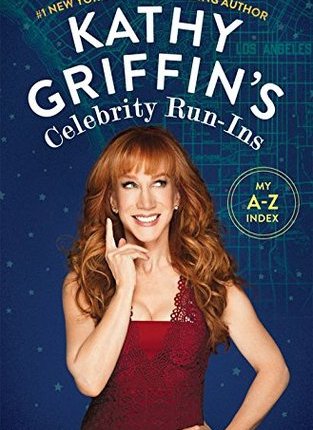
Kathy Griffin’s Celebrity Run-Ins: My A-Z Index by Kathy Griffin

Kathy Griffin’s Celebrity Run-Ins: My A-Z Index by Kathy Griffin

Here’s The Help Desk’s first ever video review!

I hope you enjoy it and here are the links to the books I mentioned at the end of the video.

The Andy Cohen Diaries

Tip It

Thanks for reading.

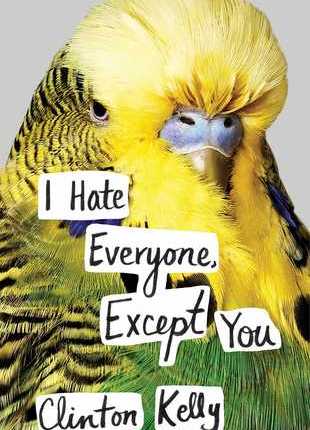
I Hate Everyone, Except You by Clinton Kelly

I Hate Everyone, Except You by Clinton Kelly

I Hate Everyone, Except You entered my life at the perfect time. I listened to a David Sedaris book last week and was unimpressed with some of his more edgy material. Clinton Kelly has the snark and sass of Sedaris, but, in my opinion, more heart and empathy.

Let’s just say, if Sedaris’ book was a hard drug, the Kelly book equivalent would be “a little fresca on a panty shield” loc 1784, ebook. Perhaps uncensored, he’s more honest and vulgar than what his fans usually see, but he’s real.

I really enjoyed this one, but don’t go into it expecting Kelly to parade himself around as the fashionista from What Not to Wear the whole time. It is definitely not that.

Photo by Artem Beliaikin on Pexels.com

Kelly’s dialogue (inner and outer) is hilarious. Take this moment, he’s psyched himself up and gone on an interview for an editorial position at a fashion mag and he’s asked to wait: “I’ll hang out here in the lobby,” I said. Yep, I’ll just sit in that plastic chair facing the door, watching my dreams rot like a bowl of fruit on time-lapse video. Thanks so much. Employees began to arrive, coffees in hand, and quite frankly, I had expected them to be better looking. … Sure, some of them were so skinny you could see through them, but they didn’t look happy about it. I had been expecting to work among anorexic women who radiated inner strength, not soul-crushing hunger. And what was with all the joyless denim? loc 375, ebook.

It makes me wonder what he would say if he saw my office crowd. Maybe I wouldn’t want to know.

Kelly isn’t religious but he seems to be spiritual in that he believes people should live authentically every moment for as long as they can.

Here’s what he has to say about it: “… the older I get…, the less Destiny and Fate-and their cousin, Faith, for that matter-concern me. For some, the opposite is true. Men and women on their deathbeds, old as the Appalachaians, wondering what it was “all about”. So foolish. I must admit, perhaps to the detriment of your esteem for me, that my sympathy for such wonderers is minimal. Imagine being given a life and not understanding until its ugly end that the point was to live it.” loc 494, ebook.

Photo by Artem Beliaikin on Pexels.com

I can see how that attitude could offend some people, so, here’s your warning. He’s not anti-religion necessarily. He’s pro- figuring out what works for you.

How he found his way onto “What Not to Wear” was New Age in the extreme and I’m so glad he recorded it here for us.

He didn’t like his current job and wasn’t sure what to do, so he talked to his friend: “She suggested that I ask the Universe for guidance. I wasn’t quite sure how to do that until I read a couple of books by Caroline Myss, in which she explained that if you ask the Universe for help, it will provide help.” loc 512.

Not to spoil the story, but guess what he did? I’ve read a bunch of New Age stuff and, honestly, Caroline Myss is hard core, sometimes angry even, and unapologetic about it. If I was asked to recommend a Law of Attraction author to a complete new comer to the topic, I’d pick Abraham Hicks, but whatever works.

Kelly found what he needed when he needed it and he didn’t even know it was missing- the very essence of New Age teachings.

My favorite part of the whole book: “When What Not to Wear ended a few years ago, many reporters asked me about my favorite and least favorite makeovers and the worst fashion faux pas I had ever witnessed. But not a single one asked me what I had learned about women over ten years of listening to their concerns about their bodies and their clothes. … Women want to feel beautiful. I’ve never met one who said she didn’t, and believe me, I’ve asked around.” loc 602, ebook.

Yes! And why would women want to feel beautiful? Because they would think they were worthy of love then. So, at the end of the day, what does every woman, man, child on earth want? Love.

Kelly talks about his failed and successful relationships in an honest manner, never denying that his own foibles could be why things tanked:“What probably kept us together was Rick’s ability to produce a level of rage in me so profound it actually inspired out-of-body experiences.” loc 2097, ebook. Funny, no?

Highly recommended for people who liked, but didn’t love David Sedaris or readers who enjoy humorous/tell-all memoirs. Some similar books: I’m Just a Person, The Andy Cohen Diaries: A Deep Look at a Shallow Year, or Life of the Party: Stories of a Perpetual Man-Child.

Thank you to NetGalley and Gallery books for a free digital advance reader’s copy of this book. And, thank you for reading.

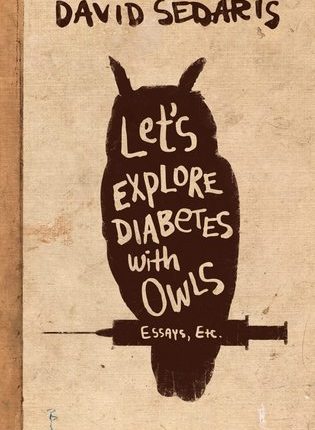
Let’s Explore Diabetes with Owls by David Sedaris

Let’s Explore Diabetes with Owls by David Sedaris

David Sedaris is a unique American humorist. Sometimes I love his essays and other times I hate them, so ranking a collection of his work fairly is difficult.

I listened to the audiobook of Let’s Explore Diabetes with Owls on my daily commute and he’s a wonderful narrator.

Actually, having read a handful of his other books, I’d recommend listening to him read his essays. His timing and inflections are perfection. He’s one of the few humorists who has literally made me laugh out loud.

The high points of this collection are Understanding Understanding Owls, Laugh Kookaburra, and A Guy Walks into a Bar Car. They’re unbelievably funny and have a lot of heart.

The low points were: Health-Care Freedoms and Why I want my Country Back, If I Ruled the World, and Dog Days. It’s as if he ran out of material and tacked the worst of it on the end.

Dog Days was awful and reminded me of Squirrel Seeks Chipmunk: A Modest Bestiary which I couldn’t stand. Vulgar prose just isn’t my thing, I guess.

Recommended for adult readers who are looking for a laugh and don’t mind some profanity and general silliness. More humorous books that I’ve enjoyed: Are You There, Vodka? It’s Me, Chelsea, Dad Is Fat, and It’s All Relative: Two Families, Three Dogs, 34 Holidays, and 50 Boxes of Wine.

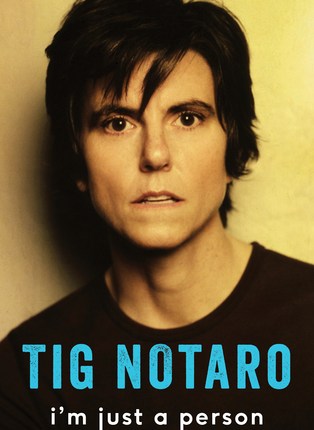
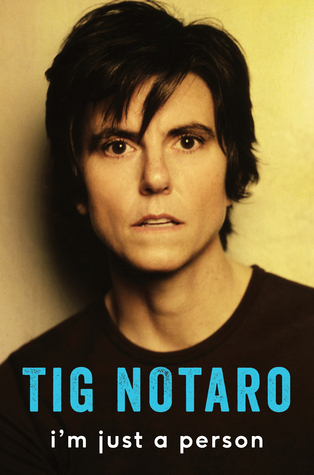
I’m Just a Person by Tig Notaro

I’m Just a Person by Tig Notaro
imjustaperson

Tig Notaro is a survivor. Her dry humor shines through these pages as she tells her life story: multiple brushes with death, romantic relationships, and snapshots of her childhood, parents, and thought processes.

She shows us that she’s “just a person”, yes, but also how extraordinary an ordinary person can be when presented with nearly insurmountable difficulties like dropping out of school at an early age, having a biological father who was never present and a stepfather who was never available emotionally, a mother who was so immature that Tig practically raised herself, not to mention all of the health problems that came later.

I picked up this book because I was enamored of Tig’s stand-up routines. This book has their flavor but far more detail than her act- if you’ve enjoyed her comedy, you’ll probably like this too.

I loved reading about how Tig found her calling and her people: “I began to refer to the comedy scene as “the land of misfit toys.” It was comforting to be surrounded by people who didn’t fit into the confines of society, and it was the first time in my life that I wasn’t met with the boring conversation stopper: “Oh my God, you’re so weird.” pg 47

This part cracked me up- Tig’s discovered lumps in her breasts but she doesn’t think they’re anything to be concerned about. Her girlfriend disagreed: “Instead of making a doctor’s appointment, I spent the next couple months teasing Brooke by removing my shirt and saying, “Hey, wanna touch my cancer?” It was really fun to walk past her holding my chest and blurting out, “Ow! My cancer!” pg 109-110.

I thought that the chapter in which Tig talks about her biological father, Pat, was particularly well-written. She takes complex emotional pain and makes it into something beautiful: “He was obviously still in pain over the loss of my mother and the news of my health, but I knew that this grief could not kindle any real kind of familial bond between us. I guess I believed there was something inherently broken in Pat’s relationship with me and my brother. Maybe we had all missed some ambiguous window of time when we could have salvaged some hope for a real connection. I am certain, however, that we have the same feelings: I want everything to be okay for him and he wants everything to be okay for me.” pg 205

That is Tig’s strength- her ability to take the worst in life and wring not just humor but meaning out of it. Some similar reads: Sleepwalk With Me and Other Painfully True Stories, Shrinkage: Manhood, Marriage, and the Tumor That Tried to Kill Me, or A Girl Named Zippy.

Thanks for reading!

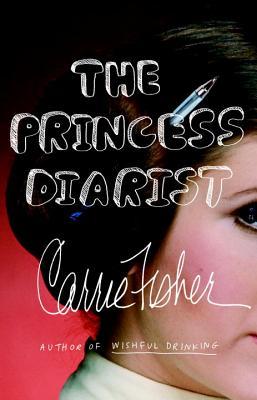
The Princess Diarist by Carrie Fisher

The Princess Diarist by Carrie Fisher
diarist

Take a highly intelligent, anxiety prone girl, mix in the life changing, world wide phenomena that is Star Wars, and add a dash of handsome, introverted, and married leading man and you have: The Princess Diarist.

This is not really about Star Wars as much as it is about obsession and Carrie trying to figure out who she is.

Though there are some tidbits sprinkled throughout: “And as much as I may have joked about Star Wars over the years, I liked that I was in those films. Particularly as the only girl in an all-boy fantasy. They were fun to make. It was an anecdote of unimaginable standing.” pg 5.

Or the moment Carrie found out that she got the part: “…I laughed and dropped the phone and ran out into the front yard and into the street. … It was raining in L.A. and I was Princess Leia. I had never been Princess Leia before and now I would be her forever. I would never not be Princess Leia. I had no idea how profoundly true that was and how long forever was.” pg 31

Carrie’s not afraid to make fun of herself: “When you watch the movie, it turns out that the voice I used when I was upset was vaguely British, and my not-upset voice is less British.” pg 44.

Or confess her hopeless awkwardness around her co-star: “But one thing I knew was that Harrison made me feel very nervous. I got tongue-tied in his company, and clumsy. It was uncomfortable in the extreme, and not in any way I could over come with a few well-chosen witticisms. We met, hit a wall, and stayed there. pg 61.

I’ve known someone who had that kind of effect on me. Poor Carrie.. poor me. 🙂

Here’s an actual entry from her diary that includes a mention of George Lucas: “George says that if you look at the person someone chooses to have “a relationship” with, you’ll see what they think of themselves. So Harrison is what I think of myself. It’s hardly a relationship, but nevertheless he is a choice. … I can’t think about it anymore. It makes my head hurt.” pg 114.

The older journal entries were my favorite part, but I can see how some readers may not enjoy them. They’re written in stream of consciousness and, at one point, I think Carrie flirts with a full on psychotic break- there’s a particularly disturbing entry about a rainbow colored talking fish that you can’t miss!

After the “Carrison” portion of the book, there’s some cringe worthy moments revealed between Carrie and mega Star Wars fans. Yes, she may have become a household name, but it doesn’t seem like it was worth the price.. or was it?

All of this just makes me want to watch Episode IV again! Read The Princess Diarist if you want to touch the depths of despair in a decades old love affair or if you want some quirky details about one of the most beloved science fiction films of all time. Also recommended: Fisher’s Shockaholic in which she details her struggles with bipolar disorder.

Thanks for reading!

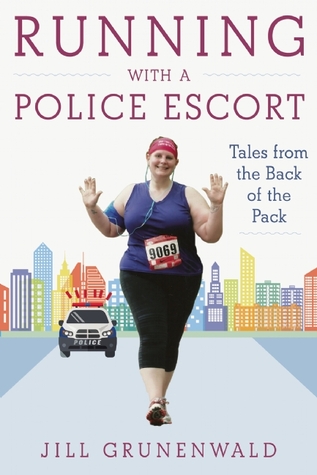
Running with a Police Escort: Tales from the Back of the Pack by Jill Grunenwald

Running with a Police Escort: Tales from the Back of the Pack by Jill Grunenwald
runningwithapoliceescort

A Cleveland librarian chronicles the emergence of her inner road warrior. Jill was very unhealthy- tipping the scales at nearly 300 pounds when an email from her younger sister convinced her that she needs to change her ways.

Self described “slow runner”, Jill often finds herself at the end of races with organizers closing the course behind her. Thus the title of her eventual podcast and this book: Running with a Police Escort.

Jill reminded me of my younger sister, another “slow runner” who took up running for health reasons.

I have a great deal of respect for people who have the courage to make major life changes- be that taking up a sport, counting calories, or giving up meat products.

It is so easy to let life determine who you are becoming instead of taking full responsibility for your choices. Jill’s point in this memoir is that it doesn’t matter how fast or slow you go, you win if you’re making even the smallest steps towards your goals.

In this passage, she’s closing down the race, like usual: “…I happened to see one of the policemen on the street gesture to get my attention and point to the car following me. I pulled out my earbuds and from the sidewalk he called out with a supportive smile, “You must be a very important person to have a police escort!” loc 72, ebook.

Jill relates her unathletic/uncoordinated childhood and I felt a lot of sympathy for her bookworm tendencies: “While (my classmates) ran wild, I’d find a quiet corner along the brick wall of the building and bury myself in a book. My favorites were the Scary Stories to Tell in the Dark series, the macabre illustrations haunting my dreams.” loc 162, ebook.

Photo by Ricardo Esquivel on Pexels.com

That probably would have been one of my favorites too, but my school library’s copy was always checked out. Not that I’m bitter or anything.

Jill reminds the reader that people don’t get to nearly 300 pounds without a reason why- an underlying pain that they’re insulating themselves from. For Jill, it seems that she was chronically lacking in self esteem and self love.

I loved reading about her getting her mojo back: Truthfully, I didn’t even know how much I weighed because the analog scale that I owned didn’t go up that high. … I don’t know if I can verbally express what it means to be so heavy that you literally outweigh your scale’s capabilities. Like, seriously. Just think about that for a second, okay? A scale has a pretty basic function… and I had gotten so big, I put my scale out of work.” loc 312, ebook.

Running with a Police Escort is a great book for those who are struggling with their weight or the decision to become more healthy.

Jill isn’t afraid to laugh at herself and there is quite a lot of wisdom in these pages: “…it’s these simple decisions that compound as we make them every single second of every single moment of every single day. It is not the Friday nights or Saturday evenings that determine who we are and where we go: it is the Thursday afternoons or Monday mornings that mentor and counsel our being into a full-fledged sense of self.” loc 818, ebook.

Beware, there’s a bunch of swearing too. If you don’t appreciate that, you may have to find another book.

I also found it to be repetitive after the first couple of races, but it’s clear that Jill is writing from the heart and has been changed by every single mile that she’s undertaken. Share this book with others who may need encouragement because Jill is a natural cheerleader for the novice runner or athlete of any type.

Some further reading: Confessions of an Unlikely Runner: A Guide to Racing and Obstacle Courses for the Averagely Fit and Halfway Dedicated, Running Like a Girl, and Down Size: 12 Truths for Turning Pants-Splitting Frustration into Pants-Fitting Success.

Thank you to NetGalley and Skyhorse Publishing for a free advance reading copy of this book!

Thanks for reading!

After a While You Just Get Used to It: A Tale of Family Clutter by Gwendolyn Knapp

After a While You Just Get Used to It: A Tale of Family Clutter by Gwendolyn Knapp
afterawhile

Sometimes poignant, other times appalling memoir by Gwendolyn (Wendy) Knapp that describes her dysfunctional family, drama filled relationships, and quest to find a job as a struggling writer in New Orleans.

The poverty level and drug addicted aunt described in After a While You Just Get Used to Itreally reminded me of Hillbilly Elegy: A Memoir of a Family and Culture in Crisis except that instead of in Appalachia, Gwendolyn describes a childhood in Florida. I suppose that some struggles are universal.

Although I enjoyed the stories, I wanted to read more about how the family dealt with Gwendolyn’s mother’s hoarding. Anybody else binge watch episodes of A&E’s Hoarders? It’s strangely compelling.

One lady collected every single flower bouquet message card that she had ever received- a leaning tower of Pisa in miniature, just perpetually collecting dust on one of her many side tables.

Anyway, the hoarding angle isn’t what this book is really about. The focus is mainly on Gwendolyn’s coming of age and early adulthood.

Gwendolyn is slightly older than me, but I enjoyed hearing about specific details from her childhood because I remembered some of those things in mine, like: “I applied my Dr Pepper lip gloss and pulled on my deflated Nike Airs, watching Mom give John a hug before saying her world-famous line, “Well, excuse our junk.” pg 6.

Photo by Rodolfo Clix on Pexels.com

Not to brag, but I think I had a Dr Pepper lip gloss and a Mint Chocolate Chip chapstick. Those were the days…

I knew that hoarders were emotionally attached to their belongings, but what I didn’t realize is that they’re also connected to their relatives through their stuff, though it makes sense when you think about it.

This is what happened when Gwendolyn’s grandpa died: “When an old relative dies, pack rats usually take in all they can from the person’s home as if they’re adopting abandoned children. It’s their duty. Since Grandma kept all his things, her kids had to find new ways to fill their void. Pack rats build up the world around them, separating themselves with a cloak of comfort from the outside world…” pg 16

Gwendolyn’s large, extended family has a passive aggressive, sometimes overtly aggressive love/hate thing going for it.

She describes her holidays as: “It was cacophonous, ear piercing, and annoying. Don’t worry, you might warn a newcomer, some bewildered boyfriend or classmate you’d invited and would never hear from again, after a while you just get used to it. Once the first jug of wine was finished, the racist diatribes and Burl Ives impersonations reared their ugly heads like gophers in need of malleting. … It wasn’t a holiday until my mother, and everybody else for that matter, had left Grandma’s feeling victimized by their loved ones.” pgs 54-55.

Photo by Christian Diokno on Pexels.com

Reading scads of memoirs has made me truly appreciate my own family and our very low levels of dysfunction, especially considering how large we are.

Here was the moment when I thought that we were going to deal with the hoarder thing for good, but Gwendolyn records this realization and time just marches on: “Imagine your mother burying herself alive. Imagine knowing there’s nothing you can do to help her. Imagine this every day of your life.” pg 85

Recommended for readers who grew up during the late 70’s/early 80’s or for people who like to read about dysfunctional families. Some further suggestions: Hillbilly Elegy: A Memoir of a Family and Culture in Crisis (similar themes like poverty and drug addiction), Not That Kind of Girl: A Young Woman Tells You What She’s “Learned” (struggling writer comes of age, details failed relationships), The Opposite of Loneliness: Essays and Stories (coming of age theme, but far more serious treatment than this book).

Thanks for reading!

Medicine, Miracles, and Manifestations: A Doctor’s Journey Through the Worlds of Divine Intervention, Near-death Experiences, and Universal Energy by John L. Turner

Medicine, Miracles, and Manifestations: A Doctor’s Journey Through the Worlds of Divine Intervention, Near-death Experiences, and Universal Energy by John L. Turner
johnturner

I felt like this memoir was all over the place- from remote viewing to Johrei, prophetic dreams to explanations of brain functions.

Dr. John Turner has an incredibly open mind when it comes to integrating traditional Western and holistic medicinal techniques. That was refreshing, but, because he was covering so much material, I felt like he didn’t spend enough time going into detail about the different modalities.

I wanted more depth and less breadth.

There were some interesting bits in here though.

Dr. Turner experienced, first hand, a case of spontaneous healing. His patient had a large brain tumor and, through the intercession of some monks and some radiation therapy, her tumor completely disappeared: “Here was a case of emotional disarray that when corrected, allowed healing to take place. Was it the patient’s realization or belief in karmic cause of her disease that allowed her brain to join with radiation to expel the foreign invader?… Were surgery and radiation necessary at all? I paced back and forth in my office, pondering the matter.” pg 60

Photo by Oles kanebckuu on Pexels.com

Dr. Turner practiced daimoku (intense chanting of a certain set of words, like a prayer) for two hours a day for a year.

Here is what he had to say of the experience: “I believe that chanting sets up resonant circuits in the brain that activate usually quiescent neural pathways. I came to know this feeling of attonement quite well, and after the promised 12 months I discarded the incense sticks, the gong, and the chanting. I could recreate the feeling through meditation… However, I saw no practical way in which to use this complex and time-consuming process for the benefit of my patients.” pg 89-90

Dr. Turner practicing Johrei (a light healing technique) in his surgery: “After placing the last suture, I gave him 20 minutes of intraoperative Johrei, letting Okada’s light flow through a spiritual cord to me, and then to the patient. This was a first for Hawaii and perhaps for any medical center (and surely for any neurosurgical operating room) outside of Japan. (My patient’s) recovery was spectacular…” pg 134

Photo by Pixabay on Pexels.com

The technique seems strange to me, but if it works, I say use it!

One of the first accounts I have read of remote viewing being used for medical diagnosis and treatment: “…it occurred to me that I should run the cause of this patient’s pain as a remote viewing target and see what Ed Dames could do to arrive at the answer. Not only would this be a confirmation of the power of remote viewing as a method of medical diagnosis, I would also have a chance to witness an expert at work. The results, as you will see, were everything I had hoped for; the patient fared well, much better than if I had tried to wait for the condition to become obvious on examination.” pg 194

If you are looking for more books about neurosurgeons who are considering non-traditional therapies in their practice, try Into the Magic Shop: A Neurosurgeon’s Quest to Discover the Mysteries of the Brain and the Secrets of the Heart by James Doty or Proof of Heaven: A Neurosurgeon’s Journey into the Afterlife by Eben Alexander.

Thanks for reading!