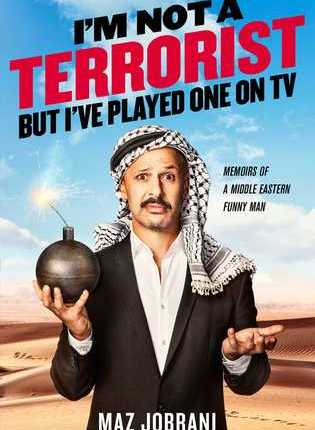
I’m Not a Terrorist, But I’ve Played One on TV: Memoirs of a Middle Eastern Funny Man by Maz Jobrani

I’m Not a Terrorist, But I’ve Played One on TV: Memoirs of a Middle Eastern Funny Man by Maz Jobrani

Humor is an interesting concept. It varies from person to person and even day to day. Something that you find funny today might not even make you crack a smile tomorrow.

Photo by William Fortunato on Pexels.com

But what I’ve discovered through watching a variety of stand-up comics is that the most successful ones tend to bring their own lives into the act in a powerful way. They distill what makes them unique and apply a humorous lens to it, making you feel like laughing or crying. It’s almost like storytelling through jokes. I feel like you have to be a brave person to even attempt it. Because what if you fail?

Have you ever watched Maz Jobrani‘s stand up? He does some storytelling and it’s rather funny. But he also has a back-and-forth with his audience, highlighting the differences between everyone but, beneath that, our essential humanness.

It is that unique voice that comes through in his memoir. He describes growing up Iranian in America and it wasn’t an easy ride. But even through his difficulties, Maz makes it amusing.

Photo by Monica Silvestre on Pexels.com

He helped me to understand what it is like to be an Iranian in America and also a successful, stand up comic.

In addition to his life story, Maz’s detailed descriptions of other countries makes the reader want to travel to all sorts of exotic locales. This book made me want to visit Petra. 🙂 Some day, perhaps.

If you enjoyed I’m Not a Terrorist, But I’ve Played One on TV, you may want to read Sleepwalk With Me and Other Painfully True Stories by Mike Birbiglia, Shrinkage: Manhood, Marriage, and the Tumor That Tried to Kill Me by Bryan Bishop or I’m Just a Person by Tig Notaro.

In similar ways to this book, Birbiglia, Bishop and Notaro take their lives and share them with us, the readers. They make you laugh, and like Maz, you can’t help but appreciate the brilliance and bravery of comedians. Life isn’t always funny, but it can be. It just depends on what you focus on.

Thanks for reading!

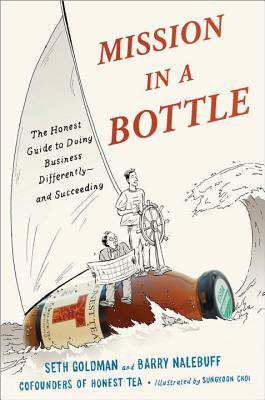
Mission in a Bottle: The Honest Guide to Doing Business Differently – And Succeeding by Seth Goldman, Barry J. Nalebuff

Mission in a Bottle: The Honest Guide to Doing Business Differently – And Succeeding by Seth Goldman,  Barry J. Nalebuff

Barry Nalebuff and Seth Goldman, who are the cofounders of Honest Tea, tell how they created their bottled tea business and grew it into something more.

Photo by Cup of Couple on Pexels.com

I understand what they were trying to accomplish with telling their business story in a graphic novel format but it didn’t work for me.

Graphic novels are great platforms to tell stories with a lot of action, colorful figures, and fantastic backgrounds. The story of founding a business, any business, seems to take place mostly in rooms with a bunch of people in business attire. The creation of a mission statement is mainly words on a page with little to show, action-wise. That doesn’t make it less important, but simply less exciting than a superhero comic.

Even the tense moments of Mission in a Bottle, like the time when a guy thought he found a piece of a male body part in one of the brands that they were renting their bottling facility out to, just didn’t translate in a meaningful way to a cartoon format.

Photo by Pixabay on Pexels.com

Overall, I enjoyed the business story and found it inspiring. I wish Goldman and Nalebuff had written it as a traditional book rather than a graphic novel.

Thanks for reading!

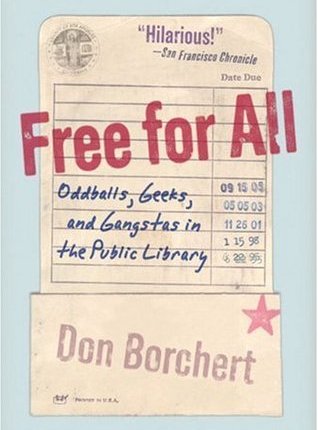
Free for All: Oddballs, Geeks, and Gangstas in the Public Library by Don Borchert

Free for All: Oddballs, Geeks, and Gangstas in the Public Library by Don Borchert

Free for All is an accurate depiction of life as a librarian in a public library.

Sometimes, the job is funny. Other times, it’s incredibly sad. If you’ve never worked in a library system, this book will reveal some of the secrets of a librarian’s day-to-day life.

Photo by Pixabay on Pexels.com

Before I worked at a public library, I thought it was a quiet, organized mecca for students and bookworms. Now, that I’ve spent some time on the librarian-side of the desk, I know better. My idea of a library was far too simple.

It is a study hall, archive, playroom, home for the homeless, kitchen, bank, movie theater, video game store, newspaper kiosk and so much more. I guess the appropriate question is: what doesn’t a library do?

And a public librarian is so much more than just a librarian. She is a counselor, a computer wizard, a curator of excellent and free entertainment.

She talks to the lonely, uplifts the lost and helps the public navigate the dangerous waters of the internet.

Librarians are my heroes.

Photo by Element5 Digital on Pexels.com

If I ever cease writing for a living, look for me at the library. Odds are, I’ll end up back there.

Perhaps some of the policies at Don Borchert’s library have changed, but at the time that he wrote this book, they charged 50 cents to put a hold in for a patron. This policy shocked me, as my library always offered that service for free.

Borchert cheerfully documents the difficulties with summer reading people vs the school year regulars. It’s a real problem.

If Borchert’s book is too edgy for you- he uses rough language and doesn’t hold back on some of his opinions- read Gina Sheridan’s I Work at a Public Library: A Collection of Crazy Stories from the Stacks.

Both are excellent and realistic non-fiction books about the trials, tribulations, and, sometimes, life-enhancing satisfaction of working at the library.

Thanks for reading!

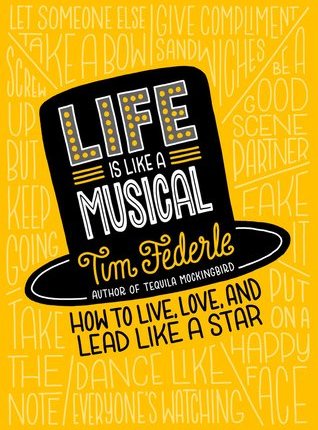
Life Is Like a Musical: How Broadway Can Help You Live Your Best Life by Tim Federle

Life Is Like a Musical: How Broadway Can Help You Live Your Best Life by Tim Federle

Life is Like a Musical is a cute, self-helpish book, full of the wisdom Tim Federle gleaned from years of experience on the stage.

“Basically, think of this book as ‘Don’t Sweat the Small Stuff’ with jazz hands.” Introduction.

Photo by Anastasiya Gepp on Pexels.com

Tim’s advice is common sense, but I appreciated it anyway. Make your weaknesses your strengths. Be nice to everybody. Pay attention. Don’t try to be a perfectionist, and so on.

He pairs these nuggets with his life stories. So, it’s part-memoir, part-self help.

“When Bob Fosse had a bald spot, he put on a stylish hat. Where’s your bald spot? Or blind spot? Or thing that you can barely accept about yourself? Go put a hat on it, and make it something wonderful.” pg 23. There’s nothing wrong with advice like that.

Photo by cottonbro on Pexels.com

First off, the key to approximately 90 percent of adulthood is appearing more interested in something than you actually are. Seriously.” pg 31.

Truth bombs, people.

Don’t give your power away. Remember who you are: “Please, never forget you’re the leading character in your own life. Read that sentence again: You aren’t the supporting cast. You’re it, baby.” pg 48.

And most importantly of all, have a sense of humor about the whole thing.

“Forgive yourself when you screw up. Develop a sense of humor that allows you to snort-giggle before anyone else can.” pg 139.

Photo by Tim Mossholder on Pexels.com

None of us are getting out of this thing called life alive. We may as well make the most of it.

I enjoyed this book. I was also a huge fan of his drink recipe book mixed with classic book titles: Tequila Mockingbird: Cocktails with a Literary Twist.

Recommended for people who are looking for a peppy voice to get them back on track and singing throughout the soundtrack of their own lives. This read will do the trick.

Thanks for reading!

Leaving Tinkertown by Tanya Ward Goodman

Leaving Tinkertown by Tanya Ward Goodman

This is Tanya Ward Goodman‘s memoir about how she loses her father and grandmother- first through Alzheimer’s and then to death. Leaving Tinkertown is a powerful look at end-of-life issues and family love.

It is an incredibly raw and straight forward account of a period of unimaginable change in the author’s life.

Photo by Matthias Zomer on Pexels.com

Tanya handles the deterioration of her father very well. I suspect that this ability to quickly and seamlessly accustom herself to change probably evolved from her childhood experiences with her father at carnivals and on road trips. With the background changing continuously, she had to change too but hold on to some essential part of herself. This characteristic served her well during her adult years.

Tanya’s father was a prolific artist. Because of his extreme creativity, I think that she was exposed to his mercurial moods long before he began losing his battle with Alzheimer’s. Artistic types seem to walk a fine line between logical thinking and madness. Their families get to walk that journey with them. That doesn’t mean that his descent into darkness didn’t hurt Tanya, but that she was more able to cope with his moment to moment shifts in behavior because she had experienced them before.

Photo by Shelagh Murphy on Pexels.com

Through this adversity, she grows closer to her brother, step-mom, and mother as they work together to care for her dad.

Tanya doesn’t gloss over her family’s shortcomings but comes to accept everything that each person brings to the table: “… I am starting to understand that doing all you can do, even if it doesn’t seem like very much, is enough.” pg 193.

When a strong, vital person in your life is no longer able to care for themselves, it’s heartbreaking.

My own grandfather, a force of nature, lost some of his heart when the family had to take the keys to the car away because he didn’t have the strength to drive safely anymore. This book was hard for me to read because Tanya knows what it feels like to cause that type of pain too.

Photo by Pixabay on Pexels.com

It brought back so many small moments when I was in a care-taking position for him. You want to provide the best quality of life that you can, but when the person can no longer clean, feed, or clothe themselves, then the really difficult decision making begins. Tanya and her relatives seem to make the process relatively simple even though I know that it is anything but that.

We all know that we’re not going to live forever but when you’re dealing with loss of physical strength or mental capacity in your own life or the lives of those you love, you get very close to that idea. It’s like the difference between looking through a window and having your face smashed up against the glass. When it’s right there, you can’t look away.

I’d recommend this for anyone who is caring for an aging or ill family member and needs a reminder that it’s all going to turn out alright. As Tanya reminds us, we just need to do all that we can do even if it doesn’t seem like it is very much.

I received a free copy of this book through Goodreads First Reads program. Thanks for reading!

Pigs Can’t Swim: A Memoir by Helen Peppe

Pigs Can’t Swim: A Memoir by Helen Peppe

Pigs Can’t Swim is a collection of essays based on Helen Peppe‘s childhood memories. Frankly, it is amazing that she managed to live to adulthood.

The youngest of nine children, she was by turns ignored or over-directed. Her family lived on a farm in Maine on a dead end road in the middle of nowhere.

Photo by Pixabay on Pexels.com

Helen tells her tale, all of it, without flinching from what she perceives the truth to be: her family’s wild behavior, prejudices, poverty, dysfunction, and an episode with a child predator that was truly horrific.

I had to keep reminding myself that she made it out alive and, at least, managed to write a book because this memoir had some truly terrifying bits in it.

I think Pigs Can’t Swim is an amazing piece of non-fiction writing not only for its content but also for its execution.

Photo by Eva Elijas on Pexels.com

Helen’s parents weren’t perfect but she doesn’t seem to blame or justify their behavior. In Pigs Can’t Swim, she just tells what happened and leaves a majority of the interpretation in the hands of the reader.

I couldn’t put this book down.

Its flowing narration reminded me of a much grittier version of Life Among the Savages.

Its personal and tell-all style reminded me of She Got Up Off the Couch: And Other Heroic Acts from Mooreland, Indiana. Similar to She Got Up Off the Couch, this book talks about overcoming poverty and adversity to become something more.

If you enjoyed either of these books, you’ll probably love Pigs Can’t Swim.

I received a free copy of this book through Goodreads First Reads program. Thanks for reading!

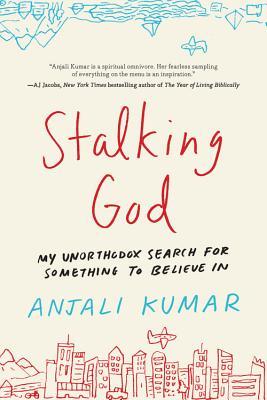
Stalking God: My Unorthodox Search for Something to Believe In by Anjali Kumar

Stalking God: My Unorthodox Search for Something to Believe In by Anjali Kumar

Anjali Kumar is a lawyer who is used to having all the answers. After she had a daughter, Anjali realized she knew very little about the big questions: why are we here? What is it all about? Is there a God?

“In 2010, when my daughter Zia was born, I decided that I needed to find God.” loc 24, ebook.

Anjali went on a quest to find out the answers, not only for the sake of her daughter, but also herself. She touches all the bases – from meditation to faith healing to Burning Man to yoni worship – Anjali leaves no stone unturned in her search to find what is real.

Photo by Artem Beliaikin on Pexels.com

“Along the way, I learned to chant, to meditate, and to marvel. I wrestled with my own identity, from my ethnic and cultural roots in India, to my femininity, to my role as a woman, daughter, mother, and wife. … I fancied myself an explorer, no different really than Magellan or Columbus. I was looking for a new world.” locs 148-163.

It’s a fascinating memoir.

Before each experience, Anjali puts in her research in an effort to find the science behind the beliefs. It’s not always as concrete as she would like it to be, but Anjali tries to engage her brain and her heart in her quest.

This is before she goes to her first “para-tan sounding”: “According to string theory, the entire universe is basically humming – all of it and all of us. Add that to the fact that the chanting of mantras has a long, compelling spiritual history, that cancer researchers are using sound- high-intensity focused ultrasound- to successfully destroy prostate cancer cells … and this whole Paramji thing starts to look like it might be grounded in a bit of hard science…” loc 500

Photo by Nataliya Vaitkevich on Pexels.com

Anjali tries to keep an open mind, even when things sound very strange: “One thing I had to be cognizant of… was how difficult it is as an outsider to come to terms with what are easy to perceive as the odd behaviors and strange beliefs of ‘other people.’ … as outsiders we have no idea what those behaviors and traditions stand for or mean.” loc 904.

She finds layers of meaning, even when particular experiences weren’t all that she hoped they would be. Anjali also experiences a few surprises along the way.

“I was looking for a theory of everything spiritual for Anjali and Zia. And yet, so far, just like those physicists had failed to find a theory of everything in the entire universe, I had failed to find a theory of everything for my own spirituality.” loc 1343.

Photo by Pixabay on Pexels.com

And she never gives up because: “A spiritual home is something that we all have to find for ourselves.” loc 2853.

Recommended for seekers everywhere. Anjali’s discoveries may not be earth-shattering, but they’re real and worth the read.

Thank you to NetGalley and Seal Press for a free advance reader copy of this book. Reminder: the short quotations in this review may change or be omitted in the final printed version.

Thanks for reading!

Gnarr: How I Became the Mayor of a Large City in Iceland and Changed the World by Jón Gnarr

Gnarr: How I Became the Mayor of a Large City in Iceland and Changed the World by Jón Gnarr
gnarr

Jon Gnarr ran for mayor of the largest city in Iceland not because he had experience as a politician, but because he was a comic and was, at first, poking fun at the system. But then, he realized that politics as usual was getting his country no where. So, he took the election seriously. Imagine his surprise when he won.

“Leo Tolstoy once said, ‘Everyone wants to change the world, but no one wants to change himself.’ But I feel that I have changed myself. I’ve done my homework. And next I want to try- just try, mind you!- to change the world. pg 6-7, ebook.

Iceland is unique in that it has a very small population of around 330,000 people. That’s about the equivalent of Santa Ana, California, or Corpus Christi, Texas. In other words, it’s not that big of a place.

Photo by S Migaj on Pexels.com

“The most famous Icelander is Bjork. … Abroad, she constantly has to flee from fans and journalists who pursue her into every little corner, while in Iceland you run into her in the pool, on the bus, or in the shops. In general, she’s left alone. In Iceland I was famous by the time I was fourteen. I was a fourteen-year-old with a Mohawk and a ring through his nose, and this too was news.” pg 13-14, ebook.

Here’s the scene: Iceland is quite small, the entire country was in an uproar because of the banking collapse, and the people were more than ready for change. But, Jon Gnarr was not ready for politics.

“Thanks to Dad, the newspapers, and the constant discussions broadcast on radio and television, I developed an aversion to politics. Politics was dumb, irritating, and boring. pg 23, ebook.

Photo by Dmitry Demidov on Pexels.com

A self-described ‘peaceful anarchist’, Gnarr was a comic and showman. He created The Best Party as a joke. But, somewhere along the line, the joke became a reality.

“Do you have to understand something down to the last detail before you can contribute to it? Do you have to be a scientist to become interested in science? … No. And it’s no different with politics. You don’t need to be a politician to have the right to participate in political life.” pg 41, ebook.

Even though he started to take the race seriously, Gnarr never took himself too seriously. And it worked.

“Every time another party made any election promises, we sat down together and discussed how we could top them. The Left-Green Alliance promised children and teens free access to swimming pools- our response was to offer free admission for all- with free towels included.” pg 54, ebook.

By not playing politics as usual, Gnarr and The Best Party won. I think he shows what’s possible when people bring a sense of humor and a desire to do good to the table. I think we can accomplish great things.

It just takes someone with a smidgen of imagination and a willingness to try.

Recommended for anyone who’s tired with politics as usual and for all the peaceful anarchists of the world.

Thanks for reading!

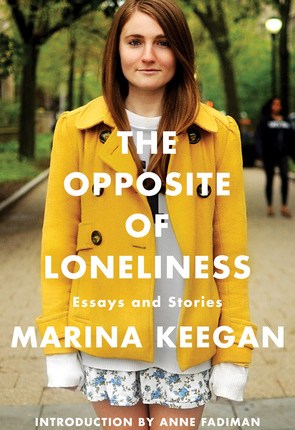
The Opposite of Loneliness: Essays and Stories by Marina Keegan

The Opposite of Loneliness: Essays and Stories by Marina Keegan

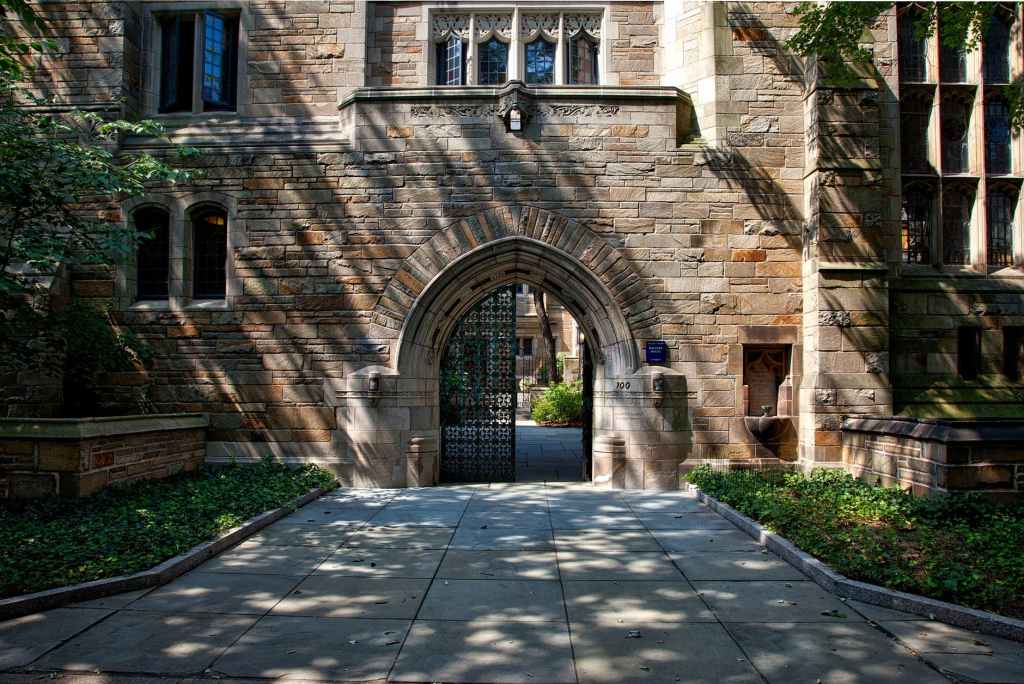
The Opposite of Loneliness is an excellent collection of fiction and non-fiction essays by Marina Keegan, a Yale student who died in a car wreck a couple days after she graduated from college.

Photo by Pixabay on Pexels.com

My favorite essay out of the bunch is “Against the Grain” pg 157 where she discusses her Celiac disease and the negative effect that that had on her mother.

She expresses frustration with how ridiculously protective her mother became when they were finally able to figure out what was wrong. She talks about being embarrassed at holidays as her mom cooked separate pies just for her or at field trips when her mother brought along special snacks.

But then, she reveals how she saw an internet article about how having Celiac disease could negatively effect the fetus when the sufferer becomes pregnant… and it’s a light bulb moment for Marina. She suddenly understands that feeling, how she would do anything to protect that other person, her baby, and suddenly her mom’s behavior doesn’t seem all that crazy after all.

Photo by Pixabay on Pexels.com

Of course, the absolutely heartbreaking moment for the reader is realizing that this particular dream will never come to fruition for Marina, but the fact that she even had that “ah-ha” moment is so powerful.

Marina’s writing highlights the sometimes indescribable feelings of daily life in such a powerful way.

For example: “My dog let out a small howl, twigs cracked in the woods, and something about the stillness or my state of mind reminded me of the world’s remarkable capacity to carry on in every place at once.”pg 34 I always had that feeling towards the end of the semester during college.

You’d work at this frantic pace, not giving a thought about your family or friends at home, then somehow in the lull between the final and actually going home, it would occur to me to wonder how my sisters had been for the last ten weeks or what my high school buddies had been up to.

I’d also forgotten that the world “carr(ies) on in every place at once.” Loved that sentiment.

Photo by Andrea Piacquadio on Pexels.com

“I worry sometimes that humans are afraid of helping humans.”pg 153 I worry about that too.

In that essay, Marina is talking about helping to save whales that were beached near her home. She talks about the time, effort, and money that is spent without consideration for the fact that only so many of the whales will actually be saved.

Then, when these whale rescuers go home, they do so without a backward glance towards the homeless on the streets, who are just as “beached” as the whales that they’ve been caring for all day.

“You feel like so many people are doing it and talking about it all the time like it’s interesting, so you start to wonder if maybe it really is.” pg 190.

Photo by Tomas Anunziata on Pexels.com

Marine was writing about how 25 percent of Yale graduates go immediately into banking or consulting positions that have absolutely nothing to do with their long term goals, but provide a quick paycheck in the short term.

Will they ever realize their dreams? If they make enough money, will they even care?

Life is about more than a paycheck. Marine Keegan knew that and her life had barely begun.

If you enjoyed The Opposite of Loneliness, I’d suggest Cool, Calm & Contentious, an excellent and serious collection of essays about life, or Zombie Spaceship Wasteland, a comedic collection of essays about life that are surprisingly insightful.

Thanks for reading!