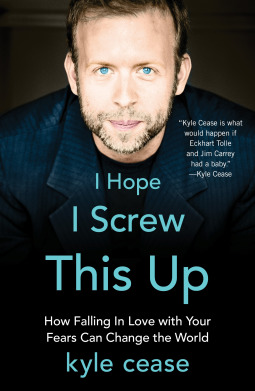
I Hope I Screw This Up: How Falling in Love with Your Fears Can Change the World by Kyle Cease

I Hope I Screw This Up: How Falling in Love with Your Fears Can Change the World by Kyle Cease

ihopeiI Hope I Screw This Up is a part-diary, part-spiritual evolution manual and 100 percent the Hippie Librarian’s type of read. Kyle Cease shares his thoughts and personal path towards becoming his best self. I didn’t find it to be as funny as promised in the blurb, but I do think it has worth as, “another finger pointing towards the moon,” as Eckhart Tolle would say.

The beginning of this book is hard to get through- for the writer and the reader. Kyle explores his fears and inability to get started. But, he slowly gets into his groove and, boy, does he begin flowing. Here’s the start of the turn-around: “You would have sensed my inauthenticity immediately if I was feeling fear in every ounce of my body and I just overlooked it in order to write the “right” thing. Instead, by baring my soul and telling you what I’m actually experiencing, I’m freeing myself from the pain I would otherwise be hiding and holding on to. Something I’ve learned is that sharing my deepest truth, no matter how scary it is in the moment, is freedom.” loc 48, ebook. And he’s off to the races.

“Just because I haven’t done this before doesn’t mean that I can’t access the ability to write the most amazing book that has ever been written. We all have the exact same level of ability to access the unlimited creativity available in every moment.” loc 158, ebook. I believe that too-
humanity’s ability to access unlimited creativity every moment. I suppose I believe that Kyle could write the most amazing book that has ever been written. Does he do it in this tome? I guess that depends upon how well you’re able to connect with what he’s done.

I enjoyed this discussion about the limitations of the mind: “Your mind is constantly putting you in survival mode all day so it can protect itself from what it thinks will be death, and unfortunately, your mind thinks almost everything is death.” loc 224, ebook. Isn’t that the truth.

And he touches on some of the problems with the New Age movement: “I know it sounds weird to say that sadness is actually a good thing, but the societal lie is that it’s better to be happy than to be sad. That’s just a belief that our mind created. … one of the strongest things you can do is to actually feel the emotions that you’re experiencing.” loc 510. Every emotion has a time and place. The insistence upon positivity at any cost, doesn’t work. Serenity now, insanity later… yes?

He also goes into the life-changing benefits of meditation, which I also agree with. By slowing down and taking the time to go within, your inner being speaks to you and gives you guidance: “Every single one of us has this calling within us, but most people are so locked into the habits and distractions they’ve created in their life that they can’t hear it. It doesn’t take anything special to discover what that calling is or what it wants you to do; all you have to do is turn down the volume of your distractions and listen.” loc 706. It may sound weird if you haven’t experienced it yet but it’s true.

For the most part, Kyle keeps his book in this dimension of reality and doesn’t dip into the far-out. But, there is a part where he briefly jokes about a picture of himself and how, at the universal energy level, we’re all the same. So, technically, you’re looking at a picture of yourself in the book that you wrote, even though it seems that you’re looking at a picture of him in a book that he wrote. That could be a bridge too far for some readers, but the Hippie Librarian took it all in stride.

Enthusiasts of Eckhart Tolle and Abraham Hicks will probably enjoy Kyle Cease. He’s authentic in the way that spiritual teachers are, understandable and amusing. He also makes a good case for falling in love with your fears. Now, the hard part, to practice it.

Thank you to Netgalley and North Star Way publishing for a free digital copy of this book. Reminder: the brief quotations that I pulled from the advance reader’s text may differ slightly in the final printed version.

Thanks for reading!
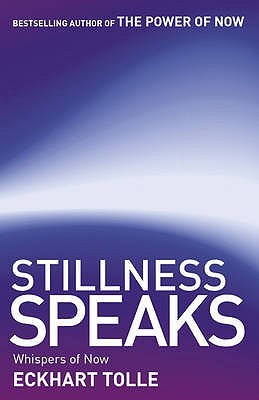
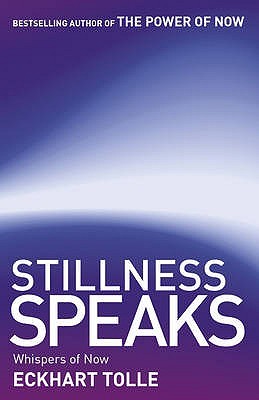
Stillness Speaks by Eckhart Tolle

Stillness Speaks by Eckhart Tolle
stillness speaks

Shorter and simpler than his other books, Stillness Speaks is the essence of Eckhart Tolle. If you’re interested in his teaching, but don’t feel up to some of his more far-out ideas, this would be a good place to start.

Waking up to who you really are: “When you recognize that there is a voice in your head that pretends to be you and never stops speaking, you are awakening out of your unconscious identification with the stream of thinking. When you notice that voice, you realize that who you are is not the voice- the thinker- but the one who is aware of it. Knowing yourself as the awareness behind the voice is freedom.” pg 29.

If you feel like things are out of your control, Eckhart Tolle hands the reins of power back to you: “Your thoughts make you unhappy. Your interpretations, the stories you tell yourself make you unhappy. “The thoughts I am thinking right now are making me unhappy.” This realization breaks your unconscious identification with those thoughts.” pg 120.

This book is filled with mind-blowing moments. Take this one (I underlined it in my copy): “Death is not the opposite of life. Life has no opposite. The opposite of death is birth. Life is eternal.” pg 103. Eckhart Tolle mic drop.

I’ve always loved his thoughts about the relationship between nature and man: “Nature can bring you to stillness. That is its gift to you. When you perceive and join with nature in the field of stillness, that field becomes permeated with your awareness. That is your gift to nature. Through you nature becomes aware of itself. Nature has been waiting for you, as it were, for millions of years.” pgs 85-86. So, go hug a tree today. 🙂

This book is an experience which is hard to describe. Read it and let me know what you think.

If you enjoy Stillness Speaks, you may want to give The Power of Now: A Guide to Spiritual Enlightenment or A New Earth: Awakening to Your Life’s Purpose a go. They are more difficult to get through than this offering, but I found them to be worth it.

Thanks for reading!
The Zen of You and Me: A Guide to Getting Along with Just about Anyone by Diane Musho Hamilton

The Zen of You and Me: A Guide to Getting Along with Just about Anyone by Diane Musho Hamilton
zen of you and me

The Zen of You and Me takes on conflict mediation through zen philosophy. I learned a lot about managing conflict but more about myself and why, perhaps, I tend to avoid it. Hamilton is never preachy, but gently guides the reader through the dark woods of differences into the clear fields of appreciation and inclusion.

“It is a very freeing experience to suddenly realize that a difference between us is not only OK- it is stimulating and worthwhile. This realization heights our confidence to bring them out directly and openly.” loc 180.

Hamilton talks about leading classes through difficult discussions about race and privilege. The group only manages to make their way through it when one of the members expresses his desire to be heard and the others in the group allow themselves to listen.

But it isn’t easy to listen. You might be angry or otherwise triggered by what you’re listening to. Hamilton addresses that: “Threat provokes such intense sensations in our body and mind that sitting still seems wildly counter intuitive and impossible. But the first step is to learn to sit still and simply pay attention.” loc 310. Mindfulness provides the way out.

Photo by Elina Fairytale on Pexels.com

I also learned that I’m not as good a listener as I could potentially be. Hamilton provides some excellent advice for improving your skills: “Listening has a lot in common with meditation. Both involve a clear intention of bringing attention to this moment, receiving input, and letting go of the preoccupations of the self. … My first impulse was to tell her it was OK; everything would be all right. Then it occurred to me that she didn’t want to hear that. … I distinctly remember the warm sensation of letting go move through me.” loc 377.

I’ve started practicing not listening to answer but listening to listen. I surprised myself with how often my mind was racing away somewhere else as soon as another person opened her mouth. But, now that I know I do that, I can focus on changing that behavior. Thanks Diane Musho Hamilton!

I expect that now I’ll experience my loved ones in wholly new ways. “Anytime we express our real thoughts and feelings, it creates more truth and reveals a bigger perspective. And anytime someone else shares their truth with us, we should be grateful that we are given the opportunity to see and feel more than we did before. It is a privilege to feel.” loc 511. It is a privilege, isn’t it.

Hamilton talks about one of her students who set an intention to not lose her temper but was then hijacked by her emotions: “Her conditioned patterns are her suffering, like mine are mine, and yours are yours. I invited her to include them, to love them, because this practice is love.” loc 1331. So, it’s not about banging yourself into shape or forcing yourself to become something you’re not. It is more like becoming who you naturally are- which is freedom, joy, love and boundlessness.

Recommended for those who struggle with conflict within themselves or between themselves and others. The Zen of You and Me is helpful, succinct, beautiful and very zen.

Thank you to NetGalley and Shambhala Publishing for a free digital copy of this book. And thank you for reading!

The End of Self-Help: Discovering Peace and Happiness Right at the Heart of Your Messy, Scary, Brilliant Life by Gail Brenner

The End of Self-Help: Discovering Peace and Happiness Right at the Heart of Your Messy, Scary, Brilliant Life by Gail Brenner

Dr. Gail Brenner, from a completely Western point of view, presents a method of self realization that feels quite Eastern in its premise. To escape from troubling thoughts or life situations, go within and stay in awareness of your own consciousness.

From this new way of existence, external problems will either change or cease to exist in your new perspective of non-being. In fact, this book read a lot like Eckhart Tolle but was, I felt, a lot more understandable with some easy exercises thrown in.

Photo by Brett Jordan on Pexels.com

I think sometimes it helps to read the same type of material from different people because maybe something that they say will finally penetrate the fog in your mind. It can be a frustrating slog through buzz words and generalities. Or, perhaps, this author’s life experience is closer to yours and you are more able to figure out what the heck they’re saying- the finger pointing at the moon and all that.

I try to have an open and empathetic mind when I read self-help because you run into a lot of authors who want you to jump through the exact same hoops that they did even though your life experiences or difficulties aren’t the same. Yes, you may find some techniques that work for you but it’s never quite the extraordinary break through that they’re claiming.

Photo by Karolina Grabowska on Pexels.com

I run into the same messages again and again in self-help, but, I’m always thinking, maybe THIS time it’ll stick and I won’t have to try, yet another, author. Dr. Brenner has written a message that resonated with me even though it wasn’t the first time I’d run into it and it’s almost universally applicable in its technique.

She wrote this book so that, theoretically, the reader would never have to delve into self help again out of feelings of lack, loneliness, fear, etc. I’m certain that I will go there again, the self help shelf, out of a sense of curiosity which Dr. Brenner doesn’t discourage. She doesn’t ask readers to check out of their lives, but she wants to make sure that you’re going into self help for the right reasons.

This is a great read. If you like Eckhart Tolle, but he feels too far or you don’t dig his teachings about the “pain body”, The End of Self-Help might be just what you’re looking for. If you’re looking for more of this type of teaching, listen to the audio lecture, In the Presence of a Great Mystery by Eckhart Tolle or Resist Nothing: Guided Meditations to Heal the Pain-Body by Kim Eng.

I received a free copy of this book through Goodreads First Reads program. Thanks for reading!
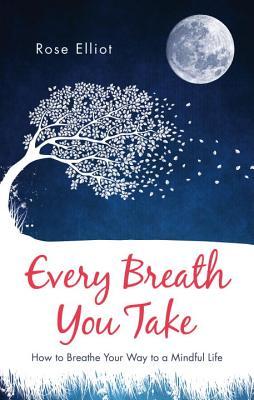
Every Breath You Take: How to Breathe Your Way to a Mindful Life by Rose Elliot

Every Breath You Take: How to Breathe Your Way to a Mindful Life by Rose Elliot
everybreath

Every Breath You Take is one of the finest mindfulness manuals that I’ve ever had the pleasure to pick up.

Practice by practice, Elliot takes the reader from the simple and concrete observation of the breath to the complex and abstract juggling of mind stuff. Along the way, she provides stories and anecdotes of those who have walked these paths before us and shows that, no matter where you are in your life, you can become more aware and grounded in the present moment and how beneficial that can be for you.

She began her journey like most of us- convinced that mindfulness was too difficult: “I struggled with the practice. I found it dreary, dull and boring- all that ‘notice-what-you’re-doing-while-you-clean-your-teeth’- I just couldn’t get to grips with it at all. … when I was on the point of giving up altogether, I met a monk… and he quietly suggested that it is helpful to link mindfulness practice to breathing. This really helped.” loc 16.

Elliot is so relatable that she made me feel like, if she could do this, I could do it too.

A reminder that mindfulness isn’t just a ‘Buddhist’ thing: “…it is to the Buddha that we owe mindfulness, but that does not mean you have to ‘be a Buddhist’ (whatever that may mean), or indeed of any religion at all to practise it. The breath is universal, as is spirit, so we can all benefit.” loc 46. If we can breathe, we can watch the breath. We just need to remember to do it.

Photo by Pixabay on Pexels.com

I loved Elliot’s gentle humor which was evident throughout: “You can use the irritations of daily life as reminders to take a mindfulness breath- and this way you’ll certainly get plenty of practice! For instance, such reminders might be: Being held up in traffic or a red light when you are driving. Waiting for the kettle to boil or for a bus or a train that’s late- waiting for almost anything. Lining up at the bank or at the grocery store checkout, or anywhere, for that matter. When someone is being really irritating, how great to know you have your own inner source of peace so they can’t bother you.” loc 237.

It is as if life is chock full of opportunities to take mindful breaths 🙂

My favorite part of the book was the many teachings about attachment. “When we can accept things as they are now, but recognize that they will change, and accept that too, we will know peace.” loc 793. I feel more peaceful already!

The Epilogue where Elliot talks about grieving for her husband and using these breathing exercises to make it through is especially touching. This is not just someone who talks the talk- she’s out there walking the walk. Highly recommended for anybody at any level of ability who wants to learn more about mindfulness.

Some further reading: How to Relax, The Wisdom of the Breath: Three Guided Meditations for Calming the Mind and Cultivating Insight, or Being Peace.

Thank you to NetGalley and Watkins Publishing for a free digital copy of this book!  And, thank you for reading.

Trance Dancing with the Jinn: The Ancient Art of Contacting Spirits Through Ecstatic Dance by Yasmin Henkesh

Trance Dancing with the Jinn: The Ancient Art of Contacting Spirits Through Ecstatic Dance by Yasmin Henkesh
trancedancing

I read The Golem and the Jinni a few months ago and realized that I knew next to nothing about the mythology of the Jinn. Not that I’m an expert on golems either, but I had at least been exposed to the idea.

Trance Dancing with the Jinn is a book about kinetic meditation (trance dancing) but it also documents the history of the Jinn as written in the Quran and other sources as well as the biological and historical reasons that humans go into trance.

In addition to the mythology and biology, I learned about how trance dancing at meetings called “zars” is an outlet for women who have very little control over any other aspect their lives in Northern Africa.

The author is clearly a believer in the existence of “the Invisibles” but, if you don’t share the same beliefs, this book still has plenty of fascinating information for those interested in cultural, religious, or feminist studies and ritual dance.

The author asks the reader to have an open mind: “Do you believe in Invisibles or do you consider them an outdated tradition from an ignorant past? What if you had a safe, drug-free way to see for yourself? Would you be curious enough to try it- even though the method takes practice and you probably won’t succeed on your first attempt?” loc 200.

Yeah, I’m down for that.

I don’t think it is that difficult to entertain the idea that there may be intelligences that exist that can’t be perceived in normal states of consciousness.

As Henkesh reminds us: “According to NASA’s website, “Everything on Earth, everything ever observed by all our instruments, all normal matter- adds up to less than 5% of the Universe… The rest is a complete mystery, but an important one. Roughly 68% of the Universe is dark energy, while dark matter makes up about 27%.” This energy and matter are called “dark” because they do not reflect light… or interact with electromagnetic forces. We only know they are there by their effects on gravity…” loc 233, ebook.

Photo by Pixabay on Pexels.com

Only 5% has been observed- that leaves a whole lot that we haven’t even looked at yet.

Western researchers are still discovering how and why trance works, but they at least acknowledge that it exists: “Neurologist Oliver Sacks once wrote, “Normal waking consciousness, rational consciousness as we call it, is but one special type of consciousness, whilst all about it, parted from it by the flimsiest of screens, live entirely different potential forms of consciousness.” loc 267.

The most fascinating part of this book was the emotional outlet that trance dancing has allowed women for hundreds of years: “… thousands of women in Egypt still turn to the zar when modern medicine fails them. If doctors cannot find the cause of their physical or mental ailments, they assume supernatural forces are involved. … Diagnostic zars can last anywhere from a day in Egypt to a week in Sudan and Ethiopia.” loc 2530-2548

I had never heard of this and looked up some examples of zar/trance dancing on YouTube. Go ahead, take a look:

I can see how such flowing, uninhibited movements would feel therapeutic now, so I can’t imagine the relief I’d feel if I was not allowed to have a job or leave the house without a male by my side. I’d probably be trance dancing non-stop.

Some further reading/listening for those interested in trance: Ecstatic Body Postures: An Alternate Reality Workbook, Seeking Heaven, or Brainwave Journey.

Thank you to NetGalley and Llewellyn Publications for a free digital copy of this book! And, thank you for reading.

The Space Within: Finding Your Way Back Home by Michael Neill

The Space Within: Finding Your Way Back Home by Michael Neill
thespacewithin

No matter how many books I read on meditation, I always seem to learn something new when I pick another one up.

The Space Within is one of the more excellent books that I’ve discovered- not pushing any particular way of being, just quietly encouraging the reader to go within and embrace what’s there.

On separating our consciousness from the universal energy that surrounds it, Neill compares the mind to a book and I’m sure most Goodreads users, like me, could easily connect with the metaphor:“Think of ‘quiet’ not as an absence of thought but as the space inside which the noise of your thinking arises. What makes this tricky, at least to begin with, is that at first glimpse the noise is more interesting than the quiet …look at the white background of this page. Chances are you can still see the words, and even read them, but without noticing it, at some point you will once again become absorbed in the words and stop seeing the white of the page.” loc 192, ebook.

Why bother to meditate? : “There is a space within you where you are already perfect, whole, and complete. It is a space of pure Consciousness- the space inside which all thoughts come and go. When you rest in the feeling of this space, the warmth of it heals your mind and body. When you operate from the infinite creative potential of this space, you produce high levels of performance and creative flow.” loc 207

And more, promises Neill. I’ve meditated for many years and I’ve experienced some extraordinary things. It wasn’t always easy and it didn’t happen all at once, but I can say, from personal experience, that this particular claim is absolutely true.

Photo by Samuel Theo Manat Silitonga on Pexels.com

Thoughts are incredibly powerful things. I think we forget just how life changing your personal perspective can be: “… we live in a world of unrecognized thought. Thought is the architect of both hope and despair, the source of every color in the emotional rainbow. … But unrecognized thought demands our attention and fills our consciousness. And when we get caught up in thought, we lose our way.” loc 324, ebook.

And also: “We live in a world of thought, but we think we live in a world of external experience. The mind is not a camera, it’s a projector. We can’t tell the difference between an imagined experience ‘in here’ and what’s going on ‘out there’- and that confusion creates a lot of confusion.” loc 375, ebook.

You create your own reality- but it’s easy to forget that and blame other people for your circumstances.

When I read this next passage, I thought of How The Secret Changed My Life and the incredible importance that people placed on feeling good.

Neill points out that it isn’t anything to get wound up about: “There’s no such thing as a solution to a feeling. Because we don’t recognize this fact, we spend huge chunks of our time and energy trying to ‘solve’ our feelings by changing them to ‘better’ ones or eliminating them altogether. … When it’s okay to feel good when you feel good and bad when you feel bad, recognizing that as thoughts change, the feelings change with them, there’s no need to prefer one feeling over another, let alone attempt to fix it. And when you really see that for yourself, you being to experience more of the deeper feelings that make life worth living.” loc 457, ebook.

This is a great place to start if you’re just learning about meditation/mindfulness but it’s also appropriate for more experienced practitioners- if you breathe or think, you could probably learn something from this book. Some suggestions for further reading: Buddha’s Brain: The Practical Neuroscience of Happiness, Love, and Wisdom, Meditations for Breaking the Habit of Being Yourself, or Happiness: A Guide to Developing Life’s Most Important Skill.

Thank you to NetGalley and Hay House Publishing for a digital copy of this book! And, thank you for reading.

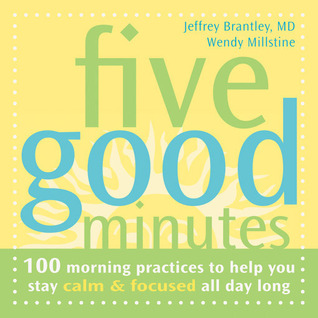
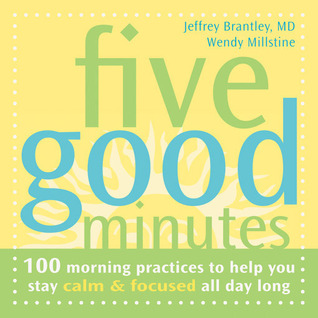
Five Good Minutes: 100 Morning Practices to Help You Stay Calm and Focused All Day Long by Jeffrey Brantley, Wendy-O Matik, Wendy Millstine

Five Good Minutes: 100 Morning Practices to Help You Stay Calm and Focused All Day Long by Jeffrey Brantley, Wendy-O Matik, Wendy Millstine
fivegoodminutes

Things have been stressful in my neck of the woods, so I picked up Five Good Minutes to help me cope.

I’m in the fourth month of having my house on the market and my husband has been looking for employment for over a year. Yeah, I’m feeling it…

Five Good Minutes is simple enough for beginners to the mindfulness/meditation practice and filled to the brim with suggestions for ways to focus in the morning and get your day off on the right foot.

The best part of this book is that there is something for everyone- it is that broad. The techniques that it uses varies from visualizations to mindfully drinking your morning cuppa.

The worst part of the book is that, because it covers so much, that it doesn’t really talk about anything in depth. If you’re looking for detailed methods of meditation and relaxation, this is not the book for you.

Why the focus on early in the day?: “The morning is the best time to break away from old habits of thinking and feeling and to set a new direction for yourself and how you will be in your day. Any exercise in this book- done in the morning- has the power to impact greatly on your experience throughout the day, if you allow it!

Photo by Felipe Borges on Pexels.com

Personally, I’ve found that I’m at my best in the mornings- well, once I blink the sleep out of my eyes. My mind is clearer and I can focus for longer periods of time.

But, if you’re more an afternoon/evening type person, don’t let the title of this book stop you. I think that these practices could be beneficial at any time of the day.

My favorites were- the Five-Fingered Peace pg 32: In which you use your hands almost as a rosary and remember awesome things that have happened to you.

Freedom from Tension pg 58: In which you scan your body and focus your relaxation on the stressed out bits.

Photo by Alexandr Podvalny on Pexels.com

Your First Sip of Tea pg 94: or coffee, for me. Take your time and mindfully drink your morning pick-me-up.

A Shot of Faith pg 186: You use visualization to picture a problem turning out perfectly.

And finally, Cultivate Gratitude pg 206: “This practice invites you to turn toward the good in your life and to express gratitude as recognition grows.”.

If none of those spoke to you, there are 95 others for you to choose from.

Recommended for stressed out people everywhere and those who are interested in bringing a bit of mindfulness or meditation to their day but don’t know where to start. Some further reading: Thank & Grow Rich: A 30-Day Experiment in Shameless Gratitude and Unabashed Joy, Meditations for Breaking the Habit of Being Yourself, or 10% Happier: How I Tamed the Voice in My Head, Reduced Stress Without Losing My Edge, and Found Self-Help That Actually Works. Peace and thanks for reading!
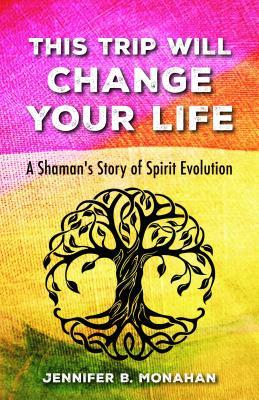
This Trip Will Change Your Life: A Shaman’s Story of Spirit Evolution by Jennifer Monahan

This Trip Will Change Your Life: A Shaman’s Story of Spirit Evolution by Jennifer Monahan
tripwillchangeyourlife

This is a firsthand account of Jennifer Monahan’s discovery of her spiritual path and budding abilities as she becomes a modern day shaman.

From the introduction: “Let me start off by saying that I’m nobody special- or at least not any more special than every other person on the planet. But I do believe in magic. And the power of the universe in our lives. This is a story about magic- everyday magic that exists in everyone’s life but that for many goes unnoticed and unappreciated.” loc 26, ebook.

I think that everyone has potential, but sometimes they don’t tap into it because they can’t see how or don’t realize that they can. Jennifer Monahan empowers the reader through her example.

Shamanism, though ancient, feels New Age.

Take this teaching about the mind: “The purpose of the mind, Antonio said, is to train it so that it focuses on those things that make the spirit sing and bring it joy- and to let everything else just slip on by without letting it get caught in the mind… Doing this enables people to live in a state of happiness, peace, and self-love.” loc 153, ebook.

That’s the message of Thank & Grow Rich: A 30-Day Experiment in Shameless Gratitude and Unabashed Joy, Ask and It Is Given: Learning to Manifest Your Desires, The Secret… I could go on. Perhaps the New Age teachers are on to something :).

My favorite parts of This Trip Will Change Your Life were the messages that Jennifer received during meditation and what she experienced during her vision walks. It is always positive, loving, supportive or healing wisdom that is shared.

Photo by Tobi on Pexels.com

Here’s the universe speaking to her while she breathes: “You don’t have to do anything. Just be. Radiate love out from your core. Focus on that and on being present. Be accepting of people- that is the first step. You’re doing that now; keep it up. Share your joy- find it! Tap into your life.” loc 503, ebook.

I can see this book not appealing to everyone: Jennifer has a few moments of “far out” behavior like talking to her crystals and receiving their wisdom, but if you believe that everything contains a spirit (the philosophy in The Life-Changing Magic of Tidying Up: The Japanese Art of Decluttering and Organizing comes to mind) then it is not such a stretch to entertain the idea that one could communicate with inanimate objects.

Western Qabalists have taught for centuries that everything has a guiding intelligence and that to tap into it, you just have to clear your thoughts, ask, and be ready for the response. But, if you don’t have a fairly open mind about such things, this might not be the book for you.

Overall, I loved the message of this book and the approachable way that Jennifer explains shamanism. “The realization that I’ve come to is that the basic human need is to be loved. And that love needs to come from within. When we feel love for ourselves, we are happy and feel good. We can then send our love unconditionally out into the world.” loc 751.

Highly recommended for those who are curious about shamanism or finding one’s spiritual calling- whatever that may be.

Recommended read alikes: the books I linked above as well as The Flying Witches of Veracruz: A Shaman’s True Story of Indigenous Witchcraft, Devil’s Weed, and Trance Healing in Aztec Brujeria by James Endredy (another modern shaman), The Way of the Shaman by Michael Harner(classic text, gives plenty of general knowledge and practices) or Active Dreaming: Journeying Beyond Self-Limitation to a Life of Wild Freedom by Robert Moss (incorporates the shamanistic practices of the Aborigines for a modern audience).

Thank you to NetGalley and She Writes Press for a free digital copy of this book! And, thank you for reading.