Hildegard von Bingen: A Journey into the Images by Sara Salvadori

Hildegard von Bingen: A Journey into the Images by Sara Salvadori

“What I do not see I do not know,” an elderly Hildegard wrote to the Cistercian monk Guibert of Gembloux, describing the visions from which she gained her knowledge of the cosmic, human and divine dimension, from childhood until the end of her life.” From the preface.

Hildegard von Bingen, born 1098-died 1179, was a female mystic of the Christian tradition. She had extraordinary visions, which she recorded, and in her later years, she shared with others.

“The ‘Sybil of the Rhine‘ appears to us in the 21st century as a real woman who developed the many aspects of her femininity: worldly and joyous, learned and visionary, profoundly human yet open to the divine, inclined to dance, friendship and leadership.” pg 6

But this is not all Hildegard accomplished. She also composed the music she heard in these visions. She traveled extensively at a time when travel was not a simple task in order to bring together communities of believers.

All in all, Hildegard was a pretty cool lady who experienced fairly trippy visions.

“Our historical human condition enables us to appreciate her fascinating, layered personality, which made her equally at home with plants and flowers, angelic powers and the virtues that courted them; and capable of dialoging with the powerful of the Earth both inside and outside the Church, without feeling in any way intimidated or inferior.” pg 7

The visions themselves are organized into sections. Hildegard gave each a title, summarized list of chapters, description, explanation and Biblical passages to go along with each. In a time when very few were literate, Hildegard’s illustrated visions were used as teaching tools, similar to medieval bestiaries. (Which I learned about here: Book of Beasts: The Bestiary in the Medieval World)

The colorful visions of Hildegard are meant to be experienced rather than enjoyed second-hand, so I won’t bore you with extensive descriptions about them. But I will share my impression of her work.

I found Hildegard to be transportive. I didn’t understand all of them, but the images speak to my subconscious mind through their beauty and repetitive patterns. “Look at the mystery of existence,” they seem to say.

I think its fascinating that Hildegard was a female mystic in a tradition where the divine feminine was relegated to a backseat role. (No offense meant to the tradition by the way, just an observation.) It makes me wonder where such mystics are today, if they exist.

And if they do, would we listen and learn from them like Hildegard? Or dismiss their experience as a brain malfunction and put them on medication.

Something to consider. Highly recommended for spiritual seekers.

Thanks for reading!

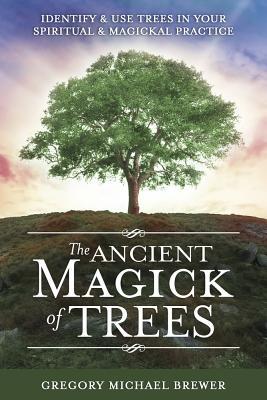
The Ancient Magick of Trees: Identify & Use Trees in Your Spiritual & Magickal Practice by Gregory Brewer

The Ancient Magick of Trees: Identify & Use Trees in Your Spiritual & Magickal Practice by Gregory Brewer

“Since the dawn of humanity, in all cultures and religions across the globe, trees have been revered not only as a life-sustaining source of food and medicine but also as a place where spirits dwelt, awaiting to reveal great mysteries to those who sought their wisdom, knowledge, and magick.” pg 2

Author Gregory Brewer examines the wonder and mystery that are trees from the pagan perspective in this book which is part informational, tree-related ritual/meditation suggestions, and reference.

Photo by Pixabay on Pexels.com

Understanding the symbolism of trees throughout countless cultures of human history is an enlightening study, but equally important is learning to form a personal connection with them in order to better comprehend the interaction of how the divine reveals itself to us through nature.” pg 243

The majority of the book is dedicated to descriptions and occult associations for different types of trees.

I read The Ancient Magick of Trees in order to learn more ways to invite nature into my life. The book has that but I found Forest Bathing: How Trees Can Help You Find Health and Happiness to be more immediately practical. I also connected more with the information in the forest bathing book.

Thanks for reading!

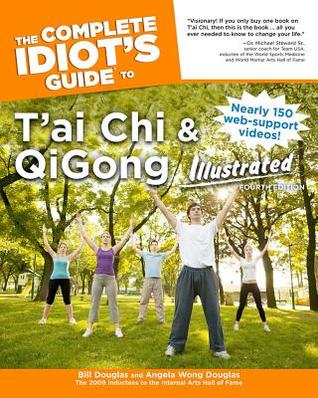
The Complete Idiot’s Guide to T’ai Chi & QiGong by Bill Douglas

The Complete Idiot’s Guide to T’ai Chi & QiGong by Bill Douglas

The Complete Idiot’s Guide to T’ai Chi & QiGong is a useful reference guide that I’ve been using in conjunction with online courses to dip my toes into the practice of both.

The first part of the book is the history of the martial and meditative arts as well as best practices. The second part is the movements.

Photo by Pixabay on Pexels.com

I liked that links to demonstrative videos are sprinkled throughout the text, somewhere over a hundred of them! It really helped the materials to come alive for me.

The way the author writes might be a little far out for readers who are looking for more scientific approaches to the practices. He touches on scientific studies that demonstrate health benefits, but doesn’t go too deeply into the science behind them. Readers who are looking for something like that may want to find a different book.

Photo by Craig Adderley on Pexels.com

I’ve begun to incorporate both t’ai chi and qigong into my daily routine. It is a nice, restive break from the stressful day-to-day grind. As I move my body through the practices, my mind follows.

It is difficult to describe, but easy to experience if you attempt some of the movements yourself.

One of the most helpful online resources I discovered for qigong is “Qi Gong for Better Health and Wellness” by Lee Holden on Wondrium.

Highly recommended for readers at all levels of fitness. Namaste!

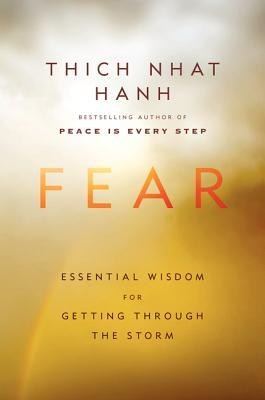
Fear: Essential Wisdom for Getting Through the Storm by Thich Nhat Hanh

Fear: Essential Wisdom for Getting Through the Storm by Thich Nhat Hanh

In Fear: Essential Wisdom for Getting Through the Storm, Thich Nhat Hanh simply and succinctly illuminates the Buddhist path beyond fear into an existence of freedom and joy.

“Nobody can give you fearlessness. Even if the Buddha were sitting right here next to you, he couldn’t give it to you. You have to practice and realize it yourself.” pg 6

Photo by Aleksandar Pasaric on Pexels.com

This book is more than theory, parables and anecdotal stories. Hanh also includes various meditations to assist in the effort.

“When the Buddha was very old, just before he died, he said, ‘My dear friends, my dear disciples, don’t take refuge in anything outside of you. In every one of us there is a very safe island we can go to. … That is a place where you can take refuge whenever you feel fearful, uncertain or confused.'” pg 71

He dissects the various forms fear can take in our lives- from fear of death, grief, anxiety about the future to reconciling with painful emotions from the past.

Photo by David Bartus on Pexels.com

My main takeaway from the book was, to deal with any kind of fear, we need only to approach it with mindfulness and compassion for ourselves and the suffering of others.

“We don’t try to grab on to the pleasant sensation, and we don’t try to push it away. We just acknowledge its existence. When a painful feeling comes, we do the same thing. … A feeling is just a feeling. And you are much more than that feeling.” pg 135

Hanh reminds readers that we are more than the temporary thoughts and feelings that cause so much havoc on their way through our minds and hearts. Our true nature is something else.

My favorite metaphor that Hanh employs to remind readers of this true nature is his comparison of a life to a wave.

“The wave is always water; it doesn’t ‘come from’ water, and it doesn’t go anywhere. It is always water; coming and going are just mental constructions. … Birth and death, coming and going, are just concepts. When we are in touch with our no-birth, no-death nature, we have no fear.” pg 50

Photo by Emiliano Arano on Pexels.com

I appreciated the reminders and found a lot of comfort in these pages. I hope other readers find the same.

Recommended for readers who are interested in learning and utilizing Buddhist philosophy and techniques to overcome any fear or other unpleasant emotion that may be in their lives.

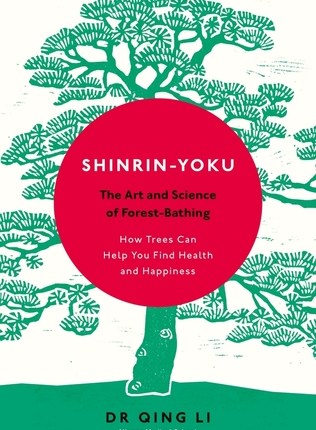
Shinrin-Yoku: The Art and Science of Forest Bathing by Qing Li

Shinrin-Yoku: The Art and Science of Forest Bathing by Qing Li

“Shinrin-yoku means bathing in the forest atmosphere, or taking in the forest through our senses. This is not exercise, or hiking, or jogging. It is simply being in nature, connecting with it through our sense of sight, hearing, taste, smell and touch.” pg 12

Nature lovers or those aspiring to be nature lovers will find much to enjoy in Shinrin-Yoku: The Art and Science of Forest Bathing.

Photo by Jose Vega on Pexels.com

Qing Li reminds readers that the human race is a part of this world even if we have walled ourselves up in cities and covered the ground in concrete. Through various scientific studies, he proves again and again that by taking a time out and forest bathing people can sleep more deeply, experience less stress and think more clearly.

“We may not travel very far on our forest walk but, in connecting us with nature, shinrin-yoku takes us all the way home to our true selves.” pg 15

Not convinced? He provides evidence that patients at hospitals heal faster if the view outside their window includes a tree rather than a wall. People who exercise outside report the exertion they need to complete the workout is less and they enjoy the time more than those who churn out the miles on a treadmill.

“The average sleep time of participants after a two-hour forest walk increased by 15 percent, or fifty-four minutes. Participants were significantly less anxious after a two-hour walk in the forest.”

Photo by WARREN BLAKE on Pexels.com

Forest bathers have reported higher levels of creativity, writers find relief from the dreaded block, and the sense of connection caused by the practice has been known to increase feelings of gratitude.

“The researchers concluded that there ‘is a real, measurable cognitive advantage to be realized if we spend time truly immersed in a natural setting’, and found that spending time in nature can boost problem-solving ability and creativity by 50 per cent. Is it any wonder that Buddha found enlightenment sitting under a tree?” pg 106

Is there anything that forest bathing doesn’t help? How about your health or physical age?

“A group of Canadian, American and Australian researchers studying tree density and health in Toronto found that… having eleven more trees on a block lowered cardio-metabolic illnesses, like high blood pressure, diabetes and obesity, comparable to the effects on well-being conferred by being given a $20,000 a year pay rise or being 1.4 years younger.” pg 116

Photo by Johannes Plenio on Pexels.com

In addition to the information about forest bathing, this book contains beautiful photos of forests every couple of pages. Qing Li gives readers the instructions so, if they desired, they could hold their own traditional tea ceremony in the woods. He includes anecdotal information about aromatherapy, tips on how to bring the forest into your home, advice on how to incorporate beneficial natural sounds into your daily life and more.

I enjoyed this book very much. Highly recommended.

Aware: The Science and Practice of Presence by Daniel J. Siegel

Aware: The Science and Practice of Presence by Daniel J. Siegel

Daniel Siegel, MD, psychiatrist and author, shares his research into neuroscience and a meditation practice he has developed called the “Wheel of Awareness“.

“The Wheel practice is a way to open awareness and cultivate a larger, more expansive container of consciousness. People who participate in the practice seem to be strengthening their minds.” pg 9

Photo by Polina Tankilevitch on Pexels.com

The practice uses focused attention on the senses, bodily sensations, mental activities and interconnectedness, in order to encourage the mind to become more integrated. When this integration happens, the mind gives off certain brainwaves that Siegel and other researchers have measured coming from experienced meditation practitioners such as monks.

Basically, Siegel is using western science in an effort to measure and replicate meditation practices.

The science portions of Aware are not very accessible to the non-scientists readers and I could see that being off-putting. However, if you are interested in the intersection of neuroscience and meditation practice, this book could be incredibly useful to you.

“Where attention goes, neural firing flows, and neural connection grows.” pg 19

Photo by cottonbro on Pexels.com

I found the implications of Siegel’s research to be fascinating. He claims, through focused attention, one can change the neural patterns and behavior of the brain. Meditation affects biology in a physically measurable way.

There have been countless studies on the positive benefits of meditation practice, but, I think, fewer on the changes in the function and integration of the mind. The rewards of such can be profound.

“When our minds wander unintentionally, we are not present, we are not receptively aware, we are not mindful, and studies suggest, we inhibit being happy — even if we are daydreaming about exciting things. … Presence cultivates happiness.” pg 49

Besides the Wheel of Awareness portion, the part of Aware I found most helpful was a discussion about the proper cultivation of empathy, the ability to put yourself in another’s place to feel and share what they are feeling.

Photo by Anastasia Shuraeva on Pexels.com

Tania Singer, in a presentation to the Dalai Lama, had this advice: “… we need to place empathy in the larger space of altruistic love and compassion. This space will act like a buffer for empathic distress. Since altruism and compassion are positive mental states, they reinforce our courage and give us the resources to deal with the suffering of others in a constructive way.” pg 86

I liked the visual of that and think it will come in handy in the future.

Recommended for non-fiction readers interested in the science behind meditation and the development of presence. Spiritual seekers looking for different meditation methods may want to look for that in another, less technical, book.

Thanks for reading!

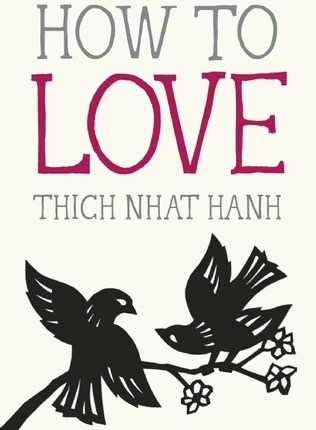
How to Love (Mindfulness Essentials, #3) by Thich Nhat Hanh

How to Love (Mindfulness Essentials, #3) by Thich Nhat Hanh

Thich Nhat Hanh, monk and spiritual leader, has written a short series of books he calls “Mindfulness Essentials.” This entry is all about love. You might ask yourself, what could a monk possibly know about love? Turns out, plenty.

Hanh applies the mindfulness techniques he’s learned over his lifetime of spiritual practice to the potentially thorny pathways of love, and the result is a gem of a read.

Photo by Asad Photo Maldives on Pexels.com

He counsels lovers to bring happiness to each other through being present in the moment and sharing your appreciation with each other. For example, if someone is distracted or worried, Hanh says you should draw their attention to the physical beauty of the world around them. In this way, you anchor the other in the present moment and ease the suffering of their busy mind.

This type of presence is a gift that you can give to anyone at anytime. And it doesn’t cost anything.

Hahn describes four defining traits of love as loving-kindness, joy, compassion, and equanimity. Then he examines these traits in detail so readers can ponder the mystery of love and see where, potentially, we may be falling short of these ideals.

Photo by Jasmine Carter on Pexels.com

He teaches all love begins with self love and walks hand-in-hand with spiritual practice. Through deep listening and the establishment of intimacy, Hahn believes love heals through empathy and “karuna,” a term that describes suffering with another and then doing what you can to end that suffering.

In addition, don’t take the other person for granted or make assumptions about what they may need. It is only through open communication that, Hahn believes, love lives.

He makes it sound so easy. I wish it was.

Photo by Pixabay on Pexels.com

Recommended for readers looking to learn about the spiritual side of love in a quick and easy read. Hanh doesn’t waste words and I am always in awe of what teachings he has to impart.

Thanks for reading!

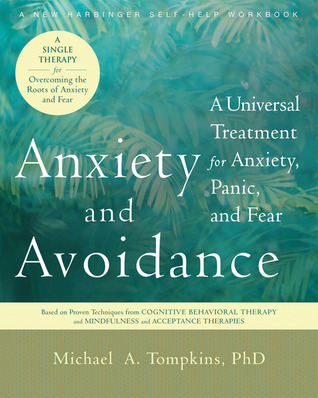
Anxiety and Avoidance: A Universal Treatment for Anxiety, Panic, and Fear by Michael A. Tompkins

Anxiety and Avoidance: A Universal Treatment for Anxiety, Panic, and Fear by Michael A. Tompkins

Everyone experiences anxiety in some form or another in their lives. The trouble comes when you find yourself altering your behavior to avoid triggering yourself, painting your life into smaller and smaller boxes in order to attempt to control the anxiety.

Photo by Eternal Happiness on Pexels.com

This self help workbook hands you the keys to your anxiety response. By unlocking that, you give yourself back the freedom that you may have lost to uncontrollable anxiety.

Emotional flexibility, then, is the key to recovery from your anxiety disorder.”

Michael Tompkins uses cognitive behavioral therapy, mindfulness and acceptance therapies to tackle most major anxiety issues.

I liked his approach because mindfulness is a practice that I enjoy incorporating into my life anyway. By applying it to my anxiety responses, I learned a lot about myself in a very short period of time.

Photo by Karolina Grabowska on Pexels.com

“The purpose of both our primary and secondary anxious responses is to protect us from the threats and challenges of life. For some people, however, the natural and normal secondary anxious response creates problems. These people are stuck in their secondary anxious responses and because they’re unable to move out of it, they have an anxiety disorder.” pg 22

But no matter what coping mechanisms therapists may bring to the table, we have to be willing to put them into action. Tompkins reminds readers to be gentle with themselves and that “true motivation is an invitation, not a push.”

“True motivation is a willingness to try because you recognize and accept that it makes sense for you to change.” pg 43

Once you know your triggers and responses, Tompkins guides the reader through exposure therapy to continue releasing any further anxiety responses.

Photo by Kaboompics .com on Pexels.com

I know no method or book will be a breakthrough for everyone, but I found this particular book to be incredibly helpful and informative. I highly recommend it for anyone suffering from anxiety, panic or fear.

It could be the jump start you need to discover true healing and freedom from the fears that may be holding you back from living the life you’ve visualized for yourself.

Thanks for reading!

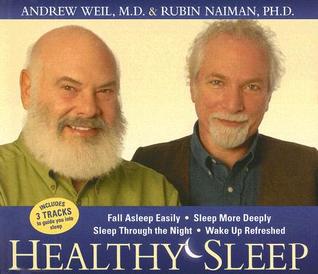
Healthy Sleep by Andrew Weil, Rubin R. Naiman

Healthy Sleep by Andrew Weil, Rubin R. Naiman

Doctors Andrew Weil and Rubin Naiman have created an audiobook to help cure the various troubles one may have while falling to sleep.

I liked their multimodality approach to a problem that everybody seems to have. They start with an exercise to help you figure out what type of sleep problem you may be facing. They discuss the differences between “rest” and “sleep”, which I had never considered. They also talk about how to structure your bedroom to give yourself the best opportunity for sleep.

Photo by Ketut Subiyanto on Pexels.com

Dr. Weil gives some natural suggestions for sleep like maintaining a consistent diet and exercise routine, going to sleep the same time every night, realigning your body with the natural rhythms of the outdoors, and more. He also discusses holistic remedies and the doses he recommends to his patients with potential side effects.

There are also multiple meditations to assist with relaxation and then sleep. As Dr. Naiman points out in the program, one does not truly “go to” sleep as it’s not a location or something you can “catch”. Sleep is more about stepping back and allowing your body to naturally do its thing.

The doctors also go into the importance of dreaming for the health of the psyche. If you’re not sleeping, there’s some underlying issues that your consciousness may not have time to deal with during the waking day. Managing your sleep is more than a benefit for your health, it is also vitally important for your mental health too.

Photo by Vecislavas Popa on Pexels.com

In addition to sleep for individuals, they talk about sleeping with a partner and the special challenges that can bring. I could see this being particularly helpful for sleep-challenged couples and is another aspect of the sleep environment that I hadn’t necessarily considered before.

Highly recommended for people who are looking to increase or improve the quality or quantity of their zzz’s.

Thanks for reading!