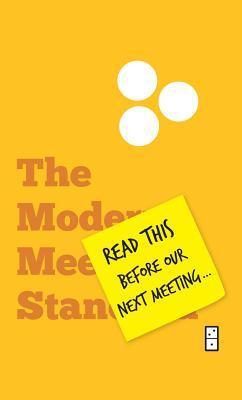
Read This Before Our Next Meeting by Al Pittampalli

Read This Before Our Next Meeting by Al Pittampalli
readthis

Endless meetings have you down? Pittampalli has a solution to your woes. He claims that modern meetings should only be held to solve specific problems and the only people who should be required to attend are those who could take direct action to solve that problem.

I think that the idea is a solid one.

It does take some internal mindset changes by the folks who call meetings. The first step, like with any problem, is to admit that you even have a problem.

“Over time, we’ve become nonchalant about bad meetings. If an operating room were as sloppily run as our meetings, patients would die.” pg 7.

Overly dramatic, perhaps, but true. And also keep in mind: “Change is never met with open arms. Great decisions involve risk and risk scares people; it’s natural for great ideas to get attacked or, worse, ignored. I can think of no single great innovation that has ever happened without the presence of opposition.” pg 15

So, there may be an uphill battle over this, but, Pattampalli thinks, it is worth it.

The end goal: “Meetings need to be less like the endless commercial breaks during a football game and more like pit stops in the Daytona 500.” pg 20.

So, they’re necessary, but they should run quickly because: “Meetings are too expensive and disruptive to justify using them for the most common types of communication, such as making announcements, clarifying issues, or even gathering intelligence. Like war, meetings are a last resort.” pg 23

Photo by Christina Morillo on Pexels.com

This strict definition of a meeting means that there is going to be some major preparatory work since communication isn’t going to be a part of the show. The person calling the meeting has to distribute information about the issue so that those who are attending can contribute.

“Every meeting should require pre-meeting work. Any information for getting attendees up to speed should be given out beforehand. If the attendee doesn’t have time to read and prepare, she doesn’t have time to attend.” pg 37.

But, this preparation pays off when, after the meeting, the business should have created a concrete ‘action plan’ that includes: “What actions are we committing to? Who is responsible for each action? When will those actions be completed?” pg 39. Thus addressing the problem that the meeting was called to solve and serving its function.

Most of the meetings that I’ve attended in my life have been rambling, unfocused affairs that were called to fill the monthly meeting quota that was arbitrarily chosen by management- a touch-base, if you will.

Pittampalli is adamant that this is a waste of time. I never really saw it that way because I didn’t have any expectations that meetings were supposed to accomplish anything at all. We’d meet, then get on about our business. This book has shown me that I should expect more.

Recommended for anybody who wants to learn more about the benefits of “modern meetings”. This short book has everything that you need to start changing the world, one meeting at a time.

Thanks for reading!

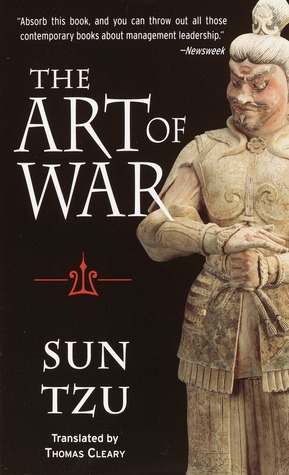
The Art of War by Sun Tzu

The Art of War by Sun Tzu
theartofwar

Frankly, I got tired of my husband quoting this and having no idea what he was talking about. So, Heidi-the-Hippie-Librarian picked up The Art of War. I must love him a great deal because this was so not my thing though I valiantly struggled my way through it. I’d say about three quarters of the book was commentary and translation quibbles on the text itself, which is really rather brief and kind of pretty in a “this is how you kill a bunch of people” sort of way.

My big take-aways from this were:
1 Pay attention to where you are and what’s going on around you all the time, especially in war. And also be super sneaky about what you’re going to do. “..concealing courage under a show of timidity presupposes a fund of latent energy; masking strength with weakness is to be effected by tactical dispositions. Thus one who is skillful at keeping the enemy on the move maintains deceitful appearances, according to which the enemy will act.” loc 1143

2 If you have to fight, do it fast because it’s too expensive to do for long.“There is no instance of a country having benefited from prolonged war.” loc 822, ebook.

3 Everybody uses spies and if you don’t, then you’re going to lose because the other guy is for sure using spies.

4 Be flexible and make the call as things happen. Don’t stick to orders from an emperor who’s really far away because he doesn’t know what the heck is going on like you do. “Water shapes its course according to the nature of the ground over which it flows; the soldier works out his victory in relation to the foe whom he is facing. Therefore, just as water retains no constant shape, so in warfare there are no constant conditions.” loc 1296, ebook.

Photo by Pixabay on Pexels.com

5 Know who you are and who you’re fighting. This knowledge makes you strong so other people can’t determine your future. Use it to win your war.“The art of war teaches us to rely not on the likelihood of the enemy’s not coming, but on our own readiness to receive him; not on the chance of his not attacking, but rather on the fact that we have made our position unassailable.” loc 1542, ebook.

6 Have a vision beyond what is right in front of you and guide yourself toward it, one good decision at a time. “To see victory only when it is within the ken of the common herd is not the acme of excellence. Neither is it the acme of excellence if you fight and conquer and the whole Empire says, “Well done!” To lift an autumn hair is no sign of great strength; to see the sun and moon is no sign of sharp sight; to hear the noise of thunder is no sign of a quick ear. What the ancients called a clever fighter is one who not only wins, but excels in winning with ease.”loc 1011-1030, ebook

7 The place that you fight is very important as well as the officer who is calling the shots and telling you which way to go. If either of these things suck, you’re in trouble. “The natural formation of the country is the soldier’s best ally; but a power of estimating the adversary, of controlling the forces of victory, and of shrewdly calculating difficulties, dangers and distances, constitutes the test of a great general.” loc 1886, ebook.

Photo by Pixabay on Pexels.com

8 Knowing small details about the enemy is very important. For example, if the dudes you’re going to war against put their pots and pans away, they’re planning on dying in battle. Who knew, right? “When an army feeds its horses with grain and kills its cattle for food, and when the men do not hang their cooking-pots over the campfires, showing that they will not return to their tents, you may know that they are determined to fight to the death.” loc 1752, ebook.

So, that’s The Art of War. Now back to my regularly scheduled reading. 🙂  And, thank you for reading.

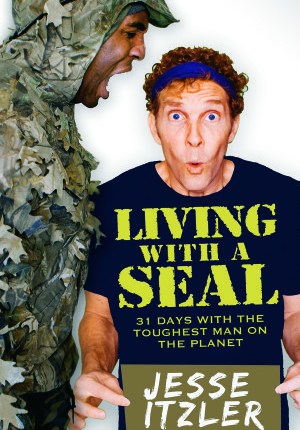
Living with a SEAL: 31 Days Training with the Toughest Man on the Planet by Jesse Itzler

Living with a SEAL: 31 Days Training with the Toughest Man on the Planet by Jesse Itzler
livingwithaseal

Jesse Itzler leads an interesting life. As a successful businessman and entrepreneur, his off-the-wall ideas for solving difficult situations and for stirring the pot have served him very well.

In this book, Living with a SEAL, he documents a month of training with a real life SEAL (who is called just “SEAL” throughout the book).

The workouts were insane, potentially life threatening, but Jesse achieved some astonishing results in a very short period of time. He also bonded with his trainer and learned, through daily interactions, that the sort of conditioning that it takes to make a killer like his SEAL, takes place mainly in the mind and such training can leave its marks on the psyche.

Jesse explains his motivation:“I don’t know if I was thinking about my mortality, or fretting over how many more peak years I had left, or anything like that. I think I was just thinking that now was as good a time as any to shake things up. You know, to break up that same routine.” loc 91, ebook.

SEAL thinks very carefully, bordering on obsessively, about safety and potential disaster scenarios for Jesse and his family. In this passage, he’s purchased an inflatable raft so that, if another 9/11 happens, that Jesse and crew could get out by taking the river.

Here’s what Jesse’s wife, Sara, thought of this: “I’m supposed to grab my son, strap a fifty-pound pack on my shoulders, carry four oars, walk a mile to the river, inflate this survival raft, and then paddle to New Jersey… in the middle of a national emergency?” There is dead silence in the room. … I think to myself, she has a point. Finally SEAL interjects. … “Sara, don’t EVER underestimate the power of adrenaline,” he says.” pg 961, ebook.

SEAL is a man who gets things done, sacrificing his own health to finish tasks that he’s started: “I found out SEAL once entered a race where you could either run for twenty-four or forty-eight hours. Shocker: SEAL signed up for the forty-eight-hour one. At around the twenty-three-hour mark, he’d run approximately 130 miles, but he’d also torn his quad. He asked the race officials if they could just clock him out at twenty-four hours. When he was told they couldn’t do that, he said, “ROGER THAT,” asked for a roll of tape, and wrapped his quad. He walked (limped) on a torn quad for the last twenty-four hours to finish the race and complete the entire forty-eight hours.” loc 1483, ebook.

Photo by Victor Freitas on Pexels.com

Amazing what people can accomplish when they set their minds to it. Personally, I would have stopped when I broke myself, but then, I suppose I wouldn’t make a very good SEAL.

The extreme exercise that SEAL demanded of Jesse had some surprising mindfulness benefits:“…with SEAL around, I’m learning how to be more present. It’s primarily because I have to. If I don’t, there is no way I will be able to finish the tasks at hand. I just go one step at a time. One rep at a time. And when I’m done, I worry about the next step or rep.” loc 1909

I was continually impressed by the physical displays of power and endurance from SEAL. But then, he’d have an interaction with Jesse or his family and I’d question the man’s paranoia levels and ability to function in society.

In this passage, he’s encouraging Sara to mix up the times that she goes to get the mail: “Sara, you need to mix up your pattern.” “Pattern?” “Yeah, your pattern. … The time you get the mail. That’s your pattern. It’s the same every day. It’s predictable.” “I get the mail after lunch,” she says, “That’s the most convenient time.”… “Exactly. You know that. And I know that. The mailman most definitely knows that. So I bet EVERYONE knows that.”… “Just do me a favor. Change up the pick up time.” loc 2161, ebook.

Photo by Element5 Digital on Pexels.com

Living with a SEAL is a lot of fun, but as I said, there are hints of a darker reality that SEAL has learned to endure. It is never graphic or spills over, but you can feel it boiling under the surface.

Recommended for runners, people who like to read memoirs, and those who are interested in the sheer power of the mind and body. Some read alikes: Born to Run: A Hidden Tribe, Superathletes, and the Greatest Race the World Has Never Seen by Christopher McDougall, Explorers of the Infinite: The Secret Spiritual Lives of Extreme Athletes–and What They Reveal About Near-Death Experiences, Psychic Communication, and Touching the Beyond by Maria Coffey, or if the extreme nature of these books are just too much, pick up Confessions of an Unlikely Runner: A Guide to Racing and Obstacle Courses for the Averagely Fit and Halfway Dedicated by Dana L. Ayers.

Thank you to NetGalley and Center Street Publishing for a free digital copy of this book!  And, thank you for reading.