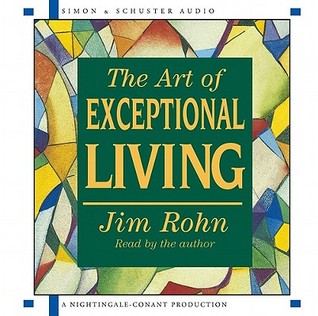
The Art of Exceptional Living by Jim Rohn

The Art of Exceptional Living by Jim Rohn

Nearly every house valued over $200,000 has a library in it. Now why do you think that is?

Jim Rohn, motivational speaker and business genius, was a kinder, gentler Tony Robbins. Originally from Iowa, he uses common sense and a storytelling style in an effort to encourage listeners to improve their lives. This audiobook presentation is a mix of live presentations and studio-recorded bits. Personally, I think he was better in front of a live audience, but there was plenty to take away from in both sections.
Photo by Ihsan Aditya on Pexels.com

Here’s some of what he shares in this audiobook:

Read, learn, journal. Write down what works and what doesn’t. Write down your goals and then take a minute to look at the passing days, weeks and months and see what you’ve accomplished.

Eat healthy and take that walk around the block. If you don’t, you may seriously regret it, maybe not today or tomorrow but in the years to come, you’ll wish you took a minute to invest in yourself.

Work hard at your job and you’ll make a living. Work hard on yourself and you’ll make a fortune!

Photo by Taryn Elliott on Pexels.com

Rohn insists that anyone can be exceptional. He says success in business (and life) comes from small positive steps taken consistently over time. That type of approach really works for most any goal or dream you may have.

Read contracts all the way through, every time. It seems like a simple thing, but it can take you down some dark roads if you don’t read the fine print. He learned that the hard way.

Don’t stop reading and be a lifetime learner. Stay curious. Stay involved.

And take pictures. Part of your legacy to the next generation can be the pictures and documentation you’ve made of your life.

Photo by Kaique Rocha on Pexels.com

I can’t tell you how many times I’ve listened to this audiobook. It’s one of my go-to programs when life has me down. Jim Rohn believed you can accomplish anything that you set your mind to do. He makes listeners believe that too. Highly recommended for anyone who wants to learn “the art of exceptional living.”

Thanks for reading!

Gnarr: How I Became the Mayor of a Large City in Iceland and Changed the World by Jón Gnarr

Gnarr: How I Became the Mayor of a Large City in Iceland and Changed the World by Jón Gnarr
gnarr

Jon Gnarr ran for mayor of the largest city in Iceland not because he had experience as a politician, but because he was a comic and was, at first, poking fun at the system. But then, he realized that politics as usual was getting his country no where. So, he took the election seriously. Imagine his surprise when he won.

“Leo Tolstoy once said, ‘Everyone wants to change the world, but no one wants to change himself.’ But I feel that I have changed myself. I’ve done my homework. And next I want to try- just try, mind you!- to change the world. pg 6-7, ebook.

Iceland is unique in that it has a very small population of around 330,000 people. That’s about the equivalent of Santa Ana, California, or Corpus Christi, Texas. In other words, it’s not that big of a place.

Photo by S Migaj on Pexels.com

“The most famous Icelander is Bjork. … Abroad, she constantly has to flee from fans and journalists who pursue her into every little corner, while in Iceland you run into her in the pool, on the bus, or in the shops. In general, she’s left alone. In Iceland I was famous by the time I was fourteen. I was a fourteen-year-old with a Mohawk and a ring through his nose, and this too was news.” pg 13-14, ebook.

Here’s the scene: Iceland is quite small, the entire country was in an uproar because of the banking collapse, and the people were more than ready for change. But, Jon Gnarr was not ready for politics.

“Thanks to Dad, the newspapers, and the constant discussions broadcast on radio and television, I developed an aversion to politics. Politics was dumb, irritating, and boring. pg 23, ebook.

Photo by Dmitry Demidov on Pexels.com

A self-described ‘peaceful anarchist’, Gnarr was a comic and showman. He created The Best Party as a joke. But, somewhere along the line, the joke became a reality.

“Do you have to understand something down to the last detail before you can contribute to it? Do you have to be a scientist to become interested in science? … No. And it’s no different with politics. You don’t need to be a politician to have the right to participate in political life.” pg 41, ebook.

Even though he started to take the race seriously, Gnarr never took himself too seriously. And it worked.

“Every time another party made any election promises, we sat down together and discussed how we could top them. The Left-Green Alliance promised children and teens free access to swimming pools- our response was to offer free admission for all- with free towels included.” pg 54, ebook.

By not playing politics as usual, Gnarr and The Best Party won. I think he shows what’s possible when people bring a sense of humor and a desire to do good to the table. I think we can accomplish great things.

It just takes someone with a smidgen of imagination and a willingness to try.

Recommended for anyone who’s tired with politics as usual and for all the peaceful anarchists of the world.

Thanks for reading!

#GIRLBOSS by Sophia Amoruso

#GIRLBOSS by Sophia Amoruso

#GIRLBOSS is Sophia Amoruso’s story about her wild childhood, unlikely and extraordinarily successful business venture and her treatise on how to be yourself and bring what is unique to you to your professional life.

I googled Sophia after I finished this book and was dismayed to discover she has declared bankruptcy.

It seems she still has a successful motivational speaker program going on, but, for whatever reason, her business hasn’t worked out.

I suspect, she will land on her feet and start again. That is a large part of the philosophy contained in #GIRLBOSS.

Photo by Sam Lion from Pexels

“In about eight years, I went from a broke, anarchist ‘freegan’ dead set on smashing the system to a millionaire businesswoman who today is as at home in the boardroom as she is in the dressing room. I never intended to be a role model, but there are parts of my story, and the lessons I’ve learned from it, that I want to share.” pg 23, ebook.

Sophia believes in being yourself. Let your freak flag fly. Embrace your weirdness- because that is what ultimately makes you great.

“#GIRLBOSS is a feminist book, and Nasty Gal is a feminist brand in the sense that I encourage you, as a girl, to be who you are and do what you want. Being a Girlboss is as much about being the boss of your career as it is of your home.” pg 29, ebook.

Photo by Skylar Kang from Pexels

Between Sophia’s business tips and memoir, she includes quotations. Such as: “It was the straying that found the path direct – Austin Osman Spare.” pg 56

In her case, that was absolutely true. Sophia wanted a job where she didn’t have to work and could get paid for doing, essentially, nothing.

She found that job and surfed the internet most of the time. In doing so, she studied online communities like MySpace and eBay and concluded that she could network and sell items with the best of them.

And she did.

Photo by cottonbro from Pexels

Sophia is a believer in creating your own reality: “… there’s also the everyday kind of magic that we make for ourselves. And that’s really not magic at all. It’s just recognizing the fact that we control our thoughts and our thoughts control our lives. This is an extremely simple, totally straightforward concept, but for a lot of people, it’s so alien that it might as well be magic.” ebook, pg 109.

Sophia, like Obi Wan Kenobi, does not believe in luck. She believes in hard work, action and selective focus.

“Focus on the positive things in your life and you’ll be shocked at how many more positive things start happening. But before you start to think you just got lucky, remember that it’s magic, and you made it yourself.” ebook, pg 115.

Come bankruptcies and whatever else, I believe Sophia Amoruso will be just fine. Don’t you? 🙂

And have you watched the #GIRLBOSS series on Netflix? I did and it didn’t appeal to me as much as this book did. Not recommended.

Thanks for reading!

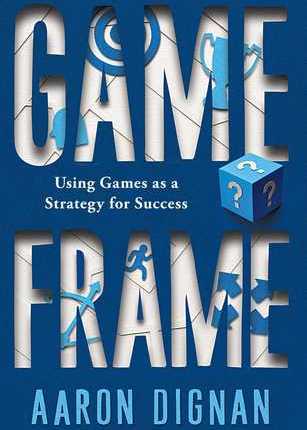
Game Frame: Using Games as a Strategy for Success by Aaron Dignan

Game Frame: Using Games as a Strategy for Success by Aaron Dignan

In Game Frame, Aaron Dignan outlines what games are, their components and how to create behavioral games to change your own and others behavior.

He clearly states his goals for the book in the introduction: “The truth is, we are born knowing how to play, and how to invent games where none exist. I’m convinced that there is a role for games and play in reshaping the world around us.” introduction, xiii.

Photo by lilartsy on Pexels.com

Dignan goes on to do just that. His detailed breakdown of the components of games and why we think they’re fun was particularly good.

I also agreed with his assertion that “play is a state of mind”: “…when a chef cooks something new, it feels like play. When I cook something new, it feels like work. Both of us are making a meal, but we’re not experiencing the same thing. Play is a state of mind.” pg 26.

Photo by Malidate Van on Pexels.com

My quibble with this book is that he didn’t convince me that games are the best way to change behavior. In Level 5 (Chapter 5), Dignan describes a speech given by Professor Jesse Schell at the D.I.C.E. conference in 2010 that scared the crap out of me.

Essentially, Professor Schell outlines how businesses and the government could use behavioral games to create a dystopian world in which our every action is analyzed and nudged towards consumerism.

“You’ll get up in the morning to brush your teeth and the toothbrush can sense that you’re brushing your teeth. So hey, good job for you, 10 points for brushing your teeth. And it can measure how long, and you’re supposed to brush your teeth for 3 minutes. You did! Good job! … And who cares? The toothpaste company. The toothbrush company. The more you brush, the more toothpaste you use. They have a vested financial interest.” pg 58

Photo by Karolina Grabowska on Pexels.com

After that chapter, I couldn’t shake the feeling that Dignan is inviting us to open a Pandora’s box.

“My challenge to you is simple: I believe that a million behavioral games could change everything, but they must be imagined and realized soon.” pg 169.

Hypothetically, say I design a game with the best intentions, but then, at some point, it’s taken over by the government and forced on people. Suddenly, it stops becoming a game and ruins the world.

Who wants to take the risk to potentially be the person who destroys society because of an ill-conceived behavioral game? Not me.

Recommended only for the truly brave gamers.

Thanks for reading!

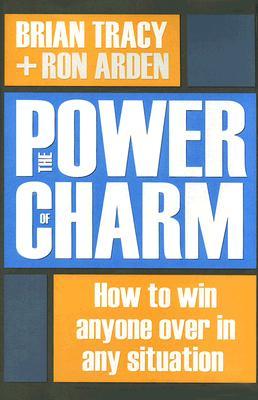
The Power of Charm: How to Win Anyone Over in Any Situation by Brian Tracy and Ron Arden

The Power of Charm: How to Win Anyone Over in Any Situation by Brian Tracy and Ron Arden

The Power of Charm is a book written for business professionals, who want to give themselves a bit of a leg up, by increasing their charm potential.

I found the book to be interesting, but it also flirts with the line between charming and manipulating. I suppose we could ask ourselves if, at the end of the day, there is any difference between the two.

Personally, I think there is.

Photo by Kat Smith on Pexels.com

In my mind, charm is unrehearsed, natural and springs from a genuine interest in others. Manipulation is ego-driven scheming. But, both can get you what you want.

I’m torn as to how this book actually fell on that scale. Some of the exercises feel like charm practices- others, like manipulation strategies.

Essentially, Brian Tracy and Ron Arden give listening and speaking tips to better understand whoever it is you’re interacting with. There’s nothing all that manipulative about polishing your communication skills.

On the other hand, in the chapter entitled: “Do Your Homework” in which the authors say, “Anytime you are getting together with someone, socially or professionally, whom you particularly want to impress, do your homework. Learn what you can about that person before you actually meet. It’s the best way to be charming and interesting to others.” pg 107. It didn’t sit so well with me.

Photo by Eduardo Dutra on Pexels.com

Here’s why- Tracy gives the following story as an example: “I learned of a successful business owner with a crack sales team who was discontented with the company he was representing. … In asking around, I discovered that he was heavily into numerology and made all his decisions based on the numbers of the birth dates of potential business partners… One of his first questions of me was my birthday. I was prepared. I told him that it was a certain day, month, and year that added up to a ‘lucky number’ for business relationships. … The preparation was the key.” pg 108.

That smacks to me of manipulation rather than charm. What do you think?

On the other hand, I seriously appreciated the tips on how to become a better conversationalist. I’ve got some work to do there.

Generally, I let my fast-talking husband take the lead in social conversations because he always has something to say. I see now how that may be a disservice to others who may want to get to know me better.

“The Secret of Charm: The deepest craving of human nature is the need to feel valued and valuable. The secret of charm is therefore simple: make others feel important.” pg 12.

It is as simple and powerful as that. I’d also recommend being kind. The world could use more charm and kindness.

Recommended for readers who understand the difference between charm and manipulation. I’m not sure that includes me, but I’ve already read it so… sorry.

And thanks for reading!

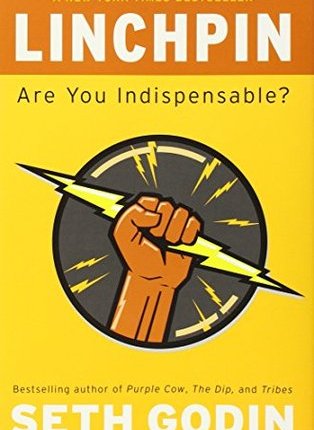
Linchpin: Are You Indispensable? by Seth Godin

Linchpin: Are You Indispensable? by Seth Godin
linchpin

Seth Godin draws on his experiences in business and life to convince the reader to be a linchpin rather than a cog in the machine of work.

He says it better than I did: “This book is about love and art and change and fear. It’s about overcoming a multigenerational conspiracy designed to sap your creativity and restlessness. It’s about leading and making a difference and it’s about succeeding.” pg 2

You have our attention, Godin. What do we do?

Through a series of blog-like sections, Godin explains that there is no road map or simple answer. “Our world no longer fairly compensates people who are cogs in a giant machine. … Leaders don’t get a map or a set of rules. Living life without a map requires a different attitude. It requires you to be a linchpin.” pg 19

Essentially, you have to embrace the uniqueness and drive that is inside of you. You have to create a platform of work rather than a resume. You have to decide to discard mediocrity.

“The very system that produced standardized tests and the command-and-control model that chokes us also invented the resume. … Great jobs, world-class jobs, jobs people kill for- these jobs don’t get filled by people e-mailing in resumes.” pg 72

That’s so outside the usual paradigm of work, for most of us, that it can sound scary.

Photo by Andrea Piacquadio on Pexels.com

“Often, when people hear about my radical ideas for how you should train for a career, as well as the best way to present yourself, they object. They point out that not fitting in is certainly going to be an ineffective way of getting one of these average jobs. … If you need to conceal your true nature to get in the door, understand that you’ll probably have to conceal your true nature to keep that job. … The linchpin says, “I don’t want a job that a non-linchpin could get.” pgs 78-79

It seems like he’s asking a lot, but the alternative is to give up and conform. Godin says that this mindset isn’t impossible: “My fundamental argument here is simple: In everything you do, it’s possible to be an artist, at least a little bit.” pg 94. We can do that, right?

I didn’t agree with everything in Linchpin. I thought that Godin was far too hard on journalists… it is easy to look at an industry, or any situation really, from the outside and criticize the people in the thick of it.

News agencies know that they have to embrace the future or die. Just how to do that is up for grabs and adding Godin’s toolbox of how to excel at work couldn’t hurt. I don’t think that reinvention or evolution is an impossible task. It’s just tricky because, as Godin noted, “there is no roadmap.”

Recommended for people who may be bored with where they are and can see a glimmer of where they want to be- but aren’t sure how to get there. Also recommended for those who work in the newspaper business because we clearly need more linchpins.

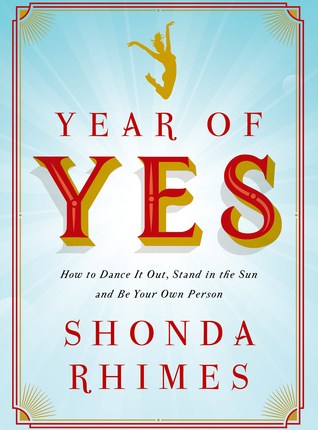
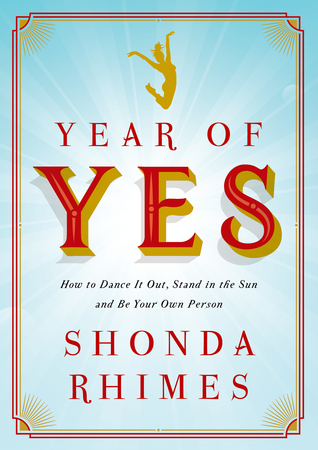
Year of Yes: How to Dance It Out, Stand In the Sun and Be Your Own Person by Shonda Rhimes

Year of Yes: How to Dance It Out, Stand In the Sun and Be Your Own Person by Shonda Rhimes
yearofyes

Shonda Rhimes’ heartfelt memoir about the power of embracing who you are and having the courage to set aside what you are not.

Though outwardly successful, Shonda was miserable. Between over-working and her introverted tendencies, she turned down every invitation and social event. The ones that she was forced to accept were anxiety inducing trials or complete blanks because of panic attacks.

Shonda didn’t even realize she was unhappy until, one Thanksgiving, her sister tells her that she doesn’t say yes to anything. Something clicks and Shonda embarks on a Year of Yes. Her results are astonishing and so is this memoir.

I have never watched a single episode of Grey’s Anatomy. I didn’t even realize that that was her show. You don’t need to be an aficionado to appreciate this book.

Shonda begins with some crushingly honest passages about her discomfort at sharing her life and her passion for writing. “Making stuff up is responsible for everything-everything I’ve done, everything I am, everything i have. Without the tales, the fiction, the stories I’ve spun, it is highly likely that right now, today, I’d be a very quiet librarian in Ohio.” pg 6, ebook. Not that there’s anything wrong with that. 🙂

Photo by Suzy Hazelwood on Pexels.com

The first part of this book was actually hard for me to get through because she was so obviously uncomfortable at creating a window into her heart and mind. She gets over it and so did I. “When it was first suggested to me that I write about this year, my first instinct was to say no. Writing about myself feels a lot like I have just decided to stand up on a table in a very proper restaurant, raise my dress and show everyone that I’m not wearing panties. That is to say, it feels shocking.” pg 12, ebook.

Shonda is just so relatable. Take this confession about motherhood: “I don’t know about you, but the mistakes and missteps I have made since becoming a mother… before kids, my confidence could not be dented. Now it’s shattered on a daily basis. I don’t know what I am doing.” pg 63, ebook. I know, right! Nobody knows what they’re doing. I take comfort in that.

Photo by Pixabay on Pexels.com

Throughout her year of challenging herself, Shonda discovers that she’s uncomfortable in her own skin because of her weight. This next passage is for anyone out there who has body image issues: “I believe everyone’s body is theirs and everyone has a right to love their body in whatever size and shape and package it comes in. I will fight for anyone’s right to do so. I will kick ass and take names if I have to. Your body is yours. My body is mine. No one’s body is up for comment. No matter how small, how large, how curvy, how flat. If you love you, then I love you.” pg 85, ebook. End of story.

I also liked how she came to a new understanding about how life works: “I’ve started to think we are like mirrors. What you are gets reflected back to you. What you see in yourself, you may see in others, and what others see in you, they may see in themselves.” pg 120, ebook. I’ve started to think that too.

The Year of Yes is recommended for readers who enjoy memoirs or for those folks out there whose lives are in need of an awakening- a shaking of the snow globe of your reality, if you will. Shonda said yes to things that scared her and discovered, on the other side of fear, a life truly worth living. I hope that we can all be as fortunate and as brave on our journeys.

Thanks for reading!

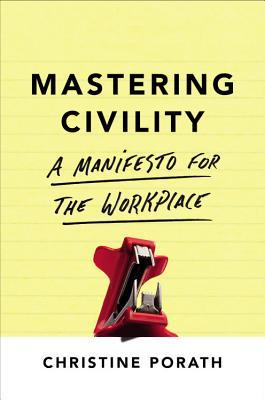
Mastering Civility: A Manifesto for the Workplace by Christine Porath

Mastering Civility: A Manifesto for the Workplace  by Christine Porath

I think we’ve all, at one time or another, worked with one of “those” people- the ones who are rude, who take all the credit, who won’t look up from their phones during meetings, send an email when they should call, or make you do work that they find boring or unimportant.

Before I read Mastering Civility, I assumed that this was behavior I had to endure until the perpetrator got another job or experienced a spontaneous personality overhaul.

Author Christine Porath asserts that tolerating incivility in the workplace is a bad idea because it spreads like a virus. Once rudeness or intolerance enters the scene, it effects everyone it touches and can sink the ship causing everything from profit loss to poor job performance.

Photo by Fox on Pexels.com

Throughout the book, Porath teaches the reader how to recognize incivility in oneself, how to assist coworkers in reforming poor behavior, and how to end working relationships with employees who either can’t or won’t toe the line. Sounding a clarion call for employers and employees alike, Porath rallies readers everywhere to join her in making the workplace civil again.

“Incivility usually arises not from malice but from ignorance. I started my research thinking that jerks out there were intentionally ruining workplaces; I now see that most bad behavior reflects a lack of self-awareness. We don’t want to hurt others, but we do.” pg 12. Until I read this book, I thought that too.

“…incivility has a way of pulling people off track and preventing them from doing their best. I’ve found this to be true in every study I’ve conducted. Even witnesses working around incivility take a hit.” pg 24.

I thought that was especially chilling because Porath ran a bunch of studies. “Many people think of rudeness as a self-contained experience, limited to one person or interaction. In truth, incivility is a virus that spreads, making the lives of everyone exposed to it more difficult. … Left unchecked, incivility can drag down an entire organization, making everyone less kind, less patient, less energetic, less fun- simply less.” pg 39.

Photo by Kate Trifo on Pexels.com

Ewww, you got your incivility all over my desk.

Those are the don’ts. Here are a few do’s: “If you want to connect with your employee or team, lead with warmth. Most of us are in a hurry to prove our competence, but warmth contributes significantly more to other’s evaluations. .. It facilitates trust, information, and idea sharing.” pg 71

“… the single biggest complaint I hear from employees about their bosses is that they fail to tune in. Do yourself and others a favor: When you speak or meet with someone, put away your smartphone. Make others the priority.” pg 114. Amen.

I laughed when Porath suggested eating well, exercising, and getting enough sleep to help foster a civil atmosphere in the workplace. Common sense stuff, yes, but how many of us have lashed out because we’re “hangry”? Change starts with you so: eat breakfast, people.

Recommended for people experiencing or who have experienced incivility in the workplace. Porath gives you some concrete methods to turn it all around. Some further business related reading that I’ve enjoyed: Do the Work, The Happiness Advantage: The Seven Principles of Positive Psychology That Fuel Success and Performance at Work and The Art of Exceptional Living.

Thanks for reading!

The Optimistic Workplace: Creating an Environment That Energizes Everyone by Shawn Murphy

The Optimistic Workplace: Creating an Environment That Energizes Everyone by Shawn Murphy

The Optimistic Workplace is a complex but useful manual on how to shift the environment at work. Shawn Murphy talks about all aspects of business from the individual to management to all the levels in-between. There weren’t many surprises in these pages, but the advice was solid.

I knew that leadership was important to the overall vibe in the work space and Murphy does say that it’s important: “…your leadership style impacts climate by up to 70 percent. Think about that 70 percent. It’s mostly how you show up and interact with others that shapes the climate that influences your team’s performance.” pg 9 But, it isn’t the only thing that matters.

Photo by Yan Krukov on Pexels.com

There are also ways in which the individual can change the work space. It all starts with greater self knowledge: “Workplace optimism thrives when people understand why they show up to work. Not only is the purpose and meaning of work important, but so, too, are the personal implications. … Personal expression through work is a major contributor to your employees’ well-being. Doing work that matters facilitates the expression of one’s talents.” pg 19 Makes sense. Know thyself does seem to be the foundation of most major life-changing movements.

“..the benefit to positively shaping the climate for your team is getting to know yourself better and discovering how to fulfill your own potential. You position yourself to love your work. In doing so, you set the tone and lead the way to help your employees realize their own potential and find greater meaning in their work and life.” pg 48 Sort of a trickle-down effect of optimistic workplace awesomeness.

Photo by Mikhail Nilov on Pexels.com

Of all of the myriad of studies included in this book, my favorite was the study of “ikigai” : “Your health is linked to a sense of purpose in life, or, as the Japanese all it, ikigai. … A 2008 study in Japan by Toshimasa Sone and his colleagues sought to understand how, if at all, ikigai contributed to longevity in life. … Mortality risks were higher in those who did not have a sense of being and of joy. Those lacking clarity in intentional living had a higher incidence of cardiovascular disease and other life-threatening illnesses.” pg 89 Purpose or death.

The only critical thing I have to say about The Optimistic Workplace is that it’s so broad. Towards the end, I despaired of ever having the time to implement all of the changes suggested, even though they seem like good ones. My boss suggested that I take my favorites and start there. I think I will.

Recommended for those who have plenty of time for reflection and transformative meetings- I think that this book has huge potential. I just wonder how many businesses would be able to take the time and actually work their way through it. Some further reading: Mastering Civility: A Manifesto for the Workplace, The Happiness Advantage: The Seven Principles of Positive Psychology That Fuel Success and Performance at Work, and Work Rules!: Insights from Inside Google That Will Transform How You Live and Lead.

Thanks for reading!