Daring Greatly: How the Courage to Be Vulnerable Transforms the Way We Live, Love, Parent, and Lead by Brené Brown

Daring Greatly: How the Courage to Be Vulnerable Transforms the Way We Live, Love, Parent, and Lead by Brené Brown

Brené Brown shares her twelve years of research into shame and gives tools on how to increase one’s vulnerability. In this way, she believes each individual can help change the culture of scarcity and pull the world back from a continual cycle of shaming.

We’ll build stronger and deeper relationships, strengthen families and have more productive work places. And, by doing this, we will each, in our own way, live in a manner that “dares greatly” every day.

“I also learned that the people who love me, the people I really depend on, were never the critics who were pointing at me while I stumbled. They weren’t in the bleachers at all. They were with me in the arena. Fighting for me and with me.” pg 56

Photo by RF._.studio on Pexels.com

I’m going to use the information in this book the most in my work life. As a writer, I attach far too much significance to my work product on the audience’s response to it rather than my own feelings about it. As Brown so clearly points out in this book, an outside response will never be good enough or big enough to fill the need that I am looking to fill with their words or their views. Or, if it is wildly praised, perhaps the next work won’t be, and then I’m right back to where I started.

“You still want folks to like, respect, and even admire what you’ve created, but your self-worth is not on the table. You know that you are far more than a painting, an innovative idea, an effective pitch, a good sermon, or a high Amazon.com ranking.” pg 64

This desire for connection and a feeling of worthiness, Brown says, comes from the need to survive by belonging to a group. Our brains have evolved to encourage us to belong and form connections. And when we don’t by not believing in our own self worth or experiencing shame, it is a physically painful emotion. People do all sorts of things to avoid feeling shame including pulling away or striking out. But, in the end, these connections are life itself.

“Buber wrote, “When two people relate to each other authentically and humanly, God is the electricity that surges between them.” pg 150

Photo by Pixabay on Pexels.com

As interesting as I found Brown’s research to be, she lost me when she began a discussion about how much vulnerability is enough or too much and walking the tightrope between extremes. So, be authentic, but don’t use it to manipulate people. A few sentences covers what Brown uses 50 pages to unpack.

“When we stop caring about what people think, we lose our capacity for connection. When we become defined by what people think, we lose our willingness to be vulnerable.” pg 169

Her message becomes a bit undefined and more general the further the book goes. That’s not to say it couldn’t be useful for readers who are looking for that type of information. I didn’t find it particularly engaging.

Like any self help book, I think sometimes authors and researchers can get lost in the weeds of the problem. I far more prefer to focus on the solution. In this case, that’s being brave enough to show up and be seen, demonstrating vulnerability and willingness to care about whatever is going on wherever we find ourselves throughout the day. As Brown reminds readers, it’s not about winning or losing, it’s about being there. And that’s a message worth spreading.

Photo by fauxels on Pexels.com

“To love ourselves and support each other in the process of becoming real is perhaps the greatest single act of daring greatly.” pg 110

I’m game. Are you?

Thanks for reading!

The 4-Hour Workweek by Timothy Ferriss

The 4-Hour Workweek by Timothy Ferriss

“I’ve spent the last three years traveling among those who live in worlds currently beyond your imagination. Rather than hating reality, I’ll show you how to bend it to your will. It’s easier than it sounds.”

Photo by Ronu00ea Ferreira on Pexels.com

Timothy Ferriss promises the stars in the sky in his new-classic business/self help book, The 4-Hour Workweek. Though he gives some good productivity tips, he fails to provide a true road map to freeing yourself from the 9-to-5 grind. Partially, this is because there is no real road map to doing this.

But he does detail how he found his way into a life of his dreams. Readers can take whatever lessons and information from that as they will.

After Ferriss relates a timeline of his life story, he begins by detailing his “DEAL” plan to a four hour work week which consists of “definition, elimination, automation and liberation”. Each step of this process, he says, helps guide the reader to a new world of free time. Though, he admits, traditional bosses may have serious problems with your new program and, perhaps, you should go more “DELA”. Yes, understatement.

“Resolve now to test the concepts as an exercise in lateral thinking. If you try it, you’ll see just how deep the rabbit hole goes, and you won’t ever go back.”

Photo by Anna Shvets on Pexels.com

He examines the concepts of “busy work” and suggests boiling your workload down to the most important tasks you complete. Then, just do those as fast as possible. Don’t allow yourself to be derailed by the internet or chatty coworkers. (Not a friendly method, but Ferriss seems to have his eyes on the prize rather than concerning himself with making friends.)

Out of everything he suggests in the first part of this book, I was most taken with the idea of only checking your email once a day or week. There is a definite time-suck there that maybe I have been blinding myself to.

After that, Ferriss enters more conceptual territory with an idea about creating a business for yourself that essentially runs itself or can be run by someone else, cheaply. For example, a website that sells something awesome. But, what exactly that something or muse is, that’s for you, the reader, to discover on your own.

It reminded me of Godin’s Purple Cow: Transform Your Business by Being Remarkable. You know an awesome product or “purple cow” when you see it, but how exactly to make one isn’t a clear thing. Interesting idea, but necessarily helpful for those looking for actionable items to improve their work life.

The most useful part of the book, in my opinion, is his encouragement to create a dream plan by “dreamlining”. Write down what you want to do. Create a timeline. Crunch the numbers. It may cost less than you thought and, with it on paper, it takes on a bit of reality already. If you don’t get started, how do you know what you might accomplish.

Photo by Negative Space on Pexels.com

“It’s lonely at the top. Ninety-nine percent of people in the world are convinced they are incapable of achieving great things, so they aim for the mediocre. The level of competition is thus fiercest for ‘realistic’ goals, paradoxically making them the most time-and energy-consuming. It is easier to raise $1,000,000 than it is $100,000.”

Ferriss’ tone in this book has been criticized by readers and I see what they mean. Some of his ideas are alienating. Sometimes he seems to say: I’ve done this-this-this and this, and it’s so easy that if you can’t figure it out too, especially with the book I’ve put in your hands, then you must be either complacent or dumb.

But I took this book to be written by someone who dared, a nod to Brené Brown, greatly. Ferriss believed his life could be something other than a slog and yours could too. He’s written down some tips to help you along the way that he discovered through real life trial and error. Read it or not. He’ll be over there, living the life of his dreams.

Photo by Alex Fu on Pexels.com

Recommended, with reservations, to folks interested in life-hacking their work/life balance. I think we can achieve whatever dreams we set our minds to while still being friendly.

Thanks for reading!

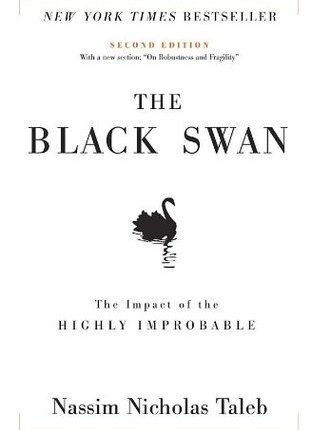
The Black Swan: The Impact of the Highly Improbable by Nassim Nicholas Taleb

The Black Swan: The Impact of the Highly Improbable by Nassim Nicholas Taleb

Nassim Nicholas Taleb discusses “black swans”, unexpected and life-changing events, and how life is far more uncertain than most believe it to be. He also examines, in-depth, how we fool ourselves into believing reality is otherwise by various means like confirmation bias (we look for evidence to support our existing beliefs) and narrative fallacies (the tendency to describe existence using linear stories when reality is far more complicated).

Mix in a heaping dose of storytelling and autobiographical information and you get The Black Swan.

Photo by Takeshi Arai on Pexels.com

“This combination of low predictability and large impact makes the Black Swan a great puzzle; but that is not yet the core concern of this book. Add to this phenomenon the fact that we tend to act as if it does not exist!” Prologue xxii

This is a dense read, full of philosophical references and terminology. Basically, beyond black swans having a larger impact on reality than we realize they do, this book can be simplified way down to “beware of because” and “know what you don’t know”.

“Beware of because” because (tee-hee) reality is far more random than most believe it to be. And we suck at predicting the future, for a variety of reasons, but partially because it is impossible to project future events from historical ones.

“Note here that I am not saying causes do not exist; do not use this argument to avoid trying to learn from history. All I am saying is that is it not so simple; be suspicious of the “because” and handle it with care — particularly in situations where you suspect silent evidence.” pgs 120-121

Photo by Karolina Grabowska on Pexels.com

“Silent evidence” is the information not readily apparent for whatever reason. Taleb gives an illustrative example of silent evidence from ancient history of a philosopher being presented an argument that a group of sailors survived a shipwreck because they prayed. The philosopher wonders how many of the sailors who drowned were also praying. The drowned sailors, you see, are the silent evidence.

Biologically, Taleb says, human beings are not set up to be deep thinkers and are fooled by a variety of logical fallacies. This is only a problem because, as time goes on, humanity has less running away to do from things trying to eat us and more dealing with the complexities of modern existence.

But by remembering “to know what we don’t know” and understanding some of the limitations built into our brains by memory and logical fallacies, we can be prepared to make better decisions than before. Or, at least, we’ll have a better grasp on how risky and unknown life is.

Photo by Marlene Leppu00e4nen on Pexels.com

Anyway, this book certainly gave me a lot to think about. The part that struck me the most is when Taleb applies his black swan idea to careers and how this uncertainty applies particularly to authors and artists. For every J.K. Rowling, there will be thousands of writers who never make that break through. I started wondering how many extraordinary books I will never get to read because of this phenomena.

The author’s tone throughout the book, slightly irreverent, didn’t annoy me as much as it seems to have bothered other readers. I enjoyed learning a new way to look at reality, but, as I mentioned before, this is a dense read and I wouldn’t consider it “fun” reading either.

It may appeal most to philosophers and anyone who wants to consider new ways to view reality.

Thanks for reading!

Purple Cow: Transform Your Business by Being Remarkable by Seth Godin

Purple Cow: Transform Your Business by Being Remarkable by Seth Godin

The world has changed. There are far more choices, but there is less and less time to sort them out.” pg 13

Seth Godin, prolific author of business blogs and books, shares his insights about why a product must be remarkable to cut through the noise and get an audience’s attention. He opines that this remarkable “Purple Cow” quality is the only way a business can succeed in the modern world, as the old methods of mass marketing through expensive television ads is going the way of the dodo.

Photo by Jan Koetsier on Pexels.com

“Something remarkable is worth talking about. Worth noticing. Exceptional. New. Interesting. It’s a Purple Cow. Boring stuff is invisible. It’s a brown cow.” pg 3

The trouble with this remarkable stuff is that there is no clear method to create it. It is a “I’ll-know-it-when-I-see-it” type situation. For businesses looking to up their Purple Cow-factor, there are very few directions in this book, other than, it’s important to be a purple cow. I could see that unclear quality being frustrating for some readers.

“The old rule was this: Create safe, ordinary products and combine them with great marketing. The new rule is: Create remarkable products that the right people seek out.” pg 21

The “right people” being the influencers or the early adoptors of whatever type of product it is that you’re selling. Marketing to the niche, rather than mass marketing to the crowd, is, according to Godin, the best strategy for the new world of marketing.

Photo by Mike Chai on Pexels.com

Take Goodreads, for example. Publishers want to get their advance reader copies into the hands of those who talk to their friends about what they’re reading and are passionate about books, the readers who exhibit “otaku”. Godin defines “otaku”: “Otaku describes something that’s more than a hobby but a little less than an obsession.” pg 94

The obsessed, passionate readers talk about what they’re reading to the extent that they start an “ideavirus”, which Godin talks about in another book. In this way, Godin says, you build momentum for whatever remarkable product you’re selling. They can’t help but talk about it because of its fascinating qualities. As this movement builds, the books end up on readers’ favorite shelves, eventually becomes a Reader’s Choice pick, and then the book sells itself.

The products that aim for the largest audience are bland and have had their remarkable edges filed off. And, that’s bad, according to Godin.

“The system is pretty simple: Go for the edges. Challenge yourself and your team to describe what those edges are (not that you’d actually go there), and then test which edge is most likely to deliver the marketing and financial results you seek.” pg 101

Photo by Christina Morillo on Pexels.com

There are definitely dated portions of this book and, as I said, it is nebulous. To get meaning out of it, readers need to distill the underlying ideas and apply them to your unique business. But, I still learned things.

The reason I read Godin is he encourages readers to think differently. He gets my creative circuits firing. I like that.

Recommended for readers who may need a creative jump-start for whatever remarkable product they’re creating. This book isn’t a road map, but it could be a compass.

Thanks for reading!

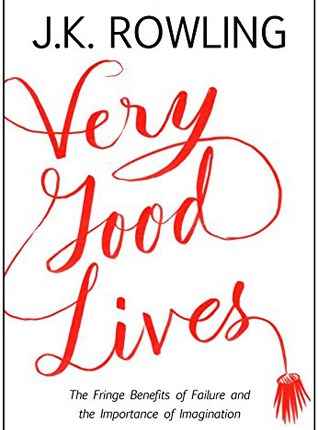
Very Good Lives: The Fringe Benefits of Failure and the Importance of Imagination by J.K. Rowling

Very Good Lives: The Fringe Benefits of Failure and the Importance of Imagination by J.K. Rowling

“It is impossible to live without failing at something, unless you live so cautiously that you might as well not have lived at all – in which case, you fail by default.”

J.K. Rowling gave the commencement speech at Harvard in 2008 and the result was a mini-masterpiece about life, the power of imagination, and failure.

Photo by Joe Digital & Co on Pexels.com

Though we all know now what a mammoth success she would go on to be, at one time, she was experiencing failure and poverty.

“Now, I am not going to stand here and tell you that failure is fun. That period of my life was a dark one, and I had no idea that there was going to be what the press has since represented as a kind of fairy tale resolution.”

I’ve had my own handful of rock bottom moments and, she’s right, it is no fun. But I too have found resilience and creativity that emerged from that darkness. It’s strange, when you’re pushed to your limits, you suddenly discover that there’s more to yourself than you ever realized.

“One of the many things I learned at the end of that Classics corridor down which I ventured at the age of 18, in search of something I could not then define, was this, written by the Greek author Plutarch: What we achieve inwardly will change outer reality.”

Photo by Pavan Maruvada on Pexels.com

Like Rowling, I studied the Classics because something about it spoke to me. When I told my dad that I was adding that course of study to my degree, he laughed and said, “Well, at least it will look impressive on your resume.” Even though I knew he was right in that there were very few jobs where I could use it, having a background in the Classics has taught me a lot about modern life.

I learned that people in antiquity, though they lacked the technology and lifestyle we enjoy today, still had the intensity of emotions and civilizations struggles that persist in the modern era. There were those who had and those who had not. There were crimes of passion, acts of kindness, politicians both corrupt and extraordinary.

Struggle, stress and failure is not something mankind invented when we produced the first smart phone. Classics gives you a long view on humanity and how far, or not far, we’ve come since.

We do not need magic to change the world, we carry all the power we need inside ourselves already: we have the power to imagine better.

Photo by josue Verdejo on Pexels.com

Brilliant. I recommend this small book as a graduation gift or for anyone who is having a bad day. It can act as a reminder that anyone can succeed at whatever their heart tells them is their path, despite any evidence to the contrary. And don’t be afraid of failure. Everyone will experience it at one time or another, but what matters most is what you chose to do next.

Thanks for reading!

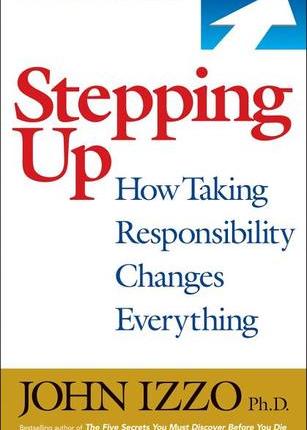
Stepping Up: How Taking Responsibility Changes Everything by John Izzo

Stepping Up: How Taking Responsibility Changes Everything by John Izzo

“You know people who accept responsibility — aren’t they great to be around?” vii, from the forward.

The focus of this book is a worthy one. The author, John Izzo, provides many real life examples of people stepping up and doing the right thing and how it has helped their lives and businesses.

Photo by Matthias Zomer on Pexels.com

Unfortunately, it just reads like one cliché after another and I had a difficult time connecting with it.

Stepping up is seeing a need and deciding YOU are the right person to do something about it.” pg x.

I do agree that all of our power lies in ourselves. Blame doesn’t fix problems. Waiting for someone else to do it doesn’t do the trick either.

“The consequence of having a seismic shift towards victim thinking means more of us feel that the future is not in our hands but in the hands of forces outside ourselves. And since internal locus of control is positively correlated with happiness, success and initiative while external locus of control is related to anxiety and depression, it’s pretty clear that most organizations and society as a whole would be better off if more of us believed we could change things.” pg 21

Photo by Aleksandar Pasaric on Pexels.com

What it comes down to is understanding that at the end of the day, the only person you can entirely control is yourself.

“Beginning where you are and doing what you can with your unique set of skills is critical.” pg 80

What are some of the methods Izzo suggests for “stepping up”? He counsels focusing on what matters, challenging your internal assumptions and find one thing, anything, that you can do immediately to address how you may have contributed to the problem.

“Think about this for a moment: everything that has EVER been accomplished began with someone taking a single step.” pg 71

It’s common sense stuff. Which is fine, but not exactly what I was expecting from this one. I suppose I’ll take responsibility for my internal assumptions about what I would learn from Stepping Up. It’s not YOU, book, it’s me.

“But here is the truth. There is a 100 percent guarantee that nothing will change if you don’t step up.” pg 33

Photo by Andrea Piacquadio on Pexels.com

What is my solution to this problem? On to the next book, my friends.

“Once you step up, somehow that act of taking initiative drives you to find the resources you need inside and outside yourself.” pg 119

To the library! 🙂

Thanks for reading!

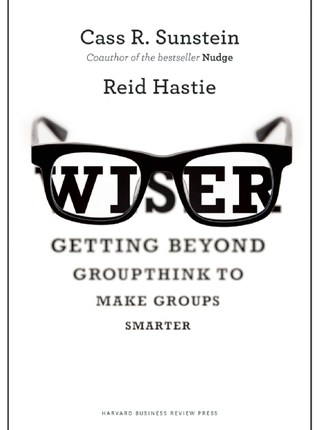
Wiser: Getting Beyond Groupthink to Make Groups Smarter by Cass R. Sunstein

Wiser: Getting Beyond Groupthink to Make Groups Smarter by Cass R. Sunstein

Authors Cass Sunstein and Reid Hastie examine many of the problems that beset groups and how to best address them for optimal group performance.

Written in a style that is more academic than approachable, Wiser uses the findings of multiple researchers to come to its conclusions. This book may be useful to managers who are desiring to set up a group at their own place of employment and want to start on the best foot.

“Do groups usually correct individual mistakes? Our simple answer is that they do not. … We also ask a second question: Can groups correct individual mistakes? Our simple answer is that they can. We aim to explain how.” pg 2

Photo by Canva Studio on Pexels.com

I picked this book up because, frankly, I wanted to know why anybody would utilize groups in a work setting. Every one that I have ever sat on has been either a disaster or inefficient. I was hoping Wiser would help me see the appeal that group-thinking seems to have for some.

And it did. But it also opened up my eyes to the myriad reasons why my experiences had been so bad. I had just assumed groups didn’t work. As it turns out, things are more complicated than that.

“The basic lesson is that people pay a lot of attention to what other group members say and do — and that they do not end up converging on the truth. In fact, they often ignore their own beliefs and say that they believe what other people believe.” pg 28

There can also be problems with authority figures in a group setting: “If the group contains one or more people who are known to be authorities or who otherwise command a lot of respect, then other group members are likely to silence themselves out of deference to the perceived or real authority.” pg 35.

I’ve seen that happen multiple times. The whole purpose of the group is thrown off. It has often frustrated me, leading me to think we may as well have saved our meeting time and had the boss issue a directive.

Photo by Andrea Piacquadio on Pexels.com

Groups also have to keep in mind the idea of “cascades” or ideas taking a hold early in the process and then taking over the rest of the group’s time: “For their part, many groups end up with a feeling of inevitability, thinking that they were bound to converge on what ultimately became their shared view. Beware of that feeling too, because it is often an illusion. The group’s conclusion might well be an accident of who spoke first…” pg 60

Groups can polarize themselves, driving their members to extremes they wouldn’t otherwise reach without members that think like them. To combat this, leaders should make sure groups are diverse.

In a perfect world, groups are equivalent to their best members, aggregate all of the information each individual brings to the table, utilizes experts properly and creates an almost mystical “synergy” where, as the authors say, “the whole is more than the sum of its parts.”

Photo by fauxels on Pexels.com

The trick is getting the group to work like that. As I said, I’ve never seen it. This book brings me hope that perhaps one day I will.

The failures of groups often have disastrous consequences — not just for group members, but for all those who are affected by those failures. The good news is that decades of empirical work, alongside recent innovations, offer a toolbox of practical safeguards, correctives, and enhancements. With a few identifiable steps, groups can get a lot wiser.” pg 214

Thanks for reading!

Spark: How to Lead Yourself and Others to Greater Success by Angie Morgan, Courtney Lynch, Sean Lynch

Spark: How to Lead Yourself and Others to Greater Success by Angie Morgan, Courtney Lynch, Sean Lynch

Spark is a manual to help an individual or a business develop leadership skills. The important attributes are outlined in each chapter with highlighted stories provided by the authors’ own life experiences. The salient points of the different topics are simply and clearly listed at the end of each chapter as well as further resources.

“Our society values leadership — craves it, for that matter. Yet we don’t teach it in formal education.” pg 9, ebook.

Photo by Sora Shimazaki on Pexels.com

The title itself “Spark” refers to those who know they carry the seeds of greatness within themselves and are willing to learn how to make those seeds bloom. As the authors are quick to point out, there are a lot of misconceptions about leadership.

One of them is that people are born leaders and only certain people can lead. They say, and I believe this too, that anyone can become anything they set their minds too. This book helps provide the necessary skills to make that process simpler.

“No one else can make or anoint you a leader. The only way to become a Spark is to make yourself into one.” pg 24, ebook

I thought it was an interesting that these skills are taught to our military personnel but are not stressed as much in the private sector. The main reason the authors started their leadership business was because they noticed leadership was required in business but no one was teaching it. I suppose that’s true, but I’d never considered it before because I had assumed that leaders were born that way.

“… invest the time in seeking to uncover your values, and you’ll be led to discover any misalignment between your expectations of yourself and your actions. The next step is having an honest conversation with yourself so that you not only understand where, when, and why you’ve compromised your values in the past but also recognize the changes you need to make to lead more consistently with your intentions.” pg 42, ebook

Photo by Cade Prior on Pexels.com

I think some of the suggestions in Spark might discomfort those who haven’t taken the time to look and evaluate their own character. Or accept responsibility for reoccurring issues in their experience.

“Overwhelmingly, we all seem to agree that we live in a pass-the-buck culture. Pointing to others as the reason for a problem is a typical response.” pg 69, ebook.

And, taking responsibility for a problem gives you the power to change it. Because, at the end of the day, you can’t control somebody else’s actions — despite how much we may want to.

The chapters I, personally, liked the most were about how to “build your confidence” and “demonstrate consistency”. The information in that section felt the most relatable because it deals with the humanity of leaders. We all fail sometimes or experience self doubt. What matters is how you handle that and continue onwards.

Photo by Ono Kosuki on Pexels.com

Which brings me to my last thought about this book, as I mentioned earlier, the authors insist leaders make themselves. If you want to learn these skills, you can. If you want to make change in your organization, you can. What you can’t do is force other people to become leaders if they don’t want to be.

I think the power in becoming a leader or a “spark” is the example you hold up to others who have the same aspirations. As for the rest, I suppose they can provide the background against which your brilliance shines.

Thanks for reading!

The Dale Carnegie Leadership Mastery Course: How To Challenge Yourself and Others To Greatness by Dale Carnegie

The Dale Carnegie Leadership Mastery Course: How To Challenge Yourself and Others To Greatness by Dale Carnegie

The version I listened to of The Dale Carnegie Leadership Mastery Course, published in 2001, has not necessarily aged well, but still had some applicable lessons for business leaders.

On the positive side, this audio program encouraged me to examine my own leadership style, something I’d never considered before. Are you a innovative or organizational leader? Do you bring people together or drive them apart, intentionally or unintentionally? What is your risk tolerance and why?

Photo by RODNAE Productions on Pexels.com

In addition to introspection, this program asks you to plan for the future based on your strengths and take steps towards those dreams. What are your goals, personally, professionally and for your current company? What would you like to see happen to your company after you die?

It also examines a leader’s entire life with the idea of success isn’t success if you lose your family and important relationships while building your career or vice versa. Are you capable of taking time off? Do you devote time to those who are most important to you at home and at work?

Those are just a few of the positive aspects of this program. On the other end of the spectrum, the music between sections is hilariously dated, almost like motivational elevator music. And there seemed to be what amounted to hero-worship of Dale Carnegie slipped in between the lessons or at the end of sections.

For example, in the lesson on handling disasters and poor decisions as a leader, the program was discussing a CEO’s almost universally hated idea of putting a thermometer on soda dispensers and having the price of a drink go up as the temperatures rose. The narrator closed the section with a statement like: “If Dale Carnegie had been at that meeting, he would have suggested the price of a drink go down as the temperatures went up.” (Cue motivational elevator music.)

Photo by Karolina Grabowska on Pexels.com

I don’t want to dismiss Carnegie’s extensive contributions to the realm of business and leadership skills, but he was human too. To assume he would have been able to turn around some spectacularly bad corporate decisions with just his mere presence struck me as a bit ridiculous.

In that same vein, some of the fable-like stories put into the lessons for emphasis felt heavy-handed, particularly one where a father expected too much of his son. It was a lesson about empathy but it was over the top.

As I said, I did learn some valuable skills from this audiobook and continue to ponder some of the lessons it presented. At the same time, I did have a few giggles at material that, I don’t believe, was ever intended to be satirical. Recommended for those interested in building their leadership acumen, but prepare yourself for a few misses in the presentation.

If you’re interested in non-fiction, business and self improvement books, here are a few I’ve recently reviewed:

Eat That Frog!: 21 Great Ways to Stop Procrastinating and Get More Done in Less Time by Brian Tracy

The Lost Prosperity Secrets of Napoleon Hill by Napoleon Hill

The Art of Exceptional Living by Jim Rohn

Thanks for reading!