Ladycastle by Delilah S. Dawson

Ladycastle by Delilah S. Dawson

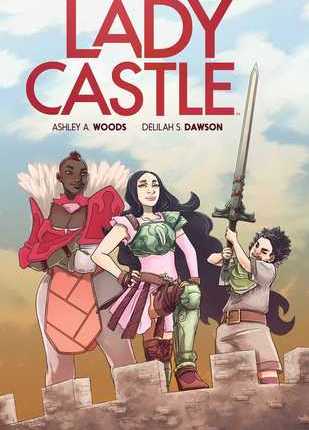
Aeve, a princess of Mancastle, is locked in a tower by her father, King Mancastle, for her refusal to chose a husband. Aeve’s younger sister, Gwyneff, is free to roam the castle, until she turns twelve and is subjected to the same fate as Aeve.

But Gwyneff doesn’t understand her sister’s choice and blames her for their father’s time-consuming efforts to find a new husband for Aeve and his absence.

“Aeve ruins everything. If she’d married, father wouldn’t go out hunting new princes. He’d be here. All the men would.”

Photo by Jeffrey Czum on Pexels.com

When King Mancastle and his men venture out to find a more suitable groom, and meet a foe they cannot overcome. One of the men returns to report to the women left behind — a curse has been laid on the castle and monsters will “be drawn as to a beacon”.

“For not only was King Mancastle cursed, but so was his domain. This castle shall be a beacon to terrifying monsters until the wizard’s curse is lifted.”

The blacksmith’s wife, Merinor, takes up the Lady of the Lake’s sword and becomes king. She and the women begin preparations to defend themselves from the approaching monsters. And thus our tale begins…

The artwork in Ladycastle is beautifully drawn with bright colors. I enjoyed the premise of the story. But Ladycastle doesn’t quite fulfill its promise in this volume.

Photo by Felix Mittermeier on Pexels.com

In the beginning of each section, the ladies’ inner monologue reads like a Disney or classic Broadway song, purposefully so. It’s distracting and derivative. I get that this work was attempting to point out the inherent bias of the other works, but I feel it takes away from the originality of this one.

The dark ages were brutal on women. I get it. Each lady in Ladycastle has a backstory of abuse or neglect from the man who ran her life, except for Gwyneff who hadn’t yet attained an age to be given away by her father for political purposes.

I liked how this comic flips that gender-issue on its head, the women rule the roost now. But the delivery of the lesson is heavy-handed, especially in the first two sections of the book.
Photo by Engin Akyurt on Pexels.com

As other readers have noted, there is a stab at diversity in this book, but no inclusion of LGBTQ characters. I can’t see any reason for this over-sight.

Recommended for readers who enjoy graphic novels, but with the reservations listed above. I felt like this topic was handled more deftly in the graphic novel for children, Princeless, Vol. 1: Save Yourself.

Thanks for reading!

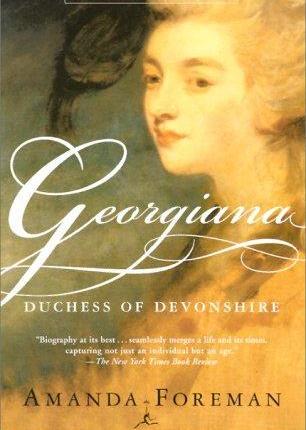
Georgiana: Duchess of Devonshire by Amanda Foreman

Georgiana: Duchess of Devonshire by Amanda Foreman

Georgiana, the Duchess of Devonshire, was a complicated lady. She was politically active, a progressive thinker, had an atrocious gambling habit that kept her perpetually in debt and suffered from an unfortunate, sometimes unhappy, marriage.

Did I mention she lived in the late 1700 and early 1800s?

“There was enough popular participation to make politics as big a national obsession as sport, if not bigger. The emergence of national newspapers turned politicians into celebrities.” pg 18 ebook.

And one of the brightest stars among them, was the Duchess of Devonshire.

“This was the age of oligarch politics, when the great landowning families enjoyed unchallenged pre-eminence in government. While the Lords sat in the chamber known as the Upper House, or the House of Lords, their younger brothers, sons, and nephews filled up most of the Lower House, known as the House of Commons.” pgs 22-23.

It wasn’t a particularly great age for democracy or for modern thought.

“Georgiana’s methods were too modern for eighteenth-century society. She was never allowed to canvass openly in London again, nor did other aristocratic women imitate her example. It would be another hundred years before women once more ventured boldly into street politics as Georgiana had not been afraid to do in 1784.”pgs 178-179, ebook

1784!

“She felt that she had the same qualities as a man; it was simply her sex, not her capability, which barred her from taking part in politics.” pg 346.

Imagine that. 🙂

The leaders of the Whig party, Georgiana’s political friends, were brilliant but flawed.

Eighteenth-century England was full of wits, connoisseurs, orators, historians, drinkers, gamblers, rakes, and pranksters, but only (Charles James) Fox embodied all these things.” pg 75, ebook.

I confess, though this book has extraordinary detail and research about Georgiana’s political activities, I found her personal life far more fascinating.

Her marriage may have been doomed from the start: “The Duke did not know how to be romantic; never having experienced tenderness himself he was incapable of showing it to Georgiana. He did not mean to hurt her, but there was a nine-year age difference between them and a gulf of misunderstanding and misplaced expectations.” pg 49, ebook.

There was another woman, who may or may not have been both Georgiana and the Duke of Devonshire’s lover. There were multiple handsome men who entered and exited Georgiana’s life.

She even had an illegitimate child with one of them.

A fascinating biography of an extraordinary lady – highly recommended.

The Lady Who Plucked Red Flowers Beneath the Queen’s Window by Rachel Swirsky

The Lady Who Plucked Red Flowers Beneath the Queen’s Window by Rachel Swirsky

The Lady Who Plucked Red Flowers Beneath the Queen’s Windowis a fantasy short story about how much one’s world view is shaped by culture, the time period in which one lives, and love.

The main character, Naeva, is a powerful magician. She serves the queen of a matriarchal society to the best of her capability.

Naeva’s love for the queen is used to trap her soul, so she can be summoned from beyond the grave to serve forever.

Photo by Maria Orlova on Pexels.com

“The Queen needs you, Naeva. Don’t you love her?” Love: the word caught me like a thread on a bramble. Oh, yes. I loved the queen. My will weakened, and I tumbled out of my body. Cold crystal drew me in like a great mouth, inhaling.

This binding is problematic, because the queen doesn’t live forever.

I was captivated by this story. It surprised me because short stories aren’t usually my thing.

During a bout of insomnia one night, I read The Lady Who Plucked Red Flowers in one sitting.

You can read it too, if you’d like. It is available in its entirety online: https://subterraneanpress.com/magazin…

There are subtleties in the story about feminine and masculine power, but also mankind’s penchant for judging current culture as superior to all others that have ever or will ever exist.

Photo by Teddy Yang on Pexels.com

“It was becoming increasingly clear that this woman viewed me as a relic. Indignation simmered; I was not an urn, half-buried in the desert. Yet, in a way, I was.”

Naeva suffers not only because she’s trapped and cannot die, but also because her matriarchal culture is left behind in the depths of time.

“I had never before been aware of the time that I spent under the earth, but as the years between summons stretched, I began to feel vague sensations: swatches of grey and white along with muted, indefinable pain.”

Photo by Aistu0117 Sveikataitu0117 on Pexels.com

She changes, but reluctantly and slowly. And love has as large a role in shaping her development as it did in her entrapment.

It is a wonderful fairy tale. I highly recommend it for sleepless nights or a boring lunch hour.

Thanks for reading!

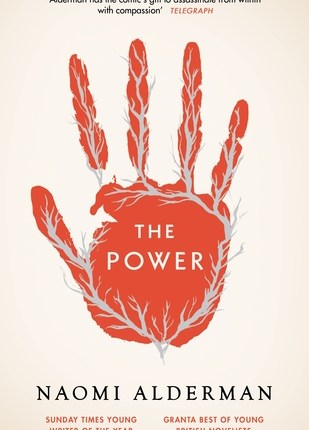
The Power by Naomi Alderman

The Power by Naomi Alderman

In The Power, young women have developed the ability to control electricity. It shifts the balance of power between the sexes and the world begins to come apart at the seams.

It is told from the point of view of a few women and a man. They each have different stories and experiences that Naomi Alderman blends together to create a powerful statement about how we live.

Photo by Sora Shimazaki on Pexels.com

This is one of the most disturbing books I’ve ever read, but also, most brilliant. It made me think about all of the internal biases I have when it comes to gender, cultural expectations and roles.

Who was it who said: “Absolute power corrupts absolutely.” This book is an examination of power and how it has shaped the world, not always for the better.

The monumental societal shift starts out small enough. A man named Tunde captures a moment between a young woman and a man who was hitting on her at the grocery store: “Tunde is recording when she turns around. … There she is, bringing her hand to his arm when he smiles and thinks she is performing mock-fury for his amusement. If you pause the video for a moment at this point, you can see the charge jump.” loc 261, ebook.

Those who have been abused are more likely to become abusers. And there are many, many abused women in the world.

“A strange new kind of fighting which leaves boys- mostly boys, sometimes girls- breathless and twitching, with scars like unfurling leaves winding up their arms or legs or across the soft flesh of their middles. Their first thought after disease is a new weapon, something these kids are bringing into school, but as the first week trickles into the second they know that’s not it.” loc 316, ebook.

Photo by Pixabay on Pexels.com

Entire governments crumble to powerful women. Women who have been locked up their entire lives roam the streets, free. Soon enough, they’re locking up and abusing the men, because they can.

Religions change. Sexual predilections change. New politicians are elected. New soldiers are trained.

“Allie thinks, God is telling the world that there is to be a new order. That the old way is overturned. The old centuries are done.”loc 681, ebook.

The new scourge of third world countries are powerful, uncontrolled women.

“He wounds three of the women in the leg or arm and the others are on him like a tide. There is a sound like eggs frying. When Tunde gets close enough to show what has been done, he is perfectly still, the twisted-vine marks across his face and neck so thick that his features are barely discernible.” loc 884, ebook.

Photo by tugay aydu0131n on Pexels.com

I think book clubs may find plenty to talk about in this book- if they can make it through. There are some very disturbing scenes.

“Gender is a shell game. What is a man? Whatever a woman isn’t. What is a woman? Whatever a man is not. Tap on it and it’s hollow. Look under the shells: it’s not there.” loc 4780, ebook.

In a time when so many women may feel powerless or voiceless, The Power may speak directly to them. It is, as I’ve said, a disturbing book, but also a conversation starter.

To quote Victor Hugo: Nothing is as powerful as an idea whose time has come. And, in my mind, it was the perfect time for this book to be written.

Thank you to NetGalley for a free digital copy of this book and thanks for reading.

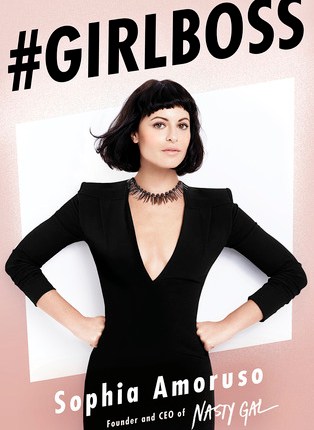
#GIRLBOSS by Sophia Amoruso

#GIRLBOSS by Sophia Amoruso

#GIRLBOSS is Sophia Amoruso’s story about her wild childhood, unlikely and extraordinarily successful business venture and her treatise on how to be yourself and bring what is unique to you to your professional life.

I googled Sophia after I finished this book and was dismayed to discover she has declared bankruptcy.

It seems she still has a successful motivational speaker program going on, but, for whatever reason, her business hasn’t worked out.

I suspect, she will land on her feet and start again. That is a large part of the philosophy contained in #GIRLBOSS.

Photo by Sam Lion from Pexels

“In about eight years, I went from a broke, anarchist ‘freegan’ dead set on smashing the system to a millionaire businesswoman who today is as at home in the boardroom as she is in the dressing room. I never intended to be a role model, but there are parts of my story, and the lessons I’ve learned from it, that I want to share.” pg 23, ebook.

Sophia believes in being yourself. Let your freak flag fly. Embrace your weirdness- because that is what ultimately makes you great.

“#GIRLBOSS is a feminist book, and Nasty Gal is a feminist brand in the sense that I encourage you, as a girl, to be who you are and do what you want. Being a Girlboss is as much about being the boss of your career as it is of your home.” pg 29, ebook.

Photo by Skylar Kang from Pexels

Between Sophia’s business tips and memoir, she includes quotations. Such as: “It was the straying that found the path direct – Austin Osman Spare.” pg 56

In her case, that was absolutely true. Sophia wanted a job where she didn’t have to work and could get paid for doing, essentially, nothing.

She found that job and surfed the internet most of the time. In doing so, she studied online communities like MySpace and eBay and concluded that she could network and sell items with the best of them.

And she did.

Photo by cottonbro from Pexels

Sophia is a believer in creating your own reality: “… there’s also the everyday kind of magic that we make for ourselves. And that’s really not magic at all. It’s just recognizing the fact that we control our thoughts and our thoughts control our lives. This is an extremely simple, totally straightforward concept, but for a lot of people, it’s so alien that it might as well be magic.” ebook, pg 109.

Sophia, like Obi Wan Kenobi, does not believe in luck. She believes in hard work, action and selective focus.

“Focus on the positive things in your life and you’ll be shocked at how many more positive things start happening. But before you start to think you just got lucky, remember that it’s magic, and you made it yourself.” ebook, pg 115.

Come bankruptcies and whatever else, I believe Sophia Amoruso will be just fine. Don’t you? 🙂

And have you watched the #GIRLBOSS series on Netflix? I did and it didn’t appeal to me as much as this book did. Not recommended.

Thanks for reading!

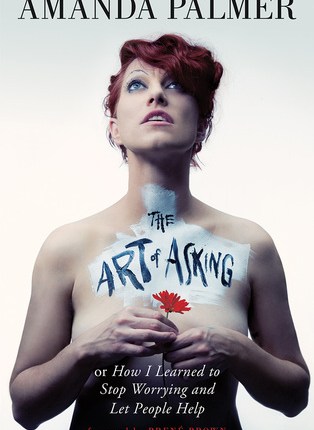
The Art of Asking; or, How I Learned to Stop Worrying and Let People Help by Amanda Palmer

The Art of Asking; or, How I Learned to Stop Worrying and Let People Help by Amanda Palmer

Amanda Palmer is an extremely talented artist who has done it all- from performing in a punk rock band to posing as a statue on the streets.

I can see why readers are passionate about this book and the author. She just didn’t strike a spark for me.

Photo by Jeffrey Czum on Pexels.com

Memoirs can drag on and become self-indulgent and ridiculous. I feel like that was a problem with The Art of Asking.

The tipping point for me was when she formed The Dresden Dolls with her friend and said (I’m quoting from memory here since I was listening to the audiobook): “I finally had the strongly emoting band I’d always dreamed of” or something like that.

I realized, I was strongly emoting on this book, but not in a good way.

I understand her internal struggles in forming a relationship with Neil Gaiman must have been difficult for her, but her “should I date him, he’s older and richer and more famous than me” just came off as silly and very first-world problems.

I get that she loves her fans, her art, her lifestyle- but it just come together to make a read that I enjoyed.

My apologies to her fans. If it helps, my favorite parts of the audiobook were the songs she put between some of the tracks. Those were actually pretty awesome.

Photo by Inga Seliverstova on Pexels.com

And the over-arching theme of The Art of Asking was good too.

Society isn’t comfortable with asking. We don’t know how to do it, don’t feel comfortable with it and it prevents people from making the art that they were born to make.

You can get that part of this book by watching Palmer’s TED talk. Maybe you should do that instead of reading this.

Here ’tis: 

https://www.ted.com/talks/amanda_palmer_the_art_of_asking

Thanks for reading.

The Woman I Wanted to Be by Diane Von Furstenberg

The Woman I Wanted to Be by Diane Von Furstenberg
thewomaniwantedtobe

The Woman I Wanted to Be is the life story of the incomparable Diane Von Furstenberg.

She starts with her parents’ harrowing early life in war-torn Europe and continues through her own tumultuous love affairs and child-rearing years.

After a personal first half, the second half of her book is dedicated to how she entered and eventually became a living icon in the world of fashion.

I really enjoyed this book.

In an era where the media glorifies women who show off their bodies, cling to powerful men, and descend into drug addictions, Diane personifies the empowered woman who shows what she can do and build rather than living on how she looks or scandal.

That’s not to say that Diane hasn’t had a wild life, she has, but she owns it, has evolved from it and built it into an empire.

There are many moments in The Woman I Wanted to Be where Diane failed to be that woman. But instead of becoming mired in failure (she had to sell her business two separate times to avoid bankruptcy), she persevered to become a household name.

At another point, she gave up her identity and her business to spend time with a man who wanted her to be a blank slate. He ended up leaving her for someone else.

Photo by Karolina Grabowska on Pexels.com

Diane didn’t crawl into a hole and wilt then either. With grace and dignity, she re-entered life and the fashion world. Diane went on to experience an even greater level of success than she had before her exit.

Diane provides some great general advice for life such as: when bad things happen, they can actually be good things.

Also, never play the victim- take responsibility for your life.

Embrace your age, whatever it may be.

Photo by Pavel Danilyuk on Pexels.com

These philosophies have enabled Diane to rise above any obstacles that have appeared in her path. She is an excellent role model and it was such fun to read about her incredibly exciting and almost unbelievably successful life.

Readers who enjoyed Wild: From Lost to Found on the Pacific Crest Trail and She Got Up Off the Couch: And Other Heroic Acts from Mooreland, Indiana may enjoy this memoir.

It’s far more glamorous than either of those two selections, but the underlying themes of female empowerment and reaching for the life of your dreams despite all the odds, are the same.

I received a free copy of this book through Goodreads First Reads. FTC guidelines: check! Thanks for reading!

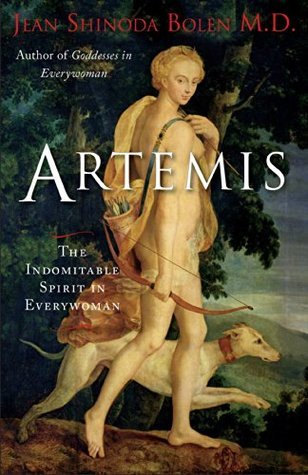
Artemis: The Indomitable Spirit in Everywoman by Jean Shinoda Bolen

Artemis: The Indomitable Spirit in Everywoman by Jean Shinoda Bolen
artemis

In Artemis, Jean Bolen discusses the importance of archetypes and mythological stories. She asserts that we don’t just enjoy the stories for their entertainment value- we respond to the psychological truths contained between the lines.

I’ve always enjoyed academic discussions of mythological tales. I never really knew why though until I read this book.

The meanings of mythology are so layered that our conscious minds may not even know that our subconscious minds are latching onto the veiled truths. We love them without realizing their importance.

Artemis: The Indomitable Spirit in Everywoman contains an intricate dissection of the tale of Atalanta, a mortal whose life paralleled the goddess, Artemis, in many ways.

I think I had been exposed to this tale in a classical mythology course in college, but the complex Jungian psychology that goes along with it wasn’t explained to this extent. Bolen’s explanation of the myth is masterful.

One archetype in particular that I enjoyed learning about was Selene/Endymion. Sometimes, in the frantic growth to adulthood, one can feel alone in their struggles and inner landscape.

Photo by luizclas on Pexels.com

I’ve known so many girls (myself included) who were living that pattern but they didn’t even know it. Bolen’s explanation of the motivations and the potential growth that can accompany this life pattern was enlightening as well as encouraging.

Bolen ties humanity together through shared experiences and mythologies. She makes the reader feel that, no matter what they have gone through, they are not and have never been alone. It’s a very empowering message.

My minor in classics covered much that was discussed in this book but the feminist lens that was applied to the mythologies was very unique and different from what I have learned in the past.

Photo by Taryn Elliott on Pexels.com

In addition to the myths, Bolen includes contemporary fictional heroines as well as real life figures who embody the archetypes. I liked that she traveled beyond the boundary of the tales to apply the energies to real life.

Young women who aspire to embody the vision of Artemis in all of her variations in their own life will find many examples to emulate within these pages.

I enjoyed this quite a lot. I haven’t read Bolen’s Goddesses in Everywoman but this book makes me want to dive into it.

I’d recommend this book to anyone who’s interested in Jungian psychology, mythology or the elevation of the human spirit.

I received a free copy of this book through Goodreads First Reads. FTC guidelines: check!

Thanks for reading!

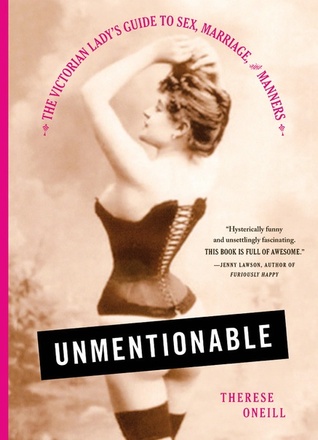
Unmentionable: The Victorian Lady’s Guide to Sex, Marriage, and Manners by Therese Oneill

Unmentionable: The Victorian Lady’s Guide to Sex, Marriage, and Manners by Therese Oneill
unmentionable

Unmentionable made me truly appreciate how good I have it compared to my female ancestors.

This clever little book examines the gross, disturbing, and, at times, hilarious “unmentionable” facets of a Victorian woman’s life and also, their powerlessness in society when compared to their male counterparts.

The women’s rights portion sounds grim, but Oneill’s writing keeps it light. I learned so much and was entertained too.

For example, I don’t consider modern cities to be very clean, but Oneill explains in her book, that they are shining examples of cleanliness compared to what came before: Some would argue that the nineteenth century was one of the filthiest times in all of Western history, particularly in any urban, developed area. … Ankle deep in filth, I said, but forgive me, I was inaccurate. You will wish the filth terminated at your ankles. Foulness is everywhere. Grime and rot cling to the very air, the buildings, the people; even the soap is made out of lard and poison.” pg 20, ebook.

All that dirt, but bathing was considered bad for your health and even, depending upon your religious upbringing, immoral! I’ve never read a historical fiction that describes the foul stench of the streets or the crowd upon it… now, I know better. Thanks Unmentionable!

Make up and other personal care products used to be either oily goop or filled with poisonous substances that could kill you or permanently wreck your face.

Photo by Rita Rebeca on Pexels.com

With this in mind, Oneill gives us a new take on the story of Jezebel: “She painted her face, and tired her head [fixed her hair], and looked out at a window.” “Some think this means Jezebel planned to seduce her way out of this problem; others think she was facing death with composure and dignity. At any rate, her eunuchs saw that they were on the wrong team and shoved her out the aforementioned window, and dogs ate her face. Which reinforces the assumption that her face was coated in sinfully delicious animal fat.” pgs 67-68, ebook.

Because women really had no other choice, being the ideal wife and mother was no laughing matter: “Your only job now that you are a nineteenth-century wife is to do everything within your power during every waking moment to make his life so sweet and full that he will literally dread the glory of Christ’s return, if only because it will mean parting from your secret strudel recipe and the unmatched craftsmanship of your trouser hemstitch.” pg 130, ebook.

So, unreasonable expectations of perfection abounded at home.

Photo by Pixabay on Pexels.com

Women, especially single, unmarried ones, weren’t supposed to go anywhere alone: “Etiquette for Ladies reminds us that no woman has any business being alone in a museum, a library, or any other such den of unwholesomeness. Wherever you are going, your behavior once you arrive should remain every bit as self-aware-but-pretending-not-to-be as when you were in transit.”pg 165, ebook.

The library is a “den of unwholesomeness”… ha!

But the worst of the era, in my opinion, was the medical community’s attitude towards women. At that time, we hadn’t figured out how the female body worked and didn’t connect the idea that people need intellectual stimulation and purpose for a life well lived.

That lead to the lumping of every female complaint under the title, “Hysteria”: “First I would like to tell you what hysteria actually was. Which is incredibly difficult. Because the only honest definition I can give you is “a misdiagnosis.” Epilepsy, diabetic shock, neural disorders, post-traumatic stress disorder, postpartum depression, and bipolar disorders do not necessarily cause similar symptoms, but they were all commonly diagnosed as hysteria.” pg 173, ebook. So, pretty much, everything then.

Photo by Vie Studio on Pexels.com

Oneill reminds the reader that many of the rights, and indoor plumbing, and personal care products that we enjoy today are because of the demands for a better life by women who lived during the Victorian era.

I am so very grateful and humbled for their contributions to society and the sufferings that they endured so that their children’s children’s children would have it better. Some further (non-humorous) reading: Spinster: Making a Life of One’s Own or Artemis: The Indomitable Spirit in Everywoman.

Thank you to Netgalley and Little, Brown and Company for a digital copy of this book & thanks for reading!