Blood Plagues and Endless Raids: A Hundred Million Lives in the World of Warcraft by Anthony R. Palumbi

Blood Plagues and Endless Raids: A Hundred Million Lives in the World of Warcraft by Anthony R. Palumbi
blood plagues

Anthony R. Palumbi’s memoir is about video games, relationships and play/life balance.

Blood Plagues and Endless Raids took a chapter for me to warm up to it. Palumbi begins his homage to World of Warcraft with an icky story about driving to meet his guild mates for the first time. But once I got past that part, I enjoyed this gaming memoir quite a lot.

I’ve mentioned in previous reviews that I am, or used to be, a very dedicated player of Everquest, both one and two. Though it never had the mammoth popularity of WoW, Everquest had quite a few things in common with the mega-hit including some game dynamics and gamer-speak. So, I found myself nodding along most of the time.

You don’t have to be a gamer to appreciate this memoir. Palumbi explains every slang term and technique that pops up. He also delves deeply into game morality, relationships in MMORPGs (massive multiplayer online role playing games), addictions, game burnout, the notable players and even how WoW entered popular culture. It is an informative and, for readers like me, a nostalgic treat.

Photo by Soumil Kumar on Pexels.com

Even though, in-game, Palumbi and I would have moved in entirely different circles. He’s a raider, you see. This means he’s into end-game content which in the old days took 40 or so players coordinating, in sometimes very complex ways, to master. I, on the other hand, prefer to wander around and see what there is to see. I like to fish and chat and have fun. Palumbi likes to PvP, strut his stuff in his rare gear and order the main tank around.

Beneath these differences though, there runs a love for gaming and the social-ness of it. He, and I, don’t have that anymore. People have moved on, had families and gone to different games. When I log onto EQ2, there’s not a single person on that I know anymore. It is very sad in some ways.

“Those who match up through games have come to know each other very well long before meeting in person. … WoW romance served, ironically, as a kind of return to romantic tradition, with separation or impossibility as a core component.” loc 467. Have I mentioned that I met my spouse in-game? Let me tell you the tale.

Photo by Luis Quintero on Pexels.com

So, I was wandering beneath the trees of Kelethin (a newbie zone for wood elves) and I was stuck in a perpetual corpse run loop. This was back when death had a cost- you’d die and lose every piece of equipment on your body unless you could go back to the scene and click your corpse. My friend had made me a nice leather piece of armor and I didn’t want to admit to him that I died and lost it, so I was looking for myself, literally. But, I was near Orc Hill and, well, I had died maybe half a dozen times looking for that tunic.

In the midst of this bloodbath, I get this ‘tell’ out of the blue (in WoW they’re called ‘whispers’) by this guy who goes “Hey, do you need some help?” And I experienced a moment of utter panic because I had always been told that people online were dangerous. But I threw caution, and my pride really, to the wind and said, “Yeah, I do.”

So these random guys helped me find most of my corpses and, as I logged on over the next couple of weeks, I met the rest of their friends. One of whom is the man I ended up marrying.

As many people as the games brought together, they also drove people apart. “Choosing a game over another person’s feelings felt strange enough on its own; to have one of my best real-life friends applauding this decision was disconcerting. At the same time, it was rewarding to hear that kind of praise from someone who’d always been so much better at games.” loc 661. I knew people who dropped out of college because of MMORPGs, lost their jobs or their relationships. Another sad reality, but true.

Palumbi also delves briefly into the gender divide on video games and how females are treated differently than their male counterparts. I honestly think that most people assumed I was a guy playing because it was more common. The last thing my future husband said before he flew out to meet me was “You are really a girl, right?” and I had to laugh. Because, REALLY, I am. So, I dealt with some harassment and discrimination because of my gender, but not a horrific amount. Sometimes it seems like I was in the lucky minority.

Highly recommended for current or former gamers or anyone who wants to understand a spouse who plays. Some further reading: You’re Never Weird on the Internet or Fantasy Freaks and Gaming Geeks: An Epic Quest for Reality Among Role Players, Online Gamers, and Other Dwellers of Imaginary Realms.

Thank you to NetGalley and Chicago Review Press for a free digital copy of this book. And thanks for reading!

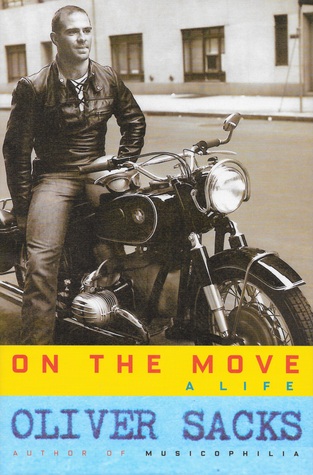
On the Move: A Life (Oliver Sacks’ memoirs #2) by Oliver Sacks

On the Move: A Life (Oliver Sacks’ memoirs #2) by Oliver Sacks
on-the-move

I knew nothing about Dr. Oliver Sacks before I read this book other than the fact that he was a prolific writer. Now I know much, much more.

I loved that Dr. Sacks didn’t hesitate to jump into the nitty gritty details of his life. One line that really stuck out to me: “It was just as well that I had no foreknowledge of the future for after that sweet birthday fling I was to have no sex for the next thirty-five years.” pg 203 Boom. It’s the last line of a chapter section, he neither explains it nor dwells on it. How extraordinary.

I also liked reading about the dramatic parts of his life like his early drug addiction, love of motorcycling, wild nights at the Y, and stint with the American truckers. I found myself dragging through his reminiscing about research or intellectual friends. I think the problem is that I don’t find the inner workings of the mind nearly as fascinating as he did.

Dr. Sacks lists his research pursuits in page after page of case studies, reading, and memories and it wasn’t very fun to slog through. I would probably enjoy the books that he wrote during these times more than this one that was about the writing of them. Another problem, sometimes during the narration, he moves backwards and forwards in time without noting that he is doing so other than writing the date. That was frustrating for me.

Despite some slow portions, Dr. Sacks does have some very beautiful writing in On the Move. Take this passage, where he’s thinking about why he lived so many years of his life on the East coast of the US when he really loved the West coast: “I suspect my nostalgia may be not only for the place itself but for youth, and a very different time, and being in love, and being able to say, “The future is before me.” pg 131

He also struck a chord with me in this line where he’s talking about his love of journaling: “My journals are not written for others, nor do I usually look at them myself, but they are a special, indispensable form of talking to myself.” pg 383 I feel that way too. I pour myself out on written pages in ways that I feel unable to do in the rest of my life through conversations or whatever else.

Dr. Sacks was extraordinarily bright, interested in life and all of its internal mechanisms. At least, after reading this memoir, one can say that he lived fully and well.

I received a free copy of this book through the Goodreads First Reads program. Thanks for reading!

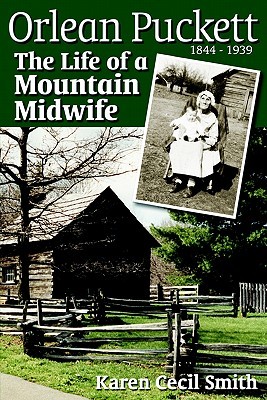
Orlean Puckett: The Life of a Mountain Midwife by Karen Cecil Smith

Orlean Puckett: The Life of a Mountain Midwife by Karen Cecil Smith
orlean-puckett

The Life of a Mountain Midwife is an interesting, but sometimes meandering, biography about a midwife named Orlean Puckett who lived and worked in rural Appalachia.

This reminded me of Laura Ingalls Wilder’s Little House on the Prairie books in that Karen Cecil Smith takes great care to detail the day-to-day chores, food, clothing, and lives of the people of Appalachian Mountains in the 1800’s to 1900’s. I loved those intimate details, many of which are completely gone from the modern lifestyle like chopping wood, lighting the stove, and cleaning laundry by hand.

Also, I am a big fan of BBC television show, Call the Midwives so the chapter detailing Puckett’s extraordinary midwifery skills was fascinating to me. Take this gem: “Aunt Orlean continued to ask, ‘Don’t you think it’s about time to feather her?’ Dr. Cundiff finally said, ‘Okay,’ at which point Aunt Orlean produced from her bag a goose feather. She stuck it into the fire and then placed the smoking feather beneath the mother’s nose. The mother started coughing and sneezing and the baby was born immediately.” pg 101 Can you believe that!

Astoundingly, Orlean Puckett delivered over 1000 babies with almost zero training and never lost a mother or child.

Photo by Pixabay on Pexels.com

Karen Cecil Smith utilizes actual interview tidbits from many of the people who knew Orlean Puckett for this book and that was also enjoyable. She maintained their improper grammar and local accent which lent real flavor to the narrative. For example, many of the children that Orlean helped deliver said that she “borned” them. Here’s a memory from a relative: “Now I was gonna stay up there one night with Granny (Orlean) and she was gonna learn me how to bake wheat bread the next mornin’ and Uncle Stewart he had to go to work and they waked me up and wanted to know if I wanted to put on bread.” pg 57

My only complaint about this book is that it wanders in places and the reader is led into extended stories about ancillary people to Orlean’s life when, this reader at least, just wanted to know more about the Orlean herself.

Photo by Lum3n on Pexels.com

If you are mainly interested in local history, this book is like a casual conversation with an elderly friend. I’d even go so far as to compare it to an unedited Story Corp interview. It can be charming but also frustrating when the story goes on and on but doesn’t seem to go anywhere.

If you enjoyed this book, I’d suggest any of the Laura Ingalls Wilder series. They have the same sort of detail oriented focus but with more of a story line.

I received a free copy of this book through Goodreads First Reads program. Thank you for reading!

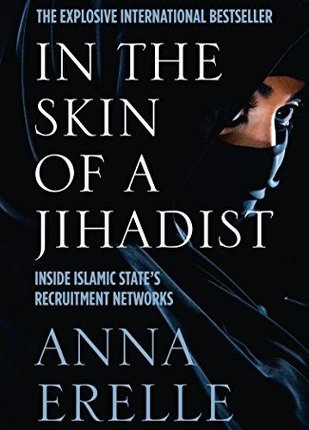
In the Skin of a Jihadist: Inside Islamic State’s Recruitment Networks by Anna Erelle

In the Skin of a Jihadist: Inside Islamic State’s Recruitment Networks by Anna Erelle
jihadist

This book was scary.

First of all, I had no idea how widespread the problem of young men and women leaving their home country to wage jihad had become. Anna Erelle was almost effortlessly sucked in to a horrific situation that has actually happened to hundreds of young people from Europe.

She demonstrates how easily a young woman, who may be lonely, marginalized, or searching for meaning, could be swept away by a religious fanatic so that she could never return home.

Once these young people hit the Syrian border, their passports are taken so that, even if they changed their minds, they couldn’t go back. And, the worst part is that it happened so quickly. The events of In the Skin of a Jihadist occur over the course of one month.

Reading this as a parent, this book was a nightmare. One minute, your child is home with you- the next they’re on a one-way flight to Turkey and they’re never coming back.

As compelling as the story was, it suffered from some small translation problems. (It was originally written in French.)

Why, for example, did Anna get into that fight at the photojournalist party? I know that she was under pressure and had had too much to drink, but, if it had been me, I wouldn’t have punched a bouncer because I was upset about how my story was going. When everything soured, I would have packed my bags and taken the first flight home.

That probably only shows how she’s a more serious journalist than I am, but still. I felt as if I was missing some details about why she was behaving how she was and how the French police used her contacts and information to prosecute terrorists.

Overall though, it was a harrowing read. I learned more about Sharia law than I had known before I read this book and also about why people would chose that type of lifestyle- it was all profoundly disturbing.

Read In the Skin of a Jihadist if you want to know more about this issue but prepare yourself for some eye-opening revelations.

If you want to learn more about this topic, I’d recommend reading The Terrorist’s Son: A Story of Choice by Zak Ebrahim or I Am Nujood, Age 10 and Divorced by Nujood Ali.

I received a free copy of this book through GoodReads First Reads program. Thanks for reading!

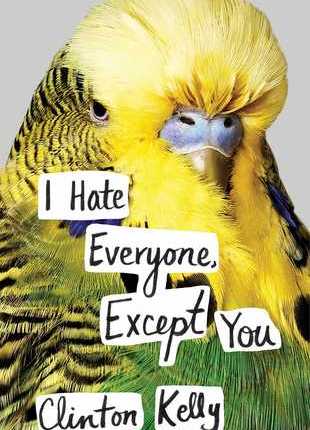
I Hate Everyone, Except You by Clinton Kelly

I Hate Everyone, Except You by Clinton Kelly

I Hate Everyone, Except You entered my life at the perfect time. I listened to a David Sedaris book last week and was unimpressed with some of his more edgy material. Clinton Kelly has the snark and sass of Sedaris, but, in my opinion, more heart and empathy.

Let’s just say, if Sedaris’ book was a hard drug, the Kelly book equivalent would be “a little fresca on a panty shield” loc 1784, ebook. Perhaps uncensored, he’s more honest and vulgar than what his fans usually see, but he’s real.

I really enjoyed this one, but don’t go into it expecting Kelly to parade himself around as the fashionista from What Not to Wear the whole time. It is definitely not that.

Photo by Artem Beliaikin on Pexels.com

Kelly’s dialogue (inner and outer) is hilarious. Take this moment, he’s psyched himself up and gone on an interview for an editorial position at a fashion mag and he’s asked to wait: “I’ll hang out here in the lobby,” I said. Yep, I’ll just sit in that plastic chair facing the door, watching my dreams rot like a bowl of fruit on time-lapse video. Thanks so much. Employees began to arrive, coffees in hand, and quite frankly, I had expected them to be better looking. … Sure, some of them were so skinny you could see through them, but they didn’t look happy about it. I had been expecting to work among anorexic women who radiated inner strength, not soul-crushing hunger. And what was with all the joyless denim? loc 375, ebook.

It makes me wonder what he would say if he saw my office crowd. Maybe I wouldn’t want to know.

Kelly isn’t religious but he seems to be spiritual in that he believes people should live authentically every moment for as long as they can.

Here’s what he has to say about it: “… the older I get…, the less Destiny and Fate-and their cousin, Faith, for that matter-concern me. For some, the opposite is true. Men and women on their deathbeds, old as the Appalachaians, wondering what it was “all about”. So foolish. I must admit, perhaps to the detriment of your esteem for me, that my sympathy for such wonderers is minimal. Imagine being given a life and not understanding until its ugly end that the point was to live it.” loc 494, ebook.

Photo by Artem Beliaikin on Pexels.com

I can see how that attitude could offend some people, so, here’s your warning. He’s not anti-religion necessarily. He’s pro- figuring out what works for you.

How he found his way onto “What Not to Wear” was New Age in the extreme and I’m so glad he recorded it here for us.

He didn’t like his current job and wasn’t sure what to do, so he talked to his friend: “She suggested that I ask the Universe for guidance. I wasn’t quite sure how to do that until I read a couple of books by Caroline Myss, in which she explained that if you ask the Universe for help, it will provide help.” loc 512.

Not to spoil the story, but guess what he did? I’ve read a bunch of New Age stuff and, honestly, Caroline Myss is hard core, sometimes angry even, and unapologetic about it. If I was asked to recommend a Law of Attraction author to a complete new comer to the topic, I’d pick Abraham Hicks, but whatever works.

Kelly found what he needed when he needed it and he didn’t even know it was missing- the very essence of New Age teachings.

My favorite part of the whole book: “When What Not to Wear ended a few years ago, many reporters asked me about my favorite and least favorite makeovers and the worst fashion faux pas I had ever witnessed. But not a single one asked me what I had learned about women over ten years of listening to their concerns about their bodies and their clothes. … Women want to feel beautiful. I’ve never met one who said she didn’t, and believe me, I’ve asked around.” loc 602, ebook.

Yes! And why would women want to feel beautiful? Because they would think they were worthy of love then. So, at the end of the day, what does every woman, man, child on earth want? Love.

Kelly talks about his failed and successful relationships in an honest manner, never denying that his own foibles could be why things tanked:“What probably kept us together was Rick’s ability to produce a level of rage in me so profound it actually inspired out-of-body experiences.” loc 2097, ebook. Funny, no?

Highly recommended for people who liked, but didn’t love David Sedaris or readers who enjoy humorous/tell-all memoirs. Some similar books: I’m Just a Person, The Andy Cohen Diaries: A Deep Look at a Shallow Year, or Life of the Party: Stories of a Perpetual Man-Child.

Thank you to NetGalley and Gallery books for a free digital advance reader’s copy of this book. And, thank you for reading.

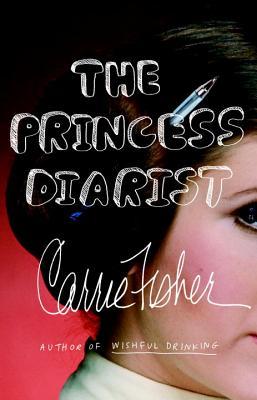
The Princess Diarist by Carrie Fisher

The Princess Diarist by Carrie Fisher
diarist

Take a highly intelligent, anxiety prone girl, mix in the life changing, world wide phenomena that is Star Wars, and add a dash of handsome, introverted, and married leading man and you have: The Princess Diarist.

This is not really about Star Wars as much as it is about obsession and Carrie trying to figure out who she is.

Though there are some tidbits sprinkled throughout: “And as much as I may have joked about Star Wars over the years, I liked that I was in those films. Particularly as the only girl in an all-boy fantasy. They were fun to make. It was an anecdote of unimaginable standing.” pg 5.

Or the moment Carrie found out that she got the part: “…I laughed and dropped the phone and ran out into the front yard and into the street. … It was raining in L.A. and I was Princess Leia. I had never been Princess Leia before and now I would be her forever. I would never not be Princess Leia. I had no idea how profoundly true that was and how long forever was.” pg 31

Carrie’s not afraid to make fun of herself: “When you watch the movie, it turns out that the voice I used when I was upset was vaguely British, and my not-upset voice is less British.” pg 44.

Or confess her hopeless awkwardness around her co-star: “But one thing I knew was that Harrison made me feel very nervous. I got tongue-tied in his company, and clumsy. It was uncomfortable in the extreme, and not in any way I could over come with a few well-chosen witticisms. We met, hit a wall, and stayed there. pg 61.

I’ve known someone who had that kind of effect on me. Poor Carrie.. poor me. 🙂

Here’s an actual entry from her diary that includes a mention of George Lucas: “George says that if you look at the person someone chooses to have “a relationship” with, you’ll see what they think of themselves. So Harrison is what I think of myself. It’s hardly a relationship, but nevertheless he is a choice. … I can’t think about it anymore. It makes my head hurt.” pg 114.

The older journal entries were my favorite part, but I can see how some readers may not enjoy them. They’re written in stream of consciousness and, at one point, I think Carrie flirts with a full on psychotic break- there’s a particularly disturbing entry about a rainbow colored talking fish that you can’t miss!

After the “Carrison” portion of the book, there’s some cringe worthy moments revealed between Carrie and mega Star Wars fans. Yes, she may have become a household name, but it doesn’t seem like it was worth the price.. or was it?

All of this just makes me want to watch Episode IV again! Read The Princess Diarist if you want to touch the depths of despair in a decades old love affair or if you want some quirky details about one of the most beloved science fiction films of all time. Also recommended: Fisher’s Shockaholic in which she details her struggles with bipolar disorder.

Thanks for reading!

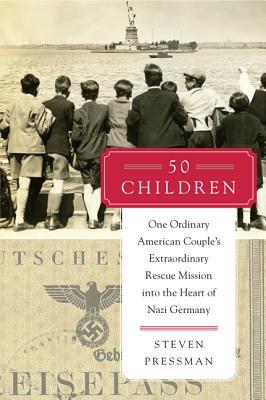
50 Children: One Ordinary American Couple’s Extraordinary Rescue Mission into the Heart of Nazi Germany by Steven Pressman

50 Children: One Ordinary American Couple’s Extraordinary Rescue Mission into the Heart of Nazi Germany by Steven Pressman
50children

Extraordinary and true story about how Gil and Eleanor Kraus saved fifty Jewish children from the Nazi Holocaust.

I watched the HBO documentary after I read this and, though similar and emotionally powerful, I enjoyed the book more because it provides a detailed history for each child (that Pressman was able to locate).

My only complaint about the book is that, though the story is gripping, it moves very slowly. My book club had a fascinating and educational discussion about 50 Children and, all said, I am very glad that it was the final club pick of 2016.

Did you know about this episode from US history?: “The fifty boys and girls whose lives were saved by Gil and Eleanor Kraus comprised the largest single known group of children, traveling without their parents, who were legally admitted into the United States during the Holocaust.” pg 9, ebook.

I didn’t realize that in the late 1930’s, that Jewish people were allowed, and even violently encouraged, to leave the Third Reich. The trouble was that, like other large displaced populations more recently, no country on earth was prepared to let that many people in or provide the social services required.

Fortunately, Gil Kraus was a well-connected lawyer who was willing and able to work within existing immigration and labor laws to find a way to bring the children into the US.

Photo by Mortandos on Pexels.com

I knew that the situation was awful for Jewish people in Europe before and during World War II, but, until I read this book, I didn’t realize the complete hopelessness that was experienced even before concentration camps became the ‘final solution’: “Within the first ten days of the Anschluss, the Viennese police reported nearly one hundred suicides throughout the city, virtually all of them Jews. By the end of April, the number of suicides had jumped to at least two thousand. Among the victims was Henny Wenkart’s pediatrician, who took his life by jumping out a window.” pg 42, ebook.

The American diplomats in Austria and Berlin had a front row seat to the horrors that the Jewish population were experiencing, but their hands were tied by national policy and immigration caps.

George Messersmith and Raymond Geist helped the Krauses as much as they could, within the law: “The Jews in Germany are being condemned to death. Their sentence will be slowly carried out, but probably too fast for the world to save them,” Geist (US foreign service officer in the Third Reich) wrote in a private letter to Messersmith (State Department secretary, stationed in Washington D.C.) in December 1938, less than a month after Kristallnacht.” pg 61, ebook.

Why was the American publication so anti-immigration?: “The United States still bore the scars of the Great Depression, and restricting immigration was seen as a way to protect jobs for Americans, who for years had been plagued with staggering unemployment rates. But challenging economic considerations were not the only factors at play in the immigration debate. The American public simply was not moved by the dire situation in Europe.” pg 68, ebook.

Photo by Pixabay on Pexels.com

And, antisemitism was far more prevalent than it is today. All of these things made it difficult if not impossible for the Jewish people who were trying to escape the Nazis.

Even after the Krauses were able to get the children to the United States, they faced harsh criticism from other Jewish charity groups for their actions. I was absolutely blown away by that.

You’d think that people would have banded together and said, “Look what’s possible!”, but instead, they fractured and accused the Krauses of breaking immigration laws. “Was it envy that prompted others to criticize what had clearly been a stunningly unique and successful rescue? Whatever their motivation, some of these same people now wondered if they might simply duplicate Gil’s strategy. pg 201, ebook.

But, since this was the largest group to get out, clearly the others didn’t succeed.

At book club, we talked about how the 1939 situation is similar to what the world is facing today with the Syrian refugee crisis and, though we all thought that immigration policy needs to be re-examined, that the real tragedy is that the world still hasn’t found a way to respond to the wars and conflicts that cause such displacement in the first place.

Is humanity ever going to figure out a way to either co-exist peacefully or provide sanctuary for those displaced by the fighting? I don’t know, but it’s a question that we should think about.

Recommended for anyone interested in the Holocaust, immigration, or testimonies from World War II- as uplifting as it is unsettling, 50 Childrenis a timeless lesson for everyone about the evils that happen when those able to help choose not to or look away.

Thanks for reading!

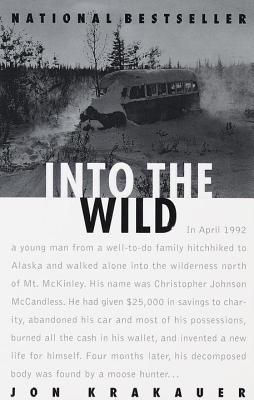
Into the Wild by Jon Krakauer

into-the-wild

“Not all those who wander are lost” seems to be the focus of this non-fiction biography by Krakauer about a young man named Chris McCandless who went into the Alaskan wilderness, but never came out again.

Jon Krakauer examines McCandless’ history, friendships, and probable motivations while also comparing his case to other young men who died or disappeared in the wilderness.

He also gets very personal and recounts a solo mountain climbing adventure of his own that nearly went south, but didn’t- crediting his survival to luck rather than skill.

Into the Wild paints McCandless as a man with a brilliant mind and the soul of an artist, who didn’t fit in to the modern world’s or his family’s view of how he was supposed to be.

“In April 1992, a young man from a well-to-do East Coast family hitchhiked to Alaska and walked alone into the wilderness north of Mt. McKinley. Four months later his decomposed body was found by a party of moose hunters.” pg 10, ebook.

For much of the book, Krakauer tries to figure out what ultimately ended McCandless’s life. In the edition I read, he had a new afterword that he penned in April 2015, talking about his definitive theory for why McCandless died.

Photo by eberhard grossgasteiger on Pexels.com

If you haven’t read the book since it was published, I really recommend picking up a new edition if only to read that.

Krakauer includes actual journal entries from McCandless’s wanderings, which I thought gave us a pretty clear window into the man’s mind: “It is the experiences, the memories, the great triumphant joy of living to the fullest extent in which real meaning is found. God it’s great to be alive! Thank you. Thank you.” pg 37, ebook.

We saw a man who cared about life, about the way he was living, and about the way he interacted with others.

Photo by Pixabay on Pexels.com

It is curious to me that his relationship with his parents wasn’t better, but I’ll let Krakauer tell you all about it: “McCandless’s personality was puzzling in its complexity. He was intensely private but could be convivial and gregarious in the extreme. And despite his overdeveloped social conscience, he was no tight-lipped, perpetually grim do-gooder who frowned on fun. To the contrary, he enjoyed tipping a glass now and then and was an incorrigible ham.” pg 95

As interesting as McCandless’s story is, my favorite part of this book was Krakauer’s experience solo climbing the Devil’s Thumb in Alaska.

“By and by your attention becomes so intensely focused that you no longer notice the raw knuckles, the cramping thighs, the strain of maintaining nonstop concentration. A trancelike state settles over your efforts; the climb becomes a clear-eyed dream. Hours slide by like minutes. The accumulated clutter of day-to-day existence- the lapses of conscience, the unpaid bills, the bungled opportunities, the dust under the couch, the inescapable prison of your genes- all of it is temporarily forgotten, crowded from your thoughts by an overpowering clarity of purpose and by the seriousness of the task at hand.” pg 115, ebook.

That passage made me wonder- what sorts of things do I like to do in my life as much as Krakauer loves climbing? It seems to me, that the state of flow he’s describing there, would be a place that I would like to dwell in as much as possible.

Recommended for folks who like to read about people with unconventional life styles or if you’re looking for a book about the human spirit. Into the Wild is a book about why people wander, what they may find, and, sadly, the loved ones they leave behind. Some further reading: Naked and Marooned: One Man. One Island., Man’s Search for Meaning, or A Death on Diamond Mountain: A True Story of Obsession, Madness, and the Path to Enlightenment.

Thanks for reading!

Medicine, Miracles, and Manifestations: A Doctor’s Journey Through the Worlds of Divine Intervention, Near-death Experiences, and Universal Energy by John L. Turner

Medicine, Miracles, and Manifestations: A Doctor’s Journey Through the Worlds of Divine Intervention, Near-death Experiences, and Universal Energy by John L. Turner
johnturner

I felt like this memoir was all over the place- from remote viewing to Johrei, prophetic dreams to explanations of brain functions.

Dr. John Turner has an incredibly open mind when it comes to integrating traditional Western and holistic medicinal techniques. That was refreshing, but, because he was covering so much material, I felt like he didn’t spend enough time going into detail about the different modalities.

I wanted more depth and less breadth.

There were some interesting bits in here though.

Dr. Turner experienced, first hand, a case of spontaneous healing. His patient had a large brain tumor and, through the intercession of some monks and some radiation therapy, her tumor completely disappeared: “Here was a case of emotional disarray that when corrected, allowed healing to take place. Was it the patient’s realization or belief in karmic cause of her disease that allowed her brain to join with radiation to expel the foreign invader?… Were surgery and radiation necessary at all? I paced back and forth in my office, pondering the matter.” pg 60

Photo by Oles kanebckuu on Pexels.com

Dr. Turner practiced daimoku (intense chanting of a certain set of words, like a prayer) for two hours a day for a year.

Here is what he had to say of the experience: “I believe that chanting sets up resonant circuits in the brain that activate usually quiescent neural pathways. I came to know this feeling of attonement quite well, and after the promised 12 months I discarded the incense sticks, the gong, and the chanting. I could recreate the feeling through meditation… However, I saw no practical way in which to use this complex and time-consuming process for the benefit of my patients.” pg 89-90

Dr. Turner practicing Johrei (a light healing technique) in his surgery: “After placing the last suture, I gave him 20 minutes of intraoperative Johrei, letting Okada’s light flow through a spiritual cord to me, and then to the patient. This was a first for Hawaii and perhaps for any medical center (and surely for any neurosurgical operating room) outside of Japan. (My patient’s) recovery was spectacular…” pg 134

Photo by Pixabay on Pexels.com

The technique seems strange to me, but if it works, I say use it!

One of the first accounts I have read of remote viewing being used for medical diagnosis and treatment: “…it occurred to me that I should run the cause of this patient’s pain as a remote viewing target and see what Ed Dames could do to arrive at the answer. Not only would this be a confirmation of the power of remote viewing as a method of medical diagnosis, I would also have a chance to witness an expert at work. The results, as you will see, were everything I had hoped for; the patient fared well, much better than if I had tried to wait for the condition to become obvious on examination.” pg 194

If you are looking for more books about neurosurgeons who are considering non-traditional therapies in their practice, try Into the Magic Shop: A Neurosurgeon’s Quest to Discover the Mysteries of the Brain and the Secrets of the Heart by James Doty or Proof of Heaven: A Neurosurgeon’s Journey into the Afterlife by Eben Alexander.

Thanks for reading!