I Was a Child by Bruce Eric Kaplan

I Was a Child by Bruce Eric Kaplan
iwasachild

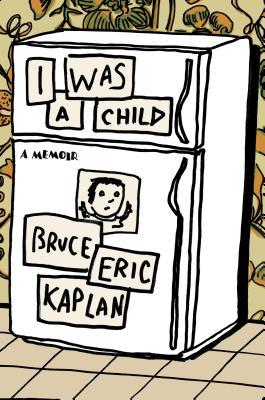
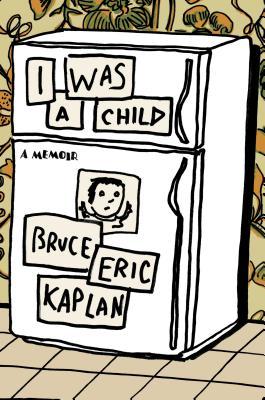
I Was a Child is Bruce Eric Kaplan’s (BEK) memoir and is written in a stream-of-consciousness style with small, hand-drawn cartoons interspersed throughout the text. Each blurb is a recollection of an event, time, television show, piece of furniture in the house, anything and everything from BEK’s childhood.

I’m not familiar with BEK’s work but his bio talks about his cartoons appearing in The New Yorker. I can see why he’s so popular.

The drawings are simple but somehow manage to convey a great depth of emotion and meaning.

They reminded me of the small drawings in Roald Dahl‘s books. I looked up the illustrator for those and Google tells me it’s Quentin Blake.

Both share a sparse, black-line look with no color to bright up the design. However, there’s something very powerful about the pictures… it’s hard to describe.

I Was A Child may be a book that one has to read to really experience what it’s all about.

I’m not as old as the author, but I connected with many of his memories because, despite what other people may tell you, we were all children once.

This memoir is quite unique but if you like it, you may want to try Today is the Last Day of the Rest of Your Life. It is more of a graphic novel than this, but it is also a memoir about growing up and change that is drawn with simplistic black and white panels.

I received a free advanced reader’s copy of this book through Goodreads First Reads. FTC guidelines: check!

Thanks for reading!

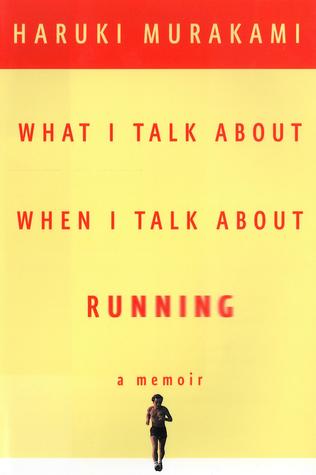
What I Talk About When I Talk About Running by Haruki Murakami, Philip Gabriel (Translator)

What I Talk About When I Talk About Running by Haruki Murakami, Philip Gabriel (Translator)
whatitalkabout

In What I Talk About When I Talk About Running, Haruki Murakami doesn’t try to convince others that we should all become long distance runners/triathletes like him. He does talk about why he took up running, how it has helped him with his creativity and why he will continue to run as long as he feels the need to do so.

I’ve never read a book by Murakami, other than this one. But, the interesting way in which he views the world makes me think that I’d probably enjoy his stuff.

I listened to this, rather short, audiobook on my daily commute. Murakami shares a lot of intimate details about his life that fans of his writing may really enjoy.

Before he took up running, Murakami said he was overweight and smoked around 60 cigarettes a day. 60 per day!

He wasn’t just looking for a way to become fit. He wanted a exercise where he was left alone with his thoughts and challenged to focus for long periods of time.

Murakami says that, when he writes a novel, it is a matter of focus and endurance. He finds it difficult to “drill down through the rock of the mind to hit veins of creativity.” (Quoting from memory, please forgive the inaccuracies.)

Photo by Pixabay on Pexels.com

The focus that runners use to finish a long race is similar, he believes, to the focus needed to write page after page until the end of a novel. I think that type of mental ability is something that could be used in any creative endeavor, not just writing. For Murakami, writing is how he makes his art.

I liked that, even though Murakami loves running and extols its virtues, he says that he never tells other people that they should take it up. He thinks that our life paths reveal themselves to us in a unique way that only we know.

He runs because he loves it. If you love it too, run. If you don’t, do what you love- walk, skip, jump, swim, whatever.

I can get behind that philosophy. Do what makes you happy because that happiness is a clue to what you were born to do.

Recommended for writers, runners, Murakami’s fans and anyone who enjoys memoirs. What I Talk About When I Talk About Running made me wish that I loved running more. Because I don’t.

Thanks for reading!

Hannibal’s Oath: The Life and Wars of Rome’s Greatest Enemy by John Prevas

Hannibal’s Oath: The Life and Wars of Rome’s Greatest Enemy by John Prevas

A fascinating and true study of Hannibal, one of ancient Rome’s greatest enemies, a brilliant general and, according to John Prevas, a “larger-than-life action hero from the past.”

Prevas did the translations from period and later documents, historical research and traveled to the places where Hannibal went, to create one of the most insightful, non-fiction examinations of Hannibal that I’ve ever read.

It all started with Hannibal’s father, Hamilcar. “Hamilcar was furious at what he saw as Roman bad faith, but powerless to intervene at the moment, he chose to bide his time and find another way to even the score.” loc 290, ebook.

Photo by Skitterphoto on Pexels.com

Spoiler alert (if you don’t know ancient history): Hamilcar had a bunch of kids and made them swear to destroy Rome. The boys, he groomed as warriors; the girls, he married off advantageously to help his sons.

“As the rituals neared completion, Hamilcar called for Hannibal, then only nine years of age, to join him at the altar. There, the young boy begged his father to take him to Spain, and Hamilcar consented on the condition that Hannibal pledge to the god he would always be an enemy to Rome and to anyone who stood with Rome.” loc 323, ebook. No pressure or anything.

The Barcas, Hamilcar’s family, create a foothold in Spain. It is from there, that Hannibal will eventually attack the Romans by, famously, crossing the Alps- with elephants in tow.

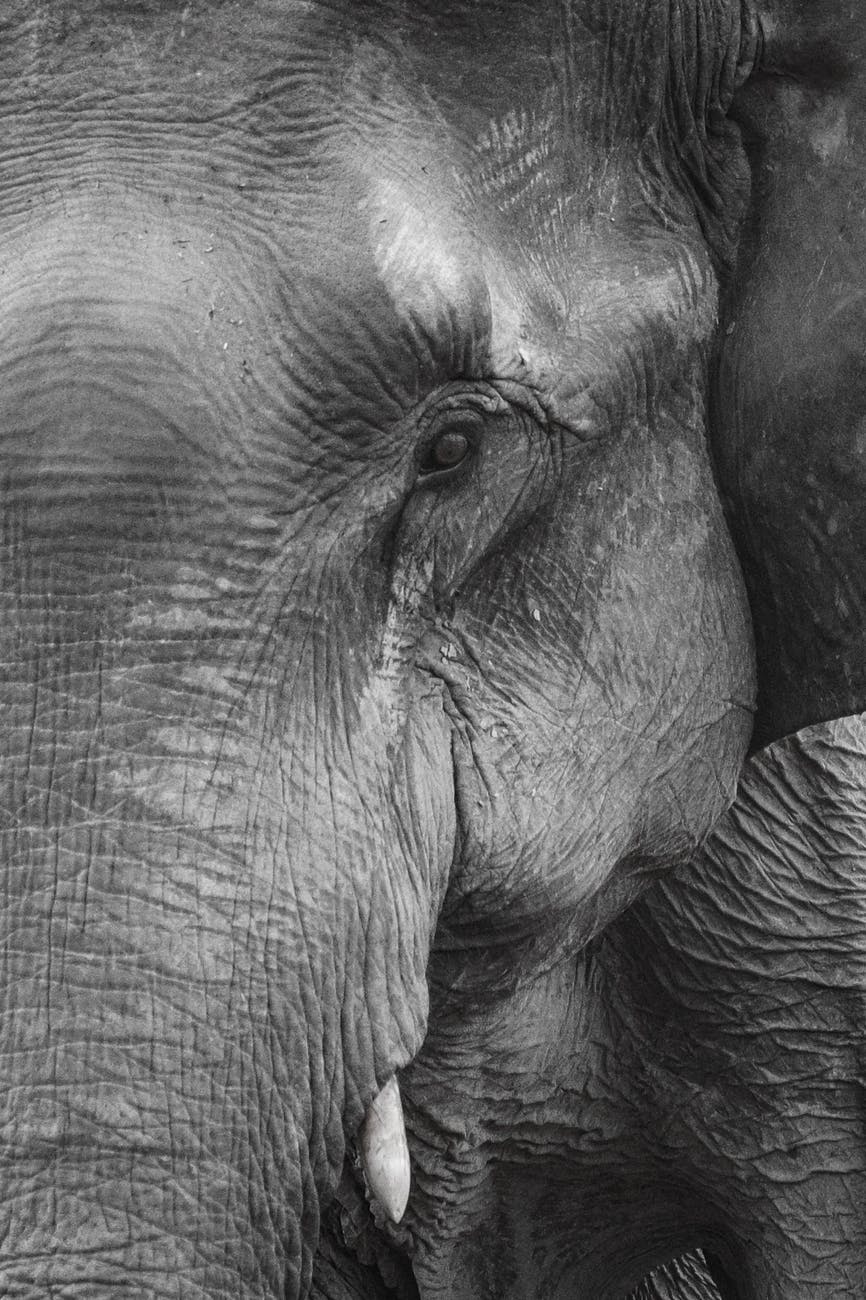
Anything to do with Hannibal’s elephants were my favorite parts of this book. “The elephants were often plied with wine before battle to stimulate their aggression, and while the wine might have done that to some degree, it also seems to have contributed to their tendency to panic and then rampage during the mayhem of the fighting.” loc 713, ebook.

Drunk, rampaging elephants! It doesn’t get much more dramatic than that.

Though written more like a textbook than a historical fiction (which is my favorite way to learn about history), I still learned a lot from Hannibal’s Oath and enjoyed it.

Recommended for classic majors, elephant lovers and fans of ancient history.

Photo by NADExRioTic on Pexels.com

Reminder: the short quotations I cited in this review may change in the final printed version. Thank you to NetGalley and Da Capo Press for a free advance reader’s copy of this book.

Thanks for reading!

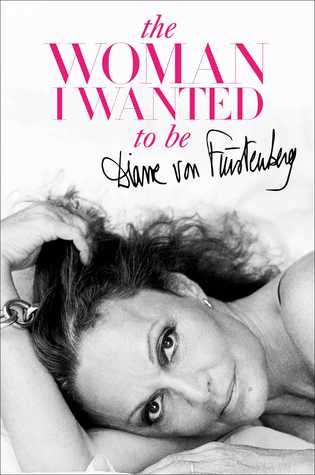
The Woman I Wanted to Be by Diane Von Furstenberg

The Woman I Wanted to Be by Diane Von Furstenberg
thewomaniwantedtobe

The Woman I Wanted to Be is the life story of the incomparable Diane Von Furstenberg.

She starts with her parents’ harrowing early life in war-torn Europe and continues through her own tumultuous love affairs and child-rearing years.

After a personal first half, the second half of her book is dedicated to how she entered and eventually became a living icon in the world of fashion.

I really enjoyed this book.

In an era where the media glorifies women who show off their bodies, cling to powerful men, and descend into drug addictions, Diane personifies the empowered woman who shows what she can do and build rather than living on how she looks or scandal.

That’s not to say that Diane hasn’t had a wild life, she has, but she owns it, has evolved from it and built it into an empire.

There are many moments in The Woman I Wanted to Be where Diane failed to be that woman. But instead of becoming mired in failure (she had to sell her business two separate times to avoid bankruptcy), she persevered to become a household name.

At another point, she gave up her identity and her business to spend time with a man who wanted her to be a blank slate. He ended up leaving her for someone else.

Photo by Karolina Grabowska on Pexels.com

Diane didn’t crawl into a hole and wilt then either. With grace and dignity, she re-entered life and the fashion world. Diane went on to experience an even greater level of success than she had before her exit.

Diane provides some great general advice for life such as: when bad things happen, they can actually be good things.

Also, never play the victim- take responsibility for your life.

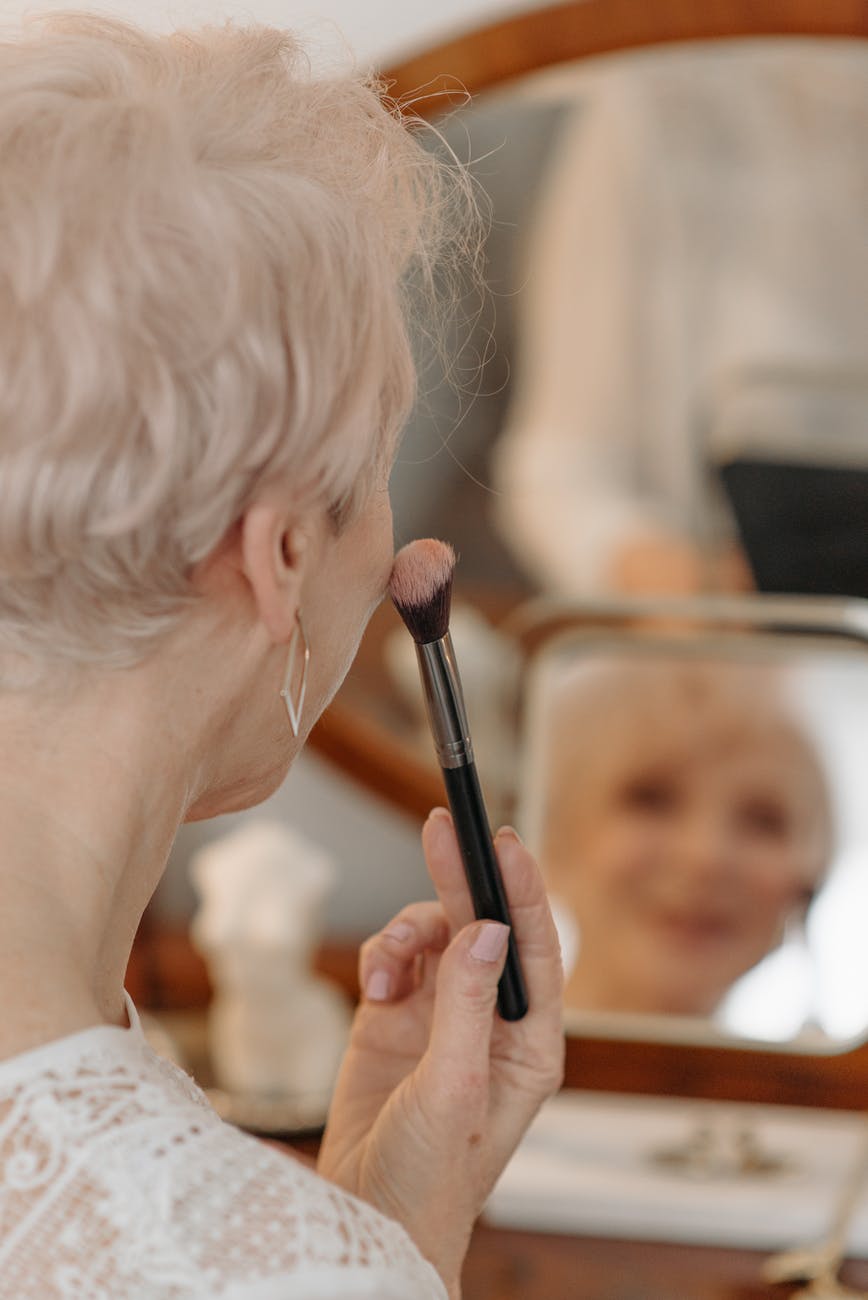
Embrace your age, whatever it may be.

Photo by Pavel Danilyuk on Pexels.com

These philosophies have enabled Diane to rise above any obstacles that have appeared in her path. She is an excellent role model and it was such fun to read about her incredibly exciting and almost unbelievably successful life.

Readers who enjoyed Wild: From Lost to Found on the Pacific Crest Trail and She Got Up Off the Couch: And Other Heroic Acts from Mooreland, Indiana may enjoy this memoir.

It’s far more glamorous than either of those two selections, but the underlying themes of female empowerment and reaching for the life of your dreams despite all the odds, are the same.

I received a free copy of this book through Goodreads First Reads. FTC guidelines: check! Thanks for reading!

Night by Elie Wiesel

Night by Elie Wiesel

Night is Elie Wiesel’s memoir about his experiences during the Holocaust. It is shocking and sad, but worth reading because of the power of Wiesel’s witnessing one of humanity’s darkest chapters and his confession on how it changed him.

Photo by Pixabay on Pexels.com

In the new introduction to the ebook version I read, Wiesel talked about the difficulty he had putting words to his experience. “Convinced that this period in history would be judged one day, I knew that I must bear witness. I also knew that, while I had many things to say, I did not have the words to say them.” pg. 7, introduction

The original version of Night was written in Yiddish. I wish I knew enough Yiddish to read it. There’s something powerful about reading books in their original form.

Wiesel closes his introduction with his reasons for writing this book:“For the survivor who chooses to testify, it is clear: his duty is to bear witness for the dead and for the living. … To forget would be not only dangerous but offensive; to forget the dead would be akin to killing them a second time.” pg 12, introduction.

Even though a member of his community warned Wiesel’s village about the horrors that awaited them, they didn’t believe him.

Photo by Engin Akyurt on Pexels.com

After they were placed in a ghetto, the Jewish population of Sighet thought that the worst was behind them. “Most people thought that we would remain in the ghetto until the end of the war, until the arrival of the Red Army. Afterward everything would be as before. The ghetto was ruled by neither German nor Jew; it was ruled by delusion.” pg 26, ebook.

If I had been in their place, I don’t think that I would have acted any differently. How could one possibly imagine the horrors that they were going to face?

Wiesel is starved, overworked and beaten in the concentration camps. He loses more than his family and faith: “One day when I was able to get up, I decided to look at myself in the mirror on the opposite wall. I had not seen myself since the ghetto. From the depths of the mirror, a corpse was contemplating me. The look in his eyes as he gazed at me has never left me.”pgs 110-111 ebook.

Another Holocaust survivor’s memoir that I highly recommend is Man’s Search for Meaning by Viktor Frankl. Never forget.

Thank you for reading.

Trials of the Earth: The True Story of a Pioneer Woman by Mary Mann Hamilton

Trials of the Earth: The True Story of a Pioneer Woman by Mary Mann Hamilton
trials of the earth

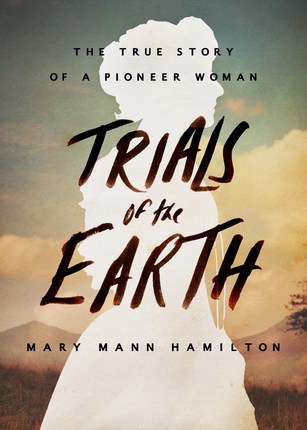
Trials of the Earth is Mary Mann Hamilton’s memoir about her hardscrabble life in America during the late 1800’s.

She uses period speech to illuminate a life of struggle and hard work. If certain anachronistic and racially insensitive terms bother you, especially the casual use of the N-word, you may want to chose another memoir. It was shocking but I kept reminding myself that Mary was a product of her times.

On top of the constant struggle of putting food on the table and keeping a roof over her head, it seems like she was perpetually pregnant and her husband was an alcoholic.

But Mary lived up to the challenges, raised and buried children, nursed her husband through his hangovers and illnesses- she was a survivor. That is mainly what Trials of the Earth was to me- a survival story.

“Nevertheless, this is not a book of repining; it is a tale simply told of what one woman has lived through in the Mississippi Delta. I say ‘lived through’ because at times this history reads like a record of the extreme limits of human endurance.” loc 75, introduction

So many of the modern conveniences that we take for granted didn’t exist. Mary moved around a lot and notes with relief every time her husband manages to install a pump in her new house so that she didn’t have to haul water from the river.

Mary’s relationship with her husband, Frank, isn’t a fair deal. She is a very young woman when she gets married and from the start he’s controlling- telling her what they will eat and what friends they will have. He even tells her what books she can read.

Photo by Gaspar Zaldo on Pexels.com

That would have been the last straw for me. But again, she was a woman of her times.

“To me he seemed like a man that had taken a silly child to raise rather than a wife. … As time went on I found there were plenty other things I didn’t know, too. The first thing I found out was that he drank.” loc 226, ebook.

In addition to the inequality in their relationship, Frank is from England and has a secret past. He won’t tell Mary, his own wife, his real name or talk about his circumstances or the family he left behind. But, Mary doesn’t let it bother her too much. I suppose she was too busy with everything else they had going on. That lack of trust would have driven me bonkers.

Not that she felt like anything was wrong with their relationship. “Women can stand more work, more trouble, and more religion than men.” loc 528, ebook. She accepted the hardships because she knew that she could. I admire her gumption but I also felt sad for her too. I felt sad because she didn’t have the option to live any other sort of life.

Frank is always talking about the sin of Eve and all the baggage that comes with it to Mary. There is a lot of mansplaining that goes on too. Parts of this book were infuriating to me.

Recommended for readers who enjoy memoirs that read like historical fiction. Ability to tolerate the bleak role that women occupied in society in the late 1800’s is a must.

Thank you to NetGalley and Little, Brown and Company for a free advance reader’s copy of this book. Reminder: some of the quotations in this review may change in the final printed copy.

Thanks for reading!

Joan of Arc: A History by Helen Castor

Joan of Arc: A History by Helen Castor
joanofarc

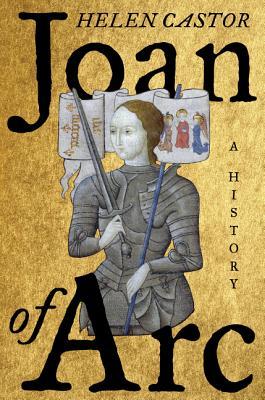
The review that I’m about to give Joan of Arc: A History has nothing to do with the historical accuracy of the book. On the contrary, I found this to be an extraordinarily well researched and cited biography.

Unfortunately, that mega-effort did not lend itself to a readable or enjoyable book.

The general idea behind Joan of Arc is sound. Helen Castor wanted to present Joan’s story in context with an extended history of France for years before and after her appearance on the world stage.

In that way, she thought that the legend of the woman could be separated away from the reality. The reader could appreciate the main players, the attitude towards spiritual visions, the belief of divine will in war and the monarchy, and capture the overall general flavor of the time period.

It was a good premise, but it just didn’t work. Maybe this was a doctoral thesis that Castor tweaked a bit and published? It reads like that.

Why is it that experts on topics are rarely able to translate that interest and depth of knowledge into stories that the general public would enjoy? I love medieval history, especially the backgrounds of the handful of female figures who made it into print during that period. This should have been right up my alley.

Photo by Pixabay on Pexels.com

Joan of Arc: A History read like a school textbook- the dull kind.

Actually, it reminded me of translating Livy’s History of Rome from Latin into English during college. It should have been fascinating stuff as he was writing about a particularly exciting period in Roman history when Hannibal was crossing the Alps to invade. But, sadly, Livy got caught up in listing endless details, particularly the size and shape of the elephants. Through description after description, the pace of Hannibal’s army slowed to a trickle and then it turned into a snooze-fest.

That also happened in this book.

If you enjoy scholarly research to the point that you just have to have it and nothing else will do, read this book. If you want history to come alive and punch you in the face, pick up something (anything really) by Margaret George or Bernard Cornwell.

I particularly liked The Memoirs of Cleopatra or The Autobiography of Henry VIII: With Notes by His Fool, Will Somers. George may not have the exacting research standards of this biography, but her historical fictions are informative in addition to a delight to read.

I received a free copy of this book through Goodreads First Reads. Thanks for reading!

Year of Yes: How to Dance It Out, Stand In the Sun and Be Your Own Person by Shonda Rhimes

Year of Yes: How to Dance It Out, Stand In the Sun and Be Your Own Person by Shonda Rhimes
yearofyes

Shonda Rhimes’ heartfelt memoir about the power of embracing who you are and having the courage to set aside what you are not.

Though outwardly successful, Shonda was miserable. Between over-working and her introverted tendencies, she turned down every invitation and social event. The ones that she was forced to accept were anxiety inducing trials or complete blanks because of panic attacks.

Shonda didn’t even realize she was unhappy until, one Thanksgiving, her sister tells her that she doesn’t say yes to anything. Something clicks and Shonda embarks on a Year of Yes. Her results are astonishing and so is this memoir.

I have never watched a single episode of Grey’s Anatomy. I didn’t even realize that that was her show. You don’t need to be an aficionado to appreciate this book.

Shonda begins with some crushingly honest passages about her discomfort at sharing her life and her passion for writing. “Making stuff up is responsible for everything-everything I’ve done, everything I am, everything i have. Without the tales, the fiction, the stories I’ve spun, it is highly likely that right now, today, I’d be a very quiet librarian in Ohio.” pg 6, ebook. Not that there’s anything wrong with that. 🙂

Photo by Suzy Hazelwood on Pexels.com

The first part of this book was actually hard for me to get through because she was so obviously uncomfortable at creating a window into her heart and mind. She gets over it and so did I. “When it was first suggested to me that I write about this year, my first instinct was to say no. Writing about myself feels a lot like I have just decided to stand up on a table in a very proper restaurant, raise my dress and show everyone that I’m not wearing panties. That is to say, it feels shocking.” pg 12, ebook.

Shonda is just so relatable. Take this confession about motherhood: “I don’t know about you, but the mistakes and missteps I have made since becoming a mother… before kids, my confidence could not be dented. Now it’s shattered on a daily basis. I don’t know what I am doing.” pg 63, ebook. I know, right! Nobody knows what they’re doing. I take comfort in that.

Photo by Pixabay on Pexels.com

Throughout her year of challenging herself, Shonda discovers that she’s uncomfortable in her own skin because of her weight. This next passage is for anyone out there who has body image issues: “I believe everyone’s body is theirs and everyone has a right to love their body in whatever size and shape and package it comes in. I will fight for anyone’s right to do so. I will kick ass and take names if I have to. Your body is yours. My body is mine. No one’s body is up for comment. No matter how small, how large, how curvy, how flat. If you love you, then I love you.” pg 85, ebook. End of story.

I also liked how she came to a new understanding about how life works: “I’ve started to think we are like mirrors. What you are gets reflected back to you. What you see in yourself, you may see in others, and what others see in you, they may see in themselves.” pg 120, ebook. I’ve started to think that too.

The Year of Yes is recommended for readers who enjoy memoirs or for those folks out there whose lives are in need of an awakening- a shaking of the snow globe of your reality, if you will. Shonda said yes to things that scared her and discovered, on the other side of fear, a life truly worth living. I hope that we can all be as fortunate and as brave on our journeys.

Thanks for reading!

Nerd Do Well by Simon Pegg

Nerd Do Well by Simon Pegg
nerddowell

Nerd Do Well is Simon Pegg’s life story interspersed with the tale of a fictional alter ego, Pegg, a James Bond figure with a robotic sidekick. His coming of age stories and fictional bits are hilarious but once Pegg gets into his movie making period, the book loses it’s momentum.

I preferred the nostalgia of the first time he saw Star Wars to the actuality of meeting his hero, George Lucas and finding him stand-offish. There’s something heart breaking about seeing childhood hero worship crumble in the face of cold hard reality.

Pegg’s education in film appreciation and critique make for truly fascinating observations about pop culture films. I took his thoughts about how the Anakin/Frankenstein scene in the third Star Wars movie could have been made into a memorable and fitting theatrical moment instead of the joke that it was (pg 328-329) to my husband, who is the most ardent Star Wars fan that I know. Husband said in response, “His way would have made it much better.” You’ll have to trust me when I say that that’s very high praise.

Another of my favorite parts in Nerd Do Well was Pegg’s explanation for American readers about why the pub occupies a prominent place at the center of British social life. I’d never really understood what the attraction was until he painted the scene.

Photo by Kelly L on Pexels.com

I mean, in my hometown, we have all sorts of dive-bars lining main street where, any night of the week, I could roll in there and meet up with the prematurely aged classmates of mine who will never get out of that place. But, who wants to do that. The bar is the epitome of failure rather than community.

With his homemade quizzes, neighborhood regulars, and music, Pegg’s pub seems to be somewhere warm and inviting where I would actually enjoy hanging out. It makes much more sense to me now why Shaun of the Dead was based around a pub and also why most DnD campaigns begin in taverns.

If you enjoyed Nerd Do Well, you may want to read My Booky Wook (less Star Wars, more drugs, fairly funny) or Just a Geek: Unflinchingly honest tales of the search for life, love, and fulfillment beyond the Starship Enterprise (more Star Trek, more angst-filled than funny).

Thanks for reading!