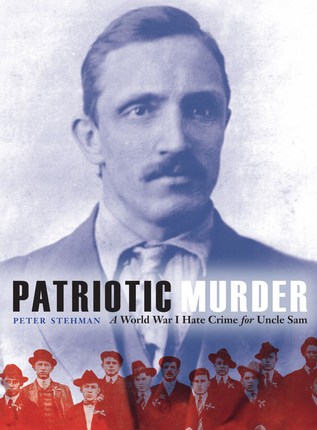
Patriotic Murder: A World War I Hate Crime for Uncle Sam by Peter Stehman

Patriotic Murder: A World War I Hate Crime for Uncle Sam by Peter Stehman

A well-researched and shocking account of the only (according to the author) German immigrant lynched on U.S. soil during World War I.

This non-fiction work is important for a number of reasons. First, it reminds readers of the time period of the Great War. Very few, unless they were just born, are even alive from that period.

Photo by Pixabay on Pexels.com

We’ve forgotten the Committee of Public Information, a federal committee created by President Woodrow Wilson, and its purpose to educate but also manipulate the public in support of an unpopular war. We’ve forgotten the Liberty Bond drives, a nation-wide push that raised billions of dollars to support the war effort. And we’ve also forgotten how a nation built largely of immigrants, of which Germans were the largest group at that time, were able to demonize an entire country and population to convince ourselves that the war was not only acceptable but just.

After Congress approved war legislation, the task remained of how to convince a splintered nation that entering the conflict was necessary. More than a third of the population was either immigrant or had at least one parent who was. Germans had been the predominant immigrant group for decades, and they had mixed feelings at best about waging war against the Fatherland.pg 17

The propaganda posters, some of which Peter Stehman has included for readers, are chilling. In some, “the hun” is shown as a bloody-thirsty creature, covered in the blood of Americans. Prior to this period, the German immigrant was seen as hard working and industrious. It took image manipulation to make the public believe otherwise.

Their patriotic themes promoted such things as buying war bonds, conserving food, or fuel or vilified Germany’s leaders or its army.pg 43

Robert Paul Prager was a patriotic German immigrant who wanted to work in the mines of Southern Illinois. The miners union not only rejected him for his lack of experience, but also because of who he was, German. He spoke up against their rejection and posted notices on the mines and saloons all around town. A drunken mob formed, took umbrage to his objection, and killed him.

They untied the line and let the body fall three times before jerking the rope to try to break his neck. “One for the red, one for the white, and one for the blue,” someone said, proclaiming their patriotic work done for now. pg 9

Photo by Rachel Claire on Pexels.com

Scholars talk a big line about remembering the past so we don’t repeat it in the future, but sometimes I feel like humanity has learned very little. We are still formed of nations and large tribes, seeking the benefit of our members and creating rules to keep others out. We still create an “us vs. them” mentality, think violence is an acceptable solution to disagreements and occasionally bow to the terrible mindless vengeance of the mob.

This book is a timely reminder, and also warning. It is a reminder of the dangers of nationalism and the mob. And, ultimately, the biggest danger of all, of convincing ourselves that others are not people like us, but something else and less valuable and sacred because of that.

I interviewed the author, Peter Stehman, for my former job at the Belleville News-Democrat. Here’s a link to the article I wrote from that hour and a half long interview, if you’re interested: https://www.bnd.com/news/local/articl…

The publisher kindly sent me a free copy of Stehman’s book. I am not being paid for this review.

He was, at least he was then, the president of the Collinsville Historical Museum and this book was a labor of love for him. Stehman was both fascinated and horrified by the fact that this event took place in his home town. For decades, no one wanted to talk about what happened on that April night. It was a matter of embarrassment and shame.

But now, that so much time has passed, people are more willing to talk about it and examine its causes as well as its cost. The tree where they hanged Prager is gone, but the memory remains. Do we learn from it or run from it? The choice is ours.

I’ll end with a quotation by Stehman from his acknowledgments section which comes at the beginning of the book: “Like so much forgotten history, the story of Robert Prager’s demise merits telling for the lessons it offers to today’s world. Patriotism is a wonderful thing, but propaganda, nationalism, and xenophobia have no place in great societies. Sadly, a reminder of that message is as relevant today as it was in 1918.”

Sadly, indeed.

Thank you for reading!

Here’s the History Guy episode I wrote about Robert Prager:

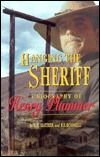
Hanging the Sheriff: A Biography of Henry Plummer by R.E. Mather, F.E. Boswell

Hanging the Sheriff: A Biography of Henry Plummer by R.E. Mather, F.E. Boswell

Hanging the Sheriff takes another look at the life of Henry Plummer. Conventional history labels Plummer as the leader of a notorious outlaw gang in the territory that would eventually become Montana. This book suggests that Plummer’s life story was written by the vigilantes who killed him and they had every reason to make him seem worse than perhaps he actually was.

It was kind of funny — the authors assumed everyone reading their book would know exactly who Plummer was. I had no clue: The image of Plummer as the one man responsible for all crime committed in the mining districts east of the Rockies is so firmly ingrained it is nearly impossible for even the most impartial of readers to drop old suspicions and view him with an open mind.” pg 7

Photo by Suliman Sallehi on Pexels.com

Like I said, blank slate here. And the story they revealed was fascinating.

Plummer was born in Maine and migrated West not just for the Gold Rush but also because of his lung disease. He was a successful business owner and prospector. He was a notorious gunslinger, able to fire five bullets in three seconds. He got in trouble with the law, but was elected marshall and sheriff in two different towns. He killed at least half a dozen people.

“Plummer jumped up. ‘I’m tired of this,’ he said, drawing his pistol and firing at the ceiling. A second shot struck Cleveland, who fell to his knees, pleading, ‘You won’t shoot me when I’m down?’ ‘No,’ Plummer said, ‘Get up.’ pg 25

In his defense, the American frontier was wild and untamed with very few courts or lawmen. Everyone had to police themselves: “As Granville Stuart explained, ‘There was no safety for life or property only as far as each individual could, with his trusty rifle, protect his own.'” pg 26

Photo by Alex Andrews on Pexels.com

I would have enjoyed this book more if it had been arranged in a linear fashion (it wasn’t) and if they had included some of the other viewpoints about Plummer. They go on and on about Plummer’s bad reputation but give little explanation, for those who haven’t heard of it, exactly what that reputation was.

“She said that she loved Mr. Plummer,” Thompson wrote, “that she knew that he loved her, that she had the upmost faith in him, that the terrible stories of him were told by men not worthy of belief; that she could never be happy unless she married him.” pg 41 What stories!

This book made me wonder about all of the “history” of the Wild West. Who were the heroes and who were the villains? Things weren’t black and white… and, as the authors pointed out, history was written by the men who survived. Was that the truth of what really happened? I guess we’ll never know.

Thanks for reading!

Here’s the History Guy episode I wrote about Henry Plummer:

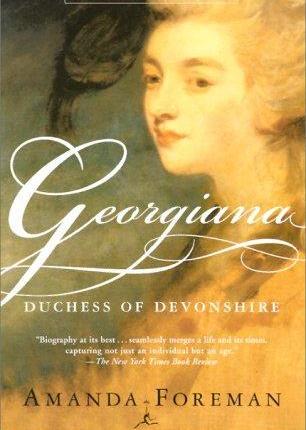
Georgiana: Duchess of Devonshire by Amanda Foreman

Georgiana: Duchess of Devonshire by Amanda Foreman

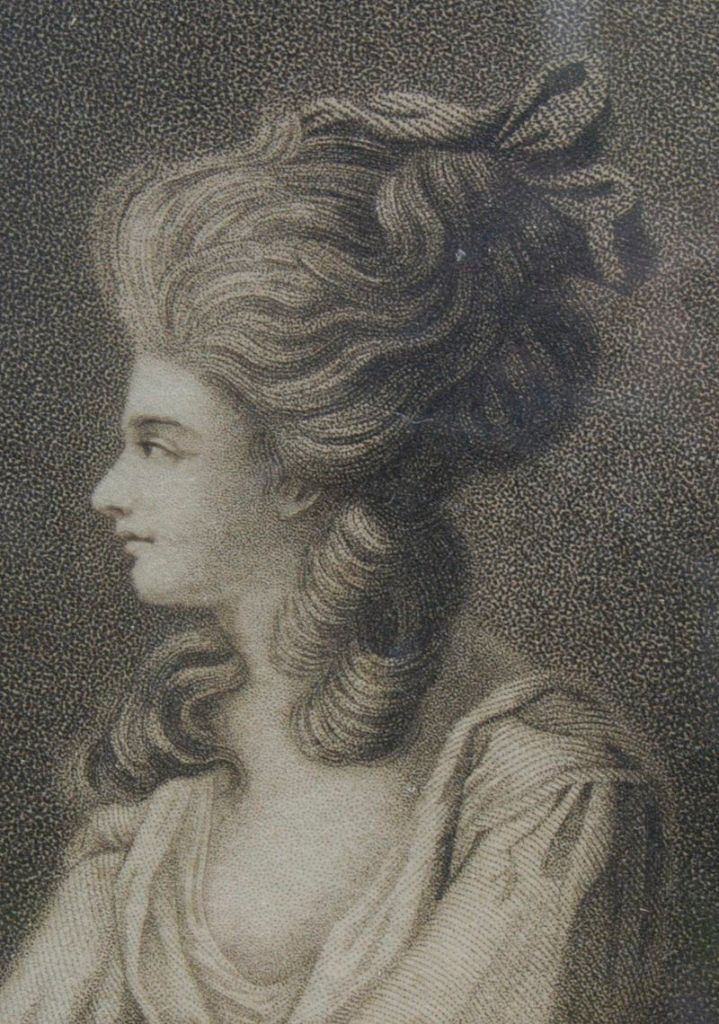
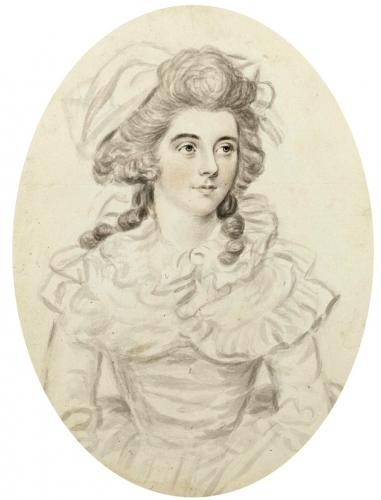
Georgiana, the Duchess of Devonshire, was a complicated lady. She was politically active, a progressive thinker, had an atrocious gambling habit that kept her perpetually in debt and suffered from an unfortunate, sometimes unhappy, marriage.

Did I mention she lived in the late 1700 and early 1800s?

“There was enough popular participation to make politics as big a national obsession as sport, if not bigger. The emergence of national newspapers turned politicians into celebrities.” pg 18 ebook.

And one of the brightest stars among them, was the Duchess of Devonshire.

“This was the age of oligarch politics, when the great landowning families enjoyed unchallenged pre-eminence in government. While the Lords sat in the chamber known as the Upper House, or the House of Lords, their younger brothers, sons, and nephews filled up most of the Lower House, known as the House of Commons.” pgs 22-23.

It wasn’t a particularly great age for democracy or for modern thought.

“Georgiana’s methods were too modern for eighteenth-century society. She was never allowed to canvass openly in London again, nor did other aristocratic women imitate her example. It would be another hundred years before women once more ventured boldly into street politics as Georgiana had not been afraid to do in 1784.”pgs 178-179, ebook

1784!

“She felt that she had the same qualities as a man; it was simply her sex, not her capability, which barred her from taking part in politics.” pg 346.

Imagine that. 🙂

The leaders of the Whig party, Georgiana’s political friends, were brilliant but flawed.

Eighteenth-century England was full of wits, connoisseurs, orators, historians, drinkers, gamblers, rakes, and pranksters, but only (Charles James) Fox embodied all these things.” pg 75, ebook.

I confess, though this book has extraordinary detail and research about Georgiana’s political activities, I found her personal life far more fascinating.

Her marriage may have been doomed from the start: “The Duke did not know how to be romantic; never having experienced tenderness himself he was incapable of showing it to Georgiana. He did not mean to hurt her, but there was a nine-year age difference between them and a gulf of misunderstanding and misplaced expectations.” pg 49, ebook.

There was another woman, who may or may not have been both Georgiana and the Duke of Devonshire’s lover. There were multiple handsome men who entered and exited Georgiana’s life.

She even had an illegitimate child with one of them.

A fascinating biography of an extraordinary lady – highly recommended.

The Lost City of Z: A Tale of Deadly Obsession in the Amazon by David Grann

The Lost City of Z: A Tale of Deadly Obsession in the Amazon by David Grann

The Lost City of Z is a well-researched tale by journalist David Grann about Percy Fawcett, the intrepid explorer who disappeared in the Amazon jungle on his search for the city he called ‘Z’.

The part in this book that I appreciated the most was Fawcett’s struggle to learn about and appreciate the cultures of the people he discovered in the Amazon, while at the same time, juggling his own biases against any culture other than his own.

Photo by Elias Tigiser on Pexels.com

In some ways, he was a product of his time, but the fact that Fawcett at least tried to understand different cultures made him different than other explorers of his age.

It’s only a small part in a larger tale full of adventure, exploration and discovery.

Photo by Quang Nguyen Vinh on Pexels.com

The tid-bits about the jungle, I first learned about in The River of Doubt by Candice Millard.

The narrative in River of Doubt was more focused than this novel, but Millard was talking about one trip, not multiple trips or explorers.

There’s a lot of weird stuff that goes on in the jungle. Read either of these books to find out all about it.

Recommended for fans of non-fiction. If you’re looking for a more straight-forward adventure tale than this wandering title, choose River of Doubt.

For readers who like book-to-screen movie adaptations, The Lost City of Z was made into a film in 2016.

Thanks for reading!

Boy on Ice: The Life and Death of Derek Boogaard by John Branch

Boy on Ice: The Life and Death of Derek Boogaard by John Branch

This is a biography of Derek Boogaard, a hockey player who died at age 28 of alcohol and prescription drug poisoning.

I didn’t know very much about hockey before I read this but fortunately John Branch discusses the history of the hockey for readers like me. He also examines the reasons why violence began and then persisted in the sport.

Branch explains the unofficial position called ‘enforcer’ on the hockey team that, essentially, intimidates or pummels the opponents into submission.

Photo by Markus Spiske on Pexels.com

I knew that hockey was violent from anecdotal stories but I didn’t realize how the various minor leagues supported the development of the enforcer role. Men are specifically scouted for their abilities in this area.

Derek wasn’t born an enforcer. In Canada, hockey is like football in some small towns in America- everybody plays beginning at quite a young age.

His enormous size drew attention but he wasn’t particularly skilled at the game. Coaches put him into the enforcer role and he was able to fulfill their demands.

Throughout his life, Derek suffered from pain caused by his job and began to take prescription drugs to find some relief. Predictably, he became addicted.

Photo by C Technical on Pexels.com

Branch carefully dissects the reasons why Derek abused drugs and it is very sad. His family obviously cared about him, but they either did not realize the extent of the problem or because of the distance that they lived away from Derek, they didn’t have the ability to do anything about it.

An additional layer of complexity is added to the story with Branch’s explanation of concussions in professional sports and how, in the late 1990’s and early 2000’s, medical experts were just becoming aware of the extent of the problem.

After his death, Derek’s family donates his brain to the medical community and what they discover was truly shocking.

I liked Branch’s analysis of the social, economic, and personal reasons why Derek lived the way he did. He painted a picture that was both approachable but also extraordinary.

Approachable in that Derek was a boy from a small town in Canada who liked quiet family evenings and country music. Extraordinary in that Derek was a professional athlete with a million dollar paycheck and needed to experience life to its fullest.

Photo by Brayden Law on Pexels.com

I also liked reading portions of a childhood diary written by Derek that included his grammar mistakes and misspellings. The inclusion of this material lent a very personal feel to the book.

From Derek’s childhood to his last struggling days, Branch gives meticulous dates, times, and names.

I didn’t like the seemingly endless descriptions of Derek’s bloody fights on the ice. During his career, it seemed like he fought constantly and the biography feels monotonous throughout that portion. He went to a game, got in a fight, and repeat.

For that reason, the graphic details, I would recommend Boy on Ice to, primarily, fans of the game. If you have season tickets for your hockey team and relish the atmosphere, you may really enjoy this biography.

Photo by Markus Spiske on Pexels.com

Personally, I found the descriptions of violence too disturbing to be enjoyable. However, Branch raises legitimate questions about the place of the enforcer in hockey, how it causes permanent damage to the men who take up that role, and how it changed and then ended the life of Derek Boogaard far too soon.

I received a free copy of this book through Goodreads First Reads. Thanks for reading!

Pigs Can’t Swim: A Memoir by Helen Peppe

Pigs Can’t Swim: A Memoir by Helen Peppe

Pigs Can’t Swim is a collection of essays based on Helen Peppe‘s childhood memories. Frankly, it is amazing that she managed to live to adulthood.

The youngest of nine children, she was by turns ignored or over-directed. Her family lived on a farm in Maine on a dead end road in the middle of nowhere.

Photo by Pixabay on Pexels.com

Helen tells her tale, all of it, without flinching from what she perceives the truth to be: her family’s wild behavior, prejudices, poverty, dysfunction, and an episode with a child predator that was truly horrific.

I had to keep reminding myself that she made it out alive and, at least, managed to write a book because this memoir had some truly terrifying bits in it.

I think Pigs Can’t Swim is an amazing piece of non-fiction writing not only for its content but also for its execution.

Photo by Eva Elijas on Pexels.com

Helen’s parents weren’t perfect but she doesn’t seem to blame or justify their behavior. In Pigs Can’t Swim, she just tells what happened and leaves a majority of the interpretation in the hands of the reader.

I couldn’t put this book down.

Its flowing narration reminded me of a much grittier version of Life Among the Savages.

Its personal and tell-all style reminded me of She Got Up Off the Couch: And Other Heroic Acts from Mooreland, Indiana. Similar to She Got Up Off the Couch, this book talks about overcoming poverty and adversity to become something more.

If you enjoyed either of these books, you’ll probably love Pigs Can’t Swim.

I received a free copy of this book through Goodreads First Reads program. Thanks for reading!

Gnarr: How I Became the Mayor of a Large City in Iceland and Changed the World by Jón Gnarr

Gnarr: How I Became the Mayor of a Large City in Iceland and Changed the World by Jón Gnarr
gnarr

Jon Gnarr ran for mayor of the largest city in Iceland not because he had experience as a politician, but because he was a comic and was, at first, poking fun at the system. But then, he realized that politics as usual was getting his country no where. So, he took the election seriously. Imagine his surprise when he won.

“Leo Tolstoy once said, ‘Everyone wants to change the world, but no one wants to change himself.’ But I feel that I have changed myself. I’ve done my homework. And next I want to try- just try, mind you!- to change the world. pg 6-7, ebook.

Iceland is unique in that it has a very small population of around 330,000 people. That’s about the equivalent of Santa Ana, California, or Corpus Christi, Texas. In other words, it’s not that big of a place.

Photo by S Migaj on Pexels.com

“The most famous Icelander is Bjork. … Abroad, she constantly has to flee from fans and journalists who pursue her into every little corner, while in Iceland you run into her in the pool, on the bus, or in the shops. In general, she’s left alone. In Iceland I was famous by the time I was fourteen. I was a fourteen-year-old with a Mohawk and a ring through his nose, and this too was news.” pg 13-14, ebook.

Here’s the scene: Iceland is quite small, the entire country was in an uproar because of the banking collapse, and the people were more than ready for change. But, Jon Gnarr was not ready for politics.

“Thanks to Dad, the newspapers, and the constant discussions broadcast on radio and television, I developed an aversion to politics. Politics was dumb, irritating, and boring. pg 23, ebook.

Photo by Dmitry Demidov on Pexels.com

A self-described ‘peaceful anarchist’, Gnarr was a comic and showman. He created The Best Party as a joke. But, somewhere along the line, the joke became a reality.

“Do you have to understand something down to the last detail before you can contribute to it? Do you have to be a scientist to become interested in science? … No. And it’s no different with politics. You don’t need to be a politician to have the right to participate in political life.” pg 41, ebook.

Even though he started to take the race seriously, Gnarr never took himself too seriously. And it worked.

“Every time another party made any election promises, we sat down together and discussed how we could top them. The Left-Green Alliance promised children and teens free access to swimming pools- our response was to offer free admission for all- with free towels included.” pg 54, ebook.

By not playing politics as usual, Gnarr and The Best Party won. I think he shows what’s possible when people bring a sense of humor and a desire to do good to the table. I think we can accomplish great things.

It just takes someone with a smidgen of imagination and a willingness to try.

Recommended for anyone who’s tired with politics as usual and for all the peaceful anarchists of the world.

Thanks for reading!

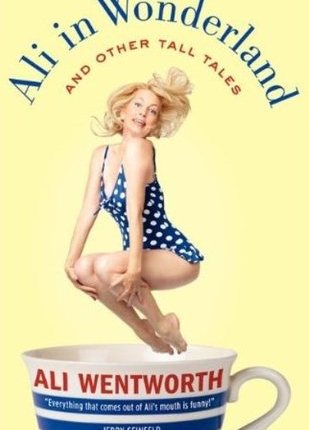
Ali in Wonderland: And Other Tall Tales by Ali Wentworth

Ali in Wonderland: And Other Tall Tales  by Ali Wentworth
aliinwonderland

Ali in Wonderland is Ali Wentworth‘s collection of stories from her childhood in Washington D.C. with her mother and stepfather all the way to her marriage and becoming a mother herself.

Ali is at her best when she’s remembering teenage hi-jinks. Some of her memories with her sister and boarding school pals are hysterical.

Other stories are terrifying. Ali recounts walking to her car one night and being accosted by a gang. Or there was the time she hitched a ride with a man who was apparently very drunk.

But, once Ali moves from her childhood into adulthood, this memoir loses some of its luster.

The chapters about meeting her husband for the first time, barfing continuously during pregnancy and why her children are special don’t have the same draw as the rest of the tales.

Maybe she started to run out of ideas? I don’t know. But the last few chapters felt tacked on to me.

Only recommended for big fans of Ali Wentworth. Side note: the author reads the audiobook herself.

Thanks for reading!

The Only Girl in the World: A Memoir by Maude Julien

The Only Girl in the World: A Memoir by Maude Julien
onlygirl

The Only Girl in the World is an extraordinary memoir about madness, control and the survival of horrific childhood abuse.

Maude Julien’s father Louis chose his future wife and mother of his child, Jeannine, when she was only six and he was 34. He became Jeannine’s guardian by promising her family that he would provide her with a quality education.

Then: “Twenty-two years after he took possession of Jeannine, Louis Didier decided the time had come for her to bring his daughter into the world… Louis Didier liquidated his assets, bought a house near Cassel, between Lille and Dunkirk, and withdrew to live there… to devote himself entirely to carrying out the project he had devised back in 1936: to make his child a superhuman being. That child was me.” loc 73, ebook.

Unfortunately, to “make his child a superhuman” involved leaving her alone in a dark, rat-infested basement, sleeping in a room without heat, eating stale bread, practicing music for 12 or more hours a day and being entirely separated from any other children her age.

That’s where Maude got the title of this memoir: The Only Girl in the World

I have not read a childhood account this disturbing since A Child Called It by Dave Pelzer.

Maude’s father was unhinged. “My father is convinced that the mind can achieve anything. Absolutely anything: it can overcome every danger and conquer every obstacle. But to do this requires long, rigorous training away from the impurities of this dirty world.” loc 247, ebook.

Photo by Marcelo Jaboo on Pexels.com

He asks Maude to do things he cannot do like perform somersaults or swim in freezing water. He shows no affection to either his child or his wife.

Louis makes the females of the house wait on him as if he is an invalid. He makes his child hold a chamber pot each morning while he empties his bladder.

He’s a controlling monster.

Louis has strange beliefs about water and soap removing the body’s immunities so he insists that Maude only bathes once a week or less. And, when she is finally given the opportunity to bathe, she must use his dirty bathwater to “take strength from him.”

Photo by Sora Shimazaki on Pexels.com

And she can’t count on protection from her mother, who was groomed by Louis to do anything he asks of her. Jeannine actually blames Maude for Louis taking them to live in the middle of nowhere. It is very sad.

Maude’s only friends are her pets, whom her father abuses as much as he hurts Maude. “Can an animal teach a person about happiness? In the depth of my despair, I am fortunate to have this incredible source of joy.” loc 685, ebook.

Even worse, Maude is abused by the few adults Louis allows in their lives. (Trigger warnings for those who were sexually or physically abused as children.)

Though incredibly disturbing, The Only Girl in the World is ultimately a story of survival against all odds. The human spirit is incredibly resilient as Maude’s tale illustrates.

Photo by Pixabay on Pexels.com

Perhaps she is more superhuman than even she realizes. Highly recommended.

Thank you to NetGalley for a free digital copy of this book.

Thank you for reading!