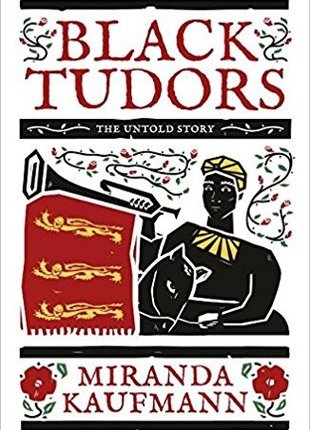
Black Tudors: The Untold Story by Miranda Kaufmann

Black Tudors: The Untold Story by Miranda Kaufmann

Scholar and historian Miranda Kaufmann has written vignettes of half a dozen or so Africans who lived and worked in England during the Tudor Era.

The trouble with this collection is that so little information exists, Kaufmann has to parcel it out among other more well-known history. I still found it interesting, but for readers looking for Black History only, it feels rather disappointing.

The answers are complex, but the questions that most commonly spring to mind about the Black Tudors are simple: why and how did they come to England? How were they treated? What were their lives like?” pg 3

Photo by Chris Carter on Pexels.com

The answers, in addition to complex, are brief. But this book did clear up some misconceptions I held about the time period.

For example: “Tudors were far more likely to judge a new acquaintance by his or her religion and social class than by where they were born or the colour of their skin, though these categories did on occasion intersect.” pg 4

Many of the records Kaufmann produces were held by the church — baptisms, marriages and so forth.

As an American, it is a different perspective to learn about a country’s history that was affected so little by slavery. People could move in and out of England with their slaves, but these unfortunate persons could also be freed or claim their freedom.

Henry VII set a precedent when he freed an African man named Pero Alvarez who was from Portugal, a country with slavery at that time. And it was backed up by the courts.
Photo by Mike on Pexels.com

In author William Harrison’s “Description of England”, he wrote: “As for slaves and bondmen, we have none; nay such is the privilege of our country by the especial grace of God and bounty of our princes, that if any come hither from other realms, so soon as they set food on land they become as free in condition as their masters, whereby all note of servile bondage is utterly removed from them.” pg 16

I wish America had been more like that.

Readers get to learn about musicians, African princes, ship wreck divers, explorers and more in this book. Recommended for fans of history and non-fiction.

Thanks for reading!

Here’s the History Guy episode that I wrote after reading some of the historical happenings in this book:

Cadillac, Knight Errant of the Wilderness by Agnes C. Laut

Cadillac, Knight Errant of the Wilderness by Agnes C. Laut

A highly detailed, but dated, biography of Antoine de la Mothe Cadillac, the founder of Detroit.

“Antoine had so many Spanish characteristics, the laughing irony, the quenchless ardor, the chivalry; he was so much the fierce fighter, the devout Catholic yet independent of priestly control, that we suspect he must have had Spanish blood of the Pyrenees from his mother’s side of the house.” pg 45

Photo by Chris Smith on Pexels.com

You would not believe how difficult it was to find information about this man. So many sources I examined contradicted each other or cast him as a villain or hero to the point where the actual history was obscured behind opinion.

Agnes Laut falls more into the hero-worship category, but I found her citations of historical documents to be more of use than most of the online articles I could find, which didn’t cite any.

That being said, like every other human in history, Cadillac was a complicated figure and I don’t think Laut does readers any favors by painting him as an unassailable hero. He would engage in illegal trade because everyone else was doing it. He believed Europeans were superior to the Native American population.

He was a man of his times and yet, he was the visionary and founder of Detroit and, for a time, the governor of the Louisiana Territory. He did great things and not-so-great things.

“The stockades of the new fort at Detroit enclosed sixty square yards. The post lay about forty steps back from the water-front. Such was the germ of a city that in little more than two centuries was to number with its suburbs nearly a million and a half in population. pg 140

Photo by Anon on Pexels.com

Goodness of the man aside, I had much to learn about Cadillac.

“Cadillac would never tolerate a man in his company not dressed spick and span as a naval man in spotless white. He, himself, set the example in costume faultless from hat to high boots.” pg 63

The history of Cadillac also shows a curious side of the court of Louis XIV of France, otherwise known as the Sun King. The politics of the court caused Cadillac to be imprisoned for a time, but the king kept releasing him and giving him more authority. He was thrown in the Bastille for six months and then given the Order of St. Louis.

“(Louis XIV) would grant favors only with the condescending generosity and pomp of a Grand Monarch; so the Court was duly assembled to witness the presentation of the commission at a morning audience. Cadillac had to kiss His Majesty’s hand and back away as from the presence of a god.” pg 121

Photo by Pixabay on Pexels.com

As an outsider looking in, it’s confusing how quickly a man’s stars can change. But at the same time, the shifting sands of court favor and intrigue emerge in the ups and downs of Cadillac’s life as well. All in all, it makes for a fascinating history.

“Let his (Cadillac’s) name stand and take its place as time goes on.” pg 286

Recommended for history readers with some reservations. Keep in mind this was published in 1931.

Thanks for reading!

Here’s the History Guy episode I wrote about Antoine de la Mothe Cadillac:

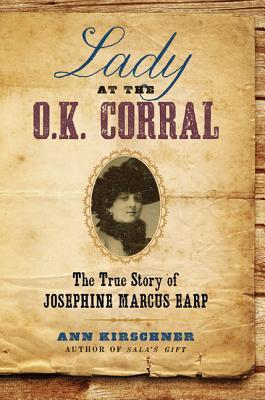
Lady at the O.K. Corral: The True Story of Josephine Marcus Earp by Ann Kirschner

Lady at the O.K. Corral: The True Story of Josephine Marcus Earp by Ann Kirschner

Josephine Marcus Earp made it difficult for biographers to accurately portray her life. Later, she would tell her history how she wished it had been or cover up the parts she didn’t want people to remember. It makes it hard for historians to paint an accurate picture of who this complicated woman actually was.

But I think Ann Kirschner, in this biography, does as good of a job as anyone could be expected to considering how convoluted the history is surrounding Josephine.

“The gunfight at the O.K. Corral was a love story, fought over Josephine Marcus, a woman of beauty and spunk barely out of her teens, escaping the restrictions of birth and seeking adventure, independence, and romance.” pg 3

Photo by Laura Stanley on Pexels.com

It’s a shame really. We know so much about Wyatt Earp and his friends. But the women around them have been almost swept into obscurity.

“A sizable group of authenticated photographs testified to Wyatt Earp’s undeniable good looks at any age, while there was not a single undisputed photograph of young Josephine, only ones in which she looked more like Sophie Tucker than Penelope Cruz.” pg 5

The fragments that are left reveal a woman who was brave and craved adventure. She seemed to have loved deeply and enjoyed gambling. Through extraordinary highs and lows, multiple states, and even the unbelievable gold rush of Nome, Alaska, Josephine lived life to the fullest.

“There was far too much excitement in the air for one to remain long a child,” Josephine recalled.” pg 22

Photo by NaMaKuKi on Pexels.com

Josephine’s Jewish family seemed rather conservative when compared to her wandering existence. She had siblings who married and raised families, like ordinary folk. One imagines that holiday gatherings were rather interesting.

“The most common occupation for a woman in Tombstone was prostitute or performer. Or both: many of the more attractive prostitutes also performed at the theaters and dance halls in town.” pg 47

The end of Josephine’s life was devastating compared to the decades of adventure that proceeded it. Penniless and perhaps suffering from dementia, one of the writers she worked with trying to create a definitive history of her life wouldn’t answer the door when she came calling. Instead, he’d record the abuse she wrote on notes that she slid under the door.

Her aggressiveness frightened him, and he began to keep track of her visits with handwritten notations on the back of calendar pages, with quotes from her: “I’ll get back at you — good and hard.” … Once she stuck her arm through the screen door to reach the doorknob.” pgs 217-218

Photo by Pixabay on Pexels.com

How could that happen? A woman who had once captivated two of the most legendary men in the West reduced to delivering threats when an acquaintance wouldn’t let her in the door. Lady at the O.K. Corral helps the reader understand some of the complicated twists and turns in the life of Josephine Marcus Earp, but I’m not sure that historians will ever be able to completely untangle the mixed-up threads of this woman’s life.

“As Wyatt’s biographer Stuart Lake put it: ‘In back of all the fighting, the killing and even Wyatt’s duty as a peace officer, the impelling force of his destiny was the nature and acquisition and association in the case of Johnny Behan’s girl. That relationship is the key to the whole yarn of Tombstone.’ pg 49

I wish there were more historical records to remember this extraordinary woman. It’s just sad.

Also, it makes me consider the type of documentation and oral record I’m leaving behind. How history will remember me? Will I be someone with a legacy to remember or just another shadow clinging to the arm of a more successful man? Stay tuned.

Thanks for reading!

Here’s the History Guy episode I wrote about Josephine Sarah Marcus Earp:

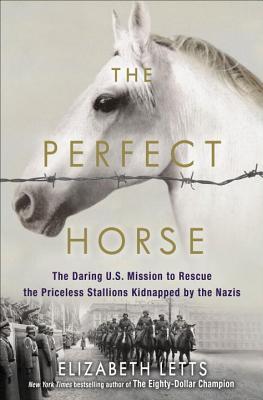
The Perfect Horse: the Daring U.S. Mission to Rescue the Priceless Stallions Kidnapped by the Nazis by Elizabeth Letts

The Perfect Horse: the Daring U.S. Mission to Rescue the Priceless Stallions Kidnapped by the Nazis by Elizabeth Letts

Author Elizabeth Letts‘ non-fiction book is about Operation Cowboy, the American protection of the Spanish Riding School and the plight of the Lipizzaner horses during World War II.

As priceless as any of the masterpieces that hung in Vienna’s museum, from their snow-white coats to their large aristocratic heads and deep brown eyes, the horses were unlike any others in the world.” prologue xvii

There was a precedent for saving irreplaceable works of art during the war, but Colonel Hank Reed‘s effort to save horses was something different. Reed, the most decorated American cavalry officer during WWII, recognized that there was something special about the horses at the Nazi stud farm at Hostau.

Photo by Helena Lopes on Pexels.com

Gustave Rau, the Nazi’s master of horse, was attempting to apply eugenics to his horse breeding program to create “the best warhorse”. He focused on gathering Lipizzaners from all over Europe.

Rau, in his next official report to Berlin, would declare, “There are no high-legged Lipizzaner, there are no flat-ribbed Lipizzaner, there are no bad-tempered Lipizzaner…” Clearly, he was impressed with what he had witnessed in Vienna. pg 87

But it wasn’t just about the breeding program, the Germans needed horses to feed the engines of war.

“The Germans were churning through horses at an astonishing rate — the army demanded six thousand fresh ones per month to replace those killed or lost to disease.” pg 37

I didn’t realize horses had such a large role in WWII. I assumed machines had taken over most of the vital functions horses used to perform like transportation and moving men into battle. I was wrong.

The Perfect Horse doesn’t cover the technical aspects of WWII or talk about the American defense of Hostau. It focuses on the horses though Letts does provide some context and information about the backgrounds of the men involved on both sides of the conflict.

Photo by Dids on Pexels.com

“Politics, prejudice, avarice, and intolerance had riven a brutal divide between the countries of these men; the grace of these horses had already started to knit them back together. The former enemies parted as friends.” pg 149

She follows the horses from their eventual relocation from the war front to the United States and what happened next.

The Perfect Horse is a difficult book to read in that it contains a lot of information and not as much “story,” but for readers interested in history, it may be a good fit.

Thanks for reading!

Here’s the History Guy episode I wrote about Operation Cowboy:

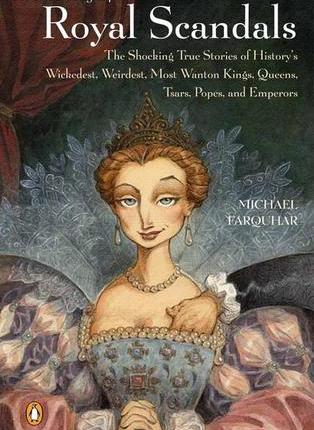
A Treasury of Royal Scandals: The Shocking True Stories of History’s Wickedest, Weirdest, Most Wanton Kings, Queens, Tsars, Popes, and Emperors by Michael Farquhar

A Treasury of Royal Scandals: The Shocking True Stories of History’s Wickedest, Weirdest, Most Wanton Kings, Queens, Tsars, Popes, and Emperors by Michael Farquhar

Michael Farquhar takes readers through different time periods and countries to remember some of the most scandalous royal persons who have ever lived.

All of the stories showcase the rich assortment of scandals that once flourished across Europe. And, thanks to the generations of royals who unwittingly created them, they remain immensely entertaining. pg 11, ebook.

Photo by Romu00e9o on Pexels.com

There is a rich assortment indeed. Almost any kind of depravity can be found in these pages. But the most shocking of the lot, in my mind, were the Roman emperors or the medieval Popes.

I guess those stuck with me the most because the emperors were stunning in how far they would go into their own personal madness, whatever that happened to be. And the Popes because, frankly, you’d think they’d know better.

For example, Tiberius, a Roman emperor, when he wasn’t raping young people on the island where he built a castle expressly for that purpose, he was torturing and killing anybody he felt like.

To Tiberius, death was a relatively light punishment. What he really enjoyed was the slow process of getting there. pg 184 Yikes.

Photo by Pixabay on Pexels.com

As for the Popes, in a cast of colorful characters, the one I remember the most was Benedict Gaetani or Pope Boniface VIII. Not necessarily because of how awful he was, but because how he was so determined to be Pope. Gaetani thought he should hold the office even when someone else was elected. He came up with a creative scheme to get that Pope to resign.

By some accounts, Gaetani installed a hidden tube in Celestine’s room. During the night as the pope slept, he would whisper into it, “Celestine, Celestine, lay down your office. It is too much for you.” Only too glad to oblige what he believed was the voice of God, Celestine V dutifully resigned and Benedict Gaetani was immediately elected Pope Boniface VIII. pg 217, ebook.

As interesting as this book was, I enjoyed Farquhar’s Bad Days in History: A Gleefully Grim Chronicle of Misfortune, Mayhem, and Misery for Every Day of the Year more because I knew fewer of the stories in that book. In fact, some of what he wrote in this book was printed nearly verbatim in the other. (Not that there’s anything against that, it is his own writing after all.) But if you only have time to read one non-fiction book full of historical trivia, I’d recommended Bad Days in History.

However, if you’re specifically interested in the misbehavior of royal people throughout history, this is the book for you.

Thanks for reading!

Three Years with Quantrell: A True Story Told By His Scout by John McCorkle, O. S. Barton

Three Years with Quantrell: A True Story Told By His Scout by John McCorkle, O. S. Barton

In Three Years of Quantrell, John McCorkle recounts riding as an irregular with William Quantrell and how they fought against the Federals in Missouri and Kansas during the American Civil War.

It is a sobering look at how war is hell. McCorkle never knew who he could trust and who he couldn’t. During the infamous raid at Lawrence, Kansas, McCorkle says that some good men may have died in the raid, “but that wasn’t our intent.”

Photo by Rodolfo Quiru00f3s on Pexels.com

It’s hard to imagine what a country at odds with itself must have been like. People would take advantage of each other, steal property, and even the lives of their neighbors.

My one quibble with this memoir is it contains a lot of travel. It feels like McCorkle said we went here, then here, then here… as he goes through his memories of the war. There’s plenty of “hours of boredom punctuated by moments of terror.”

Recommended for history readers who want an original source for research about the American Civil War.

Thanks for reading!

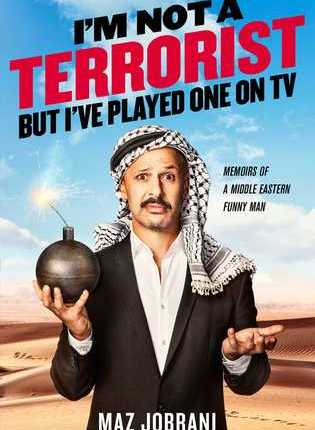
I’m Not a Terrorist, But I’ve Played One on TV: Memoirs of a Middle Eastern Funny Man by Maz Jobrani

I’m Not a Terrorist, But I’ve Played One on TV: Memoirs of a Middle Eastern Funny Man by Maz Jobrani

Humor is an interesting concept. It varies from person to person and even day to day. Something that you find funny today might not even make you crack a smile tomorrow.

Photo by William Fortunato on Pexels.com

But what I’ve discovered through watching a variety of stand-up comics is that the most successful ones tend to bring their own lives into the act in a powerful way. They distill what makes them unique and apply a humorous lens to it, making you feel like laughing or crying. It’s almost like storytelling through jokes. I feel like you have to be a brave person to even attempt it. Because what if you fail?

Have you ever watched Maz Jobrani‘s stand up? He does some storytelling and it’s rather funny. But he also has a back-and-forth with his audience, highlighting the differences between everyone but, beneath that, our essential humanness.

It is that unique voice that comes through in his memoir. He describes growing up Iranian in America and it wasn’t an easy ride. But even through his difficulties, Maz makes it amusing.

Photo by Monica Silvestre on Pexels.com

He helped me to understand what it is like to be an Iranian in America and also a successful, stand up comic.

In addition to his life story, Maz’s detailed descriptions of other countries makes the reader want to travel to all sorts of exotic locales. This book made me want to visit Petra. 🙂 Some day, perhaps.

If you enjoyed I’m Not a Terrorist, But I’ve Played One on TV, you may want to read Sleepwalk With Me and Other Painfully True Stories by Mike Birbiglia, Shrinkage: Manhood, Marriage, and the Tumor That Tried to Kill Me by Bryan Bishop or I’m Just a Person by Tig Notaro.

In similar ways to this book, Birbiglia, Bishop and Notaro take their lives and share them with us, the readers. They make you laugh, and like Maz, you can’t help but appreciate the brilliance and bravery of comedians. Life isn’t always funny, but it can be. It just depends on what you focus on.

Thanks for reading!

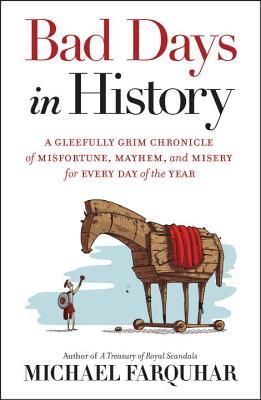
Bad Days in History: A Gleefully Grim Chronicle of Misfortune, Mayhem, and Misery for Every Day of the Year by Michael Farquhar

Bad Days in History: A Gleefully Grim Chronicle of Misfortune, Mayhem, and Misery for Every Day of the Year by Michael Farquhar

Michael Farquhar has compiled a veritable treasure trove of historical events and organized them by the calendar day upon which they occurred.

“Plucked from all eras of history, and from around the globe, the bad days in this book are intended to amuse, tantalize, and enlighten — without being too predictable.” From the introduction.

Photo by Andrea Piacquadio on Pexels.com

From ancient Rome to the more modern era, anyone interested in history should find something to enjoy in here.

For example, those who like to learn about doomed romance, may I suggest March 29: “There was nothing particularly special about Yaoya Oshichi, a grocer’s daughter living in 17th-century Japan. Indeed, her memory undoubtedly would have been lost to history had it not been for the extraordinary circumstances of her death — a tale of romance so tragic that it enshrined the 16-year-old girl forever in Japanese literature and theater.”

Or maybe you want to learn about the publishers of the so-called “Wicked Bible” who faced a committee for their misdeeds on May 8: “Some readers of a 1631 edition of the King James Bible were shocked (or at least pleasantly surprised) when they came across the Seventh Commandment in the Book of Exodus: ‘Thou shalt commit adultery.’ Then there was the apparent blasphemy found in Deuteronomy, chapter 5: ‘The Lord hath shewed us his glory, and his great asse.” (The proper word was ‘greatnasse’.) 

Photo by Wendy van Zyl on Pexels.com

From the amusing to the tragic, there’s something for everyone. Each listing is a short version of the event, just a couple of pages. If you want something more in-depth, you’ll have to keep looking. However, if you just want a few pages of something interesting to read before bed, this book could fit the bill.

Recommended for history lovers and trivia hounds.

Thanks for reading!

Here’s the History Guy episode I wrote about Yaoya Oshichi:

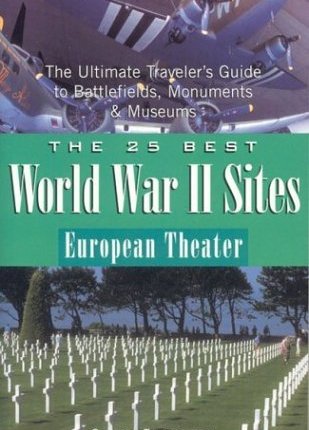
The 25 Best World War II Sites, European Theater: The Ultimate Traveler’s Guide to Battlefields, Monuments and Museums by Chuck Thompson

The 25 Best World War II Sites, European Theater: The Ultimate Traveler’s Guide to Battlefields, Monuments and Museums by Chuck Thompson

Excruciatingly detailed travel guide for those interested in World War II. My husband, The History Guy on YouTube, thought it was amazing.

I’m married to someone who is obsessed with war, war machines, war documentaries, military uniforms and, well, you get the idea. This one time, I went to England just to wander around a tank museum with him. A tank museum. This is true love, people. Was I bored? Yeah. Did I care about any of the tanks? No. Could I think of a million other things I’d rather be doing? Yeah. And yet, there I was- the hippie in the tank museum.

Me at the Tank Museum. Really, it’s me.

So, my plan is: convince him that he needs to go on a tour of the European Theater- all of the battle fields in order. It will probably take him two, three months, say, six months to do it right. I will suck it up and go with him, somehow finding a way to survive half a year in Europe. HALF A YEAR!

Think of the libraries, the museums… oh my God, the pubs! The art! The culture!

This book is step one. 🙂 Check back with me in twenty years or so and I’ll let you know how the war lover and the hippie’s European tour went. Maybe we’ll end up writing a tour guide of our own. Half of the book will be war stuff, the other half will be a tree-hugging, far-out love fest. Heck, I’d read it.

If you’re interested in reading another book by Chuck Thompson, I’d recommend Smile When You’re Lying: Confessions of a Rogue Travel Writer. It is more of a collection of stories than a travel guide, like this one, but more amusing in my opinion.

Thanks for reading!