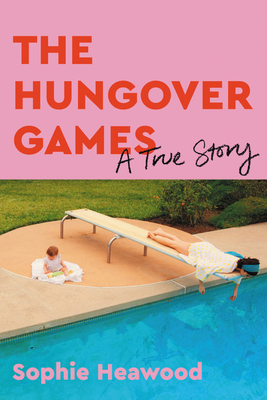
The Hungover Games: A True Story by Sophie Heawood

The Hungover Games: A True Story by Sophie Heawood

The Hungover Games is an amusing and poignant glimpse into the world of a woman who didn’t mean to become a mother, but who found her life’s path when she got there.

“It had all happened by accident. I hadn’t meant to have a baby at all. I hadn’t meant not to have a baby either, by which I mean I always thought I’d have children one day.”

Sophie Heawood

Sophie Heawood was barely scraping by, living from paycheck to paycheck as a journalist in Hollywood. After a misadventure in Mexico, which had nothing to do with her reproductive health, she discovers in a round-about way that if she ever does decide to have children, it may be impossible without fertility treatments.

“In my life, it was as if I was the captain of a magnificent ship but was somehow, always, at this moment, just this one perpetual moment, in a dinghy buffeted about in the ship’s wake, always about to catch up with myself. Up ahead on the magnificent ship, I was organised and sober and slim and shiny-haired, all of which was always coming soon, like a trailer in the multiplex that ran in my head twenty-four hours a day.”

Photo by Lukas Kloeppel on Pexels.com

But she never seemed to get there.

And then, after a one-night stand with the man she had been one-night-standing with for years, Heawood becomes pregnant. What happens next, her journey into parenthood but also the adjustment of dreams she held her entire life, is a fantastic story.

I think part of what I enjoyed so much about this book is the nature of Heawood’s job. In the short time I spent as a reporter, I loved talking to people, learning what they had to teach me about life, and seeing who they really were behind whatever public persona they were projecting.

Heawood had the opportunity to interview Hollywood A-listers and she gives you an inside view of what that was like. Goldie Hawn, Jodie Foster, and Amy Adams are a few of the names who pop up in the memoir.

In addition to the peek behind the curtain into the mystical world of Hollywood fame, Heawood doesn’t shy away from faithfully recording the sometimes harsh reality of becoming a parent.

“My introduction to being a mother involves being told off by other women, again and again. Told that I am not doing it right, that there are rules. … When I do get home, it only takes me a couple of weeks to recover from the surgery, but it takes me about a year to recover from the few days in the hospital when I was supposed to be recovering, and to regain the caring instincts to protect this tiny creature, the ones that were crushed before they had even dared to begin.”

Photo by Pixabay on Pexels.com

She faces difficulties not just with the newness of being a parent, but from her path as a single mother. Heawood has trouble finding housing as a single mother and going to prenatal classes alone. In this life transition that can be difficult at the best of times, she faces it on her own.

But her attitude is not woe-is-me. Heawood keeps the positive and empowered spin up throughout most of her challenges and, when she can’t manage it, she still appreciates the gift she has been given through her relationship with her daughter.

I enjoyed this memoir very much and read it in about two sittings. Recommended for readers who enjoy humorous memoirs about parenthood, Hollywood, dating, night-clubbing and the inevitable spiritual evolution that comes from finding the place in life that you were always meant to be.

Thank you to NetGalley and the publisher for a free advance reader copy of this book. The brief quotations cited in this review may change or be omitted in the final print version.

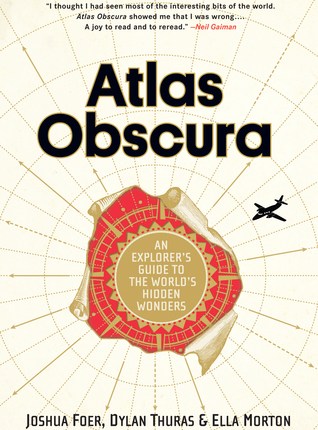
Atlas Obscura: An Explorer’s Guide to the World’s Hidden Wonders by Joshua Foer

Atlas Obscura: An Explorer’s Guide to the World’s Hidden Wonders by Joshua Foer

Atlas Obscura reminds readers that the world is a weird and wonderful place full of amazing things to see. It examines extraordinary places from across the globe and includes informational tidbits about each.

This book could be handy as a reference guide for choosing an exotic locale for a vacation or for someone who is seeking information about places of historical significance for a certain YouTube channel that covers forgotten history.

Photo by ArtHouse Studio on Pexels.com

Or, if neither of those things are your jam, it would make a lovely coffee table book. I found curious information about places I’d never heard of on almost every page.

Here’s Atlas Obscura author Joshua Foer giving a TedTalk about ways to improve your memory:

Now when you visit all of these incredible places, you’ll remember enough to share a story about it. 🙂

Highly recommended for travelers- traditional and of the armchair variety.

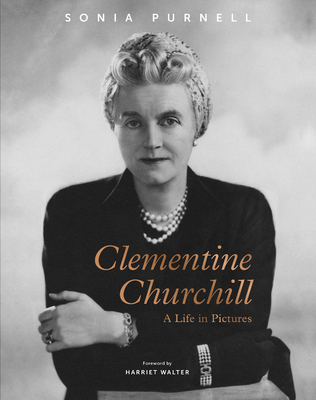
Clementine Churchill: A Life in Pictures by Sonia Purnell

Clementine Churchill: A Life in Pictures by Sonia Purnell

Clementine Churchill: A Life in Pictures is a sparkling biography about Mrs. Winston Churchill. The biographer credits Clementine with supporting and providing the confidence necessary to her famous husband so that he could live the extraordinary life of service that he did.

In the meantime, she also devoted herself to her country as well as raised a family. Her role in Churchill’s life has gone largely unnoticed, but it seems she is finally taking her place in history.

Photo by vectors icon on Pexels.com

Not only did they weather repeated public and personal humiliation together, they overcame the bitterest of personal tragedies, and survived the all but intolerable strains of being at the center of two world wars. … The question is not simply what did she do for him, but also what could he have done without her? pg 9

I knew, in a general way about Winston Churchill’s life, but this biography about Clementine fills in many of the gaps in my knowledge. And actually, it was quite interesting reading. The personal life of the Churchills was filled with a surprising amount of drama and scandal.

In addition, they worked with and knew so many powerful people from the time period. I particularly liked the chapters about Clementine’s acquaintance with Eleanor Roosevelt.

The case can be made that no other premier’s wife, in a democratic country at least, has played such a pivotal role in her husband’s government — arguably greater during the Second World War than the greatest of American First Ladies, Clementine’s direct contemporary, Eleanor Roosevelt. pg 18

Photo by Sid Ali on Pexels.com

The pictures bring this incredible woman, and the trying times she lived in, to life. Many of the photos are un-posed and Clementine is looking off camera, smiling at other people. Even in photos, one gets the sense of how much of this woman’s life was lived in the public eye.

Though her contributions were perhaps unrecognized during her lifetime, Clementine was appreciated by her husband. Take this note he wrote to her on their fortieth wedding anniversary:

“I send this token, but how little can it express my gratitude to you for making my life & any work I have done possible.”

She is certainly a woman who deserves to be remembered.

Thank you to NetGalley and the publisher for a free advance reader copy of this book. It is slated to be on sale in October 2019. Please note, the brief quotations I cited in this review may change or be omitted in the final print edition.

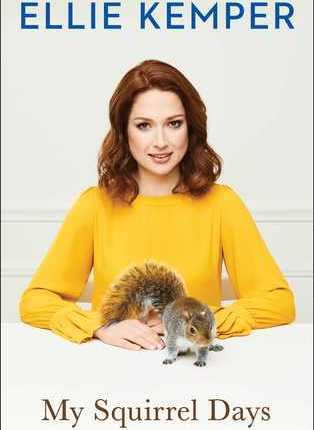
My Squirrel Days by Ellie Kemper

My Squirrel Days by Ellie Kemper

Ellie Kemper, the hilarious actress from the Netflix show “The Unbreakable Kimmy Schmidt,” shares a few essays highlighting moments from her life. I laughed out loud a few times, both in amusement and embarrassment for Kemper. She’s not afraid to make fun of herself.

The best part of the memoir is, as I read it, I could hear each word being read in Kemper’s distinctive voice. She definitely has a style of expressing herself that stays true for the whole book.

“As a reasonably talented person who is also part fraud, I cannot praise highly enough the virtues of enthusiasm and tenacity as substitutes for finely honed skills or intensive training. And in this book, Reader, I will tell you about the numerous times that I have made up in pluck what I have lacked in natural ability.” pg 4

Photo by Pixabay on Pexels.com

Unlike other readers, I didn’t fault this book for its mundane subject matter. I think, no matter our age or experience, people have valid things to say. Maybe it didn’t make for a gripping read, but I was able to relate to many of Kemper’s childhood experiences.

I too grew up near St. Louis, Missouri. I also went on an elementary school age field trip to Hannibal, Missouri, to learn about Mark Twain.

I also get scatter-brained when meeting authors I admire, like this moment between Kemper and Doris Kearns Goodwin:

“Doris Kearns Goodwin smiled brightly, and I leaned in, enthusiastically, to hug her. Unfortunately, she had begun to turn away by then, and — arms still outstretched — I lost my balance, stumbling forward and accidentally pushing the legendary biographer to the ground.” pg 24-25

Photo by Brittany Moore on Pexels.com

My experience: It was near Thanksgiving in 2005. George R.R. Martin was coming to Denver to do a book signing at the Tattered Cover because he had recently published A Feast for Crows. (And I’m still super pissed that he didn’t finish writing his series before the television show ended, but that’s neither here nor there.)

But this was long before the television show. The only people showing up for a signed copy of Martin’s new book were the nerdy bookworms like me and my then-boyfriend now-husband, Lance, who I dragged along because I didn’t want to drive downtown by myself.

We arrived late and had to sit at the back. But that was cool, because I was there! We got to listen to him chat about his vision for the series and then a couple people from the audience asked him questions. Someone asked who his favorite character was, and he said, Tyrion, which hit me as a total surprise. But I guess if I had thought about it and the extraordinary luck Tyrion enjoys in a world where every other person gets slaughtered in ever more inventive and disgusting ways, I could have guessed.

Then, we all queued up to have our new book signed! Because of my position in the nook-area, I was the second-to-last in line. I was hopping up and down in excitement for almost an hour as everyone filed past the bespectacled and hat-sporting author. We finally got to the front, I handed my book to his assistant, who pushed it in front of him.

“Hi!” I exclaimed and then just stood there, grinning like Hodor and equally as eloquent. Martin turns to Lance and says, “What’s her name?”, which Lance gamely told him and then gave him the correct spelling. Meanwhile, I’m talking a blue-streak in my head.

“Say something,” I told myself. “Now’s your chance.” And nothing came out. “This man has provided you with hours of entertainment and you’ve got nothing!” My book was signed. He handed it to me. We were walking away from the table… and I frantically turned back and blurted out, “Happy Thanksgiving!”

George R.R. Martin smiled and said, “Happy Thanksgiving to you too.” And that was that.

Photo by Craige McGonigle on Pexels.com

Here’s to people like Ellie Kemper, who lose their minds when they meet rock-star authors, get stuck in Japanese temples, and amuse themselves perhaps more than they entertain others. It may not make for the most exciting book, but it’s real and that matters. Recommended for readers who are a fan of Kemper’s work and enjoy humorous memoirs.

Thanks for reading!

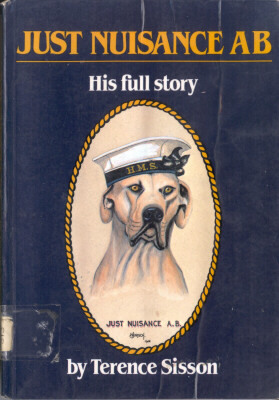
Just Nuisance A.B.: His Full Story by Terence Sisson

Just Nuisance A.B.: His Full Story by Terence Sisson

This is a biography about a very special dog, Just Nuisance, the only dog in history to be enlisted in the Royal Navy.

He was a great dane who befriended the sailors around the port of Simon’s Town, South Africa, in the days before the outbreak of the Second World War. The sailors fed the enormous dog and even gave him portions of their lager. In turn, he guided drunken sailors home and protected them from any ruffians on the street.

Just Nuisance received his name because he loved to fall asleep on the gangplanks leading to the decks and so the sailors would have to choose another way to board the ship, because they couldn’t move the enormous animal. So, they called him, “Nuisance,” as well as a variety of other colorful adjectives.

Photo by Laura Stanley on Pexels.com

He was enlisted in the navy because Just Nuisance was causing an issue on the train. He liked the ride the train to and fro with the sailors, but the officials running the line said the great dane was taking up a space that could be filled by paying passengers. They threatened to put Just Nuisance down if the sailors couldn’t keep him off the train.

However, sailors in the Royal Navy were allowed to ride the train for free. So, they came up with a creative solution to their problem. Just Nuisance would join their ranks and be issued a pass. Then he too could ride the train for free.

And so he was.

“The first problem arose when it came to filling in the heading listed as Christian Name. … “No dog has a Christian name, what the hell should I put here?” … “Well I can’t see any other way out than to leave it blank and give the name as just Nuisance.” The petty officer looked at the lieutenant with a broad smile on his face: “That’s it, sir, his Christian name, write ‘Just’ in that column.”pg 26

Photo by David Jakab on Pexels.com

This is a very sweet book. It is composed of the reminiscences of sailors who served with the great dane and shares how he affected each of their lives. He had a prodigious appetite, multiple “wives,” and took his service in the navy seriously, showing up at fundraisers and participating in parades.

But his broader legacy, how he raised the spirits of the men of the Royal Navy prior to one of humankind’s darkest sagas, deserves to be remembered.

I recommend this biography for readers who like small, forgotten moments of history and enjoy reading about the extraordinary way our canine companions can make our lives so much better.

Thanks for reading!

Here’s The History Guy’s video about Just Nuisance (I didn’t write the script for this one, Lance did.):

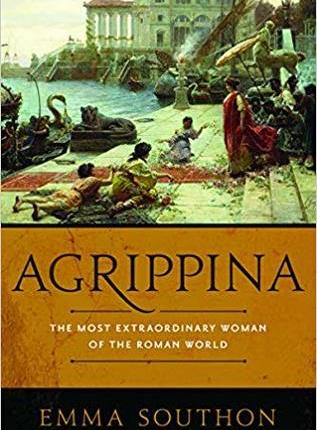
Agrippina: The Most Extraordinary Woman of the Roman World by Emma Southon

Agrippina: The Most Extraordinary Woman of the Roman World by Emma Southon

Emma Southon gives us a fascinating look at a complex woman whom history has perhaps treated unfairly.

She starts by giving the reader reasons why the study of historical women is so difficult.

… we have just three major literary sources that mention Agrippina with any detail, and a total of seven literary sources from the entire corpus of Latin literature that think she was interesting or significant enough to deserve a single line; one of which is a play.”

Photo by Octoptimist on Pexels.com

Like most women from history, Agrippina was mainly written about when she orbited important men. There’s also the difficulty of potential bias in the few sources we have.

“She can be seen only through the distorting lens of her relationship to other people and how well or badly she performed the ideal form of that relationship. It’s mostly badly, which is why we get to see so much of her.”

But what’s left when you take all of that into consideration is extraordinary. As the author points out, Agrippina was “the sister, niece, wife, and mother of emperors.” There are few from history who can claim the same.

Photo by Francesco Ungaro on Pexels.com

Southon uses an informal style and words like “stabby” and “murdery”. I found her delivery rather hilarious and enjoyed it. If you’re turned off by this type of writing, you may want to choose another, more serious author.

She doesn’t neglect to remind readers of the context of every bit of Agrippina’s history or point out when the record is missing or falls silent. Sometimes, the gaps in the record speak even louder than what was written.

“The next year, however, Agrippina came roaring back into historical narratives in the most confusing possible way.”

I liked how Southon took complex concepts from Roman history and gave them to the reader in digestible chunks. For example, we get a glimpse of what portions of Agrippina’s wedding ceremony may have been like:

“First, Agrippina the Younger anointed the doorway with fat and wool. Basically, she smeared some kind of animal fat onto the door frame and then strung wool between the door posts, sticking the ends to the fat. Obviously that sounds both disgusting and bizarre, which it is, but this is very symbolic and serious. Probably as these things were brought out, the party atmosphere would die down and everyone would watch reverently as this little girl covered the door in goo.”

Photo by Mathias P.R. Reding on Pexels.com

She goes on to examine the superstition of carrying the bride across the threshold of her new home which was another important part of the ceremony and nothing like the laughing, fun time it is today. It was interesting to me to juxtapose the modern viewpoint on these ancient traditions and see the glaring differences between the two.

Highly recommended for readers who like their non-fiction to sound like a conversation between friends. Southon makes the past come alive in a delightful read filled with scandals, power struggles and, of course, Rome.

Thank you to NetGalley and the publisher for an advance reader copy of this book, which is slated to go on sale tomorrow, August 6, 2019. The brief quotations I cited in this review may change or be omitted in the final copy.

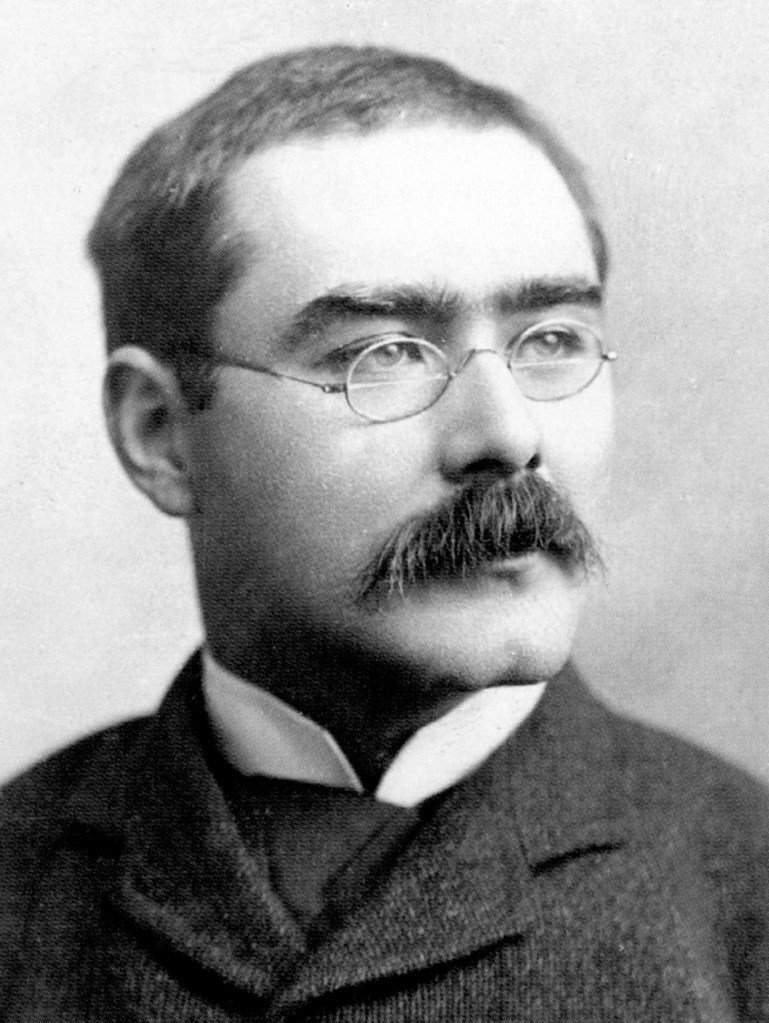
If: The Untold Story of Kipling’s American Years by Christopher Benfey

If: The Untold Story of Kipling’s American Years by Christopher Benfey

Christopher Benfey has written a masterful biography of Rudyard Kipling’s years in the United States. It is a little-remembered period from the life of the youngest ever Nobel Prize winner for literature.

“At this remove, it is difficult to recover the sheer depth of reverence once accorded Kipling. “He’s more of a Shakespeare than anyone yet in this generation of ours,” wrote the great American psychologist William James.”

Photo by Ylanite Koppens on Pexels.com

He was friends with Mark Twain. One of Kipling’s books, The Jungle Book, was in Sigmund Freud’s top picks for important books in his life. He has inspired generations of authors and readers with his Just So Stories and poetry.

My husband used to quote some of his poetry to me from memory when we were first dating. Rudyard Kipling is a giant of literature.

Yet he’s also a complex historical figure. “With the rise of postcolonial theory — a view of literature that assesses the human cost of colonial arrangements —Kipling is often treated with unease or hostility in university literature departments, as the jingoist Bard of Empire, a man on the wrong side of history.”

And there’s reasons for this distrust. Kipling penned “The White Man’s Burden”, asking the United States to take up Great Britain’s colonial interests.

So when Benfey examines the life of Kipling, it’s not all hero worship. He is aware of and acknowledges Kipling’s failings, but doesn’t take it out of the context of Kipling’s life and times. 

If brings to light previously unknown portions of Kipling’s life and legacy. Some new poetry and personal papers have recently been discovered that Benfey uses to paint a more complete picture of Kipling than perhaps ever before.

Readers learn of the friendships Kipling had with some of the political giants in the United States. We also get to peek into Kipling’s private life and share some of the intense sorrows he experienced in his own childhood and with his children.

There’s an examination of how opium use affected Kipling’s writings. We travel with Kipling to Japan on his honeymoon. And we learn about the great writer’s obsession with, of all things, beavers.

This most interesting part of all of it is, though he lived in the Gilded Age, how similar Kipling’s times were to today.

“It was an era, like our own, of vast disparities between rich and poor, of corruption on an appalling scale, of large-scale immigration and rampant racism, of disruptive new technologies and new media, of mushrooming factories and abandoned farms, of vanishing wildlife and the depredation of public lands.”

Photo by Pixabay on Pexels.com

So, despite his astonishing literary genius, Kipling was just a man. He had his flaws and his dark side. And after his death, he left behind a treasury of written works that carry his legacy into the unknowable future. A future that, if we try, perhaps we can make more than one man’s limited imagination could contain.

Recommended for readers who enjoy forgotten history in all its imperfections and glory. 

Thank you to NetGalley and the publisher for a free digital advance reader’s copy of this book. The brief quotations I cited in this review may change or even be omitted in the final version.

Here’s the History Guy’s take on Rudyard Kipling that I wrote the script for and thanks for reading!:

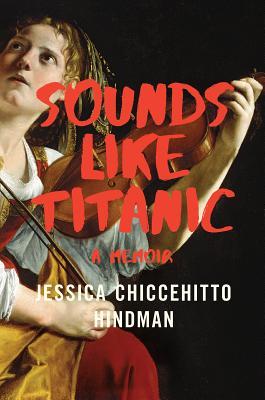
Sounds Like Titanic by Jessica Chiccehitto Hindman

Sounds Like Titanic by Jessica Chiccehitto Hindman

Jessica Chiccehitto Hindman is a violinist and Eastern Studies major who is struggling to pay her way through Columbia gets a job that seems to be more than she ever hoped for. She is going to be playing professionally for audiences across the U.S. It turns out to be fake — the music is played through speakers, never live.

“While this is a memoir about being a fake, this is not a fake memoir. This is a memoir in earnest, written by a person striving to get at the truth of things that happened in her past.” From the introduction.

Photo by Pixabay on Pexels.com

Jessica Hindman grew up in Appalachia among some of the most impoverished residents in the country. It’s interesting though, the gripping poverty seemed normal to her until she considered it later, through more mature eyes. Children are so flexible. Almost anything can be made to seem “normal”.

“And as you listen to the other kids talk about their life goals, you realize something else: You are someone whose upbringing was upper class enough to make you believe you could make music for a living, but lower class enough to provide no knowledge of how to do it.” pg 10

After some serious struggles through puberty with her body and self image, Jessica ends up following her boyfriend to Columbia University, where they almost immediately break up. But her troubles to pay the astronomical tuition bills are just beginning.

“The Composer,” the man behind the music and the tours Jessica eventually goes on, seems to know very little about music himself.

Photo by Nathan Martins on Pexels.com

“And then, The Composer asks me a question that — had it come from any other musician, let alone a Billboard-topping classical composer who has performed with the New York Philharmonic — I would have taken as a joke. … “I like this music,” he says of the opening to Beethoven’s Fifth Symphony. “What is it?” pg 20

Despite any concerns she may have, Jessica perseveres in the job anyway, because her tuition requirements leave her little choice. It nearly ruins her mind and body before she finds a way out of her predicament. Along the way, you can’t help but hope for her to succeed.

“After several more customers mention ‘Titanic,’ you begin to realize that most of The Composer’s compositions sound very ‘Titanic-esque’. And you notice that the more the songs sound like ‘Titanic,’ the more customers want to buy them.” pg 47

I enjoyed this memoir so much not just because of Jessica’s life, which is fascinating, but also because we have so many things in common. I am the same age she is, lived through the events of 9/11 in a collegiate setting (as she did), started out as a music major but changed to something else, and the similarities go on. I’ve also experienced crushing anxiety with the same physical symptoms she describes. It was eerie, really.

“A million times more than any other emotion or experience, fear has the strength and ability to mangle her into something different from what she truly is, something phony and fake and cowardly. And now, surprised and twisted and disoriented and broken as she is by fear’s sudden arrival, she realizes that she needs to fight it, fight for her life.” pg 223

Photo by Pixabay on Pexels.com

But you don’t need to be anything like Jessica to appreciate what it means to be made to feel like an impostor in your own life. To know that you can be doing better, but you’re just inching along. To dream big but live small.

Recommended for readers who enjoy memoirs about a life filled with difficulties, but also hope. If you have a background in music, you may like this book even more, but it’s not required to understand it.

Thanks for reading!

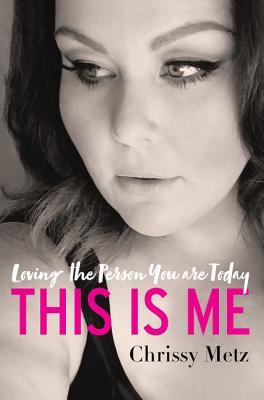
This Is Me: Loving the Person You Are Today by Chrissy Metz

This Is Me: Loving the Person You Are Today by Chrissy Metz

Chrissy Metz relates her abusive and underprivileged childhood and how hard work and perseverance made her into the inspirational figure and television superstar she is today.

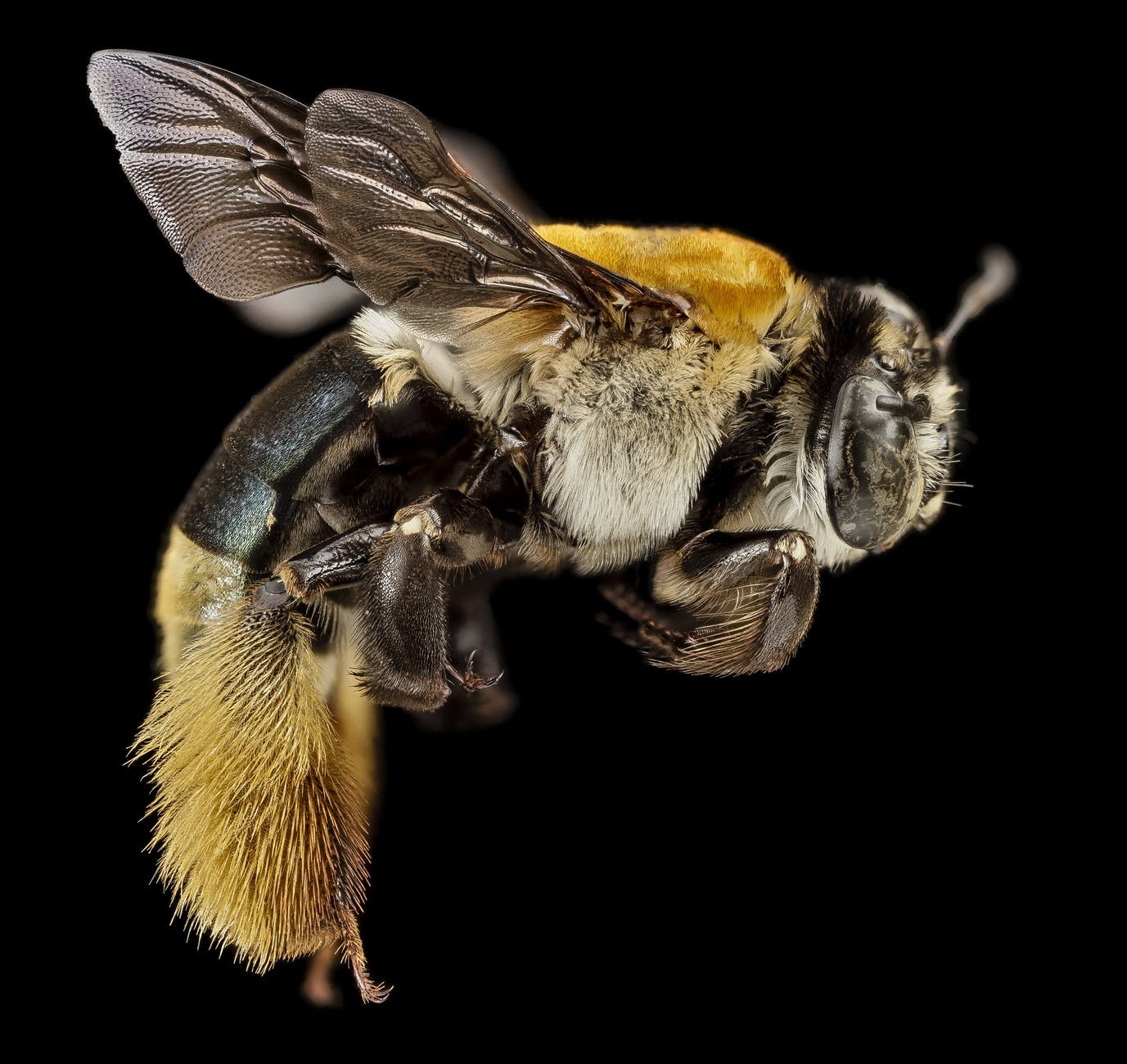
“Honeybees are meaningful to me because technically they’re not supposed to be able to fly. We know they do, but in the 1930s French scientists ‘proved’ they couldn’t. Their reasoning was that it was aerodynamically impossible because honeybees’ wings are too small to support the weight of their bodies. … I get that. I’m not supposed to be able to fly either.” pg 6, ebook

Photo by Pixabay on Pexels.com

Chrissy’s parents divorced when she was young and her mother worked multiple jobs to support her children. They lived in a trailer park for a time in Florida.

“I know now that when families are in crisis, kids blame themselves, and kids also take on adult burdens. Which is why it is important that I say something else: Arredondo Farms is still there and I won’t say a single bad thing about it. People look down on people who grow up in trailer parks.” pg 25

Things became a bit easier when her mother married Chrissy’s stepfather (she calls him ‘Trigger’), but then he began systematically abusing Chrissy.

“I don’t remember why Trigger hit me the first time. I know he thought I’d had it coming for a while. I bet I was too loud putting away the dishes. Or I didn’t put his Coca-Cola in the fridge and he wanted a cold Coke. That would usually do it.” pg 28, ebook

Photo by Karolina Grabowska on Pexels.com

Somehow, she survives to not only succeed in the business of her dreams, but to thrive. It wasn’t easy. She honestly documents her struggles, both mentally and physically. She continues to have relationship troubles. But Chrissy never lets it dim her optimism that things can get better and that she can improve, no matter where she finds herself.

Throughout the memoir, she gives tips and life advice that she calls “Bee Mindful” lessons — referring back to her metaphor of how the honeybee can fly even though it seems aerodynamically impossible.

“So many people, including myself, talk at each other but don’t listen. To ourselves or to other people. Believe in actively listening to yourself. Take time to have a conversation with yourself every now and again. … So often we’re on autopilot and we slip into addictive behaviors to avoid listening to ourselves. We eat, or drink, or, yes, check our phones — anything to avoid hearing what we truly need to say.” pg 57, ebook

Photo by Ono Kosuki on Pexels.com

The astonishing part of this memoir, to me, is simply how often Chrissy is judged and found wanting because of her appearance. How long are we, as a society, going to accept the objectification of women’s bodies and believe that it’s ok? I thought we addressed that issue in the last century, but, from the way this beautiful and strong woman has been treated her entire life, it is obvious that we haven’t gotten very far.

I found Chrissy Metz to be inspiring before I read her memoir. Now, I feel like she’s a literal hero for anyone who simply wants to live life as they are and not accept anyone else’s standards for what beautiful, strong and successful is. And she manages to be kind and humble while doing it.

Highly recommended for any readers who like inspiring memoirs — this one gets all the stars.

Thanks for reading!