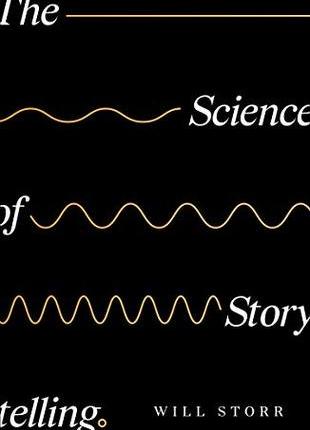
The Science of Storytelling by Will Storr

The Science of Storytelling by Will Storr

In The Science of Storytelling, Will Storr reminds readers our brains are hard-wired for stories and how best to utilize this in our own writing endeavors.

Through the use of various writing tools based on scientific research, Storr demonstrates how to appeal to an audience, keep them hooked and connected to the characters.

Photo by Suzy Hazelwood on Pexels.com

For example, Storr writes the use of change in storytelling grabs readers’ attention because human beings are always on the look out for it. Change can be good or bad- it’s life itself. Our brains look for change as a survival mechanism and this trait can be used to entice readers so they come back for more story.

“This is what storytellers do. They create moments of unexpected change that seize the attention of their protagonists and, by extension, their readers and viewers.” pg 13, ebook

Photo by Cameron Casey on Pexels.com

Change is also something that people try to control (they can’t but they try). This universal pattern is called, ‘the theory of control’. When readers see traits they share with characters in stories, they become invested in the outcome which keeps them reading. Or when readers see traits they don’t believe they have, but do, they’re hooked.

There’s a lot of hooking going on, which is a good thing when you’re writing a story. 🙂

“A character in fiction, like a character in life, inhabits their own unique hallucinated world in which everything they see and touch comes with its own unique personal meaning.” pg 41, ebook

Photo by Emre Can Acer on Pexels.com

Storr suggests creating complex characters and writes that the story almost creates itself with a properly drawn character. A complex character has flaws, a personality, misunderstandings with others in the story.

Also, going back to the ‘change’ theme, complex characters are generally passing through a ‘change of status’ of some kind. This ignites curiosity in the reader. It makes readers ask themselves, ‘What’s going to happen next?!’

“The place of maximum curiosity- the zone in which storytellers play- is when people think they have some idea but aren’t quite sure.” pg 18, ebook

Highly recommended for writers or anyone interested in how the brain works. If you’re looking for more writing advice, I recommend Murder Your Darlings: And Other Gentle Writing Advice from Aristotle to Zinsser or Nobody Wants to Read Your Sh*t: Why That Is And What You Can Do About It.

Thanks for reading!

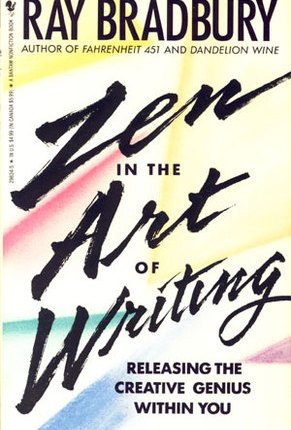
Zen in the Art of Writing by Ray Bradbury

Zen in the Art of Writing by Ray Bradbury

Ray Bradbury, a titanic author of American science fiction, shares remembrances and anecdotes from his lifetime. Within the essays, Bradbury shares both his passion for writing and the methods with which he accomplished it.

“And what, you ask, does writing teach us? First and foremost, it reminds us that we are alive and that it is a gift and a privilege, not a right. … Secondly, writing is survival.” pg 12, ebook

From his childhood days in Waukegan, Illinois, to penning screen plays in Ireland, Bradbury mined his life experiences with his subconscious mind and unearthed, so to speak, the stories that he wrote.

Ray Bradbury

“And when a man talks from his heart, in his moment of truth, he speaks poetry.” pg 32, ebook

Bradbury also highlights the importance of writing at least a little bit every day. Through his habit of writing an essay a week, Bradbury cranked out hundreds during his lifetime. Though he admits not all of them were brilliant, each one brought something to his experience, whether that was honing his craft or creating avenues towards other brighter stories.

Recommended for aspiring authors or any reader who is a fan of Bradbury. This book shines a spotlight on both the man and his creations.

Thanks for reading!

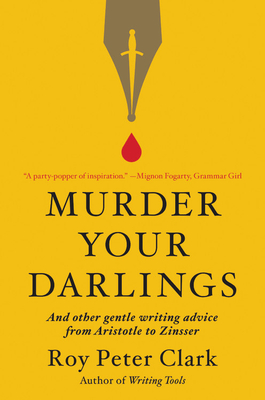
Murder Your Darlings: And Other Gentle Writing Advice from Aristotle to Zinsser by Roy Peter Clark

Murder Your Darlings: And Other Gentle Writing Advice from Aristotle to Zinsser by Roy Peter Clark

Murder Your Darlings is not just another book about writing. It shares the wisdom and creative insights of fifty or so authors, some famous, some not, and some who wrote their own books about the craft.

In his own unique manner, Roy Peter Clark distills the main lessons from each writer and presents them in curated chapters. The chapters are organized into six parts: language and craft, voice and style, confidence and identity, storytelling and character, rhetoric and audience, mission and purpose.

Photo by Andrea Piacquadio on Pexels.com

Aspiring or struggling writers can go directly to the issue she may be facing at the moment or read the whole thing to find tips and techniques that fit her emerging efforts best.

Though this may be most useful to writers who have a particular problem in mind, I believe any writer who wants to elevate their work could find something illuminating in these pages.

At the very least, Clark saves writers days of research time into locating appropriate writing resources. If you like the brief outline he gives of a writing guide, you could go invest the time to read the whole thing.

Photo by Ricardo Esquivel on Pexels.com

Highly recommended for everyone who strings words together or dreams about doing so.

Thank you to NetGalley and the publisher for a free digital copy of this book.

You’re Married to Her? by Ira Wood

You’re Married to Her? by Ira Wood

A surprising and amusing collection of essays by Ira Wood about his childhood, early relationships and, eventual marriage, to author Marge Piercy.

“Readers seeking insight into the creativity of a prolific American artist had best look at my wife’s own memoir, for these are my stories, those of the very lucky young man she chose not merely to put up with but to love, and for slim rewards except being fiercely loved in return.” pg 10, ebook.

Photo by Emma Bauso on Pexels.com

These are not tame remembrances. Wood is cheerfully self-deprecating as he relates heavy drug use, promiscuous sexual behavior, and smashing disappointments as both an author and a publisher. He remembers the cut-throat politics during his time on the board of a small New England town. He talks gardening, sex at other people’s houses, and how he ruined one of his girlfriend’s big nights out.

Each essay, as outrageous as it may be, ties itself up in a surprisingly tender conclusion. Usually.

“The motivation that would always drive me in the face of overwhelming odds, the internal fire that no amount of personal failure, or success, would put out; as powerful as the force of life itself, my father’s everlasting gift to me: the burning envy of other people’s lives.” pg 26, ebook.

I loved Wood’s humor. I loved his insights. Really, I was pleasantly surprised by this book. I found it in my library’s digital lending library and the cover drew my eye.

Photo by Rachel Claire on Pexels.com

He reads a lot like David Sedaris but with more sex. I mean, he talks about sex more than the Sedaris books that I have read so far. Small disclaimer: I haven’t read them all.

“One night I left Boston so blindly drunk that I arrived in Wellfleet with a sandwich in my lap that I had neglected to eat and could not remember buying.” pg 38

Highly recommended for readers who like humorous non-fiction and aren’t put off by some scandalous situations.

Thanks for reading!

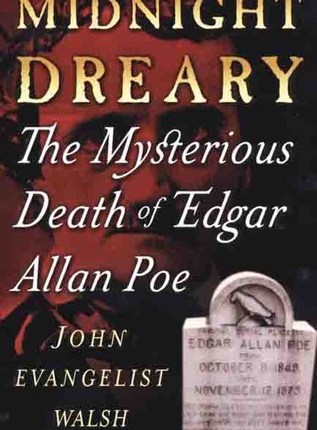
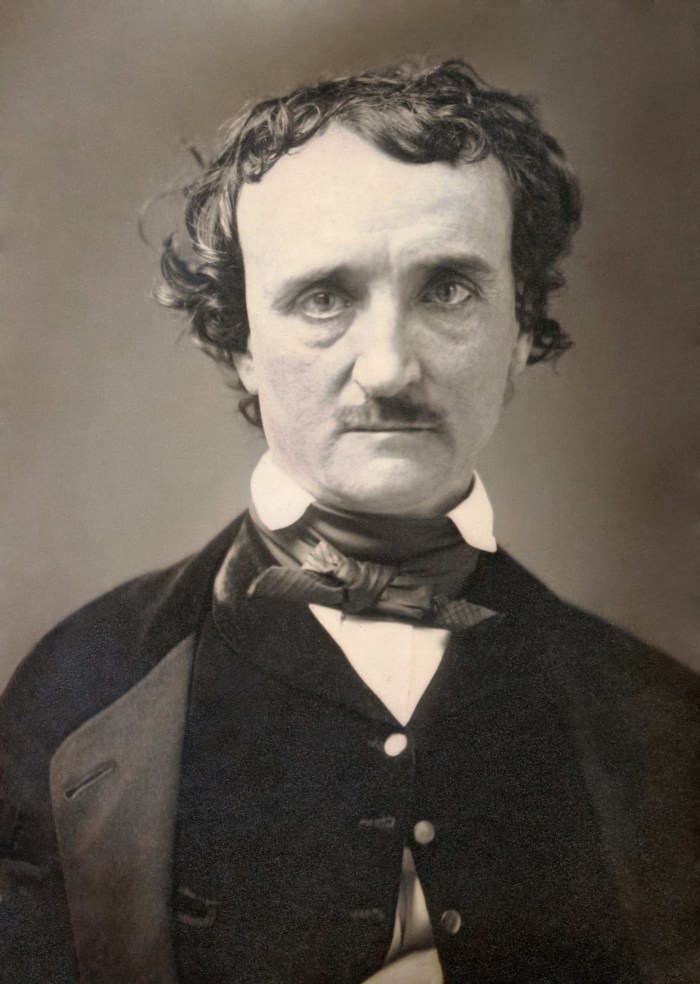
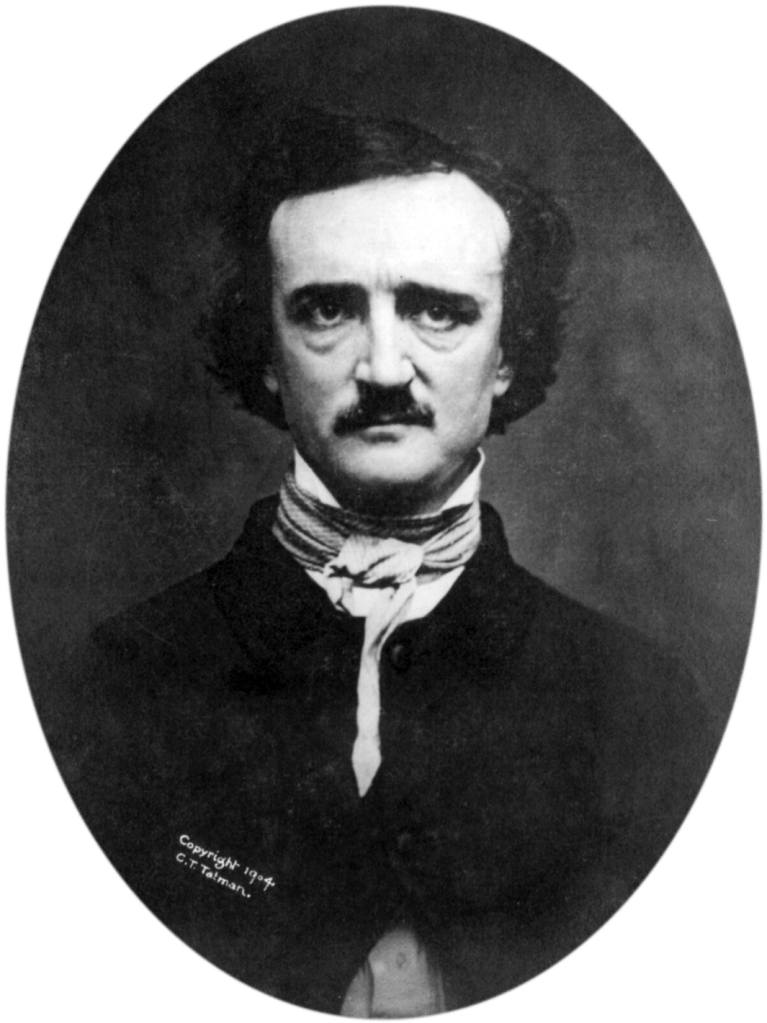
Midnight Dreary: The Mysterious Death of Edgar Allan Poe by John Evangelist Walsh

Midnight Dreary: The Mysterious Death of Edgar Allan Poe by John Evangelist Walsh

John Evangelist Walsh examines the last months of the life of Edgar Allan Poe and puts forth the hypothesis that he did not die of alcohol withdrawal, but something more sinister.

Poe, one of the most celebrated American authors, had a rough life. He was orphaned and adopted at an early age. He spent his life in poverty, scraping enough money from writing and editing jobs to keep himself fed, only to die mysteriously at age 40.

“We regret to learn that Edgar Allan Poe Esq. the distinguished American poet, scholar and critic died yesterday morning after an illness of four or five days. This announcement, coming so sudden and unexpected, will cause poignant regret among all who admire genius and have sympathy for the frailties so often attending it.”pg 34

Photo by Poppy Thomas Hill on Pexels.com

Walsh packs this book with details about Poe’s life and heartbreaks — that can be verified by historical documentation. After Poe’s untimely death, an author, perhaps more than one, who had been vilified by in Poe’s literary reviews, wrote angry and unflattering obituaries and biographies. It was an effort to black Poe’s name after his death which ultimately failed.

However, this “name blackening campaign” makes it difficult to separate fact from fiction.

Walter Colton, who was one of those who was kind to Poe after his death wrote: “I knew something of Poe. Something of the unfathomed gulfs of darkness out of which the lightning of his genius sent its scorching flashes.” pg 28

Perhaps that’s the lesson to take from Poe’s life, besides his astonishing literary achievements. Genius often seems to walk hand in hand with madness or emotional upheaval. I wonder why this is. Maybe, to touch the heights and depths required to write beautiful poetry, you have to go there? I don’t know.

“As always with this type of alcoholism, the unsettling fact was its combined certainty and unpredictability. After long periods of perfect sobriety, he seemed almost bound to fall again, and those who cared about him had to live with that relentless expectation.”introduction, pg xiv

Walsh’s hypothesis about the manner of Poe’s death was not convincing to me, but it gave me another angle to consider.

I had heard Poe may have died from “cooping” which was a practice where a man was kidnapped by a political party, kept drunk and imprisoned until election day, when he would let him free to vote as they directed. This idea holds water because he was found inebriated and ill outside a polling place and in clothing that didn’t seem to belong to him. I had also heard he was a victim of alcohol withdrawal.

Dear Sir, There is a gentleman, rather the worse for wear, at Ryan’s Fourth ward polls, who goes under the cognomen of Edgar A. Poe, and who appears in great distress, and he says he is acquainted with you, and I assure you, he is in need of immediately assistance.” pg 46

Walsh believes some relatives of one of the women Poe was involved with may have led to his untimely end.

Whatever happened, I can’t help but feel sad for the rest of us. Imagine what he could have accomplished with another 40 years on this earth.

It was many and many a year ago, 
In a kingdom by the sea, 
That a maiden there lived whom you may know 
By the name of Annabel Lee; 
And this maiden she lived with no other thought 
Than to love and be loved by me.

Recommended for fans of Edgar Allan Poe or readers who enjoy true crime.

Thanks for reading!

Here’s The History Guy episode I wrote about Edgar Allan Poe:

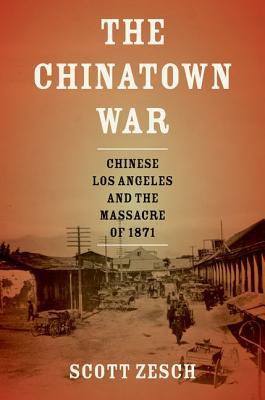
The Chinatown War: Chinese Los Angeles and the Massacre of 1871 by Scott Zesch

The Chinatown War: Chinese Los Angeles and the Massacre of 1871 by Scott Zesch

The Chinatown War is an outstanding examination of a little remembered event in Los Angeles history. One terrible night in 1871, racial tension boiled over in what was later labeled “the Chinese Massacre” and what the people of Los Angeles at the time called “Black Tuesday” or “the night of horrors”.

Scholars can’t even agree on how many people were murdered that night in October 1871. Scott Zesch, the author of The Chinatown War, believes it was around 18.

“Most Angelenos do not even know what happened that night, for the city’s fathers decided to put the incident behind them shortly after it occurred, and the victims were not people of consequence. They were ordinary immigrants whose American dream ended in a nightmare.” prologue

Photo by Roberto Nickson on Pexels.com

Public opinion was driven by resentment and distrust of Chinese immigrants. While often portrayed as a working class complaint over jobs, the hatred towards the Chinese was a thinly veiled racism against a people who were hated largely because their ways and culture were different.

“Contrary to popular belief, the earliest Chinese immigrants to America did not come to build the transcontinental railroad in the 1860s. Instead, it was the California Gold Rush of 1849 that brought the first large wave of Chinese to the West Coast.” pg 6

I learned so much from this book.

For example, Chinese immigrants in Los Angeles were often members of social groups called huiguan – commonly called “companies” in the newspapers of the time, although that translation is not exactly correct. Huiguan were social groups formed to help Chinese immigrants in their new lives in America. Members would sign up for the huiguan based on the location they immigrated from in China.

Also, though it is now one of the most populous cities in the U.S., in 1871 Los Angeles only had a population of around 6,000 people. Unfortunately, this massacre is one of the events that brought Los Angeles to the attention of the rest of the world.

“One of the city’s early historians, Charles Dwight Willard, characterized Los Angeles as ‘undoubtedly the toughest town of the entire nation’ during the 1850s and 1860s. He claimed that it had a larger percentage of miscreants than any other American city and, for its size, also had the highest number of fights, murders, and robberies.” pg 23

Photo by Pixabay on Pexels.com

Policing this rough and tumble western town wasn’t easy. This was compounded by the fact that the police department was too small.

Los Angeles’s early police department was too small, and was staffed by men too inexperienced or indifferent to their responsibilities, to be very effective in keeping order.” pg 53

The riot itself is difficult to read about, even now that nearly 150 years have passed since that night. Innocent people were dragged from their homes, brutalized and murdered.

“One eyewitness reported that the ‘stark, staring corpses hung ghastly in the moonlight,’ while ‘others, mutilated, torn and crushed, lay in our streets.'” pg 150

Not all of the citizens of Los Angeles participated in the massacre. Some tried to shame the mob into stopping or hid the terrified Chinese in their own homes to protect them.

“Baldwin quickly realized that the crowd’s sentiment was very much against him. As he said later, ‘I might as well have spoken to a cyclone.'” pg 145

Photo by Megan Markham on Pexels.com

A man named William H. Gray concealed several people in his home. In the years following the massacre, he received anonymous gifts in thanks for his actions that night.

Zesch examines the whole incident from the beginning to the trials following and how it affected (or didn’t) Los Angeles afterwards. His research and scholarship really is astonishing. He gives context and history not only of the city but also of the Chinese immigrant community at that time.

Highly recommended for anyone who wants to learn about an event in Los Angeles history that should never be forgotten.

Thanks for reading!

Here’s the History Guy episode I wrote about this event:

Dear Girls Above Me: Inspired by a True Story by Charlie McDowell

Dear Girls Above Me: Inspired by a True Story by Charlie McDowell

Dear Girls Above Me is about Charlie McDowell’s time living beneath a loud group of gossiping young women (names have been changed to protect the innocent). He claims to have learned much about love, life and himself through his eavesdropping.

From the description, I thought this book was going to be cute. Instead, I found it very creepy.

“I most definitely did not expect to be the unwilling audience of a twenty-four-hour slumber party between the Winston Churchill and Benjamin Franklin of the 90210 generation.” pg 6, ebook.

Photo by Max Vakhtbovych on Pexels.com

But, shortly after professing his irritation for the girls, he spends an inordinate amount of time wandering around his apartment, looking for the location with the best “reception” of their voices.

“…I’m living underneath a couple of Kardashian wannabes who spend their time gossiping, starving themselves, and throwing noisy parties.” pg 21, ebook.

Instead of ignoring them or moving to a new apartment, Charlie creates a Twitter account where he mercilessly mocks the snippets of conversation he overhears. It seemed very passive-aggressive to me.

“As my Dear Girls Above Me Twitter following grew, so did my guilt and anxiety. Each day, more and more people were discovering my ‘letters’ to the girls, and I felt as if it was only a matter of time before they stumbled across it.” pg 113, ebook.

Photo by Tracy Le Blanc on Pexels.com

But not guilty enough to stop tweeting about it.

Charlie does try to build reader sympathy by sharing some fairly embarrassing stories about his own personal life, but it didn’t really work. I found myself feeling embarrassed for everyone in this book rather than amused.

The low point of this tale was this: Dear Girls Above Me, ‘The psychic said I have a serious stalker in my life!’ I much prefer ‘a friend who always listens,’ thank you very much. pg 194, ebook.

No, stalker is more appropriate. Sorry.

I don’t recommend this book.

Thanks for reading!

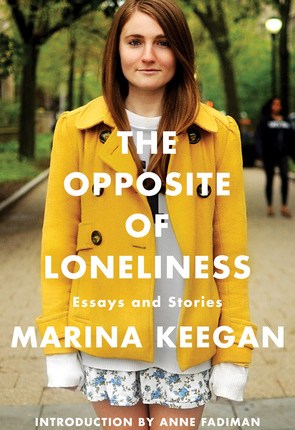
The Opposite of Loneliness: Essays and Stories by Marina Keegan

The Opposite of Loneliness: Essays and Stories by Marina Keegan

The Opposite of Loneliness is an excellent collection of fiction and non-fiction essays by Marina Keegan, a Yale student who died in a car wreck a couple days after she graduated from college.

Photo by Pixabay on Pexels.com

My favorite essay out of the bunch is “Against the Grain” pg 157 where she discusses her Celiac disease and the negative effect that that had on her mother.

She expresses frustration with how ridiculously protective her mother became when they were finally able to figure out what was wrong. She talks about being embarrassed at holidays as her mom cooked separate pies just for her or at field trips when her mother brought along special snacks.

But then, she reveals how she saw an internet article about how having Celiac disease could negatively effect the fetus when the sufferer becomes pregnant… and it’s a light bulb moment for Marina. She suddenly understands that feeling, how she would do anything to protect that other person, her baby, and suddenly her mom’s behavior doesn’t seem all that crazy after all.

Photo by Pixabay on Pexels.com

Of course, the absolutely heartbreaking moment for the reader is realizing that this particular dream will never come to fruition for Marina, but the fact that she even had that “ah-ha” moment is so powerful.

Marina’s writing highlights the sometimes indescribable feelings of daily life in such a powerful way.

For example: “My dog let out a small howl, twigs cracked in the woods, and something about the stillness or my state of mind reminded me of the world’s remarkable capacity to carry on in every place at once.”pg 34 I always had that feeling towards the end of the semester during college.

You’d work at this frantic pace, not giving a thought about your family or friends at home, then somehow in the lull between the final and actually going home, it would occur to me to wonder how my sisters had been for the last ten weeks or what my high school buddies had been up to.

I’d also forgotten that the world “carr(ies) on in every place at once.” Loved that sentiment.

Photo by Andrea Piacquadio on Pexels.com

“I worry sometimes that humans are afraid of helping humans.”pg 153 I worry about that too.

In that essay, Marina is talking about helping to save whales that were beached near her home. She talks about the time, effort, and money that is spent without consideration for the fact that only so many of the whales will actually be saved.

Then, when these whale rescuers go home, they do so without a backward glance towards the homeless on the streets, who are just as “beached” as the whales that they’ve been caring for all day.

“You feel like so many people are doing it and talking about it all the time like it’s interesting, so you start to wonder if maybe it really is.” pg 190.

Photo by Tomas Anunziata on Pexels.com

Marine was writing about how 25 percent of Yale graduates go immediately into banking or consulting positions that have absolutely nothing to do with their long term goals, but provide a quick paycheck in the short term.

Will they ever realize their dreams? If they make enough money, will they even care?

Life is about more than a paycheck. Marine Keegan knew that and her life had barely begun.

If you enjoyed The Opposite of Loneliness, I’d suggest Cool, Calm & Contentious, an excellent and serious collection of essays about life, or Zombie Spaceship Wasteland, a comedic collection of essays about life that are surprisingly insightful.

Thanks for reading!

The Love Poems of Rumi by Jalaluddin Rumi, Edited by Deepak Chopra

The Love Poems of Rumi by Jalaluddin Rumi, Edited by Deepak Chopra

I think Rumi’s poetry is unsurpassed in its mysticism and beauty.

“In your light I learn how to love.
In your beauty, how to make poems.”

“You dance inside my chest,
where no one sees you,”

“but sometimes I do, and that
sight becomes this art.”
pg 62

Photo by Rahul on Pexels.com

When my husband and I were first dating, we lived in different parts of the country. This was one of the books he sent when he found out that I loved poetry. He bought himself a copy too and we read it together- separately. Then we talked about it on the phone later. This was in the days before Skype or Facetime. It seems so quaint now.

“I desire you
more than food
or drink”

“My body
my senses
my mind
hunger for your taste”

“I can sense your presence
in my heart
although you belong
to all the world”

“I wait
with silent passion
for one gesture
one glance
from you”
pg 34

Photo by Wendy van Zyl on Pexels.com

I’ll be married for 11 years this May.

If you ever meet someone romantically interesting who tells you they like poetry, buy them a book of Rumi. You won’t regret it- at least, my husband says he doesn’t. 🙂

Thanks for reading!