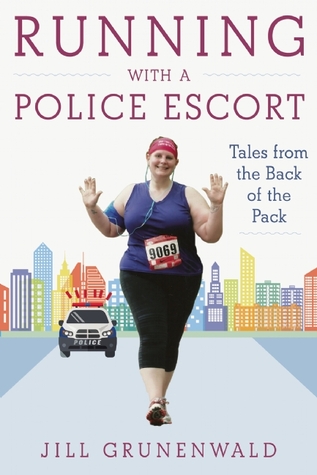
Running with a Police Escort: Tales from the Back of the Pack by Jill Grunenwald

Running with a Police Escort: Tales from the Back of the Pack by Jill Grunenwald
runningwithapoliceescort

A Cleveland librarian chronicles the emergence of her inner road warrior. Jill was very unhealthy- tipping the scales at nearly 300 pounds when an email from her younger sister convinced her that she needs to change her ways.

Self described “slow runner”, Jill often finds herself at the end of races with organizers closing the course behind her. Thus the title of her eventual podcast and this book: Running with a Police Escort.

Jill reminded me of my younger sister, another “slow runner” who took up running for health reasons.

I have a great deal of respect for people who have the courage to make major life changes- be that taking up a sport, counting calories, or giving up meat products.

It is so easy to let life determine who you are becoming instead of taking full responsibility for your choices. Jill’s point in this memoir is that it doesn’t matter how fast or slow you go, you win if you’re making even the smallest steps towards your goals.

In this passage, she’s closing down the race, like usual: “…I happened to see one of the policemen on the street gesture to get my attention and point to the car following me. I pulled out my earbuds and from the sidewalk he called out with a supportive smile, “You must be a very important person to have a police escort!” loc 72, ebook.

Jill relates her unathletic/uncoordinated childhood and I felt a lot of sympathy for her bookworm tendencies: “While (my classmates) ran wild, I’d find a quiet corner along the brick wall of the building and bury myself in a book. My favorites were the Scary Stories to Tell in the Dark series, the macabre illustrations haunting my dreams.” loc 162, ebook.

Photo by Ricardo Esquivel on Pexels.com

That probably would have been one of my favorites too, but my school library’s copy was always checked out. Not that I’m bitter or anything.

Jill reminds the reader that people don’t get to nearly 300 pounds without a reason why- an underlying pain that they’re insulating themselves from. For Jill, it seems that she was chronically lacking in self esteem and self love.

I loved reading about her getting her mojo back: Truthfully, I didn’t even know how much I weighed because the analog scale that I owned didn’t go up that high. … I don’t know if I can verbally express what it means to be so heavy that you literally outweigh your scale’s capabilities. Like, seriously. Just think about that for a second, okay? A scale has a pretty basic function… and I had gotten so big, I put my scale out of work.” loc 312, ebook.

Running with a Police Escort is a great book for those who are struggling with their weight or the decision to become more healthy.

Jill isn’t afraid to laugh at herself and there is quite a lot of wisdom in these pages: “…it’s these simple decisions that compound as we make them every single second of every single moment of every single day. It is not the Friday nights or Saturday evenings that determine who we are and where we go: it is the Thursday afternoons or Monday mornings that mentor and counsel our being into a full-fledged sense of self.” loc 818, ebook.

Beware, there’s a bunch of swearing too. If you don’t appreciate that, you may have to find another book.

I also found it to be repetitive after the first couple of races, but it’s clear that Jill is writing from the heart and has been changed by every single mile that she’s undertaken. Share this book with others who may need encouragement because Jill is a natural cheerleader for the novice runner or athlete of any type.

Some further reading: Confessions of an Unlikely Runner: A Guide to Racing and Obstacle Courses for the Averagely Fit and Halfway Dedicated, Running Like a Girl, and Down Size: 12 Truths for Turning Pants-Splitting Frustration into Pants-Fitting Success.

Thank you to NetGalley and Skyhorse Publishing for a free advance reading copy of this book!

Thanks for reading!

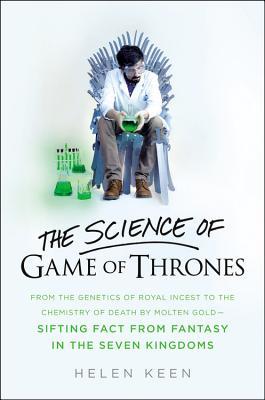
The Science of Game of Thrones: From the genetics of royal incest to the chemistry of death by molten gold – sifting fact from fantasy in the Seven Kingdoms by Helen Keen

The Science of Game of Thrones: From the genetics of royal incest to the chemistry of death by molten gold – sifting fact from fantasy in the Seven Kingdoms by Helen Keen
thescienceofgameofthrones

Readers beware: there are major spoilers contained within the pages of The Science of Game of Thrones. Do not read it (or this review) unless you’ve read all of the books that are currently out or have watched all of the seasons of the HBO show!

That being said: if you are a fan of the Game of Thrones, in any format, you simply must read this book.

From dragons to the effectiveness of female body armor, poisoning to the real possibilities of our world ending in ice or fire, Keen takes us on a scientific examination of all things related to George R.R. Martin’s epic series and what a trip it is.

My favorite part was a discussion about how dragons would breathe fire in real life and how that relates to the explosive capabilities of cows: “A cow can produce between 250 and 500 litres of highly flammable methane a day… In 2013 it was reported that a build-up of methane from a particularly afflicted dairy herd, coupled with an accidental spark of static electricity, ‘nearly blew the roof off [the] barn’ in Rasdorf, Germany… After a lot of genetic tinkering, a Danearys Targaryen in our world will be able to ride valiantly into battle to claim what’s hers on the back of a genetically modified fire-breathing heifer.” loc 235, ebook.

Can you picture it? I can!

Photo by Pixabay on Pexels.com

The potential positive effects of inbreeding: “… there’s evidence that, over time, inbreeding can actually purge a population of the effects of harmful recessive gene variants. These ‘bad’ genes are way more likely to show their effects, so, ultimately, the lines of the carriers are more likely to die off. Thus while the results of successive generations inbreeding is generally bad for the particular individual, it’s often good for the population as a whole.” loc 328, ebook.

So, the Lannisters can continue paying their debts as long as they’re not carrying harmful recessive gene variants. Good to know.

The Hodor question: “For a long time we were wondering what happened to Wyllis to cause his ‘hodoring’ behaviour. Perhaps he suffered a stroke or a tumour, or even a blow to the head. … Extensive damage to Broca’s area is also sometimes caused by malnutrition, but that seems unlikely in Wyllis’s case, given his enormous girth. Whatever the story, one thing is clear: Wyllis is clearly exhibiting a severe type of ‘expressive aphasia’. He can understand what other people are saying and respond, but he struggles to produce more than a single word.” loc 882-895, ebook. Hodor, hodor… hodor! Hodor.

Prior to a wonderful examination of the actual existence of dire wolves, Keen has this to say about the Starks and their pets: “The Stark children.. find a litter of orphaned dire wolf puppies and are desperate to keep them- like all children everywhere when confronted with the cute, mewling faces of slavering ferocious death beasts in their juvenile form. Their father Ned gives them a lecture worthy of any parent in Pets R Us along the lines of ‘Ok then but you’ll have to walk them yourselves even if it’s raining’.” loc 1160, ebook. Ha!

Photo by Brenda Timmermans on Pexels.com

And, finally, I enjoyed learning about crows. Apparently, they’re actually extremely smart and have very good memories: “Previous research has shown that crows not only remember a threatening face, they share that knowledge within their community, so that the individual is remembered and scolded by the crows, even after a gap of several years. Young crows, it seems, are even taught to recognise and scold the ‘villain’ by their parents.” loc 1357, ebook. Yikes. Don’t bully crows, friends.

There’s a bit of language in The Science of Game of Thrones and some juvenile humor, but, overall, it is much tamer than the source material. Recommended for ages 14+. Some further reading: What If?: Serious Scientific Answers to Absurd Hypothetical Questions by Randall Munroe or Loch Ness Monsters and Raining Frogs: The World’s Most Puzzling Mysteries Solved by Albert Jack.

Thank you to NetGalley and Little, Brown and Company for a free digital copy of this book! And, thank you for reading.

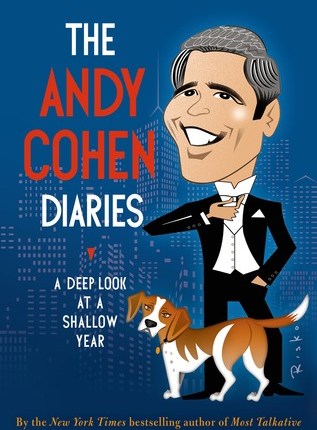
The Andy Cohen Diaries: A Deep Look at a Shallow Year by Andy Cohen

The Andy Cohen Diaries: A Deep Look at a Shallow Year by Andy Cohen

The Andy Cohen Diaries is the type of book that you have to be in the mood to read. It is basically like a book length gossip column, which can sometimes be exactly the kind of fluff that I want to read. Other times though… it is more annoying than amusing.

Andy writes it in a stream of consciousness style- event, event, feeling, event, aside, event, personal thoughts, inside joke, repeat. So, jump into this one if you want a bunch of gossip about the New York scene and Watch What Happens Live.

Photo by Expect Best on Pexels.com

I thought Andy’s description of his book was spot on:“Sometimes-like life itself-these chronicles are funny, sometimes dishy, and sometimes even a little sad. And sometimes they are really, really shallow. Because sometimes life is shallow. I understand that and have accepted it. I hope you will too.” pgs 7-8 ebook

Andy’s life is filled with drama, divas, and emotion laden moments both on and off the screen. I enjoyed watching him juggle it all. He offers this advice for handling the more challenging people in your life: “…I told her I was sorry if I offended her. Sometimes, the only option is to say you’re sorry, even if you have no idea what someone is talking about.” pg 11 ebook.

I’ve never watched any of the Real Housewives of (fill in the blank city). So, those gossip bits didn’t mean all that much to me.

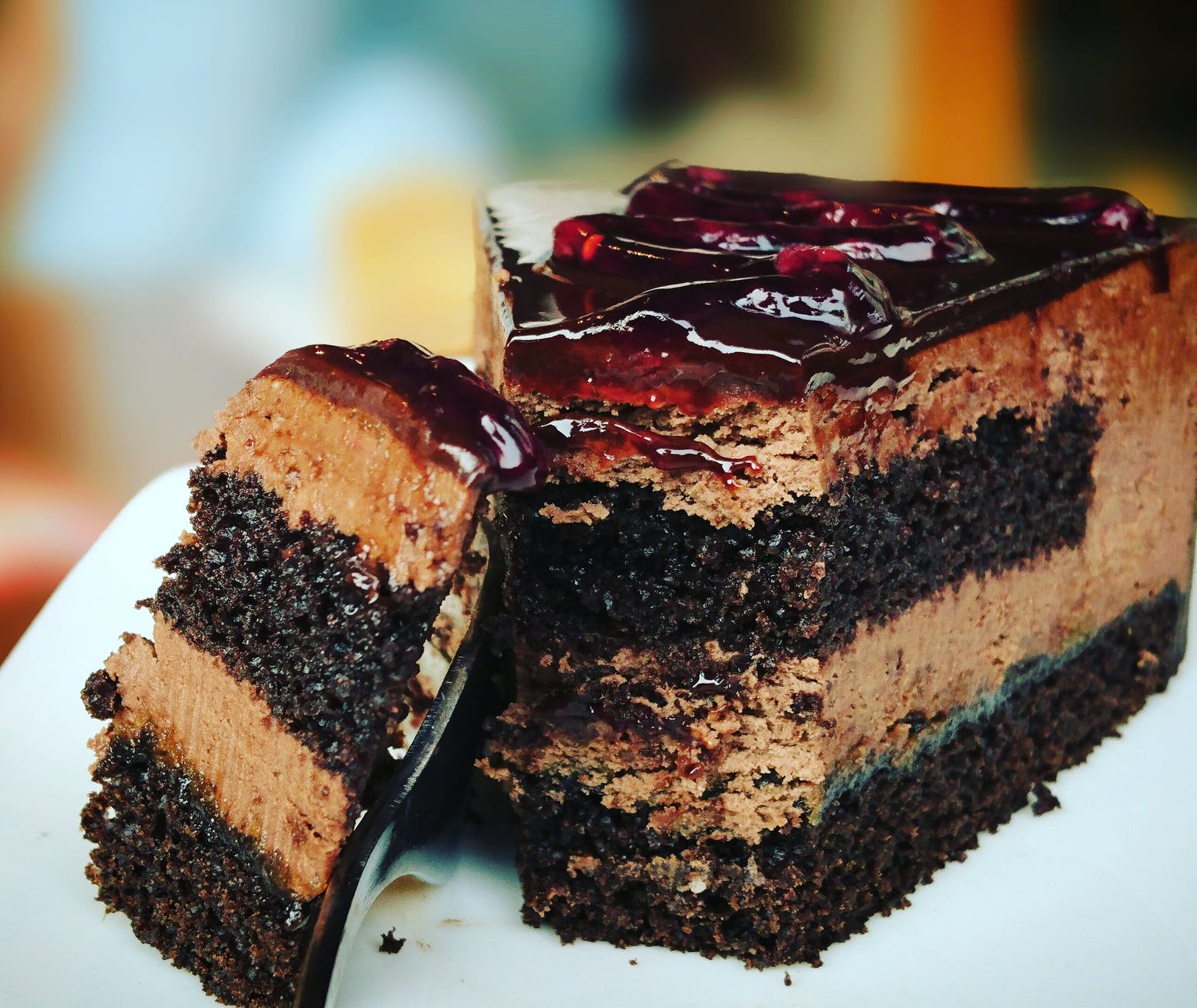
However, the parts about Lady Gaga were a different story! : “Then the weirdest cake arrived from Lady Gaga, red velvet cheesecake with white chocolate on top with Lady Gaga Art Pop written on it… the note said “Love, Gaga” in teeny little capitals. It looked like-I don’t know what actually-robot writing?”pg 18 ebook

Photo by Abhinav Goswami on Pexels.com

I also learned in this book that Andy Cohen makes a cameo in Gaga’s surreal music video, G.U.Y. Who knew?

Andy is from St. Louis, the closest city to my small hometown. So, we had that in common.

Any time he was taking about the weird things that people from St. Louis do, I was nodding my head in sympathy: “Everybody in St. Louis, all they talk about is how great St. Louis is. The hostess lady in the suite asked me if I lived in LA and I said no, I live in New York, and she said to me very earnestly, “Why, may I ask, would you ever leave St. Louis?” pg 38 ebook. Yeah, they do that.

I could go on and on. The Andy Cohen Diaries is just so quotable. Some read alikes: Amish Confidential by “Lebanon” Levi Stoltzfus (tell-all about the Amish Cofidential show and the Amish community) or My Horizontal Life by Chelsea Handler (hilarious recounting of Chelsea’s various escapades).  Thanks for reading!

You’re Never Weird on the Internet (Almost) by Felicia Day

You’re Never Weird on the Internet (Almost) by Felicia Day

“You’re Never Weird on the Internet (Almost)” is an excruciatingly honest memoir from Felicia Day about her quirky childhood, gaming addiction, cultural attitudes online, and life long struggle with anxiety and other mental health issues.

She reminded me a great deal of Jenny Lawson in her straight forward presentation of difficult topics and also in her exuberant storytelling style. And, in many other ways, she reminded me of myself.

Being a female gamer is hard. There, I’ve said it. Not only do your female friends not want to play video games with you, but your male friends never really accept you as a legitimate gamer. You’re kind of stuck in this twilight space of “this is what I love to do” but society doesn’t agree that it is appropriate for you to do.

Now, unlike the early days of MMORPGs, many more women play video games, and I’m sure that I’d make more female friends if I tried. But, back then in the fall of 2000, when I first got into EverQuest (one of the predecessors of WoW, the game that Felicia played), many more men played female avatars than actual women played. That’s just how it went.

Photo by picjumbo.com on Pexels.com

I loved that Felicia addressed this female gamer white elephant, so to speak. There are few people who really talk about it, but it’s something that I’ve been dealing with for a long time.

I loved her cheerful attitude, even when things got tough: “My story demonstrates that there’s no better time in history to have a dream and be able to reach an audience with your art. Or just be as weird as you want to be and not have to be ashamed.” pg 19 ebook. That’s a pretty powerful lesson and one which artists and dreamers everywhere should know.

Felicia admits that she has very few hands-on skills, something which I also have in common with her. In this passage, she’s joking about ordering coffee: “…I’m determined to enjoy the liquid indulgences of modern life. Might as well take advantage of it all before the zombie apocalypse. I have no practical skills; I’m fully aware that I’ll be one of the first ones “turned.” Instead of learning motorcycle repair or something else disaster-scenario useful, I’ll order the drink I want until I become a shambling corpse.” pg 17 ebook.

I’ve thought about my librarianship skills and book reviewing abilities in that same light. If something catastrophic happens, I’m kind of screwed.

I mean, yes, there have been favorable depictions of librarians after the apocalypse (Station Eleven comes to mind) but really, what good could I do for people struggling to survive or myself? While we’re on the topic of librarians, I also enjoyed that Felicia’s first “job” was working for her aunt, a librarian. She said about it: “No job since has left me feeling so well rewarded.” pg 67 ebook. Aww….

Photo by Pixabay on Pexels.com

Chapter Five: Quirky Addiction = Still an Addiction (How my obsessive personality steered me into a twelve-hour-a-day gaming addiction and an alt-life as a level 60 warlock named Codex) pg 85 ebook, was my favorite.

Gaming addiction is an actual thing. I’ve known multiple people who dropped out of college or lost their jobs because they couldn’t stop playing video games. I’ve also known people whose relationships started or ended because of it too. It seems silly for people who don’t have any interest in video games, but it can be as destructive an addiction and as real as anything else- drugs, sex, whatever.

Felicia nails the siren call of video games in this passage: “When we graduate from childhood into adulthood, we’re thrown into this confusing, Cthulhu-like miasma of life, filled with social and career problems, all with branching choices and no correct answers. Sometimes gaming feels like going back to that simple kid world. pg 93 ebook.

That’s it, really. Do the quest, get the reward, and repeat. Real life is never that simple or straight forward.

Though she felt like she wasted a lot of time, Felicia managed to break free of her addiction and channel her passion into the hugely successfully series: The Guild. I had never watched it, but after reading this book, I binge-watched every episode. She managed to take the culture, friendships, and craziness that is online gaming and turned it into a compulsively view-able series. I loved it.

If you haven’t had a chance to watch it yourself, I highly recommend it. One of the overarching points of this book, and the television show, is that not only can you overcome hurdles that held you back from the life of your dreams, but you can use the very thing that was the stumbling block to move onwards. Well done, Felicia, very well done.

One last little bit that I wanted to include in this review, because it rang so true for me, was Felicia’s thoughts about her struggles with mental illness. She says: “I couldn’t trust my own mind anymore, which was the scariest thing I’ve ever experienced. pg 170 ebook.

When your own internal filter, your brain, is compromised, you feel like you can’t trust yourself ever again. It’s as simple and as terrifying as that and, unless you go through it yourself, there’s not really any good way to explain what’s happened to you or why you’re so afraid.

If you’ve ever had any struggles with anxiety or mental health issues, you may really enjoy this memoir. Also, if you enjoy online gaming or want to understand one of your loved ones who does, you may like this book. Some read-alikes: Nerd Do Well by Simon Pegg, Fantasy Freaks and Gaming Geeks: An Epic Quest for Reality Among Role Players, Online Gamers, and Other Dwellers of Imaginary Realms by Ethan Gilsdorf, or Just a Geek: Unflinchingly honest tales of the search for life, love, and fulfillment beyond the Starship Enterprise by Wil Wheaton.

Thanks for reading!

Women Who Read Are Dangerous by Stefan Bollmann, Foreword by Karen Joy Fowler

Women Who Read Are Dangerous by Stefan Bollmann, Foreword by Karen Joy Fowler
womenwhoread

Part art appreciation and part homage to the female reader, Women Who Read Are Dangerous is probably the the most aptly titled book that I’ve ever read.

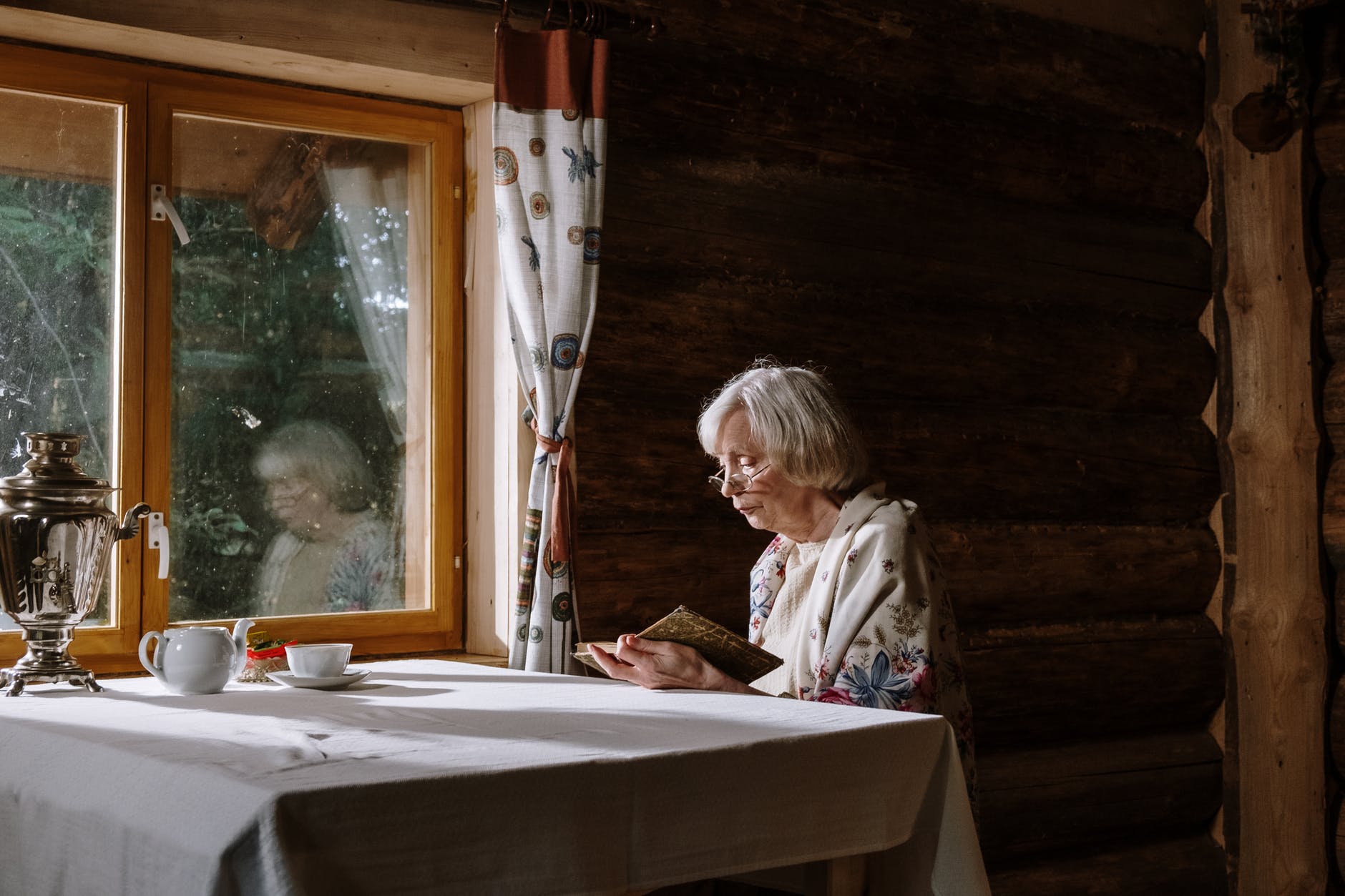
In addition to the beautiful images (my favorites pages 73 & 89), this book educates the reader about the politics, historical trends, and gender inequality tied to reading. Who knew that simply picking up a book could be such a subversive act?

Women Who Read are Dangerous sums up years of strange thinking about women and books with a dose of humor that I appreciated.

Take these historical opinions for example: “Women are too literal-minded for reading. Women are too sentimental, too empathetic, too distractable for reading. Women are passive, practically somnolent, consumers of popular culture, never realizing how, with the very books they choose, they participate in their own subordination.” pg 16

Photo by Los Muertos Crew on Pexels.com

Or this: “The lack of all physical movement while reading, combined with the forcible alternation of imagination and emotion,” said the teacher Karl G. Bauer in 1791, would lead to “slackness, mucous congestion, flatulence, and constipation of the inner organs, which, as is well known, particularly in the female sex, actually affects the sexual parts”- so anyone who read a great deal and whose powers of imagination were stimulated by reading would also be inclined to masturbation, as indeed we can already observe in Baudouin’s painting. But such moralizing could not hold up the triumphal march of reading, including- and specifically- female reading.” pg 23

Can’t hold us back, right readers? I’m actually feeling pretty well for all the reading that I do.

Photo by cottonbro on Pexels.com

Reading is power, I’ve always known that: “With the ability to read, however, there developed new patterns of private behavior that were to threaten the legitimacy of both the Church and secular authorities on a permanent basis. Women who learned to read at that time were considered dangerous. For the woman who reads acquires a space to which she and no one else has access, and together with this she develops an independent sense of self-esteem; furthermore, she creates her own view of the world that does not necessarily correspond with that conveyed by tradition, or with that of men.” pg 26

An introvert’s paradise, the keys to your freedom, the way to stick it to the “man”… as if I needed more reasons to read.

I also liked this description of reading: “Reading is an act of friendly isolation. When we are reading, we make ourselves unapproachable in a tactful way.” pg 34 I never really considered it that way before, but it is a method in which you remove yourself from the world for a time, even from those sitting in the same room.

Photo by Karolina Grabowska on Pexels.com

Seems obvious, when I consider it, but I had never taken the time to do so.

Finally, I learned about how “silent reading” is a recent trend. Did you know?: “An illiterate today is not only someone who cannot read (or write), but also anyone who cannot understand a text unless he or she reads it aloud. Yet there must have been a time when the opposite was the case- when reading aloud was the norm, as silent reading is today. … Until well into the Middle Ages and in some cases well into modern times, reading consisted of both thinking and speaking, and was above all an act that took place not in separation from the outside world, but at its center, within the social group and under its surveillance.” pg 25

Ugh. “Under its surveillance”?

That brings to mind the quotation, “Let others praise ancient times; I am glad I was born in these.” -Ovid.

Highly recommended for art enthusiasts and anyone who loves to read, Women Who Read are Dangerous is a lot of fun and a walk on the wild side… if one believes in such things.

If you’re looking for more non-fiction information about reading, try “Wild Things! Acts of Mischief in Children’s Literature” by Betsy Bird. It doesn’t have the beautiful artwork of this book, but it does contain a lot of information about the history and, sometimes scandalous, back story of children’s books and authors.

A big thank you to the Goodreads First Reads Program for a finished copy of this book for review purposes.  And, thank you for reading!

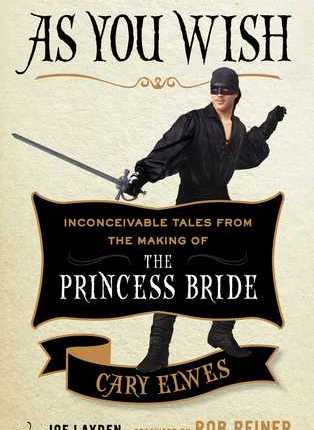
As You Wish: Inconceivable Tales from the Making of The Princess Bride by Cary Elwes

As You Wish: Inconceivable Tales from the Making of The Princess Bride by Cary Elwes

Before I start my review, I want to mention that As You Wish is the perfect audiobook for a road trip between St. Louis, Missouri and Kansas City, Kansas. I was traveling with my daughter and husband, and we were all entertained by Elwes’ memories of the making of the film.

It’s really not that easy to find a book that works for all three of us, but this was an absolute hit. I can’t recommend it enough and if you’re already a fan of the movie, I’m sure that you’ll love it even more.

Though it starts out a bit self-congratulatory in tone, throwing around words like “timeless”, “modern classic”, and “once-in-a-lifetime experience”, As You Wish is ultimately, like The Princess Bride, a very sweet and and enjoyable memoir about the events behind the making of the film.

At first, as I said, I was afraid that I was going to be bored to tears. Rob Reiner wrote and narrated the foreward and it is sugary sweet in its praise of the author, the movie, and everything to do with either. This high praise, some may argue, is well deserved, but I thought that it might have fit better in the flow of the tale as an afterword. First, the play then the applause, but, that’s just my opinion.

Some of the best parts of the memoir, not surprisingly, centered around Elwes’ interactions with his colorful co-stars. Andre the Giant figures largely into this tale, as he did in life, not only because of the enormous size of his body but also his heart.

The brightest among us always seem to burn too quickly.

Another of my favorite parts is the description of Elwes’ and Patinkin’s struggle to film the “greatest sword fight in modern times.” I had no idea of the amount of backbreaking work that went into the acquisition of the skills to run the scene. From day one of filming, Elwes and Patinkin were schooled by some of the best sword fighters in the movie business. Now that I know, I’m going to have to re-watch the film. I had always assumed that the fight was done by stuntmen. How wrong I was…

If you enjoy the film, The Princess Bride, you must listen to this audiobook. It is a real treat and you’ll appreciate some hidden gems revealed by Elwes’ narration. To borrow some descriptors from the book, it was a magical, “once-in-a-lifetime” moment when talent and story mixed together to create a “timeless, modern classic”. If you’re looking for some film related read-alikes (for movies other than the Princess Bride), try Nerd Do Well by Simon Pegg or A Funny Thing Happened on the Way to the Future…: Twists and Turns and Lessons Learned by Michael J. Fox.

Thanks for reading! -Heidi

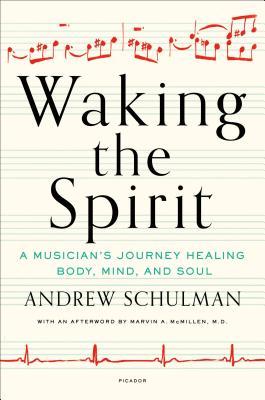
Waking the Spirit: A Musician’s Journey Healing Body, Mind, and Soul by Andrew Schulman

Waking the Spirit: A Musician’s Journey Healing Body, Mind, and Soul by Andrew Schulman
wakingspirit

Waking the Spirit is an educational and uplifting look at music therapy from a world class musician who, not only plays for a critical care unit at a hospital, but was also saved by music himself.

I’ve always known about the healing power of music for the spirit, but I didn’t realize that it had such marked effects on the body itself. When I’m having a bad day or just need to relax, I plop down in front of the piano and play the stress out.

What I did not know, and that Andrew discusses at length in this book, is that music has been used throughout history to treat sick people and the astonishingly positive effects that it has on the critically ill.

The idea behind music therapy in the ancient world is that everything is vibration.

If you play harmonious and balanced music, the human body will, in turn, put itself into harmony and alignment. Sickness was viewed as a simple imbalance: “Early records have been discovered from ancient Egyptian medicine, Babylonian medicine, Arurvedic (Indian subcontinent) medicine, and classical Chinese medicine that incorporated musical healing. The ancient Greeks valued the relationship between music and medicine in the god Apollo, whose gifts included both the musical and healing arts, and the first use of the term “musical medicine” began with Pythagoras, the fifth-century philosopher-mathematician. The Romans are said to have used musicians in their battlefield hospitals as a form of anesthesia.”

Before I read this book, I didn’t realize that music therapy was even a “thing” in hospitals.

It seems like, at least here in the U.S., and this is entirely my opinion, that medicine has moved ever so much farther away from holistic treatments. The preference is for high cost drugs and highly educated doctors to perform surgery… something concrete that people can hold in their hands and say, “Look! This is what I paid for. This thing right here.”

If something, like music therapy, works, but we can’t explain why it works, then people don’t value it as much. That’s where Waking the Spirit comes in.

Andrew provides tons of examples of beneficial music therapy treatments as well as studies to back up his real life experiences. I think this book could be helpful to doctors, nurses, or anyone who is looking to try something inexpensive to make the environment within their institution more appealing.

Take this experience: the patient was in pain and talking to herself (a side effect of the brain surgery she had just undergone). Then, Andrew shows up with his guitar: “At the sound of the first note she turned her head toward me, looking at my face and then at my right hand as it plucked the strings of the guitar. Gone was the scattered expression from her face as her eyes gained focus. She stopped talking, her mouth half-open in surprise, silent. Her face and shoulders relaxed, and she smiled. Not the plastered grin of before but a real smile of pleasure. She was here now, in this room, and not wherever she’d been for the past few hours. Something was connecting. We were just ten seconds into the music.” Powerful.

“Over the years, I’ve witnessed the most remarkable ways in which music can help the healing process, the ways it can calm a patient or lift their spirits, or reach them when they seem locked in a place that no one else can access. It can soothe a staff member’s exhaustion or anxiety and let them refocus on helping a patient, and it can provide a connection for a patient’s family, perhaps bring back old memories and open pleasant topics of conversation.”

Bringing beauty and dignity back to medicine with music.

In this passage, Schulman is talking to Dr. Richard Kogan, a professor of psychiatry, about how just the act of composing music has soothed individuals who are suffering from mental illness and then, their masterworks have gone on to help others: “While it’s important not to overromanticize mental illness- most depressed individuals are too paralyzed to write a symphony and most psychotic individuals are too disorganized to produce a work of art that is coherent- the suffering associated with mental illness can led to bursts of creative inspiration that are less likely to come from an individual that is emotionally content. For many of the greatest composers, music has been profoundly therapeutic.” In other words, artists who used their music to alleviate their own suffering composed some of the greatest music ever written, which in turn as the effect of ameliorating the suffering of others.” It’s a circle of healing.

You don’t have to be a musician to fully enjoy Waking the Spirit. I recommend it for anyone who’s interested in non-traditional treatments for pain and suffering. Thank you to NetGalley and Picador for a free digital ARC of this book.

Thanks for reading!