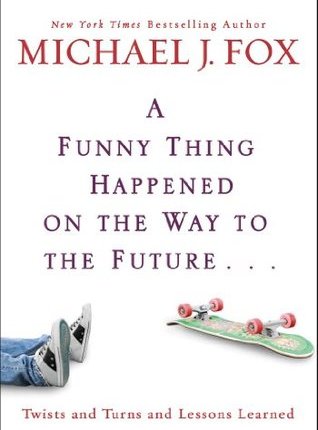
Michael J. Fox talks about his life, career and health. There’s nothing world-shattering in here, but if you enjoy watching Fox as an actor, you’ll probably like this book too.
A Funny Thing Happened on the Way to the Future reminded me strongly of Steve Job’s 2005 commencement address at Stanford. Both of these men chose not to pursue higher education. They both also found, through their own meandering ways, fulfilling, purposeful, and powerful lives that were rich in meaning for themselves and those who were fortunate enough to fall in with them.
Personally, I don’t think that the messages of “find your passion and live it”, “keep learning even if you’re not in a classroom”, and “fall but get back up” can be repeated enough. Life is filled with unexpected twists and turns — I guess the trick is to view these moments as opportunities instead of stumbling blocks. Fox’s book helps the reader do just that.
Though Fox isn’t a graduate, it would potentially make a good gift for a graduate. It might also be a good gift for anybody who is at a crossroads and needs a bit of a boost to proceed with not only courage but also hope.
Also, if they haven’t seen it yet, play Job’s Stanford address for them. It is available for free off of TED talks: https://www.ted.com/talks/steve_jobs_…
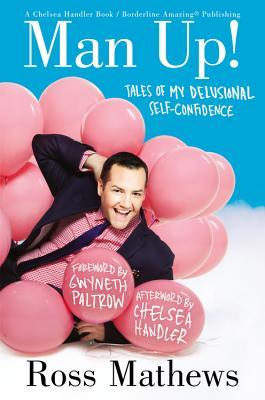
Ross Mathews is perhaps best known for how he got started in the entertainment business — as “Ross the Intern” on “The Tonight Show” with Jay Leno. If you’ve never seen any of his segments, I think you can catch some of them on YouTube. I think they’re worth a few minutes of your time as I found him funny.
This book is a little slice of Mathews’ personality. Nothing deep or earth-shattering, but bit after bit of light and amusing self deprecation.
Sometimes after reading a bunch of serious books, I need a bit of fluff. I’d venture to say that there are very few books as fluffy as this one. 🙂 It’s one silly thing after another and could be just what you need to make you smile.
Mathews skates across deeper issues a couple of times. For example, he mentions that he lost his father at a young age but he doesn’t go into depth about his feelings of loss. Instead, he talks about overdosing on THC while his father was dying in the hospital.
Though there are no great introspective moments in Man Up!, it could be perfect for reading next to a pool, on a plane, or while you’re sitting in a doctor’s office.
Between the laughs, he does have a good message about self acceptance and living your dreams. It’s not a subtle delivery, but that’s not who Mathews is. And, I think he’s just fine with that.
Michael Kimmelman, art critic for the New York Times, gives art trivia and philosophic insights in The Accidental Masterpiece.
… I have come to feel that everything, even the most ordinary daily affair, is enriched by the lessons that can be gleaned from art: that beauty is often where you don’t expect to find it; that it is something we may discover and also invent, then reinvent, for ourselves; that the most important things in the world are never as simple as they seem but that the world is also richer when it declines to abide by comforting formulas.” pg 5
Though, at times, I felt as if he was getting too deep into the art “appreciation” portions, I learned a great deal about not just unconventional forms of art, but how art can be found in your every day life. It is all a matter of adjusting how you view reality.
There were some historical tidbits I particularly enjoyed. For example, did you know that when Kodak film was invented and made the art of photography available to the general public, that some professional photographers believed the medium was doomed?
“The placing in the hands of the general public a means of making pictures with but little labor and requiring less knowledge has of necessity been followed by the production of millions of photographs,” wrote Alfred Stieglitz in 1899. “It is due to this fatal facility that photography as a picture-making medium has fallen into disrepute.” pg 32
Wonder what Stieglitz would have made of Instagram.
Or this other bit of trivia, which seemed particularly apropos with the news reporting today that so many people are climbing Mount Everest that they’ve become a danger to themselves and others: humankind didn’t always find mountains beautiful or worthy of appreciation. The Romans hated the mountains — they were difficult to maneuver armies across and also enemies had a nasty habit of popping out of them. (Think Hannibal.)
Here’s a young Thomas Hobbes’ view of mountains:
“Behind a ruin’d mountain does appear Swelling into two parts, which turgent are As when we bend our bodies to the ground, The buttocks amply sticking out are found.” pg 55
Hilarious. And now we highly value mountain views and the sublime feeling of ascending a mountain’s peak.
“The evolution of the whole modern worldview, including the notion of beauty, you might even say, is exemplified by the evolution of our feelings toward mountains.” pg 56
I also enjoyed Kimmelman’s thoughts on the art of collecting objects, every day and otherwise. I live with someone who has serious collecting tendencies — notably a large military hat collection. It made me appreciate my husband even more when I found out there are people in the world who collect things like light bulbs to the extent where they’ve set up light bulb-themed museums. In their own homes.
We’ve agreed (so far) to keep the collection in one room. So, comparably, I’m doing pretty well. 🙂
Recommended for readers who enjoy non-fiction reads about art, philosophy and a curious mix of the two.
An informative non-fiction biography about Yip Harburg, the little-remembered lyricist, who is responsible for, among other notable works, writing the lyrics to “Somewhere Over the Rainbow”.
Similar to Malcolm Gladwell’s “successful hockey players who were born in January” thesis, Yip was among an extraordinary group of lyricists, all born within a short time of each other, who wrote for Broadway and Hollywood. It wasn’t just talent, of which Yip had a great deal, it was also opportunity.
A myriad of different factors came into play in just the right way at the perfect time to create musical theater and a chance for lyricists to make a huge impact on the national consciousness. Prior to this time period, that type of entertainment, musical theater, didn’t even exist.
Yip grew up in poverty but claimed that didn’t affect him all that much. Children are surprisingly resilient.
“You lived from month to month. But youngsters didn’t feel the sting of it because everyone else was poor, too. We knew no other way of life, and it didn’t mean much to a kid who turned the street into an exciting playground.” pg 9
The Great Depression hit Yip hard and he lost everything. He decided, when the chips were down, to try his hand at a new career. And so, he began writing lyrics for composers. It’s a curiously difficult profession.
“The challenge of becoming a lyricist involves not only perfecting individual writing skills but also learning to be an effective collaborator, one of the most demanding of human relationships. … The theater lyricist must also be collaborating with the book writer of a musical, as well as directors, actors, designers, and producers who impact the lyric-writing process.” pg 32
Beyond the life of Yip Harburg, this book gives the ins-and-outs of the lyric writing business. It is a tricky art, limited by not only the written music but also the demands of the show or song in which the words are appearing.
“The word rainbow never appears in L. Frank Baum’s book, “The Wizard of Oz”. It was lyricist Yip Harburg who put it in the film.”From the introduction.
“Somewhere Over the Rainbow” is arguably one of the most recognizable Hollywood songs of all time and most people don’t remember the man who made it possible. Yip was also responsible for the almost “operatic” flow of the music during Dorothy’s time in Oz. In fact, Judy Garland wanted Yip to write the lyrics for her turn in “A Star is Born” but her husband, the producer, was unable to get Yip under contract because of his blacklisting during the McCarthy-era.
But Yip didn’t let it get him down. He kept writing even though some of his friends completely fell apart when they couldn’t get a contract.
I enjoyed learning about not just the difficulties of lyric writing, including the plot lines and back stories of some of Yip Harburg’s most popular works, but also learning about the life of this man who affected so many people by putting thoughts into words. He encapsulated dreams. And that’s not an easy thing.
“I think everybody, not only every artist, but every person who thinks, is confronted with… — his drive to be related to the universe, but that’s a hard thing because there are so many stars and it’s very hard to grasp that relationship. … But, if he can identify himself, and relate really with one other person, he will relate with all of humanity and he will relate with all the universe.” pg 69
Thank you, Yip, for giving Dorothy rainbows. The world would have been a darker place without you.
Recommended for fans of Broadway shows and musicals, but also for readers who enjoy learning forgotten history about people who deserve to be remembered.
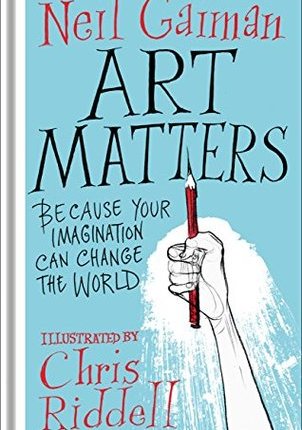
Neil Gaiman and Chris Riddell have created a manifesto for readers, librarians and content creators. This little book celebrates everything having to do with reading, freedom of information and ideas, and how to start creating the life of your dreams, even if you don’t know where to start.
It was compiled from Gaiman’s prolific back catalog of speeches, poems and various other writings about creativity.
“The world always seems brighter when you’ve just made something that wasn’t there before.”
I feel like this should be required reading — especially the parts about how to respond to intellectual disagreements. I think Gaiman penned these words after the bombing at Charlie Hebdo, and they still ring true.
“I believe I have the right to think and say the wrong things. I believe your remedy for that should be to argue with me or to ignore me. And that I should have the same remedy for the wrong things that I believe you think.”
And, of course, I was partial to all of the praise directed towards librarians and libraries, having been a librarian once myself. Sometimes people ask me if I ever think libraries will be closed because “they’re just a building with books” or “they’re a waste of taxpayer money”.
This is how I wished I had replied: “Libraries are about freedom. Freedom to read, freedom of ideas, freedom of communication. They are about education, about entertainment, about making safe spaces and about access to information.” How could that ever possibly go out of style?
Gaiman also gives attention to the bookworms of the world. We make it a better place through our reading and daydreaming and daydreaming about reading. Also, our epic library patronage is a good thing.
“We have an obligation to read for pleasure. If others see us reading, we show that reading is a good thing. We have an obligation to support libraries, to protest the closure of libraries. If you do not value libraries you are silencing the voices of the past and you are damaging the future.”
Gaiman shares a bit about how he became the universally beloved author he is today. Step one, you’ve just got to get started.
“If you have an idea of what you want to make, what you were put here to do, then just go and do that and that’s much harder than it sounds and, sometimes in the end, so much easier than you might imagine.”
He confesses that he lied on early resumes to get his foot in the door. But, after his later success, he went back and worked at all of the places he had claimed before. That way, he didn’t see himself as lying but as “chronologically challenged.” I loved that he took the time to make things right.
Gaiman also has some interesting views about no-start dreamers. He says the saddest thing to him are friends that say they’re too committed to follow their dreams. There’s bills to pay, mortgages and families to support and they can’t take the dive to do whatever it is they’ve always dreamed of doing.
He said he dodged that particular roadblock by skipping a well-paying job or two early in his career, so that he didn’t get too comfortable doing something other than writing. I thought that was an interesting strategy. Creating is about having the courage to just do it, no matter what and not stopping until you’re doing it.
“Somebody on the internet thinks what you do is stupid or evil or it’s all been done before? Make good art.”
The good news is there are more platforms than ever before to get your creations in front of the people who will care about them.
“The gatekeepers are leaving their gates. You can be as creative as you need to be to get your work seen. YouTube and the web (and whatever comes after YouTube and the web) can give you more people watching than television ever did. The old rules are crumbling and nobody knows what the new rules are. So make up your own rules.”
My own life right now points to the truth of that. I left a guaranteed paycheck and employer provided health care to write for my husband’s YouTube channel. We’re not only succeeding but we’re having a lot of fun doing it.
Thank you, Gaiman and Riddell for this beautiful book. I hope it encourages creators everywhere to take the leap.
“Are you a gambling man?” he’d ask. “Because I am.” Prologue.
A non-fiction biography that reads like fiction, this is the life story of Titanic Thompson. According to author Kevin Cook, Titanic’s life was the model for the gambler Sky Masterson in the musical “Guys and Dolls.” This poker and golf-playing phenomenon bet and propositioned his way across the country. In addition to all of the fun anecdotes about bets he made, Titanic was a star witness in the trial for the murder of the man accused of “fixing” the World Series.
Seriously folks, history doesn’t get much more interesting than this.
As Alvin collected his winnings, someone asked Snow Clark the stranger’s name. “I don’t rightly know but it ought to be ‘Titanic,'” Clark said. “He sinks everybody.” pg 3
Alvin Clarence Thomas was born in 1893 in rural Missouri near the small town of Monett. The last name, Thompson, that he would adopt for most of his adult life, came from a later newspaper misprint that he embraced as his own.
Later in life, Thompson said he couldn’t read, but numbers and odds always made sense to him. He spent hours sitting alone in his room, teaching himself to adeptly shuffle cards, practicing dealing from the bottom of the deck more quickly than the eye could follow. Thompson developed a method of marking cards that some still use today, like putting dots on the back or notching the edges to be able to tell a face cards from the lower ones.
He was quite popular with the ladies and married 5 times to women significantly younger than him. Scandalous!
“He was fun,” said a woman who knew him. “He took his hat off when he spoke to you. Alvin was slim like a willow, and he didn’t walk, he sauntered.” pg 21
When he was drafted into the army, he was made a sergeant and taught the men under him how to gamble.
“Sergeant Thomas spent hours dealing demonstration stud hands, providing a running commentary on each hand, training his men to calculate the odds of an opponent’s having an ace or king or deuce in the hole, telling them when to bet harder and when to fold their tents, so they could beat all the poor dumb soldiers who trusted to luck.” pg 53
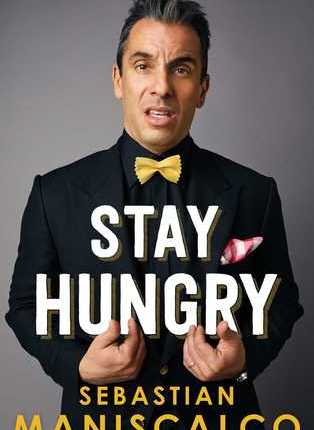
Sebastian Maniscalco (one of my favorite comics) shares his journey from just another funny guy to successful stand-up comedian.
I was so excited to see Sebastian had penned a memoir. If you’ve never had a chance to enjoy one of his specials or to see him live, I highly recommend it. He has a very physical style of comedy. You can see his emotions on his face while he runs all around the stage, mimicking other people and ridiculous situations for laughs. Sebastian is an observational comic who skewers the every day nonsense that others might miss because it’s so mundane. It’s a gift.
Unfortunately, it doesn’t translate as well into a book. However, I was notified by Netflix that he has a special coming out this week with the same name as this book, Stay Hungry. You better believe I’m going to watch it to see if any of what was in here makes it on the screen. I think it might have a chance to shine that way.
As it is, the material just doesn’t have the same flavor as the comedy I’m accustomed to from Sebastian.
For starters, I think Jim Gaffigan has the food angle of comedy pretty well sewn up. Sebastian apparently enjoys food too, but it didn’t feel like his introduction was particularly strong because I associate food so heavily with Gaffigan.
Another thing about me: I’m constantly starving. My entire day is planning around food. What’s for breakfast? Should I scramble a couple eggs like a normal human, or wolf down the dozen my appetite is telling me to do? pg 9, ebook.
On the other hand, Sebastian quickly moves away from the “food” type of hungry into the real meaning of this work, which is to always keep looking and moving towards the next step of your career. This is more about “being hungry” for success, not resting on your laurels.
He’s been a mover and a shaker almost his entire life, having worked multiple jobs from a very young age. Sebastian was kicked into the workforce by his father and supported by his large Italian family. This cocoon of family meant more to him than he realized, but its importance became clear when he moved to Los Angeles and his family was back in Chicago.
So I went from that environment, a welcoming, warm home with tons of people coming and going, to my one-bedroom in Hollywood with a naked man outside the only window. pg 20, ebook.
Success didn’t come either quickly or easily to Sebastian, but he never gave up. He always kept reaching for it. And he relied on his friends and family back home to never let him forget where he came from.
I love to share what I’m doing with my family and old friends. That’s where I get my enjoyment. No matter what, I can count on these guys to keep me grounded and rip me to shreds. pg 159, ebook.
In that way, this memoir is totally relatable. In other ways, Sebastian mingles with celebrities and lives an upper class lifestyle with his bride. He describes the first weeks of being a new parent and learning the ins-and-outs from a night nurse, who stayed with his baby so they could get some sleep. Not so relatable…
Recommended for readers who like memoirs about someone climbing the ladder to their dreams. Fans of Sebastian may want to stick to watching his stand up routines, many of which are available on Netflix.
Full title: Scandals of Classic Hollywood: Sex, Deviance, and Drama from the Golden Age of American Cinema
Scandals of Classic Hollywood is about movie star scandals, obviously, but also shows the development of Hollywood and how public and private forces place tremendous pressure on the stars of film. I think it’s extraordinary than anyone in the business can be normal at all considering what they go through.
The scandals discussed in this book are more than just smut. They’re history lessons…” introduction
The most fascinating piece of this book is the role of fixers and reputation creators. It makes you wonder what’s real and what’s simply fairy tale in celebrity magazines now. In what other profession do we act like we know a person simply because they were doing their job?
“During this period, stars weren’t born; they were made. Scouts would bring in ‘raw’ star material, culled from the vaudeville circuit, the theater, or the soda fountain counter. The potential star would be given a name, a sanitized (and sometimes dramatized) backstory, a makeover, and a contract.” introduction
The other side of Hollywood that this book gives you an inside look at is the creation of film ratings and the history of censorship.
“To save their monopolies, then, they had to figure out a way to appease the calls for censorship, but to do so without actually appointing a government censor. Thus the studios came together and created an organization — the Motion Picture Producers and Distributors of America — and elected to censor themselves.” pgs 22-23
Each chapter focused on a different person or couple and it seemed like most of the chapters ended in tragedy. Judy Garland, Lombard and Gable, and Fatty Arbuckle are a few who come to mind, but there are a dozen others.
“Whenever a Hollywood star dies young, it’s a tragedy. Whenever a Hollywood star dies young while serving her country, leaving behind her much-beloved husband, with whom she had been very publicly and blissfully happy, the tragedy amplifies into something else entirely.” pg 132
Before TMZ, fans got their gossip through magazines or newspaper columnists, perhaps not with the immediacy that exists now, but there was still tremendous pressure to behave or appear to behave a certain way. The pressure totally messed up some stars.
Like Judy Garland: “Today she remains one of Hollywood’s most enduring stars and the most compelling reminder of what our affection for the idols on the screen, and the machinery that feeds it, does to both body and mind. Her life suggested hope and despair in equal measures, begging you to love her and damning you for doing so.” pg 178
I also loved learning about the eccentricities and bizarre behaviors a few of the stars were known to display. I mean, I always knew Marlon Brando was kind of weird, but this book took it to a whole new level for me…
“He loved to play congas and marimbas, and specialized in playing the recorder with his nose; he owned a pet raccoon; and he was known to make an entire meal out of peanut butter. (When asked why he didn’t fall for Desire costar Jessica Tandy, his answer: ‘She doesn’t like peanut butter.’)” pg 223
Recommended for fans of classic film or those who want to learn more about Hollywood and its stars. Scandals of Classic Hollywood entertains while it educates.
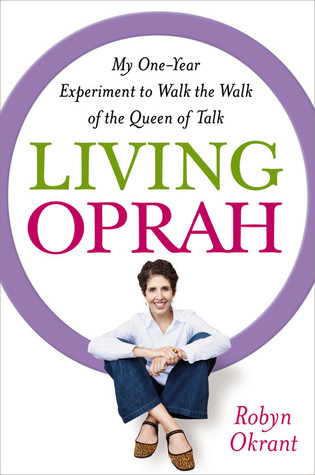
Living Oprah is Robyn Okrant’s account of how she spent one year conscientiously following the advice Oprah dishes out to millions of women across America.
If Oprah said to read a book or watch a film, Robyn did it. If she advised de-cluttering, new make-up tips or relationship work, Robyn was on-board.
For the most part, I enjoyed this quirky book, but I also found it to be slightly repetitive- similar to what Robyn found following Oprah to be after a few months.
She starts out with high hopes: “Could Oprah’s guidance truly lead a woman to her ‘best life,’ or would it fail miserable? Is it even possible to follow someone else’s advice to discover one’s authentic self?” pg 4.
We all discover the answer to be no. But, Robyn gives it a good run because: “It’s vitally important for women to question the sources of influence and persuasion in our lives. We are inundated with get rich/get thin/get married suggestions every time we turn on the TV or walk by the magazine rack. And sadly, we tend to judge ourselves against seemingly impossible standards.” pg 11.
I liked her thought process throughout the year. I also thought her reasoning for doing the experiment was excellent: “One of the reasons I was drawn to Oprah as a subject for this project was my continual search for new ways to manage my pain, keep my self-esteem from faltering, and ease the stress and fear associated with scoliosis.” pg 36. In some ways, Robyn was sort of Oprah’s target audience.
My favorite part of this book was when Robyn was trying to follow Oprah’s advice to read Eckert Tolle’s A New Earth and live by its precepts, while still engaging in the consumerism and self improvement programs Oprah touts on her program each week.
“It’s also uncomfortable to enjoy a celebrity lovefest on Oprah after I’ve spent an hour competing my reading assignment for A New Earth. Oprah’s Book Club selection focuses on separating ourselves from our ego and learning to connect with people on an authentic level rather than a superficial one. I don’t see how a segment on the show glamorizing Mariah Carey’s lingerie closet supports the work Oprah’s asked us to do.” pg 72.
Robyn comes to the conclusion that if Oprah’s viewers followed all of Oprah’s advice, they quickly wouldn’t need her anymore to live their best lives. Part of Oprah’s draw is that she has viewers convinced there’s always something more to be improved upon, tweaked, de-cluttered or examined.
It is a never-ending process of evolution. That is why Oprah’s built her empire and also why women don’t stop watching.
And sometimes it’s the promise of ‘infotainment’ that keeps viewers coming back: “Oprah frequently reminds her guests and audience that her tell-all shows are not pulp entertainment, they are for our education. I do take her warning to heart but think that if this is something we must constantly be reminded about, maybe a different format is in order.” pg 57-58
I’ve never been a huge watcher of Oprah (or any tv for that matter), but I still enjoyed this book for it’s honest examination of hero worship, popular culture and the self improvement industry. I think Oprah viewers may enjoy this book even more.



















 The Help Desk Book Blog