Unmistakable: Why Only is Better than Best by Srinivas Rao

Unmistakable: Why Only is Better than Best by Srinivas Rao
unmistakable

A call-to-action for artists and business people of all types to create the work that only they can create which makes them irreplaceable and also Unmistakable.

“When you’re the only person who could have created a work of art, the competition and standard metrics by which things are measured become irrelevant because nothing can replace you. The factors that distinguish you are so personal that nobody can replicate them.” pg 2.

That makes sense to me. You’re essentially writing the book so no one can tell you how it’s supposed to go.

The theory of becoming Unmistakable is fairly simple but the journey to that place is not. There are no maps to this realm because it is different for everyone and the paths to that place vary as widely as the talents that people bring with them.

As Srinivas reminds us: “Unmistakable work is a process of self-discovery. We start our ride not knowing what it is that makes us unmistakable, and a thread reveals itself through the creation of a body of work. Dots connect, patterns emerge, and our unmistakable gift is revealed. Time is the critical ingredient required for this to take place, hence the role of longevity and commitment in the quest to become unmistakable.” pgs 56-57

So, you can’t give up. Create and fail and try again. That is as hard and as easy as it is.

“…creating unmistakable work might be one of the hardest things to do: you have to look into the depths of who you are, explore what matters to you, and infuse that into every element of your work until it can’t possibly be mistaken for something anybody could have done but you.” pg 68.

The messages contained within Unmistakable become repetitive after a few chapters, but Srinivas threads some of the stories and artists from his podcast to break up the material as well as his personal testimony.

Unmistakable encourages creation even in areas that you may have no prior experience: “Lack of formal instruction might keep us from attempting some sort of creative pursuit or starting anything in which we don’t have experience. … When we lack experience, we also have the advantage of lacking preconceived notions of what’s possible.” pg 113.

And, you don’t know what you’re capable of until you get started. So, what are we waiting for!

As Srinivas writes from an interview with Seth Godin: “The enemy of creativity is fear; that seems pretty clear. The enemy of fear is creativity; that doesn’t seem that obvious.” The antidote to our fear is to put our heads down, do our work, and make something each day.”pg 189.

Let’s all become Unmistakable.

Some further reading: Creativity: The Perfect Crime, Do the Work, and How to Fly a Horse: The Secret History of Creation, Invention, and Discovery.

Thanks for reading!

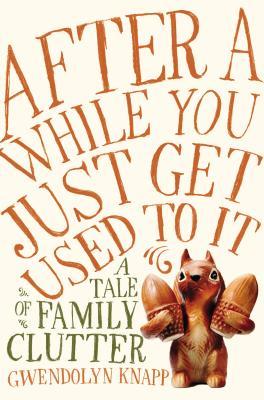
After a While You Just Get Used to It: A Tale of Family Clutter by Gwendolyn Knapp

After a While You Just Get Used to It: A Tale of Family Clutter by Gwendolyn Knapp
afterawhile

Sometimes poignant, other times appalling memoir by Gwendolyn (Wendy) Knapp that describes her dysfunctional family, drama filled relationships, and quest to find a job as a struggling writer in New Orleans.

The poverty level and drug addicted aunt described in After a While You Just Get Used to Itreally reminded me of Hillbilly Elegy: A Memoir of a Family and Culture in Crisis except that instead of in Appalachia, Gwendolyn describes a childhood in Florida. I suppose that some struggles are universal.

Although I enjoyed the stories, I wanted to read more about how the family dealt with Gwendolyn’s mother’s hoarding. Anybody else binge watch episodes of A&E’s Hoarders? It’s strangely compelling.

One lady collected every single flower bouquet message card that she had ever received- a leaning tower of Pisa in miniature, just perpetually collecting dust on one of her many side tables.

Anyway, the hoarding angle isn’t what this book is really about. The focus is mainly on Gwendolyn’s coming of age and early adulthood.

Gwendolyn is slightly older than me, but I enjoyed hearing about specific details from her childhood because I remembered some of those things in mine, like: “I applied my Dr Pepper lip gloss and pulled on my deflated Nike Airs, watching Mom give John a hug before saying her world-famous line, “Well, excuse our junk.” pg 6.

Photo by Rodolfo Clix on Pexels.com

Not to brag, but I think I had a Dr Pepper lip gloss and a Mint Chocolate Chip chapstick. Those were the days…

I knew that hoarders were emotionally attached to their belongings, but what I didn’t realize is that they’re also connected to their relatives through their stuff, though it makes sense when you think about it.

This is what happened when Gwendolyn’s grandpa died: “When an old relative dies, pack rats usually take in all they can from the person’s home as if they’re adopting abandoned children. It’s their duty. Since Grandma kept all his things, her kids had to find new ways to fill their void. Pack rats build up the world around them, separating themselves with a cloak of comfort from the outside world…” pg 16

Gwendolyn’s large, extended family has a passive aggressive, sometimes overtly aggressive love/hate thing going for it.

She describes her holidays as: “It was cacophonous, ear piercing, and annoying. Don’t worry, you might warn a newcomer, some bewildered boyfriend or classmate you’d invited and would never hear from again, after a while you just get used to it. Once the first jug of wine was finished, the racist diatribes and Burl Ives impersonations reared their ugly heads like gophers in need of malleting. … It wasn’t a holiday until my mother, and everybody else for that matter, had left Grandma’s feeling victimized by their loved ones.” pgs 54-55.

Photo by Christian Diokno on Pexels.com

Reading scads of memoirs has made me truly appreciate my own family and our very low levels of dysfunction, especially considering how large we are.

Here was the moment when I thought that we were going to deal with the hoarder thing for good, but Gwendolyn records this realization and time just marches on: “Imagine your mother burying herself alive. Imagine knowing there’s nothing you can do to help her. Imagine this every day of your life.” pg 85

Recommended for readers who grew up during the late 70’s/early 80’s or for people who like to read about dysfunctional families. Some further suggestions: Hillbilly Elegy: A Memoir of a Family and Culture in Crisis (similar themes like poverty and drug addiction), Not That Kind of Girl: A Young Woman Tells You What She’s “Learned” (struggling writer comes of age, details failed relationships), The Opposite of Loneliness: Essays and Stories (coming of age theme, but far more serious treatment than this book).

Thanks for reading!

Zen Dogs by Alexandra Cearns

Zen Dogs by Alexandra Cearns
zendogscover

This unique book is a series of pictures of dogs in a ‘zen’ state. Even though I’m more of a cat than a dog person (gasp, I know!), I found it completely charming.

See more of the photos here: http://www.boredpanda.com/relaxed-pet…

zendogs1

Fun, aren’t they?

zendogs2

As I enjoyed the pictures, I found myself becoming more relaxed. Cearns reminds us in the introduction: “Like the dogs in these photos and the canine companion on your couch, we all need to stop, take a break, relax, and unwind- to breathe it all in and be fully present in each and every experience.” Preach.

The best part of the collection is comparing the ‘zen’ photos to the regular photos of each pooch. I couldn’t believe the difference that eyes opened vs eyes closed made. Check this book out and see for yourself! Recommended for everyone with two legs or four.

Thanks for reading!

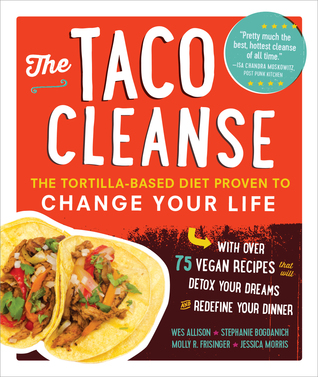
The Taco Cleanse: The Tortilla-Based Diet Proven to Change Your Life by Wes Allison

The Taco Cleanse: The Tortilla-Based Diet Proven to Change Your Life by Wes Allison
tacocleanse

Deciding what to eat for dinner was becoming a drag, but luckily for me, the library has an enormous foodie section. I dug through the cookbook collection and discovered this gem- The Taco Cleanse.

Part satire, part traditional recipes, The Taco Cleanse makes you laugh while you prepare delicious, vegan eats.

From the copyright page: “This book contains the opinions and ideas of its authors, plus large quantities of total BS. Although the recipes are intended to be accurate and tasty, all other content is solely intended to be hilarious.” And it is.

This book isn’t just about the food: “Now, we want to be clear that supplementing- that is, drinking beverages that traditionally accompany tacos- is acceptable as long as you are getting all of your tacos in. Margaritas should be added on an as-needed basis for the top levels of the cleanse, but at Fuego (the highest cleanse level) you should be adding them at least a couple of times a week, working up to every day.” pg 4.

To your health. 🙂

My favorite part was the author’s insistence on Taco Journaling: “One of the most powerful things you can do in your taco journey is taco journaling. Writing down your thoughts during your Taco Cleanse now will be like having a time machine for your future. Future You can go back and see how you’ve changed over time, where you had taco successes and taco failures. … Every time you open your journal, you will feel peace in your heart.” pg 26.

Photo by Chitokan on Pexels.com

They really nailed the self help tone that is prevalent in most “dietary” cookbooks. It is really very clever and worth the read, even if you’re not planning on trying the recipes.

Speaking of which, I personally plan on trying Minimalist Nacho Cheese pg 128, Infinite Fish Tacos pg 145, Smoked Brisket and Jalapeno Mac and Cheese Tacos pg 149, and the Frito Pie Tacos pg 152. Decadent.

Recommended for people who are experiencing a dinner idea slump or anybody looking for an excuse to drink a margarita (or two).

Thanks for reading and happy taco eating!

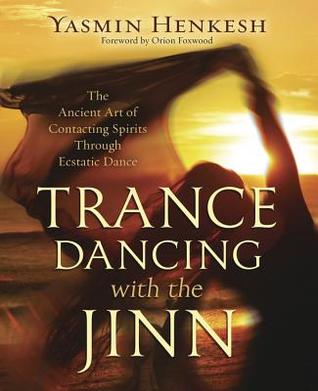
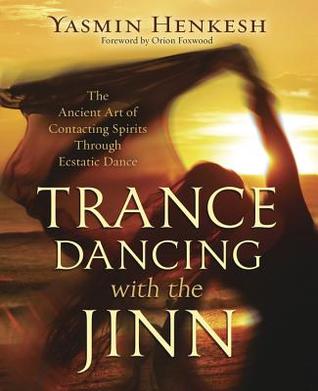
Trance Dancing with the Jinn: The Ancient Art of Contacting Spirits Through Ecstatic Dance by Yasmin Henkesh

Trance Dancing with the Jinn: The Ancient Art of Contacting Spirits Through Ecstatic Dance by Yasmin Henkesh
trancedancing

I read The Golem and the Jinni a few months ago and realized that I knew next to nothing about the mythology of the Jinn. Not that I’m an expert on golems either, but I had at least been exposed to the idea.

Trance Dancing with the Jinn is a book about kinetic meditation (trance dancing) but it also documents the history of the Jinn as written in the Quran and other sources as well as the biological and historical reasons that humans go into trance.

In addition to the mythology and biology, I learned about how trance dancing at meetings called “zars” is an outlet for women who have very little control over any other aspect their lives in Northern Africa.

The author is clearly a believer in the existence of “the Invisibles” but, if you don’t share the same beliefs, this book still has plenty of fascinating information for those interested in cultural, religious, or feminist studies and ritual dance.

The author asks the reader to have an open mind: “Do you believe in Invisibles or do you consider them an outdated tradition from an ignorant past? What if you had a safe, drug-free way to see for yourself? Would you be curious enough to try it- even though the method takes practice and you probably won’t succeed on your first attempt?” loc 200.

Yeah, I’m down for that.

I don’t think it is that difficult to entertain the idea that there may be intelligences that exist that can’t be perceived in normal states of consciousness.

As Henkesh reminds us: “According to NASA’s website, “Everything on Earth, everything ever observed by all our instruments, all normal matter- adds up to less than 5% of the Universe… The rest is a complete mystery, but an important one. Roughly 68% of the Universe is dark energy, while dark matter makes up about 27%.” This energy and matter are called “dark” because they do not reflect light… or interact with electromagnetic forces. We only know they are there by their effects on gravity…” loc 233, ebook.

Photo by Pixabay on Pexels.com

Only 5% has been observed- that leaves a whole lot that we haven’t even looked at yet.

Western researchers are still discovering how and why trance works, but they at least acknowledge that it exists: “Neurologist Oliver Sacks once wrote, “Normal waking consciousness, rational consciousness as we call it, is but one special type of consciousness, whilst all about it, parted from it by the flimsiest of screens, live entirely different potential forms of consciousness.” loc 267.

The most fascinating part of this book was the emotional outlet that trance dancing has allowed women for hundreds of years: “… thousands of women in Egypt still turn to the zar when modern medicine fails them. If doctors cannot find the cause of their physical or mental ailments, they assume supernatural forces are involved. … Diagnostic zars can last anywhere from a day in Egypt to a week in Sudan and Ethiopia.” loc 2530-2548

I had never heard of this and looked up some examples of zar/trance dancing on YouTube. Go ahead, take a look:

I can see how such flowing, uninhibited movements would feel therapeutic now, so I can’t imagine the relief I’d feel if I was not allowed to have a job or leave the house without a male by my side. I’d probably be trance dancing non-stop.

Some further reading/listening for those interested in trance: Ecstatic Body Postures: An Alternate Reality Workbook, Seeking Heaven, or Brainwave Journey.

Thank you to NetGalley and Llewellyn Publications for a free digital copy of this book! And, thank you for reading.

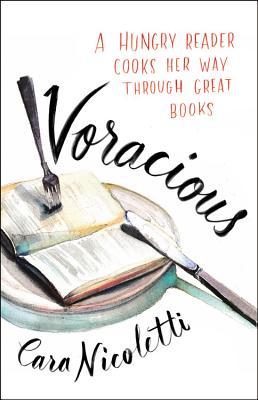
Voracious: A Hungry Reader Cooks Her Way through Great Books by Cara Nicoletti

Voracious: A Hungry Reader Cooks Her Way through Great Books by Cara Nicoletti
voracious

Voracious is so much fun. It is a foodie’s honest and open-hearted memoir in which she weaves literary themed recipes each chapter and gives a brief summary of the novel that included it.

Pair this with Tequila Mockingbird: Cocktails with a Literary Twist and you’ve got the makings of a bookworm’s dream feast!

The chapters from Cara’s childhood were some of my favorites because they were so relatable. “I cooked and read my way through awkward middle school years, first love, devastating heartbreaks, loss, and change. As I grew older, though, reading and cooking became the forces that broke me out of my shell, allowing me to form strong relationships and connect to the world around me.” pg 5, ebook.

Or this part, when she and her friends find Grimm’s Fairy Tales in the attic: “We were heavily into mysteries and ghost stories at the time, and when we found the book we were certain that we had discovered some dark secret that my parents had tried to keep under lock and key.” pg 13, ebook.

I know that feeling- when I was ten or eleven, I found a copy of Alfred Hitchcock’s Mystery Magazine that Grandma had loaned to my mother and I had read half of it before Mom discovered me, contently turning pages in the summer sun.

She took it away saying, “This is too old for you.” Some humbug mothers, hmph. I learned to hide when I was reading anything that I thought she wouldn’t want me to. Can’t keep a bookworm down.

In this passage, Cara talks about the culinary conundrum of gingerbread houses: “You toil and sweat, smelling good smells and touching sticky dough and mixing sweet icing for hours and your only reward is visual. It seems so wrong.” pg 15, ebook. I’ve always thought that too!

Photo by EKATERINA BOLOVTSOVA on Pexels.com

If I try any of the recipes in here, it’s going to be: If You Give a Mouse a Cookie- Brown Butter Chocolate Chip Cookies (pg 34, ebook) or To Kill a Mockingbird: Biscuits with Molasses Butter (pg 93, book).

I think that some of the huge list of offerings in this book are only for “brave” kitchen people. Cara includes recipes for homemade doughnuts, ice cream, chocolate eclairs… things that I don’t think I’ll ever gear myself up to attempt. But, she makes me want to try and I suppose that is half of the battle.

Highly recommended for anybody who likes to eat, read, or do both at the same time. I would guess that’s pretty much everybody.

Thanks for reading!

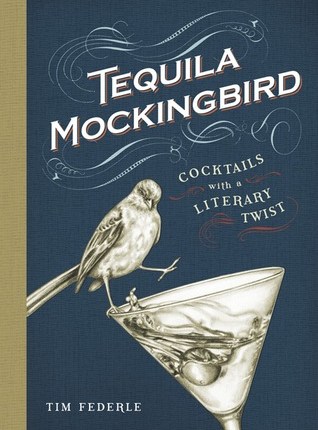
Tequila Mockingbird: Cocktails with a Literary Twist by Tim Federle

Tequila Mockingbird: Cocktails with a Literary Twist by Tim Federle
tequila-mockingbird

New life goals: buy this book. Read every classic mentioned within and try associated drink. (I was shocked by how few of these I’d read.)

I highly recommend this charming book of literary-themed drinks. For folks who are either underage or choose not to imbibe, there are a few non-alcoholic selections and snacks included.

The book summaries are hilarious and playfully presented. Some of my favorite drink titles: “Paradise Sauced”, “Are You There God? It’s Me, Margarita.”, and “Moby-Drink”.

This is a must-read for any bookworm or aspiring bartender. Five stars. Cheers!

Thanks for reading.

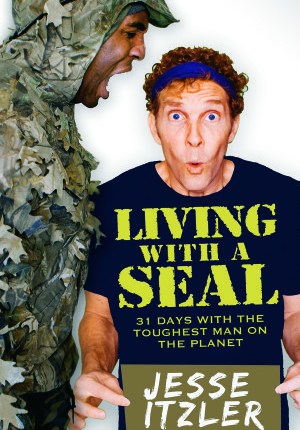
Living with a SEAL: 31 Days Training with the Toughest Man on the Planet by Jesse Itzler

Living with a SEAL: 31 Days Training with the Toughest Man on the Planet by Jesse Itzler
livingwithaseal

Jesse Itzler leads an interesting life. As a successful businessman and entrepreneur, his off-the-wall ideas for solving difficult situations and for stirring the pot have served him very well.

In this book, Living with a SEAL, he documents a month of training with a real life SEAL (who is called just “SEAL” throughout the book).

The workouts were insane, potentially life threatening, but Jesse achieved some astonishing results in a very short period of time. He also bonded with his trainer and learned, through daily interactions, that the sort of conditioning that it takes to make a killer like his SEAL, takes place mainly in the mind and such training can leave its marks on the psyche.

Jesse explains his motivation:“I don’t know if I was thinking about my mortality, or fretting over how many more peak years I had left, or anything like that. I think I was just thinking that now was as good a time as any to shake things up. You know, to break up that same routine.” loc 91, ebook.

SEAL thinks very carefully, bordering on obsessively, about safety and potential disaster scenarios for Jesse and his family. In this passage, he’s purchased an inflatable raft so that, if another 9/11 happens, that Jesse and crew could get out by taking the river.

Here’s what Jesse’s wife, Sara, thought of this: “I’m supposed to grab my son, strap a fifty-pound pack on my shoulders, carry four oars, walk a mile to the river, inflate this survival raft, and then paddle to New Jersey… in the middle of a national emergency?” There is dead silence in the room. … I think to myself, she has a point. Finally SEAL interjects. … “Sara, don’t EVER underestimate the power of adrenaline,” he says.” pg 961, ebook.

SEAL is a man who gets things done, sacrificing his own health to finish tasks that he’s started: “I found out SEAL once entered a race where you could either run for twenty-four or forty-eight hours. Shocker: SEAL signed up for the forty-eight-hour one. At around the twenty-three-hour mark, he’d run approximately 130 miles, but he’d also torn his quad. He asked the race officials if they could just clock him out at twenty-four hours. When he was told they couldn’t do that, he said, “ROGER THAT,” asked for a roll of tape, and wrapped his quad. He walked (limped) on a torn quad for the last twenty-four hours to finish the race and complete the entire forty-eight hours.” loc 1483, ebook.

Photo by Victor Freitas on Pexels.com

Amazing what people can accomplish when they set their minds to it. Personally, I would have stopped when I broke myself, but then, I suppose I wouldn’t make a very good SEAL.

The extreme exercise that SEAL demanded of Jesse had some surprising mindfulness benefits:“…with SEAL around, I’m learning how to be more present. It’s primarily because I have to. If I don’t, there is no way I will be able to finish the tasks at hand. I just go one step at a time. One rep at a time. And when I’m done, I worry about the next step or rep.” loc 1909

I was continually impressed by the physical displays of power and endurance from SEAL. But then, he’d have an interaction with Jesse or his family and I’d question the man’s paranoia levels and ability to function in society.

In this passage, he’s encouraging Sara to mix up the times that she goes to get the mail: “Sara, you need to mix up your pattern.” “Pattern?” “Yeah, your pattern. … The time you get the mail. That’s your pattern. It’s the same every day. It’s predictable.” “I get the mail after lunch,” she says, “That’s the most convenient time.”… “Exactly. You know that. And I know that. The mailman most definitely knows that. So I bet EVERYONE knows that.”… “Just do me a favor. Change up the pick up time.” loc 2161, ebook.

Photo by Element5 Digital on Pexels.com

Living with a SEAL is a lot of fun, but as I said, there are hints of a darker reality that SEAL has learned to endure. It is never graphic or spills over, but you can feel it boiling under the surface.

Recommended for runners, people who like to read memoirs, and those who are interested in the sheer power of the mind and body. Some read alikes: Born to Run: A Hidden Tribe, Superathletes, and the Greatest Race the World Has Never Seen by Christopher McDougall, Explorers of the Infinite: The Secret Spiritual Lives of Extreme Athletes–and What They Reveal About Near-Death Experiences, Psychic Communication, and Touching the Beyond by Maria Coffey, or if the extreme nature of these books are just too much, pick up Confessions of an Unlikely Runner: A Guide to Racing and Obstacle Courses for the Averagely Fit and Halfway Dedicated by Dana L. Ayers.

Thank you to NetGalley and Center Street Publishing for a free digital copy of this book!  And, thank you for reading.

When Breath Becomes Air by Paul Kalanithi

When Breath Becomes Air by Paul Kalanithi
whenbreath

This is Paul Kalanithi’s life story. He relates how he got into neuroscience, his exhausting and life consuming training, his illness, and his eventual transition out of this world into the next.

At first, Paul didn’t even want to become a surgeon because his own father was one and he saw how hard it was to balance work and family: “When we did see him, late at night or on weekends, he was an amalgam of sweet affections and austere diktats, hugs and kisses mixed with stony pronouncements … He had reached some compromise in his mind that fatherhood could be distilled; short, concentrated (but sincere) bursts of high intensity could equal.. whatever it was that other fathers did. All I knew was, if that was the price of medicine, it was simply too high.” pgs 24-25, ebook.

But, even though he started out as an English major, Paul’s own interests led him towards the profession. He was passionate about medicine and making the best decisions for patients. He was interested in what makes life worth living and how the brain’s functions effect quality of life.

kalanithi.interior-ata-photo---suszi-lurie-mcfadden
Dr. Lucy Kalanithi and Dr. Paul Kalanithi with their daughter, Elizabeth Acadia.

This is what he had to say after a sobering visit to a home for people who had suffered severe brain injuries as children: “Only later would I realize that our trip had added a new dimension to my understanding of the fact that brains give rise to our ability to form relationships and make life meaningful. Sometimes, they break.” pg 34

It was really difficult for me, personally, to read the parts of this memoir that dealt with Paul learning how to make life and death decisions for ailing patients. He talks in depth about taking people off of life support because they didn’t want their bodies to be kept alive while their brains were gone. I was reminded of how my grandfather, though he never suffered any debilitating brain injury, was kept alive through endless medicines and machines to reduce the water around his heart. He eventually refused to eat and refused a feeding tube, so he slowly withered away.. this from a man who lived for eating and described the joys of consuming a fresh peach in summer as one of his favorite memories. It was heartbreaking.

In this passage, one of Paul’s professors is talking about the same type of situation with his own grandma: “But “what was most evident,” he continued, “was the slow drawing away from life… By the time Bubbeh stopped praying, she had stopped virtually everything else as well.” pg 41 ebook. Eating was my grandpa’s form of prayer. So, you may want to avoid this memoir if you have any fresh grief that you’re dealing with, as this book brings it all bubbling to the surface.

kalanithi3

Photo from timeshighereducation.com

Paul studies so hard to become a doctor to learn the secrets of life and death. But, he begins to realize, that as a doctor, he’ll constantly deal with these moments but never truly understand them: “I began to suspect that being so close to the fiery light of such moments only blinded me to their nature, like trying to learn astronomy by staring directly at the sun. I was not yet with patients in their pivotal moments, I was merely at those pivotal moments.” pg 56

Then, he has his own illness and realizes that, even though he’s seen death and suffering, he really knew nothing about it: “It occurred to me that my relationship with statistics changed as soon as I became one.” pg 82. The rest of the book is so very sad, but one thing is clear, Paul Kalanithi finally found the moment when breath becomes air, what he had been searching for his whole life.

Neurosurgeons write really fine memoirs. At least, that’s been the case for nearly every one I’ve come across.

Some read alikes, if you’re interested: A Thousand Naked Strangers: A Paramedic’s Wild Ride to the Edge and Back by Kevin Hazzard (not a neurosurgeon, but Kevin talks about the burnout that comes in the medical community), Medicine, Miracles, and Manifestations: A Doctor’s Journey Through the Worlds of Divine Intervention, Near-death Experiences, and Universal Energy by John L. Turner (neurosurgeon), Into the Magic Shop: A Neurosurgeon’s Quest to Discover the Mysteries of the Brain and the Secrets of the Heart by James R. Doty (neurosurgeon), or Proof of Heaven: A Neurosurgeon’s Journey into the Afterlife by Eben Alexander.

Thanks for reading!