Linchpin: Are You Indispensable? by Seth Godin

Linchpin: Are You Indispensable? by Seth Godin
linchpin

Seth Godin draws on his experiences in business and life to convince the reader to be a linchpin rather than a cog in the machine of work.

He says it better than I did: “This book is about love and art and change and fear. It’s about overcoming a multigenerational conspiracy designed to sap your creativity and restlessness. It’s about leading and making a difference and it’s about succeeding.” pg 2

You have our attention, Godin. What do we do?

Through a series of blog-like sections, Godin explains that there is no road map or simple answer. “Our world no longer fairly compensates people who are cogs in a giant machine. … Leaders don’t get a map or a set of rules. Living life without a map requires a different attitude. It requires you to be a linchpin.” pg 19

Essentially, you have to embrace the uniqueness and drive that is inside of you. You have to create a platform of work rather than a resume. You have to decide to discard mediocrity.

“The very system that produced standardized tests and the command-and-control model that chokes us also invented the resume. … Great jobs, world-class jobs, jobs people kill for- these jobs don’t get filled by people e-mailing in resumes.” pg 72

That’s so outside the usual paradigm of work, for most of us, that it can sound scary.

Photo by Andrea Piacquadio on Pexels.com

“Often, when people hear about my radical ideas for how you should train for a career, as well as the best way to present yourself, they object. They point out that not fitting in is certainly going to be an ineffective way of getting one of these average jobs. … If you need to conceal your true nature to get in the door, understand that you’ll probably have to conceal your true nature to keep that job. … The linchpin says, “I don’t want a job that a non-linchpin could get.” pgs 78-79

It seems like he’s asking a lot, but the alternative is to give up and conform. Godin says that this mindset isn’t impossible: “My fundamental argument here is simple: In everything you do, it’s possible to be an artist, at least a little bit.” pg 94. We can do that, right?

I didn’t agree with everything in Linchpin. I thought that Godin was far too hard on journalists… it is easy to look at an industry, or any situation really, from the outside and criticize the people in the thick of it.

News agencies know that they have to embrace the future or die. Just how to do that is up for grabs and adding Godin’s toolbox of how to excel at work couldn’t hurt. I don’t think that reinvention or evolution is an impossible task. It’s just tricky because, as Godin noted, “there is no roadmap.”

Recommended for people who may be bored with where they are and can see a glimmer of where they want to be- but aren’t sure how to get there. Also recommended for those who work in the newspaper business because we clearly need more linchpins.

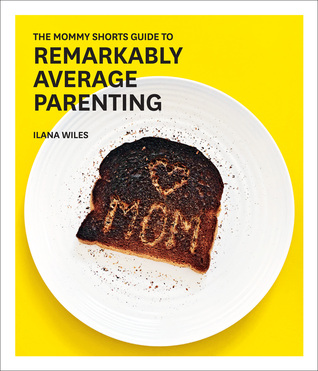
The Mommy Shorts Guide to Remarkably Average Parenting by Ilana Wiles

The Mommy Shorts Guide to Remarkably Average Parenting by Ilana Wiles
remarkably average

The Mommy Shorts Guide to Remarkably Average Parenting is one of the best books about parenthood I’ve ever read. It is an honesty, funny and poignant look at the un-glamorous side of parenting. I loved the pictures. I loved the stories. I wish that this book had been around when I had my baby. Between this read and How Not to Hate Your Husband After Kids, mothers-to-be have all their bases covered.

Ilana warns mothers about the perils of choosing rare names: “… if you want to name your child something odd, I support you. I like odd names. I think odd names make the world a more interesting place. But you should be prepared to hear some criticism when you are at your most vulnerable.” pg 19. I didn’t even pick something that weird for my child (Willow) but I still faced criticism. When I told my grandpa the name I picked for his first female great-grandkid, he told me that it was the stupidest thing he’d ever heard. And there I was, heavily pregnant. Yeah, I cried. Wish someone had warned me.

I empathized with the idea that parents have no clue what they’re doing and we’re all secretly terrified that we’re going to screw up our kids in some irreparable way. Over a decade later and I still feel that: “In hindsight, the newborn phase wouldn’t be that hard if new parents weren’t so worried about messing up in such a way that it would ruin their newborn’s life forever.” pg 33.

The page entitled, My two-year-old’s rules for eating a banana pg 76, had me in stitches. Kids are so weird about food. My daughter is currently on a mac-n-cheese, ramen and ice cream kick. This time last year, all she would eat was homemade pancakes and grilled cheese with the crusts cut off. I’m sure that in another year, we’ll be somewhere else. And it’s not just about the “what”, there’s also the “how.” If you cut the crusts off the grilled cheese, but then don’t cut it diagonally, then no dice. You may as well throw it out because my kid won’t eat it. It’s absurd, but true. Poor Ilana suffers through the same thing but with bananas.

Photo by Aleksandar Pasaric on Pexels.com

The other funniest mini-chapter is: “Totally Butchered Words: Even if you do stop cursing and shield your kids’ ears from swearwords outside the home, your kids will probably still end up saying a few unfortunate things anyway. This is because toddlers might be trying to say one thing, but then it comes out sounding like another word entirely.” pg 116. I can’t even quote what she prints on the next pages because it is too filthy but, in my opinion, it is absolutely hilarious.

Ilana’s parenting philosophy is fantastic: “It’s not a matter of high or low expectations- it’s a matter of no expectations. Discover who your kid is as you go. Your kids will not be who you expect, but the things that amaze us most in life are never the things we expect.” pg 215 Mine amazes me all the time.

Highly recommended to own or give as a gift, The Mommy Shorts Guide to Remarkably Average Parenting is a cut-above average.

Thanks for reading!

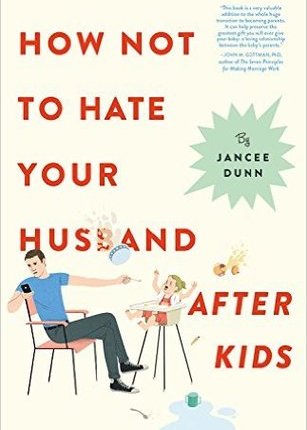
How Not to Hate Your Husband After Kids by Jancee Dunn

How Not to Hate Your Husband After Kids  by Jancee Dunn

This book gave me so many “ah-ha” moments that after a hundred pages I started to feel like an idiot. Why did I assume that so many of these little “life after baby” marital frustrations had only ever happened to me?

How Not to Hate Your Husband After Kids made me feel like I was part of a larger group called ‘mothers who try to do it all and feel secretly guilty that they can’t and wonder how everybody else does it.’ What a relief to know it wasn’t just me.

Photo by Andreas Wohlfahrt on Pexels.com

Dunn weaves her personal stories in with interviews from experts in fields as diverse as couples’ counseling to organizational gurus on a quest to save her sanity and her marriage from the hole that it had fallen into post-baby.

She is largely successful and gives plenty of tips that readers can incorporate immediately into their lives.

But, I was bothered by the, what I interpreted as, straight-up manipulation of her husband. Yes, Dunn is simply following expert advice, but reading about her self-satisfied crowing as she changes some of his more irritating behaviors felt disrespectful.

I mean, husband Tom is going to read this book.

I would feel devastated if my spouse wrote those sorts of things about me for millions of people to read and dissect. Granted, he was clued in that things were being recorded in a tell-all book, but still.

Photo by Public Domain Pictures on Pexels.com

“When I was six months pregnant with my daughter, I had lunch with a group of friends, all of whom were eager to pass along their hard-won scraps of parental wisdom. … ” … get ready to hate your husband,” said my friend Lauren. … Wrong, I told her calmly… But my friend Lauren was right.” locs 115-140 ebook.

We joke about how babies change lives but it’s not really funny, is it. It is a legit problem that marital happiness decreases because of less sleep, less money, less time, less sex… no need to go on.

Dunn begins her efforts to change her situation when she realizes that she’s reached a breaking point.

“Our daughter is now six, and Tom and I still have endless, draining fights. Why do I have the world’s tiniest fuse when it comes to the division of childcare and household labor? I am baffled that things have turned out this way.” loc 158.

In cringe-inducing honesty, Dunn admits to being verbally abusive to her spouse. My stomach actually churned when I read the sorts of things that she’d call him during fights.

Photo by cottonbro on Pexels.com

That part of the memoir made me very glad that she decided she didn’t want to live like that because I know that I wouldn’t have wanted that either.

I learned a lot about “maternal gatekeeping,” a pernicious practice where a mother discourages fathers from interacting with their children because of an internal belief that she knows better how to do EVERYTHING. And also, I learned about the importance of blocking time on weekends for personal rejuvenation and rest.

“And must we be compulsively busy every second of the day, briskly doing something “useful”? Nonstop activity can be addictive, but it’s a mistake, warns the University of Houston’s Brene Brown, a mom of two.” loc 1697.

Word. Everybody needs to chill out, calm down and unwind.

We also need to appreciate each other more.

At the end of the day and on the other side of all of the experts, Dunn comes to a dozen important realizations. One of which, appreciation, seems to be the magic bullet for most of her formerly-insurmountable marriage woes. It isn’t a new message but it is one that is worth repeating.

Photo by Magda Ehlers on Pexels.com

Recommended for parents of all ages, How Not to Hate Your Husband After Kids contains wisdom for just about every troublesome situation that one may find themselves in after children. Let’s hope the book can live up to its title.

Thank you to NetGalley and Little, Brown and Company for a free digital copy of this book. And thank you for reading!

The Real-Life MBA: Your No-BS Guide to Winning the Game, Building a Team, and Growing Your Career by Jack Welch, Suzy Welch

The Real-Life MBA: Your No-BS Guide to Winning the Game, Building a Team, and Growing Your Career by Jack Welch, Suzy Welch
the real life mba

Jack & Suzy Welch have years of corporate experience under their belts. The Real-Life MBA is filled with some of their best practices culled from this background. Some of it I found helpful, other suggestions I didn’t enjoy as much, but I think that this may be because I’m coming from a non-profit career track rather than a cut-throat, competitive one.

Let’s get the negative out of the way first. Mr. Welch is well known for his practice of sorting his employees into tiered groups- the top 20%, the middle 70%, and the bottom 10%. If you are in the bottom 10% and you don’t improve within a certain amount of time, he promptly and tactfully assists you in finding new employment.

Now, I understand that there needs to be a balance when applying the carrot and the stick in business relationships. But, their approach just seems harsh. Welch insists that this system is more fair to the employer and employee- if you’re a bad fit, you’re not doing anyone any favors by sticking around.

Photo by fauxels on Pexels.com

On the other hand, your business will always have a bottom %10 so there will always be the shadow of that looming ax. I suppose that this could lend itself to an environment of continual growth, but I feel like it would be more motivated by fear than love. And, really, who wants that.

I liked the vision of organizational structure that was presented in Yes, And: How Improvisation Reverses “No, But” Thinking and Improves Creativity and Collaboration by Leonard Kelly. I think that creativity, trust, safe environments for occasional failures and career success go hand-in-hand. By encouraging an “ensemble” effort rather than a “team” mindset and fostering collaboration rather than a score board, I suspect that one would see just as excellent receipts with less turnover and a closer team bond.

Photo by Andrew Neel on Pexels.com

I haven’t tested this theory though and Mr. Welch does have forty or fifty more years business experience than me, so take it with a grain of salt. But, that’s my two cents.

I liked the section on career development: It’s About You, starting on page 177. Most of it is just common sense advice, but it’s solid. Do what you love to do and don’t waste your time in a career you hate.

We spend most of our time at work so we may as well be happy when we’re there- it’s the fuel of success, etc. No big surprises, but sometimes the most useful and applicable advice isn’t surprising.

If you enjoyed The Real-Life MBA, I’d recommend Yes, And: How Improvisation Reverses “No, But” Thinking and Improves Creativity and Collaboration by Leonard Kelly to give you a slightly different viewpoint on teamwork.  Also, Work Rules!: Insights from Inside Google That Will Transform How You Live and Lead by Laszlo Bock so that you can read about HR practices inside one of the most successful and employee friendly companies on the planet.

I received a free copy of this book through the Goodreads First Reads program. Thanks for reading!

Mastering Civility: A Manifesto for the Workplace by Christine Porath

Mastering Civility: A Manifesto for the Workplace  by Christine Porath

I think we’ve all, at one time or another, worked with one of “those” people- the ones who are rude, who take all the credit, who won’t look up from their phones during meetings, send an email when they should call, or make you do work that they find boring or unimportant.

Before I read Mastering Civility, I assumed that this was behavior I had to endure until the perpetrator got another job or experienced a spontaneous personality overhaul.

Author Christine Porath asserts that tolerating incivility in the workplace is a bad idea because it spreads like a virus. Once rudeness or intolerance enters the scene, it effects everyone it touches and can sink the ship causing everything from profit loss to poor job performance.

Photo by Fox on Pexels.com

Throughout the book, Porath teaches the reader how to recognize incivility in oneself, how to assist coworkers in reforming poor behavior, and how to end working relationships with employees who either can’t or won’t toe the line. Sounding a clarion call for employers and employees alike, Porath rallies readers everywhere to join her in making the workplace civil again.

“Incivility usually arises not from malice but from ignorance. I started my research thinking that jerks out there were intentionally ruining workplaces; I now see that most bad behavior reflects a lack of self-awareness. We don’t want to hurt others, but we do.” pg 12. Until I read this book, I thought that too.

“…incivility has a way of pulling people off track and preventing them from doing their best. I’ve found this to be true in every study I’ve conducted. Even witnesses working around incivility take a hit.” pg 24.

I thought that was especially chilling because Porath ran a bunch of studies. “Many people think of rudeness as a self-contained experience, limited to one person or interaction. In truth, incivility is a virus that spreads, making the lives of everyone exposed to it more difficult. … Left unchecked, incivility can drag down an entire organization, making everyone less kind, less patient, less energetic, less fun- simply less.” pg 39.

Photo by Kate Trifo on Pexels.com

Ewww, you got your incivility all over my desk.

Those are the don’ts. Here are a few do’s: “If you want to connect with your employee or team, lead with warmth. Most of us are in a hurry to prove our competence, but warmth contributes significantly more to other’s evaluations. .. It facilitates trust, information, and idea sharing.” pg 71

“… the single biggest complaint I hear from employees about their bosses is that they fail to tune in. Do yourself and others a favor: When you speak or meet with someone, put away your smartphone. Make others the priority.” pg 114. Amen.

I laughed when Porath suggested eating well, exercising, and getting enough sleep to help foster a civil atmosphere in the workplace. Common sense stuff, yes, but how many of us have lashed out because we’re “hangry”? Change starts with you so: eat breakfast, people.

Recommended for people experiencing or who have experienced incivility in the workplace. Porath gives you some concrete methods to turn it all around. Some further business related reading that I’ve enjoyed: Do the Work, The Happiness Advantage: The Seven Principles of Positive Psychology That Fuel Success and Performance at Work and The Art of Exceptional Living.

Thanks for reading!

The Optimistic Workplace: Creating an Environment That Energizes Everyone by Shawn Murphy

The Optimistic Workplace: Creating an Environment That Energizes Everyone by Shawn Murphy

The Optimistic Workplace is a complex but useful manual on how to shift the environment at work. Shawn Murphy talks about all aspects of business from the individual to management to all the levels in-between. There weren’t many surprises in these pages, but the advice was solid.

I knew that leadership was important to the overall vibe in the work space and Murphy does say that it’s important: “…your leadership style impacts climate by up to 70 percent. Think about that 70 percent. It’s mostly how you show up and interact with others that shapes the climate that influences your team’s performance.” pg 9 But, it isn’t the only thing that matters.

Photo by Yan Krukov on Pexels.com

There are also ways in which the individual can change the work space. It all starts with greater self knowledge: “Workplace optimism thrives when people understand why they show up to work. Not only is the purpose and meaning of work important, but so, too, are the personal implications. … Personal expression through work is a major contributor to your employees’ well-being. Doing work that matters facilitates the expression of one’s talents.” pg 19 Makes sense. Know thyself does seem to be the foundation of most major life-changing movements.

“..the benefit to positively shaping the climate for your team is getting to know yourself better and discovering how to fulfill your own potential. You position yourself to love your work. In doing so, you set the tone and lead the way to help your employees realize their own potential and find greater meaning in their work and life.” pg 48 Sort of a trickle-down effect of optimistic workplace awesomeness.

Photo by Mikhail Nilov on Pexels.com

Of all of the myriad of studies included in this book, my favorite was the study of “ikigai” : “Your health is linked to a sense of purpose in life, or, as the Japanese all it, ikigai. … A 2008 study in Japan by Toshimasa Sone and his colleagues sought to understand how, if at all, ikigai contributed to longevity in life. … Mortality risks were higher in those who did not have a sense of being and of joy. Those lacking clarity in intentional living had a higher incidence of cardiovascular disease and other life-threatening illnesses.” pg 89 Purpose or death.

The only critical thing I have to say about The Optimistic Workplace is that it’s so broad. Towards the end, I despaired of ever having the time to implement all of the changes suggested, even though they seem like good ones. My boss suggested that I take my favorites and start there. I think I will.

Recommended for those who have plenty of time for reflection and transformative meetings- I think that this book has huge potential. I just wonder how many businesses would be able to take the time and actually work their way through it. Some further reading: Mastering Civility: A Manifesto for the Workplace, The Happiness Advantage: The Seven Principles of Positive Psychology That Fuel Success and Performance at Work, and Work Rules!: Insights from Inside Google That Will Transform How You Live and Lead.

Thanks for reading!

Boy Meets Depression: Or Life Sucks and Then You Live by Kevin Breel

Boy Meets Depression: Or Life Sucks and Then You Live by Kevin Breel
boymeetsdepression

Boy Meets Depression is a raw memoir written by someone who lived through the depths of mental illness but, fortunately for the world, lived to tell about it.

Between relating events from his past, the author pokes around in the dark corners of his mind and it can be difficult to read because of his brutal self consciousness. Kevin Breel’s flowing, almost stream of consciousness, writing style probably isn’t for everyone, but I generally liked it because it allowed me to literally step inside his brain while I was reading his book.

Having dealt with a bout of crippling depression when I was at the age Breel describes here, I empathized deeply but also was forced to look through the mirror of my own recollections at moments that I perhaps didn’t want to remember.

But, that was ok. Breel’s point is that these life stories and experiences do not define us, it’s what we do with our lives that does.

A few highlights for me:

“You make a better life through example, not opinion. You can’t just think things. You gotta live them out.” pg 167 He found a counselor he liked and this was in one of their conversations.

“The thing about trying to figure out who you are is that it’s big waste of time. You never end up finding yourself, only being a part of the journey which is creating you.” pg 172 A conversation with his mother in which he realizes that he can go to therapy until he croaks but that the point of life is to live it.

“I’m not much a fan of stars, but I am a fan of the idea that sometimes life has to go pitch black before you can really appreciate the light.” pg 174  In this passage, Kevin was talking about the extreme darkness in the Yukon and how it allows people to see stars in the sky that they would not normally be able to see. What a beautiful metaphor for depression and life.

“I used to think that focusing on the here and now was just a cute way of ignoring life. Now I see it’s the opposite: the here and now is life. Everything else is just self-talk.” pg 188  How extraordinary that Breel has been able to come to this conclusion so early in his life. I think that generally it takes folks longer to come to the realization that the world in your mind isn’t real, just a story.

Photo by cottonbro on Pexels.com

I wish that our society could come up with better ways to address and treat mental illness than what we have figured out so far, but with books like Boy Meets Depression and Furiously Happy by Jenny Lawson I think that we have at least found a place to start the conversation.

Personal accounts of the darkness that dwells in our minds and the slow climb back into the light of wellness serve a purpose beyond a cathartic release for the author. It lets any of the book’s readers, who may be suffering with the same issues, realize that they’re not alone and that there are ways out. These books are like flashing exit signs to people who may be lost in a frighteningly dark place and I only hope that they find their way at the right time into the hands of the ones who need them most.

I received a free advance reading copy of this book through GoodReads First Reads program. Thanks for reading.

Simple Rules: How to Thrive in a Complex World by Donald Sull and Kathleen M. Eisenhardt

Simple Rules: How to Thrive in a Complex World by Donald Sull and Kathleen M. Eisenhardt
simplerules

I enjoyed the examples that the authors cite for simple rules helping to solve complex problems, but the manner in which to create your own ‘simple rules’ wasn’t really that simple.

I thought that in a book with the title, Simple Rules, that they’d give me a checklist of how to do it: Step 1, 2, 3, you know. The simple rules for how to make simple rules.

But, that wasn’t the case.

Since each problem, situation, business, and life is different, the authors essentially told the readers to use their discernment in the creation of the rules. Pick a ‘bottleneck’ and solve it. I found the suggestion too vague to be very helpful.

Despite these complaints, I did find a gem or two:

“Decisions that require coordination across different departments or teams are another good place to look for bottlenecks.” pg 135

“Better rules are better, and even apparently irrelevant rules can be reasonably effective if they happen to encourage helpful behavior.” pgs 172-173

If you enjoyed Simple Rules, I’d suggest The Checklist Manifesto by Atul Gawande (ways to simplify your work processes) or Yes, And: How Improvisation Reverses “No, But” Thinking and Improves Creativity and Collaboration—Lessons from The Second City by Kelly Leonard (for more simple rules on collaborations).

Thanks for reading.

Ask: The Counterintuitive Online Formula to Discover Exactly What Your Customers Want to Buy…Create a Mass of Raving Fans…and Take Any Business to the Next Level by Ryan Levesque

Ask: The Counterintuitive Online Formula to Discover Exactly What Your Customers Want to Buy…Create a Mass of Raving Fans…and Take Any Business to the Next Level by Ryan Levesque
ask

Quite the title, isn’t it?

I picked this up a few months ago because I was looking for some pointers on creating online surveys for the public library. It has some excellent ideas, but they’re buried beneath the coils of a very aggressive marketing formula.

Levesque coaches businesses to send twelve follow up emails to customers, whether they purchase the product or not. Can you imagine?

It’s no wonder that people don’t like giving their emails out, if that is the manner in which they will be used. I have to give it to Levesque- the man certainly doesn’t take no for an answer.

He describes the unique circumstances that gave him this fierce business drive and, unlike other reviewers on this book, I actually liked the autobiographical portion of Ask.

It made me view Levesque as a regular guy before he presented his over-the-top marketing strategies. I mean, perhaps if you were running your own business and needed absolutely every customer who strayed to your webpage, Ask would be invaluable to you. As it is, if the library were to employ this system, I think it would just seriously piss everybody off.

So, anyway, the some gems I pulled out of the mess:
“…people essentially are only good at answering two basic types of questions when they don’t know what they want: what it is they don’t want and what they’ve done in the past.” pg 10

Bring clarity to your business through stat analysis: “We discovered that by paying attention to the right information (provided by the market), you could not only identify what sub-segments exist in your market, but you can also identify which ones are worth focusing on.” pg 53

Put the important questions first: “Generally speaking, you should expect to see a degradation in response the deeper you get into your survey. So, for this reason, it’s essential to prioritize the importance of your questions beyond the initial questions in your survey.” pg 87

When evaluating survey responses: “The reason why response length is vitally important is because it’s an indication of hyper-responsiveness, which is a leading indicator of how likely someone is to purchase a paid solution for the problem or challenge about which we’re asking.” pg 92

Why to use an “open-ended Single Most Important Question”: “To determine what buckets naturally emerge in your market. To identify what people’s hot buttons are. To identify what their objections are. To identify what their biggest challenges are. To use in concert with their demographic information. pg 97

So anyway, to get all of these tidbits in context, pick up Ask and dig through it. But please, if I ever, for whatever reason, give you my email, do not send me 12 follow up emails. Please. And thanks for reading.