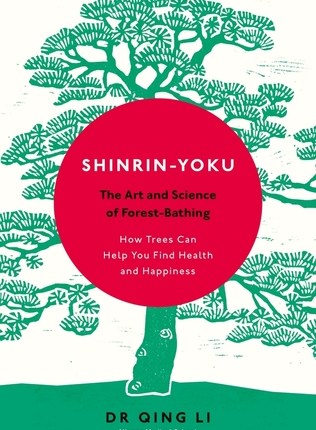
Shinrin-Yoku: The Art and Science of Forest Bathing by Qing Li

Shinrin-Yoku: The Art and Science of Forest Bathing by Qing Li

“Shinrin-yoku means bathing in the forest atmosphere, or taking in the forest through our senses. This is not exercise, or hiking, or jogging. It is simply being in nature, connecting with it through our sense of sight, hearing, taste, smell and touch.” pg 12

Nature lovers or those aspiring to be nature lovers will find much to enjoy in Shinrin-Yoku: The Art and Science of Forest Bathing.

Photo by Jose Vega on Pexels.com

Qing Li reminds readers that the human race is a part of this world even if we have walled ourselves up in cities and covered the ground in concrete. Through various scientific studies, he proves again and again that by taking a time out and forest bathing people can sleep more deeply, experience less stress and think more clearly.

“We may not travel very far on our forest walk but, in connecting us with nature, shinrin-yoku takes us all the way home to our true selves.” pg 15

Not convinced? He provides evidence that patients at hospitals heal faster if the view outside their window includes a tree rather than a wall. People who exercise outside report the exertion they need to complete the workout is less and they enjoy the time more than those who churn out the miles on a treadmill.

“The average sleep time of participants after a two-hour forest walk increased by 15 percent, or fifty-four minutes. Participants were significantly less anxious after a two-hour walk in the forest.”

Photo by WARREN BLAKE on Pexels.com

Forest bathers have reported higher levels of creativity, writers find relief from the dreaded block, and the sense of connection caused by the practice has been known to increase feelings of gratitude.

“The researchers concluded that there ‘is a real, measurable cognitive advantage to be realized if we spend time truly immersed in a natural setting’, and found that spending time in nature can boost problem-solving ability and creativity by 50 per cent. Is it any wonder that Buddha found enlightenment sitting under a tree?” pg 106

Is there anything that forest bathing doesn’t help? How about your health or physical age?

“A group of Canadian, American and Australian researchers studying tree density and health in Toronto found that… having eleven more trees on a block lowered cardio-metabolic illnesses, like high blood pressure, diabetes and obesity, comparable to the effects on well-being conferred by being given a $20,000 a year pay rise or being 1.4 years younger.” pg 116

Photo by Johannes Plenio on Pexels.com

In addition to the information about forest bathing, this book contains beautiful photos of forests every couple of pages. Qing Li gives readers the instructions so, if they desired, they could hold their own traditional tea ceremony in the woods. He includes anecdotal information about aromatherapy, tips on how to bring the forest into your home, advice on how to incorporate beneficial natural sounds into your daily life and more.

I enjoyed this book very much. Highly recommended.

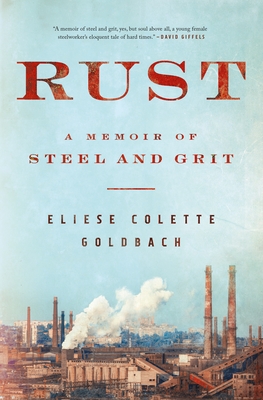
Rust: A Memoir of Steel and Grit by Eliese Colette Goldbach

Rust: A Memoir of Steel and Grit by Eliese Colette Goldbach

Eliese Goldbach pulls back the curtain to reveal the unseen struggles and contributions to society by steelworkers in Cleveland, Ohio, her hometown. Along the way, she delves into complex issues of mental health, politics, socioeconomic status, gender equality, and religion in her own life. It is, ultimately, a memoir about hope, but there was great suffering on Goldbach’s path to this realization.

When Goldbach was young, she viewed the stink of the steel mills as a type of pollution she needed to keep out of her body. But, when her plans to become a nun don’t materialize and she faces hurdles to completing the paperwork for her masters degree, Goldbach applies at the steel mill for the paycheck, accepting it as a step backwards in order to move forward into self sufficiency.

Photo by PhotoMIX Company on Pexels.com

“In a Rust Belt town, that flame isn’t just a harbinger of weird smells and pollution. It isn’t an anachronism, and it doesn’t prove a lack of innovation. … The flame is very much a part of our history and our identity. It’s a steady reminder that some things can stand the test of time, even in a world where nothing is built to last.”

A large part of Goldbach’s failure to thrive is caused by her mental health struggles. It affects her ability to hold down a full time job, maintain her relationships, and makes her dread the future. Yes, she might be doing well now, she tells herself, but in another couple of weeks that might not be true any longer.

“Doctors would tell me that mixed-state bipolar disorder is one of the most dangerous forms of the disease. Depression brings suicidal thoughts, and mania adds impulsivity. When people with mixed-state bipolar disorder have the will for death, they are more likely to have the energy to follow through.”

Photo by Artem on Pexels.com

Raised in a conservative and religious household, Goldbach is trained from an early age to see feminism as a dirty word. Through her own life experience, she discovers that some of her assumptions about feminism are untrue and begins to speak up for those who are unable or unwilling to speak for themselves.

“While there were other women who worked in the mill, we were definitely a minority. … There was a good deal of mansplaining, and there were offhanded comments that came straight out of the 1950s.”

Goldbach’s memoir shines in its examination and dissection of her personal beliefs and how those change through experience. It feeds into my own belief that only the person living a life has the true insight into its meaning and direction.

“I’m just disappointed in myself, I guess. I feel like I should have done more by now, and I’m worried that I’ll get stuck in the mill.”

Photo by Kateryna Babaieva on Pexels.com

Some readers may find Goldbach’s politics off-putting. But I think the difficult conversations she describes at the dinner table with her parents are going on at other dinner tables all across the country. An open dialogue and willingness to look at our differences can be painful, but that doesn’t mean we should never have those conversations.

Recommended for readers who enjoy memoirs and as a possible book club pick. Trigger warnings for mental health issues, especially those with bipolar disorder, and rape.

Thank you to NetGalley and the publisher for a free digital copy of this book. The brief quotations cited in this review may change or be omitted in the final print version.

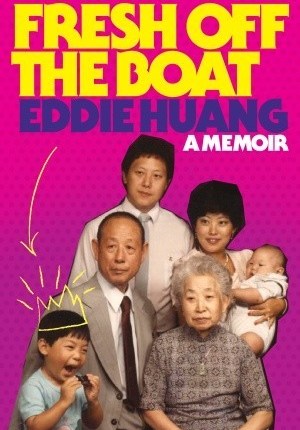
Fresh Off the Boat: A Memoir by Eddie Huang

Fresh Off the Boat: A Memoir by Eddie Huang

Fresh Off the Boat is the life story of Eddie Huang.

After learning about his various exploits, some of which were extremely dangerous, I was amazed that he’s still around to recount them.

I picked up this memoir because I’ve seen almost every episode of the network family comedy, “Fresh Off the Boat,” and wanted to read the source material behind it.

As sweet as the show is, I think it does Huang a disservice.

Photo by Prince Photos on Pexels.com

I guess because it’s on network television, writers have essentially edited Huang’s life story. In the television show, the character of Eddie loves rap music, basketball and eating, (like he did in real life) but it leaves out the more real portions of Huang’s history.

His classmates called him racial slurs on an almost daily basis. He was subjected to physical abuse from his parents. He got mixed up in drugs and selling name brand shoes. He was arrested for fighting.

Photo by king Siberia on Pexels.com

The reason why his grandmother is in a wheelchair, which is depicted on the show though the reason is never given, is because her feet were bound as a child.

All of that realness is completely missing from the television show. But it is so important to creating the man Huang is today.

Photo by Pixabay on Pexels.com

The differences between the book and the tv series aside, Huang has a fascinating voice. He’s, at turns, funny and real. He explains his more obscure slang references at the end of each chapter in footnotes.

“I think my mom is manic, but Chinese people don’t believe in psychologists. We just drink more tea when things go bad.” pg 12, ebook

The window Huang opens into his culture is an enlightening one. He’s the first generation of his family to be born in the United States, but he doesn’t ever really embrace being American. He exists in a realm in between because he is never truly accepted by his European peers.

Photo by Juan Pablo Serrano Arenas on Pexels.com

“Since kindergarten my parents had been sending me to Christian schools, where the teachers would feed me soap and made me use my right hand even though I’m a lefty, because we supposedly got a better education at parochial schools even if we weren’t actually Christians.” pg 26, ebook

In an effort to get along better with his teachers, Huang even acts as if he embraces Christianity when in reality he was just trying to survive. I felt sad that he had to pretend to be something other than who he was to make his way in the world.

Photo by Drigo Diniz on Pexels.com

“They’ll never let someone with a face like you on television.” To this day, I wake up at times, look in the mirror, and just stare, obsessed with the idea that the person I am in my head is something entirely different than what everyone else sees. pg 41

I highly recommend this memoir for readers who want to learn about another person’s life experience. Huang has penned an engrossing memoir about someone who took some unexpected turns on the way to his destiny — creating a wildly popular eatery in New York City. I enjoyed every story and learned so much.

How Not to Die: Discover the Foods Scientifically Proven to Prevent and Reverse Disease by Michael Greger

How Not to Die: Discover the Foods Scientifically Proven to Prevent and Reverse Disease by Michael Greger

I think everybody is aware that your diet has an enormous impact on your health. This book is another reminder that this is true.

Photo by Trang Doan on Pexels.com

Though everyone will one day die, Michael Greger gives some tips to help you live as long and as healthily as possible.

I’m not going to debate the merits of different diets which seem to change as quickly as fads. I think everybody should try to incorporate healthy habits that are right for them as they are able.

How Not to Die is packed with ideas on that front.

Photo by Pixabay on Pexels.com

I think the most interesting part of this book are the effects that various foods have on the body. But you don’t have to take Greger’s word for it, experiment and see what works for you.

Happy eating 🙂

Rest: Why You Get More Done When You Work Less by Alex Soojung-Kim Pang

Rest: Why You Get More Done When You Work Less by Alex Soojung-Kim Pang

“We shouldn’t regard rest as a mere physical necessity to be satisfied grudgingly; we should see it as an opportunity. When we stop and rest properly, we’re not paying a tax on creativity. We’re investing in it.” pg 11

Photo by Tatiana Syrikova on Pexels.com

I think we’re living in a culture that generally glorifies busyness and a frantic pace of achievement. That’s not news.

Alex Soojung-Kim Pang takes a deep dive into the science of rest and shares the insight that taking breaks isn’t something we should squeeze into our schedule. Rest, he argues, is as important as the work itself.

Four of his major points are: “work and rest are partners”, “rest is active”, “rest is a skill”, and “deliberate rest stimulates and sustains creativity”.

I was particularly interested in the creativity-related point of Pang’s hypothesis.

“You need time for rest because that’s when the unconscious mind can get to work. You can’t command inspiration to appear, but you can nudge it, most notably by working steadily and regularly. The romantic image of the artist who does nothing until he’s inspired and then produces in a furious burst of work is misleading.” pg 91

Photo by Dazzle Jam on Pexels.com

Pang looked into the lives and routines of creative thinkers throughout history and came to the perhaps surprising conclusion that four concentrated hours of work per day is sufficient.

“The pattern of working four hard hours with occasional breaks isn’t just confined to scientists, writers, or other people who are already successful, well-established, and have the freedom to set their own schedules. You can also see it among students who go on to become leaders in their fields.” pg 67

The rest of the day that geniuses such as Charles Darwin or Ernest Hemingway lived were filled with activities like long walks, day dreaming, active rest, sport and other seemingly unrelated moments that fueled the subconscious mind.

“The right kinds of rest would restore their energy while allowing their muse, that mysterious part of their minds that helps drive the creative process, to keep going.”

Photo by Pixabay on Pexels.com

What these activities may be vary from person to person, but Pang’s research proves time and again that the rest portion of the day is critical.

One of my favorite parts of this book dealt with Malcolm Gladwell’s popular 10,000 hours for mastery idea that he discusses in his book, Outliers. Yes, Pang argues, 10,000 hours are necessary for exceptional performance. But we’re ignoring the rest of the equation.

“It comes after 10,000 hours of deliberate practice, 12,500 hours of deliberate rest, and 30,000 hours of sleep.” pg 74

Photo by Andrea Piacquadio on Pexels.com

From morning routines and sabbaticals to naps and carving out time for more sleep, Pang exhorts the reader to make rest a priority. It’s not lazy, it is one of the building blocks of a creative and productive life.

Sign me up. 🙂

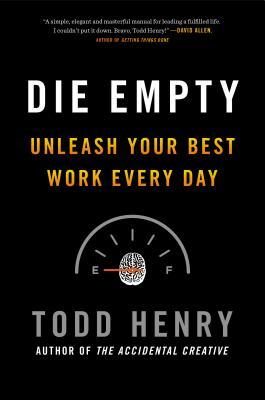
Die Empty: Unleash Your Best Work Every Day by Todd Henry

Die Empty: Unleash Your Best Work Every Day by Todd Henry

Your days are finite. One day, they will run out. As a friend of mine likes to say, “You know, the death rate is hovering right around one hundred percent.” pg 3

Todd Henry has given the world a call-to-action with Die Empty. The book is one big reminder that one day you (yes, you!) will die and he imparts some useful tools to help you discover what you’re meant to do and then to do it to the best of your ability.

Photo by Ketut Subiyanto on Pexels.com

“If there is one overriding goal of this book it is this: to bring a new found clarity and sense of urgency to how you approach your work on a daily basis, and over your lifetime.” pgs 5-6

Henry is into catchy acronyms and veers very close to empty motivational jargon. But, I feel, he pulls himself back in time.

“No one charts a course for mediocrity, yet it’s still a destination of choice. It’s chosen in small ways over time, and those tiny, seemingly inconsequential decisions accumulate until they result in a state of crisis. pg 35

I learned a great deal from his abc’s of mediocrity that include “comfort zone” as the letter C. If I am guilty of anything, it is finding my comfort zone boundaries and then staying carefully inside of them. Henry believes you do the world a disservice when you don’t push yourself. Who knows how much you can do if you don’t try?

Photo by Ketut Subiyanto on Pexels.com

“Growth is about daily, measured, and disciplined action. It’s about embracing purposeful skill development and pursuing new opportunities that stretch you a step beyond your comfort zone, even when it means venturing boldly into the unknown.” pg 89

You escape your comfort zone, Henry says, by creating goals in steps, sprints and stretches. Steps are goals that can be accomplished in one day. Sprints are completed in one or two weeks. Stretches are a big goal that takes longer than that.

Throughout much of the book, the lesson seems to be act, observe, and act again. It touches on everything from fear of failure and delusions to inflated egos and effective communication. Die Empty could be described as a one-stop-shop for almost anything that holds you back from “unleashing your best work every day”.

Photo by Prateek Katyal on Pexels.com

Henry even addresses the fact that no self help book is the complete answer for anyone. The final ingredient in any lasting change or improvement in your life is you.

You can have the map, and there can be gas in the tank, but unless you’re willing to fire up the engine and put your foot on the gas, you’ll never get anywhere. Intention and theory don’t change the world; decisive action does.” pg 201

Recommended for readers who are unwilling to settle for less than their very best work every day.

Thanks for reading!

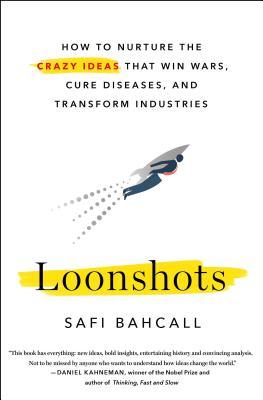
Loonshots: How to Nurture the Crazy Ideas That Win Wars, Cure Diseases, and Transform Industries by Safi Bahcall

Loonshots: How to Nurture the Crazy Ideas That Win Wars, Cure Diseases, and Transform Industries by Safi Bahcall

“New frontiers of the mind are before us, and if they are pioneered with the same vision, boldness, and drive with which we have waged this war we can create fuller and more fruitful employment and a fuller and more fruitful life.” — Franklin Delano Rooseveltpg 257

Safi Bahcall has applied a physics-based approach to understanding innovations and creativity in group settings. Through the careful study of a bunch of historical examples, he has discovered ways leaders can structure their businesses to best encourage the growth of “loonshots.”

Photo by Pixabay on Pexels.com

The author has defined a “loonshot” as “a neglected project, widely dismissed, its champion written off as unhinged.” It is through these, Bahcall believes, that world-changing ideas are produced that can be applied from arenas as diverse as business to war.

“The twisted paths leading to great discoveries are the rule rather than the exception. And so are their revisionist histories: victors don’t just write history; they rewrite history.” pg 56

He suggests these breakthroughs are generally created by large groups of people, rather than solitary geniuses. And he thinks that “applying the science of phase transitions to the behavior of teams, companies, or any group with a mission provides practical rules for nurturing loonshots faster and better.”pg 2

Photo by Andrea Piacquadio on Pexels.com

For example: By examining Theodore Vail and the way he structured AT&T’s “fundamental research” department to Vannevar Bush’s non-military leadership for the Office for Scientific Research and Development for the military, Bahcall has come to some actionable conclusions.

He believes that, in a business, you need to separate the creative-types in the innovation departments from what he called the “soldiers” or people who run the rest of the business. Both are absolutely imperative to the success of the business, but if the two are working too closely together, “loonshots” can be strangled in their infancy.

The same risk of failure is faced by leaders who try to micromanage “loonshots”. Trust your people to do what they do best, whether that’s development or running the business, so that you don’t drive a business into the ground because you’re too attached to your own pet project.

Photo by Pixabay on Pexels.com

Bahcall reminds us that structure is important but culture is as well. He makes a biological comparison to drive the point home: “Both genes and lifestyle matter. And so with teams and groups: both structure and culture matter. The aim of this book is not to replace the idea that certain patterns of behavior are helpful (celebrating victories, for example) and others are less so (screaming), but to complement it.” pg 227

I can’t say I completely understand what a “phase transition” is but Bahcall’s storytelling manner of imparting information is easy to understand. His writing is reminiscent, in some ways, of The Black Swan: The Impact of the Highly Improbable but with more emphasis on structure and culture instead of probability.

Readers who enjoyed one book, may like the other. Recommended for readers seeking more information about how to help businesses succeed, innovate and thrive.

Thanks for reading!

Zen Cat by Judith Adler

Zen Cat by Judith Adler

Judith Adler matches peaceful pictures of cats with various quotations from throughout history to create “Zen Cat”.

It’s funny, even though I consider myself a “cat person”, I liked Adler’s Zen Dog more than this feline version.

Photo by Amir Ghoorchiani on Pexels.com

Cats are so contained. When you’re looking at the photos of the dogs, there’s an exuberance or bottled energy there that just doesn’t seem to show up for the cats. 

However, the book does have beautiful photos and quotations. Take this one from Rumi that is arranged next to a photo of a black cat viewing itself in a mirror: “We are the mirror as well as the face in it. We are tasting the taste this minute of eternity.

Or this one by Buddha which is paired with a cat on an urban street: “There are only two mistakes one can make along the road to truth: not going all the way, and not starting.”

Photo by Miguel u00c1. Padriu00f1u00e1n on Pexels.com

And finally, a simple photo of a grey cat looking directly at the camera: “I love all solitary places, where we taste the pleasure of believing what we see is boundless, as we wish our souls to be.” by Percy Bysshe Shelley.

Even though I found the dog version more compelling, cat lovers may still feel the need to have this as a coffee table book. For everybody else, I recommend borrowing it from the library.

Thanks for reading!

The 4-Hour Workweek by Timothy Ferriss

The 4-Hour Workweek by Timothy Ferriss

“I’ve spent the last three years traveling among those who live in worlds currently beyond your imagination. Rather than hating reality, I’ll show you how to bend it to your will. It’s easier than it sounds.”

Photo by Ronu00ea Ferreira on Pexels.com

Timothy Ferriss promises the stars in the sky in his new-classic business/self help book, The 4-Hour Workweek. Though he gives some good productivity tips, he fails to provide a true road map to freeing yourself from the 9-to-5 grind. Partially, this is because there is no real road map to doing this.

But he does detail how he found his way into a life of his dreams. Readers can take whatever lessons and information from that as they will.

After Ferriss relates a timeline of his life story, he begins by detailing his “DEAL” plan to a four hour work week which consists of “definition, elimination, automation and liberation”. Each step of this process, he says, helps guide the reader to a new world of free time. Though, he admits, traditional bosses may have serious problems with your new program and, perhaps, you should go more “DELA”. Yes, understatement.

“Resolve now to test the concepts as an exercise in lateral thinking. If you try it, you’ll see just how deep the rabbit hole goes, and you won’t ever go back.”

Photo by Anna Shvets on Pexels.com

He examines the concepts of “busy work” and suggests boiling your workload down to the most important tasks you complete. Then, just do those as fast as possible. Don’t allow yourself to be derailed by the internet or chatty coworkers. (Not a friendly method, but Ferriss seems to have his eyes on the prize rather than concerning himself with making friends.)

Out of everything he suggests in the first part of this book, I was most taken with the idea of only checking your email once a day or week. There is a definite time-suck there that maybe I have been blinding myself to.

After that, Ferriss enters more conceptual territory with an idea about creating a business for yourself that essentially runs itself or can be run by someone else, cheaply. For example, a website that sells something awesome. But, what exactly that something or muse is, that’s for you, the reader, to discover on your own.

It reminded me of Godin’s Purple Cow: Transform Your Business by Being Remarkable. You know an awesome product or “purple cow” when you see it, but how exactly to make one isn’t a clear thing. Interesting idea, but necessarily helpful for those looking for actionable items to improve their work life.

The most useful part of the book, in my opinion, is his encouragement to create a dream plan by “dreamlining”. Write down what you want to do. Create a timeline. Crunch the numbers. It may cost less than you thought and, with it on paper, it takes on a bit of reality already. If you don’t get started, how do you know what you might accomplish.

Photo by Negative Space on Pexels.com

“It’s lonely at the top. Ninety-nine percent of people in the world are convinced they are incapable of achieving great things, so they aim for the mediocre. The level of competition is thus fiercest for ‘realistic’ goals, paradoxically making them the most time-and energy-consuming. It is easier to raise $1,000,000 than it is $100,000.”

Ferriss’ tone in this book has been criticized by readers and I see what they mean. Some of his ideas are alienating. Sometimes he seems to say: I’ve done this-this-this and this, and it’s so easy that if you can’t figure it out too, especially with the book I’ve put in your hands, then you must be either complacent or dumb.

But I took this book to be written by someone who dared, a nod to Brené Brown, greatly. Ferriss believed his life could be something other than a slog and yours could too. He’s written down some tips to help you along the way that he discovered through real life trial and error. Read it or not. He’ll be over there, living the life of his dreams.

Photo by Alex Fu on Pexels.com

Recommended, with reservations, to folks interested in life-hacking their work/life balance. I think we can achieve whatever dreams we set our minds to while still being friendly.

Thanks for reading!