Bed Yoga for Couples: Easy, Healing, Yoga Moves You Can Do in Bed by Blythe Ayne

Bed Yoga for Couples: Easy, Healing, Yoga Moves You Can Do in Bed by Blythe Ayne

“If it’s a lazy Saturday morning and you don’t feel like getting up just yet, you can ease into your day with a few shared yoga poses. It’s a great way to feel connected, to hook up your energies and get on the same wavelength.” pg 3, ebook

Bed Yoga for Couples is a simple yoga manual for two practitioners that includes stick figure diagrams, brief explanations of each pose, and a few basic breathing techniques.

I’ve practiced hatha yoga for nearly two decades so I was familiar with the poses in this book. However, even if you have zero experience, most are so simple that beginners shouldn’t have any problems either.
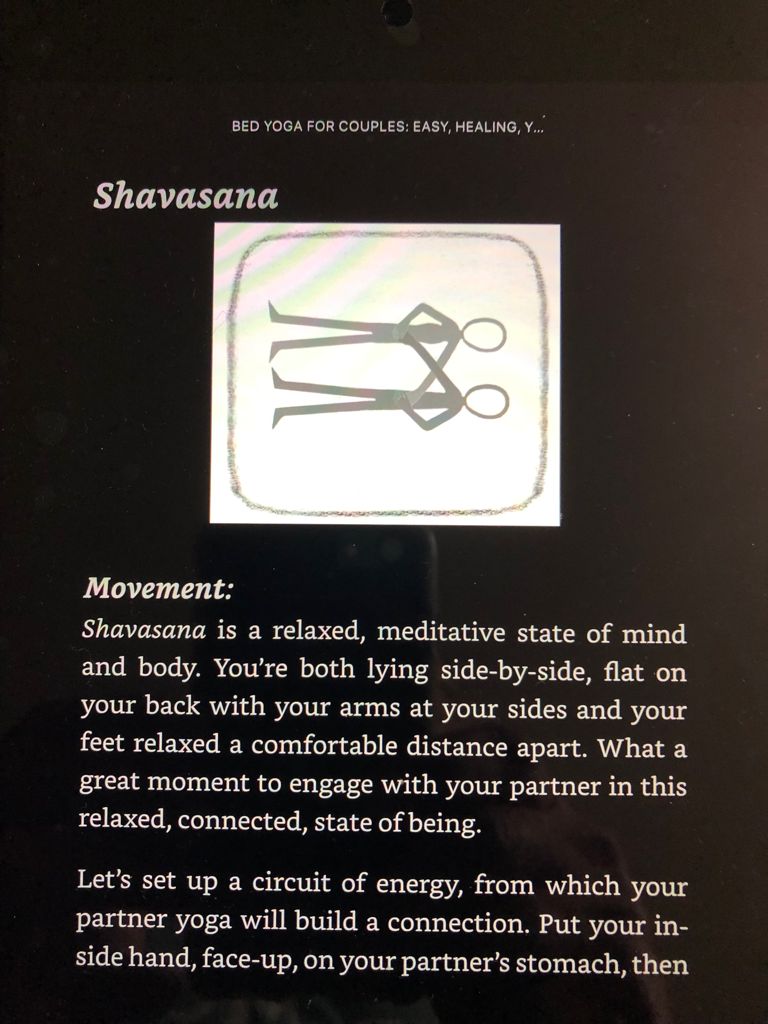
That being said, I’m not convinced of the efficacy of the moves while laying down. Part of yoga, at least for me, is experiencing gravity working on different areas of my body while holding the poses. Clearly, this will be very different while on one’s side rather than standing.

But, as the author Blythe Ayne points out, this method of practice is much easier for anyone who has trouble standing for long periods of time or other health issues that make regular yoga practice difficult.

“The most important point for the two of you to remember is that yoga is about you and for you. … Always communicate clearly with one another about any of the poses- if you’d like to go further into the movement, or if you’ve reached your ‘comfort zone.'” pg 4, ebook

Photo by u0410u043bu0435u043au043au0435 u0411u043bu0430u0436u0438u043d on Pexels.com

I could see this book being most useful for couples who are looking for creative and meditative ways to connect. However, it is not an in-depth examination of the subject. If you’re looking for a detailed history of yoga or the poses, you would be best served looking elsewhere.

Yoga has always had that centering and calming effect on me. The only thing that could possibly improve that experience would be to have it simultaneously with a loved one.

Highly recommended. Thanks for reading!

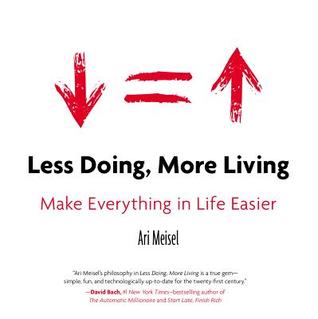
Less Doing, More Living: Make Everything in Life Easier by Ari Meisel

Less Doing, More Living: Make Everything in Life Easier by Ari Meisel

“The idea of Less Doing is to reclaim your time and- more important- your mind, so you can do the things you want to do.” pg xv

Ari Meisel, a self-professed “achievement architect”, outlines ways to streamline your chores, finances, and more in order to free up time for the activities, and people, that are most important to you.

“I don’t want you to run errands, ever ever ever again. They’re not efficient, and there’s no way to make them efficient.” pg 69

Photo by cottonbro on Pexels.com

Many of his suggestions are common now, like setting up an automatic delivery from Amazon for your regularly needed household items like toilet paper and paper towels. But when I considered that this book was published in 2014, then it seemed like a stroke of genius.

However, that won’t necessarily be useful to readers who are looking for more updated suggestions to make their lives that much more efficient- except for a few of his timeless strategies. For example, measure and monitor how much time it takes you to do things so then you can figure out where your time is going to.

Not rocket science, but helpful.

The one suggestion of his that I found most intriguing was his idea of creating an ‘external brain’. Basically, you write notes, diary entries, clip electronic articles and organize it in a program (he likes Evernote) so that you can access it again quickly if you would like.

Photo by David Cassolato on Pexels.com

“… you can create an ‘external brain’ that stores everything reliably, offers instant access, and frees your mind for more interesting work.” pg 18

I thought this approach could be very helpful for someone like me who reads and researches different topics all the time, for the fun of it, but also for professional content creators who are looking for their next blog post or YouTube video, etc.

How much easier would it be to be able to access all of your previous research rather than having to start over from scratch each time?

Photo by cottonbro on Pexels.com

On the other hand, there is a massive amount of time required to both create this external brain and keep it updated. I suppose the investment only makes sense depending on what you’re eventually going to use the database for.

Recommended with reservations for readers who are looking for ways to streamline their lives.

Thanks for reading!

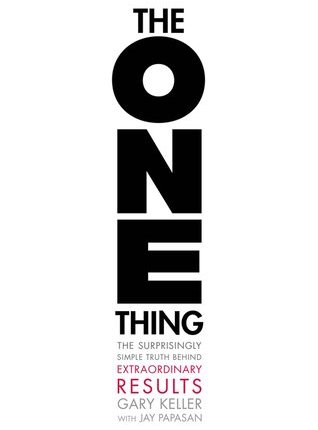
The One Thing: The Surprisingly Simple Truth Behind Extraordinary Results by Gary Keller

The One Thing: The Surprisingly Simple Truth Behind Extraordinary Results by Gary Keller

“Anyone who dreams of an uncommon life eventually discovers there is no choice but to seek an uncommon approach to living it.” pg 73, ebook

The One Thing contains simple, ridiculously obvious advice- find your passion, make time for it and live it. But, if it’s really that easy, then why aren’t more of us doing it?

Photo by Ylanite Koppens on Pexels.com

“Where I’d had huge success, I had narrowed my concentration to one thing, and where my success varied, my focus had too.” pg 8, ebook

This book has helped me to adjust my focus so that I spend more of my time on what I love, writing. That being said, there are still chores that must be done, a family business to tend to, a child to raise and numerous other responsibilities that chip away at time that I can give to my one thing.

And, as author Gary Keller points out, this isn’t a big deal. Everybody has their big ONE THING but smaller one things in other areas of their lives. You can use the same focusing principles on each to improve your life in each sphere.

What’s the one thing you can do to improve your family life? Health? Diet? etc., etc.

Photo by Maria Orlova on Pexels.com

This book also taught me that a majority of my output comes from a very small percentage of my actions, something that I had never considered before. Like I said, obvious in hindsight now that I know it, but it wasn’t something I instinctively knew.

“Happiness happens on the way to fulfillment.” pg 98, ebook

I read tons of non-fiction and self help titles. Have they all improved my life? No. Do I always learn something from them? Generally.

Photo by Wallace Chuck on Pexels.com

For me, the fun is in the search.

Read The One Thing if you want to learn some methods to narrow your focus and advance what is most important to you in your life. If you already know how to do that, this isn’t the title for you.

Thanks for reading!

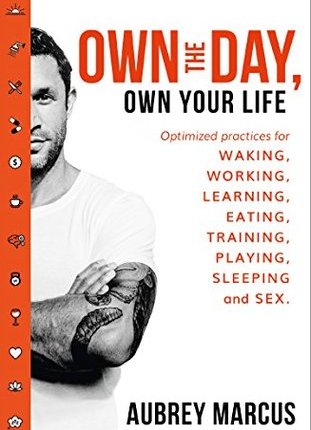
Own the Day, Own Your Life: Optimised practices for waking, working, learning, eating, training, playing, sleeping and sex by Aubrey Marcus

Own the Day, Own Your Life: Optimised practices for waking, working, learning, eating, training, playing, sleeping and sex by Aubrey Marcus

Aubrey Marcus shares different life hacks in an effort to improve your day. Because, as he reminds us: “To live one day well is the same as to live ten thousand days well. To master twenty-four hours is to master your life.” pg 7, ebook

There’s not a lot of new information here, especially not for aficionados of the self help genre. But there are some interesting strategies to try that I enjoyed.

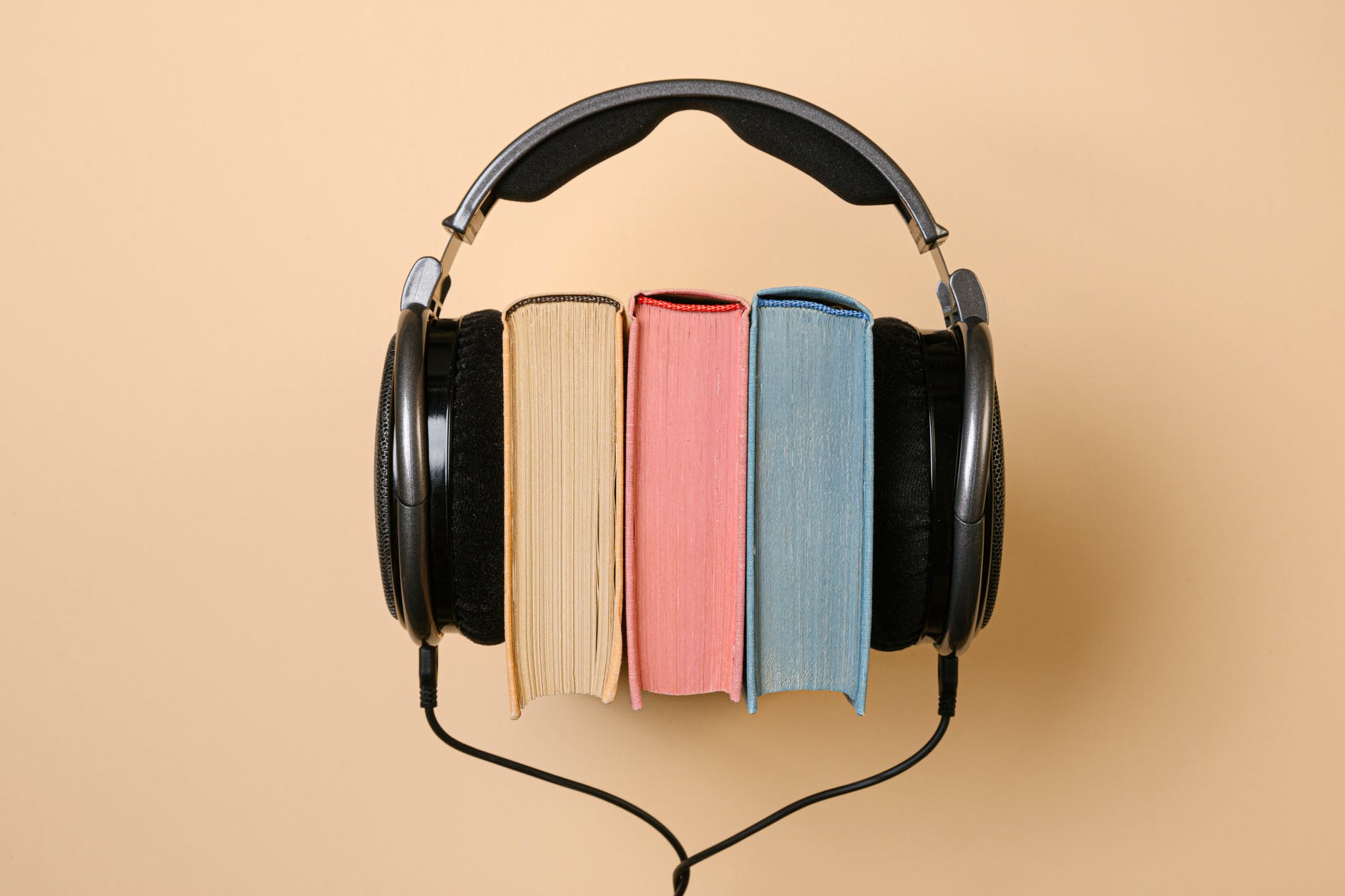
One is to use your commute time to listen to a book or a podcast. As Aubrey points out, if you’re going to be spending the time anyway, you may as well use it to invest in yourself.

“These minutes are precious things. They are the only currency we spend every day whose value fluctuates wildly. Spend your minutes investing in your future self, filling your emotional coffers, and building value and enjoyment, or spend minutes depleting your emotional bank account.” pg 82, ebook

Photo by Stas Knop on Pexels.com

Nothing new, as I said, and also it doesn’t take too much encouragement to get me to read. 🙂 But for anybody who hasn’t tried it yet, I highly recommend incorporating this into your morning commute.

Another strategy suggested in Own the Day, Own Your Life that I attempted to hilarious, yet effective, results was a method for waking yourself up. Basically, you practice deep breathing and then stand under cold water in your shower.

The basic principle behind it, if I understand it correctly, is that our bodies have evolved to handle stress in ways that are completely outdated in the modern world. We react to an emotional email or digital comment as if a tiger was running at us. But it’s not.

All of those chemicals go into us and have no where to go, leading to chronic stress and all of the symptoms that go along with that. The deep breathing and cold water cause a stress reaction too, but it’s one that you control and can switch off at will. The exposure teaches your body how to handle it when you can’t switch it off.

Photo by Gratisography on Pexels.com

In addition to these other supposed benefits, it wakes you the heck up. I can vouch for that. Come on, Heidi, I can hear you say. You really needed a book to tell you to take a cold shower? Well, apparently I did. And that part really works as promised.

If you’ve already got your diet and exercise routines locked down, you’re already well on your way to living your best life and probably don’t need this book. But, for anybody looking for a few pointers or are willing to try new things, this could be the book you’re looking for.

Breath: The New Science of a Lost Art by James Nestor

Breath: The New Science of a Lost Art by James Nestor

James Nestor takes a deep dive into the fascinating and surprisingly mysterious world of breathing. “How mysterious could it be, Heidi?” I hear you ask. It’s something everyone does without thinking literally a few times every minute every day of their lives.

Photo by Daisa TJ on Pexels.com

Well, there’s a lot of mysteriousness, as Nestor discovered through his journey from terrible breathing to consciousness-shifting, bone-building, better breathing.

“I do as instructed, and listen as the rushing wind that was pouring through my lungs suddenly stops and is replaced by pure silence, the kind of jarring quietude a skydiver feels the moment a parachute opens. But this stillness is coming from inside.” pg 143, ebook

He talks to researchers and mystics from around the globe to access both cutting edge research as well as ancient teachings from such exalted texts as The Upanishads.

What he’s discussing here isn’t new, but it feels new, perhaps because of the chronic disconnect between the mind and body that seems to haunt modern humanity.

Photo by Craig Adderley on Pexels.com

From breathing slower to exhaling more, the dangerous of mouth breathing and the astonishing connection carbon dioxide inhalation has to panic attacks, there’s a lot to explore.

And, despite all of the observed benefits and ten years of extensive research, Nestor doesn’t forget to mention that breathing isn’t a panacea. I appreciated that part as well.

“… what I’d like to make clear now, is that breathing, like any therapy or medication, can’t do everything. Breathing fast, slow, or not at all can’t make an embolism go away. … No breathing can heal stage IV cancer. These severe problems require urgent medical attention.” pg 184-185, ebook

Photo by Daria Shevtsova on Pexels.com

I bookmarked all of the exercises Nestor gathers together from the text and lists at the end of the book. Each has similar yet slightly different affects according to practitioners of the methods. I may have to try every one to see for myself.

Highly recommended.

The Complete Idiot’s Guide to T’ai Chi & QiGong by Bill Douglas

The Complete Idiot’s Guide to T’ai Chi & QiGong by Bill Douglas

The Complete Idiot’s Guide to T’ai Chi & QiGong is a useful reference guide that I’ve been using in conjunction with online courses to dip my toes into the practice of both.

The first part of the book is the history of the martial and meditative arts as well as best practices. The second part is the movements.

Photo by Pixabay on Pexels.com

I liked that links to demonstrative videos are sprinkled throughout the text, somewhere over a hundred of them! It really helped the materials to come alive for me.

The way the author writes might be a little far out for readers who are looking for more scientific approaches to the practices. He touches on scientific studies that demonstrate health benefits, but doesn’t go too deeply into the science behind them. Readers who are looking for something like that may want to find a different book.

Photo by Craig Adderley on Pexels.com

I’ve begun to incorporate both t’ai chi and qigong into my daily routine. It is a nice, restive break from the stressful day-to-day grind. As I move my body through the practices, my mind follows.

It is difficult to describe, but easy to experience if you attempt some of the movements yourself.

One of the most helpful online resources I discovered for qigong is “Qi Gong for Better Health and Wellness” by Lee Holden on Wondrium.

Highly recommended for readers at all levels of fitness. Namaste!

Fancy AF Cocktails: Drink Recipes from a Couple of Professional Drinkers by Ariana Madix, Tom Sandoval, Danny Pellegrino

Fancy AF Cocktails: Drink Recipes from a Couple of Professional Drinkers by Ariana Madix, Tom Sandoval, Danny Pellegrino

I’m not a reality tv watcher. I have no idea what show these two are from, but I’m not going to let that keep me from giving credit where credit is due.

These folks know how to make a seriously fancy cocktail.

Photo by Helena Lopes on Pexels.com

The sections of this book of drink recipes are divided into “classy,” “trashy,” “shots,” and “recovery,” which aren’t all that useful when it comes to drink classifications, but plays right into their reality show vibe.

The index at the back of the book that divides each cocktail by the spirit used in it is far more helpful and appealed to the librarian in me.

Photo by Chris F on Pexels.com

Brief autobiographical stories and recollections from the authors are included on nearly every page.

I imagine readers who have enjoyed the television show the authors feature on may enjoy it more, but I do enjoy a tell-all memoir. Of course it depends on who it’s about, but for some starlets or rock stars, I consider the tell-all memoir to be the book equivalent of mindless reality television.

Photo by freestocks.org on Pexels.com

The photography of Fancy AF Cocktails is a work of art. The authors are, in fact, quite fancy but the real stars of this book show are the drinks. I suggest page 95, “Salty New Yorker,” with its garnish of a caramel chocolate as exhibit one, closely followed by page 59, “Alchemy Rose,” and the hearts etched into its foam as exhibit two.

Highly recommended for readers looking to up their cocktail A-game. Thanks for reading!

Pogue’s Basics: Life: Essential Tips and Shortcuts (That No One Bothers to Tell You) for Simplifying Your Day by David Pogue

Pogue’s Basics: Life: Essential Tips and Shortcuts (That No One Bothers to Tell You) for Simplifying Your Day by David Pogue

David Pogue and his team tested every suggestion in this book to verify that each works the way it is supposed to.

The result is a gem.

“… the morsels in this book describe features hidden right under our noses, features that lots of people don’t know about. As well as ‘Everyone’s been using it wrong’ insights. Plus tips that are clever, unexpected, and useful.” pgs 5-6

Photo by Kaboompics .com on Pexels.com

I knew some of the tips in these pages, but certainly not all of them.

When I’m done with this book, I’m going to gift it to my pre-teen, who thinks she knows everything but obviously doesn’t. I think she’ll find this incredibly handy in a few years.

A pot of water doesn’t boil over if you lay a wooden spoon across the top of the pot.” pg 81

Who knew? I didn’t. That’s one of the tips I’ve already used to make my life easier.

I’ve also utilized the tip for how to get ketchup out of the bottom of the bottle. And no, it’s not leaving it upside down and leaning against something for two hours though that does work. It is a much more immediate solution.

Photo by Vova Krasilnikov on Pexels.com

Some of the technology tips may be outdated, only because this book was printed in 2015. But I haven’t tested them all yet, so don’t hold me to it. It’s one small section in a stellar lineup of life “basics” that cover topics including the car, travel, food, clothes, your body, animals, house and home, and more.

Highly recommended for anybody who’s looking to make their lives a little bit simpler. Let’s be honest then, that’s everybody.

Thanks for reading!

Quackery: A Brief History of the Worst Ways to Cure Everything by Lydia Kang

Quackery: A Brief History of the Worst Ways to Cure Everything by Lydia Kang

Quackery taught me that people have been desperately seeking cures for ailments, real and perceived, for ages. Sometimes that search takes them into disgusting or deadly treatments peddled by others who are taking advantage of that desperation for their own gain.

These human vultures have been called “quacks,” among other things.

Photo by Engin Akyurt on Pexels.com

“But quackery isn’t always about pure deception. Though the term is usually defined as the practice and promotion of intentionally fraudulent medical treatments, it also includes situations when people are touting what they truly believe works.” pg 1

Unfortunately, even those selling the “remedies” with the best of intentions still managed to kill people.

There seemed to be no end to the creative ways we’ve poisoned each other with various metals or concocted deadly and addicting brews in the name of health. We’ve burnt and blistered suffering unfortunates, taken pieces of their skull out to let the evil spirits out of their brains, or ground up human bone and ingested it.

The most disturbing chapter of this book, and there were some serious contenders, was the part about the development of anesthesia.

Photo by Mitja Juraja on Pexels.com

“Several chapters in the annals of anesthesia were written by some hard-partying, borderline sociopathic characters. So the next time you blissfully awaken from a surgery, remember to thank the child-stranglers, sponge-huffers, and ether frolickers of the past.”

Yeah, there have been some awful things done to both animals and people in the name of medicinal research.

The most amusing anecdote in Quackery goes to a section about creative uses of tobacco.

Photo by Aphiwat chuangchoem on Pexels.com

“You know the phrase ‘blowing smoke up your ass’? Well, you can disgust your next blind date with the true life medical origin of that phrase. Because literally blowing smoke up someone’s ass was a sanctioned resuscitation method in the eighteenth century.”

And now you know.

Recommended for readers with a strong stomach who are interested in strange and forgotten medical history.

My book club read this for our June pick but I missed the meeting. I expect an extraordinary conversation was had by all because this book is full of fascinating and disturbing topics of all sorts.

Thanks for reading!