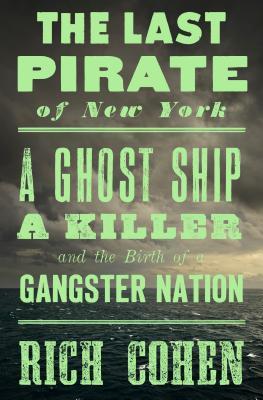
The Last Pirate of New York: A Ghost Ship, a Killer, and the Birth of a Gangster Nation by Rich Cohen

The Last Pirate of New York: A Ghost Ship, a Killer, and the Birth of a Gangster Nation by Rich Cohen

A fantastic and non-fiction account of Albert Hicks, the last man to be publicly executed in New York City and also one of the last to be tried and convicted for piracy. For fans of history, this is a must-read.

“Albert Hicks is the closest thing the New York underworld has to a Cain, the first killer and the first banished man, carrying that dread mark: MURDER. He operated so long ago, in a city so similar to and yet so different from our own, the word gangster had not yet been coined. He was called a pirate.”

Photo by Pixabay on Pexels.com

Beyond the fascinating true crime story about Hicks, Rich Cohen, the author, has brought New York City, mere years before the Civil War, to life. You get to learn about the streets, the notable people, the attitudes, the newspapers and more. It is a fun and, occasionally serious, romp through the past.

“New York Harbor is a network of islands and coves, seabirds and arsenical green marshland, the sort that looks solid until you step on it. … In the old days, every road on the island ended at the water, the sun rose at the foot of every street. Even now, when the fog rolls in, the waterfront is a sailor’s dream.”

Cohen doesn’t tell his story through the dry recitation of facts and figures. He has a storyteller’s way of weaving the details into the larger narrative. This is history as it was meant to be told.

“An 1850 police report estimated the presence of between four hundred and five hundred pirates in New York City. To the police, a pirate was any criminal who made his living on the water, attacking and robbing ships beyond the jurisdiction of the landlocked coppers…”

Photo by Chris Schippers on Pexels.com

Four and five hundred pirates! In New York City! This book changed my view of “The City So Nice They Named It Twice.” I suppose everybody and everything comes from somewhere. The early years of the city had more story to it than I imagined it could.

“Why had he killed everyone on the ship if money was his object? Because, he later explained, “Dead men tell no tales.”

Part of the reason why Albert Hicks may have been so forgotten is because of the extraordinary events that occurred just a short time later, the Civil War. It overshadowed everything that came before it, and, also, time moves on. I think about what was in the news last week and how our attention will already have moved on by next week.

As much as Cohen was able to discover about Hicks, his trial and what came next, I wish more had existed in the historical record about Hicks’ wife. I get that, beyond a few details, she basically disappeared from the record and that’s such a shame.

It made me wonder if Hicks has any descendants out there and if they know the story of one of their most notorious ancestors… I have relatives a few generations back who were adopted in New York City. Hicks’ history could belong to any of us who have question marks in our family tree.

As Cohen points out in his book, Hicks’ history, as shocking as it is, is also the early history of our country. Any shining point of light casts a shadow. This is one of those stories that took place in the shadows — a nightmarish memory from early New York City.

Photo by TheUknownPhotographer on Pexels.com

Recommended for readers of history and true crime. The Last Pirate of New York is brilliant.

Thank you to NetGalley and the publisher for a free digital, advance reader copy of this book. Please note that the brief quotations I cited in this review may change in the final printed version. The estimated date for publication is June 2019.

Thanks for reading! #TheLastPirateOfNewYork #NetGalley

Update June 21, 2019: The Last Pirate of New York is on sale now. The History Guy made an episode about Albert Hicks, the subject of this book. You can see the short documentary-style YouTube video here:

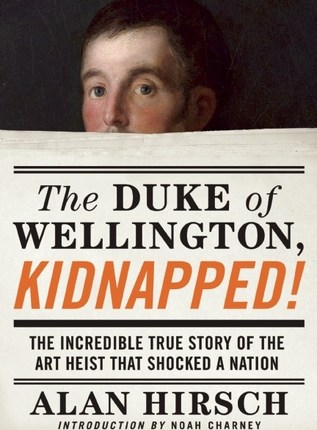
The Duke of Wellington, Kidnapped!: The Incredible True Story of the Art Heist That Shocked a Nation by Alan Hirsch

The Duke of Wellington, Kidnapped!: The Incredible True Story of the Art Heist That Shocked a Nation by Alan Hirsch

“The only successful theft from London’s National Gallery took place on August 21, 1961, when a brazen thief stole Goya’s Portrait of the Duke of Wellington.” Introduction

Alan Hirsch discusses an extraordinary art heist that took place in the 1960s, how it affected criminal law thereafter and even made an appearance in a James Bond movie. The thief sent authorities a series of ransom notes, demanding money for the return of the painting. This went on for years.

Photo by Pixabay on Pexels.com

“All the publicity led to a spike in visitors (from the usual August average of five thousand daily to more than seven thousand in the weeks following the theft), and reportedly even more people came to see the empty space where The Duke had hung than had come to see the painting itself.” pg 19

This potentially fascinating story becomes bogged down during the chapters discussing the trial and minutiae of the law. But, Hirsch is thorough, I’ll give him that.

“Where necessary, lawyers argued in the alternative: “My client did not take the painting, and if he did take it he intended to return it.”pg 125

I loved the information about the thief himself, which the world may not have seen before this book. Hirsch was given the man’s unpublished memoirs to add details to his side of the story.

“I understand you have information to give to police respecting the theft of the Goya portrait from the National Gallery in London.” “You don’t have to look any further, I am the man who took it,” the man calmly replied.” pg 107

Photo by Steve Johnson on Pexels.com

I also enjoyed the information about the ransom notes sent after the heist. That part of this book read almost like a movie. Who does that!

“In handwritten block letters, it began: “Query not that I have the Goya,” and it sought to prove the point by identifying marks and labels on the back of the canvas.” pg 52

Admittedly, I know very little about art history and had never heard of this event before reading The Duke of Wellington, Kidnapped!. But I think this would be a great read for anyone interested in history, especially art history. It may appeal even more if you’re interested in the development of criminal law in Great Britain.

Thanks for reading!

Here’s the History Guy episode I wrote about the theft of the Wellington portrait:

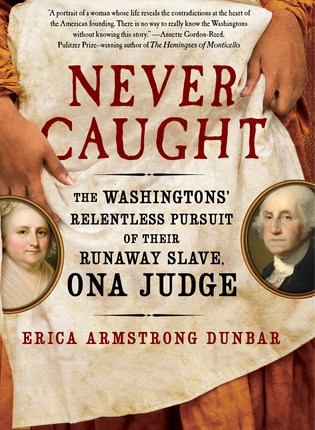
Never Caught: The Washingtons’ Relentless Pursuit of Their Runaway Slave, Ona Judge by Erica Armstrong Dunbar

Never Caught: The Washingtons’ Relentless Pursuit of Their Runaway Slave, Ona Judge by Erica Armstrong Dunbar

An interesting, non-fiction book about Ona Judge, a woman who was one of Martha Washington‘s personal slaves until she ran away. Ona remained a fugitive for the rest of her life. This book dissects early emancipation laws in the United States and Ona’s life, as well as revealing struggles in the private lives of George and Martha Washington.

Ona was born to a black slave and a white, indentured servant. Ona and her mother were abandoned by Ona’s father after only a few years.

“Ona Judge learned valuable lessons from both of her parents. From her mother she would learn the power of perseverance. From her father, Judge would learn that the decision to free oneself trumped everything, no matter who was left behind.” pg 14

Photo by Todd Trapani on Pexels.com

Author Erica Dunbar does a fairly good job bringing Ona Judge to life on the few details that were available. It must have been tricky to fill in the blanks on a life that wasn’t as well-documented as her famous, former owners.

“Those of us who research and write about early black women’s history understand how very difficult it is to find our subjects in the archives. Enslavement, racism, and sexism often discarded these women from the historical record, and as historians we are frequently left unsatisfied with scant evidence.” from the Author’s Note.

Because she gave two interviews to journalists towards the end of her life, Ona may well be one of the only female, fugitive slaves from Virginia to have a personal narrative that survived to exist in the historical record.

“The interviewer wrote, ‘When asked if she is not sorry she left Washington, as she has labored so much harder since, than before, her reply is ‘No, I am free, and I have, I trust, been made a child of God by the means.'” pg 187

Photo by Maksim Romashkin on Pexels.com

What I liked most about this book, beyond Ona’s own life story, was the way Dunbar made George and Martha Washington into people, not just icons, in my mind. They made mistakes and would act in their own best interest. It was interesting to discover that one of the founding fathers and his spouse were just as human as the next person.

But also sad in the way they held and treated “human property.” I suppose everyone is a product of his or her own time.

(Martha Washington) had no interest in releasing the slaves at Mount Vernon, who numbered in the hundreds. Instead, she would move quickly to join her husband in New York, shielding her slaves from the contagion of liberty.” pg 31

Photo by cottonbro on Pexels.com

They simply couldn’t understand why someone would want their freedom — at any cost. It seems like a no-brainer now. But, once the Washingtons discovered where Ona was hiding, they sent agents to talk to her and try to convince her to return to slavery.

“She told Whipple that under no circumstances would she return to slavery, where she could be “sold or given to any person.” She would rather die than return.” pg 144

Recommended for readers who love history, especially American history, and want to learn about another facet of the American experience.

Thanks for reading!

Here’s the History Guy script I wrote about Ona Judge:

The Midnight Assassin: Panic, Scandal, and the Hunt for America’s First Serial Killer by Skip Hollandsworth

The Midnight Assassin: Panic, Scandal, and the Hunt for America’s First Serial Killer by Skip Hollandsworth

A fascinating, non-fiction examination of what may have been the first serial killer in the United States. “The Midnight Assassin” or “Servant Girl Annihilator” terrorized Austin, Texas, for about a year before disappearing. Then, when Jack the Ripper began running around London, some in Texas theorized that their killer had crossed the ocean.

The scariest part, like Jack the Ripper, is that this person was never caught or identified.

“Several journalists proclaimed in their articles that the murders were nothing less than an Edgar Allan Poe tale of terror come to life. One reporter nicknamed the killer “the Midnight Assassin… who strides at will over Austin’s sacred soil.” pg 4

Photo by Yigithan Bal on Pexels.com

Skip Hollandsworth uses newspaper articles and period pictures to make these historical events come to life. It is a story that you almost can’t believe. You can feel the citizen’s terror as the murders increase and no one is found.

“A woman has been chopped to pieces!” Wilkie yelled. “It’s Mrs. Hancock! On Water Street!” pg 139

This was before investigations were conducting using forensic evidence or even finger prints. It is interesting to see how authorities looked for the killer.

“… the idea that Jack the Ripper was a Texan made for sensational copy, and soon the newspapers in England were in on the frenzy. “A Texas Parallel!” cried the Woodford Times of Essex. “The monster has quitted Texas and come to London!” trumpeted the London Daily News…” pg 234

It is also a glimpse into the shadowy part of the human soul.

“I do not believe any man figures into the world’s history with such a terrible and horrifying distinction from the rest of humanity,” the reporter declared. “He may well give to history a new story of crime — the first instance of a man who killed in order to gratify his passion.” pg 173

Photo by Matthew T Rader on Pexels.com

The Midnight Assassin is a story of forgotten history that most of the world no longer remembers. The murderer’s name has now become a fairy tale to scare children…

“But people in Austin hadn’t forgotten about him — not completely. Children had devised their own nickname for the Midnight Assassin: they called him the “Axe Man.” They raced for their homes as the sun was setting, shouting to one another that the Axe Man was hiding in the shadows just beyond the light of the moonlight towers, waiting for them to come close so he could grab them.” pg 255

Recommended for readers of true crime and thrilling history.

Thanks for reading!

Here’s The History Guy episode I wrote about the ‘Midnight Assassin’ also known as ‘The Servant Girl Annihilator’:

Barracoon: The Story of the Last “Black Cargo” by Zora Neale Hurston

Barracoon: The Story of the Last “Black Cargo” by Zora Neale Hurston

Zora Neale Hurston interviewed Oluale Kossola before he died in the 1930’s to create this first-person narrative by one of the last people to be transported to the United States through the middle passage. It is interesting in that, among the existing records of that period in time, it is written from the perspective of someone who lived slavery rather than perpetuated it. It wasn’t written with an agenda. It is a record of a history.

It is a story of a culture and a life lived far from home and family because of human greed.

“I hailed him by his African name as I walked up the steps to his porch, and he looked up into my face as I stood in the door in surprise.” pg 17

Photo by Johannes Plenio on Pexels.com

Hurston records Kossola’s responses to her questions phonetically, which makes you feel like you’re sitting there with her, listening to the remembrances of Kossola as he says them.

In the introduction by Deborah G. Plant, she captures this feeling: “The narrative space she creates for Kossula’s unburdening is sacred. Rather than insert herself into the narrative as the learned and probing cultural anthropologist, the investigating ethnographer, or the authorial writer, Zora Neale Hurston, in her still listening, assumes the office of a priest.” pg xxv

I think, as someone looking back, it’s important to understand the transportation of slaves into the U.S. was made illegal in 1808, fifty years before Kossula was taken from his home. It’s a piece of American history that has been almost entirely forgotten.

“Of the thousands of Africans smuggled into American after 1808, only one man was held accountable and hanged, and even he died proclaiming his innocence.” pg 132

Photo by GEORGE DESIPRIS on Pexels.com

In Barracoon, not only are we given the story of Kossula’s transportation in life in the U.S., but also, he shares fascinating details of his life in Africa. There’s information about the justice system, social structure, rites of initiation and more.

In addition to his life story, Kossula shares fables he created to share his feeling of loss about his family as he outlived all of his children and wife. I enjoyed this folk lore part of the book the most.

There’s some controversy surrounding this book. Apparently, Hurston published a magazine article about Kossula early in the last century and was accused by later scholars of plagiarism.

“Of the sixty-seven paragraphs in Hurston’s essay,” Hemenway relates, “only eighteen are exclusively her own prose.” pg 120

Photo by Pixabay on Pexels.com

The text in question is Emma Langdon Roche’s Historic Sketches of the South, that was published in 1917. The full text is available from the U.S. Library of Congress and can be accessed online. That’s how I read it and was able to see some of the similarities in the writing.

However, the interview portions of this book, written in Kossola’s distinctive style of speaking, are entirely unique. As the editor of this book points out, Hurston was never accused of plagiarism in her works after writing about Kossola and it was very early in her career. We all make mistakes.

Recommended for any readers interested in history. Barracoon is a treasure.

Thanks for reading!

Here’s the History Guy episode I wrote about Oluale Kossola:

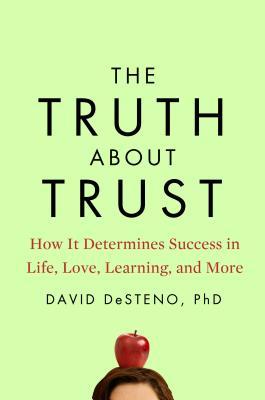
The Truth About Trust: How It Determines Success in Life, Love, Learning, and More by David DeSteno

The Truth About Trust: How It Determines Success in Life, Love, Learning, and More by David DeSteno

“Deciding to trust someone, more than almost any other decision we make, holds the keys to how resilient we, both as individuals and as a society, will be.” pg 241

Trust is one of the things that makes society work. We trust that our taxes will go towards making our society better. We trust we will be paid for the jobs we perform. We trust in contracts, news agencies and family members. Sometimes it seems this trust is misplaced. David DeSteno examines trust, what is it and how or why you decide to give someone all your trust or not.

Photo by Karolina Grabowska on Pexels.com

I held as true many of the fallacies that DeSteno deconstructs in The Truth About Trust. That was disturbing, in a way, but I also enjoyed it because I learned new ways to approach trust issues and even to define what trust is. Although it may seem like a simple concept, I realized that I didn’t know the basic definition of trust. I knew what it felt like, but not the mechanics behind it.

Tell me: what do you think trust is?

“There are two facets to trust: integrity and competence. Some of the best partners or teachers you may ever have had may not be the warmest people in the world, but they knew their stuff.” pg 33

DeSteno reminds readers that beyond examining a new business or potential romantic partner to determine their trustworthiness, you need to remember your own perceptions color your reality.

If you want to be able to trust as you should, take a moment before negotiating with someone new to allow any feelings from a previous event to dissipate. pg 60

Photo by fauxels on Pexels.com

I liked that DeSteno waded into the potentially thorny world of cyberspace and who or what to give your trust to in the technological age. It seems that is going to be the future — programs, applications and machines.

…the basic issue of whether to trust technology has in fact been around for thousands of years. What makes it feel new now, however, is that technology is beginning to encroach on what had until recently been a solely human domain — sociality. pg 183

DeSteno gave me plenty to think about including why I sometimes place great trust where it has not necessarily been earned. Recommended for readers who want to ask themselves the same types of questions.

If you enjoyed The Truth About Trust, I’d suggest also picking up Terms of Service: Social Media and the Price of Constant Connection (DeSteno deals with trust in cyberspace and the two books complement each other nicely) or The Happiness Advantage: The Seven Principles of Positive Psychology That Fuel Success and Performance at Work (which discusses the issue of trusting yourself to do the things that will benefit you most in the future and why we don’t always do those things).

Thanks for reading!

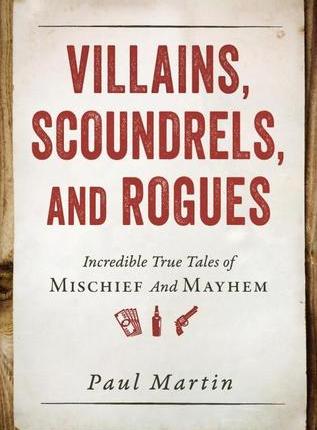
Villains, Scoundrels, and Rogues: Incredible True Tales of Mischief and Mayhem by Paul Martin

Villains, Scoundrels, and Rogues: Incredible True Tales of Mischief and Mayhem by Paul Martin

The past comes alive in Paul Martin‘s compilation of villains, scoundrels and rogues from history.

Although many of these people were famous in their own time, they’ve largely slipped into the shadows for most modern readers. … What makes these figures worthy of note is that their life stories all read like fiction. From the introduction.

Photo by Mateusz Dach on Pexels.com

And they really do. From the truly terrible like serial killers, including one who wore a suit made of human skin, to the less terrible like fraudsters and a counterfeiter of one dollar bills, these are people who made their mark on history in one way or another.

I find this kind of non-fiction read absolutely fascinating. It makes me wonder, these are the stories that almost slipped through the cracks. How many note-worthy people have been completely forgotten?

I have a small quibble about how this book was organized. Martin takes the reader from the awful to less-awful, which seems anticlimactic. Shouldn’t it have gone the other way?

Photo by cottonbro on Pexels.com

Also, Martin editorializes somewhat at the end of each chapter, so if you’re looking for just history and no opinions, this might not work for you.

With those few reservations, I’d recommend this for readers looking to expand their trivia knowledge and for fans of history. I really enjoyed it.

If you want some other true crime stories from history, check out The History Guy’s true crime playlist on YouTube.

Thanks for reading!

Mrs. Sherlock Holmes by Brad Ricca

Mrs. Sherlock Holmes by Brad Ricca

In the era before women could vote, an extraordinary detective and lawyer was solving crimes the police couldn’t and defending those who couldn’t afford it. Her name was Grace Humiston and this is her story.

Grace was admitted to the bar in the state of New York in 1905, becoming one of only a thousand female lawyers in the whole United States. pg 29

Photo by Taryn Elliott on Pexels.com

Readers, this lady was incredible. Though she fell out of public favor later in her career, Grace accomplished so much. She was the first woman to become a consulting detective for the New York Police Department. They formed a missing persons bureau because of her work to reform how they searched for victims of crimes.

Grace was even the first woman to serve as a Special Assistant U.S. District Attorney. She brought down businesses that were abusing immigrants through peonage practices. I’m telling you, this lady was hardcore.

The case that catapulted her into the limelight was the disappearance of Ruth Cruger, a teenager who went to get her ice skates sharpened in New York City and never returned. Her family insisted Ruth wouldn’t have run away, as the authorities suggested when they reported her disappearance.

“My girl has been kidnapped,” Henry said to the reporters. “This talk about her having gone away voluntarily is an unwarranted insult to her and to us. It is nothing more than a screen for police shirking.” pg 47

So who did he call? Grace Humiston.

Photo by Wallace Chuck on Pexels.com

When a reporter asked about how she had solved the case so quickly after the police had given up, Grace did not couch her words. “To begin with, the police are no good,” Grace told the reporter. “They had all the facts to start on that I had and did nothing.” pg 71

Savage.

The facts of this story merit a five-star rating but how they are organized brought down my rating of this book. Brad Ricca opens with the Ruth Cruger case and puts chapters inbetween detailing Grace’s history. It disturbs the flow of the story. I think if he had gone from an opening, gripping chapter about Ruth into a chronologically organized history, I may have enjoyed it more.

Another gripe some readers had with Mrs. Sherlock Holmes is that it had an unsatisfying conclusion. I’m not of that opinion. Often, life doesn’t end stories with a bowtie or an ending worthy of their beginning. In non-fiction, especially when careers rise and then fall as in this book, there isn’t a satisfying ending to be had.

I enjoyed learning about this extraordinary lady and I appreciate the level of research Ricca put into these pages. One can feel, especially in the conclusion, how this was a labor of love for him. Not just to bring Grace back into the public’s mind and heart, but also to remind readers about how people still go missing today and, sometimes, they’re never found.

Photo by Ylanite Koppens on Pexels.com

I wanted to reprint all the people gone missing in the last year here, at the end, but it would not have been ‘cost effective’, they told me, even in the smallest type. So think of one name for me. Maybe it is someone you know. Or someone you saw on a show or a flier once. Or maybe it is your name, or a name you once had. Whoever it is, write that name here…. pgs 362-363

We are solving more and more cold cases with the advent of DNA databases. Perhaps some day this issue will be a thing of the past. Until then, we’ll rely on the Graces of today to lead us, clue by clue, to wherever the trail ends.

Thanks for reading!

Here’s the History Guy episode I wrote about Grace Humiston:

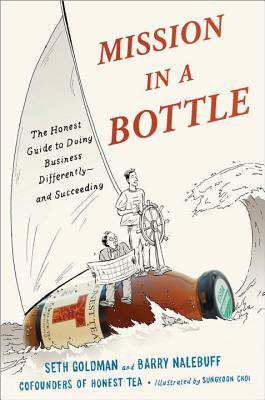
Mission in a Bottle: The Honest Guide to Doing Business Differently – And Succeeding by Seth Goldman, Barry J. Nalebuff

Mission in a Bottle: The Honest Guide to Doing Business Differently – And Succeeding by Seth Goldman,  Barry J. Nalebuff

Barry Nalebuff and Seth Goldman, who are the cofounders of Honest Tea, tell how they created their bottled tea business and grew it into something more.

Photo by Cup of Couple on Pexels.com

I understand what they were trying to accomplish with telling their business story in a graphic novel format but it didn’t work for me.

Graphic novels are great platforms to tell stories with a lot of action, colorful figures, and fantastic backgrounds. The story of founding a business, any business, seems to take place mostly in rooms with a bunch of people in business attire. The creation of a mission statement is mainly words on a page with little to show, action-wise. That doesn’t make it less important, but simply less exciting than a superhero comic.

Even the tense moments of Mission in a Bottle, like the time when a guy thought he found a piece of a male body part in one of the brands that they were renting their bottling facility out to, just didn’t translate in a meaningful way to a cartoon format.

Photo by Pixabay on Pexels.com

Overall, I enjoyed the business story and found it inspiring. I wish Goldman and Nalebuff had written it as a traditional book rather than a graphic novel.

Thanks for reading!