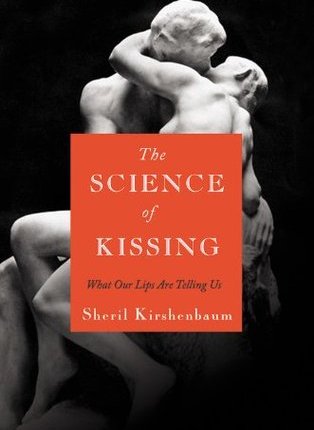
The Science of Kissing: What Our Lips Are Telling Us by Sheril Kirshenbaum

The Science of Kissing: What Our Lips Are Telling Us by Sheril Kirshenbaum

What do we know about the “science” of kissing? Researcher and author Sheril Kirshenbaum shows we know surprisingly little in The Science of Kissing.

“Kissing is a type of universal language, best interpreted by those involved in the exchange.” pg 209
Photo by Flora Westbrook on Pexels.com

To start, I didn’t know that humankind wasn’t the only species to demonstrate “kissing” behavior.

“Moose and ground squirrels brush noses. Manatees nibble at their partners. Moles rub snouts and turtles tap heads. Porcupines nuzzle noses – one of the few regions of their bodies that lack quills.” pg 29
Photo by Snapwire on Pexels.com

I also didn’t know, seems obvious in hindsight, that kissing wasn’t always a common behavior. It has spread throughout cultures and countries because of the way we’re interconnected with technology.

But that wasn’t always the case. Historians and anthropologists have recorded different attitudes towards kissing among various cultures for hundreds of years.

“… he noted that some Finnish tribes were not very interested in kissing, and observed that while the sexes would bathe together completely nude, a kiss on the lips was considered indecent.” pg 57

Kirshenbaum briefly covers a few different scientific studies into sexual behavior or kissing.

“In Alfred Kinsey’s 1948 report ‘Sexuality in the Human Male,’ for instance, kissing style was found to correlate with a person’s level of education. Seventy percent of well-educated men admitted to French kissing, while only 40 percent of those who dropped out of high school did.”

Photo by Pixabay on Pexels.com

However, I felt that the majority of this book was written anecdotally because there are so few rigorous studies that have been conducted. In fact, one of the chapters of this book consists of suggestions of studies that could be done with some of the information that Kirshenbaum compiled.

… only one in seven women answered that she would consider sex with someone she had not first kissed. Conversely, the majority of men reported that they would not be deterred.” pg 92

Despite what I perceived as a lack of hard science in here, I found the book amusing. Recommended for readers who are looking to be entertained, rather than enlightened, about kissing.

Mystical Places by Sarah Baxter, Amy Grimes

Mystical Places by Sarah Baxter, Amy Grimes

Throughout history, humankind has told each other stories. Sometimes these stories center on places that become sacred through their association to the legends that are told.

Sarah Baxter highlights 25 such locations from all over the world. Each brief chapter includes a short description of the site and the stories associated with it.

Photo by diana plotkin on Pexels.com

“In these pages we meet mythical kings, sacred summits, and enchanted architecture, plus a cast of elves, giants, ghosts, golems and sea creatures without which our planet might be a more logical and well-reasoned place but also less colourful and compelling.” pg 6, ebook.

I thoroughly enjoyed armchair traveling from Africa to Canada, China to Portugal, and more. This book gave me so many ideas for places I want to see when I feel comfortable boarding a plane again.

And, in the meantime, there’s always the possibility of travel-filled day dreams.

In the chapter about Cadair Idris in Wales, Baxter writes: “It’s said that on the very crown of the peak there is a long, wide platform of stone slabs that is the Bed of Idris and that whoever sleeps on that bed will suffer one of two fates: they will wake up either as the most profound poet or completely mad.” pg 18, ebook.

Photo by Adrian Dorobantu on Pexels.com

Worth the risk, right?

I was also taken with the descriptions of the Stone Circles of Senegambia, thousands of ancient stone monuments found in Senegal and The Gambia.

“Stories passed down the generations claim that the stones were put in place by the gods at the very dawn of time. Other legends suggest they are the gravestones of an ancient race of giants or chiefs and that a curse will fall on anyone who dares disturb them…” pg 76, ebook.

I had never heard anything about these circles, despite taking a class in ritual and religion in prehistory from Oxford. I am also fairly well-read in world mythologies yet there were surprises on almost every page.

Photo by Oleg Magni on Pexels.com

Highly recommended for travelers, armchair or otherwise, who are seeking destinations of mystical significance or anyone who wants to learn about legends from around the world. The only trouble that may be encountered for the mystical tourist is the remoteness of some of the locations.

Thank you to NetGalley and the publisher for a free advance reader copy of this book. The brief quotations I cited may change or be omitted entirely from the final version, which I believe is slated to be published tomorrow.

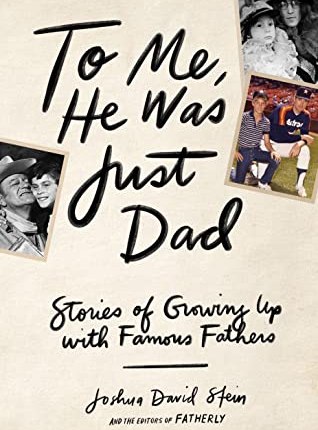
To Me, He Was Just Dad: Stories of Growing Up with Famous Fathers by Joshua David Stein

To Me, He Was Just Dad: Stories of Growing Up with Famous Fathers by Joshua David Stein

To Me, He Was Just Dad is a collection of essays written by the grown children of famous or otherwise notable men. From scientists to musicians, actors to drug lords, the vocations of the featured fathers runs the gamut. There’s even one Catholic priest.

“How wide, we wondered, is the gap between what the public thinks of notable men and what the sons or daughters of those men experience? Do great men make for great fathers?” pg 6

Photo by Ketut Subiyanto on Pexels.com

The essays themselves are intimate portraits into the private lives of all of these people who, because of their success at whatever they chose to do, the world acts like we already “know.” The fascinating part of this book is how little we know them at all.

We venerate famous people. This book is a great reminder that, at the end of the day, they’re just people and put their pants on one leg at a time like the rest of us.

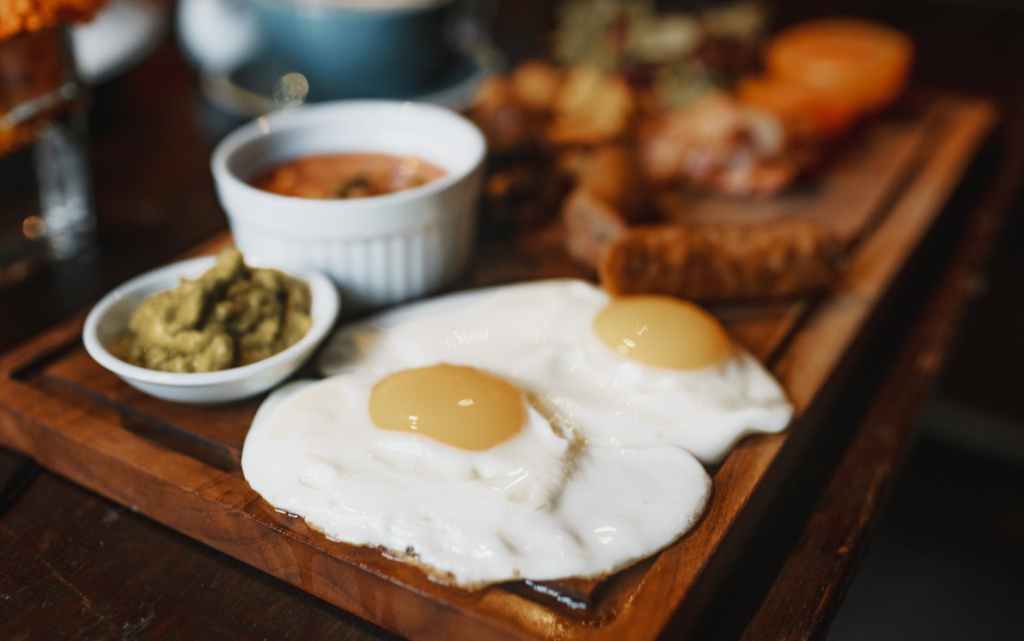
Though, admittedly, some are much more talented at cooking eggs, like Claudine Pepin’s dad, the famed chef, Jacques Pepin“I feel like Papa taught half of America how to make an omelet. He taught me how to make an omelet, too, and also how to walk, ski, and drive (that one was a touch stressful). But one of the most important things he taught me was how to be part of a deep and enduring friendship.” pg 35

Photo by ROMAN ODINTSOV on Pexels.com

Fame is such a strange lens. Through it, some qualities are magnified while others are lost in the glare.

The same is true for infamy. The two who stuck out to me in that particular category were “My Father the Cult Leader, Saul B. Newton” and “My Father the Drug Lord, Pablo Escobar“.

Here’s Newton’s daughter, Esther: “My dad was an amazing, complicated, brilliant individual. It was important to me that he wasn’t remembered only as a nutjob with a cult.” pg 52

Escobar’s son remembers how his father, the drug lord, implored him not to do drugs. He also recalled living much of his early life on the run.

I think the small details add such dimension to these famous lives.

Take, for example, the fact that Evel Knievel, of daredevil fame, didn’t want any of his children to follow in his footsteps because he thought it was going to get them killed. It was fine for him to risk his life, but not ok for his beloved children.

Photo by Mridul Pradeep on Pexels.com

Makes you view him just a little bit differently, doesn’t it? He seems like a multi-dimensional individual to me now and not just a fearless dude on a motorcycle.

Highly recommended for non-fiction readers. This book is a treat.

Thanks for reading!

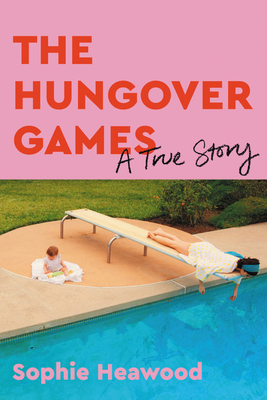
The Hungover Games: A True Story by Sophie Heawood

The Hungover Games: A True Story by Sophie Heawood

The Hungover Games is an amusing and poignant glimpse into the world of a woman who didn’t mean to become a mother, but who found her life’s path when she got there.

“It had all happened by accident. I hadn’t meant to have a baby at all. I hadn’t meant not to have a baby either, by which I mean I always thought I’d have children one day.”

Sophie Heawood

Sophie Heawood was barely scraping by, living from paycheck to paycheck as a journalist in Hollywood. After a misadventure in Mexico, which had nothing to do with her reproductive health, she discovers in a round-about way that if she ever does decide to have children, it may be impossible without fertility treatments.

“In my life, it was as if I was the captain of a magnificent ship but was somehow, always, at this moment, just this one perpetual moment, in a dinghy buffeted about in the ship’s wake, always about to catch up with myself. Up ahead on the magnificent ship, I was organised and sober and slim and shiny-haired, all of which was always coming soon, like a trailer in the multiplex that ran in my head twenty-four hours a day.”

Photo by Lukas Kloeppel on Pexels.com

But she never seemed to get there.

And then, after a one-night stand with the man she had been one-night-standing with for years, Heawood becomes pregnant. What happens next, her journey into parenthood but also the adjustment of dreams she held her entire life, is a fantastic story.

I think part of what I enjoyed so much about this book is the nature of Heawood’s job. In the short time I spent as a reporter, I loved talking to people, learning what they had to teach me about life, and seeing who they really were behind whatever public persona they were projecting.

Heawood had the opportunity to interview Hollywood A-listers and she gives you an inside view of what that was like. Goldie Hawn, Jodie Foster, and Amy Adams are a few of the names who pop up in the memoir.

In addition to the peek behind the curtain into the mystical world of Hollywood fame, Heawood doesn’t shy away from faithfully recording the sometimes harsh reality of becoming a parent.

“My introduction to being a mother involves being told off by other women, again and again. Told that I am not doing it right, that there are rules. … When I do get home, it only takes me a couple of weeks to recover from the surgery, but it takes me about a year to recover from the few days in the hospital when I was supposed to be recovering, and to regain the caring instincts to protect this tiny creature, the ones that were crushed before they had even dared to begin.”

Photo by Pixabay on Pexels.com

She faces difficulties not just with the newness of being a parent, but from her path as a single mother. Heawood has trouble finding housing as a single mother and going to prenatal classes alone. In this life transition that can be difficult at the best of times, she faces it on her own.

But her attitude is not woe-is-me. Heawood keeps the positive and empowered spin up throughout most of her challenges and, when she can’t manage it, she still appreciates the gift she has been given through her relationship with her daughter.

I enjoyed this memoir very much and read it in about two sittings. Recommended for readers who enjoy humorous memoirs about parenthood, Hollywood, dating, night-clubbing and the inevitable spiritual evolution that comes from finding the place in life that you were always meant to be.

Thank you to NetGalley and the publisher for a free advance reader copy of this book. The brief quotations cited in this review may change or be omitted in the final print version.

Tonight We Bombed the U.S. Capitol: The Explosive Story of M19, America’s First Female Terrorist Group by William Rosenau

Tonight We Bombed the U.S. Capitol: The Explosive Story of M19, America’s First Female Terrorist Group by William Rosenau

It is simple to pretend that people who perform shocking acts of violence are different than everyone else. It’s got to be something in their childhoods, we think, or maybe it’s a mental illness.

The most disturbing part of this book, and it admittedly has many, was that these women seemed so normal, just like you or me.

Photo by Andrea Piacquadio on Pexels.com

William Rosenau has combed through court files, newspaper articles and more to write Tonight We Bombed the U.S. Capitol, a non-fiction account of a radical leftist terrorist group. They planted multiple homemade bombs, robbed and killed people, all in the name of freeing the world from imperialism.

The majority of the group were highly educated, white women.

“They’d spent their entire adult lives embroiled in political struggles: protesting against the Vietnam War, fighting for black, Puerto Rican, and Native American liberation, and fighting against what they called U.S. ‘imperialism’ – that is, U.S. military aggression, political domination, and economic exploitation, particularly in the Third World.”

Photo by cottonbro on Pexels.com

Rosenau paints a careful picture to reveal how, step-by-step, the people involved in the group felt more and more marginalized and victimized to the point where they felt any and all actions were justified.

“Their vision of what this heaven on earth would look like was hazy, but one thing was certain: creating it would require nothing less than violent revolution. This vagueness about ultimate objectives is typical among terrorists.”

Photo by Pixabay on Pexels.com

There is so much information about a number of different people in this book that it can be overwhelming. But I think, ultimately, it is better to know what has gone on in the past because it affects the future in such a profound way.

“I discovered that during the 1970s and 1980s, the United States had waged an earlier ‘war on terror’ against violent domestic extremists, and it was during that period that the government created many of the counter-terrorism tools and approaches that continue to be used today.”

Photo by Rahul on Pexels.com

The privilege of living in a free society is that all manner of ideas can be discussed and embraced or dismissed depending upon their merits. I want equality, freedom from tyranny and opportunities for all people – no matter what you’re from, what you look like, or what your background is.

However, I won’t use violence to try and bring those ideals about. That seems to be the line in the sand for many. The people in this book didn’t have that line but they seemed to espouse higher ideals.

And what a tragedy that is. If only their brilliant minds had been directed towards methods of bringing about change that worked within society rather than against a nameless enemy, our country might have been better for all of them.

Thank you to NetGalley and the publisher for a free advance reader copy of this book. The brief quotations cited in this review may change or be omitted entirely from the final print version.

For Small Creatures Such as We: Rituals for Finding Meaning in Our Unlikely World by Sasha Sagan

For Small Creatures Such as We: Rituals for Finding Meaning in Our Unlikely World by Sasha Sagan

My parents taught me that the universe is enormous and we humans are tiny beings who get to live on an out-of-the-way planet for the blink of an eye. And they taught me that, as they once wrote, “for small creatures such as we, the vastness is bearable only through love.” pg 12, ebook.

Sasha Sagan, the daughter of celebrated scientist Carl Sagan, was raised to believe only what could be proven. Her father told her: “It’s dangerous to believe things just because you want them to be true.” pg 11, ebook.

Photo by Yuting Gao on Pexels.com

But they also instilled a sense of wonder in Sasha about existence and humanity’s place in it. For Small Creatures Such as We is an examination of religious and secular celebrations and rituals from around the world. I learned a great deal about the similarities of humanity’s need to celebrate and recognize the seasons, rites of passage, and other universal milestones in life.

I wouldn’t describe myself as religious, rather I’m very spiritual. In my opinion, Sagan’s book could appeal to even those who may describe themselves as religious. She has a welcoming voice for every kind of reader.

Photo by Dominika Greguu0161ovu00e1 on Pexels.com

“If you are devoutly religious, firstly, I’m delighted you’re reading this. Thank you. … This book is not intended to dissuade you, only to increase what there is to be joyful about.” pg 14

I think she succeeds in drawing a clear picture of what rituals mean to humanity. And that brought me so much hope for the future.

Some live lives of little meaning and less depth because there is no framework in place to support the creation of personal rituals outside of certain groups who may not share your vision of reality.

Photo by Karolina Grabowska on Pexels.com

This book could be helpful for spiritual people who want to use rituals to instill a sense of wonder into their daily existence.

It is also fascinating to learn about so many different cultures from around the world. Highly recommended.

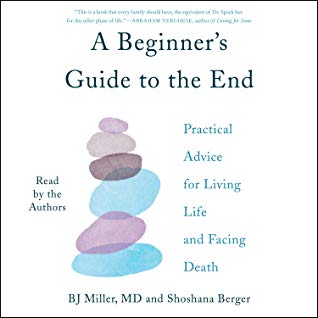
A Beginner’s Guide to the End: Practical Advice for Living Life and Facing Death by B.J. Miller, Shoshana Berger

A Beginner’s Guide to the End: Practical Advice for Living Life and Facing Death by B.J. Miller, Shoshana Berger

A Beginner’s Guide to the End is a definitive guide about death and how to handle it, both for yourself and your loved ones.

Topics range from planning your estate and dealing with life-ending illnesses all the way through to what to do in the first 24 hours after someone dies and how to liquidate an estate.

Photo by KoolShooters on Pexels.com

I could see this book being incredibly useful to anyone who has received a terminal diagnosis, their family or caregivers of all types.

I picked this book up because my father-in-law recently died and I was looking for information on how to help myself and others with grief.

“Grief is a force of nature. Though it can feel problematic as hell, bereavement is an essential piece of the human picture, whichever way it surfaces. pg 420

Photo by Alex Green on Pexels.com

I learned all about that, but also a bunch of other helpful end-of-life details. For example, I knew nothing about the legalities of transporting and spreading cremated remains. Now, I know.

“A friend snuck down to the field of the Oakland-Alameda County Coliseum at half-time and dumped some of his father’s dust at the fifteen-yard line. His pop, a doctor, had been a hard-core Raiders fan, and though his son knew he was doing something illegal, he felt a jolt of joy, knowing that part of his father would always be in that stadium.” pg 459

The text in this book is printed slightly larger than normal, which could be exactly what is needed for elderly readers.

Highly recommended for anyone who needs some guidance about death-related issues.

Thanks for reading.

The Fine Art of Small Talk: How to Start a Conversation, Keep It Going, Build Networking Skills and Leave a Positive Impression! by Debra Fine

The Fine Art of Small Talk: How to Start a Conversation, Keep It Going, Build Networking Skills and Leave a Positive Impression! by Debra Fine

Hello, my name is Heidi and I am bad at small talk. It’s not that I don’t have things to say — I can think of plenty of things to say. The things just don’t make it out of my mouth.

Enter Debra Fine, self-help author and speaking coach. She believes small talk is a skill that can be taught and mastered by even the most hopeless conversationalist. Fine begins by detailing her own life experience as a poor conversationalist and how she remade herself into a conversational dynamo.

Photo by Armin Rimoldi on Pexels.com

And she hopes to do the same for her readers.

Most of the advice in The Fine Art of Small Talk is common sense stuff, but I can still see it being useful to me in the future.

For example, she encourages readers to be brave and initiate conversations in public situations. Look for the people sitting by themselves. They might appreciate your attempts to chat. Also, if you don’t start a conversation, he or she may believe you’re being stand-offish. That’s not a belief you’d want to encourage.

Actually, I have a very shy friend, one of the librarians I worked with, who swore by this technique of finding a person sitting by themselves. She did extremely well at parties by finding the quietest person in the room and starting a conversation with them.

Photo by cottonbro on Pexels.com

Next, once you’re talking to someone, learn his or her name and how to appropriately pronounce it. Ask open-ended questions to foster the conversations and reduce any potentially awkward pauses. Fine recommends using the acronym “FORM” to help you create these questions. FORM stands for family, occupation, recreation and miscellaneous.

Don’t be rude and press into topics that people seem reluctant to talk about. Just gently steer the conversation around the recommended general topics and let the person you’re conversing with lead. Make sure to pay attention to any verbal cues or body language the other person gives you. Obviously, this can be more difficult over the phone, so just actively listen.

And finally, exit the conversation gracefully by going back to the topic you started talking about in the first place or offering to follow up with the person by giving a phone number or email.

Now that you have all the tools of small talk, your assignment is to practice it. Yikes.

Photo by cottonbro on Pexels.com

As I said, nothing earth-shattering in here, but in an age of increasing social disconnection because of technology, perhaps these tips could be useful to anyone who is seeking to improve their relationships through small talk.

Recommended for all the tongue-tied bibliophiles out there, like me.

Thanks for reading!

The Botany of Desire: A Plant’s-Eye View of the World by Michael Pollan

The Botany of Desire: A Plant’s-Eye View of the World  by Michael Pollan

Packed with food-related history, trivia and stories, Michael Pollan attempts to explain how four types of plants have had such a large effect on humanity.

“We automatically think of domestication as something we do to other species, but it makes just as much sense to think of it as something certain plants and animals have done to us, a clever evolutionary strategy for advancing their own interests.”

Photo by John Finkelstein on Pexels.com

I believe that our lives are intimately intertwined with our environment, even if we can’t quite see how. Pollan removes the veil between apples, tulips, marijuana, potatoes, and mankind in order to illustrate how the plants evolved and what kinds of shenanigans they’ve brought on civilization in the process.

“Our grammar might teach us to divide the world into active subjects and passive objects, but in a coevolutionary relationship every subject is also an object, every object a subject. That’s why it makes just as much sense to think of agriculture as something the grasses did to people as a way to conquer the trees.”

My favorite chapter was about the tulips. Did you know at one point in the Dutch Republic a tulip bulb cost as much as a house? It was called “tulipmania” and it caused enormous havoc in the local economy when the tulip bubble burst.

I also learned about the evolution of flowers, which I didn’t know anything about before reading this. I had only ever considered them from a spiritual perspective — I think it was Eckhart Tolle who talked about flowers being the “spiritual evolution of plants”. It’s rather interesting actually if you’re into that kind of thing.

“But I do wonder if it isn’t significant that our experience of flowers is so deeply drenched in our sense of time. Maybe there’s a good reason we find their fleetingness so piercing, can scarcely look at a flower in bloom without thinking ahead, whether in hope or regret.

Photo by James Wheeler on Pexels.com

Pollan’s writing style wanders no where quickly, so readers who have little patience for storytelling non-fiction may want to choose a different book. I rather liked it.

I think he may have oversimplified the plants and humanity relationship by picking only one motivating desire per plant. Let’s be real, things are never as simple as that. But for the premise of this book, it worked well enough.

Basically, The Botany of Desire encourages readers to consider what plants get from us as much as what we get from them. It’s a different perspective, like looking at your home from the level of a toddler rather than your usual height. There’s things to learn and puzzle out and discover that you may have never even imagined.

Recommended for readers interested in botany and different worldviews. Thanks for reading!