Cultish: The Language of Fanaticism by Amanda Montell

Cultish: The Language of Fanaticism by Amanda Montell

In Cultish: The Language of Fanaticism, author Amanda Montell examines groups, companies and individuals, and the way they use language to build communities, sometimes for harmless purposes and other times for more sinister.

“We need a more versatile way to talk about communities that are cult-like in one way or another but not necessarily connected to the supernatural. Which is why I like the word “cultish.” pg 39, ebook

Photo by Karolina Grabowska on Pexels.com

Before I read this book, I believed language was powerful. Montell showed me I had no idea about the life and death reality that carefully constructed words can have over people.

“Year after year, we ask: What makes people join cults like Jonestown and Heaven’s Gate? … Here’s where the answer starts: Using systematic techniques of conversation, conditioning, and coercion, with language as their ultimate power tool, Jones and Applewhite were able to inflict unforgettable violence on their followers without personally laying a finger on them.” pg 77, ebook

And the people affected by this language are not just vulnerable people, which is what some folks believe about the others who join cults. The targets of cultish organizations can be just like you and me.

Photo by Eva Bronzini on Pexels.com

“A common belief is that cult indoctrinators look for individuals who have ‘psychological problems’ because they are easier to deceive. But former cult recruiters say their ideal candidates were actually good-natured, service-minded, and sharp.” pg 96, ebook

It was rather scary thinking about how anyone might become prey to a cultish organization.

It was also eye-opening to see how common place this is as Montell talks about so many different organizations. There’s fitness groups, multi-level marketing groups, spiritual and new age groups, as well as more religious organizations. Once you know the tricks of language that are commonly used, you see this type of manipulation almost everywhere.

“A cult is like porn: You know it when you hear it.” pg 219, ebook

I picked up this read for my local book club- it wasn’t something that I would have necessarily chosen on my own. There’s plenty to talk about in here, from the different groups to the various types of language techniques they use.

After awhile, all of Montell’s examples begin to feel repetitive, which wasn’t that fun to read. Still, I’d recommend this book if you’re interested in cults or cultish language.

Thanks for reading!

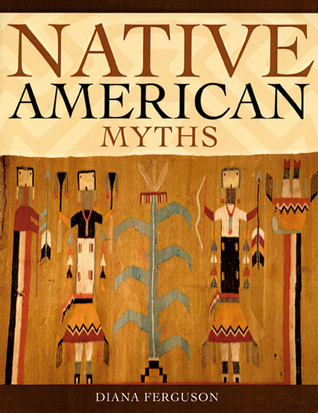
Native American Myths by Diana Ferguson

Native American Myths by Diana Ferguson

Native American Myths is an excellent collection of stories from different cultures gathered into a few categories: “How the world was made,” “Tricksters and Culture Heroes,” “Earth Sea and Sky,” “Quests and Sacred Gifts,” and “Ghosts and the Supernatural”.

“In the beginning, people lived at peace with the Earth and all her creatures. The Great Spirit had said that it should be so.” pg 34

One of my favorite stories from the collection is “The Buffalo Skin Sky” which tells the tale of a buffalo skin saving humanity from drowning in a great flood. It reminded me of the Biblical tale of Noah and the ark.

“Coyote stood alone, holding the sacred gift of fire. But he had no one to give it to, so he passed it to the nearest tree.” pg 50

I also enjoyed the stories that had the trickster Coyote in them. There were a couple different cultures who shared tales about him. He must have tricked a lot of people to have such a reputation… 🙂

Recommended for anyone who enjoys mythology. This book would be a wonderful choice for bedtime story reading.

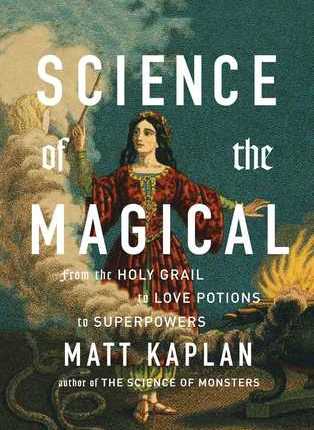
Science of the Magical: From the Holy Grail to Love Potions to Superpowers by Matt Kaplan

Science of the Magical: From the Holy Grail to Love Potions to Superpowers by Matt Kaplan

“Does knowing how something magical works make it into something other than magic?” pg 7

In Science of the Magical, science correspondent Matt Kaplan examines phenomena from prophecy to immortality and more, seeking the science behind the magic. The result is a compelling look at life and humanity’s beliefs around such things.

“Our ancestors had a magical worldview. … For the Viking berserkers, no biochemistry was behind their rage; Odin was casting a spell. For pilgrims visiting the oracle at Delhi, no ethylene vapors were creeping up the fault below the temple; the spirit of Apollo was coming to force the priestess to speak with his voice.” pg 212

Photo by cottonbro on Pexels.com

You would think these activities would lose their magical feeling under Kaplan’s microscope, but the opposite is true. I felt more wonder learning the studies about Buddhist monks who can sit wrapped in wet sheets and not freeze or the symbiotic relationship between ravens and wolves, which was immortalized in the stories about Odin.

“… Dr. Stahler suspects that because wolf kills are considerably larger than those made by coyotes, the birds have more food to feed on. The ravens seem to have the ability to differentiate between the animals and selectively follow only wolves.” pg 102

Photo by Pixabay on Pexels.com

Though I knew some of what Kaplan reports in these pages, other ideas were totally new to me. Highly recommended for readers who enjoy non-fiction.

Thanks for reading!

The Highly Sensitive Person in Love: Understanding and Managing Relationships When the World Overwhelms You by Elaine N. Aron

The Highly Sensitive Person in Love: Understanding and Managing Relationships When the World Overwhelms You by Elaine N. Aron

Author Elaine Aron defines “highly sensitive persons” (HSPs) and gives a plethora of coping mechanisms as well as case studies to support the definition. She also includes tests so you can discover where you are in the HSP world.

“The trait was always there, of course, just called by other names. But its essential elements were not known, so it was described by external behaviors only, such as ‘shy’ or ‘introverted.'” pg 54, ebook

Photo by Michelle Leman on Pexels.com

This was only the second book I’ve read about HSPs. Prior to this, I have heard HSPs being described as having sensory processing disorders, which exist on a spectrum like most everything else in the psychology universe, or simple shyness.

“My term for it is sensory processing sensitivity, but the same trait is also called environmental sensitivity or reactivity; biological sensitivity to context; differential susceptibility or vantage sensitivity; or identified by the names of certain genetic variations or as in animals, sometimes termed behavioral plasticity or flexibility.” pg 82, ebook

Despite my lack of background in the topic, there was very little new information in this book. A big take-away was to improve your communication style and keep in touch with the people in your life who love you. So many problems can be cleared up with clear, concise communication.

Photo by Gustavo Fring on Pexels.com

Also, attempt to address any troubles you may have from a dysfunctional childhood or relationships prior to embarking on a new relationship. Healer, heal thyself.

Another coping mechanism I use regularly, but didn’t realize I did, is handling over arousal. Whenever I find myself being overwhelmed by life, I find a backroom and take a minute or two to myself. Sometimes I just breathe. If I’m not at work, I pick up a book or get a hot drink.

“Anger is a highly stimulating emotion. HSPs are strongly affected by it, even when we just witness it. pg 77, ebook

Photo by freestocks.org on Pexels.com

Aron encourages readers to find their “optimal level of arousal” since it varies from person to person. Know yourself and your limits, and tell your loved ones. Also, give yourself permission to turn off your sensitivity. It may seem silly- but that never occurred to me.

“All HSPs, men or women, are more aware of what other people are feeling, what they want and need. Thanks to your spontaneous deep processing, you also can sense what will happen if others don’t receive what they need- they may suffer, fail at what they want to do, become angry with you, feel disappointed with you. And being more sensitive, when they feel bad, you will be bothered too… pg 56, ebook

I tried to treat everyone the same and it led to some serious problems in my personal as well as professional life.

Photo by Kat Smith on Pexels.com

One of the most helpful parts of this book was Aron’s invitation to reframe my past in light of my new self knowledge. Prior to learning about HSPs, I was barely functioning in a world that didn’t necessary make room for me. Now I know I’m not alone in this- and have more tools in my metaphorical belt to help me get through the day.

I’m not entirely convinced by the final section of The Highly Sensitive Person in Love that discusses HSPs being more spiritual or falling harder in love than non-HSPs. It’s a romantic sentiment perhaps, but I was unconvinced by the evidence. I think we’re all in this love game together.

Recommended for readers who are or have a loved one who is a highly sensitive person. I’m curious to know what others in the community think about this book. If you do have a chance to pick it up, please write a review and let me know. 🙂

O’s Little Book of Happiness by O, The Oprah Magazine (Editor), Thelma Adams (Contributor)

O’s Little Book of Happiness by O, The Oprah Magazine (Editor), Thelma Adams (Contributor)

This collection of essays from the pages of O are wonderful. Through memories and insights, the writers of each chapter have something uplifting and inspiring to share.

My favorite was the chapter entitled “My Unplanned Adventure” by Catherine Price, pgs 88-99. It’s about an uptight traveler who planned every aspect of her trips around the world until she came to the conclusion that she was overthinking it.

Photo by Andrew Neel on Pexels.com

Once she figured this out, she walked up to a person, asked them where they would travel if they could go anywhere, and went there. I won’t ruin the essay by relating all of it here, but it resonated with me. I also have to remind myself that going with the flow is always more desirable than white-knuckling intricate plans and time tables.

I have to confess: I am not a reader of magazines. I find them to be filled to the brim with advertisements for things I neither want nor need and, after I’ve dug through the pages of stuff for sale, I find the writing to be insipid. “Six new sex positions!” “Keep your romance alive!” blah, blah, blah…

Photo by KoolShooters on Pexels.com

That being said, O’s Little Book of Happiness was totally different from my expectations of what a magazine is and introduced to me the idea of what a magazine could be. (And there were no advertisements!)

A couple of the essays felt too short- one page or one paragraph in some instances- but for the most part I enjoyed their length and the order they are arranged in.

There’s something very powerful in reading back-to-back essays about happiness and accounts of people finding their path in life. I read this through in almost one sitting but it could also be savored slowly like a-chapter-a-day devotional guide.

Photo by Andre Furtado on Pexels.com

I enjoyed this very much. And I hope you will too.

If you like O’s Little Book of Happiness, I would also recommend Happiness: A Guide to Developing Life’s Most Important Skill by Matthieu Ricard and Living Oprah: My One-Year Experiment to Live as TV’s Most Influential Guru Advises by Robyn Okrant.

I received a free copy of this book through Goodreads First Reads. FTC guidelines: check! And thank you for reading.

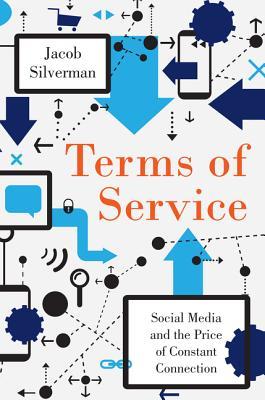
Terms of Service: Social Media and the Price of Constant Connection by Jacob Silverman

Terms of Service: Social Media and the Price of Constant Connection by Jacob Silverman

Author Jacob Silverman digs deeply into various social media platforms and uncovers not only privacy violations but also underlying attitudes adopted by the platform owners that point towards a future that is completely controlled by digital government watchdogs and technological elites.

Terms of Service is a terrifying book to me in many ways.

Photo by ThisIsEngineering on Pexels.com

I knew some of the pitfalls of the big networks like Facebook, but I didn’t know all of them. This book changed the way that I view the portable devices that everyone carries around with them. Instead of helpful tools, I now see that they can be a chilling and impersonal form of control and surveillance, if we let them.

Terms of Service isn’t all doom and gloom though. Silverman gives the reader innovative ways to buck the bland, over-sharing majority and examples of creative hackers and programmers who are doing just that.

Photo by Designecologist on Pexels.com

He also suggests some sweeping societal changes within the government like a twenty-first century Bill of Rights to address the troubles and privacy challenges of technology and a universal minimum wage to unlock the chains of digital serfdom.

It’s an exciting possible vision for the future. I wonder if we will ever manage to do any of that.

This is the part of the review where I try to list read-alikes or books with a similar theme, but I think that Terms of Service is in a class all of its own. I think parents, educators, politicians, and anyone who uses the internet should read and discuss this book.

Photo by Vanessa Garcia on Pexels.com

It is only through knowing the dangers of constant connection that we can begin to address them. Terms of Service provides an eye-opening and disturbing view of how far we have let the situation go.

But, never fear, with proper education- like reading this book- anything is possible.

I received a free advanced reader’s copy of this book through Goodreads First Reads. FTC guidelines: check! And thanks for reading.

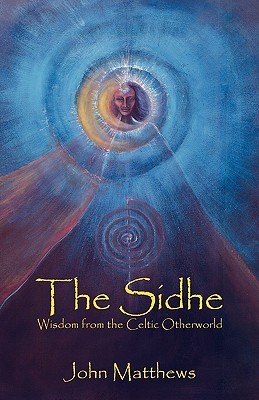
The Sidhe: Wisdom from the Celtic Otherworldby John Matthews

The Sidhe: Wisdom from the Celtic Otherworldby John Matthews

“I knew then that something was going to happen in Ireland. I had no idea then just what an enormous and irrevocable change it was going to make to my life.” pg 5, ebook

John Matthews received a call from a friend whose occupation is archaeology. The friend showed John into a barrow where he first saw the glyph that is on the cover of this book.

John claims that through meditation upon the glyph, he communicated with other beings whom he believes are ‘the Sidhe.’

“To truly know a thing is to become one with it. Just as to become one with it is to truly know it.” pg 27, ebook

Photo by cottonbro on Pexels.com

He shares the communications that he had through the glyph throughout the text. At the end, he includes six exercises that the beings gave him and encourages readers to try the practices for themselves.

Readers could potentially experience the connection John felt.

“Drawn by this feeling, I lay down beneath the branches of the old oak, and, as I had done countless times before, stared up through the branches at the patches of blue sky that showed through. As I did so a sense of stillness and peace descended upon me.” pg 36, ebook

Photo by Magda Ehlers on Pexels.com

The Sidhe: Wisdom from the Celtic Otherworld reminded me of the multiple works of Abraham Hicks or Seth Speaks: The Eternal Validity of the Soul. There’s probably a reason for that.

It could be that the channelers are tapping into a similar place. In this book, John calls it the “great net” of creation. I’ve heard it called, “Indra’s net,” among other names in other sources.

Whatever it may be, I find it interesting that the communications received are similar enough to draw comparisons.

“Among the greatest gifts we have observed in your race is the desire to know and to explore. This hunger has propelled you far along the path of the day and the path of the night. Hence, your journey is indeed one of exploration, not only in time and space, but in the dimensions of Spirit.”

Photo by Stefan Stefancik on Pexels.com

Of course, I had to try John’s method for myself. I’m always so curious about these kind of things.

Unfortunately, I fell asleep rather than having a memorable experience. I expect the fault was on my side, but perhaps I experienced something in my sleep- I just failed to remember it.

I do plan to give the meditation a try again in the future, when I’m not so sleepy.

I was fascinated with the way the glyph looks like a treble clef with multiple circles. When John began to describe the Sidhe’s connection to music, I felt that comparison made sense.

“Much of our time is spent in the making of music- though for us it is more serious than a pleasant pastime, since it is part of our creative process in more than an abstract fashion.” pg 69

Playing music is one of the few activities that put me into a flow state. Perhaps I should try meditating that way.

Anyway, I recommend this book for the curious or spiritual seekers. If you try the exercises within, please do share your results. Maybe some day, the world will have more answers than questions about these ineffable things.

Or, maybe, we’ll open yet another door for endless discoveries. Either way, I’ll be interested to see what comes next.

Thanks for reading!

Medieval Costume and How to Recreate It by Dorothy Hartley

Medieval Costume and How to Recreate It by Dorothy Hartley

“All too late it is beginning to be realized, slowly indeed but no less surely, that the historic evolution of dress and personal ornament offers a wide field for methodical study; that it is in fact a science and can be made to subserve worthier ends than those of mere amusement.” pg 11, ebook

Medieval Costume and How to Recreate It by Dorothy Hartley is more of a history book than practical manual for dressing as a historical figure, unless the reader happens to have a very highly developed tailoring ability.

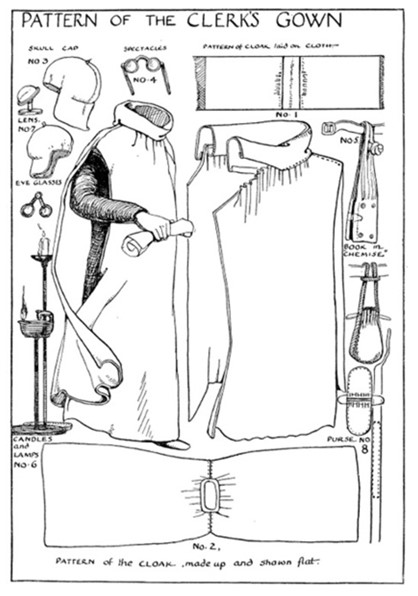
From the book.

At least, more than I currently have.

That being said, the divisions of different types of historical costumes into profession is inspired. As author Dorothy Hartley explains, at the beginning of the book, professions had a huge affect on how medieval persons looked. Think doctor compared to butcher compared to musician or priest.

“After the careful restrictions of religion and royalty, musicians are refreshingly loose, and may wear anything. Since there is no definite costume for musicians we have concentrated on robes and sleeves that give free play to the arms.” pg 74, ebook

Photo by JJ Jordan on Pexels.com

In addition to the visible clothing, this book delves into the garments worn under historical clothing, which was a topic I hadn’t considered before. But, as Hartley writes, dressing as a historical figure gives the roleplayer the opportunity to both entertain and educate through the details of the costume.

For example, the thickness and type of the fabrics that go into hose have an obvious function as well as a proper place on timeline of historical costumes.

“To the casual enquirer it will no doubt seem a curious anomaly: it is none the less a fact that in the majority of costume-books no portions of man’s apparel are slurred over in so haphazard a fashion as those under the above heading.” (hose and breeches) pg 80

Photo by Valentin Onu on Pexels.com

This book is a learning experience but, as I mentioned, also a practical one if you already know how to construct a shirt or are curious about how to make a cloak hang correctly.

Highly recommended for roleplayers or historians.

Thanks for reading!

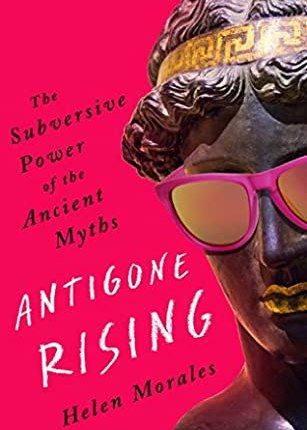
Antigone Rising: The Subversive Power of the Ancient Myths by Helen Morales

Antigone Rising: The Subversive Power of the Ancient Myths by Helen Morales

Helen Morales highlights troubling aspects of Greek and Roman mythology in a call-to-action to analyze and reimagine those myths for modern times.

As a classicist, I was familiar with most of the myths Morales examined. However, I was unaware of some of the toxic sub-context contained within them.

“My hope is that by tracing patterns and connections between ancient and modern beliefs and practices it will become easier to understand how misogyny operates and the ways in which classical antiquity plays a role (although it is not the only player and this is not its only role) in legitimating how misogyny operates today.” pg 14

Photo by Miggy Rivera on Pexels.com

The stories we tell ourselves are powerful. It shapes our expectations for our communities and the roles we occupy within them. Joseph Campbell pointed this out for the last generation. Perhaps Helen Morales will be the one to point it out for this one.

“The problem is that misogynist myths are more strongly culturally entrenched in our societies than myths that subvert them.” pg 148

But all hope is not lost. Creators from books to film to music videos are taking these myths and making them their own. With time, new interpretations will take hold.

Antigone is rising. Antigones (and Ismenes and Haemons) are rising.” pg 150

Photo by cottonbro on Pexels.com

Lest we forget, Morales reminds readers that ancient myths have been the inspiration for, among other things, “the Declaration of Independence and the US Constitution, trades union movements, Marxism, and the gay rights movement.”

It is all about how we interpret and tell the myths with each passing generation. Let’s choose carefully.

Thanks for reading!