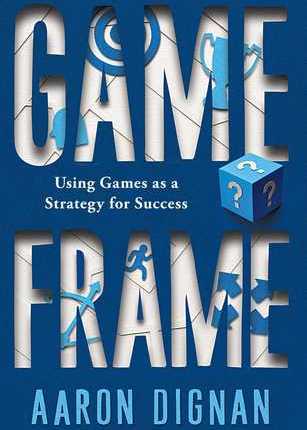
Game Frame: Using Games as a Strategy for Success by Aaron Dignan

Game Frame: Using Games as a Strategy for Success by Aaron Dignan

In Game Frame, Aaron Dignan outlines what games are, their components and how to create behavioral games to change your own and others behavior.

He clearly states his goals for the book in the introduction: “The truth is, we are born knowing how to play, and how to invent games where none exist. I’m convinced that there is a role for games and play in reshaping the world around us.” introduction, xiii.

Photo by lilartsy on Pexels.com

Dignan goes on to do just that. His detailed breakdown of the components of games and why we think they’re fun was particularly good.

I also agreed with his assertion that “play is a state of mind”: “…when a chef cooks something new, it feels like play. When I cook something new, it feels like work. Both of us are making a meal, but we’re not experiencing the same thing. Play is a state of mind.” pg 26.

Photo by Malidate Van on Pexels.com

My quibble with this book is that he didn’t convince me that games are the best way to change behavior. In Level 5 (Chapter 5), Dignan describes a speech given by Professor Jesse Schell at the D.I.C.E. conference in 2010 that scared the crap out of me.

Essentially, Professor Schell outlines how businesses and the government could use behavioral games to create a dystopian world in which our every action is analyzed and nudged towards consumerism.

“You’ll get up in the morning to brush your teeth and the toothbrush can sense that you’re brushing your teeth. So hey, good job for you, 10 points for brushing your teeth. And it can measure how long, and you’re supposed to brush your teeth for 3 minutes. You did! Good job! … And who cares? The toothpaste company. The toothbrush company. The more you brush, the more toothpaste you use. They have a vested financial interest.” pg 58

Photo by Karolina Grabowska on Pexels.com

After that chapter, I couldn’t shake the feeling that Dignan is inviting us to open a Pandora’s box.

“My challenge to you is simple: I believe that a million behavioral games could change everything, but they must be imagined and realized soon.” pg 169.

Hypothetically, say I design a game with the best intentions, but then, at some point, it’s taken over by the government and forced on people. Suddenly, it stops becoming a game and ruins the world.

Who wants to take the risk to potentially be the person who destroys society because of an ill-conceived behavioral game? Not me.

Recommended only for the truly brave gamers.

Thanks for reading!

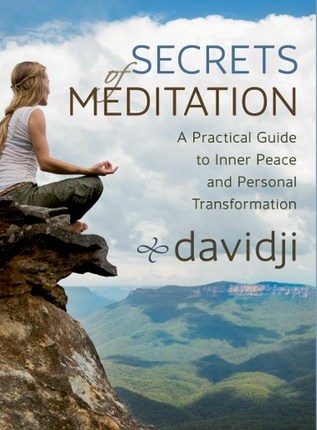
Secrets of Meditation: A Practical Guide to Inner Peace and Personal Transformation by Davidji

Secrets of Meditation: A Practical Guide to Inner Peace and Personal Transformation by Davidji

Secrets of Meditation is one of the clearest and beginner friendly meditation manuals that I’ve ever read.

Davidji breaks practices down not only into type and step-by-step instructions with examples, but also by lineage and development over time and place.

Davidji provides enough background on himself to establish his bona fides but not so much as to overpower the instruction with meaningless chatter about himself.

Photo by Spencer Selover on Pexels.com

He intersperses the text with helpful advice, additional authors to explore, and a myriad of ways to connect with him online for some meditation freebies.

Though it’s clear that he’s immersed himself in Eastern culture and practices (having traveled extensively in the East and studied under various gurus), Davidji hasn’t adopted an insider’s way of talking about meditation.

Sometimes, and maybe this is just me, it feels like meditation instructors go so far out into the “oneness” that they never come back fully into the real world. That’s not Davidji at all. I loved this text mainly because of how he could keep one foot “over there” and the other firmly planted “back here”.

Admittedly, my daily meditation practice has lately fallen somewhat on my priority list. This book makes me want to head back to the mat.

If you enjoyed Secrets of Meditation, you may want to read 10% Happier: How I Tamed the Voice in My Head, Reduced Stress Without Losing My Edge, and Found Self-Help That Actually Works which is not so much meditation instruction as a memoir from someone beginning meditation. I recommend it a lot because Dan Harris seemed so relatable to me.

And also, Seeking Heaven. Eben Alexander is a neurosurgeon who had a near death experience turned it into guided meditations. I think they’re easy enough for beginners to use.

Thanks for reading!

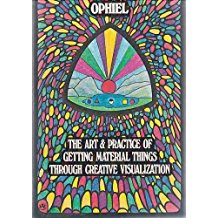
Art and Practice of Getting Material Things Through Creative Visualization by Ophiel

Art and Practice of Getting Material Things Through Creative Visualization by Ophiel

Originally published in 1967, the Art and Practice of Getting Material Things Through Creative Visualization arrived nearly three decades before The Secret.

With more of an occult than a New Age twist, the one-name author, Ophiel, talks readers through what is essentially the Law of Attraction, but he never calls it that.

Photo by Egor Kamelev on Pexels.com

Ophiel tends to write portions of the book that he thinks are most important in all caps. LIKE THIS. It can be annoying.

Another interesting quirk, Ophiel talks about him/herself in the third person, at all times.

In this passage, he’s talking about why he wrote this book, and you get to see the author’s style in action: “Ophiel’s defect consists of not being about to accept self-styled prophets’ sayings, and teachings, without raising the following awkward question- and making the following embarrassing test. The question is IS WHAT THEY SAY TRUE? and the test is DOES WHAT THEY SAY WORK, AND PRODUCE RESULTS? And if what they SAY DOES NOT WORK THEN IT IS NOT TRUE, and into the garbage can with it!!” pg iii

Ophiel claims that creative visualization techniques don’t always work for a variety of reasons. He gives the reader exercises and suggestions for improving their results.

“In Creative Visualization work all the planes involved in our cosmic existence are used, the Etheric, the Lower Astral, The Higher Astral, the Mental Plane, and the Causal Plane, AND ALL THESE PLANES HAVE DEFINITE RULES AND LAWS FROM WHICH THEY WILL NOT DEVIATE ONE IOTA.” pg 5.

Again, with the capitalization.

Photo by stein egil liland on Pexels.com

He also has interesting ideas about reasons why beginners fail out of the gate.

He cites something called “the sphere of availability”: “The new student then proceeds to visualize for LARGE THINGS. BIG THINGS. VALUABLE THINGS. Things that are far beyond his ability- not to visualize-imagine-desire, BUT FAR BEYOND HIS PRESENT ABILITY TO DEMONSTRATE-VISUALIZE.” pg 31.

Ophiel uses different words, but essentially he says, start small, celebrate the small victories and increase your “sphere of availability” in that manner. He also gives practices to improve your visualization skills.

Honestly, if asked to recommend a teacher for creative visualization, I’d say skip Ophiel and read Abraham Hicks. They’re a lot more fun.

Thanks for reading!

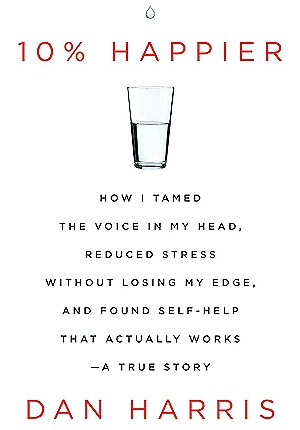
10% Happier: How I Tamed the Voice in My Head, Reduced Stress Without Losing My Edge, and Found Self-Help That Actually Works by Dan Harris

10% Happier: How I Tamed the Voice in My Head, Reduced Stress Without Losing My Edge, and Found Self-Help That Actually Works  by Dan Harris
10 happier

Dan Harris had problems, like all of us, but unlike all of us, he was beginning to experience some of the messier symptoms of his dysfunctional inner world in front of millions of people.

He sought help and jumped into the meditation world with both feet. I think its why most people find their way into spiritual practices- something isn’t working quite right in their life and they need to change from the inside out. So, they look for a process of inner change and run smack into meditation.

However, Dan isn’t drinking the kool-aid of the new age movement. He questions every practice for its practical benefits and searches for scientific experimentation to back up those benefits.

In essence, he brings the investigative skills that he applies to his job as a news anchor to the practice of meditation and it’s a delight to read.

I loved this. Dan had the same initial reaction to Eckhart Tolle and Deepak Chopra that I did. One of them seems too mellow to be real and the other seems to market himself too well to be that spiritual.

Over time, I’ve come to love both of those authors/gurus for their wisdom, but they are both just out of this world. Harris isn’t afraid to point that out.

In conclusion, I’d recommend 10% Happier to anyone who wants to become 10% happier- isn’t that all of us?

Also, anyone who has read Eckhart Tolle or Deepak Chopra may also enjoy this, if only for the surprisingly accurate descriptions of their foibles. Anyone who wants to try meditation but feels like they don’t have time, couldn’t do it if they tried, or doesn’t know where to start may find some inspiration from this book.

And, finally, anyone who is fed up with the hippie-dippie-trippie feeling that most spiritual memoirs give them, will find a kindred soul in Dan Harris.

Thanks for reading!

I’ll Put 3 Chips on God, Just in Case There is One by Preeti Gupta

I’ll Put 3 Chips on God, Just in Case There is One by Preeti Gupta

I’ll Put 3 Chips on God, Just in Case There is One reads like what you would get if you crossed Bridget Jones’ Diary with an episode of Seinfeld and added a dash of New Age spiritual musings.

Preeti, in a conversational way, discusses topics ranging from karma to palm reading.

Photo by Rakicevic Nenad on Pexels.com

I liked that she didn’t talk down to the reader or apologize for her thoughts. She just puts it out there and lets everybody come to their own conclusions.

My favorite part of this book was when Preeti goes to the astrologist twice to see if he would give her the same natal chart on both visits. She lets some years pass so that she won’t be recognized by her face and compares the results. They don’t match.

Preeti celebrates the fact that the charts were completely different because it backs up her theory that folks who are in the spiritual business only for money are hucksters.

But, at the same time, she doesn’t dismiss astrology as utter nonsense and leaves the door open for more learning on the subject.

Photo by Min An on Pexels.com

It’s refreshing to find an author who is that willing to entertain different traditions even in the face of a fraudulent experience. She freely admits that she doesn’t know the ultimate truth and I think everyone can resonate with that idea… because, who does, really? Not me.

If you enjoyed I’ll Put 3 Chips on God, I’d recommend reading Life’s Operating Manual: With the Fear and Truth Dialogues(Tom Shadyac’s thoughts on life and spirituality) or Tipping Sacred Cows: The Uplifting Story of Spilt Milk and Finding Your Own Spiritual Path in a Hectic World (in the same conversational type of style as this book and with irreverent humor, Betsy Chasse talks about her journey through the New Age Movement).

I received a free digital copy of this book from the author. Thank you, Preeti, for sending it to me.

And, thank you, for reading!

Art Of Possibility by Rosamund Stone Zander, Benjamin Zander

Art Of Possibility by Rosamund Stone Zander, Benjamin Zander
art of possibility

The Art of Possibility takes a psychologist and a musician and smooshes their ideologies together to create a self help program.

“Our premise is that many of the circumstances that seem to block us in our daily lives may only appear to do so based on a framework of assumptions we carry with us. Draw a different frame around the same set of circumstances and new pathways come into view.” pg 1.

The various practices that are discussed in The Art of Possibility seek to create those new frames.

One of my favorite chapters was: Being a Contribution. In it, the authors suggest playing life like a game. “The purpose of describing, say, your professional life or your family traditions as a game is twofold. You instantly shift the context from one of survival to one of opportunity for growth. You also have the choice of imagining other games you might prefer to play in these realms.” pg 59.

As a gamer, that’s an idea that I can easily assimilate into my life. 🙂

I also enjoyed: The Way Things Are“Being present to the way things are is not the same as accepting things as they are … It simply means, being present without resistance: being present to what is happening and present to your reactions, no matter how intense.” pg 100.

Photo by David Bartus on Pexels.com

A little bit of Buddhist philosophy can go a long way.

One of my complaints about this book is that I don’t think that it fit together as seamlessly as they were hoping it would.

Also, I feel like non-musicians may not get as much out of this book as I did. It is rather heavy on the music stories and metaphors.

But, like many self-help books, it is packed with actionable suggestions and feel-good stories. Recommended for those looking to inject a little more possibility into their lives.

Thanks for reading!

Limitless Mind: A Guide to Remote Viewing and Transformation of Consciousness by Russell Targ

Limitless Mind: A Guide to Remote Viewing and Transformation of Consciousness by Russell Targ
limitless mind

Russell Targ is one of the founding members of the Stanford Research Institute’s studies of psychic phenomena. He worked with Hal Puthoff and Ingo Swann to develop the remote viewing protocols for the CIA.

Remote viewing, though lambasted in popular culture in such films as “Men who Stare at Goats,” is an actual practice. It was utilized by United States and Russian militaries with some success or complete failure- depending on who you ask.

I thought that a handbook on remote viewing from this seminal scientist would delve more into the nitty-gritty of the practice. But, it doesn’t.

Targ does give a broad outline of what remote reviewing is. He also give examples of his research, but it wasn’t all that I had hoped it would be.

Limitless Mind is, however, packed with information about psychic studies from the late 1800’s until the current time. Targ discusses the studies from multiple countries covering such diverse topics as spoon bending, distance healing and psychic diagnosis.

If the reader is looking for remote viewing techniques only, I’d recommend Remote Viewing: The Complete User’s Manual for Coordinate Remote Viewing or The Seventh Sense: The Secrets of Remote Viewing as Told by a “Psychic Spy” for the U.S. Military.

Thanks for reading!

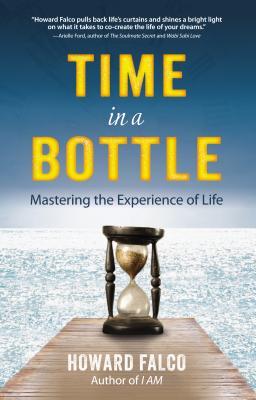
Time in a Bottle: Mastering the Experience of Life by Howard Falco

Time in a Bottle: Mastering the Experience of Life by Howard Falco
timeinabottle

Time in a Bottle is a self help book about changing your perceptions to improve your life. Though not a new message, some readers may find this book worth the time.

Howard Falco presents this knowledge with a spiritual slant. Readers who are turned off by that kind of thing may want to choose another book.

The main premise: “Our misunderstanding of time- how our thoughts relate to time, how time is actually created, and how time seems limited- is one of the biggest reasons we suffer and at times feel hopeless or powerless in our lives.” pg 1, introduction.

One of the ways to “master the experience of life” is to realize that you are infinite potential like the universe itself: “You are a part of infinity. To the degree that you feel that life is finite and limited, you will act out of this fear, and work to create an experience that is a result of this fear.” pg 33.

I agree that mindset is important to determining your life’s path. Love and fear seem to be the two driving forces of our world. Wonder why that is…

Photo by Nacho Juu00e1rez on Pexels.com

Falco also discusses giving up resistance to how life is: “It is critical that you know that the ending of your resistance toward any particular thing (sickness, layoffs, war, family, financial trouble, death, political chaos, natural disasters, etc.) is not in anyway condoning these terrible things or giving up on change. It is simply the full acknowledgment that for the moment this is what is happening.” pg 40

He talks about giving up regrets about the past that could potentially be holding you back: “This is not about accepting that something had to happen to you; it is about acknowledging that it did happen and standing in front of the universe saying, “I trust that there is perfection and a specific, divine purpose for my past and the exact way it unfolded. Because of this, I am realizing more of my unlimited potential for the future.”

So then, unburdened, you step into your future with faith.

Falco incorporates quotes from famous philosophers and scientists along with anecdotal stories to illustrate his points. As I said, no new wisdom here, but plenty of good reminders to trust, forgive and move forward to a life outside of time.

Thanks for reading!

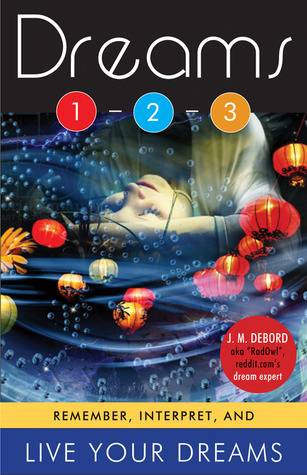
Dreams 1-2-3: Remember, Interpret, and Live Your Dreams by J.M. DeBord

dreams

J.M. DeBord starts his book about dreams with the idea that dream interpretation used to be the job of a wise man or woman in the community. Dreams were an integral part of living a fully conscious and realized life.

Now, dream interpretation experts charge for their services and not everyone has access to their skills.

This clever little book opens the doors of dream interpretation so that average people can again know the meaning of their dreams. It doesn’t stop there- J.M. DeBord also provides suggestions for integrating the dreams into your daily life.

Finally, in Dreams 1-2-3, DeBord empowers readers by reminding us that no matter how expert the dream interpreter, the final meaning for any dream really rests in the hands of the dreamer herself. Only she can feel the “ringing of truth” in the interpretation.

This is by far the best book that I have ever read on dream symbolism. DeBord doesn’t provide lists of animals/colors/scenarios and their most common meanings. He ties whatever shows up in the dream to the rest of its contents and the dreamer’s own internal and external world.

Photo by Ylanite Koppens on Pexels.com

In this way, each dream can be understood and applied in as unique a way as the dream itself.

My one critique of Dreams 1-2-3 is that DeBord made the process seem so simple. I’d read the dream example and think, I have absolutely no clue what that one means, and then DeBord would go on to provide a crystal clear interpretation.

See how simple it is?… he seems to say. Perhaps not.

DeBord may have a gift for it, honed by practice, and he doesn’t realize that what he is doing is rather amazing. I suppose he gives me a goal to strive towards.

I have had a few dreams since completing this book and, with DeBord’s method, have been able to wring some meaning from what I otherwise would have assumed to be nonsense. Dreams 1-2-3 has already changed my life. Read it if you want to change yours too.

Thanks for reading!