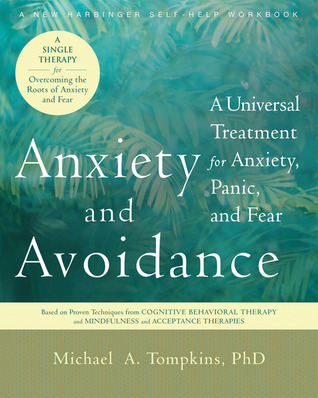
Anxiety and Avoidance: A Universal Treatment for Anxiety, Panic, and Fear by Michael A. Tompkins

Anxiety and Avoidance: A Universal Treatment for Anxiety, Panic, and Fear by Michael A. Tompkins

Everyone experiences anxiety in some form or another in their lives. The trouble comes when you find yourself altering your behavior to avoid triggering yourself, painting your life into smaller and smaller boxes in order to attempt to control the anxiety.

Photo by Eternal Happiness on Pexels.com

This self help workbook hands you the keys to your anxiety response. By unlocking that, you give yourself back the freedom that you may have lost to uncontrollable anxiety.

Emotional flexibility, then, is the key to recovery from your anxiety disorder.”

Michael Tompkins uses cognitive behavioral therapy, mindfulness and acceptance therapies to tackle most major anxiety issues.

I liked his approach because mindfulness is a practice that I enjoy incorporating into my life anyway. By applying it to my anxiety responses, I learned a lot about myself in a very short period of time.

Photo by Karolina Grabowska on Pexels.com

“The purpose of both our primary and secondary anxious responses is to protect us from the threats and challenges of life. For some people, however, the natural and normal secondary anxious response creates problems. These people are stuck in their secondary anxious responses and because they’re unable to move out of it, they have an anxiety disorder.” pg 22

But no matter what coping mechanisms therapists may bring to the table, we have to be willing to put them into action. Tompkins reminds readers to be gentle with themselves and that “true motivation is an invitation, not a push.”

“True motivation is a willingness to try because you recognize and accept that it makes sense for you to change.” pg 43

Once you know your triggers and responses, Tompkins guides the reader through exposure therapy to continue releasing any further anxiety responses.

Photo by Kaboompics .com on Pexels.com

I know no method or book will be a breakthrough for everyone, but I found this particular book to be incredibly helpful and informative. I highly recommend it for anyone suffering from anxiety, panic or fear.

It could be the jump start you need to discover true healing and freedom from the fears that may be holding you back from living the life you’ve visualized for yourself.

Thanks for reading!

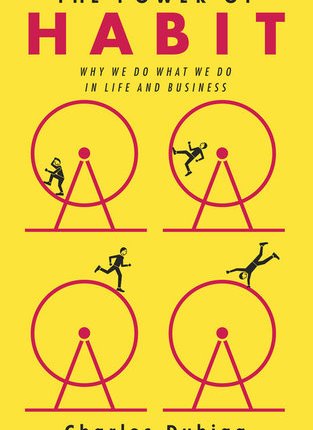
The Power of Habit: Why We Do What We Do in Life and Business by Charles Duhigg

The Power of Habit: Why We Do What We Do in Life and Business by Charles Duhigg

The Power of Habit examines behaviors you may not even know you have and hands you the tools to make lasting change at home, at work and in your community… if you want it.

“Each chapter revolves around a central argument: Habits can be changed, if we understand how they work.” prologue xvii

Photo by Sora Shimazaki on Pexels.com

First, author Charles Duhigg goes into what makes a habit at the biological level.

“Habits, scientists say, emerge because the brain is constantly looking for ways to save effort. Left to its own devices, the brain will try to make almost any routine into a habit, because habits allow our minds to ramp down more often.” pgs 17-18

Duhigg describes how the brain creates a “habit loop” through cues, routines and rewards. These three elements feed on themselves until an ingrained habit is made. And, once it is there, it takes very little to upkeep.

That’s good news and bad news, because it works the same way for healthy and unhealthy habits.

“But the reason the discovery of the habit loop is so important is that it reveals a basic truth: When a habit emerges, the brain stops fully participating in decision making.” pg 20

Photo by Anna Shvets on Pexels.com

The “golden rule” for changing a habit, Duhigg says, is to keep the same cues and rewards, but change the routine that leads to them. It sounds simple, but everyone is different with different motivations. So, it takes a bit of self awareness to discover what those unique cues and rewards are for you. But, once you know your triggers and motivations, that’s when the fun begins of crafting a new routine.

I found this book to be absolutely fascinating. It’s also making me question the habits I’ve picked up in my own life. Am I certain that they are ones I want to continue? I can think of a few that could use a bit of tweaking. And now I know how.

Photo by Petar Staru010deviu0107 on Pexels.com

“This is the real power of habit: the insight that your habits are what you choose them to be.” pg 271

Let’s cultivate the good ones then.

Thanks for reading!

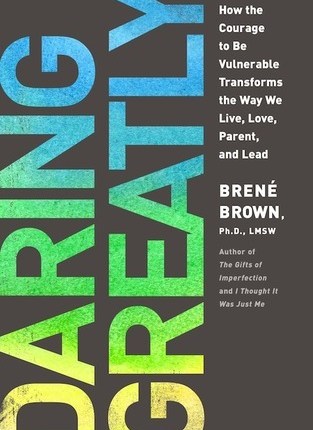
Daring Greatly: How the Courage to Be Vulnerable Transforms the Way We Live, Love, Parent, and Lead by Brené Brown

Daring Greatly: How the Courage to Be Vulnerable Transforms the Way We Live, Love, Parent, and Lead by Brené Brown

Brené Brown shares her twelve years of research into shame and gives tools on how to increase one’s vulnerability. In this way, she believes each individual can help change the culture of scarcity and pull the world back from a continual cycle of shaming.

We’ll build stronger and deeper relationships, strengthen families and have more productive work places. And, by doing this, we will each, in our own way, live in a manner that “dares greatly” every day.

“I also learned that the people who love me, the people I really depend on, were never the critics who were pointing at me while I stumbled. They weren’t in the bleachers at all. They were with me in the arena. Fighting for me and with me.” pg 56

Photo by RF._.studio on Pexels.com

I’m going to use the information in this book the most in my work life. As a writer, I attach far too much significance to my work product on the audience’s response to it rather than my own feelings about it. As Brown so clearly points out in this book, an outside response will never be good enough or big enough to fill the need that I am looking to fill with their words or their views. Or, if it is wildly praised, perhaps the next work won’t be, and then I’m right back to where I started.

“You still want folks to like, respect, and even admire what you’ve created, but your self-worth is not on the table. You know that you are far more than a painting, an innovative idea, an effective pitch, a good sermon, or a high Amazon.com ranking.” pg 64

This desire for connection and a feeling of worthiness, Brown says, comes from the need to survive by belonging to a group. Our brains have evolved to encourage us to belong and form connections. And when we don’t by not believing in our own self worth or experiencing shame, it is a physically painful emotion. People do all sorts of things to avoid feeling shame including pulling away or striking out. But, in the end, these connections are life itself.

“Buber wrote, “When two people relate to each other authentically and humanly, God is the electricity that surges between them.” pg 150

Photo by Pixabay on Pexels.com

As interesting as I found Brown’s research to be, she lost me when she began a discussion about how much vulnerability is enough or too much and walking the tightrope between extremes. So, be authentic, but don’t use it to manipulate people. A few sentences covers what Brown uses 50 pages to unpack.

“When we stop caring about what people think, we lose our capacity for connection. When we become defined by what people think, we lose our willingness to be vulnerable.” pg 169

Her message becomes a bit undefined and more general the further the book goes. That’s not to say it couldn’t be useful for readers who are looking for that type of information. I didn’t find it particularly engaging.

Like any self help book, I think sometimes authors and researchers can get lost in the weeds of the problem. I far more prefer to focus on the solution. In this case, that’s being brave enough to show up and be seen, demonstrating vulnerability and willingness to care about whatever is going on wherever we find ourselves throughout the day. As Brown reminds readers, it’s not about winning or losing, it’s about being there. And that’s a message worth spreading.

Photo by fauxels on Pexels.com

“To love ourselves and support each other in the process of becoming real is perhaps the greatest single act of daring greatly.” pg 110

I’m game. Are you?

Thanks for reading!

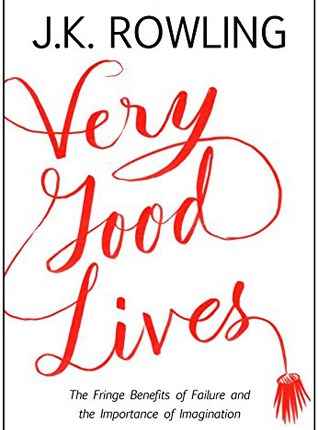
Very Good Lives: The Fringe Benefits of Failure and the Importance of Imagination by J.K. Rowling

Very Good Lives: The Fringe Benefits of Failure and the Importance of Imagination by J.K. Rowling

“It is impossible to live without failing at something, unless you live so cautiously that you might as well not have lived at all – in which case, you fail by default.”

J.K. Rowling gave the commencement speech at Harvard in 2008 and the result was a mini-masterpiece about life, the power of imagination, and failure.

Photo by Joe Digital & Co on Pexels.com

Though we all know now what a mammoth success she would go on to be, at one time, she was experiencing failure and poverty.

“Now, I am not going to stand here and tell you that failure is fun. That period of my life was a dark one, and I had no idea that there was going to be what the press has since represented as a kind of fairy tale resolution.”

I’ve had my own handful of rock bottom moments and, she’s right, it is no fun. But I too have found resilience and creativity that emerged from that darkness. It’s strange, when you’re pushed to your limits, you suddenly discover that there’s more to yourself than you ever realized.

“One of the many things I learned at the end of that Classics corridor down which I ventured at the age of 18, in search of something I could not then define, was this, written by the Greek author Plutarch: What we achieve inwardly will change outer reality.”

Photo by Pavan Maruvada on Pexels.com

Like Rowling, I studied the Classics because something about it spoke to me. When I told my dad that I was adding that course of study to my degree, he laughed and said, “Well, at least it will look impressive on your resume.” Even though I knew he was right in that there were very few jobs where I could use it, having a background in the Classics has taught me a lot about modern life.

I learned that people in antiquity, though they lacked the technology and lifestyle we enjoy today, still had the intensity of emotions and civilizations struggles that persist in the modern era. There were those who had and those who had not. There were crimes of passion, acts of kindness, politicians both corrupt and extraordinary.

Struggle, stress and failure is not something mankind invented when we produced the first smart phone. Classics gives you a long view on humanity and how far, or not far, we’ve come since.

We do not need magic to change the world, we carry all the power we need inside ourselves already: we have the power to imagine better.

Photo by josue Verdejo on Pexels.com

Brilliant. I recommend this small book as a graduation gift or for anyone who is having a bad day. It can act as a reminder that anyone can succeed at whatever their heart tells them is their path, despite any evidence to the contrary. And don’t be afraid of failure. Everyone will experience it at one time or another, but what matters most is what you chose to do next.

Thanks for reading!

Powers of Two: Finding the Essence of Innovation in Creative Pairs by Joshua Wolf Shenk

Powers of Two: Finding the Essence of Innovation in Creative Pairs by Joshua Wolf Shenk

Joshua Wolf Shenk examines creatives pairs throughout history in an effort to see why and how they work, and also why they end.

“The dyad is also the most fluid and flexible of relationships. Two people can basically make their own society on the go. When even one more person is added to the mix, the situation becomes more stable, but this stability may stifle creativity, as roles and power positions harden.” Introduction, pg xxii

Photo by Gratisography on Pexels.com

Shenk believes pairs move through six stages: Meeting, confluence, dialetics, distance, the infinite game and interruption. The stages show the development of the relationship, assumption of roles and eventual fall out of creative pairings.

“This book is written in the faith, underscored by experience, that more is possible — more intimacy, more creativity, more knowledge about this primary truth: that we make our best work, and live our best lives, by charging into the vast space between ourselves and others.” Introduction, pg xxv

I picked up this book because I’m involved in a creative partnership with my spouse (The History Guy, YouTube channel) and I was curious to see how other pairings have worked in the past. It was interesting to see how similarly we function when compared to other creative partners. I mean, everyone is different, but there are patterns that can be observed if you look closely.

“The irony is that, while our eyes naturally follow the star, a pair’s center of gravity is often with the one we see less.” pg 66

Photo by Victoria Borodinova on Pexels.com

Shenk’s chapters were interesting not only in their obscure history about some of the most famous partners in history, but also their implications for people who are looking to share their creative endeavors, and lives, with others.

“High-functioning couples commonly say that one key to a good relationship is giving each other plenty of space. But a big reason there are so many dysfunctional couples, romantic and creative, is that it’s hard for a lot of us to know what that really means or what it would look like in our lives.” pg 128

What works, what doesn’t work, and why?

“Creativity has become a broad, vague term, a kind of stand-in for universal good, even a synonym for happiness (or, as innovation, for profits). But making new, beautiful, useful things is as much about discord as it is about union.” pg 21

Photo by Tim Samuel on Pexels.com

The path isn’t always smooth, but good partners shore each other up. They may be strong where the other is weak. They challenge each other to be better than they ever would have been by themselves.

“Highly creative people have high standards and distinct sensibilities; they see the world in an unusual way (or they wouldn’t be able to make something new out of the materials of that world). Their partners must be a match — and the discovery of a shared sensibility is itself often an impetus to share work.” pg 31

I learned a lot about the Beatles, scientists, dancers, artists, screen writers, authors and more in Powers of Two. This is a book about creativity, yes, but it also looks at relationships themselves. It takes apart power dynamics, personal satisfaction and creative instincts. It is more of a rumination on creative pairs than a scientific thesis.

Recommended for readers who enjoy quirky non-fiction books. You’ll probably learn something new if you pick this one up. I did.

Thanks for reading!

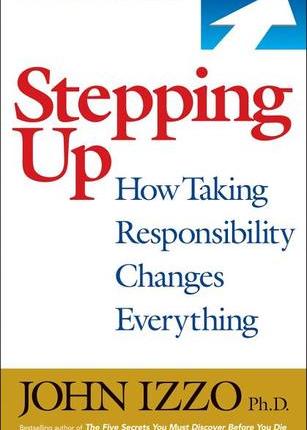
Stepping Up: How Taking Responsibility Changes Everything by John Izzo

Stepping Up: How Taking Responsibility Changes Everything by John Izzo

“You know people who accept responsibility — aren’t they great to be around?” vii, from the forward.

The focus of this book is a worthy one. The author, John Izzo, provides many real life examples of people stepping up and doing the right thing and how it has helped their lives and businesses.

Photo by Matthias Zomer on Pexels.com

Unfortunately, it just reads like one cliché after another and I had a difficult time connecting with it.

Stepping up is seeing a need and deciding YOU are the right person to do something about it.” pg x.

I do agree that all of our power lies in ourselves. Blame doesn’t fix problems. Waiting for someone else to do it doesn’t do the trick either.

“The consequence of having a seismic shift towards victim thinking means more of us feel that the future is not in our hands but in the hands of forces outside ourselves. And since internal locus of control is positively correlated with happiness, success and initiative while external locus of control is related to anxiety and depression, it’s pretty clear that most organizations and society as a whole would be better off if more of us believed we could change things.” pg 21

Photo by Aleksandar Pasaric on Pexels.com

What it comes down to is understanding that at the end of the day, the only person you can entirely control is yourself.

“Beginning where you are and doing what you can with your unique set of skills is critical.” pg 80

What are some of the methods Izzo suggests for “stepping up”? He counsels focusing on what matters, challenging your internal assumptions and find one thing, anything, that you can do immediately to address how you may have contributed to the problem.

“Think about this for a moment: everything that has EVER been accomplished began with someone taking a single step.” pg 71

It’s common sense stuff. Which is fine, but not exactly what I was expecting from this one. I suppose I’ll take responsibility for my internal assumptions about what I would learn from Stepping Up. It’s not YOU, book, it’s me.

“But here is the truth. There is a 100 percent guarantee that nothing will change if you don’t step up.” pg 33

Photo by Andrea Piacquadio on Pexels.com

What is my solution to this problem? On to the next book, my friends.

“Once you step up, somehow that act of taking initiative drives you to find the resources you need inside and outside yourself.” pg 119

To the library! 🙂

Thanks for reading!

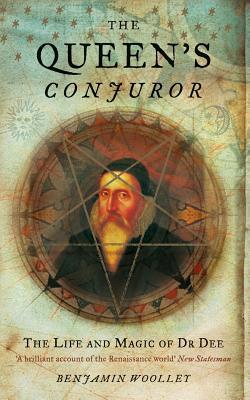
The Queen’s Conjuror: The Science and Magic of Dr. John Dee by Benjamin Woolley

The Queen’s Conjuror: The Science and Magic of Dr. John Dee by Benjamin Woolley

The Queen’s Conjuror is a biography of Dr. John Dee, a fascinating and much-maligned Renaissance man who was, among other things, Queen Elizabeth I’s personal astrologer.

“And for these and such like marvellous acts and feats, naturally, mathematically, and mechanically wrought and contrived: ought any honest student and modest Christian philosopher be counted and called a conjuror?” pg 15

He had interests in astrology, science, mathematics and the occult, which, to modern eyes, may seem strange. But Dee viewed the inner workings of nature and the universe as a type of magic and his studies of it, through the use of science, was another way that Dee worshiped God.

Photo by Tima Miroshnichenko on Pexels.com

“Queen Elizabeth, a symbol of Protestant sovereignty, told the French Ambassador Andre Hurault: ‘There is only one Jesus Christ… the rest is dispute over trifles.’ This, it seems, was Dee’s view as well.” pg 45

Part of Dee’s study of nature was an attempt to find a “universal language.” This universal language, Dee believed, was told to the Biblical Adam by God in the fabled Garden of Eden before the fall from grace. Dee hypothesized if a scientist could find this universal language, giving the secret name of beasts, plants and everything in creation, that it would unlock the secrets of the universe itself.

“In other words, Dee thought that the ‘astronomical’ symbols appeared to be the relics of a long lost universal language that transcended national and, by implication, religious barriers.” pg 75

Photo by cottonbro on Pexels.com

In addition to his legacy of mysticism and the Enochian alphabet, Dee is credited as the first man to formulate the idea of a ‘British Empire’ and he suggested that England develop its navy as a key to upholding that empire.

“The navy would become the ‘master key’ of English military strength, England would challenge the Spanish — to spectacular effect in its defeat of the Armada in 1588 — North America would be colonized, a British Empire would emerge, and the expeditions that Dee had in the last few years been helping to plan would lay its foundations.” pg 123

Another reason I admire Dee — he amassed one of the largest libraries in Europe. Unfortunately, his home was looted during a long sojourn on the Continent.

Photo by Ekrulila on Pexels.com

“In short, Dee’s house had been ransacked not by an ignorant peasant mob, but by pupils and associates. Their motives remain unclear. They may have seized the books to settle outstanding debts, or to discover the secrets they contained, or to hide them from others.” pg 278

Although he died in poverty and obscurity, he affected society then and today, and represented an era where science, religion, and mysticism were intimately entwined.

Highly recommended for readers who enjoy history, mysticism, and a curious combination of the two.

Here’s the History Guy episode I wrote about Dr. John Dee:

The History Guy remembers Dr. John Dee

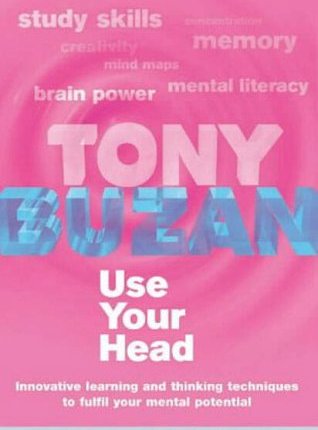
Use Your Head by Tony Buzan

Use Your Head by Tony Buzan

In “Use Your Head,” Tony Buzan teaches the reader strategies to utilize the infinite powers of your mind.

“I call it the ‘operations manual’ for your brain. It is designed to help you nurture your ‘super-biocomputer’ and unleash the natural and extraordinary range of mental skills that you possess.pg xii

Photo by Maria Orlova on Pexels.com

I’ve read a lot of non-fiction books about what the potentials of the mind and positive thinking are. This book gives more than just information about what could be, it shares tools for expanding your creative skills and organizing what goes in and comes out of our mind.

“No man yet exists or has existed who has even approached using his full brain. We accept no limitations on the power of the brain — it is limitless.” pg 24

Buzan shares the keys for maximizing your memory — imagination and association. By combining images with simple rhymes, he’s created a surprisingly easy way to remember lists and, potentially, large sections of information.

Photo by Pixabay on Pexels.com

I was intrigued by his method of organizing information and study materials with the use of “mind maps.” Basically, you start with a topic and draw branches coming out from this main theme, that relate to the information in some way. Continue to branch out, using colors and shapes to stimulate your brain while drawing conscious connections between the ideas on the paper.

It’s a fun little creative exercise, but also it helps you see associations you may not have considered before.

Personally, I do mounds of research on an almost daily basis and it helps to have a tool to organize the facts I come across. The mind map may be the most helpful tool in this book.

There’s a lot of self help advice in these pages too. It’s mainly common sense, but I found almost all of it useful as reminders of what is possible. For example, Buzan suggests considering your perspective before starting any program of study or problem solving.

Photo by Andrea Piacquadio on Pexels.com

“On average, people assume that there are theoretically infinite insoluble problems and only a relatively minor number of solutions. The fact is, every problem has a solution and there are no insoluble problems for a human brain that is properly trained, activated and aware of its creative functions.” pg 82

After a bit of research on the author, it seems Buzan is quite popular in Great Britain and has been for some time. Perhaps it’s time for the U.S. to jump on this train too.

Thanks for reading!

The Astonishing Power of Emotions: Let Your Feelings be Your Guide by Esther Hicks, Jerry Hicks

The Astonishing Power of Emotions: Let Your Feelings be Your Guide by Esther Hicks, Jerry Hicks

“Beyond the five physical senses that you are actively aware of, there is another less-realized sense — the sense of emotion.” pg 20

Esther Hicks channeled this book from her “higher self,” an entity she calls Abraham. It is about how one can deliberately create their experience by being aware of their emotions. It also gives advice on how to focus on those things that make you feel good, because by doing so, Hicks believes it will “bring you into alignment” with your higher being. And, therefore, you’ll allow the goodness of creation to flow through you.

Photo by Emre Kuzu on Pexels.com

“Allowing yourself to become what life has caused you to desire is not about action. It is about the aligning of thought Energies. It is about focusing your attention in the direction of your desire rather than looking back at the current conditions that have given birth to your desire.” pg 25

My favorite part of this book was contained within the first 45 pages in which Abraham talks in a general way about emotions and their latent power. The rest of the book contained examples of how to apply this teaching to specific questions Hicks received at her various workshops.

I didn’t find the second portion as helpful because, first of all, it felt like we were focusing on current conditions. Secondly, the answer to every question was to soften the emotions by looking for things that made you feel good about in whatever subject was being discussed. Then, roll with that until the emotions shift. Honestly, it felt repetitive after the first two or three examples.

Photo by Quang Anh Ha Nguyen on Pexels.com

I suppose if one of the questions had applied directly to my life experience right now, then maybe I would have had a different view of this book. As it is, I prefer Ask and It Is Given: Learning to Manifest Your Desires to this.

Ask and It is Given deals with the topic in a more general way and I got more out of it.

I can understand the criticisms of Hicks as a life philosophy: that she teaches people to ignore their problems, to be selfish, to be utterly self absorbed. But wasn’t it a teaching of the Buddha that the first love you should attend to, before you can offer unconditional love to others, is self love. You build a base of love and everything else flows from that. I see Hick’s teachings as the same kind of thing — self love first.

I think another point to bring up before closing the discussion of this book is the idea that the Law of Attraction, so beloved of New Age teachers and authors, functions rather like gravity. You don’t have to teach someone how to utilize gravity because it just works. The Law of Attraction is the same kind of deal and isn’t that nice to know.

Photo by Mary Taylor on Pexels.com

So, no matter what you’re doing, thinking or feeling, you’re not going to float off into outer space because gravity has got both of your feet safely planted on the ground. I like to approach any teachings about the Law of Attraction the same way. I can play with ideas and techniques, but at the end of the day, it’s going to do its thing whether I’m paying attention to it or not.

Recommended for readers who like New Age materials or love the teachings of Abraham Hicks.