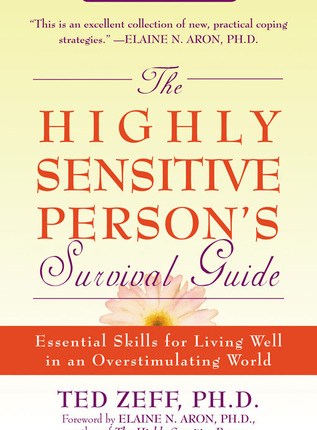
The Highly Sensitive Person’s Survival Guide: Essential Skills for Living Well in an Overstimulating World by Ted Zeff

The Highly Sensitive Person’s Survival Guide: Essential Skills for Living Well in an Overstimulating World by Ted Zeff

“Approximately 15 to 20 percent of the population have trouble screening out stimuli and can be easily overwhelmed by noise, crowds, and time pressure.” pg 10, ebook

Ted Zeff, a self professed highly sensitive person or HSP, shares coping mechanisms he’s cultivated throughout his life-long struggle with the unique way he responds to every day life. Topics range from improving work environments, personal relationships with non-highly sensitive people, getting a good night’s sleep and more.

While you can’t live your life totally removed from the world’s jolts, you can create an environment that minimizes stimuli. If you can anchor yourself to a ship of tranquility, you won’t be tossed about by the waves of stimulation.” pg 22

Photo by Anna Shvets on Pexels.com

I am a highly sensitive person too. Most of the tips and habits Zeff suggests in this book are common sense and were not all that helpful to me. The material also becomes somewhat repetitive as the book goes on. But, if you’ve just discovered this about yourself, I could see this book being eye-opening.

“Since our aggressive society values non-HSP behavior, HSPs must learn to create boundaries and speak up. Unfortunately, many HSPs are shy and feel embarrassed to state what they want.” pg 63

Something I did learn about in this book is the highly sensitive person issue of “time pressure”. I know deadlines and meet up times stress me out, but I didn’t realize that was fairly typical of highly sensitive people.

Photo by David Bartus on Pexels.com

“Combined with your high sense of responsibility, functioning under time constraints can be one of the most difficult aspects of being a highly sensitive person. In this section you will learn specific techniques to successfully deal with the daily pressures of our fast-paced modern society.” pg 32

If you only have time to read one book about highly sensitive people, the author himself recommends The Highly Sensitive Person: How to Thrive When the World Overwhelms You multiple times throughout this text. You may want to pick that one up and give this a pass.

Thanks for reading!

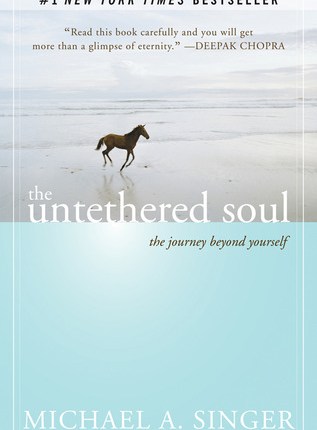
The Untethered Soul: The Journey Beyond Yourself by Michael A. Singer

The Untethered Soul: The Journey Beyond Yourself by Michael A. Singer

Michael Singer reminds readers that we are not the thoughts that we habitually think or the bodies that we walk around in. He gives multiple tips on how to access the spiritual strength inside ourselves and how to view life through the wide lens of this non-attached perspective.

Singer writes that it is through this new way of looking at life that one can find enlightenment.

Photo by Supriyo Ghoshal on Pexels.com

The ideas that are shared in Untethered Soul can be found in countless other books on spiritual studies. This isn’t new information. But, I think, there is always room on my bookshelf for a book that reminds me of spiritual truths.

It is all too easy to get caught up in the day-to-day trivialities of life with its stresses and constant demands on our attention. If you take a breath and a step back, it’s surprising what you can see.

Photo by Engin Akyurt on Pexels.com

Perhaps the mammoth success of The Untethered Soul over other books in its genre is the exposure it received on The Oprah Winfrey show. Whatever the case, it is quite accessible to readers who haven’t considered these concepts before.

Recommended for spiritual seekers both seasoned and not.

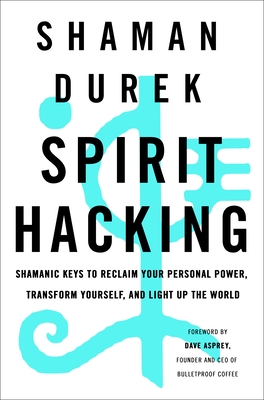
Spirit Hacking: Shamanic Keys to Reclaim Your Personal Power, Transform Yourself, and Light Up the World by Shaman Durek

Spirit Hacking: Shamanic Keys to Reclaim Your Personal Power, Transform Yourself, and Light Up the World by Shaman Durek

Shaman Durek offers practices to spiritual seekers who are looking for ways to improve their lives through the use of shamanistic techniques. Like most new age or spiritual books, not everything in here resonated with me. But I will take a few key concepts and jettison the rest.

Photo by Abet Llacer on Pexels.com

For starters, I took issue with the title of this book, “Spirit Hacking”. It implies that there are some sort of tested and proven short cuts to bringing spiritual dimensions into one’s life. I think most readers are wise enough to know that such a thing doesn’t exist. To put that sort of label on a work is false advertising to delusional, depending, I suppose, on how much one believes one’s own hype.

On the other hand, if “Spirit Hacking” was simply an effort to connect with readers who sincerely want to believe in such spiritual short cuts then this book will probably fill some sort of gap in his or her journey to a desired “goal”.

Personally, I took the title as a type of warning flag before I read it. Tread softly here, Heidi, I said to myself. And question everything.

Photo by Darius Krause on Pexels.com

Shamanism, like other semi-organized movements, varies greatly depending upon who is imparting the wisdom and from what tradition. Shaman Durek touches upon topics I’ve studied from other sources such as there are different types of spirits, various rituals or practices to interact with these spirits and time isn’t as fixed as some imagine it may be. But he puts his own unique spin on the information.

I like the empowering side to shamanism. If you have lingering physical or emotional pain, these practices suggest that you can do something about it, today if you’d like. If you’d like to change the world, go within and change yourself, then the rest will follow.

I also like the idea that everything on the planet from plants to animals to places has a guiding spirit or intelligence. If only one knew the way to interact with these intelligences, life itself could become a guide into the mysteries of the spirit. That part of shamanism is pretty cool.

Photo by Aleksandar Pasaric on Pexels.com

On the other hand, I don’t like how some shamanistic movements act like established religions, insisting that their ways or traditions are the only way to go. In addition to the snobbery, I take issue with the manner in which some shaman teach their methods. They fail to distinguish between the real world and visionary space, leading adherents to confuse one with the other or worse, not draw any dividing lines at all.

Shaman Durek’s tone can be somewhat abrasive, but if readers are looking for basic shamanistic ideas, they can be found here. Recommended with reservations for new age spiritual seekers.

Other titles about shamanism that you may want to explore if you’ve read this: This Trip Will Change Your Life: A Shaman’s Story of Spirit EvolutionThe Way of the ShamanActive Dreaming: Journeying Beyond Self-Limitation to a Life of Wild Freedom or The Flying Witches of Veracruz: A Shaman’s True Story of Indigenous Witchcraft, Devil’s Weed, and Trance Healing in Aztec Brujeria.

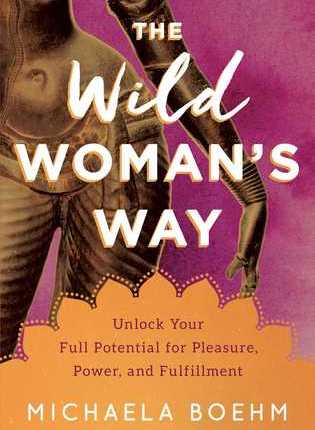
The Wild Woman’s Way: Unlock Your Full Potential for Pleasure, Power, and Fulfillment by Michaela Boehm

The Wild Woman’s Way: Unlock Your Full Potential for Pleasure, Power, and Fulfillment by Michaela Boehm

“This book is a call to come back to our wild, undomesticated ‘original nature,’ which, combined with an untamed heart, knows what is true for each of us. It is a call to return to the inborn genius that guides our passion, whispers in our ear with longing, and reveals itself abundantly when we allow our bodies to show us the way.” pg 8, ebook

Michaela Boehm utilizes her years of therapeutic practice and tantric training in this self help book designed for the modern woman.

Photo by Gabriela Cheloni on Pexels.com

There are so many choices and life paths from high-powered careers to motherhood, that many women try to do it all.

“The good news: amidst such a multitude of options we are free to choose what resonates with us. The bad news: it’s confusing, overwhelming, time-consuming, fraught with many pitfalls, and requires constant discernment.” pg 9, ebook

It’s not possible to do and have it all, Boehm writes, and while they attempt it, women cut themselves off from their sensual natures. She has written this book to give women practices and rituals to bring them back from this disconnection into the power and knowledge of their bodies.

Photo by Maria Orlova on Pexels.com

“Relaxing the body; engaging with life, beauty, and nature; and gentle, nonlinear movement and dance are some of those physical practices we’ll be engaging in throughout this book.” pg 34, ebook

I didn’t connect with all of Boehm’s writing, but I have begun to practice a version of her “formless dancing” every day. The practice itself is simple. Turn on music with no words and a beat, and move your body however it feels like moving. It’s designed to release tension and unconscious clenching that happens when one becomes disconnected from their physical form.

“Once you understand your own reasons for any numbness, tension, and strain that you may carry in your body, you can easily undo the related habitual body patterns and restore yourself to a state of pleasurable aliveness and sensual well-being.” pg 50

Photo by Engin Akyurt on Pexels.com

I find it extremely relaxing. I probably look mad, shimmying and bouncing and swaying around, but it feels really good so who cares. 🙂

Highly recommended for readers looking to reconnect with their body’s innate intelligence or who are interested in different spiritual practices.

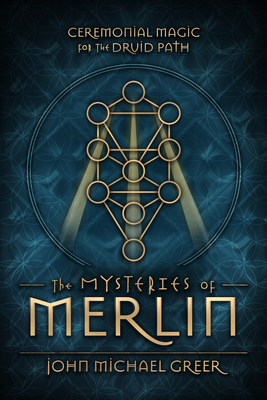
The Mysteries of Merlin: Ceremonial Magic for the Druid Path by John Michael Greer

The Mysteries of Merlin: Ceremonial Magic for the Druid Path by John Michael Greer

John Michael Greer, one of the most influential authors on Druidism in the modern age, takes a crack at reviving ancient traditions through ceremonies involving the mysterious figure of Merlin. As for his success at this integration, I think that’s up to individual readers to decide for themselves.

Photo by Carol Lemos on Pexels.com

I didn’t connect with the rituals myself, but the first part of this book which details the author’s research into mystery cults and mythology in general, was fascinating to me.

“… myths are things that never happened but always are. They express spiritual truths too profound to be communicated in any more direct way.” pg 12

Though this topic has been covered by a variety of different authors, perhaps most notably Joseph Campbell, Greer’s take on the subject is welcome and refreshing. His focus in this book is piecing together what the Pagan Celtic religion of Britain may have looked like through the fragmentary records and mythology that remain behind.

“Was Merlin, then, purely a god, and his appearances as a Dark Age prophet and wizard only garbled mythology? That is a surprisingly difficult question to answer.” pg 27

Photo by cottonbro on Pexels.com

Greer’s writing is accessible even for those who may not have a background of western occultism or paganism to draw upon. But, this book might be most useful for those who feel drawn to those spiritual paths because, as I mentioned before, the majority of this book is dedicated to detailing rituals that Greer has created for those traditions.

Seekers interested in the forgotten history of paganism in Europe, as I am, might be better served with another book. If I find one, I’ll let you know.

“Vortigern ordered the workmen to dig into the hill and they found the lake; once the water was drained away, the rocks appeared, and the dragons leapt out of them and began to fight each other. As they struggled, Vortigern asked Merlin what the combat meant, and the boy burst into tears and began to prophesy.” pg 22

Photo by Dimitry Anikin on Pexels.com

As for the actual historical personage of ‘Merlin,’ I think Greer’s interpretation of the sparse evidence is as good as any I’ve read which, admittedly, isn’t very much because there’s not much to go on.

And as for the retrieval of ancient traditions and mystery cults, perhaps new mythologies, like this book, need to be written. The old lineages may simply be lost forever.

Nobody Wants to Read Your Sh*t: Why That Is And What You Can Do About It by Steven Pressfield

Nobody Wants to Read Your Sh*t: Why That Is And What You Can Do About It by Steven Pressfield

Steven Pressfield shares the applicable lessons he’s learned from a lifetime of different writing jobs. The most important one is the title of this non-fiction, self help book.

Photo by Suzy Hazelwood on Pexels.com

“Sometimes young writers acquire the idea from their years in school that the world is waiting to read what they’ve written. They get this idea because their teachers had to read their essays or term papers or dissertations. In the real world, no one is waiting to read what you’ve written. pg 16, ebook

Along the way, Pressfield discovered the importance of writing for yourself rather than as a ghost writer, the necessity of structuring each piece whether it is a screen play or a novel, the enduring popularity of the hero’s journey and more.

Photo by Kun Fotografi on Pexels.com

He also addresses the inner demons that may prevent fledging writers from finishing what they begin, a topic that Pressfield also discusses at length in his other book, The War of Art: Break Through the Blocks & Win Your Inner Creative Battles

“I did not know that there existed inside my head an invisible, insidious, intractable, indefatigable force whose sole object was to keep me from doing my work, i.e., finishing the book I had been trying to write for seven years- and ultimately to destroy me, physically, psychologically, and spiritually. All I knew was that I couldn’t finish anything.” pg 49

Photo by bongkarn thanyakij on Pexels.com

I found all of his advice helpful, and the manner in which Pressfield delivers it as both approachable and entertaining.

“The writer must know what genre he is working in and the conventions of that genre, just as the bridge builder must understand the science of foundational integrity and the means of mitigating stress on strung steel.” pg 66, ebook

He closes the book with a humorous anecdote about writing for a pornographic film. Even in that tale, Pressfield managed to teach me something about story construction and storytelling. I only mention it in case any potential reader finds such things offensive. Here’s your warning.

Highly recommended for writers at any level. Pressfield knows his stuff.

Embrace Your Weird: Face Your Fears and Unleash Creativity by Felicia Day

Embrace Your Weird: Face Your Fears and Unleash Creativity by Felicia Day

Embrace Your Weird is a non-fiction and self help manifesto encouraging creativity and told in Felicia Day’s unmistakably humorous way.

I say “unmistakable” for any of her myriad fans who have watched her ground-breaking web series, “The Guild,” or read another of her books like You’re Never Weird on the Internet. Her tone and sense of humor remains the same.

Photo by Prateek Katyal on Pexels.com

And if you haven’t had the chance to enjoy any of Day’s other creations, I encourage you to give them a try. They’re light-hearted and fun.

“Aside from (over)sharing a lot of my opinions, I have filled this book with exercises designed to uncover the joy of creativity. To help people beat back the fear that keeps them from trying new things.” pg xi

On almost every other page, Day encourages readers to stop a moment and draw a picture, fill out a list, or write empowering messages over and over so that they’ll sink in. The act of reading this book is nearly a creative act in and of itself. (Sadly, I couldn’t do this because I was reading a library book. Suggestion for future readers: buy yourself a copy.)

“No, I don’t think creativity is a cure-all. But I do believe it could be a cure-most.” pg 29

Photo by Pixabay on Pexels.com

Besides reminding readers that we have unique voices and viewpoints that the world needs to hear, Day loosely structures the rest of the book off of life viewed as a game. She asks us to remember our “hero-self,” identify “enemies” and “allies” of our creativity, and to view the steps we take towards creation as “quests.”

Day also shares moments in her life when she’s completed or failed attempting various pieces of this philosophy in her own life.

“I constantly hand my heart over to strangers to batter however they wish, and I wonder why I’m constantly wounded all the time, and this makes me reluctant to create. Good way to operate? NOT REALLY!” pg 143

As I said, the whole book has a definite Felicia Day vibe. And it’s fun!

“Playfulness is the root of all creation. All invention. All discovery. There is no reason NOT to feel joyous when we make things.” pg 206

Photo by Sharon McCutcheon on Pexels.com

She wasn’t afraid to tackle all sorts of hang-ups people might have in their creative process. Day nailed my biggest issue: finishing projects once they’re started.

“But we will never get anywhere if we don’t focus on one thing at a time. And then see that thing through before moving on!” pg 239

Message received. Now to put it into action…

Recommended for anyone looking to start or jump start their creativity. This book is an excellent place to begin. Thanks for reading!

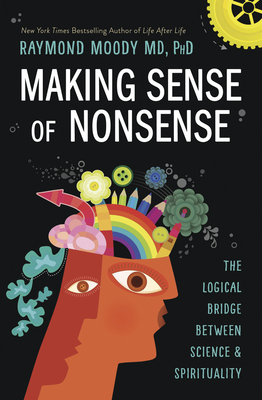
Making Sense of Nonsense: The Logical Bridge Between Science & Spirituality by Raymond Moody

Making Sense of Nonsense: The Logical Bridge Between Science & Spirituality by Raymond Moody

“A little nonsense now and then, is relished by the wisest men.” ― Anonymous

Raymond Moody, renown researcher of near death experiences (NDEs), has spent decades codifying and categorizing nonsense, proving it has a structure. Through his endeavors, Moody hopes nonsense, spoken by those who experience NDEs or upon their death beds, may be analyzed in order to provide another avenue of exploration into humanity’s experience after death.

It may sound like a load of nonsense, but I promise it is anything but. 🙂

Photo by Produtora Midtrack on Pexels.com

“Nonsense itself affects people positively, but the word ‘nonsense’ affects people negatively. That is, people like nonsense itself, but they dislike the word ‘nonsense.’ … they associate the word ‘nonsense’ with one common negative effect of involuntary nonsense: specifically, errors.” pg 13

It is not the accuracy of the utterance that researchers are examining, instead, it is the structure of the language itself.

In a class on this topic, Moody says his students learned to identify and write seventy different types of nonsense. (Who knew there were so many!) Once you know the forms, you’ll be able to do the same.

Why is this useful if you’re not a NDE researcher? Not only is nonsense regularly utilized in poetry, plays, television shows and other forms of entertainment, Moody shows examples of nonsense in religious texts, alchemical writings, advertising and more.

“My sense of nonsense has been an indispensable asset during my career as a medical doctor and psychiatrist, for it often helps me make sense of someone’s unique inner experience.” pg 105

Photo by Andrea Piacquadio on Pexels.com

And he’s right. Since finishing this book, I’ve become aware of how often nonsense is bandied about in both daily conversations I have with friends and family as well as in the Netflix shows I watch.

It’s not only used for communication and art. Moody claims nonsense goes a step further, providing a link to other mystical states of mind.

“Talking nonsense to people makes them experience a curious, hard-to-describe alternate state of consciousness. In sum, nonsense is an alternate state of language that can induce an alternate state of consciousness.” pg 125

Photo by Vinícius Vieira ft on Pexels.com

So, babble away, my friends. If anybody says anything negative about it, tell them you’re conducting a science experiment and you won’t just be talking nonsense. 🙂

“It takes a heap of sense to write good nonsense.” ― Mark Twain

Thanks for reading!

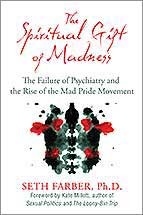
The Spiritual Gift of Madness: The Failure of Psychiatry and the Rise of the Mad Pride Movement by Seth Farber

The Spiritual Gift of Madness: The Failure of Psychiatry and the Rise of the Mad Pride Movement by Seth Farber

In The Spiritual Gift of Madness, Seth Farber interviews half a dozen people who have had negative experiences with western psychology as well as experts in mental health. His thesis is the mental health system as it is values medication over other types of therapy and, because of this misguided focus, harms the very people it is attempting to help.

He is a champion of the Mad Pride movement, a group that seeks to celebrate and assist those suffering from mental health issues to embrace who they are rather than medicating it away.

Photo by Engin Akyurt on Pexels.com

“… helping the mad does not mean drugging or coaxing them into a state of “adjustment,” but rather appreciating the state of madness for what it is: an existential clearing in the jungle of our insane modern society that potentially leads into the realm of true sanity, which, in the world today, means a state of creative maladjustment.” pg 124

I should mention that Farber doesn’t use “mad” in a negative way, rather he uses it to highlight how individuals with different viewpoints from the rest of society are marginalized and sedated into silence. He puts forward the idea that insanity is believing everyone must view the world in the same manner or be ostracized for it. He holds up society’s repeated failures to handle issues like global warming to racial and gender equality as evidence of the insanity of the world.

“Now one of the things that’s so detrimental about the hospitalization is the power impact of being treated like a patient – people end up believing they’re chronically mentally ill.” pg 44

Farber believes mental illness is a transition to a new, potentially powerful state of being that, as a modern society, we quash before it’s completed. He points out that many of the great prophets and visionaries from history had, what we would now call, complete breakdowns before their epic breakthroughs.

Photo by Ryan Millier on Pexels.com

“… a few weeks of mania could give one access to a sense of understanding that it could take ‘years of meditation’ to achieve, access to visions of ‘the wholeness’ of the universe and ‘the interconnected nature of love, access to a sense of time and space that allows one to discern what is and what is not important.'” pg 21

Instead of medication and psychiatric facilities, Farber would like to see the creation of safe havens for people going through this process so they could assimilate whatever is going on in their minds before going back to the rest of society. That would be for the experiencer’s protection as well as the public.

I think Farber brings up important issues in this book. As someone who has struggled with mental illness, I’ve viewed the system from the inside and recognize some of the problems he points out. There’s the stigma of the diagnosis and the embarrassment of feeling separated from “normal”. There’s the expectation you will take your meds from the day you’re labeled until you die, no matter the side effects.

But, worst of all, is feeling like you can’t trust what’s going on in your head because it went so spectacularly wrong before and what’s to prevent it from going sideways again.

I agree some changes need to be made to the system and, as a society, perhaps we can do a better job minimizing stigma, maximizing communication, and helping people live in a happy and healthy manner that they choose.

However, I feel like Farber goes too far in his insistence that the “mad” are the future. That somehow they hold the keys to a paradise on earth if only we’d let them share their messages unfettered.

Photo by Oliver Sjöström on Pexels.com

In the midst of my psychosis in 2009, I wouldn’t have wanted any of the nightmares in my head to permanently affect my future or my family. If there are lessons to be learned from it, maybe it’s an individual message for the people undergoing the change rather than expecting it to be universal lessons, applicable for everyone.

But, that’s my two cents. I certainly don’t have all the answers, but The Spiritual Gift of Madness asks some interesting questions.

Recommended for seekers who are interested in a different way to both approach and treat those with mental illnesses or for those who have gone “through the looking glass” and are now viewing the world from the other side, like me and the people in this book and many, many others.

Thanks for reading!