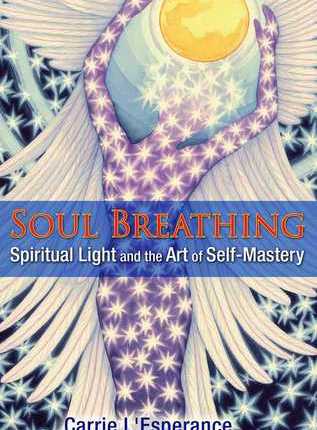
Soul Breathing: Spiritual Light and the Art of Self-Mastery by Carrie L’Esperance

Soul Breathing: Spiritual Light and the Art of Self-Mastery by Carrie L’Esperance

An incredibly ambitious book, Soul Breathing: Spiritual Light and the Art of Self-Mastery covers most major spiritual topics- from chakras to meditations and the evolution of the soul to aliens.

With this very diverse amount of material, readers are certain to find at least one chapter or section that resonates with them.

Photo by Egor Kamelev on Pexels.com

Unfortunately, he or she will probably also discover something that doesn’t, which is just fine, because as Carrie points out in this book, everyone experiences the “Universal Mind” in a different way.

What is enlightenment? In the author’s own words: “Enlightenment is a way of freeing oneself from ignorance in order to act, operate, and contribute as a Light in the world. It is through the balanced integration of body, mind, and spirit that a deeper and more profound Intelligence is expressed.”

The vocabulary in Soul Breathing is definitely New Age, but the reader doesn’t have to have any background in that to understand what Carrie is talking about. She starts out with a bit of her personal history and then jumps into general teachings about the soul and transcendence, which I found to be very reminiscent of Eckhart Tolle’s A New Earth.

After that, Soul Breathing goes in a bunch of different directions, which I didn’t enjoy nearly as much as the opening few chapters.

Photo by Jill Wellington on Pexels.com

What is Soul Breathing anyway? “Soul Breathing is the ability to create a balanced life on Earth through a conscious connection to Spirit. It is a state of grace achieved through action and experience.”

Carrie L’Esperance is at her strongest when she’s relating personal stories or giving concrete instructions- like specific affirmations or methods of meditating to support positive spiritual change.

I felt that Soul Breathing stumbled in the parts where Carrie talks about what is wrong with the world or how things have gone so badly. (The rampant energy pollution and government-alien conspiracy sections come to mind.)

All personal stories of spiritual or the otherworldly have value as Carrie reminds us: “There have always been the unbelievers and the hyperrational scientific intellectuals who attempt to devalue what for some people are the most powerful, transformative, and sacred experiences of their lives. In truth, there is really no one who can denigrate the authentic spiritual experiences of the individual.” I would add, except his or herself.

I thought that this book with its myriad of suggestions and prohibitions would be impossible for anyone to ever implement in their lives in a manageable way.
Photo by Chermiti Mohamed on Pexels.com

Carrie says: “We don’t have to dissect every aspect of how and why we exist in order to appreciate the miracle of life. We can experience all that is needed in the natural stages and steps that we take along the way. Ultimately we are to choose what capacities we will develop within the laws of existence.”

Despite that passage, Carrie seems to be a very demanding teacher.

It is clear that Carrie is passionate about spiritual, physical, earthly, and even galactic health and well-being.

Don’t read this book if you are unwilling to have an open mind about all manner of spiritual topics. Do read this book if you’re looking for more information about sensing, managing, and healing with subtle energy in the body, mind, and soul.

Photo by Magicbowls on Pexels.com

Her beliefs about aliens and a grand government conspiracy to control and manipulate the population were a bridge too far for me, but I’m certain that there are some readers out there who will resonate with her teachings.

Perhaps fans of Whitley Strieber or John Keel will enjoy Soul Breathing.

A big thank you to Netgalley and Bear & Company for a free digital Advance Reader copy of this book for review purposes!  And, thank you for reading.

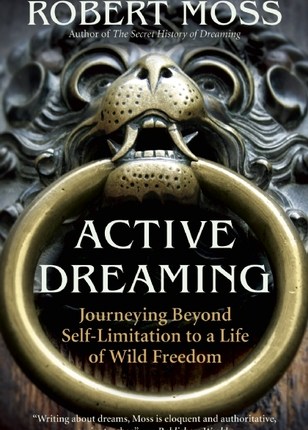
Active Dreaming: Journeying Beyond Self-Limitation to a Life of Wild Freedom by Robert Moss

Active Dreaming: Journeying Beyond Self-Limitation to a Life of Wild Freedom by Robert Moss

Active Dreaming is more than just another book about lucid dreaming or dream interpretation. Moss takes the Aboriginal practices of his native Australia and develops a living practice wherein one treats the world, whether waking or sleeping, like an lucid dream.

Moss invites the readers to fully live their lives and to “wake up” through drumming circles, sharing and interpretation of dreams, choosing your names and how you define yourself, practicing mindful creativity, noticing synchronicities, journaling, storytelling, creative visualization (and more).

Photo by Sabel Blanco on Pexels.com

Some of the concepts in this book were a bit far out there- things like shared dreams or visions in which, theoretically, you invite another person into your dreamspace to help you address whatever is going on for you or instructions on how to start Dream Groups.

Active Dreaming is a call to action, but in so many directions that it is difficult to really know where to start. I think I’m going to cherry pick a few of Moss’s techniques and see how I do.

Robert Moss’s definition of Active Dreaming: “This approach includes paying attention to night dreams, but it is not only, or even essentially, about what happens at night. It is a method for conscious living. When you become an active dreamer, you’ll notice that the world speaks to you in a different way.” pg xii introduction

Photo by GEORGE DESIPRIS on Pexels.com

Here are some of the benefits of practicing Active Dreaming: “The journey opens gateways for soul recovery and the release of life blockages. It introduces and strengthens connections with the animal guardians and brings their vitality, tracking skills, and healing energies richly alive in the body. It encourages spontaneous art and creativity and offers rich personal mythology, which is healing in itself. Properly conducted, the journey raises a tremendous amount of life force and channels the movement of that energy into harmonious, unrestricted flow.” pg 98

And finally, a passage that really resonated with me: “You must know your story and tell your story and have your story received. … Learn to do that, and you can survive the worst nightmares of history and bring heart and healing to others…” pg 134

Tell your story. I can do that.

Photo by cottonbro on Pexels.com

This review has really only touched the tip of the iceberg that is Active Dreaming. Read this book if you want to adjust the lens with which you perceive reality or if you just want to read a book that is completely different from anything else that you’ve ever read.

Robert Moss is not for everyone, but, if you can set aside any preconceived notions about what this book should be, I think that you’ll find at least some chapters that will speak to you.

If you’re looking for more spiritual books like this, look no further than another of Moss’s titles: The Boy Who Died and Came Back: Adventures of a Dream Archaeologist in the Multiverse

Thanks for reading!

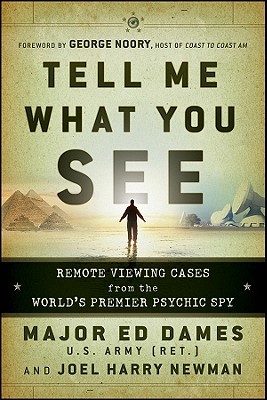
Tell Me What You See: Remote Viewing Cases from the World’s Premier Psychic Spy by Edward Dames

Tell Me What You See: Remote Viewing Cases from the World’s Premier Psychic Spy by Edward Dames

Tell Me What You See: Remote Viewing Cases from the World’s Premier Psychic Spy  is a book about remote viewing written by Edward Dames.

Remote viewing is a military protocol by which a “viewer” goes into a meditative state, sends his or her consciousness “out” to a target, and then reports on what he or she perceives while there.

In this book, Dames writes story after story about using this protocol for the government. And, later, cases that he and his group worked on, as a private company.

Confession time again: I love to read fringe-y non-fiction.  From the paranormal to the other worldly, I can’t get enough of it.

Books by former remote viewers from the military are such a trip to read.

These guys were/are on the cutting edge of consciousness exploration. It makes me wonder what humans are potentially capable of, but we don’t know it yet.

It also makes me wonder what else is out there to be perceived.

Don’t go to these books for feel good stories. I’m sure that it is because remote viewers were all trained as human weapons to root out threats to the government, but they all seem so dark and obsessed with shadows.

Even when Dames sets out to have a “fun” RV session on the Ark of the Covenant, his viewers see mainly blood shed and despair.

The methods used in Dames’ sessions were different from others that I’ve read.

David Morehouse and Lyn Buchanan, also former military RVers, described RV sessions in which separate viewers with handlers would run through coordinates. They would do this in completely secluded rooms. Later, the different sessions would be put together to try to create a complete picture.

Dames, on the other hand, described group RV sessions in which he’d act as the handler and give out the coordinates to the group. Then, his viewers would sit in a group setting and say what they were seeing, as they saw it.

I found this approach to be interesting. I wonder which technique had more accurate results.

What is RV?: “Remote viewing is about reaching beyond the five senses into the unconscious mind, to look inside and miraculously gather information stored like web pages on a cosmic computer. Even more miraculous is that we all have the innate potential to do this, a prescient sixth sense.” pg 16

The way the mainstream considers RV: “It’s part of my regular curriculum to discuss how badly the authorities treat remote viewing. … What people can’t pigeonhole they often reject. We were dealing with a system that treats what we do like watching someone have a seizure from behind a two-way mirror- uninvolved yet shamefully fascinated.” pg 27

Which is why I was surprised when he so vehemently rejects the contributions of the natural psychics, mediums, channelers to his military unit: “Gauvin and his broomstick pals were running us into the ground… Angela’s channeling was bound to be judged useless and scrapped and then maybe she’d go back to her crystal ball. … Who knew, by participating in an actual session maybe she’d catch on to how remote viewing really works. Maybe.” pg 120-121

Unlike mainstream folks, those types of spiritual “witches”, as Dames describes them, don’t need to be convinced that there are levels of perception beyond those utilized in day-to-day life.

If he had taken the time to look beyond their strange methods and encourage them to organize their natural talents within developed protocols, I think Dames could have found some powerful allies within the military RV program.

But, that’s not how he played it. Instead, you were either completely with Dames or against him. I suppose it goes back to his role as a soldier.

Dames’ comparison of RV to out-of-body experiences: “OBEs aren’t anything new. The concept has been around and practiced for thousands of years, dating back to the monks of ancient China and India. Their wizened mystics called it “astral projection,” a practice where, either awake or dreaming, certain adept individuals could cast off their earthly skin and propel their consciousness- astral body- into unknown spirit dimensions across time and space.” pg 153

And possibilities for RV in the future: “The ability to remote view is the next step in the evolution of the mind… What started out as a military tool based on the desperate need of warriors seeking to destroy their enemies in battle has now developed into an invaluable instrument in the search for enlightenment. Remote viewing is a teachable psychic-like skill anyone can learn. What is often overlooked is its potential to help us more deeply experience life.” pg 257 I would say so.

If you’re interested in more books like Tell Me What You See, you may want to look into The Seventh Sense: The Secrets of Remote Viewing as Told by a “Psychic Spy” for the U.S. Military by Lyn Buchanan or Remote Viewing: The Complete User’s Manual for Coordinate Remote Viewing by David Morehouse.

Thanks for reading!

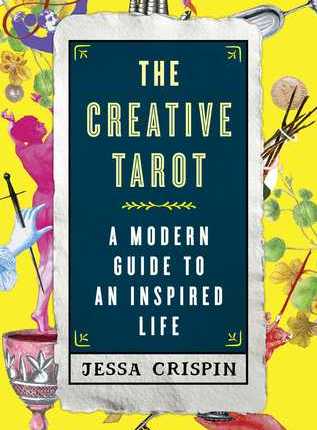
The Creative Tarot: A Modern Guide to an Inspired Life by Jessa Crispin

The Creative Tarot: A Modern Guide to an Inspired Life by Jessa Crispin

The Creative Tarot: A Modern Guide to an Inspired Life is an excellent tarot card reading manual for beginners to the more experienced card reader.

I loved that Crispin gives novel, art, and film suggestions for each card so that the reader can immerse herself in the “feel” or “mood” of them. That was a lovely touch and different from any other book on tarot cards that I’ve read.

Photo by Anna Tarazevich on Pexels.com

Mainly, the books that I’ve picked up have been about tarot card theory and how the cards tie in to the Tree of Life. It’s a complex system and can only be talked about in metaphors.

Imagine my relief to read a book about just the cards themselves and not an arcane “theory of everything.”

A.E. Waite was the co-creator of the Rider-Waite Tarot. He had some interesting thoughts about the tarot card reading qabalists, many of whom wrote books like the ones I’ve mentioned above.

A.E. Waite’s beliefs, which Crispin includes in the chapter entitled, A History of the Tarot, were: “Waite believed that the magical systems (tarot) of the Golden Dawn and other systems were not about imposing your will on a situation… or about telling the future… He believed they were for elevating the soul and for bringing what is unconscious conscious.” pg 7.

Photo by Jonathan Petersson on Pexels.com

I believe that too. But, if you can’t explain the system in a way that makes sense, then what’s the point of writing a beginner’s manual. There can be no “elevation of the soul” if the beginners can’t understand the first thing about reading tarot cards.

Thankfully, Crispin’s interpretations are simple and clear. This is a book that will see some use, not become another expensive paperweight.

I liked Crispin’s description of Temperance: “Temperance is an easily misunderstood card, as it has become associated mostly with abstention. Not drinking, not participating, denying yourself something. But that breaks away from the origins of the card, which traditionally portrays a hermaphrodite blending two cups of water- one hot and one cold- to create something in the middle between these two extremes.” pgs 76-77

Photo by Aleksandar Pasaric on Pexels.com

Temperance is about finding the middle way, not skirting along the edges from one extreme to another. Kind of ruins the idea of a “temperance movement,” doesn’t it.

I also liked this blurb about the Tower: “Remember that scene in Louisa May Alcott’s Little Women, where Amy throws Jo’s stories into the fire? That’s the feeling of the Tower: the realization that all is lost, and you will have to start over from the beginning.” pg 83

Yes, I’m a bookworm. Yes, Little Women is one of my favorite books. I think Crispin nailed the card’s description with that scene.

Photo by Pixabay on Pexels.com

I thought this description of The Moon was brilliant: “The Moon rules our dreams, and that’s a good way to think about this card. They don’t make sense on a logical level, but on a personal level, on an emotional level, they do. The location in a dream will shift without warning; dead people will walk beside the living; your mother will show up, say something nonsensical while wearing a jellyfish on her head, and then stab you in the heart. And you wake up and think, “Oh, of course, this is about that incident that happened when I was five.”

My dreams are just like that. In fact, I had that exact dream last night. 🙂

The tone in The Creative Tarot is very friendly and conversational, as if you asked your best friend to teach you a little bit about her favorite hobby- tarot cards. Highly recommended for artists, dreamers, and aspiring tarot card readers.

Its only weakness, in my opinion, is that I wanted more… more stories, more examples. I understand that we’re dealing with 50 plus cards and they can’t all receive extremely detailed treatment, otherwise we’d get the George R.R. Martin version of Tarot card books, but a girl can dream.

Jessa Crispin has modernized a system that seems to want to stay inaccessible to the beginner. I wish more of the books about the tarot were like this one.

Thanks for reading!