The Afterlife of Billy Fingers: How My Bad-Boy Brother Proved to Me There’s Life After Death by Annie Kagan

The Afterlife of Billy Fingers: How My Bad-Boy Brother Proved to Me There’s Life After Death by Annie Kagan

I think anyone who has lost a loved one wishes to talk to them again. Annie Kagan was granted that wish. She wasn’t a practicing channeler, so it came as a huge surprise to her when she heard her dead brother’s voice speaking to her from a spot above her head.

At the time that this happened, Annie was living a hermit’s life in New England only venturing out to kick ideas around at her writer’s group. So, that gave her the space and time to explore these communications rather than running to the doctor to have the voice medicated away.

Photo by William Alexander on Pexels.com

At first, she was reluctant to share what she was hearing, afraid that Billy’s voice was her mind’s way of holding the grief away or that other people would think she was going insane, but the information imparted became more and more specific until she couldn’t explain it away.

Through the experience and sharing it, Annie came to believe without a doubt that the spirit continues on after death. She took comfort from it and hopes, with this book, to share that comfort with others who may be grieving or afraid of death itself.

The Afterlife of Billy Fingers isn’t going to appeal to everyone. If you don’t believe that communications from beyond the grave are possible, I’d suggest passing on this book. And, towards the end of Billy’s travels into the afterlife, things get really far out as he lets go of his previous self and becomes the universe, embodying the entirety of reality.

Photo by Designecologist on Pexels.com

It reminded me of Be Here Now by Ram Dass, hippie to the extreme. But, that’s the type of spirituality I’m into, so I loved it.

The introduction by Raymond Moody describes Billy as a modern psychopomp, someone who guides the spirits of others through the afterlife: “The experiences Dr. Kagan relates are completely consistent with the kind of role walkers between the worlds played in antiquity. And that is no surprise to me. I think that such experiences are part of the collective psychological heritage of humankind- not artifacts of any one culture.” pg 11, ebook.

Billy was a drug addict and led a very hard life.

This is what he had to say about it: “How do I know my life wasn’t some punishment for my past transgressions? Well, because there’s no such thing. You’re not on earth to be punished. … That’s a human concept. Something man made up. Humans make up stuff and then they believe it”. pg 24, ebook.

A continuation along that line of thinking later in the book: “Beliefs are big on earth. People collect them. Some of these beliefs are helpful, but others just keep you running around trying to follow rules that others have laid down. They don’t have a lot of personal meaning. It’s a good idea to sort through your beliefs now and then and throw out the ones that don’t serve you.” pg 85, ebook

Photo by Pixabay on Pexels.com

Annie dealt with a bunch of her own issues in this book, like the fact that by writing this book, people were going to think she was “flaky”. At one point in the narrative, she has a toothache and starts to believe that she’s being punished for revealing universal truths that should be kept secret.

She eventually gets past that attitude, but, when it comes to the unknown, I think fear can be a major hurdle: “After my toothache and the painful root canal and awful infection that followed, I was scared. … who was I to be the one to prove there’s life after death? Maybe some secrets shouldn’t be revealed. Maybe I was breaking a sacred taboo, dabbling in a cosmic Pandora’s box.” pg 41, ebook.

Another of the Be Here Now moments: “In your world, as the earth moves around the sun, there’s nothing but shadow for a good part of the time. The mystery of life on earth cannot exist without the shadow element. You cannot have the sea without storms, the earth without quakes, the wind without tornados. … And sometimes- sometimes darkness is okay too. Don’t overlook the riches contained in the darkness. Life’s very temporary, so don’t let time just pass. Let the moments fill you- the ones you judge to be good as well as bad.” pg 77, ebook. Solid advice.

Let’s end with one more bit of wisdom: “People spend lots of time on things that make them unhappy- too much focus on the sand in the oyster. To cultivate joy, pay attention to what you like.” pg 116

Recommended for spiritual seekers and people who enjoy reading about near death experiences/channeled wisdom.

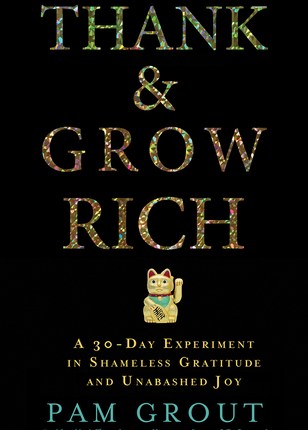
Some read alikes: Conversations with God: An Uncommon Dialogue, Vol. 1 by Neale Donald Walsch, My Son and the Afterlife: Conversations from the Other Side byElisa Medhus, Ask and It Is Given: Learning to Manifest Your Desires byEsther Hicks or, if you’re looking to introduce more joy into your life:Thank & Grow Rich: A 30-Day Experiment in Shameless Gratitude and Unabashed Joy by Pam Grout.

Thanks for reading!

Thank & Grow Rich: A 30-Day Experiment in Shameless Gratitude and Unabashed Joy by Pam Grout

Thank & Grow Rich: A 30-Day Experiment in Shameless Gratitude and Unabashed Joy by Pam Grout

There is a disclaimer written in the description of this book on Goodreads that states it is not for everyone, but it was awesome in my opinion. I am going to admit that I am incredibly biased.

Photo by cottonbro on Pexels.com

I absolutely adored Pam’s other books on New Age thought and had some unbelievable experiences with the experiments recommended in them: E-Squared: Nine Do-It-Yourself Energy Experiments That Prove Your Thoughts Create Your Reality and E-Cubed: Nine More Energy Experiments That Prove Manifesting Magic and Miracles Is Your Full-Time Gig.

However, I couldn’t convince my public library to buy them because, I was told, they are “too fringe”.

Perhaps this book, which focuses on adopting an attitude of gratitude to improve your life, will be mainstream enough to make the cut.

Pam addresses the metaphorical elephant contained in her title early in the book: “No offense to Napoleon Hill, the author of the self help classic on which my title riffs, but the real power is in not thinking. If you want to override your brain’s unfortunate habit of leafing through your past and creating a present hologram to match, forget thinking. And start thanking.” Loc 108, ebook.

I read Think and Grow Rich last year and I could see how other people have beef with the classic. Napoleon Hill focuses on money, making connections, and doing the internal work to shoot yourself into the stratosphere of life success.

There’s very little in there about feeling your way to the same place.

Photo by fauxels on Pexels.com

Pam takes a different approach: “I should get this out on the table right now. This book won’t do a thing for your 401(k) or help you secure the McMansion you pasted onto your vision board. It’s not about getting rich in the traditional sense. … There’s nothing wrong with financial capital, but let me be very clear. It’s incapable of bringing any measure of real happiness.” Locs 324-337 ebook.

She gets to the heart of why seekers chase anything- because we believe that it will bring happiness. Pam suggests getting happy and then the success will come.

And, how does she say that we should “get happy”? By being thankful for what we already have.

“Be astonished by useless things. It’s easy to be thankful for the obvious- healthy kids, public libraries, strong marriages. But in this game we’re going to take it a step further. We’re going to build our gratitude muscle by also appreciating the insignificant and impractical…” Loc 856 ebook.

I had to include that passage for the library mention. Yay libraries!

Photo by Janko Ferlic on Pexels.com

Pam backs up her claims with scientific studies such as: “According to Richard Wiseman, psychology professor at the University of Hertfordshire in England and creator of Luck School, people who think they’re lucky actually are. After eight years of studying hundreds of self-identified exceptionally lucky and exceptionally unlucky people, he concluded that getting good breaks has nothing to do with karma or kismet and everything to do with how we see ourselves.” Loc 991 ebook.

I would like to state for the record that I am one of the luckiest people that I know. 🙂

She also includes a bunch of information from happiness researchers: “When it comes to success, research shows that while IQ, education, and training play cameo roles, the starring role, the headliner on the success stage, is “Do you have a vision? Do you believe it’s possible?” Shawn Achor, author of The Happiness Advantage: The Seven Principles of Positive Psychology That Fuel Success and Performance at Work… claims that predicting success using any other factor (say, your IQ or number of degrees) is about as effective as flipping a coin. What is effective, Achor and Frederickson and other happiness researchers have proven, is creating a happy brain that anticipates accomplishment, that knows success is just a matter of time.” Loc 1876 ebook.

I know that I have a pretty open mind when it comes to these types of books, but my thought is, what’s the harm in it? If it works for you, great! You’ve just discovered a new tool to use for living the best life for you.

If it doesn’t work, no harm done. At the very least, you would know for yourself.

Photo by Belle Co on Pexels.com

I recommend this book for readers of the Abraham Hicks materials because there are quite a few similarities in the philosophies contained within.

Some additional read-alikes for seekers like me who can’t get enough information about the law of attraction: The Power of the Heart: Finding Your True Purpose in Life, Happiness: A Guide to Developing Life’s Most Important Skill, or Dr. Quantum Presents: Meet the Real Creator–You!.

The opinions contained within this review are entirely my own. Thank you to NetGalley and Hay House for a free advance reader’s copy of this book for review purposes!  And, thank you for reading.

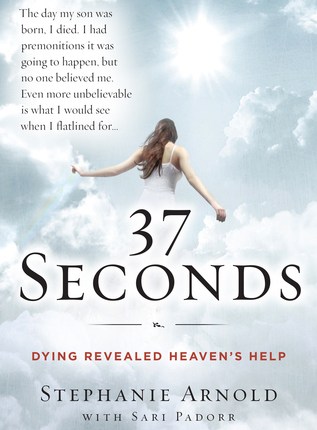
37 Seconds: Dying Revealed Heaven’s Help—A Mother’s Journey by Stephanie Arnold

37 Seconds: Dying Revealed Heaven’s Help—A Mother’s Journey by Stephanie Arnold

37 Seconds is a fascinating account of Stephanie Arnold’s near death experience. She had a premonition that she was going to die having her second child.

Photo by Pixabay on Pexels.com

Stephanie did die for 37 seconds and had an amazing spiritual experience.  Her religious upbringing is in Judaism which makes for a totally different lens of perception than other NDEs (near death experiences) that I have studied.

I like reading books about near death experiences and examinations of consciousness.  So far, I’ve read twenty one books by folks from different religions and parts of the world about their NDE and what they’ve brought back with them to their normal, every day lives.

I found it interesting that the focus of Stephanie’s consciousness during the event was on her deceased relatives and their support of the physical world rather than on a location on a higher level where people go to hang out around their G-d for the rest of eternity.

Photo by Pixabay on Pexels.com

Another portion of the account that made it different than others that I’ve read on the topic is that Stephanie accessed her memories of the time during her 37 second death through hypnosis.

Other NDE writers (Piper, Moorjani, Burpo, et al) came out of their NDEs with memories of what went down. Stephanie, because of the extreme trauma and the premonitions about her death that haunted her for months before the actual event, repressed her NDE.

Isn’t it fascinating?  The study of consciousness never ceases to surprise me. It seems that not only do our lenses of perception create what we see in other modes of existence, but we can choose whether to access those perceptions or not.

I also liked Stephanie’s repeated message through 37 Seconds of trusting your own intuitions and believing in that inner voice. I feel that in modern society, we’ve advanced in so many ways both scientifically and technologically, that we discount simpler modes of understanding and knowledge.

Why try learning about why your body is presenting symptoms of anxiety and stress when we can just medicate it away? Why believe in your dreams and intuitions when educated doctors and scans show that nothing is wrong?

Photo by alleksana on Pexels.com

If Stephanie had listened to the experts, she would be dead. She is a great role model for a return to trusting ourselves. Doctors, medicine, and therapy have their place but so do dreams, intuitions, and the inner voice.

If you enjoyed 37 Seconds, try Wisdom of Near-Death Experiences: How Understanding NDEs Can Help Us Live More Fully by Penny Satori or Journey of Souls: Case Studies of Life Between Lives by Michael Newton.

Thank you for reading!

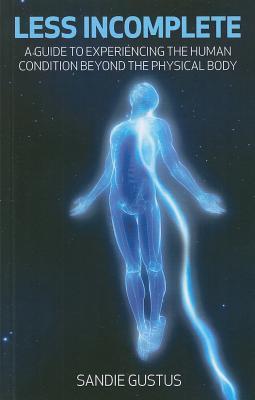
Less Incomplete: A Guide to Experiencing the Human Condition Beyond the Physical Body by Sandie Gustus

Less Incomplete: A Guide to Experiencing the Human Condition Beyond the Physical Body by Sandie Gustus

Like Journeys Out of the Body by Robert Monroe, Less Incomplete is about out-of-body experiences and how to have them.

Unlike Monroe’s book, there’s less personal narrative in this one and more about ethics and practical exercises for the out-of-body state.

So, in that way, it wasn’t as fun to read, but for people who are just starting out, I could see this book being an excellent place to start. I had never heard of Dr. Vieira and his work with the IAC (International Academy of Consciousness), so now, I have another resource to investigate too. Hooray!

Sandie’s reasons for writing the book: “…Vieira’s own books are notoriously sophisticated, technical and intellectual in style… My endeavor, with this book, is to make his work available to a wider nonacademic audience by presenting it in a language and format that everyone can understand follow, without compromising the integrity of his ideas in any way.” pgs 14-15

I feel like she really succeeded at that.

Photo by Cup of Couple on Pexels.com

A simple explanation of other dimensions: “… when thinking about where the extraphysical dimensions are, we can say that many of them coexist and share space with the physical dimension. They are all around us. They are right here, right now. This fact is much easier to understand when we remember that we are also sharing space with innumerable invisible artificial electromagnetic waves, such as those used to broadcast television and radio and to transmit data across mobile phone networks and between aircraft and military installations.” pg 39

Other dimensions sound so normal when she puts it that way.

Sandie stresses the importance of exploring consciousness for evolutionary reasons: “If we take into account the broader, more detailed picture of what it means to be a consciousness… it is clear that physical life, rather than being meaningless or arbitrary, provides us with a sophisticated, challenging environment that is rich in opportunities to better ourselves and to mature- in other words, to evolve.” pg 162

I think it’s fun too.

Consciousness exploration is a chance to evolve, certainly, but it’s also a way to play, explore, and simply exist in a way that is entirely different from regular reality. That’s my only criticism of this book, I feel like it takes itself too seriously at times.

Photo by Felix Mittermeier on Pexels.com

I was having trouble fitting my visions/meditations into the paradigm provided by this book until the chapter on Lucid Projection Techniques, section Projection through the Mental Body Technique: “Targets for a projection in the mental body are notional concepts that are outside the boundaries of ordinary life. The point of them is to break out of the boundaries of what’s known. The experience is epitomized by having an epiphany- suddenly you consider the concept of infinity or spirituality or oneness and you have an expansion of consciousness in which you grasp the whole idea. pg 254 Bingo.

Vieira doesn’t seem to have a high opinion of remote viewing: “Vieira describes it in Projectiology as “a daydream with some flashes of awareness or clairvoyance at a distance.” pg 270

I was surprised by that. It seems like, in this sort of research, one would want to consider all modalities for their possible contributions to the topic.

If you’re looking for more books on how to do out-of-body experiences, you may want to consider Soul Flight: Astral Projection & the Magical Universe by Donald Tyson, Soul Traveler: A Guide to Out-of-Body Experiences and the Wonders Beyond by Albert Taylor, and, one of my favorites, Otherwhere: A Field Guide to Nonphysical Reality for the Out-of-Body Traveler by Kurt Leland.

Thanks for reading!

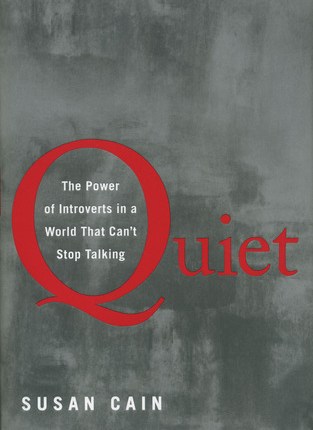
Quiet: the Power of Introverts in a World that Can’t Stop Talking by Susan Cain

Quiet: the Power of Introverts in a World that Can’t Stop Talking by Susan Cain

Quiet: The Power of Introverts in a World That Can’t Stop Talking entered my life at a particularly low moment.

Allow me to set the scene: I had been on vacation for a week and a half. We were in Colorado, visiting my husband’s family, some of whom I had met before, others whom I had not. I knew I wasn’t going to be entirely comfortable being around people the whole trip- I’m a huge introvert and I’m self aware enough to know that I need downtime, and quite a bit of it, to feel as if I’m functioning normally.

But I didn’t realize that my husband, who is just as introverted as I am and who I was counting on to help me through all of the introductions, dinners, conversations, etc, was going to immerse himself in Pokemon Go a majority of the time and essentially leave me to my own devices.

As Susan Cain would say, he found a “restorative niche” for himself in a digital world. It was hard on me as I didn’t have that escape.

Photo by ROMAN ODINTSOV on Pexels.com

So, here we are, visiting a friend’s home and my daughter, who strangely enough is a huge extrovert (the exact opposite of her parents), is struggling. She’s tired, out-of-sorts, and throwing a sulk every ten minutes.

I’m meeting yet more people, trying to hold trite conversations, and steer my child, all the while just wanting to retreat into a cave and not talk to anyone for a very long time. Honestly, I felt that way before we reached the party, but things seemed to get much, much worse the moment we arrived.

It had been building over the course of the vacation, but that day, my internal clamor reached a boiling point. My husband was oblivious to my growing discomfort as he’s catching Pokemon, again. (I don’t mean to sound bitter here, but I suppose that I am.)

I had forced myself for ten days to be social, keep the smile on my face, keep everything flowing smoothly. To my horror, I realize that I am about to have a panic attack in the middle of this crowd of people, more than half of whom I don’t even know. I grab my keys and leave.

I drive a couple blocks away, castigating myself for not being able to handle it and just pissed because, once again, like many times in my childhood, adolescence, and adulthood, I feel like I’m failing at life because I’m not a social butterfly.

Photo by Ryanniel Masucol on Pexels.com

I can’t stand to be around strangers for extended periods of time. I’ve always been this way- overly sensitive to others, noise, motion, events. I really dislike groups, parties, places where I have to circulate with a bunch of people who don’t know me or care about anything that I have to say.

The tears fell down my cheeks as I opened up my tablet and began reading this book. And I discovered that about half of all people are just like me.

Thank you, Susan Cain. Your book gave me the courage to drive back to my friend’s house and face the rest of the evening. I am not a pariah. I am an introvert and perhaps I can do a better job figuring out when I’ve reached my socializing limits before I meltdown.

Many of the positive attributes of introverts which Susan describes, I have, I’ve just never considered them as worth the trade-off of the extroverted personality.

I notice small details, have a great memory for conversations and events, long past the time when others forget such things. I think carefully about problems and people, devoting time to taking apart small nuances of books and movies, that other people don’t even consider, which makes me a good reviewer of media- perfect for my job as a librarian.

Susan nailed my general feeling about myself in the introduction: “Introverts living under the Extrovert Ideal are like women in a man’s world, discounted because of a trait that goes to the core of who they are. Extroversion is an enormously appealing personality style, but we’ve turned it into an oppressive standard to which most of us feel we must conform.” pg 34 ebook. Yes!

My role at the reference desk calls for an extroverted personality but I muddle through it, because I care about the job and helping others. Usually, I come home from work, totally worn out and in need of quiet time to unwind.

Susan helped me understand that sometimes “faking it” is worth it, if it for a cause that means something to you and that others do the exact same thing that I do.

Pull out the mask for the job, but then allow yourself the freedom to be who you really are at home: “According to Free Trait Theory, we are born and culturally endowed with certain personality traits- introversion, for example- but we can and do act out of character in the service of “core personal projects.” In other words, introverts are capable of acting like extroverts for the sake of work they consider important, people they love, or anything they value highly.” pg 391 ebook.

My favorite parts of the book were about sensitivity and social situations. Take this passage: “…maybe we didn’t choose … social accessories at random. Maybe we’ve adopted dark glasses, relaxed body language, and alcohol as signifiers precisely because they camouflage signs of a nervous system on overdrive. Sunglasses prevent others from seeing our eyes dilate with surprise or fear; we know from Kagan’s work that a relaxed torso is a hallmark of low reactivity; and alcohol removes our inhibitions and lowers our arousal levels. When you go to a football game and someone offers you a beer, says the personality psychologist Brian Little, “they’re really saying hi, have a glass of extroversion.” pg 277 ebook.

I may use that in my life. “Please hand me that glass of extroversion.”

I also really enjoyed learning the differences in thinking: “Introverts and extroverts also direct their attention differently: if you leave them to their own devices, the introverts tend to sit around wondering about things, imagining things, recalling events from their past, and making plans for the future. The extroverts are more likely to focus on what’s happening around them. It’s as if extroverts are seeing “what is” while their introverted peers are asking “what if.”pg 323 ebook. Yeah, I do that too.

I can’t recommend this book highly enough. It saved an evening for me, but more importantly, it changed the way that I view myself. There is power in knowing that you’re not alone. Again, thank you, Susan Cain. Some read-alikes: The Introvert’s Way: Living a Quiet Life in a Noisy World by Sophia Dembling (for introversion) or Furiously Happy: A Funny Book About Horrible Things by Jenny Lawson (for more instances of social anxiety).

Thank you for reading!

Following Your Path by Alexandra Collins Dickerman

Following Your Path by Alexandra Collins Dickerman

Following Your Path is about using tarot cards and meditation in order to communicate with your psyche. I was particularly excited about this book because that’s the method that I use for my own meditations and writings. This book is a treasure trove of mythological symbolism and fairy tales. I enjoyed much of it. But, I felt as if Alexandra guides the reader almost too well.

She breaks down the cards into their various pieces and encourages reflection on each piece of the Tarot artwork in a sort of automatic writing process (write down the first thing that comes to mind when you look at “blank”).

I felt like she was depriving the reader of the richer experience of pathwalking into the cards themselves.

If I were to write a manual, perhaps someday, I would leave the meditations themselves as completely open ended with plenty of blank pages for writing. So, more like: “Here is the card. Walk through it as if it is a doorway. What do you see?”

It may be difficult to believe, but the mind fills the space with “something”. The endless writing prompts for the small details really aren’t needed. But, I could see this book being very useful for true beginners who are unsure of the way or don’t yet trust or know their own inner worlds.

Another small criticism, Alexandra has the reader starting their journey into the major Trumps (the minor cards aren’t even presented) and she starts her study with the Fool rather than the Universe. But, I suppose it doesn’t really matter the order in which you explore the cards. The fact that you’re doing it at all is what is important.

I loved this explanation of the psyche in the introduction by Jean Houston: “The psyche is not unlike an archaeological dig in which different civilizations, stories, and interpretations may be revealed at each level. Unlike the field archaeologist, however, we have living access to the cultures and knowings of the various strata within ourselves and therefore can learn on site how to tap our hidden dimensions for the benefit of our existential lives. It is also possible, with the help of those primordial patterns of meaning and relationship known as archetypes, to build sustaining bridges to, and networks among, these strata, thereby encouraging an ongoing communication and exchange of content- a kind of commerce of the psyche.” introduction, pg vii

There are quotations scattered throughout the text that I found very enlightening, such as: “Myth is the secret opening through which the inexhaustible energies of the cosmos pour into human cultural manifestation. Religions, philosophies, arts, the social forms of primitive and historic man, prime discoveries in science and technology, the very dreams that blister sleep, boil up from the basic, magic ring of myth.” -Joseph Campbell, pg 17 Makes you want to start meditating right now!

This book is extremely positive and affirming. I liked that in addition to the meditation prompts, Alexandra provides further exercises and questions to help heal and creatively examine the mind. She says: “It is only when we learn to evaluate ourselves in terms of our own inner values that we can exist in a positive emotional state, aware of the continual opportunities for growth and for feelings of satisfaction.” pg 138

She also provides hope for those who may be going through the darkness of depression or despair:“Often when we find ourselves in a state of stupor, hopelessness, pain, loneliness, depression, and even madness, we may be on the verge of great vision and inspiration. Our condition of desperation is often only a stopping place on the road to greater self-development. By looking inward, we can find a way past destruction, to salvation and to a new life.” pg 244 So, if you’re going through hell, keep going.

If you enjoyed this book, you may want to look at The Creative Tarot: A Modern Guide to an Inspired Life by Jessa Crispin. If you want numerous examples of tarot card pathwalkings, take a look at my book, The Light Congress: thelightcongress.com

Happy meditating and thanks for reading!

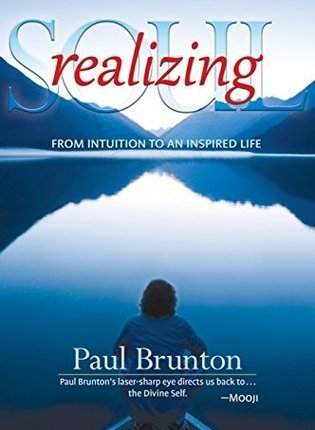
Realizing Soul — From Intuition to an Inspired Life by Paul Brunton

Realizing Soul — From Intuition to an Inspired Life by Paul Brunton

Paul Brunton was an English philosopher who dedicated his life to the spiritual journey.

Photo by Jonas Ferlin on Pexels.com

I had never read the teachings of Brunton before Realizing Soul and I found him to be very similar to Eckhart Tolle or, interestingly enough, Abraham Hicks.

He was like Eckhart Tolle in that he stressed the importance of the Now moment.

Brunton was like Abraham Hicks in that his description of the “Oversoul” could walk hand in hand with Hick’s “Vortex of Creation”. In fact, in my mind when I was reading this, I just substituted Oversoul for Vortex because I was more familiar with Hick’s thoughts on the matter than Brunton’s.

There is quite a lot of information in Realizing Soul, though it isn’t very long. In fact, I wish that some of the passages had been longer. This book was mainly a compilation of ideas from many of Brunton’s different writings.

I suppose that it gives the reader a great overview of the various works but I felt that it lacked some depth because of the shortened sections which were each generally only a couple of sentences long.

Photo by ArtHouse Studio on Pexels.com

Some parts I want to remember:
“…That which he has been seeking so ardently has been within himself all the time. For there at the core of his being, hidden away underneath all the weakness, passion, pettiness, fear, and ignorance, dwells light, love, peace, and truth. The windows of his heart open on eternity, only he has kept them closed! He is as near the sacred spirit of God as he ever shall be, but he must open his eyes to see it. Man’s divine estate is there deep within himself. But he must claim it.”pg 18

“The personal ego of man forms itself out of the impersonal life of the universe like a wave forming itself out of the ocean. It constricts, confines, restricts, and limits that infinite life to a small finite area. The wave does just the same to the water of the ocean. The ego shuts out so much of the power and intelligence contained in the universal being that it seems to belong to an entirely different and utterly inferior order of existence. The wave, too, since it forms itself only on the surface of the water gives no indication in its tiny stature of the tremendous depth and breadth and volume of water beneath it…” pg 27

“What can I do to break this barren, monotonous, dreary, and sterile spiritual desert of my existence? The answer is if you cannot meditate successfully go to nature, where she is quiet or beautiful; go to art where it is majestic, exalting; go to hear some great soul speak, whether in private talk or public address; go to literature, find a great inspired book written by someone who has had the glimpses (of the divine within life).” pg 78

Photo by Dina Nasyrova on Pexels.com

“Man as scientist has put under observation countless objects on earth, in sea and sky. He has thoroughly examined them. But man as man has put himself under a shallower observation. He has limited his scrutiny first to the body, second to what thinking can find. Yet a deeper level exists, where a deeper hidden self can be found.” pg 96

For the most part, I found Realizing Soul to be very beautiful and rich in meaning. There were some bits on karma and ego illusion that didn’t really resonate with me, but that doesn’t mean that it won’t speak to others.  If you want more of Brunton’s writings, they can be found online for free at this website: http://www.paulbruntondailynote.se/

If you enjoyed this book, you may want to listen to some of Eckhart Tolle’s lectures like Even the Sun will Die, Gateways to Now, or pick up the book, Stillness Speaks. Readers may also enjoy The Art of Living and Dying: Celebrating Life and Celebrating Death by Osho.

Thanks to the Goodreads First Reads program for a free copy of this book.  And, thank you for reading!

The Light: A Modern-Day Journey for Peace by Judith Lambert

The Light: A Modern-Day Journey for Peace by Judith Lambert

In The Light, Judy, the author, chronicles her dreams and her search through various countries and cultures for their ultimate meaning. She calls this book, a memoir, with some pieces changed to protect the privacy of the people involved.

I found it to be an engaging look into the life of a spiritual seeker and a fascinating comparative study of all religions, their symbols, and common meanings.

Judy talks to a librarian named Bill about symbols: “I’ve been having some dreams with symbols that seem to be very powerful and consistent, and I’m wondering whether these symbols have a history or a larger meaning…” “Oh, yes, absolutely,” he broke in. “All symbols have a history and a commonality. There’s no question about that… Images are the means people must employ to understand ideas and feelings. Without them, we cannot reason… but, you see, we often don’t know where these symbols and images come from, do we? We forget their origin and the long history of their use, until we end by thinking that the symbol is the thing itself!”

I’ve heard it said that all symbols are mere pointers. It is like a man trying to draw our attention to the moon by pointing at it, but we mistake the moon for the finger doing the pointing.

Photo by Aron Visuals on Pexels.com

A beautiful description of the chaos at the river, Ganges: “Over the course of the day, blessed pilgrims gathered at Mother Ganga to wash away their sins. Motionless holy men sat absorbed in rumination, their faces turned toward the sun in celebration of the endless cycle of mornings like this. The striking of wet clothing against the steps was accompanied by the distant ringing of temple bells, whose pitch and resonance varied with the preciousness of the material from which they were made- bronze, brass, or iron. And over it all hung a fetid haze smelling of smoke and of- well, I didn’t want to think what else.”

I enjoyedThe Light because Lambert made me feel as if I was there beside her in her spiritual wanderings. I enjoyed the travel parts of this book very much.

The City of Light: “…The Gita,” now he looked out at the Ganges, “speaks of a radiant river of light. Westerners.. well, they often see a surface, and then they have no idea how to look beyond that surface.” He gestured as if to indicate the whole city. “This is the City of Light. Is this not what you were looking for? I do not mean any disrespect, madam,” he hurried on before I could react, “but if one cannot see the Light here, then one has not looked long enough.”

A description of inner illumination: “Nothing changed. Or everything did, for though monk, mandala, walls, cushions, and robes all seemed to remain the same, I felt at last- and only for an instant- the sense of peace that had eluded me since my dreams began.”

Photo by Pixabay on Pexels.com

The author changes immensely over the course of her journey: “I feel a reassuring contentment from all I’ve discovered and all that I’ve been privileged to learn. I am a Jew, a Christian, a Hindu, a Muslim, a Buddhist, everything else, and nothing, all at once. I am…whole… And I believe that all religions possess and have knowledge of the Light. By claiming the Light myself, I can also retain my own personal stories, my own place, and time, and history…” An empowering message and a timely one.

If you enjoyed The Light, you may want to pick up The Realization of Being by Eckhart Tolle (a lecture, any of his talks are along this subject line) or The Invisible Hand: Business, Success & Spirituality by David Green (a memoir about another spiritual seeker and how he found the “Light”).

Thank you to NetGalley and Ann Duran Productions for the opportunity to read and review a digital ARC of this book!  And, thank you for reading.

The New Science of the Paranormal: From the Research Lab to Real Life by Carl Llewellyn Weschcke & Joe H Slate, PhD.

The New Science of the Paranormal: From the Research Lab to Real Life by Carl Llewellyn Weschcke & Joe H Slate, PhD.

Carl Llewellyn Weschcke died last year- may he rest in peace. I eagerly looked forward to reading The New Science of the Paranormal, one of his last (I’m guessing) books that we will ever see from him.

The primary message in here is one of self empowerment and the potential for anyone to develop powers that could be considered “paranormal”. What an appropriate departing lesson from a man who ran a publishing firm dedicated to bringing the occult and mysterious to light.

Photo by Rafael Guajardo on Pexels.com

The New Science of the Paranormal isn’t an “easy” read in that it includes a lot of tables and metaphysical philosophizing about the new age and levels of spiritual evolution.

To me, the most engaging bits were the accounts of students and researchers trying to swing a pendulum with their minds or use dowsing rods to predict the gender of unborn babies.  The scientific experiments that were included are fascinating in their implications.

Also, many of the techniques like water gazing and hand prints in the sand are not ones that I had been exposed to. I’ll definitely be trying some of this out on my own.

“The objective study of paranormal power can dispel many of the myths and “stories” surrounding the topic, including the belief that very few individuals possess paranormal powers. Although certain individuals, often called “advanced beings” or “gifted psychics”, may appear to be extraordinarily empowered, everyone to some degree possesses paranormal potential. Not unlike intelligence, the distribution of paranormal potential within the general population seems to occur in a so-called “normal curve”…

Photo by Lucas Pezeta on Pexels.com

Empowerment: “We are more than we think we are, but we don’t know we are until we develop that level of awareness and related sense of perception. We must grow to become more than we are and all we can be.”

Water gazing, who knew? : “Validated in the lab setting and successfully applied beyond the lab, water gazing is among the most effective self-empowerment techniques known. Whether to increase creativity in writing and art, activate telepathic sending and receiving, facilitating clairvoyance, improve memory, promote successful goal attainment, or generate a state of mental, physical, and spiritual attunement, the powers of water gazing appear to be without limits.”

Photo by Anastasia Shuraeva on Pexels.com

The Crumpled Paper technique was also surprising in its incredible amount of potential uses. Actually, this whole book kind of blew my mind. Perhaps I was dreaming too small.

A bit reminiscent of Abraham Hicks: “…one simple self-administered procedure is: Pay Attention to Your ‘Feelings.’ By that, we don’t mean to get all emotional when ‘feeling’ an idea, concept, event, situation, person, etc., but rather to analyze: what your feelings are telling you, what is it you are sensing, what is the basis for your emotional reaction, etc. And then let yourself explore the ‘answers’ to those questions.”

Know thyself. A message as old as the Delphic oracles.

I’ll close with a quotation included in Chapter Twelve: “Not in the clamor of the crowded street, Not in the shouts and plaudits of the throng, But in ourselves are triumph and defeat.” Henry Wadsworth Longfellow, “The Poets” (1876)

Thank you to NetGalley and Llewellyn Publishing for a free digital ARC of this book!  And, thank you for reading!