Don’t Let Anything Dull Your Sparkle: How to Break Free of Negativity and Drama by Doreen Virtue

Don’t Let Anything Dull Your Sparkle: How to Break Free of Negativity and Drama by Doreen Virtue

This book wasn’t for me.

Don’t get me wrong, I love sparkling.

Photo by Hope Aye on Pexels.com

But, what dulls my sparkle is considering all of the ways in which the world raises my histamine levels, which seems to be Doreen Virtue’s thesis for this book: “…the next day as I was walking along Post Street in Union Square, I heard the inner message that is the basis of this book. … “The reason why you and so many people are experiencing life drama is because you’re addicted to histamine.” loc 81, ebook.

She goes on to list various ways that one may lower this including: major dietary changes, laundry detergent, cleaning supplies, certain types of exercise, therapy, dry cleaning chemicals, what types of plastic bottles to drink from, what types of television programs to expose yourself to, what types of make up to wear and much, much more.

I hope that the readers who are looking for this type of information find Don’t Let Anything Dull Your Sparkle because it is one of the most complete types of books of this kind that I’ve ever read.

Photo by Matheus Bertelli on Pexels.com

The thing is, I could make myself crazy if I tried to control all of that stuff.

I’ve discovered, through my own life, that if I do the inner work of feeling better then external circumstances sort of fall into place on their own without me dancing around trying to make it so.

Don’t get me wrong- I am all for self care. Regular massages, aromatherapy, professional therapy, organic foods, support groups, whatever you need to make yourself feel better, do it.

I just don’t need to adjust those things to sparkle. I feel innately sparkly. I am a veritable disco ball of sparkles.

Photo by NEOSiAM 2020 on Pexels.com

Beyond the histamine issue, it is clear that Dr. Doreen Virtue had another career in psychotherapy. If you’ve experienced drama of any kind, trouble finding that special someone or encountered difficult personalities, she will help you get past that in this book.

There again, my significant other and friends are all quite normal and low drama- sparkling, if you will.

But, if you’ve had relationship troubles, this could be the book that you’re looking for. So, seriously, don’t let me deter you if you feel you need to read it.

“Remember, it’s not about how many friends you have; it’s the quality of the friendships that matter. Even one good friendship, built upon mutual respect and other healthy qualities, will help you sparkle throughout the day.” loc 2034, ebook.

Photo by fauxels on Pexels.com

Meditation and yoga, two of my favorite things, are highlighted in this book as ways to improve your life. I couldn’t agree more!

In this passage, Doreen is talking about dealing with potential drama in your family or with in-laws: “…any way you slice it, the situation will bring up stress hormones in your brain and body, and part of being responsible is taking care of yourself. So, go do yoga as soon as you can. Play gentle music, meditate, eat a low-histamine diet, and avoid chemicals.” loc 1961, ebook.

The trouble is: brownies are not low-histamine. That’s a deal breaker for me.

Photo by Jhon Marquez on Pexels.com

I recommend this book if you’re sick and fed up with the way life is going and you want to try something drastic to turn it all around. Otherwise, I’d have to suggest borrowing this one from the library.

I’ve heard that high library usage lowers histamine levels and makes you sparkle too. Kidding.

Thank you to NetGalley and Hay House publishing for a free digital copy of this book. And, thank you for reading!

The Age of Cosmic Consciousness: Discover Your True Identity & Accelerate Your Evolution by Transform Publishing

The Age of Cosmic Consciousness: Discover Your True Identity & Accelerate Your Evolution by Transform Publishing
ageofcosmic

Time for the hippie librarian to get a little New Age-y!

The Age of Cosmic Consciousness is a bunch of different metaphysical concepts strung together sort of like Ram Dass’ Be Here Now but written on regular paper instead of- I don’t know what that stuff is- let’s say brown paper bags.

The first thing to know about this book is that it is written in a flow of consciousness style. I found it very difficult to get into, but then hypnotic once I got reading, and thus it became difficult to put dow

. I found it similar to Kelly Howell’s Secret of the Universal Mind Meditation in that one idea leads to the next idea in a very natural and linear fashion.

A lot of the concepts in here have been covered by The Secret and various other authors. There’s a good bit about the Law of Attraction, but there’s so much more than that.

What I loved about this book can be summed up in this quote: “Do not overly focus on the inaccessible gurus and unapproachable enlightened people. Recognize and accept that a higher consciousness can be attained by anyone who proactively pursues its realization.” pg 136 I truly believe that enlightenment is for everyone and possible for everyone. This book really puts that idea forward.

That being said, I don’t know that I was prepared for the “other beings of light consciousness” mentioned in this book or the section that purports to have information directly from them but not “channeled”. Or the other section about aliens tampering with human DNA in the dawn of time. My inner self doesn’t necessarily “resonate” with those ideas yet, but some readers out there may feel it and understand it.

Photo by Julia Volk on Pexels.com

In conclusion, The Age of Cosmic Consciousness is worth the read for anyone interested in improving themselves and the world through inner transformation. Remember to keep an open heart and mind because some of the ideas presented are fairly “evolved”. Some similar books are: Be Here Now and Gateway to the Heavens: How Simple Shapes Mould Reality and the Fabric of Your Being.

I received a free copy of this book through the Goodreads First Reads program. Thanks for reading!

The Office Sutras: Exercises for Your Soul at Work by Marcia Menter

The Office Sutras: Exercises for Your Soul at Work by Marcia Menter
officesutras

The Office Sutras sums itself up in the first couple of pages: “The basic premise of this book is that we’re on a spiritual journey every second of our lives, not just during those times we set aside to contemplate the cosmos. The job you have right now, no matter how frustrating, no matter how screamingly imperfect, is part of your spiritual path.”pg 3

Every page there after pretty much repeats the same theme.

This book just wasn’t for me. Every chapter presents a common problem that one can encounter at work and then gives exercises that you can use to come to an understanding about it.

I realized that I was never going to do any of the exercises and I didn’t regret that in any way. Big fail.

If you’re going to read a self help book that deals with work and has a Buddhist vibe, I’d suggest Peace Is Every Breath: A Practice for Our Busy Lives.

Thich Nhat Hanh is brilliant and I find his writing to be more appealing than this offering. Thanks for reading!

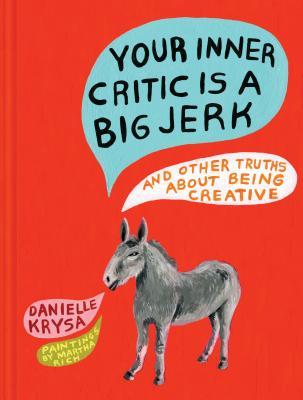
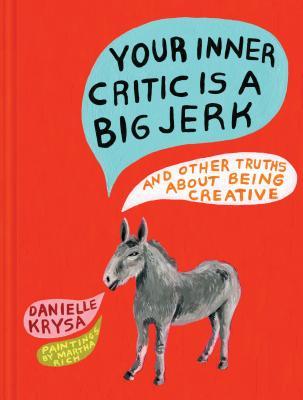
Your Inner Critic Is a Big Jerk: And Other Truths About Being Creative by Danielle Krysa

Your Inner Critic Is a Big Jerk: And Other Truths About Being Creative by Danielle Krysa
yourinnercritic

A quirky little book about how to inspire your own creativity and how to use your inner negative voice to its best advantage. Martha Rich’s art elevates what is actually rather simple text, but, on a more positive note, it is a quick read for those who may be short on time.

I couldn’t help but draw similarities between this book and Unmistakable: Why Only Is Better Than Best, which I read last week. Your Inner Critic is a Big Jerk deals with the sensitive parts of the creative process and breaking through your fears about how your art will be received.

Unmistakable is more about why you need to create the art that only you can create and how a bunch of different artists have managed to do just that. But, if you’re looking to jump start your creativity this year, pick up both of these because they actually complement each other fairly well.

One of my take-aways from Your Inner Critic is that it is never too late to start doing what you do: “Far too often, people tell me, “I wish I hadn’t given up on art [or dancing, acting, writing, music], but it’s too late now.” What! Why? I don’t believe that for a second. Many amazingly talented people didn’t hit their stride until their thirties, forties, or later.” pg 20

And Krysa goes on to list such luminaries as van Gogh, Money, and Julia Child. Can you believe that!

Even if you didn’t go to school to learn whatever art you feel compelled to create, you are still an artist. I’ve been pricked by that negative inner whisper once or twice and it was cathartic to learn that I’m not alone in that struggle and to finally put it to rest: “If you want to learn something new, go learn something new. Set yourself up to get this new skill in whichever way suits you best. You are what you know, regardless of when and where you did the learning.” pg 45

Some further reading: Unmistakable: Why Only Is Better Than Best or Creativity: The Perfect Crime

Thanks for reading!

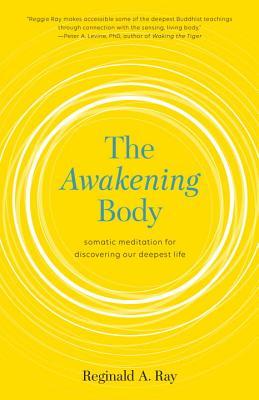
The Awakening Body: Somatic Meditation for Discovering Our Deepest Life by Reginald Ray

The Awakening Body: Somatic Meditation for Discovering Our Deepest Life by Reginald Ray
theawakeningbody

I picked up The Awakening Body because of a conversation I had with a friend last week. He said that when he sits down to meditate, that his mind won’t shut off, and it ruins the experience for him.

I gave him a technique about focusing on the space between thoughts, but decided that I needed something more concrete to give him. This book is perfect for anyone who feels like they can’t escape from his or her own mind.

The Awakening Body is a series of progressive meditations that take the practitioner out of “thinking” and into “experiencing”.

It’s as easy as focusing on your own toes: “In contrast to contrived conventional approaches that emphasize entry into the meditative state through the intentional thinking of the conscious mind… Somatic Meditation develops a meditative consciousness that is accessed through the spontaneous feelings, sensations, visceral intuitions, and felt senses of the body itself. … Put in the language of Buddhism, the human body, as such, is already and always abiding in the meditative state, the domain of awakening- and we are just trying to gain entry into that.” loc 110, ebook.

The teachings themselves are Buddhist in origin but you don’t have to be a practicing Buddhist to receive benefit from them. If you have a body, you can successfully do these meditations.

And the benefits from them could be enormous: “It is as if we are waking up, within our Soma (body consciousness), and we suddenly find ourselves in a new world. … We begin to see that what we formerly took to be our body was just a made-up version with little correspondence to anything real. We find in our body previously unimaginable vistas of spaciousness, experience arising that is ever surprising and fresh, an endless world of possibilities for ourselves and our lives.” loc 329, ebook.

Photo by Pixabay on Pexels.com

This book includes a link to access the guided meditations online so that you can completely focus on the practice as it unfolds. I am just beginning to work with these, but I am encouraged by my progress so far.

When I started, I couldn’t sense my big toes at all, which kind of freaked me out. Logically, I knew they was there, but I couldn’t feel them.

Ray says that this isn’t uncommon: “When we arrive at the first instruction, “pay attention to your big toe on each foot,” at first, practitioners may not be able to do this because, they often report, they have no feeling not only of their toes, but often of their feet, their legs, or even the lower half of their body. … “Keep trying,” I tell them. For even directing our attention to the vicinity of where we think the toes should or might be is already transforming our neurological wiring.” loc 1215, ebook.

That was a big wake up call for me. I’m so glad I picked this book up.

The last part of the book was the most challenging for me to understand because Ray begins to speak directly to those who have had experience with Somatic meditation. I read the words, but I can’t say that I grasped their meaning… yet. With time, perhaps I will.

I recommend The Awakening Body to anyone who is looking for a slightly different technique to begin or improve his or her meditation practice. Beginners to advanced practitioners will find this book useful.

Some further books to explore if you are interested in using/sensing the body in meditation: Ecstatic Body Postures: An Alternate Reality Workbook or Meditations for Breaking the Habit of Being Yourself.

Thank you to NetGalley and Shambhala Publications for a free digital copy of this book! And, thank you for reading!

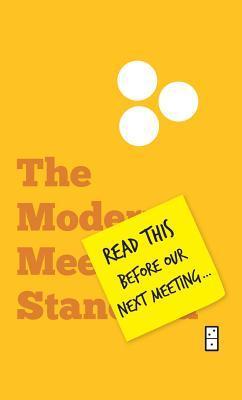
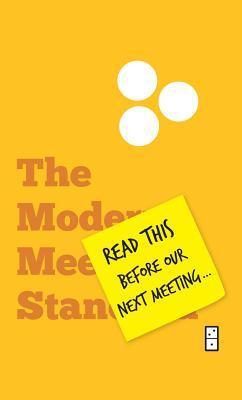
Read This Before Our Next Meeting by Al Pittampalli

Read This Before Our Next Meeting by Al Pittampalli
readthis

Endless meetings have you down? Pittampalli has a solution to your woes. He claims that modern meetings should only be held to solve specific problems and the only people who should be required to attend are those who could take direct action to solve that problem.

I think that the idea is a solid one.

It does take some internal mindset changes by the folks who call meetings. The first step, like with any problem, is to admit that you even have a problem.

“Over time, we’ve become nonchalant about bad meetings. If an operating room were as sloppily run as our meetings, patients would die.” pg 7.

Overly dramatic, perhaps, but true. And also keep in mind: “Change is never met with open arms. Great decisions involve risk and risk scares people; it’s natural for great ideas to get attacked or, worse, ignored. I can think of no single great innovation that has ever happened without the presence of opposition.” pg 15

So, there may be an uphill battle over this, but, Pattampalli thinks, it is worth it.

The end goal: “Meetings need to be less like the endless commercial breaks during a football game and more like pit stops in the Daytona 500.” pg 20.

So, they’re necessary, but they should run quickly because: “Meetings are too expensive and disruptive to justify using them for the most common types of communication, such as making announcements, clarifying issues, or even gathering intelligence. Like war, meetings are a last resort.” pg 23

Photo by Christina Morillo on Pexels.com

This strict definition of a meeting means that there is going to be some major preparatory work since communication isn’t going to be a part of the show. The person calling the meeting has to distribute information about the issue so that those who are attending can contribute.

“Every meeting should require pre-meeting work. Any information for getting attendees up to speed should be given out beforehand. If the attendee doesn’t have time to read and prepare, she doesn’t have time to attend.” pg 37.

But, this preparation pays off when, after the meeting, the business should have created a concrete ‘action plan’ that includes: “What actions are we committing to? Who is responsible for each action? When will those actions be completed?” pg 39. Thus addressing the problem that the meeting was called to solve and serving its function.

Most of the meetings that I’ve attended in my life have been rambling, unfocused affairs that were called to fill the monthly meeting quota that was arbitrarily chosen by management- a touch-base, if you will.

Pittampalli is adamant that this is a waste of time. I never really saw it that way because I didn’t have any expectations that meetings were supposed to accomplish anything at all. We’d meet, then get on about our business. This book has shown me that I should expect more.

Recommended for anybody who wants to learn more about the benefits of “modern meetings”. This short book has everything that you need to start changing the world, one meeting at a time.

Thanks for reading!

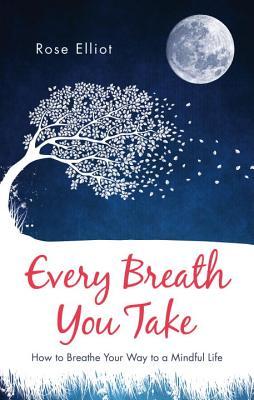
Every Breath You Take: How to Breathe Your Way to a Mindful Life by Rose Elliot

Every Breath You Take: How to Breathe Your Way to a Mindful Life by Rose Elliot
everybreath

Every Breath You Take is one of the finest mindfulness manuals that I’ve ever had the pleasure to pick up.

Practice by practice, Elliot takes the reader from the simple and concrete observation of the breath to the complex and abstract juggling of mind stuff. Along the way, she provides stories and anecdotes of those who have walked these paths before us and shows that, no matter where you are in your life, you can become more aware and grounded in the present moment and how beneficial that can be for you.

She began her journey like most of us- convinced that mindfulness was too difficult: “I struggled with the practice. I found it dreary, dull and boring- all that ‘notice-what-you’re-doing-while-you-clean-your-teeth’- I just couldn’t get to grips with it at all. … when I was on the point of giving up altogether, I met a monk… and he quietly suggested that it is helpful to link mindfulness practice to breathing. This really helped.” loc 16.

Elliot is so relatable that she made me feel like, if she could do this, I could do it too.

A reminder that mindfulness isn’t just a ‘Buddhist’ thing: “…it is to the Buddha that we owe mindfulness, but that does not mean you have to ‘be a Buddhist’ (whatever that may mean), or indeed of any religion at all to practise it. The breath is universal, as is spirit, so we can all benefit.” loc 46. If we can breathe, we can watch the breath. We just need to remember to do it.

Photo by Pixabay on Pexels.com

I loved Elliot’s gentle humor which was evident throughout: “You can use the irritations of daily life as reminders to take a mindfulness breath- and this way you’ll certainly get plenty of practice! For instance, such reminders might be: Being held up in traffic or a red light when you are driving. Waiting for the kettle to boil or for a bus or a train that’s late- waiting for almost anything. Lining up at the bank or at the grocery store checkout, or anywhere, for that matter. When someone is being really irritating, how great to know you have your own inner source of peace so they can’t bother you.” loc 237.

It is as if life is chock full of opportunities to take mindful breaths 🙂

My favorite part of the book was the many teachings about attachment. “When we can accept things as they are now, but recognize that they will change, and accept that too, we will know peace.” loc 793. I feel more peaceful already!

The Epilogue where Elliot talks about grieving for her husband and using these breathing exercises to make it through is especially touching. This is not just someone who talks the talk- she’s out there walking the walk. Highly recommended for anybody at any level of ability who wants to learn more about mindfulness.

Some further reading: How to Relax, The Wisdom of the Breath: Three Guided Meditations for Calming the Mind and Cultivating Insight, or Being Peace.

Thank you to NetGalley and Watkins Publishing for a free digital copy of this book!  And, thank you for reading.

Dying to Wake Up: A Doctor’s Voyage into the Afterlife and the Wisdom He Brought Back by Rajiv Parti

Dying to Wake Up: A Doctor’s Voyage into the Afterlife and the Wisdom He Brought Back by Rajiv Parti

Rajiv Parti was living a materialistic dream with the house, car, and beautiful wife to prove it. But, the many things in his life didn’t bring him comfort when he developed prostate cancer and a bunch of unfortunate side effects from the surgery to remove it.

Photo by PixaSquare on Pexels.com

Addicted to pain pills and disconnected from the people around him, Dr. Parti underwent emergency surgery and experienced something so incredible, that when he woke up, he completely changed his life, developed a new form of holistic health treatment, and gave up many of the possessions that were weighing him down.

This is the memoir about that experience and Dr. Parti shares it in the hopes that it will change the reader’s life or at least bring comfort to those who are struggling in their current life experience.

Like many of the other memoirs I’ve read by medical professionals, Dr. Parti talks about the completely scientific view he had of the soul, which is to say, if you couldn’t see it and measure it, then it doesn’t exist.

Also, working on the technological edge of medical breakthroughs in the treatment of various diseases, had given him an invincible feeling.

This experience blew that attitude away: “Feeling like a master of the universe is easy in the world of modern medicine. … Maybe it’s a sense of cheating death for others that gives us cardiac surgical teams the vague feeling that we can overcome our own death. Of course that isn’t true. … Reality popped that myth for me.” pg 10

Photo by Kevin Menajang on Pexels.com

In his near death experience, Dr. Parti not only encountered his father, but also a huge crowd of his ancestors.

They shared messages of forgiveness and love: “Love is the most important thing there is, my grandfather communicated to me. I am glad to let you know that simple truth while you can still make change in your earthly life.” pg 44

But his time on the other side wasn’t all light and love, Dr. Parti also had the (fairly rare) experience of seeing hell and the suffering souls within it.

This is entirely my opinion, but I think that the detached manner in which Dr. Parti was living his life brought forth a major wake-up call from the spirit world. He saw hell first and then heaven and, in a way, that could be a metaphor for his life experience.

Photo by Skitterphoto on Pexels.com

I don’t believe in “hell” myself other than the nightmare that people can create in their own minds and lives, but, I didn’t experience it like Dr. Parti did. This memoir does not focus on the hell portion of the narrative, but, with the rarity of that experience, it could have. That, in itself, says something.

When Dr. Parti “comes back”, he knows that he wants to start a new life and a new focus, but he doesn’t know how.

The information for developing a new type of medicine comes to him slowly during meditation: “What is (the new mode of healing) anyway?” “…It is how nonpharmacological treatments in combination with drugs can heal things like depression and addiction and other diseases. It’s about searching one’s own soul to fight back against the hollowness that pharmaceuticals alone or alcohol and illegal drugs create or don’t really fill.”pg 91.

He eventually develops meditations and lifestyle changes as well as a manifesto for treatment.

To me, the most fascinating part of this memoir was the communication between himself and the spirit world once he was back.

For readers who are unfamiliar with near death experiences, Dr. Parti provides a broad background with some of the major historical figures who went through it.

Like Jung: “(Carl) Jung’s NDE led to a split with Sigmund Freud, who believed that spiritual experiences were fantasies. Jung, however, considered spirituality an important part of our well-being saying that life has purpose beyond material goals and that our main task, the path we should all be on, is the one that leads to our own connection with the universe.” pg 124

Photo by Cliford Mervil on Pexels.com

Ultimately uplifting and empowering, Dying to Wake Up is another excellent entry into the literature about near death experiences.

Recommended for anyone who questions why we are here or what comes after. Some further reading: Into the Magic Shop: A Neurosurgeon’s Quest to Discover the Mysteries of the Brain and the Secrets of the Heart, Dying to Be Me: My Journey from Cancer, to Near Death, to True Healing, or Wisdom of Near-Death Experiences

Thanks for reading!

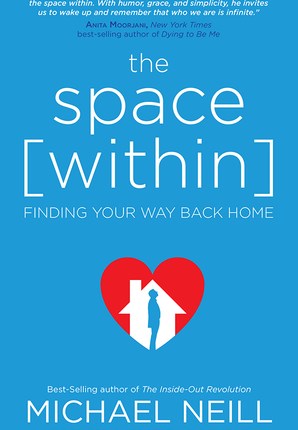
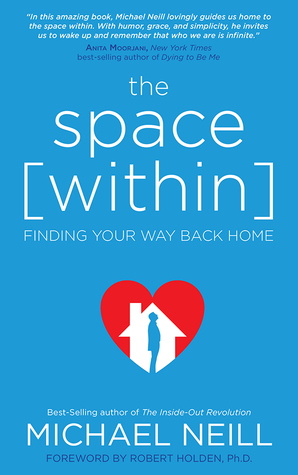
The Space Within: Finding Your Way Back Home by Michael Neill

The Space Within: Finding Your Way Back Home by Michael Neill
thespacewithin

No matter how many books I read on meditation, I always seem to learn something new when I pick another one up.

The Space Within is one of the more excellent books that I’ve discovered- not pushing any particular way of being, just quietly encouraging the reader to go within and embrace what’s there.

On separating our consciousness from the universal energy that surrounds it, Neill compares the mind to a book and I’m sure most Goodreads users, like me, could easily connect with the metaphor:“Think of ‘quiet’ not as an absence of thought but as the space inside which the noise of your thinking arises. What makes this tricky, at least to begin with, is that at first glimpse the noise is more interesting than the quiet …look at the white background of this page. Chances are you can still see the words, and even read them, but without noticing it, at some point you will once again become absorbed in the words and stop seeing the white of the page.” loc 192, ebook.

Why bother to meditate? : “There is a space within you where you are already perfect, whole, and complete. It is a space of pure Consciousness- the space inside which all thoughts come and go. When you rest in the feeling of this space, the warmth of it heals your mind and body. When you operate from the infinite creative potential of this space, you produce high levels of performance and creative flow.” loc 207

And more, promises Neill. I’ve meditated for many years and I’ve experienced some extraordinary things. It wasn’t always easy and it didn’t happen all at once, but I can say, from personal experience, that this particular claim is absolutely true.

Photo by Samuel Theo Manat Silitonga on Pexels.com

Thoughts are incredibly powerful things. I think we forget just how life changing your personal perspective can be: “… we live in a world of unrecognized thought. Thought is the architect of both hope and despair, the source of every color in the emotional rainbow. … But unrecognized thought demands our attention and fills our consciousness. And when we get caught up in thought, we lose our way.” loc 324, ebook.

And also: “We live in a world of thought, but we think we live in a world of external experience. The mind is not a camera, it’s a projector. We can’t tell the difference between an imagined experience ‘in here’ and what’s going on ‘out there’- and that confusion creates a lot of confusion.” loc 375, ebook.

You create your own reality- but it’s easy to forget that and blame other people for your circumstances.

When I read this next passage, I thought of How The Secret Changed My Life and the incredible importance that people placed on feeling good.

Neill points out that it isn’t anything to get wound up about: “There’s no such thing as a solution to a feeling. Because we don’t recognize this fact, we spend huge chunks of our time and energy trying to ‘solve’ our feelings by changing them to ‘better’ ones or eliminating them altogether. … When it’s okay to feel good when you feel good and bad when you feel bad, recognizing that as thoughts change, the feelings change with them, there’s no need to prefer one feeling over another, let alone attempt to fix it. And when you really see that for yourself, you being to experience more of the deeper feelings that make life worth living.” loc 457, ebook.

This is a great place to start if you’re just learning about meditation/mindfulness but it’s also appropriate for more experienced practitioners- if you breathe or think, you could probably learn something from this book. Some suggestions for further reading: Buddha’s Brain: The Practical Neuroscience of Happiness, Love, and Wisdom, Meditations for Breaking the Habit of Being Yourself, or Happiness: A Guide to Developing Life’s Most Important Skill.

Thank you to NetGalley and Hay House Publishing for a digital copy of this book! And, thank you for reading.