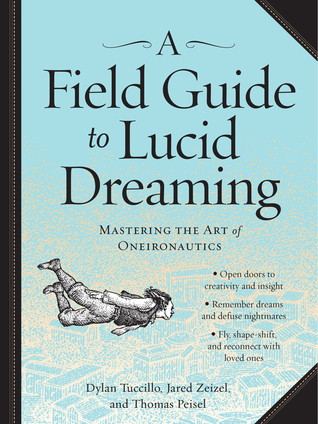
A Field Guide to Lucid Dreaming: Mastering the Art of Oneironautics by Dylan Tuccillo

A Field Guide to Lucid Dreaming: Mastering the Art of Oneironautics by Dylan Tuccillo
luciddreaming

An excellent guide to experiencing or deepening lucid dreams, A Field Guide to Lucid Dreaming is filled with tips, tricks and advice to explore your dream world.

My husband and daughter experience lucid dreams all the time and I don’t or, at least, haven’t yet. It’s embarrassing.

It’s as if they have access to worlds that I can only dream about, literally. I picked this book up because I wanted to develop this skill too.

So far, with the advice contained within this Field Guide, I’ve realized that I was dreaming once, became lucid and immediately woke up. But, that’s progress.

I’m encouraged actually. If I can go lucid once, I can do it again.

“Lucid dreaming is the ability to know you’re dreaming while you’re dreaming. A lucid dreamer is able to go to sleep at night and wake up within his or her dream. With this unique awareness, you can generally behave like someone who is awake, exercising the free will, imagination, and memory of waking life.” introduction. How fun would that be?

Ever wanted to fly? Face your nightmares? Talk to a deceased loved one? The authors of this book claim that it is all possible.

Photo by Ron Lach on Pexels.com

They addressed some of my problems directly: “Quite often, the amateur lucid dreamer’s early exploits in lucidity last only a few moments. If you’ve become lucid already but lost your awareness very quickly, don’t worry. This is common. In the next chapter we’ll look at ways in which you can stabilize the dream and stay lucid for long stretches of time.” pg 106.

Practice makes perfect, it seems.

The shamanistic beliefs about the dream world are intriguing:“…shamans of indigenous cultures understood that in order for something to be created in the physical world (such as that kitchen you’ve been meaning to remodel, or this book), it must first be constructed in the “imaginal realm.” In other words, lucid dreaming might be a tool in creating our physical reality.”pg 151.

Life is like a dream and we are the dreamers, whether asleep or awake:“This world can be a nightmare or a nice dream. It’s full of friends or enemies, success or failure, meaning or nihilism. We’re headed toward destruction or we’re headed toward rebirth. There are many viewpoints on Earth as there are people. And just like the dream, we shape our experience with our thoughts, emotions, and expectations. pg 246.

Recommended for anyone who, like me, wants to master lucid dreaming. I think that this book will help you find your way.

Sweet dreams 🙂

Thanks for reading!

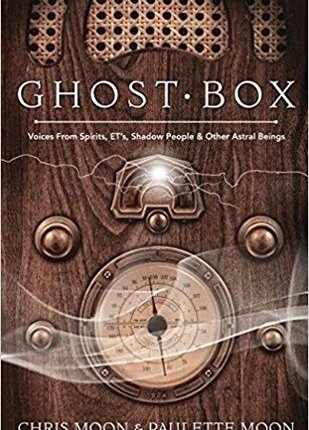
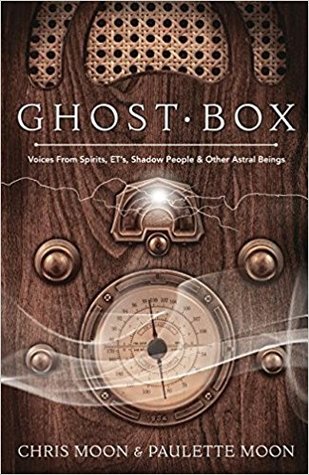
Ghost Box: Voices from Spirits, Ets, Shadow People & Other Astral Beings by Chris Moon, Paulette Moon

Ghost Box: Voices from Spirits, Ets, Shadow People & Other Astral Beings by Chris Moon, Paulette Moon
ghost box

Ghost Box is Chris Moon’s collection of paranormal investigations that he has conducted using electronic voice phenomena (EVP) and his own intuitive skills.

There is little to no science presented in this book so if you’re interested in the tech-side of paranormal investigation, you’ll have to keep looking.

Readers who want concrete information about the afterlife may grow a tad frustrated with this book. The majority of Moon’s investigations are conducted through feelings and feedback from the people he’s interacting with.

That’s not to say that he doesn’t have some solid hits. Occasionally, the information that he receives through his “ghost box” is absolutely spot on. It gave me the chills.

I watched a documentary once about Mario Bacci, an Italian man who has been receiving other worldly voices through an old radio for years. He has a group of devoted followers that gathers around him to hear his sessions with his own “ghost box”. They claim to hear their deceased family members through Bacci’s radio.

That documentary convinced me that this phenomena is real because of how the people reacted when they heard the noises coming through the radio.

Moon had his doubts at first too. When he first receives the box, he doesn’t think it will work. But, through using it and the evidence it provides, he becomes convinced that it is the real deal too.

Photo by Igor Mashkov on Pexels.com

“The machine facilitates real-time two-way communication with the spirit world and, as soon as my dad and I experienced it in action, we knew it would revolutionize the paranormal investigation field.” loc 95, ebook.

He receives this machine from Frank Sumption- an electrical tech who claims to have completed Thomas Edison’s ‘Telephone to the Dead.’

I didn’t even know that was a thing. “Apparently, Edison’s mother was a Spiritualist and he was very close to her. After her death, Edison started to re-examine his views on the afterlife. He realized that since energy could neither be created nor destroyed and that it could only change form, we humans (being energy) had to go somewhere.” loc 224. Fascinating.

The rest of the book, including aliens speaking through the ghost box and sightings of shadow people, I didn’t connect with as much. But, if you’re interested in that type of information, Moon’s book might be something that you’d really enjoy.

Thank you to NetGalley and Llewellyn Publications for a free digital copy of this book. Reminder: the brief quotations that I pulled for this review may change in the final printed version.

Thanks for reading!

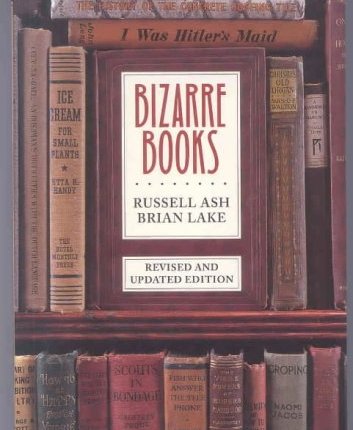
Bizarre Books: a Compendium of Classic Oddities by Russell Ash

Bizarre Books: a Compendium of Classic Oddities by Russell Ash
bizarrebooks

Though it relies too heavily on puns and doubles ententes, Bizarre Books is a humorous look at titles, subjects and author names in published materials. It is a must-read for any book lover or professional who deals with the printed word on a daily basis. *cough* Librarians. *cough*

“All the books recorded are real titles, with real authors. All of them were published with the serious intention of informing, not amusing. In this, they have signally failed.” introduction, pg 7.

I don’t think that ALL of them were meant to be informative. Take this entry from one of my favorite genres, science fiction: Planet of the Knob Heads. Stanton A. Coblentz. Science Fiction, Atlas Publishing, 1939. “Jack and Marjorie are brought to the distant world of their captors. In far Andromeda, they struggle against “favors” of the knob-heads – but hope fades as they face the High Knobule!” pg 40. Almost irresistible, isn’t it?

If science fiction isn’t your thing, how about this (I’m guessing) thriller: What Farrar Saw. James Hanley. Nicholson & Watson, 1946. “No story by Mr. Hanley is without its moral implications; here we have a glimpse of nightmare horror and chaos in a monstrous machine ridden world. It starts simply enough as chaos does. A young couple set off for a holiday in Scotland.” pg 44. Sounds at least as promising as The Girl on the Train, wouldn’t you say?

Photo by Suzy Hazelwood on Pexels.com

Those were some of the fictional books that caught my eye. On to the non-fiction. If it was on a shelf in front of me, I’d pick up Carnivorous Butterflies by Austin Hobart Clark, pg 62.

In the most ineffective category, the prize goes to: Atomic Bombing: How to Protect Yourself. Watson Davis, et al. New York: William H. Wise & Co. 1950. One of its suggestions was: “Curl up in a ball as you hit the ground.” pg 166.

By far, my most favorite selection is: The New Guide of the Conversation in Portuguese and English in Two Parts. Pedro Carolino.

Familiar phrases: Let us go on ours feet. At what o’clock is to get up? At which is this hat. Have him some children? pg 54. And so on. The authors dedicated another three pages to this gem alone.

Highly recommended from this bookworm. It made me laugh a lot and that is not easy to do.

Thanks for reading!

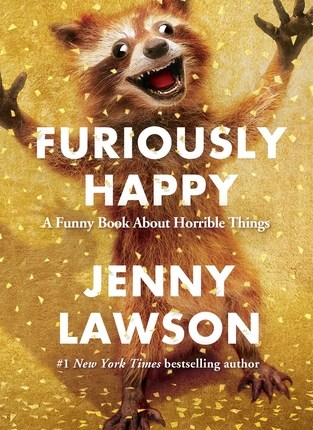
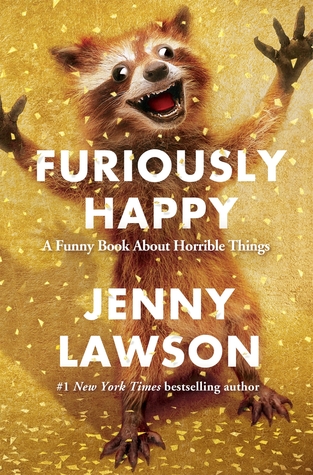
Furiously Happy: A Funny Book About Horrible Things by Jenny Lawson

Furiously Happy: A Funny Book About Horrible Things by Jenny Lawson
furiously happy

Jenny Lawson may not appeal to all readers, but I love her stuff. Her books are like open diaries and sometimes you just have to look away, but I always find myself looking back. I loved her first book and this one was even better.

In addition to being, in my opinion, uproariously funny, Jenny is a poster child for the millions who suffer silently from mental illness and the social stigma that goes along with that. She has more than embraced her condition, she’s transcended it into a weird alternate reality with grinning, taxidermied raccoons and brown (not white) Pegasuses with back herpes.

Though she obviously has her dark moments, Jenny’s world seems a lot more fun than the ordinary world. That in itself is miraculous when you consider the sheer amount of mental anguish that she’s lived through. I think Jenny gives people with debilitating mental illnesses hope- that they too can live a life filled with laughter, quirkiness and fun despite any obstacles.

It’s weird but my favorite part was the bit about Japanese toilets. I googled it and found out that Japanese toilets are a for-real “thing”- those buttons, squirting water and all. So, in addition to being entertaining and inspiring, this book could also be considered educational. 🙂

If you enjoyed Furiously Happy, you may want to try I’m Just a Person by Tig Notaro, Mother. Wife. Sister. Human. Warrior. Falcon. Yardstick. Turban. Cabbage. by Rob Delaney or Sleepwalk With Me and Other Painfully True Stories by Mike Birbiglia.

Thanks for reading!

The End of Self-Help: Discovering Peace and Happiness Right at the Heart of Your Messy, Scary, Brilliant Life by Gail Brenner

The End of Self-Help: Discovering Peace and Happiness Right at the Heart of Your Messy, Scary, Brilliant Life by Gail Brenner

Dr. Gail Brenner, from a completely Western point of view, presents a method of self realization that feels quite Eastern in its premise. To escape from troubling thoughts or life situations, go within and stay in awareness of your own consciousness.

From this new way of existence, external problems will either change or cease to exist in your new perspective of non-being. In fact, this book read a lot like Eckhart Tolle but was, I felt, a lot more understandable with some easy exercises thrown in.

Photo by Brett Jordan on Pexels.com

I think sometimes it helps to read the same type of material from different people because maybe something that they say will finally penetrate the fog in your mind. It can be a frustrating slog through buzz words and generalities. Or, perhaps, this author’s life experience is closer to yours and you are more able to figure out what the heck they’re saying- the finger pointing at the moon and all that.

I try to have an open and empathetic mind when I read self-help because you run into a lot of authors who want you to jump through the exact same hoops that they did even though your life experiences or difficulties aren’t the same. Yes, you may find some techniques that work for you but it’s never quite the extraordinary break through that they’re claiming.

Photo by Karolina Grabowska on Pexels.com

I run into the same messages again and again in self-help, but, I’m always thinking, maybe THIS time it’ll stick and I won’t have to try, yet another, author. Dr. Brenner has written a message that resonated with me even though it wasn’t the first time I’d run into it and it’s almost universally applicable in its technique.

She wrote this book so that, theoretically, the reader would never have to delve into self help again out of feelings of lack, loneliness, fear, etc. I’m certain that I will go there again, the self help shelf, out of a sense of curiosity which Dr. Brenner doesn’t discourage. She doesn’t ask readers to check out of their lives, but she wants to make sure that you’re going into self help for the right reasons.

This is a great read. If you like Eckhart Tolle, but he feels too far or you don’t dig his teachings about the “pain body”, The End of Self-Help might be just what you’re looking for. If you’re looking for more of this type of teaching, listen to the audio lecture, In the Presence of a Great Mystery by Eckhart Tolle or Resist Nothing: Guided Meditations to Heal the Pain-Body by Kim Eng.

I received a free copy of this book through Goodreads First Reads program. Thanks for reading!

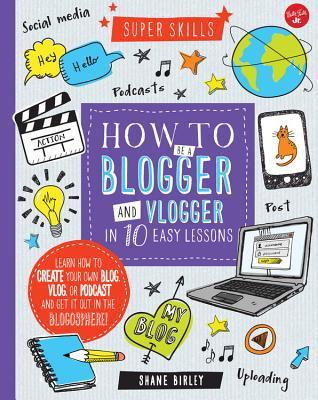
How to be a Blogger and Vlogger in 10 Easy Lessons: Learn how to create your own blog, vlog, or podcast and get it out in the blogosphere! by Shane Birley

How to be a Blogger and Vlogger in 10 Easy Lessons: Learn how to create your own blog, vlog, or podcast and get it out in the blogosphere! by Shane Birley
howtobeablogger

This is a good resource for kids who are looking to start their own online presence on a variety of platforms.

From podcasts to video blogs, Birley gives basic to expert tips and safety suggestions.

As a parent, I was particularly interested in his Super Skill Section 8 (begins on page 50) in which he talks about online etiquette and how to appropriately handle unruly website visitors.

(Getting on my soapbox) I think that there aren’t enough books that teach kids how to behave online.

With episodes of cyber bullying and trolling on the increase, as a professional educator, I am always on the lookout for books that give effective coping mechanisms for dealing with the issues that arise.

How to Be a Blogger and Vlogger in 10 Easy Lessons is a great place to start and we need more books just like it. (Getting off soapbox)

My only complaint is that this doesn’t include “Parent Tips” or any sections about how the adults in the kids’ lives can support the effort.

Birley doesn’t leave parents entirely out of the loop: “Speak to a trusted adult about any comments on your blog that make you feel uncomfortable or upset.” pg 53. But, I wish that there had been more.

The recommendation on the cover of this book is for ages 12+ but my 9-year-old devoured this text. So, I’d give this to any child who is interested in digital media, no matter their age.

Thanks for reading!

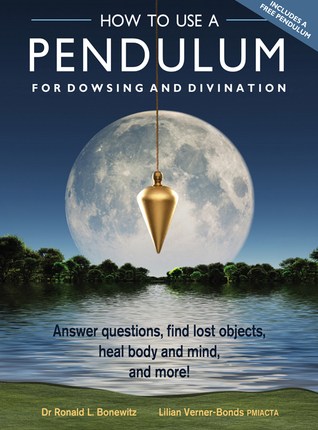
How to Use a Pendulum for Dowsing and Divination by Ronald L. Bonewitz

How to Use a Pendulum for Dowsing and Divination by Ronald L. Bonewitz
pendulum

I read a book a couple of years ago called Extraordinary Knowing: Science, Skepticism, and the Inexplicable Powers of the Human Mind by Elizabeth Lloyd Mayer. She opens the book with a chapter about how her daughter’s instrument was stolen and she called a professional dowser, though she didn’t believe in such things, to help her find it.

And guess what happens. 🙂

Pendulums work along the same kind of lines as dowsing and, after reading that, I thought maybe there is something to this.

You can watch Elizabeth Mayer talking about her experience on YouTube by clicking this sentence.

There used to be holistic shop (it has since closed) in my town that I liked to pop in for “fringe” books that libraries don’t purchase (but I love!) and, one day, the owner had a huge collection of pendulums for sale. I picked one up, not knowing anything about it beyond what I had read in that book, and it has sat on my meditation table for months, just looking mysterious and interesting.

Then, last week, I saw this book and was so excited to finally have some instructions!

pendulum-brass-gemstone

Photo from shamanschool.com

First of all, some background info: (Divination practices) most directly related to pendulum use fall under the general category of sortilege- the casting of lots. The word ‘sortilege’ comes from the Latin word sors, which means lots, and the title Sortilegus was given to the person who was the reader or the diviner via means of this process. Broadly, the practice involved (and still involves) holding an object or group of objects in the hand or hands while imbuing them with the question for which an answer is sought, then casting them through the air. It was believed that the answers were ‘in the air’, and that, as the lots moved through it, they became impregnated with the answer, causing them to fall in a certain pattern. The answer is then divined from the pattern made by the objects in their landing positions. The movements of the pendulum are derived from the same source.” pg 11

herkimon

Image from http://www.harmony000.org

What is divination anyway?: “Divination lifts up and beyond the normal. Divination is all a question of moving the self into a deeper consciousness, a totality of awareness, of discovering messages and information as we seek, passing between the mind of the great architect of the universe and the mind of man. Divination is a state; it is not a technique. But, you can use techniques to develop your ability to be in that state.” pg 15

I’ve always used meditation for that.

I thought that the authors took the use of pendulums a bit too far in this part where they advised bringing your pendulum with you wherever you go ‘just in case’: “Carrying your answers with you- Pendulum work is extremely useful in your everyday life, whether at home or abroad. For instance, at the local market or the supermarket, if you can’t decide which grocery to put in your basket, use your pendulum. You can also use it for yourself, for those times when you’re wondering ‘Is this product good for me?’ Maybe, maybe not. It’s helpful to be informed. Before purchasing anything, you can check.” pg 56. Intriguing idea, but I just can’t see myself doing that. Should I recommend THIS book to that patron or THAT book?

pendulumatlibrary

Image from consortiumlibrary.org

How the human body connects to the spirit like a pendulum: “Just as the pendulum connects into this (spirit) flow, so we, too, connect in physically. In past times, there was a consciousness of the fluid flow from the brain. Initially, it was equated with palmistry. Napoleon, for example, always had his palmist with him. He- among many others at that time- was convinced of the belief that the brain directed fluid (spirit) flow down through the top of the head, along the arm, and over the top of the wrist, hand and fingertips, and that it even created the lines on the palms of the newborn child. This was revered as a map of the child’s future. It has also been shown that a hand that is paralysed becomes void of any lines.” pg 68 I didn’t know any of that.

I was disappointed to discover that there are some minor binding errors in this book. It has half a dozen or so blank pages in the middle.

I’m not entirely convinced about this pendulum thing, but, for total novices like me, How to Use a Pendulum for Dowsing and Divination is a good place to start.

Thanks for reading!