Psychic Dreamwalking: Explorations at the Edge of Self by Michelle Belanger

Psychic Dreamwalking: Explorations at the Edge of Self by Michelle Belanger

Psychic Dreamwalking has some instruction on lucid dreaming, but it is interspersed with a lot of personal background information and some psychic vampire stuff. That didn’t bother me, even though it isn’t my particular realm of study. I’ve found that the mind is a very powerful tool for interpreting reality and people seem to believe all sorts of things that I find to not be compatible with my life experience. But, if that kind of thing annoys you, just stop reading Psychic Dreamwalking before Chapter 9 and you’ll avoid most of it.

I rather liked author Michelle Belanger’s opening dedication, “Prayer of the Dreaming”: “I commit myself to you, Lord Morpheus! Open wide the Gates of Dream. Grant me safe passage in your realm So I may return with tales to tell. -from the Introduction. She mentions that this prayer is based on The Dream King from Neil Gaiman’s Sandman series. I haven’t read that comic yet, but it has a great reputation. I’ll have to get to it sometime.

What is dreamwalking anyway?: “Dreamwalking is the art of sending forth a part of the self in order to make contact with others through the medium of dreams. Anyone can learn how to dreamwalk, and, as we explore the concept throughout this book, you will find that most people already do. … The lack of available information on dreamwalking exists in part because there is no consistent nomenclature for the technique. There are accounts of dreamwalking mixed in with experiments in astral projection, dream telepathy, and lucid dreaming, but they are rarely identified as such.” pg 1

It is so difficult in consciousness experimentation to come up with a vocabulary to discuss not only your experiences but to be able to communicate something very personal and individual with someone else who may have had completely different experiences and who are approaching the same topic from a different background. The name of the game in this book is “dreamwalking” which I find to be a rather poetic way to describe a universal phenomenon.

“But this the fundamental premise of dreamwalking: on some level, the dreamspace is real. It is not real in the sense that the physical world it (sic) real, but it is certainly as real as the astral planes described by writers like Madame Blavatsky and Dion Fortune. Like the astral planes, the dreamspace is a subjective reality. As much as it is a place we can go to, it is also a place that we shape with out (sic) hopes, desires, and fears.” pg 25

I think this is a part of the human experience that deserves a far broader investigation than experts and laypersons have given it so far. But there’s always time to get started! Who’s with me?

Belanger talks about Carl Jung a lot in this book. I wonder what he would think about dreamwalking…: “Jung’s concept of the collective unconscious, a layer of myth and symbol deep within each of our minds that connects all of us in mysterious ways, hearkens back to the ancient notions that the dreamspace is a realm unto itself, a hazy place of twilight where men can sometimes meet with gods.” pg 36

It reminds me a great deal of the Dreamtime of the First Nations of Australia. This is not a new concept but one which, as I said before, deserves more experimental research than it has yet received.

The main technique that Belanger uses to access this world within dreams is one that I am very familiar with, namely building a gate: “The Gates of Dream are an archetypal image that I return to again and again in this book. Archetypes and symbols have some objective reality within the realm of dreams, and the Gates of Dream represent the point of passage from your personal dreams to the wider territory of the dreamspace. You can harness this archetypal image in your dream haven, creating a crossing-over point that can later serve as a focus for when you seek to dreamwalk.” pg 51

If you’d like to learn about my experiences with walking through gates, I invite you to explore my blog: https://thelightcongress.com/

Belanger touches a bit on shamanic practices, but not in depth: The shamanic dreamtime, as a realm of myths and images that is peopled by animal totems and celestial teachers, can very easily be equated to Jung’s collective unconscious, the psychological repository of humanity’s collective myths, dreams, and symbols. Many of the totems and other mythic figures encountered in the shamanic realms are Jungian archetypes transported from their existence as simple concepts to vivid, potent entities. … There is a kind of travel that occurs in dreamwalking, but it is, at first, an inward journey. This inward journey, however, can lead the dreamwalker elsewhere. Traveling within can sometimes lead you out. pg 67

I’ve explored a few books about shamanism. You can read those reviews here:

In this passage, Belanger discusses the importance of lucid dreaming in various religious traditions: “From the monks of Buddhist Tibet to the 12th century Spanish Sufi Ibn El-Arabi, mystics the world over have proclaimed the benefits of lucid dreaming. For religious thinkers, lucid dreaming has long been seen as a way to illuminate both the nature of the Self and the nature of reality. Tibetan Buddhists were pursuing lucid dreams as early as the eighth century C.E. According to their philosophy, the mastery of lucid dreams was a necessary step in the pursuit of enlightenment. The ability to recognize the illusory nature of the dreamstate directly correlated to the ability to recognize the illusory nature of all things. pg 139 Fascinating in how the study of dreams can be applied to other areas of your life!

Belanger captured my feelings about psychic vampires very well in this passage: “Ultimately, you and you alone can judge the validity of your experiences. You should never surrender this right, but you should also not use it as an excuse to indulge in wish fulfillment. Make a thorough investigation of every experience and decide for yourself. pg 181. Cura te ipsum.

Though I feel that Psychic Dreamwalking contained a lot of superfluous information, there are some solid dreamwalking techniques in here. I think that the main hurdle to this practice is simply becoming lucid while dreaming in the first place. So, for now, I’ll stick with going into trance. But, for those who already have the ability to lucid dream, this may be something that you’ll want to investigate. Pick up Otherwhere by Kurt Leland for a first person account of dreamwalking or Multidimensional Man by Jurgen Ziewe.

Thanks for reading!

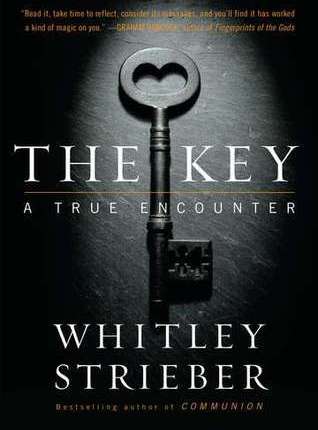
The Key: A True Encounter by Whitley Strieber

The Key: A True Encounter by Whitley Strieber

Originally Reviewed on April 12, 2015

I enjoyed this book not necessarily for its message but because it’s a stunning example of a clear communication from a mysterious source of non-human/non-physical intelligence. It’s not a huge surprise to me that Strieber was able to make such a connection as he details his daily transcendental meditation practice and has previous experiences with the worlds and beings beyond the everyday waking world. (For an example, see his story in this book about meeting the small, withered old man or one of his numerous other non-fiction works.)

If you pick up this book, you’re either going to believe what Strieber has to say or dismiss the information- there’s not a lot of wiggle room. Let’s continue this review with the assumption that you, like me, believe Strieber saw and heard something or someone, received a message, and wrote it down. If you don’t believe that basic assumption, then this review is going to be a waste of your time. I’d suggest moving on to the next one. Peace.

Now, I believe that there are all manner of spirits that inhabit the unseen world. Like the “Master of the Key” described in Strieber’s midnight conversation, I believe there are forces that allow things to thrive and forces that deny this. I think the way to decide which force is what is to examine how the communication makes us feel and the actions that we feel compelled to take after the encounter.

What was the ultimate impact of the “Master’s” words for you, the reader? I felt fear- deep, bone-chilling fear.

First of all, I felt fear for the being’s assertion that the Earth is going to be destroyed in a climate related disaster that no one can stop now because we ruined the atmosphere. That not only affects me, but my children’s children’s children. There are always steps we can take to make the world, and the future, a better and brighter place. I will not give up this agency to anyone, despite what hidden knowledge they may profess to have.

Second, I felt fear for his idea that none of the major world religions (Christianity, Buddhism, Islam) reveal the full truth of conscious evolution, which, in one fell swoop, denied the inner truths for a majority of the people on this planet today. And, the quietly implied addendum to this revelation, that none of the major religions know the truth, BUT I DO- this mysterious guy who shows up in the middle of the night, dumps all of this in Strieber’s lap, then makes him drink a concoction to have him forget everything that he didn’t write down. This doesn’t feel like a benevolent act to me. It feels like a play to make Strieber feel afraid, directionless, and unwilling to seek out help from anyone from a major religion, which is a lot of people and shuts a lot of potential open doors.

Third, I felt fear for this mysterious being’s assertion that the world will be lost because of a child who was never born because of the Holocaust. What sort of creature/being/visitor would know the full extent of the evil caused by one of the worst atrocities in human history, save that knowledge until fifty years after the fact, and tell it to someone who, by his own admission, doesn’t have the power to do anything about it? Fiendishly clever, no?

And, again, this third bit of information seeks to remove Strieber’s, and any reader’s, feelings of hope for the future. I reject the idea that nothing can be done about future events. Everyone exists in the Now moment, which is quite a powerful place to be. It is here that we can change the world, not by ruminating on past horrors and the terrible fallout from them. I will not abandon hope. A dream of mine is that others will not give up also.

I find it interesting that the “Master of the Key” in the book planted enough prophetic tidbits in his fear-filled message to impress Strieber with a feeling of truth from the communication like with the gas-holding memory idea for machines. But, for me, the nature of the messenger himself is clear, given the underlying effect that almost everything the visitor had to say was to sow fear, create a feeling of impotence or divisiveness, and to manufacture a driving need to consciously evolve now, now, NOW in this brand new way or everybody’s going to die and be chained to a dying planet forever until the end of time.

Let’s go back to our existential questions again for a moment: what sort of being wants people to feel afraid, separate from the source of your being, feeling like you have forgotten important knowledge that is required to save your soul that only the mysterious being knows? What sort of being would counsel a soul to not go into the light because that isn’t God, it’s oblivion?

When Strieber asks this being his name, the reply was something like “You could call me, Michael. Or, you could call me, Legion. I would be honored to be called human.” This was a red flag for me. “Who’s in there with you, Legion?” would have been my next question to the being.

I think what Strieber experienced was real. I think that it was a cleverly packaged hodgepodge of truths, possible futures, and small twists of religious dogma designed to make Strieber doubt everything, even his own inner guidance. Strieber himself said that, after everything that had happened, what he most wanted was to talk to this being again. If I was in his shoes, I’d feel the exact same way. There are quite a few things that could use clarification. The first of which, in my mind, is why does this being instill such a feeling of fear in those he communicates with? Is that really necessary to get his message across or is it some kind of unfortunate side effect of the type of energy the being is emitting?

Despite my thoughts on the true nature of the “Master of the Key,” if you liked The Key and were able to distill some truths that rang true for you from all of the fear-mongering, you might like troubling predictions of Heaven is Real But So is Hell by Vassula Ryden. I got the same kind of vibe from her book. I feel like there may be truths there to be found but the large part of the message felt devoted to making the recipients of that message just quake in fear. Proceed cautiously.

Thanks for reading!

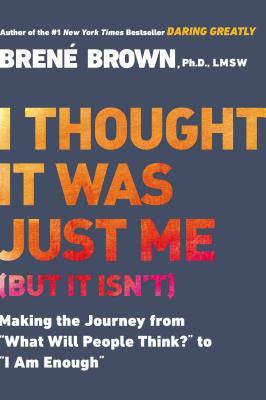
I Thought It Was Just Me (But It Isn’t): Making the Journey from “What Will People Think?” to “I Am Enough” by Brené Brown

I Thought It Was Just Me (But It Isn’t): Making the Journey from “What Will People Think?” to “I Am Enough” by Brené Brown

Researcher Brené Brown gives readers another self help title on how to handle the difficult emotion called shame.

“This book offers information, insight and specific strategies for understanding shame and building “shame resilience.” We can never become completely resistant to shame; however, we can develop the resilience we need to recognize shame, move through it constructively and grow from our experiences.” pg xiv

Photo by Kei Scampa on Pexels.com

It’s not easy to handle shame. In fact, it’s not that easy to read about it.

But Brown says the way through is sharing those uncomfortable feelings with others. One of the solutions to shame is empathy and another is self awareness.

Other attributes shared by those with high shame resilience are:

“The ability to recognize and understand their shame triggers. High levels of critical awareness about their shame web. The willingness to reach out to others. The ability to speak shame.” pg 67

Photo by Pixabay on Pexels.com

Part of her work in psychology has been to define what shame is. Brown writes everyone has different triggers based on unique childhood and adult experiences. Therefore, it is impossible to name universal shame triggers which can make it difficult to study shame.

Her studies have led her to believe the opposite of shame is self esteem, which was an interesting aspect I had never considered. Other aspects of shame include: feeling like you’re not good enough or don’t belong.

Brown has discovered another hurdle in her research- it can be difficult to speak about shame as words sometimes fail us when we experience visceral feelings.

“Sharing our shame with someone is painful, and just sitting with someone who is sharing his or her shame story with us can be equally painful.” pg 147

Photo by Tima Miroshnichenko on Pexels.com

On a more positive note, Brown writes everyone has experienced this at some point or another. She uses this universality of experience to issue a clarion call for change. To foster shame resilience, we should build networks of support and be kind to each other by showing our own vulnerability. We’re all in this together.

And I couldn’t agree more.

Recommended for anyone who has ever felt shame. That’s everybody.

Thanks for reading!

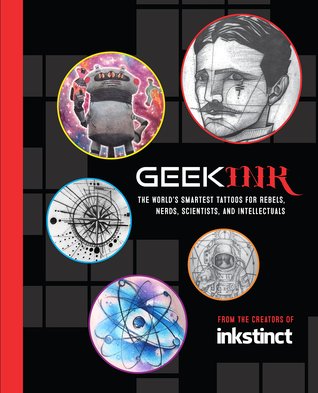
Geek Ink: The World’s Smartest Tattoos for Rebels, Nerds, Scientists, and Intellectuals by Emanuele Pagani

Geek Ink: The World’s Smartest Tattoos for Rebels, Nerds, Scientists, and Intellectuals by Emanuele Pagani

Geek Ink is a fairly representative book of “geek” culture tattoos with brief biographies of some of the tattoo artists.

I have to say though, there were far more Star Wars ideas in here than Star Trek. In that particular showdown, the Trekkies were not representing. I know there are major fans of the Star Trek franchise out there… where are you guys?! Not getting tattoos, I guess.

Photo by Jose Musa on Pexels.com

I was also disappointed in their collection of literary tattoos. Lord of the Rings, Harry Potter and The Little Prince were there, of course. There were a few science fiction themes. But nothing from other beloved classics like Where the Wild Things Are, or poetry, or various mythologies beyond a few generic-looking fairy tale castles.

Are book readers not into tattoos? This one is. 🙂 I was particularly drawn to the hyper-realistic tats of plants and animals.

Photo by cottonbro on Pexels.com

Recommended for people looking for tattoo ideas or who appreciate gorgeous body art. Despite my quibbles, this is a beautiful book created by incredibly talented artists, and which would look great on your coffee table.

Thanks for reading!

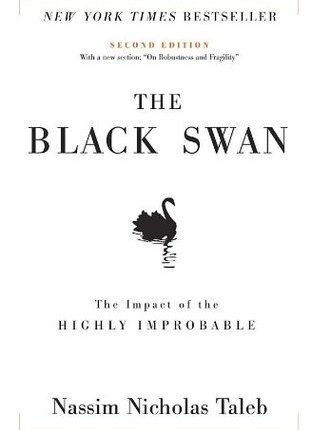
The Black Swan: The Impact of the Highly Improbable by Nassim Nicholas Taleb

The Black Swan: The Impact of the Highly Improbable by Nassim Nicholas Taleb

Nassim Nicholas Taleb discusses “black swans”, unexpected and life-changing events, and how life is far more uncertain than most believe it to be. He also examines, in-depth, how we fool ourselves into believing reality is otherwise by various means like confirmation bias (we look for evidence to support our existing beliefs) and narrative fallacies (the tendency to describe existence using linear stories when reality is far more complicated).

Mix in a heaping dose of storytelling and autobiographical information and you get The Black Swan.

Photo by Takeshi Arai on Pexels.com

“This combination of low predictability and large impact makes the Black Swan a great puzzle; but that is not yet the core concern of this book. Add to this phenomenon the fact that we tend to act as if it does not exist!” Prologue xxii

This is a dense read, full of philosophical references and terminology. Basically, beyond black swans having a larger impact on reality than we realize they do, this book can be simplified way down to “beware of because” and “know what you don’t know”.

“Beware of because” because (tee-hee) reality is far more random than most believe it to be. And we suck at predicting the future, for a variety of reasons, but partially because it is impossible to project future events from historical ones.

“Note here that I am not saying causes do not exist; do not use this argument to avoid trying to learn from history. All I am saying is that is it not so simple; be suspicious of the “because” and handle it with care — particularly in situations where you suspect silent evidence.” pgs 120-121

Photo by Karolina Grabowska on Pexels.com

“Silent evidence” is the information not readily apparent for whatever reason. Taleb gives an illustrative example of silent evidence from ancient history of a philosopher being presented an argument that a group of sailors survived a shipwreck because they prayed. The philosopher wonders how many of the sailors who drowned were also praying. The drowned sailors, you see, are the silent evidence.

Biologically, Taleb says, human beings are not set up to be deep thinkers and are fooled by a variety of logical fallacies. This is only a problem because, as time goes on, humanity has less running away to do from things trying to eat us and more dealing with the complexities of modern existence.

But by remembering “to know what we don’t know” and understanding some of the limitations built into our brains by memory and logical fallacies, we can be prepared to make better decisions than before. Or, at least, we’ll have a better grasp on how risky and unknown life is.

Photo by Marlene Leppu00e4nen on Pexels.com

Anyway, this book certainly gave me a lot to think about. The part that struck me the most is when Taleb applies his black swan idea to careers and how this uncertainty applies particularly to authors and artists. For every J.K. Rowling, there will be thousands of writers who never make that break through. I started wondering how many extraordinary books I will never get to read because of this phenomena.

The author’s tone throughout the book, slightly irreverent, didn’t annoy me as much as it seems to have bothered other readers. I enjoyed learning a new way to look at reality, but, as I mentioned before, this is a dense read and I wouldn’t consider it “fun” reading either.

It may appeal most to philosophers and anyone who wants to consider new ways to view reality.

Thanks for reading!

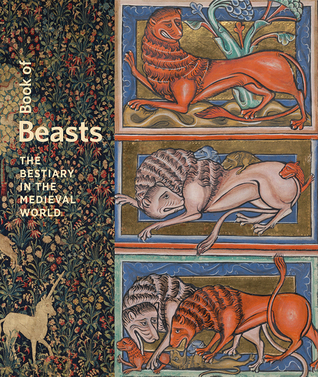
Book of Beasts: The Bestiary in the Medieval World by Elizabeth Morrison

Book of Beasts: The Bestiary in the Medieval World by Elizabeth Morrison

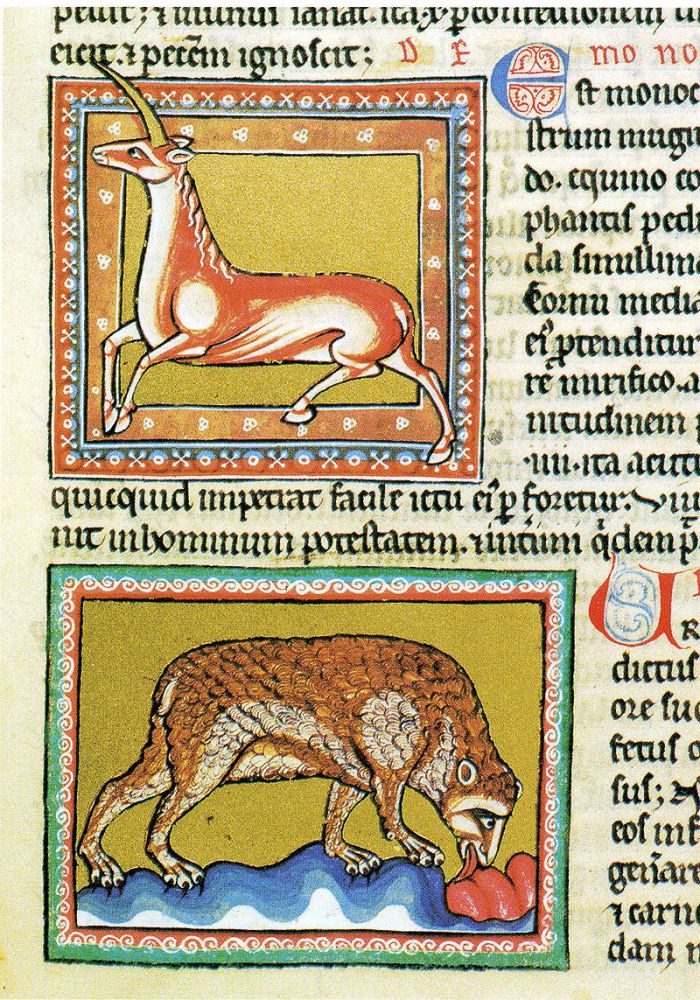
Books of Beasts is a scholarly examination of medieval texts called “bestiaries”. These curious works consisted of lists of animals with accompanying pictures and traditional stories. Sometimes they were printed alongside other works, like the Bible, sometimes not.

Elizabeth Morrison and twenty six other medieval scholars assert that these were the second most popular texts in the medieval world. They weren’t concerned with accuracy or science, part of the purpose of the books were to use creation as a window to contemplate the mysteries of God.

This particular book, Books of Beasts, was made to accompany a ground-breaking exhibition at The J. Paul Getty Museum. You can learn more about the exhibition here: http://www.getty.edu/art/exhibitions/…

I also used the information in this book to write a script for The History Guy YouTube Channel.

“Book of Beasts: The Bestiary in the Medieval World” presents the largest number of medieval bestiaries ever gathered together, representing one third of the known surviving illuminated bestiaries, including some that have never before left their countries of origin.”

The stunning portion of this book are the bestiaries themselves. The colors and the animals in their various tableau are simply beautiful. When you consider how old the artwork is, it’s staggering that something that fragile has survived so long.

“Animals both real and fantastic parade by the dozens, and sometimes hundreds, across the pages of these remarkable works. Their stories were among the most familiar and beloved of the time, and many survive today, though their origins in medieval and earlier times have, sadly, been largely forgotten.”

My favorite part of this book were the stories attached to the animals. Everyone in the medieval world knew them and so, when that animal appeared somewhere else say, for example, on a tapestry or dish, it was a hidden code of sorts, imparting meaning that the modern reader has never learned.

Consider the lion: “The natural philosophers say that the lion has three principal natures. His first nature is that he likes to walk on the mountain heights. And if it should happen that he is sought by hunters, the odor of the hunters reaches to him and with his tail he covers the trail of foot prints he left behind…. And thus our Savior… covered over the foot prints of his love in Heaven, until sent by the Father, he might descend into the womb of the Virgin Mary, and save the human race that was lost.”

The lion was always presented first in the bestiaries and was given the name “the King of Beasts” not only for its position on the food chain but also for its association with Jesus Christ. These associations have bled over to today, and I had no idea that’s where they came from.

Fascinating, isn’t it?

But as interesting as the stories and images were, this book suffers from some serious academia-itis. The various scholars, the only experts on the topic in the world I’m sure, have different writing styles and some are far more palatable than others.

By the time I got to my fifth or sixth explanation why this text was related to that text and may or may not have come first, my brain was glazing over a little bit. Other sections read more like dissertations than material that someone would pick up for fun.

That criticism aside, the topic itself is absolutely worthy of investigation, if for nothing else than these stories that were, as one of the authors said, as popular as a “viral meme” that some of their meanings are still in use today. Isn’t it cool how history haunts us in ways that we may be unaware of?

Thank you to NetGalley and the publisher for a free digital advance reader copy of this book. The projected publication date is in June 2019. The short quotations I cited in my review may change in the final version. 

Thanks for reading! #BookOfBeasts #NetGalley

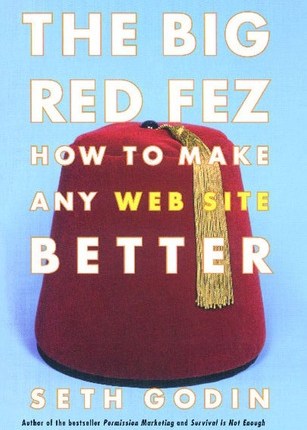
The Big Red Fez: How To Make Any Web Site Better by Seth Godin

The Big Red Fez: How To Make Any Web Site Better by Seth Godin

The premise of Seth Godin’s non-fiction book about how to improve business websites is this: imagine consumers as a monkey in a big red fez looking for a banana, i.e., whatever it is you’re selling or promoting. You want whatever the “banana” is to be as big and bright as possible because if the consumer can’t find it, like right now, they’re going to go somewhere else.

“Some people might object to the characterization of web surfers as monkeys. After all, they say, we’re smarter than that. No, actually, we’re not. We’re not smart because we’re busy, or we’re distracted, or we’ve never been to a particular site before and and we’re not mind readers.” pg 8

Photo by Junior Teixeira on Pexels.com

Yes, the specific information about how to lay out your website is outdated. (The examples he uses for newsletters are too.) But, if you take his general business advice and apply it in broad strokes to your blog or social media accounts, it is still incredibly useful.

For example, I don’t answer all of the messages my business account receives on its Facebook page because we get too many. I had a generic robot response set up that said something like “thank you for your interest, we can’t get back to you right now”. Godin pointed out that most websites lose an opportunity to further connect with the consumer by not utilizing the “thank you” portion of the interaction. The consumer has already reached out to you through a sale, or in this case, a message. Why not direct them back to other items or services your business sells when replying?

As I said, he was applying this idea to the sales portion of a website, but I started thinking about other potential applications and realized that I was missing a golden opportunity to share further information about our business.

I now use the automated message response to thank the person for contacting us AND providing the links to our YouTube page and Patreon account. I may have never come to the realization — that the person reaching out to the business wants more than just a thank you note — if Godin hadn’t pointed it out. Thanks Seth!

He also had some interesting ideas about what kinds of things to post on your website/social media accounts. Sometimes, he asserts, you just need to strike up a conversation.

“The biggest win you can create when you interact with a customer is actually not closing a sale. The biggest win is getting someone to tell ten friends, who then come do business with you.” pg 75

Photo by Negative Space on Pexels.com

Good business is about how valued you make the consumers feel. Make the interactions about them and their needs.

Don’t read this book if you’re actually interested in website design. I’m afraid you’ll be sorely disappointed.

Do read this book if you’re interested in general business principles that you can apply to your digital interactions. I’ve generated a half dozen different ideas on how to improve my online business presence, all thanks to The Big Red Fez.

Thanks for reading!

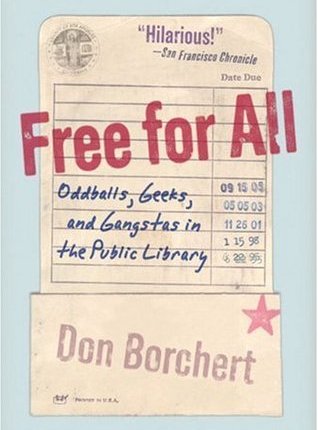
Free for All: Oddballs, Geeks, and Gangstas in the Public Library by Don Borchert

Free for All: Oddballs, Geeks, and Gangstas in the Public Library by Don Borchert

Free for All is an accurate depiction of life as a librarian in a public library.

Sometimes, the job is funny. Other times, it’s incredibly sad. If you’ve never worked in a library system, this book will reveal some of the secrets of a librarian’s day-to-day life.

Photo by Pixabay on Pexels.com

Before I worked at a public library, I thought it was a quiet, organized mecca for students and bookworms. Now, that I’ve spent some time on the librarian-side of the desk, I know better. My idea of a library was far too simple.

It is a study hall, archive, playroom, home for the homeless, kitchen, bank, movie theater, video game store, newspaper kiosk and so much more. I guess the appropriate question is: what doesn’t a library do?

And a public librarian is so much more than just a librarian. She is a counselor, a computer wizard, a curator of excellent and free entertainment.

She talks to the lonely, uplifts the lost and helps the public navigate the dangerous waters of the internet.

Librarians are my heroes.

Photo by Element5 Digital on Pexels.com

If I ever cease writing for a living, look for me at the library. Odds are, I’ll end up back there.

Perhaps some of the policies at Don Borchert’s library have changed, but at the time that he wrote this book, they charged 50 cents to put a hold in for a patron. This policy shocked me, as my library always offered that service for free.

Borchert cheerfully documents the difficulties with summer reading people vs the school year regulars. It’s a real problem.

If Borchert’s book is too edgy for you- he uses rough language and doesn’t hold back on some of his opinions- read Gina Sheridan’s I Work at a Public Library: A Collection of Crazy Stories from the Stacks.

Both are excellent and realistic non-fiction books about the trials, tribulations, and, sometimes, life-enhancing satisfaction of working at the library.

Thanks for reading!

Passport to Magonia: On UFOs, Folklore, and Parallel Worlds by Jacques F. Vallée

Passport to Magonia: On UFOs, Folklore, and Parallel Worlds by Jacques F. Vallée

Jacques F. Vallee was one of the first scientists to closely study UFO phenomenon. He goes beyond a simple examination and compares it to the fairy religions and mythologies from the past. Passport to Magonia is one of his most well-known works.

Vallee also mentions, in the new preface that he wrote for the book in the early ’90s, of the difficulties that he had compiling the thousands of eyewitness accounts that are included in Passport to Magonia. I suppose with the easy connections to the internet that are available now, that I hadn’t considered how laborious it would be to gather all of that information together in the time before computers.

Photo by Cliford Mervil on Pexels.com

At the very least, Passport to Magonia can be admired for its thoroughness in the section: “A Century of UFO Landings.” It is approximately 150 pages of account after account of UFO encounters. The amount of information, types of witnesses and manner of UFO phenomena is truly mind-boggling.

Some of the standout examples for me are: Juan Diego’s tilma and the sky anchor that was left behind in 1211 a.d. at a church in Cloera, Ireland. And, Aleister Crowley’s run in with two gnomes or aliens.

Vallee cites the book, Magick Without Tears, for the Crowley experience. It makes me so curious- I may just have to look into it.

So many of these accounts are beyond belief, which makes for great reading, but which Vallee reminds the reader, cannot be taken at face value.

He reminds us of our inability to understand the accounts even as he seeks to understand them. Futility, thy name is Passport to Magonia?

Photo by Felix Mittermeier on Pexels.com

Readers who enjoy UFO literature will probably enjoy this classic book. Vallee doesn’t provide the answers, but he has crafted a framework for UFO exploration beyond the usual acceptance or denial of a puzzling and reoccurring phenomena.

Thanks for reading!