inGenius: A Crash Course on Creativity by Tina Seelig

inGenius: A Crash Course on Creativity by Tina Seelig

As my mentor pointed out to me a couple years ago, creativity is one of the most important skills to master and develop throughout your career. No matter what you’re doing, in your professional or personal life, creativity provides the answers and greases your wheels to whatever goal you desire.

inGenius is Tina Seelig’s offering to those interested in learning about creativity. She is a professor at Stanford University and these chapters are like talking points from her class.

Photo by Tima Miroshnichenko on Pexels.com

Granted, some of these tips seem like common sense. But if that’s the case, then why aren’t we all creative geniuses who have solved all of our problems? In my mind, there’s plenty still to be learned from the topic or, if you’ve already heard it, reiterating the important points.

What is that saying… your thoughts become actions, become habits, become your life? Or some such. Well, it’s true.

“With enhanced creativity, instead of problems you see potential, instead of obstacles you see opportunities, and instead of challenges you see a chance to create breakthrough solutions.” pg 4

Photo by Allan Mas on Pexels.com

It’s more than a positive mind-set, it’s a way of viewing your reality. And, as Seelig points out in this book, your attitude at any given moment affects your creativity. You have to view any problem as solvable — you just haven’t found the solution yet.

Seelig says anyone can be creative: “There is a concrete set of methods and environmental factors that can be used to enhance your imagination, and by optimizing these variables your creativity naturally increases.” pg 9

I figure it’s a bit like exercise. Flex those creative muscles on a regular basis and they’ll get stronger.

Photo by nappy on Pexels.com

Seelig brought my attention to the fact that our environment affects our creativity. She cites studies with the way classrooms are set up and how those changed the results of experiments. I had no idea.

She also reminded me that one does not have to re-invent the wheel to be creative: “Building upon existing ideas and inventions is another way to foster innovation.” pg 41

inGenius offers readers a clear path to creativity. Recommended for anybody who wants to up their creative game.

Thanks for reading!

Be Here Now by Ram Dass

Be Here Now by Ram Dass

A classic exploration of spirituality and consciousness by the former Harvard professor turned drug-fueled, then clean, spiritual seeker, Ram Dass.

What a strange book.

The first part is Ram Dass‘s life story.

Photo by Alesia Kozik on Pexels.com

He has trouble relating exactly how his guru changed his life. He also has trouble expressing his life changing spiritual insights.

This could perhaps be because of all the LSD he experimented with, but no judgement here.

I think Dass could have added another couple hundred pages to the first part and still probably not fully described his experience.

The next section of the book is block text printed on, what seems to be, brown paper bags. Monty Python-esque photos are drawn in, and sometimes behind, the text.

Photo by Giftpundits.com on Pexels.com

It reads like a stream-of-consciousness, path to enlightenment, how-to lecture.

Some of it is worthwhile, but I can’t sugarcoat it: It’s pretty far out there.

My description doesn’t really do it justice. Perhaps Be Here Now is one of those books that needs to be “experienced” rather than read.

The last section was a “cook book” on how to live an enlightened lifestyle.

Photo by Mikhail Nilov on Pexels.com

If you have a question about how an enlightened person lives, it’s probably included in there.

Dass elucidates how he believes you should eat, sleep, breathe, interact with others, think, meditate, raise a family, form a commune and so on.

I didn’t like it because it felt too brain-washy, cult-ish.

Dass attempts to put the reader’s mind at ease to all of the strictures. He mentions that one needn’t be concerned about family or social responsibilities because, once you reach the ultimate level, you’ll realize that none of those things are real anyway.

Looking back on my review, it seems as if I don’t like Ram Dass, but I do.

I rather enjoyed his Polishing the Mirror: How to Live from Your Spiritual Heart and a documentary that I saw about him once called Fierce Grace.

I too have had life experiences that have led me to the belief that human kind is here to “be high” and not just to “get high.”

Photo by Tim Gouw on Pexels.com

I don’t buy into the idea that life has to be lived a certain way to get certain results.

And, perhaps because I haven’t personally had the experience yet, I don’t get the whole guru relationship thing. I know it’s my western background speaking, but there you have it.

Recommended for spiritual seekers, but don’t forget to trust your own inner guidance.

Thanks for reading!

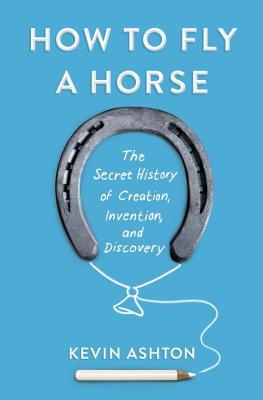
How to Fly a Horse: The Secret History of Creation, Invention, and Discovery by Kevin Ashton

How to Fly a Horse: The Secret History of Creation, Invention, and Discovery by Kevin Ashton

How to Fly a Horse takes many of the myths that I believed about creativity or the creative process and methodically takes them apart. Any perceived blocks are revealed for the fallacies that they are.

It is one of those great non-fiction books that educates the reader while simultaneously encouraging her to improve herself.

From the creation of a South Park episode to Coca-Cola, Kevin Ashton covers all sorts of ways the average person can, does, and should contribute to mankind through her own, innate creativity.

My biggest take-aways from this are Ashton’s descriptions and appropriateness of creativity (or lack of) within organizations. He writes about humanity’s need for the new while simultaneously pushing against it.

Here’s a quote about organizations that could be applied to any work place: “Organizations are made of rituals- millions of small, moments-long transactions between individuals within groups- and it is these rituals that determine how much an organization creates.” pg 225

Photo by Marc Mueller on Pexels.com

Be aware of these rituals and harness them to be more creative.

And, on humanity’s propensity to reject innovation, Ashton explains this is not unusual but is actually the normal response to expect when introducing new ideas into your work environment.

Don’t be discouraged; be prepared. Create anyway.

Photo by Pixabay on Pexels.com

I liked that he encouraged creation while also illuminating the many pitfalls, both internal and external, that one may encounter along the creative path.

Folks who enjoy How to Fly a Horse may also like Leonardo’s Brain: Understanding da Vinci’s Creative Genius or any of Malcolm Gladwell’s books. If you’re looking for another book about how to be more productive or creative in the workplace, I suggest Linchpin: Are You Indispensable?.

I received a free copy of this book through Goodreads First Reads. FTC guidelines: check!

Thanks for reading.

You Do You: How to Be Who You Are and Use What You’ve Got to Get What You Want by Sarah Knight

You Do You: How to Be Who You Are and Use What You’ve Got to Get What You Want by Sarah Knight

The self-styled “anti-guru” Sarah Knight adds another volume to her quirky, profanity-laden self-help series with You Do You.

The focus, as you can guess from the title, is the art of allowing your authentic self to shine through without feeling guilt or being so far out of the social norms that you border on “psychopath.”

You Do You is about accepting your strengths and your flaws, whether those flaws are self-identified, or just things that you’re perfectly happy about but that other people seem to have a problem with. Or, should I say, that you WOULD be happy about, if you felt a little more confident in yourself…” loc 146, ebook.

Photo by Kat Jayne on Pexels.com

And, like the previous books, Knight doesn’t stint on the bad words. She admits she kept the title clean so a certain publication *cough* New York Times *cough* would print the all the words of the title in their sought after Best Seller list.

Which Knight has made before… but had her titles censored for their content.

“The advice in this book boils down to one simple mantra: Stand up for who you are and what you want. How do you do that? Stop letting other people tell you what to do, how to do it, or why it can’t be done.” loc 188, ebook.

I enjoyed You Do You, but I felt it wasn’t as strong as Knight’s other titles because she spends so much time rehashing material she has already covered elsewhere.

That being said, I like Knight’s style, her famous diagrams and her illuminating stories. This is an author who has been there, done that and cussed about it.

Photo by Anna Nekrashevich on Pexels.com

My favorite diagram in You Do You is Knight’s “ouroboros” or symbolic, conjoined serpent of wisdom picture. The text with the cute doodle says: “Is it right or wrong? You won’t know unless you have the confidence to take a risk and find out. If you regret your decision, then accept the consequences, swallow the lesson, and start over. With confidence.” loc 1995, ebook.

Verges on mystic Eastern wisdom, doesn’t it?

She encourages all readers everywhere to let the strange sides of yourself out- within certain boundaries. Don’t hurt anybody. Don’t take advantage of people. Be reasonable within your freakishness.

“Now, with those ground rules established, I do declare that we, as a society, should celebrate weirdness in all its forms- and that the right to be weird should be inalienable- just like the right to life, liberty, and the pursuit of happiness.” loc 2130, ebook.

Photo by Gratisography on Pexels.com

“You do you” and let everybody else do them. It’s that simple. It’s that hard.

Sarah Knight may be a bit of an acquired taste. Please don’t read unless you have a high tolerance for bad words and, dare I say, mild snark.

But, if you are someone in need of encouragement to let your freak flag fly, look no further.

Thank you to NetGalley and Little Brown and Company for a free digital copy of this book. And thank you for reading!

Read my reviews of Sarah Knight’s other titles:

The Life Changing Magic of Not Giving a F*ck by Sarah Knight

Get Your Sh*t Together by Sarah Knight

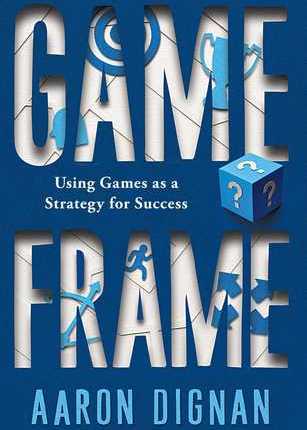
Game Frame: Using Games as a Strategy for Success by Aaron Dignan

Game Frame: Using Games as a Strategy for Success by Aaron Dignan

In Game Frame, Aaron Dignan outlines what games are, their components and how to create behavioral games to change your own and others behavior.

He clearly states his goals for the book in the introduction: “The truth is, we are born knowing how to play, and how to invent games where none exist. I’m convinced that there is a role for games and play in reshaping the world around us.” introduction, xiii.

Photo by lilartsy on Pexels.com

Dignan goes on to do just that. His detailed breakdown of the components of games and why we think they’re fun was particularly good.

I also agreed with his assertion that “play is a state of mind”: “…when a chef cooks something new, it feels like play. When I cook something new, it feels like work. Both of us are making a meal, but we’re not experiencing the same thing. Play is a state of mind.” pg 26.

Photo by Malidate Van on Pexels.com

My quibble with this book is that he didn’t convince me that games are the best way to change behavior. In Level 5 (Chapter 5), Dignan describes a speech given by Professor Jesse Schell at the D.I.C.E. conference in 2010 that scared the crap out of me.

Essentially, Professor Schell outlines how businesses and the government could use behavioral games to create a dystopian world in which our every action is analyzed and nudged towards consumerism.

“You’ll get up in the morning to brush your teeth and the toothbrush can sense that you’re brushing your teeth. So hey, good job for you, 10 points for brushing your teeth. And it can measure how long, and you’re supposed to brush your teeth for 3 minutes. You did! Good job! … And who cares? The toothpaste company. The toothbrush company. The more you brush, the more toothpaste you use. They have a vested financial interest.” pg 58

Photo by Karolina Grabowska on Pexels.com

After that chapter, I couldn’t shake the feeling that Dignan is inviting us to open a Pandora’s box.

“My challenge to you is simple: I believe that a million behavioral games could change everything, but they must be imagined and realized soon.” pg 169.

Hypothetically, say I design a game with the best intentions, but then, at some point, it’s taken over by the government and forced on people. Suddenly, it stops becoming a game and ruins the world.

Who wants to take the risk to potentially be the person who destroys society because of an ill-conceived behavioral game? Not me.

Recommended only for the truly brave gamers.

Thanks for reading!

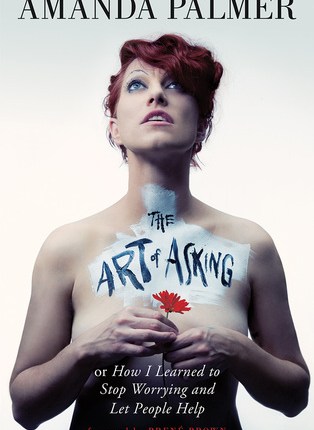
The Art of Asking; or, How I Learned to Stop Worrying and Let People Help by Amanda Palmer

The Art of Asking; or, How I Learned to Stop Worrying and Let People Help by Amanda Palmer

Amanda Palmer is an extremely talented artist who has done it all- from performing in a punk rock band to posing as a statue on the streets.

I can see why readers are passionate about this book and the author. She just didn’t strike a spark for me.

Photo by Jeffrey Czum on Pexels.com

Memoirs can drag on and become self-indulgent and ridiculous. I feel like that was a problem with The Art of Asking.

The tipping point for me was when she formed The Dresden Dolls with her friend and said (I’m quoting from memory here since I was listening to the audiobook): “I finally had the strongly emoting band I’d always dreamed of” or something like that.

I realized, I was strongly emoting on this book, but not in a good way.

I understand her internal struggles in forming a relationship with Neil Gaiman must have been difficult for her, but her “should I date him, he’s older and richer and more famous than me” just came off as silly and very first-world problems.

I get that she loves her fans, her art, her lifestyle- but it just come together to make a read that I enjoyed.

My apologies to her fans. If it helps, my favorite parts of the audiobook were the songs she put between some of the tracks. Those were actually pretty awesome.

Photo by Inga Seliverstova on Pexels.com

And the over-arching theme of The Art of Asking was good too.

Society isn’t comfortable with asking. We don’t know how to do it, don’t feel comfortable with it and it prevents people from making the art that they were born to make.

You can get that part of this book by watching Palmer’s TED talk. Maybe you should do that instead of reading this.

Here ’tis: 

https://www.ted.com/talks/amanda_palmer_the_art_of_asking

Thanks for reading.

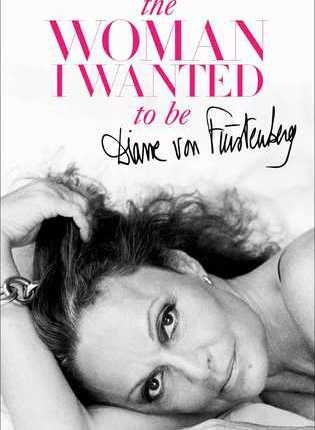
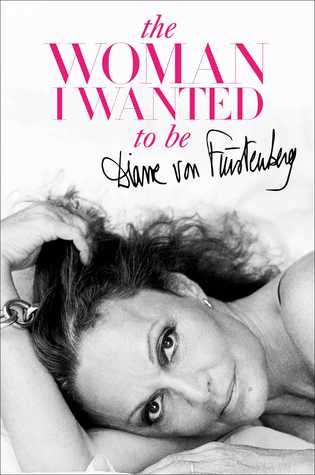
The Woman I Wanted to Be by Diane Von Furstenberg

The Woman I Wanted to Be by Diane Von Furstenberg
thewomaniwantedtobe

The Woman I Wanted to Be is the life story of the incomparable Diane Von Furstenberg.

She starts with her parents’ harrowing early life in war-torn Europe and continues through her own tumultuous love affairs and child-rearing years.

After a personal first half, the second half of her book is dedicated to how she entered and eventually became a living icon in the world of fashion.

I really enjoyed this book.

In an era where the media glorifies women who show off their bodies, cling to powerful men, and descend into drug addictions, Diane personifies the empowered woman who shows what she can do and build rather than living on how she looks or scandal.

That’s not to say that Diane hasn’t had a wild life, she has, but she owns it, has evolved from it and built it into an empire.

There are many moments in The Woman I Wanted to Be where Diane failed to be that woman. But instead of becoming mired in failure (she had to sell her business two separate times to avoid bankruptcy), she persevered to become a household name.

At another point, she gave up her identity and her business to spend time with a man who wanted her to be a blank slate. He ended up leaving her for someone else.

Photo by Karolina Grabowska on Pexels.com

Diane didn’t crawl into a hole and wilt then either. With grace and dignity, she re-entered life and the fashion world. Diane went on to experience an even greater level of success than she had before her exit.

Diane provides some great general advice for life such as: when bad things happen, they can actually be good things.

Also, never play the victim- take responsibility for your life.

Embrace your age, whatever it may be.

Photo by Pavel Danilyuk on Pexels.com

These philosophies have enabled Diane to rise above any obstacles that have appeared in her path. She is an excellent role model and it was such fun to read about her incredibly exciting and almost unbelievably successful life.

Readers who enjoyed Wild: From Lost to Found on the Pacific Crest Trail and She Got Up Off the Couch: And Other Heroic Acts from Mooreland, Indiana may enjoy this memoir.

It’s far more glamorous than either of those two selections, but the underlying themes of female empowerment and reaching for the life of your dreams despite all the odds, are the same.

I received a free copy of this book through Goodreads First Reads. FTC guidelines: check! Thanks for reading!

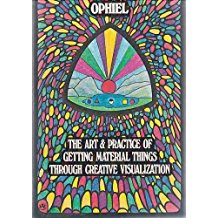
Art and Practice of Getting Material Things Through Creative Visualization by Ophiel

Art and Practice of Getting Material Things Through Creative Visualization by Ophiel

Originally published in 1967, the Art and Practice of Getting Material Things Through Creative Visualization arrived nearly three decades before The Secret.

With more of an occult than a New Age twist, the one-name author, Ophiel, talks readers through what is essentially the Law of Attraction, but he never calls it that.

Photo by Egor Kamelev on Pexels.com

Ophiel tends to write portions of the book that he thinks are most important in all caps. LIKE THIS. It can be annoying.

Another interesting quirk, Ophiel talks about him/herself in the third person, at all times.

In this passage, he’s talking about why he wrote this book, and you get to see the author’s style in action: “Ophiel’s defect consists of not being about to accept self-styled prophets’ sayings, and teachings, without raising the following awkward question- and making the following embarrassing test. The question is IS WHAT THEY SAY TRUE? and the test is DOES WHAT THEY SAY WORK, AND PRODUCE RESULTS? And if what they SAY DOES NOT WORK THEN IT IS NOT TRUE, and into the garbage can with it!!” pg iii

Ophiel claims that creative visualization techniques don’t always work for a variety of reasons. He gives the reader exercises and suggestions for improving their results.

“In Creative Visualization work all the planes involved in our cosmic existence are used, the Etheric, the Lower Astral, The Higher Astral, the Mental Plane, and the Causal Plane, AND ALL THESE PLANES HAVE DEFINITE RULES AND LAWS FROM WHICH THEY WILL NOT DEVIATE ONE IOTA.” pg 5.

Again, with the capitalization.

Photo by stein egil liland on Pexels.com

He also has interesting ideas about reasons why beginners fail out of the gate.

He cites something called “the sphere of availability”: “The new student then proceeds to visualize for LARGE THINGS. BIG THINGS. VALUABLE THINGS. Things that are far beyond his ability- not to visualize-imagine-desire, BUT FAR BEYOND HIS PRESENT ABILITY TO DEMONSTRATE-VISUALIZE.” pg 31.

Ophiel uses different words, but essentially he says, start small, celebrate the small victories and increase your “sphere of availability” in that manner. He also gives practices to improve your visualization skills.

Honestly, if asked to recommend a teacher for creative visualization, I’d say skip Ophiel and read Abraham Hicks. They’re a lot more fun.

Thanks for reading!

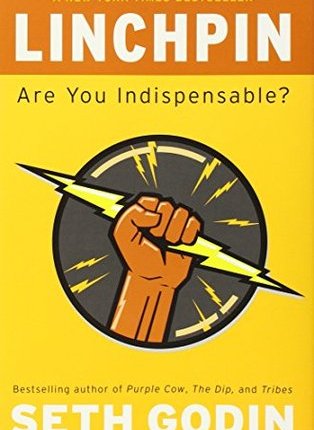
Linchpin: Are You Indispensable? by Seth Godin

Linchpin: Are You Indispensable? by Seth Godin
linchpin

Seth Godin draws on his experiences in business and life to convince the reader to be a linchpin rather than a cog in the machine of work.

He says it better than I did: “This book is about love and art and change and fear. It’s about overcoming a multigenerational conspiracy designed to sap your creativity and restlessness. It’s about leading and making a difference and it’s about succeeding.” pg 2

You have our attention, Godin. What do we do?

Through a series of blog-like sections, Godin explains that there is no road map or simple answer. “Our world no longer fairly compensates people who are cogs in a giant machine. … Leaders don’t get a map or a set of rules. Living life without a map requires a different attitude. It requires you to be a linchpin.” pg 19

Essentially, you have to embrace the uniqueness and drive that is inside of you. You have to create a platform of work rather than a resume. You have to decide to discard mediocrity.

“The very system that produced standardized tests and the command-and-control model that chokes us also invented the resume. … Great jobs, world-class jobs, jobs people kill for- these jobs don’t get filled by people e-mailing in resumes.” pg 72

That’s so outside the usual paradigm of work, for most of us, that it can sound scary.

Photo by Andrea Piacquadio on Pexels.com

“Often, when people hear about my radical ideas for how you should train for a career, as well as the best way to present yourself, they object. They point out that not fitting in is certainly going to be an ineffective way of getting one of these average jobs. … If you need to conceal your true nature to get in the door, understand that you’ll probably have to conceal your true nature to keep that job. … The linchpin says, “I don’t want a job that a non-linchpin could get.” pgs 78-79

It seems like he’s asking a lot, but the alternative is to give up and conform. Godin says that this mindset isn’t impossible: “My fundamental argument here is simple: In everything you do, it’s possible to be an artist, at least a little bit.” pg 94. We can do that, right?

I didn’t agree with everything in Linchpin. I thought that Godin was far too hard on journalists… it is easy to look at an industry, or any situation really, from the outside and criticize the people in the thick of it.

News agencies know that they have to embrace the future or die. Just how to do that is up for grabs and adding Godin’s toolbox of how to excel at work couldn’t hurt. I don’t think that reinvention or evolution is an impossible task. It’s just tricky because, as Godin noted, “there is no roadmap.”

Recommended for people who may be bored with where they are and can see a glimmer of where they want to be- but aren’t sure how to get there. Also recommended for those who work in the newspaper business because we clearly need more linchpins.