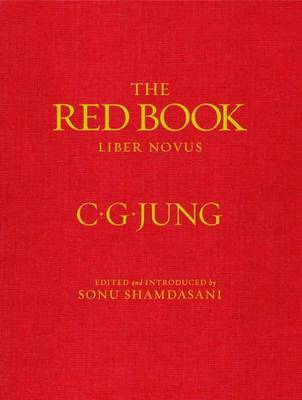
The Red Book: Liber Novus by C.G. Jung

The Red Book: Liber Novus by C.G. Jung

“The years, of which I have spoken to you, when I pursued the inner images, were the most important time of my life. Everything else is to be derived from this.” preface

The Red Book is a stunning publication. It is a physically large book which mimics Jung’s own handwritten copy which measured 11.57 inches by 15.35 inches.

Carl Jung’s calligraphy

The contents are just as impressive. The first part is a brief history of Jung and his publications. The second contains pages of calligraphy in both German and Latin of his “active imagination” visualizations as well as sketches and paintings created by Jung to accompany the text.

The last section of the book is the English translation of the second part.

“Jung described his technique for inducing such spontaneous fantasies: ‘The training consists first of all in systematic exercises to eliminating critical attention, thus producing a vacuum in consciousness.'” pg 209

Painting from Carl Jung’s The Red Book

The visions themselves are interactions between Jung and voices or figures that he named his soul, gods and other archetypical figures.

“To this my soul spoke a word that roused my anger: ‘My light is not of this world.’ I cried, “I know of no other world.” The soul answered, “Should it not exist because you know nothing of it?” pg 240

As he stated in the preface, Jung felt as if his ‘confrontations with his subconscious’ affected his work for the rest of his life. It is a fascinating, little-examined side of a man who has had a huge effect on psychology and is credited, by some, as being one of the leading figures of the New Age movement.

The road to publication for this book is a story in itself. At first, Jung’s family carefully kept The Red Book in a safe deposit box to protect it as they recognized its value as a one-of-a-kind creation. They also believed that Jung wouldn’t have wanted its contents made public as he hadn’t left any specific instructions in his will about it.

Painting from Carl Jung’s The Red Book

However, researchers and scholars have since examined the text and found parts where Jung addresses, “my dear friends,” leading to the opinion that he did intend to share it with a wider audience. They also point to its importance to Jung’s following works as another reason why it should be published.

Whatever their reasoning, I’m so very glad his family and foundation made the decision to publish. This book is a treasure.

Curiously, The Red Book ends in an incomplete sentence.

Here it is:“I knew of nothing better than to write them down in a ‘precious,’ that is to say, costly book and to paint the images that emerged through reliving it all- as well as I could. I knew how frightfully inadequate this undertaking was, but despite much work and many distractions I remained true to it, even if another/possibility never…” epilogue

Painting from Carl Jung’s The Red Book

I wonder what he was going to write next.

Though I didn’t use Jung’s method of active imagination, I too have undertaken lengthy ‘confrontations’ of my subconscious and have come back with pages of material that read, in some ways, quite similar to this book.

Perhaps, one day, I will also find the courage to publish it.

Highly recommended for any readers interested in Carl Jung’s methods, archetypes or dream interpretation.

Thanks for reading!

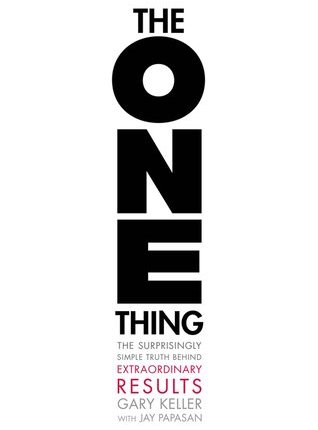
The One Thing: The Surprisingly Simple Truth Behind Extraordinary Results by Gary Keller

The One Thing: The Surprisingly Simple Truth Behind Extraordinary Results by Gary Keller

“Anyone who dreams of an uncommon life eventually discovers there is no choice but to seek an uncommon approach to living it.” pg 73, ebook

The One Thing contains simple, ridiculously obvious advice- find your passion, make time for it and live it. But, if it’s really that easy, then why aren’t more of us doing it?

Photo by Ylanite Koppens on Pexels.com

“Where I’d had huge success, I had narrowed my concentration to one thing, and where my success varied, my focus had too.” pg 8, ebook

This book has helped me to adjust my focus so that I spend more of my time on what I love, writing. That being said, there are still chores that must be done, a family business to tend to, a child to raise and numerous other responsibilities that chip away at time that I can give to my one thing.

And, as author Gary Keller points out, this isn’t a big deal. Everybody has their big ONE THING but smaller one things in other areas of their lives. You can use the same focusing principles on each to improve your life in each sphere.

What’s the one thing you can do to improve your family life? Health? Diet? etc., etc.

Photo by Maria Orlova on Pexels.com

This book also taught me that a majority of my output comes from a very small percentage of my actions, something that I had never considered before. Like I said, obvious in hindsight now that I know it, but it wasn’t something I instinctively knew.

“Happiness happens on the way to fulfillment.” pg 98, ebook

I read tons of non-fiction and self help titles. Have they all improved my life? No. Do I always learn something from them? Generally.

Photo by Wallace Chuck on Pexels.com

For me, the fun is in the search.

Read The One Thing if you want to learn some methods to narrow your focus and advance what is most important to you in your life. If you already know how to do that, this isn’t the title for you.

Thanks for reading!

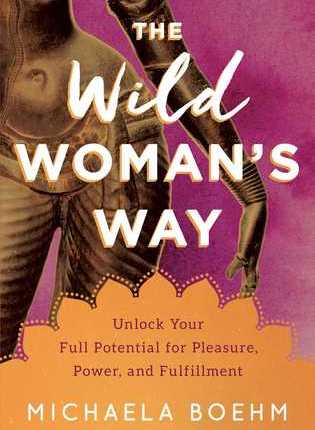
The Wild Woman’s Way: Unlock Your Full Potential for Pleasure, Power, and Fulfillment by Michaela Boehm

The Wild Woman’s Way: Unlock Your Full Potential for Pleasure, Power, and Fulfillment by Michaela Boehm

“This book is a call to come back to our wild, undomesticated ‘original nature,’ which, combined with an untamed heart, knows what is true for each of us. It is a call to return to the inborn genius that guides our passion, whispers in our ear with longing, and reveals itself abundantly when we allow our bodies to show us the way.” pg 8, ebook

Michaela Boehm utilizes her years of therapeutic practice and tantric training in this self help book designed for the modern woman.

Photo by Gabriela Cheloni on Pexels.com

There are so many choices and life paths from high-powered careers to motherhood, that many women try to do it all.

“The good news: amidst such a multitude of options we are free to choose what resonates with us. The bad news: it’s confusing, overwhelming, time-consuming, fraught with many pitfalls, and requires constant discernment.” pg 9, ebook

It’s not possible to do and have it all, Boehm writes, and while they attempt it, women cut themselves off from their sensual natures. She has written this book to give women practices and rituals to bring them back from this disconnection into the power and knowledge of their bodies.

Photo by Maria Orlova on Pexels.com

“Relaxing the body; engaging with life, beauty, and nature; and gentle, nonlinear movement and dance are some of those physical practices we’ll be engaging in throughout this book.” pg 34, ebook

I didn’t connect with all of Boehm’s writing, but I have begun to practice a version of her “formless dancing” every day. The practice itself is simple. Turn on music with no words and a beat, and move your body however it feels like moving. It’s designed to release tension and unconscious clenching that happens when one becomes disconnected from their physical form.

“Once you understand your own reasons for any numbness, tension, and strain that you may carry in your body, you can easily undo the related habitual body patterns and restore yourself to a state of pleasurable aliveness and sensual well-being.” pg 50

Photo by Engin Akyurt on Pexels.com

I find it extremely relaxing. I probably look mad, shimmying and bouncing and swaying around, but it feels really good so who cares. 🙂

Highly recommended for readers looking to reconnect with their body’s innate intelligence or who are interested in different spiritual practices.

Nobody Wants to Read Your Sh*t: Why That Is And What You Can Do About It by Steven Pressfield

Nobody Wants to Read Your Sh*t: Why That Is And What You Can Do About It by Steven Pressfield

Steven Pressfield shares the applicable lessons he’s learned from a lifetime of different writing jobs. The most important one is the title of this non-fiction, self help book.

Photo by Suzy Hazelwood on Pexels.com

“Sometimes young writers acquire the idea from their years in school that the world is waiting to read what they’ve written. They get this idea because their teachers had to read their essays or term papers or dissertations. In the real world, no one is waiting to read what you’ve written. pg 16, ebook

Along the way, Pressfield discovered the importance of writing for yourself rather than as a ghost writer, the necessity of structuring each piece whether it is a screen play or a novel, the enduring popularity of the hero’s journey and more.

Photo by Kun Fotografi on Pexels.com

He also addresses the inner demons that may prevent fledging writers from finishing what they begin, a topic that Pressfield also discusses at length in his other book, The War of Art: Break Through the Blocks & Win Your Inner Creative Battles

“I did not know that there existed inside my head an invisible, insidious, intractable, indefatigable force whose sole object was to keep me from doing my work, i.e., finishing the book I had been trying to write for seven years- and ultimately to destroy me, physically, psychologically, and spiritually. All I knew was that I couldn’t finish anything.” pg 49

Photo by bongkarn thanyakij on Pexels.com

I found all of his advice helpful, and the manner in which Pressfield delivers it as both approachable and entertaining.

“The writer must know what genre he is working in and the conventions of that genre, just as the bridge builder must understand the science of foundational integrity and the means of mitigating stress on strung steel.” pg 66, ebook

He closes the book with a humorous anecdote about writing for a pornographic film. Even in that tale, Pressfield managed to teach me something about story construction and storytelling. I only mention it in case any potential reader finds such things offensive. Here’s your warning.

Highly recommended for writers at any level. Pressfield knows his stuff.

Embrace Your Weird: Face Your Fears and Unleash Creativity by Felicia Day

Embrace Your Weird: Face Your Fears and Unleash Creativity by Felicia Day

Embrace Your Weird is a non-fiction and self help manifesto encouraging creativity and told in Felicia Day’s unmistakably humorous way.

I say “unmistakable” for any of her myriad fans who have watched her ground-breaking web series, “The Guild,” or read another of her books like You’re Never Weird on the Internet. Her tone and sense of humor remains the same.

Photo by Prateek Katyal on Pexels.com

And if you haven’t had the chance to enjoy any of Day’s other creations, I encourage you to give them a try. They’re light-hearted and fun.

“Aside from (over)sharing a lot of my opinions, I have filled this book with exercises designed to uncover the joy of creativity. To help people beat back the fear that keeps them from trying new things.” pg xi

On almost every other page, Day encourages readers to stop a moment and draw a picture, fill out a list, or write empowering messages over and over so that they’ll sink in. The act of reading this book is nearly a creative act in and of itself. (Sadly, I couldn’t do this because I was reading a library book. Suggestion for future readers: buy yourself a copy.)

“No, I don’t think creativity is a cure-all. But I do believe it could be a cure-most.” pg 29

Photo by Pixabay on Pexels.com

Besides reminding readers that we have unique voices and viewpoints that the world needs to hear, Day loosely structures the rest of the book off of life viewed as a game. She asks us to remember our “hero-self,” identify “enemies” and “allies” of our creativity, and to view the steps we take towards creation as “quests.”

Day also shares moments in her life when she’s completed or failed attempting various pieces of this philosophy in her own life.

“I constantly hand my heart over to strangers to batter however they wish, and I wonder why I’m constantly wounded all the time, and this makes me reluctant to create. Good way to operate? NOT REALLY!” pg 143

As I said, the whole book has a definite Felicia Day vibe. And it’s fun!

“Playfulness is the root of all creation. All invention. All discovery. There is no reason NOT to feel joyous when we make things.” pg 206

Photo by Sharon McCutcheon on Pexels.com

She wasn’t afraid to tackle all sorts of hang-ups people might have in their creative process. Day nailed my biggest issue: finishing projects once they’re started.

“But we will never get anywhere if we don’t focus on one thing at a time. And then see that thing through before moving on!” pg 239

Message received. Now to put it into action…

Recommended for anyone looking to start or jump start their creativity. This book is an excellent place to begin. Thanks for reading!

For Small Creatures Such as We: Rituals for Finding Meaning in Our Unlikely World by Sasha Sagan

For Small Creatures Such as We: Rituals for Finding Meaning in Our Unlikely World by Sasha Sagan

My parents taught me that the universe is enormous and we humans are tiny beings who get to live on an out-of-the-way planet for the blink of an eye. And they taught me that, as they once wrote, “for small creatures such as we, the vastness is bearable only through love.” pg 12, ebook.

Sasha Sagan, the daughter of celebrated scientist Carl Sagan, was raised to believe only what could be proven. Her father told her: “It’s dangerous to believe things just because you want them to be true.” pg 11, ebook.

Photo by Yuting Gao on Pexels.com

But they also instilled a sense of wonder in Sasha about existence and humanity’s place in it. For Small Creatures Such as We is an examination of religious and secular celebrations and rituals from around the world. I learned a great deal about the similarities of humanity’s need to celebrate and recognize the seasons, rites of passage, and other universal milestones in life.

I wouldn’t describe myself as religious, rather I’m very spiritual. In my opinion, Sagan’s book could appeal to even those who may describe themselves as religious. She has a welcoming voice for every kind of reader.

Photo by Dominika Greguu0161ovu00e1 on Pexels.com

“If you are devoutly religious, firstly, I’m delighted you’re reading this. Thank you. … This book is not intended to dissuade you, only to increase what there is to be joyful about.” pg 14

I think she succeeds in drawing a clear picture of what rituals mean to humanity. And that brought me so much hope for the future.

Some live lives of little meaning and less depth because there is no framework in place to support the creation of personal rituals outside of certain groups who may not share your vision of reality.

Photo by Karolina Grabowska on Pexels.com

This book could be helpful for spiritual people who want to use rituals to instill a sense of wonder into their daily existence.

It is also fascinating to learn about so many different cultures from around the world. Highly recommended.

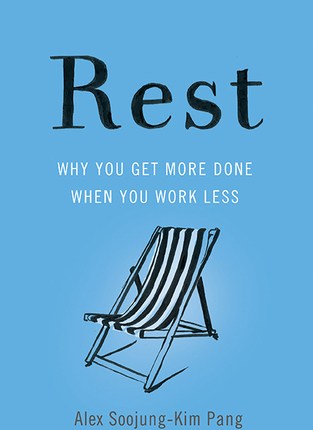
Rest: Why You Get More Done When You Work Less by Alex Soojung-Kim Pang

Rest: Why You Get More Done When You Work Less by Alex Soojung-Kim Pang

“We shouldn’t regard rest as a mere physical necessity to be satisfied grudgingly; we should see it as an opportunity. When we stop and rest properly, we’re not paying a tax on creativity. We’re investing in it.” pg 11

Photo by Tatiana Syrikova on Pexels.com

I think we’re living in a culture that generally glorifies busyness and a frantic pace of achievement. That’s not news.

Alex Soojung-Kim Pang takes a deep dive into the science of rest and shares the insight that taking breaks isn’t something we should squeeze into our schedule. Rest, he argues, is as important as the work itself.

Four of his major points are: “work and rest are partners”, “rest is active”, “rest is a skill”, and “deliberate rest stimulates and sustains creativity”.

I was particularly interested in the creativity-related point of Pang’s hypothesis.

“You need time for rest because that’s when the unconscious mind can get to work. You can’t command inspiration to appear, but you can nudge it, most notably by working steadily and regularly. The romantic image of the artist who does nothing until he’s inspired and then produces in a furious burst of work is misleading.” pg 91

Photo by Dazzle Jam on Pexels.com

Pang looked into the lives and routines of creative thinkers throughout history and came to the perhaps surprising conclusion that four concentrated hours of work per day is sufficient.

“The pattern of working four hard hours with occasional breaks isn’t just confined to scientists, writers, or other people who are already successful, well-established, and have the freedom to set their own schedules. You can also see it among students who go on to become leaders in their fields.” pg 67

The rest of the day that geniuses such as Charles Darwin or Ernest Hemingway lived were filled with activities like long walks, day dreaming, active rest, sport and other seemingly unrelated moments that fueled the subconscious mind.

“The right kinds of rest would restore their energy while allowing their muse, that mysterious part of their minds that helps drive the creative process, to keep going.”

Photo by Pixabay on Pexels.com

What these activities may be vary from person to person, but Pang’s research proves time and again that the rest portion of the day is critical.

One of my favorite parts of this book dealt with Malcolm Gladwell’s popular 10,000 hours for mastery idea that he discusses in his book, Outliers. Yes, Pang argues, 10,000 hours are necessary for exceptional performance. But we’re ignoring the rest of the equation.

“It comes after 10,000 hours of deliberate practice, 12,500 hours of deliberate rest, and 30,000 hours of sleep.” pg 74

Photo by Andrea Piacquadio on Pexels.com

From morning routines and sabbaticals to naps and carving out time for more sleep, Pang exhorts the reader to make rest a priority. It’s not lazy, it is one of the building blocks of a creative and productive life.

Sign me up. 🙂

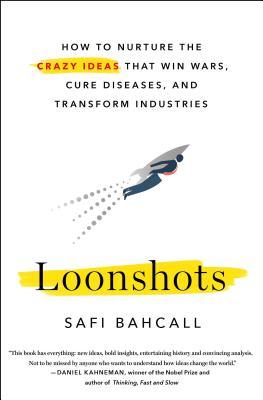
Loonshots: How to Nurture the Crazy Ideas That Win Wars, Cure Diseases, and Transform Industries by Safi Bahcall

Loonshots: How to Nurture the Crazy Ideas That Win Wars, Cure Diseases, and Transform Industries by Safi Bahcall

“New frontiers of the mind are before us, and if they are pioneered with the same vision, boldness, and drive with which we have waged this war we can create fuller and more fruitful employment and a fuller and more fruitful life.” — Franklin Delano Rooseveltpg 257

Safi Bahcall has applied a physics-based approach to understanding innovations and creativity in group settings. Through the careful study of a bunch of historical examples, he has discovered ways leaders can structure their businesses to best encourage the growth of “loonshots.”

Photo by Pixabay on Pexels.com

The author has defined a “loonshot” as “a neglected project, widely dismissed, its champion written off as unhinged.” It is through these, Bahcall believes, that world-changing ideas are produced that can be applied from arenas as diverse as business to war.

“The twisted paths leading to great discoveries are the rule rather than the exception. And so are their revisionist histories: victors don’t just write history; they rewrite history.” pg 56

He suggests these breakthroughs are generally created by large groups of people, rather than solitary geniuses. And he thinks that “applying the science of phase transitions to the behavior of teams, companies, or any group with a mission provides practical rules for nurturing loonshots faster and better.”pg 2

Photo by Andrea Piacquadio on Pexels.com

For example: By examining Theodore Vail and the way he structured AT&T’s “fundamental research” department to Vannevar Bush’s non-military leadership for the Office for Scientific Research and Development for the military, Bahcall has come to some actionable conclusions.

He believes that, in a business, you need to separate the creative-types in the innovation departments from what he called the “soldiers” or people who run the rest of the business. Both are absolutely imperative to the success of the business, but if the two are working too closely together, “loonshots” can be strangled in their infancy.

The same risk of failure is faced by leaders who try to micromanage “loonshots”. Trust your people to do what they do best, whether that’s development or running the business, so that you don’t drive a business into the ground because you’re too attached to your own pet project.

Photo by Pixabay on Pexels.com

Bahcall reminds us that structure is important but culture is as well. He makes a biological comparison to drive the point home: “Both genes and lifestyle matter. And so with teams and groups: both structure and culture matter. The aim of this book is not to replace the idea that certain patterns of behavior are helpful (celebrating victories, for example) and others are less so (screaming), but to complement it.” pg 227

I can’t say I completely understand what a “phase transition” is but Bahcall’s storytelling manner of imparting information is easy to understand. His writing is reminiscent, in some ways, of The Black Swan: The Impact of the Highly Improbable but with more emphasis on structure and culture instead of probability.

Readers who enjoyed one book, may like the other. Recommended for readers seeking more information about how to help businesses succeed, innovate and thrive.

Thanks for reading!

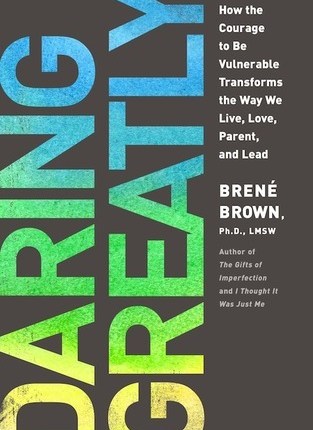
Daring Greatly: How the Courage to Be Vulnerable Transforms the Way We Live, Love, Parent, and Lead by Brené Brown

Daring Greatly: How the Courage to Be Vulnerable Transforms the Way We Live, Love, Parent, and Lead by Brené Brown

Brené Brown shares her twelve years of research into shame and gives tools on how to increase one’s vulnerability. In this way, she believes each individual can help change the culture of scarcity and pull the world back from a continual cycle of shaming.

We’ll build stronger and deeper relationships, strengthen families and have more productive work places. And, by doing this, we will each, in our own way, live in a manner that “dares greatly” every day.

“I also learned that the people who love me, the people I really depend on, were never the critics who were pointing at me while I stumbled. They weren’t in the bleachers at all. They were with me in the arena. Fighting for me and with me.” pg 56

Photo by RF._.studio on Pexels.com

I’m going to use the information in this book the most in my work life. As a writer, I attach far too much significance to my work product on the audience’s response to it rather than my own feelings about it. As Brown so clearly points out in this book, an outside response will never be good enough or big enough to fill the need that I am looking to fill with their words or their views. Or, if it is wildly praised, perhaps the next work won’t be, and then I’m right back to where I started.

“You still want folks to like, respect, and even admire what you’ve created, but your self-worth is not on the table. You know that you are far more than a painting, an innovative idea, an effective pitch, a good sermon, or a high Amazon.com ranking.” pg 64

This desire for connection and a feeling of worthiness, Brown says, comes from the need to survive by belonging to a group. Our brains have evolved to encourage us to belong and form connections. And when we don’t by not believing in our own self worth or experiencing shame, it is a physically painful emotion. People do all sorts of things to avoid feeling shame including pulling away or striking out. But, in the end, these connections are life itself.

“Buber wrote, “When two people relate to each other authentically and humanly, God is the electricity that surges between them.” pg 150

Photo by Pixabay on Pexels.com

As interesting as I found Brown’s research to be, she lost me when she began a discussion about how much vulnerability is enough or too much and walking the tightrope between extremes. So, be authentic, but don’t use it to manipulate people. A few sentences covers what Brown uses 50 pages to unpack.

“When we stop caring about what people think, we lose our capacity for connection. When we become defined by what people think, we lose our willingness to be vulnerable.” pg 169

Her message becomes a bit undefined and more general the further the book goes. That’s not to say it couldn’t be useful for readers who are looking for that type of information. I didn’t find it particularly engaging.

Like any self help book, I think sometimes authors and researchers can get lost in the weeds of the problem. I far more prefer to focus on the solution. In this case, that’s being brave enough to show up and be seen, demonstrating vulnerability and willingness to care about whatever is going on wherever we find ourselves throughout the day. As Brown reminds readers, it’s not about winning or losing, it’s about being there. And that’s a message worth spreading.

Photo by fauxels on Pexels.com

“To love ourselves and support each other in the process of becoming real is perhaps the greatest single act of daring greatly.” pg 110

I’m game. Are you?

Thanks for reading!