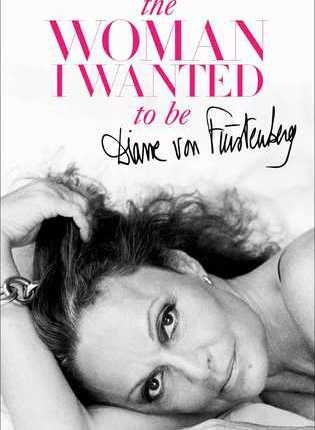
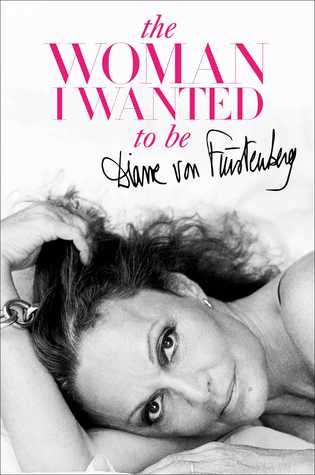
The Woman I Wanted to Be by Diane Von Furstenberg

The Woman I Wanted to Be by Diane Von Furstenberg
thewomaniwantedtobe

The Woman I Wanted to Be is the life story of the incomparable Diane Von Furstenberg.

She starts with her parents’ harrowing early life in war-torn Europe and continues through her own tumultuous love affairs and child-rearing years.

After a personal first half, the second half of her book is dedicated to how she entered and eventually became a living icon in the world of fashion.

I really enjoyed this book.

In an era where the media glorifies women who show off their bodies, cling to powerful men, and descend into drug addictions, Diane personifies the empowered woman who shows what she can do and build rather than living on how she looks or scandal.

That’s not to say that Diane hasn’t had a wild life, she has, but she owns it, has evolved from it and built it into an empire.

There are many moments in The Woman I Wanted to Be where Diane failed to be that woman. But instead of becoming mired in failure (she had to sell her business two separate times to avoid bankruptcy), she persevered to become a household name.

At another point, she gave up her identity and her business to spend time with a man who wanted her to be a blank slate. He ended up leaving her for someone else.

Photo by Karolina Grabowska on Pexels.com

Diane didn’t crawl into a hole and wilt then either. With grace and dignity, she re-entered life and the fashion world. Diane went on to experience an even greater level of success than she had before her exit.

Diane provides some great general advice for life such as: when bad things happen, they can actually be good things.

Also, never play the victim- take responsibility for your life.

Embrace your age, whatever it may be.
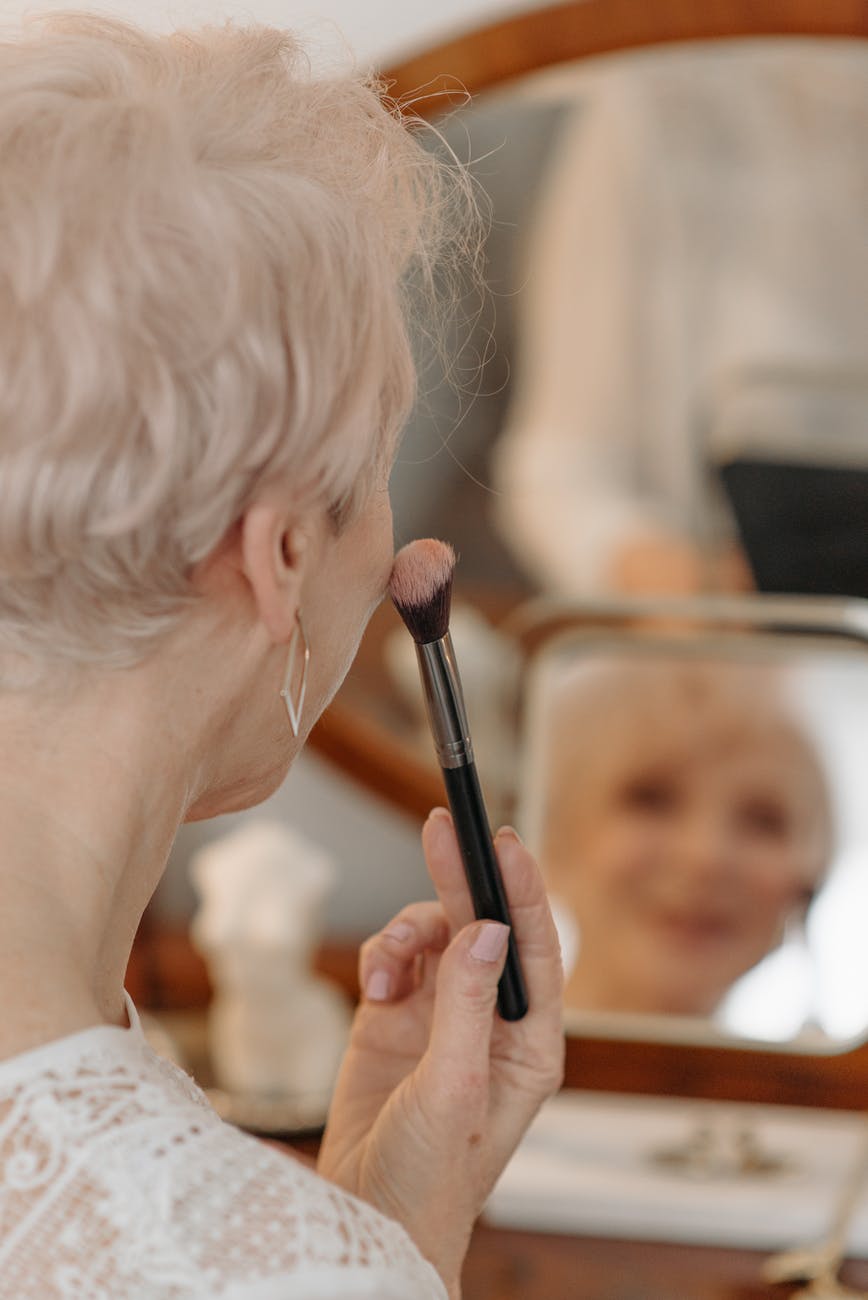
Photo by Pavel Danilyuk on Pexels.com

These philosophies have enabled Diane to rise above any obstacles that have appeared in her path. She is an excellent role model and it was such fun to read about her incredibly exciting and almost unbelievably successful life.

Readers who enjoyed Wild: From Lost to Found on the Pacific Crest Trail and She Got Up Off the Couch: And Other Heroic Acts from Mooreland, Indiana may enjoy this memoir.

It’s far more glamorous than either of those two selections, but the underlying themes of female empowerment and reaching for the life of your dreams despite all the odds, are the same.

I received a free copy of this book through Goodreads First Reads. FTC guidelines: check! Thanks for reading!

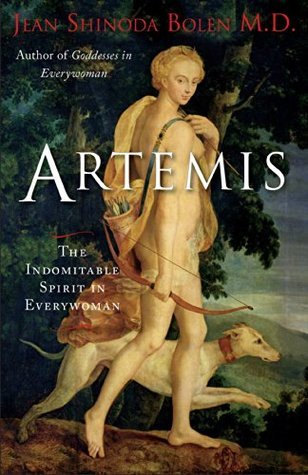
Artemis: The Indomitable Spirit in Everywoman by Jean Shinoda Bolen

Artemis: The Indomitable Spirit in Everywoman by Jean Shinoda Bolen
artemis

In Artemis, Jean Bolen discusses the importance of archetypes and mythological stories. She asserts that we don’t just enjoy the stories for their entertainment value- we respond to the psychological truths contained between the lines.

I’ve always enjoyed academic discussions of mythological tales. I never really knew why though until I read this book.

The meanings of mythology are so layered that our conscious minds may not even know that our subconscious minds are latching onto the veiled truths. We love them without realizing their importance.

Artemis: The Indomitable Spirit in Everywoman contains an intricate dissection of the tale of Atalanta, a mortal whose life paralleled the goddess, Artemis, in many ways.

I think I had been exposed to this tale in a classical mythology course in college, but the complex Jungian psychology that goes along with it wasn’t explained to this extent. Bolen’s explanation of the myth is masterful.

One archetype in particular that I enjoyed learning about was Selene/Endymion. Sometimes, in the frantic growth to adulthood, one can feel alone in their struggles and inner landscape.

Photo by luizclas on Pexels.com

I’ve known so many girls (myself included) who were living that pattern but they didn’t even know it. Bolen’s explanation of the motivations and the potential growth that can accompany this life pattern was enlightening as well as encouraging.

Bolen ties humanity together through shared experiences and mythologies. She makes the reader feel that, no matter what they have gone through, they are not and have never been alone. It’s a very empowering message.

My minor in classics covered much that was discussed in this book but the feminist lens that was applied to the mythologies was very unique and different from what I have learned in the past.

Photo by Taryn Elliott on Pexels.com

In addition to the myths, Bolen includes contemporary fictional heroines as well as real life figures who embody the archetypes. I liked that she traveled beyond the boundary of the tales to apply the energies to real life.

Young women who aspire to embody the vision of Artemis in all of her variations in their own life will find many examples to emulate within these pages.

I enjoyed this quite a lot. I haven’t read Bolen’s Goddesses in Everywoman but this book makes me want to dive into it.

I’d recommend this book to anyone who’s interested in Jungian psychology, mythology or the elevation of the human spirit.

I received a free copy of this book through Goodreads First Reads. FTC guidelines: check!

Thanks for reading!

The Power of Personality: How Introverts and Extroverts Can Combine to Amazing Effect by Sylvia Loehken

The Power of Personality: How Introverts and Extroverts Can Combine to Amazing Effect by Sylvia Loehken
powerpersonality

The Power of Personality is more than just another book that picks apart the obvious differences between introverts, centroverts, and extroverts. It delves very deeply into the strengths and possible hurdles that each face in business, social situations, and with each other.

Loehken presents management techniques for the different personality types and how one might leverage innate characteristics for the most positive outcome possible in a variety of ways. I found the book to be very helpful in explaining my own reactions to most perceived conflicts.

I hope to utilize what I’ve learned in the future to harness my strengths while minimizing the others. Some of my more damaging introverted tendencies are that I’m conflict/contact adverse and easily overstimulated in every day life.

I thought when Loehken discusses how the different personality types view each other that her descriptions were spot on. I think I do tend to categorize most extroverts as loud, unthinking buffoons. My mistake.

I suppose that extroverts view me as “boring, lame duck, sensitive flower, unsociable, professional worrier, reader, timid”pg 51. I never considered why.

Photo by Armando Are on Pexels.com

Perhaps now with a more educated mindset, I can embrace personality differences and work more smoothly with extroverts. Rather than, in my previous experience, pushing them away so that I can have some peace and quiet.

The other portion of the book that I enjoyed is Chapter 8: Stressful Encounters: Status Games pg 161. It reminded me of a book on body language, I Can Read You Like a Book: How to Spot the Messages and Emotions People Are Really Sending with Their Body Language. But, instead of just focusing on body language, Loehken goes into all manner of status symbols, interactions, and conversational cues.

She dissects how, particularly introverts, do themselves a disservice in their professional and personal lives because of how they perceive and react to conflict. It blew my mind.

It may be because this is a European book (the price on the back is listed in pounds) but I have never read anything like this in an American business book. Loehken talks about the unwritten rules of polite society and how, in sometimes subconscious ways, we shape our relationships and our status to the people around us.

Photo by fauxels on Pexels.com

One of her tips for dominating or owning space that I’m going to integrate into my life (right now!) is to sit fully on an office chair instead of perching on the edge. “If you take the whole seating area of a chair, this has a higher status effect than someone who only takes up half the seat or sits on the edge.”pg 175. Lesson learned.

The weak part of this book was any of the bits that dealt with centrovists. Basically, Loehken kept saying (paraphrasing in my own words) ‘If you’re a centrovist, you enjoy the benefits from both types of personalities and will therefore be more successful in whatever it is that we’re talking about in this section.’

It got kind of annoying after awhile because Loehken tells us that everyone exists on a scale of personality (we’re rarely entirely one type or another from situation to situation) so the centrovist advice could have been most applicable for every reader. Unfortunately, it felt more like a ‘Captain Obvious’ moment every time it came up rather than a revelation.

If you enjoyed The Power of Personality, I’d suggest reading I Can Read You Like a Book: How to Spot the Messages and Emotions People Are Really Sending with Their Body Language. It deals with body language rather than the driving personality behind the body, but it is still illuminating. It helps readers monitor the involuntary signals that we send out in our day to day interactions, how to leverage your movements and to send the message that you want to send, rather than broadcasting your internal mindset unintentionally.

I received a free copy of this book through Goodreads First Reads. FTC guidelines: check! Thanks for reading!

Nine Tenths: The Slider by Alex Anstey. Illustrated by Cory Godbey, Courtney Godbey Wise, Thomas Boatwright

Nine Tenths: The Slider  by Alex Anstey. Illustrated by Cory Godbey, Courtney Godbey Wise, Thomas Boatwright

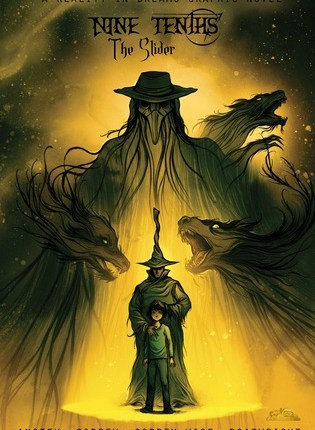
nine tenthsNine Tenths: The Slider is a gorgeous graphic novel that introduces a world of archetypes and fantasy, where some of the forces that underlie nature have become unbalanced.


The panels are done primarily in greys, blues, and red. The overall effect is ethereal and dreamlike. I loved the artwork in this, especially the scenes of Lundon, the city of the dead and the gods in the introduction.

The characters are drawn beautifully as well. My favorites are the Dreads, hell hound creatures with elongated teeth, that sever the threads of life within souls. Excellent and very creepy.

Because this graphic novel is the first in a series, I felt like I didn’t get to enjoy all that much of the story before it was over. But, that’s nothing new. I seem to feel that way at the start of every series.

The world and main characters get their introductions then there isn’t time for much else. And this literally starts at the beginning of existence: “At the very beginning of time, long before there was an Earth or people to live upon it, there was only chaos… from chaos came life, and by consequence, death. Two natural forces through which all could be observed.” pgs 1-2

I’m always on the look out for age appropriate graphic novels for reluctant readers. Nine Tenths: The Slider has some violence in it so it may most appropriate for the 12-18 year old set.

The mythological setup and scope of the story are truly epic. It’s a shame that there haven’t been future entries in this series. Anyone who appreciates the intrinsic beauty of graphic novels will certainly find much to enjoy in this.

I received a free copy of this book through Goodreads First Reads.

Thanks for reading!

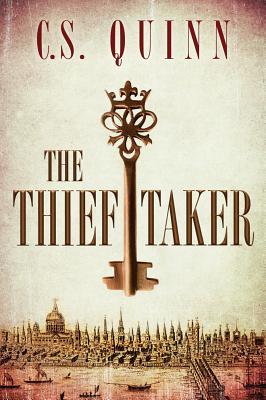
The Thief Taker (The Thief Taker #1) by C.S. Quinn

The Thief Taker (The Thief Taker #1) by C.S. Quinn

In the 1660s, thief takers solved the cases that were beneath the dignity of the typical London watchmen.

The poorer sort of people, who had experienced a crime or theft, would come to men like the title character in this story for justice. He would attempt to track down the perpetrator by finding the property that they took and fenced.

Photo by Wallace Chuck on Pexels.com

Usually, the thief taker could either get the property back for his client or turn the thief in to the higher authorities. But, the punishments back then were so barbaric- chopping off a hand, splitting noses- that the thief taker would usually just let the criminal go with a warning to not steal again or advise him to find a different clientele.

Charlie Tuesday is a thief taker in London. One day, a beautiful young woman comes to him for help in solving her sister’s murder. Normally, he doesn’t work on any cases larger than theft but the money that is offered is more than he can refuse.

From the strange mutilation of the body, he determines that there’s more to this crime than meets the eye. As the plague descends on London, he and Anna-Maria race to stop the murderer from striking again and, perhaps, even threatening the throne of England itself.

Photo by Yoss Cinematic on Pexels.com

The Thief Taker‘s scenery is lush. The customs, clothing, and food from 1665 are so different from what we have now. The reader is whisked away to a world that is the same in some ways (human behavior and emotions) and so different in other ways (social structures and occupations). I didn’t even know what a thief taker was until I read this book.

The story is an intricate mystery with the murders, possible witchcraft, and treason. I didn’t see the ending coming at all. It could be that I don’t read that many mysteries, but I thought that it was really well done.

Another fascinating piece to this story are the plague victims. The horrific conditions that the author describes, like bodies rotting in the streets and the Thames becoming clogged with corpses around London Bridge, actually took place.

Photo by Yoss Cinematic on Pexels.com

Because of these icky details, The Thief Taker occasionally veers towards the horror genre but never really crosses that line.

I kept picturing the rotting plague victims as zombies. In some ways, they’re similar. Contact with a plague victim could bring infection. Sometimes, the main character would come across a body that would appear dead, but wasn’t dead.

At one point in the story, a character describes the plague victims who are wandering the streets in search of mercy as the “walking dead.” It was very creepy.

Photo by Renato Danyi on Pexels.com

Also, the societal breakdown that accompanied the plague was so quick. Every moment the characters were in the London streets was filled with tension. The reader didn’t know if a plague victim was going to pop out of a quarantined house or if a thug was going to try to commit a robbery in a dark alley.

Readers who like the historical fiction of Philippa Gregory, Judith Merkle Riley, and Sarah Dunant may enjoy this.

I received a free copy of this book through Goodreads First Reads program.

Thanks for reading!

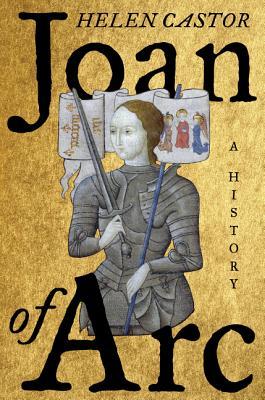
Joan of Arc: A History by Helen Castor

Joan of Arc: A History by Helen Castor
joanofarc

The review that I’m about to give Joan of Arc: A History has nothing to do with the historical accuracy of the book. On the contrary, I found this to be an extraordinarily well researched and cited biography.

Unfortunately, that mega-effort did not lend itself to a readable or enjoyable book.

The general idea behind Joan of Arc is sound. Helen Castor wanted to present Joan’s story in context with an extended history of France for years before and after her appearance on the world stage.

In that way, she thought that the legend of the woman could be separated away from the reality. The reader could appreciate the main players, the attitude towards spiritual visions, the belief of divine will in war and the monarchy, and capture the overall general flavor of the time period.

It was a good premise, but it just didn’t work. Maybe this was a doctoral thesis that Castor tweaked a bit and published? It reads like that.

Why is it that experts on topics are rarely able to translate that interest and depth of knowledge into stories that the general public would enjoy? I love medieval history, especially the backgrounds of the handful of female figures who made it into print during that period. This should have been right up my alley.

Photo by Pixabay on Pexels.com

Joan of Arc: A History read like a school textbook- the dull kind.

Actually, it reminded me of translating Livy’s History of Rome from Latin into English during college. It should have been fascinating stuff as he was writing about a particularly exciting period in Roman history when Hannibal was crossing the Alps to invade. But, sadly, Livy got caught up in listing endless details, particularly the size and shape of the elephants. Through description after description, the pace of Hannibal’s army slowed to a trickle and then it turned into a snooze-fest.

That also happened in this book.

If you enjoy scholarly research to the point that you just have to have it and nothing else will do, read this book. If you want history to come alive and punch you in the face, pick up something (anything really) by Margaret George or Bernard Cornwell.

I particularly liked The Memoirs of Cleopatra or The Autobiography of Henry VIII: With Notes by His Fool, Will Somers. George may not have the exacting research standards of this biography, but her historical fictions are informative in addition to a delight to read.

I received a free copy of this book through Goodreads First Reads. Thanks for reading!

The Dream Lover: A Novel of George Sand by Elizabeth Berg

The Dream Lover: A Novel of George Sand  by Elizabeth Berg
thedreamlover

The Dream Lover encompasses some of the best qualities that historical fiction has to offer. It transports you to the 1800’s France. It introduces you to an extraordinary person: Aurore Dupin, pen name, George Sand. Then, the reader gets to sit back and enjoy the wild ride that was her life. Talk about escapism.

For a woman in the 1800’s, George Sand had it going on. She left her husband, had a series of lovers- both male and female- became a famous author, involved herself in the political upheavals of her time… it is truly an incredible life.

Not everyone in her life accepted her for who she was: “I feel I have made a mistake, George, and that I do not love you after all. … The only thing you are passionate about is locking yourself up at night and writing your precious fiction, ignoring all that is before you here, which, if you would pay attention to it, would make your stories infinitely richer!” … It was as if I had been shot in the chest.” pg 242. But she wrote and loved anyway. Well done, Aurore, well done.

She rejected the role that society set out for her. “Tell me, George. Do you wish you’d been born a man?” … “In my youth, I wished that. … But now I find I don’t wish to be either man or woman. I wish to be myself. Why should men serve as judge and jury, deciding for us what can and cannot be done, what is our due? Why should they decide in advance of our deciding for ourselves what is best for us; why should they decide what IS us?” “But then you do wish to be a man!” “Perhaps I wish to be a woman with a man’s privileges.” pg 151. Amen.

I loved the drama in this novel as well as the romance. One would think that the sheer quantity of lovers that she had would have nullified any quality in the feelings, but Berg does a good job proving that this was otherwise. The passion that she exhibits in one, Sand seems to have shown in them all.

My only complaint about The Dream Lover is that it felt rushed because of the almost unbelievable amount of important events that peppered Sand’s life. I would have savored a 1000+ page book like Margaret George’s treatment of Cleopatra in The Memoirs of Cleopatra, but The Dream Lover appeals to the more casual reader.

Still, it would have been awesome. A bookworm can dream, can’t she?

If you enjoy Margaret George, you may like this book too for its sumptuous descriptions and tempestuous relationships. Also, you may want to pick up In the Company of the Courtesan or Marrying Mozart. Both are excellent historical fiction novels with similar themes to The Dream Lover.

I received a free advance reader’s copy of this book through Goodreads First Reads. FTC guidelines: check!

Thanks for reading!

Stronger by Jeff Bauman, Bret Witter

Stronger by Jeff Bauman, Bret Witter

strongerI am not a big news watcher. I try to keep up on current events, so I knew about the bombing at the Boston Marathon, but I didn’t watch the news broadcasts as they occurred nor did I see the (now famous) picture of Jeff Bauman being wheeled away from the bomb site. So, this whole book was a revelation and learning experience for me.
In a straight forward and honest manner, Jeff describes his life, what happened to him that tragic afternoon, and then how he and his family picked up the pieces of their lives and began to move on.

He also describes what happened at the shootout between Tsarnaev and the police from the officers’ point of view (he heard multiple first hand accounts from the men who were there). He details the trauma to his body and mind- some of it is very graphic, but that’s how he experienced it.

I think this was a very intimate memoir.

In addition to sharing his inner most thoughts and emotions, he doesn’t try to make the people in his life look better than they really are. For example, the portrait he paints of his mother is very unflattering. She tends to drink to excess and then vent her emotions while under the influence.

Apparently she has behaved this way Jeff’s entire life, so he doesn’t think much of it. It’s very dysfunctional, at best, and alcoholic, at worst. But, it’s real and not something that he had to share with the world.

Jeff chose to share it.

At multiple points in the book, Jeff denies that he’s a hero, but he is. He’s demonstrated the resiliency of the human spirit and sheer determination to move on with his life by learning to walk with his new legs a mere six months after the bombing.

I sincerely hope that his life continues to move forward and that he finds more peace than is detailed in his memoir. He deserves that, at least.

I received a free copy of this book through Goodreads First Reads. Thanks for reading!

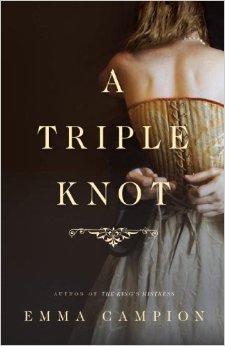
A Triple Knot by Emma Campion

A Triple Knot by Emma Campion
a triple knot

I love historical fiction about the English monarchy and court. This time period, the 1300’s, is one that I wasn’t very familiar with, which was fine with me. I’m always up for learning something new while being entertained. Warning: there are some spoilers ahead if you aren’t familiar with English history.

This story centers around Joan of Kent. Joan’s father was executed by her grandmother’s lover when she was very young. She also didn’t trust her own family to provide for her or believe that they had her best interests at heart. After reading about the actions of some of her clan, I can’t really blame her for that.

Joan seemed ridiculously naive when she married, clandestinely, at the age of twelve for love. Then, when her family insisted on a more advantageous match, she was heart broken.

I was surprised at first about her behavior and reaction but then I imagined that the lack of training, guidance or protection that she received during her childhood was probably the reason that she believed she could marry whomever she wished. Royalty didn’t enjoy the freedom of marrying for love. Poor Joan.

The historical figures described in this tale, such as Edward III and his son, The Black Prince, were larger than life with tempers to match. I loved the descriptions of the clothing, the feasts, the dancing, building maintenance and other minutiae of daily life.

I didn’t love other aspects of this story. I felt like this book was too long and the second half was incredibly rushed. I think the author should have created a trilogy.

She could have ended book one at the decision of the Pope about Joan’s marriage status. (I won’t ruin that one for you.) Then, a second book could have followed about the birth of her first four children and family life. A third book could have chronicled her next marriage and what followed.

In this book, five years passed in approximately a page and a half, sometimes less. There could have been so much more to the story and I would have loved to have read it.

Fans of Philippa Gregory’s brand of historical fiction will probably eat this up with a spoon. Prepare yourself for some rushed passages though.

I received a free copy of this book through Goodreads First Reads. Thanks for reading!