Tree of Ages (Tree of Ages #1) by Sara C. Roethle

Tree of Ages (Tree of Ages #1) by Sara C. Roethle

Tree of Ages is a fantasy novel about a tree who becomes a girl… or is it a girl who becomes a tree and then reverts back into a girl?

Photo by Maria Orlova on Pexels.com

Finn is trying to figure out who she is and so is the rest of the world- which itself is on the verge of something big, something having to do with the magical creatures.  Author Sara Roethle calls these creatures, ‘Faie,’ who disappeared years ago and now are reappearing all over the place.

The group’s trip into the fairy forest was my favorite part. That whole section had me flying through the pages, I just had to know what was going to happen next!

Photo by mali maeder on Pexels.com

Sadly, this is only the first installment and I was left with so many questions: will Finn ever figure out who she is? Will Aed come to terms with his shadowy past? Will Iseult clear his family name?

Guess I’ll have to read the next novel to find out…

This book, the first in a series, reminded me of Katharine Kerr’s Deverry saga. We have an old, wizard type person in Aed (Nevyn in Deverry), who is trying to help a young female, Finn (Jill in Deverry), come into her powers. Then there’s the confused, tormented, perhaps love interest, Iseult (Rhodry in Deverry) and a whole cast of other characters who are along for the ride.

Photo by Athena on Pexels.com

And, like Kerr’s creation, the world that Roethle has crafted is very large and unexpected with, sometimes terrifying, creatures.

I’d recommend Tree of Ages for anyone who loves high fantasy.

If you like this, I’d also suggest Katharine Kerr’s Deverry (start with Daggerspell) and Kage Baker’s The Company series (start with In the Garden of Iden).

Baker’s world is more of a steam punk/historical fiction/low fantasy type place, but I think that the relationships that she has knit together were quite like what Roethle has made in Tree of Ages.

Here’s a short book trailer for “Tree of Ages” by Sara C Roethle. Available on all digital platforms for only 99 cents: https://books2read.com/u/bw8XAe

I received a free copy of this book through Goodreads First Reads. FTC guidelines: check! And thank you for reading.

Work Rules!: Insights from Inside Google That Will Transform How You Live and Lead by Laszlo Bock

Work Rules!: Insights from Inside Google That Will Transform How You Live and Lead by Laszlo Bock

Work Rules!: Insights from Inside Google That Will Transform How You Live and Lead by Laszlo Bock is a behind the scenes glimpse into the “People Operations” of Google, the mammoth internet company.

Laszlo explains Google  wasn’t always a global leader. It started out like every other company- with a couple of dedicated people and a big dream.

Photo by Karolina Grabowska on Pexels.com

After some background, Laszlo gives step-by-step ways to improve your own business, whatever that may be, from the inside-out while remaining true to the mission that led to the creation of your company in the first place.

It’s clear from this book that Google is an engineer-dominated workplace. Every decision from hiring to employee perks is tested and the numbers are crunched to justify the expense, time spent, etc.

Photo by Anna Nekrashevich on Pexels.com

To be honest, psychology tests, graphs, and in-depth analysis isn’t really my thing. I enjoy a more artsy approach to the world and so the nitty-gritty of Laszlo’s work wasn’t that interesting to me.

In <i>Work Rules</i>, I was hoping for more insider stories than engineering problems, but that’s not how the book was written.

That’s not to say that there isn’t value to be had in this read. My take-away chapters were “It’s Not All Rainbows and Unicorns” and “What You Can Do Starting Tomorrow.”

Photo by Steve Johnson on Pexels.com

In ‘It’s Not All Rainbows and Unicorns,’ Laszlo gives the reader moments in Google’s history when their policies didn’t really work and how they got through the crisis. It was heavy on dramatic stories and I enjoyed it quite a lot.

In ‘What You Can Do Starting Tomorrow,’ Laszlo boils down his previous chapters into ten steps for businesses to take right now. If you don’t have time to dig through the entire book, ‘What You Can Do Starting Tomorrow’ gives you a pretty thorough overview.

If you enjoyed <i>Work Rules!</i>, you may enjoy The Happiness Advantage by Shawn Achor. Shawn explains, in an engaging manner, many of the principles that Google has adopted to improve their employees’ quality of life.

I received a free advanced reader’s copy of this book through Goodreads First Reads. FTC guidelines: check! And thank you for reading.

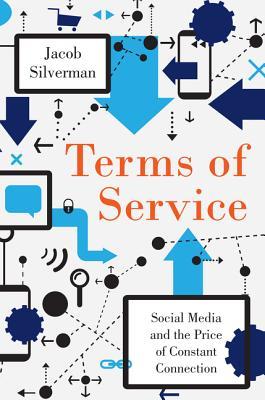
Terms of Service: Social Media and the Price of Constant Connection by Jacob Silverman

Terms of Service: Social Media and the Price of Constant Connection by Jacob Silverman

Author Jacob Silverman digs deeply into various social media platforms and uncovers not only privacy violations but also underlying attitudes adopted by the platform owners that point towards a future that is completely controlled by digital government watchdogs and technological elites.

Terms of Service is a terrifying book to me in many ways.

Photo by ThisIsEngineering on Pexels.com

I knew some of the pitfalls of the big networks like Facebook, but I didn’t know all of them. This book changed the way that I view the portable devices that everyone carries around with them. Instead of helpful tools, I now see that they can be a chilling and impersonal form of control and surveillance, if we let them.

Terms of Service isn’t all doom and gloom though. Silverman gives the reader innovative ways to buck the bland, over-sharing majority and examples of creative hackers and programmers who are doing just that.

Photo by Designecologist on Pexels.com

He also suggests some sweeping societal changes within the government like a twenty-first century Bill of Rights to address the troubles and privacy challenges of technology and a universal minimum wage to unlock the chains of digital serfdom.

It’s an exciting possible vision for the future. I wonder if we will ever manage to do any of that.

This is the part of the review where I try to list read-alikes or books with a similar theme, but I think that Terms of Service is in a class all of its own. I think parents, educators, politicians, and anyone who uses the internet should read and discuss this book.

Photo by Vanessa Garcia on Pexels.com

It is only through knowing the dangers of constant connection that we can begin to address them. Terms of Service provides an eye-opening and disturbing view of how far we have let the situation go.

But, never fear, with proper education- like reading this book- anything is possible.

I received a free advanced reader’s copy of this book through Goodreads First Reads. FTC guidelines: check! And thanks for reading.

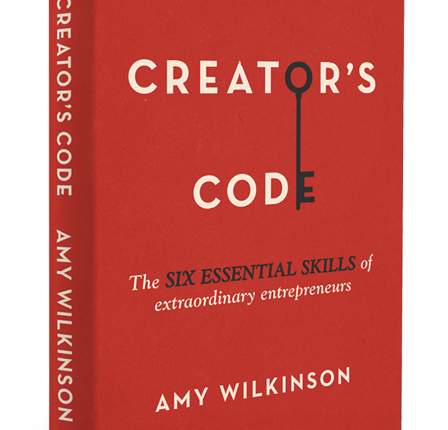
The Creator’s Code: The Six Essential Skills of Extraordinary Entrepreneurs

The Creator’s Code: The Six Essential Skills of Extraordinary Entrepreneurs

For The Creator’s Code, Amy Wilkinson interviewed over 200 wildly successful entrepreneurs and narrowed down the skills that they used to create their businesses to an “essential” six.

These essentials are the keys to the “creator’s code,” she writes.

Photo by Canva Studio on Pexels.com

My favorite chapter from The Creator’s Code is Chapter 5: Network Minds- Solve Problems Collectively. We’ve recently instituted some collaborative projects where I work and I’m excited to see this creative skill in action.

Also, I enjoyed the portion of the book where Wilkerson explored businesses trying to integrate computer games into the work day in order to encourage co-workers to help each other as well as to instill a sense of play into the creation process.

Photo by Garrett johnson on Pexels.com

I wish that my library management system could be tweaked to do something like that. Imagine how fun that would be! Playing computer games in order to boost productivity.

In some ways, this book reminded me of Napoleon Hill‘s Think and Grow Rich. He also interviewed hundreds of wealthy people to understand their mind set. However, unlike the New Age, positive thinking slant of Hill’s work, Wilkinson relies on scientific studies as well as real world results.

Of the two approaches, I personally favor Napoleon Hill’s, but readers of a more scientific mind-set might enjoy this book more.

Photo by Pixabay on Pexels.com

While we’re on the subject of read-alikes, I also read [book:How to Fly a Horse: The Secret History of Creation, Invention, and Discovery|20342540] by Kevin Ashton and it shared some of the stories from The Creator’s Code.

It felt slightly repetitive because of this. Otherwise, I may have given The Creator’s Code five stars instead of four. It felt like I was covering the same material. Despite this bookish deja vu, The Creator’s Code is very well researched.

Photo by Pixabay on Pexels.com

So, if you’ve already read the other book, don’t be hesitant to pick this one up too. It was just not ground-breaking reading for me- my reviewer’s bias, I suppose.

There are some differences between the two works: How to Fly a Horse focuses on the history of the creative process and uses that knowledge to encourage the average Joe to be creative today.

The Creator’s Code has distilled the essential nature of creation and lists guidelines that can be used for success in business, art, science, whatever.

Though both encourage creation, Wilkinson gives actionable steps to take at the individual level whereas Ashton focuses more on the big picture.

If you enjoyed The Creator’s Code, I highly recommend How to Fly a Horse by Kevin Ashton and Think and Grow Rich by Napoleon Hill. Both of these works share the themes of success in business through creativity exploration.

I received a free copy of this book through Goodreads First Reads. FTC guidelines: check! And thank you for reading!

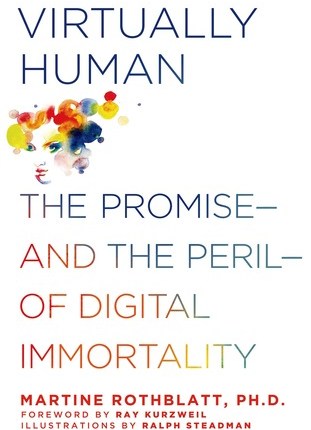
Virtually Human: The Promise and the Peril of Digital Immortality by Martine Rothblatt

Virtually Human: The Promise and the Peril of Digital Immortality by Martine Rothblatt

Dr. Martine Rothblatt, an expert in medical ethics, takes the time to imagine a future in which artificial intelligence is real and the potential problems that could arise from such interactions.

Photo by Alex Knight on Pexels.com

Unfortunately, I found Virtually Human to be virtually unreadable.

The introduction sounded promising enough — a description of the robot that Dr. Rothblatt created and its capabilities — but then Dr. Rothblatt launches into an abstract conversation about what is consciousness. She applies her definition to hypothetical artificial intelligences, which haven’t been created yet, and proceeds into a dizzying array of potential scenarios involving mindclones and “bemans”.

She talks about potential marriages between people and machines, various types of AI — some dysfunctional, some not — voting rights, reproduction rights, and more. It all reads like a discussion of very dry, very abstract human rights law mixed with a smidgen of science fiction, but not enough to be engaging.

Photo by Pixabay on Pexels.com

Dr. Rothblatt certainly knows her stuff, but is seemingly unable to impart her knowledge in an approachable manner. Perhaps, I should say, this is a book that would probably be enjoyed by scholars interested the subject.

I suppose this might be more interesting when such technology actually exists, but in the meantime, it seems rather pointless to be asking ourselves if mindclones should have the right to vote or not. I’m not convinced that by asking ourselves unanswerable questions we’ll be better prepared for when/if this sort of thing actually occurs. Maybe we’ll just have to take life as it comes.

I received a free copy of this book through Goodreads First Reads.

Thanks for reading!

This Is Why You’re Sick and Tired: (And How to Look and Feel Amazing) by Jackie Warner

This Is Why You’re Sick and Tired: (And How to Look and Feel Amazing) by Jackie Warner

Jackie Warner sets the gold standard for diet and exercise books with This is Why You’re Sick and Tired. She starts out with the science of nutrition, exercise, and rest then goes into custom diet and weekly exercise suggestions. It’s easy to see why she’s so sought after by Hollywood stars — this lady knows her stuff.

Photo by Karl Solano on Pexels.com

I first saw Jackie in action on her, now ended, Bravo show, Work Out. At the time, I had just had a baby and was awake at all hours of the night doing the infant-feeding dance. Work Out was a nice escape from the spit up, exhaustion-filled reality that I was living at the time.

Jackie looked pretty serious about her business, but Work Out mainly focused on the drama between Jackie, her trainers, and the folks who came to her for help. It’s nice to see that she actually knows what she’s doing as a trainer and she’s not just another reality show poser.

The exercises that Jackie suggests are intense. They can be executed with hand weights, but by the fourth set, I’m so wobbly that it’s comical. We’ll see if I ever reach the heights of fitness put forth in This is Why You’re Sick and Tired. At this point, I’d be happy to finish her workout strong rather than falling apart in the last few reps.

Photo by Karolina Grabowska on Pexels.com

Recently, I saw on Jackie’s Facebook page that she intends to lose 30 pounds in the coming weeks. She has shared that her fitness and nutrition has spun a bit off the rails in the last year. But, using what she knows about the body, Jackie intends to get herself back on track and fast.

I think it was brave of her to share that struggle in such a public manner. She’s as human as the rest of us and I think I like her even more since she’s admitted that. Here’s hoping Jackie accomplishes everything she sets out to do.

And you do too, dear readers. I’m not big into New Year’s resolutions, but this book may be a help to you if you’re looking to jump start your fitness and diet plans in the new year.

Photo by Mikhail Nilov on Pexels.com

If you enjoy This is Why You’re Sick and Tired, I also suggest reading Reboot with Joe: Fully Charged: 7 Keys to Losing Weight, Staying Healthy and Thriving by Joe Cross (instructions on how to add juicing to your daily diet) and Down Size: 12 Truths for Turning Pants-Splitting Frustration into Pants-Fitting Success by Ted Spiker (to keep you laughing through any ups and downs of your new diet and exercise routine).

I received a free copy of this book through Goodreads First Reads.

Thanks for reading!

Vita Maglia by Brit Malorie

Vita Maglia by Brit Malorie

In Vita Maglia, the spiritual realm is just beyond the fabric of the real world.

Within this other world, spiritual entities like souls, angels, and demons are physical realities.

The story begins with a mystery on a dangerous island called Kadera where reality seems “thinned” and visitors experience a strange ability to sense other people’s emotions.

Photo by Stijn Dijkstra on Pexels.com

Why is the island so strange? What is the subject of Zander’s father’s unending studies?

Why does that one person, at the start of the book, die screaming with her skin torn to shreds?

The story answers all of these questions in a timely and satisfying manner.

A warning: don’t start reading it unless you have time to finish it. It’s engrossing and addictive.

Photo by cottonbro on Pexels.com

Brit Malorie has crafted an extraordinary fantasy world.

It absolutely hooked me. I started to read it in the morning and ended up finishing it in one afternoon.

I felt that the characterizations were strong for this genre, particularly the antagonist.

Malorie’s villain, Lynch Katlan, is totally believable, psychotic, and terrifying.

I haven’t been this frightened while reading about a character since Ramsay Bolten in George R.R. Martin’s series. Seriously.

Photo by Lucas Pezeta on Pexels.com

Further on in the tale, I felt that we didn’t spend enough time in Maglia. Yes, we talked about it a lot and the characters were clearly focused on getting there, but we weren’t “there.”

So, if I had any criticism for this story, that’s it.

I wanted to spend more time in this fantastic world experiencing the different creatures and environments.

Strangely enough, I had the same complaint about Jeff Vandermeer’s Authority.

Recommended for readers who long for escape from reality and fantasy fans.

Thank you to Goodreads First Reads and the publisher for a free copy of this book for review purposes.

Thanks for reading!

Boy on Ice: The Life and Death of Derek Boogaard by John Branch

Boy on Ice: The Life and Death of Derek Boogaard by John Branch

This is a biography of Derek Boogaard, a hockey player who died at age 28 of alcohol and prescription drug poisoning.

I didn’t know very much about hockey before I read this but fortunately John Branch discusses the history of the hockey for readers like me. He also examines the reasons why violence began and then persisted in the sport.

Branch explains the unofficial position called ‘enforcer’ on the hockey team that, essentially, intimidates or pummels the opponents into submission.

Photo by Markus Spiske on Pexels.com

I knew that hockey was violent from anecdotal stories but I didn’t realize how the various minor leagues supported the development of the enforcer role. Men are specifically scouted for their abilities in this area.

Derek wasn’t born an enforcer. In Canada, hockey is like football in some small towns in America- everybody plays beginning at quite a young age.

His enormous size drew attention but he wasn’t particularly skilled at the game. Coaches put him into the enforcer role and he was able to fulfill their demands.

Throughout his life, Derek suffered from pain caused by his job and began to take prescription drugs to find some relief. Predictably, he became addicted.

Photo by C Technical on Pexels.com

Branch carefully dissects the reasons why Derek abused drugs and it is very sad. His family obviously cared about him, but they either did not realize the extent of the problem or because of the distance that they lived away from Derek, they didn’t have the ability to do anything about it.

An additional layer of complexity is added to the story with Branch’s explanation of concussions in professional sports and how, in the late 1990’s and early 2000’s, medical experts were just becoming aware of the extent of the problem.

After his death, Derek’s family donates his brain to the medical community and what they discover was truly shocking.

I liked Branch’s analysis of the social, economic, and personal reasons why Derek lived the way he did. He painted a picture that was both approachable but also extraordinary.

Approachable in that Derek was a boy from a small town in Canada who liked quiet family evenings and country music. Extraordinary in that Derek was a professional athlete with a million dollar paycheck and needed to experience life to its fullest.

Photo by Brayden Law on Pexels.com

I also liked reading portions of a childhood diary written by Derek that included his grammar mistakes and misspellings. The inclusion of this material lent a very personal feel to the book.

From Derek’s childhood to his last struggling days, Branch gives meticulous dates, times, and names.

I didn’t like the seemingly endless descriptions of Derek’s bloody fights on the ice. During his career, it seemed like he fought constantly and the biography feels monotonous throughout that portion. He went to a game, got in a fight, and repeat.

For that reason, the graphic details, I would recommend Boy on Ice to, primarily, fans of the game. If you have season tickets for your hockey team and relish the atmosphere, you may really enjoy this biography.

Photo by Markus Spiske on Pexels.com

Personally, I found the descriptions of violence too disturbing to be enjoyable. However, Branch raises legitimate questions about the place of the enforcer in hockey, how it causes permanent damage to the men who take up that role, and how it changed and then ended the life of Derek Boogaard far too soon.

I received a free copy of this book through Goodreads First Reads. Thanks for reading!

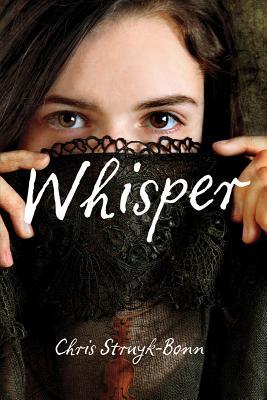
Whisper by Chris Struyk-Bonn

Whisper by Chris Struyk-Bonn

Whisper has a cleft palate. In this young adult dystopian tale, she and other deformed children are cast out of society because of their abnormalities.

This story is about how she survives and holds her new family, made up of other rejected children, together despite obstacles at every turn.

Whisper was a far darker story than I expected.

Photo by luiisrtz on Pexels.com

Terrible things kept happening to Whisper and I kept telling myself that it would turn around soon. And it didn’t.

If she wasn’t running from someone who was trying to harm her, she was freezing or starving. She’d get a modicum of security and then lose it.

I was really cheering for Whisper to embrace her special abilities, but she never seems to manage it.

Honestly, I was disappointed by the heroine’s decisions at multiple times in this story.

As one of the children tells Whisper: “You will never go far in this world if you don’t know how to rescue yourself.” And, in my opinion, she never did what was best for her own survival.

The author describes the setting as “near future” but if she had taken out the cars, refrigerators, and indoor plumbing, it could just as easily have been the recent past.

Photo by Stefan Stefancik on Pexels.com

It wasn’t too long ago that superstitious people believed birth defects marked someone who would ruin the crops, bring bad luck, or comets shooting across the sky spelled misfortune. In fact, in some parts of the world, this type of thinking still reigns.

I think it’s human nature to try to explain the unexplained and to condemn others for their differences, the physical differences being the easiest to pick out. That doesn’t make it right.

My main complaint about this read was the repetitiousness. After short bursts of frantic activity, Whisper’s life would settle into a routine that was really uninteresting.

If I had to read about her messing up the homemade bread one more time, I was going to put the book down.

Photo by Geraud pfeiffer on Pexels.com

Maybe the author was trying to get the reader invested in the process, but I simply wanted the story to move on. I was already interested in Whisper- I was just over the baking and cleaning.

The same feeling hit me during the multiple music lessons and the days spent playing violin on the streets for change. I guess I prefer my dystopian novels with more explosive action and less daily slogging.

Fans of How I Live Now or Gated may enjoy the pacing and story line of Whisper. As for me, I’m headed back to more action-oriented dystopian reads.

I received a free copy of this book through Goodreads First Reads. Thanks for reading!