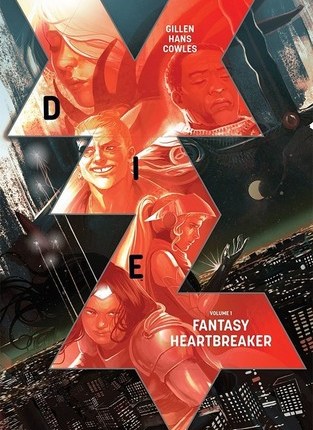
Die, Vol. 1: Fantasy Heartbreaker by Kieron Gillen, Stephanie Hans

Die, Vol. 1: Fantasy Heartbreaker by Kieron Gillen, Stephanie Hans

In Die, six teens enter a fantasy role-playing game, disappearing from the mundane world for two years. When they reappear, they are missing one of their members and carrying scars, both physical and emotional, from their ordeal.

Fast forward twenty five years, and a blood stained die shows up on someone’s birthday, mirroring the date when they last entered the game. The group has to face the fantasy world that has given them nightmares for decades in order to put the past to rest. But some things are easier said than done.

Readers of this series seem heavily divided on its quality. I thought it was brilliant.
Photo by Armando Are on Pexels.com

This isn’t because of the fantasy elements which, as many have noted, rely heavily on tropes and the established world building of touchstone series like The Lord of the Rings and The Chronicles of Narnia.

What I loved was the character development and its relatability for aging gamers.

The author shares a series of essays in the back of the graphic novel about the development of the story and characters as well as their associations with classic rpgs. He nails the reasons why I loved the book so much:

“… the simple idea of six forty-something adults contrasting their teenage fantasies with the realities of where their lives ended up. It’s a pure midlife crisis scream of a book. And the bit that got me? The idea that maybe part of me did disappear into a fantasy world at the age of sixteen and never came out.”

In the hero’s journey, we venture forth into trials and return changed but bearing gifts from the experiences we went through. That format- there and back again- seems so clear cut and simple in many of the “through the looking glass” fantasy stories.
Photo by Thiago Matos on Pexels.com

It is not so simple in this one.

In Fantasy Heartbreaker, the journey isn’t finished when the characters return to where they started and they aren’t bearing gifts, but a curse. It is only through the natural passage of time and the development of the adolescent into the adult, that the heroes in this story can finish their journey or, unbeknownst to them, begin an entirely new one.

This delayed emotional development speaks to any manner of gamers, both video or tabletop, who may find themselves, for a variety of reasons, gaming with a dysfunctional group of people over and over again each week. Perhaps this is because there are only a few people in their lives who love to game as much as they do.

For whatever reason, from the outside, such intense and conflict-prone relationships can seem confusing at best or borderline abusive at worst. But from inside the group itself, the bonds created through the traversing of realms of the imagination and overcoming obstacles as a team are real and important.

Photo by Plato Terentev on Pexels.com

The members of the group form a family of sorts- one that they chose rather than one they were born with. It can be beautiful but bewildering. Something that one has to experience to truly understand.

Sort of like visiting a different world, and never really coming home again.

In addition to the peek into gamer culture, the artwork in Fantasy Heartbreaker is gorgeous, one of the most beautiful I’ve ever seen in a comic.

Highly recommended for readers, and gamers, who like fantasy graphic novels.

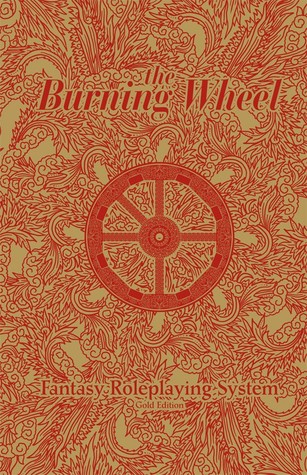
The Burning Wheel by Luke Crane

The Burning Wheel by Luke Crane

I’ve been reading the rule books of different roleplaying games this year like Nobilis and now The Burning Wheel in order to alleviate boredom and socialize with friends while playing the various games online. While doing so, I have come to appreciate the artistry and finesse that goes into creating the games.

This effort is most easily seen in the rulebooks.

The Burning Wheel rulebook is gorgeous. The artwork and binding are lovely. This is a book that feels like it belongs in your hands when you open it.

I realize that the world is moving more digital all the time, books included, and that makes sense. It saves resources, space, and what could be more convenient than having your entire library with you when you travel?

But I think I would miss the experience of holding a physical book and the sensations that go along with that. I watched a YouTube video review of this game that suggested part of the familiarity of the feel of this book might be related to the fact that it was created in the shape and size of a family Bible.

Whatever the draw is, if you’re going to play this game, I highly recommend buying a physical copy of the book.

That being said, the game itself is incredibly complex. No matter what you want to do in Burning Wheel, it requires some sort of roll. The most annoying aspect of this complexity is in the “resource” portion of the game. I failed a roll a few weeks ago and now my financially-challenged elf bard has to find a job.

Photo by fotografierende on Pexels.com

Do I really want to play a game to roleplay something like that? I could just live life as it is right now to worry about resources.

The organization of the rulebook also leaves something to be desired. For example, bard songs and their details are located in a couple different places.

So, say you’re playing along, then you want to know what sort of dice you have to roll to sing a song to the trees. In order to find that information, you’ve got to look all over the place. It doesn’t work well at all.

Photo by Pixabay on Pexels.com

Even the character creation is an unwieldy process. It took two very experienced gamers and I, who admittedly has less experience but plenty of enthusiasm, nearly four hours to put together two characters. Four hours!

Despite its complex and difficult nature, I think experienced gamers who are willing to greatly simplify the rules might still enjoy playing this game. Newbies to RPGs may want to try something else.

Geek Ink: The World’s Smartest Tattoos for Rebels, Nerds, Scientists, and Intellectuals by Emanuele Pagani

Geek Ink: The World’s Smartest Tattoos for Rebels, Nerds, Scientists, and Intellectuals by Emanuele Pagani

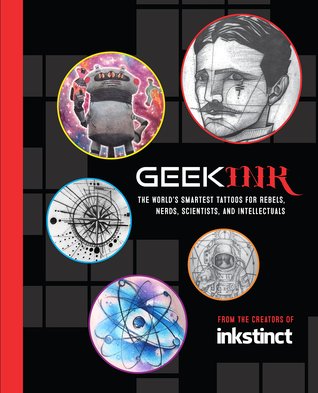
Geek Ink is a fairly representative book of “geek” culture tattoos with brief biographies of some of the tattoo artists.

I have to say though, there were far more Star Wars ideas in here than Star Trek. In that particular showdown, the Trekkies were not representing. I know there are major fans of the Star Trek franchise out there… where are you guys?! Not getting tattoos, I guess.

Photo by Jose Musa on Pexels.com

I was also disappointed in their collection of literary tattoos. Lord of the Rings, Harry Potter and The Little Prince were there, of course. There were a few science fiction themes. But nothing from other beloved classics like Where the Wild Things Are, or poetry, or various mythologies beyond a few generic-looking fairy tale castles.

Are book readers not into tattoos? This one is. 🙂 I was particularly drawn to the hyper-realistic tats of plants and animals.

Photo by cottonbro on Pexels.com

Recommended for people looking for tattoo ideas or who appreciate gorgeous body art. Despite my quibbles, this is a beautiful book created by incredibly talented artists, and which would look great on your coffee table.

Thanks for reading!

Embrace Your Weird: Face Your Fears and Unleash Creativity by Felicia Day

Embrace Your Weird: Face Your Fears and Unleash Creativity by Felicia Day

Embrace Your Weird is a non-fiction and self help manifesto encouraging creativity and told in Felicia Day’s unmistakably humorous way.

I say “unmistakable” for any of her myriad fans who have watched her ground-breaking web series, “The Guild,” or read another of her books like You’re Never Weird on the Internet. Her tone and sense of humor remains the same.

Photo by Prateek Katyal on Pexels.com

And if you haven’t had the chance to enjoy any of Day’s other creations, I encourage you to give them a try. They’re light-hearted and fun.

“Aside from (over)sharing a lot of my opinions, I have filled this book with exercises designed to uncover the joy of creativity. To help people beat back the fear that keeps them from trying new things.” pg xi

On almost every other page, Day encourages readers to stop a moment and draw a picture, fill out a list, or write empowering messages over and over so that they’ll sink in. The act of reading this book is nearly a creative act in and of itself. (Sadly, I couldn’t do this because I was reading a library book. Suggestion for future readers: buy yourself a copy.)

“No, I don’t think creativity is a cure-all. But I do believe it could be a cure-most.” pg 29

Photo by Pixabay on Pexels.com

Besides reminding readers that we have unique voices and viewpoints that the world needs to hear, Day loosely structures the rest of the book off of life viewed as a game. She asks us to remember our “hero-self,” identify “enemies” and “allies” of our creativity, and to view the steps we take towards creation as “quests.”

Day also shares moments in her life when she’s completed or failed attempting various pieces of this philosophy in her own life.

“I constantly hand my heart over to strangers to batter however they wish, and I wonder why I’m constantly wounded all the time, and this makes me reluctant to create. Good way to operate? NOT REALLY!” pg 143

As I said, the whole book has a definite Felicia Day vibe. And it’s fun!

“Playfulness is the root of all creation. All invention. All discovery. There is no reason NOT to feel joyous when we make things.” pg 206

Photo by Sharon McCutcheon on Pexels.com

She wasn’t afraid to tackle all sorts of hang-ups people might have in their creative process. Day nailed my biggest issue: finishing projects once they’re started.

“But we will never get anywhere if we don’t focus on one thing at a time. And then see that thing through before moving on!” pg 239

Message received. Now to put it into action…

Recommended for anyone looking to start or jump start their creativity. This book is an excellent place to begin. Thanks for reading!

Nobilis by R. Sean Borgstrom, Bruce Baugh

Nobilis by R. Sean Borgstrom, Bruce Baugh

Though not a traditional “book”, the rules and world-building instructions for the fantasy role-playing game, Nobilis, has more than 300 pages in it. And reads like a beautiful work of fiction.

“His eyes open, black as night. A star falls through them. ‘It is strange,’ he says, ‘how humans need but a taste of power to grow arrogant. You walk in a world of things greater than you can imagine, and you speak defiance.”

Nobilis by R. Sean Borgstrom, Bruce Baugh
Photo by Achraf Alan on Pexels.com

The game itself has been labeled so complex that, after reading the rules book, some gamers don’t bother to try it. Therefore, I think it’s fair to rate it on Goodreads where it can be appreciated more for its fantastic literature rather than its playability as an actual game.

“The Imperator Ananda rules Murder, the Infinite, and (some say) the Fourth Age that is to come. His glory is terrible: humans and Powers weak in spirit dare not face him, lest his countenance drive them mad with joy.”

The basic premise is there are major forces behind the every day reality that we all know. These forces are striving to either preserve the universe or end it.

Photo by Engin Akyurt on Pexels.com

They work through intermediaries and lesser servants to influence what goes on in the real world. The point of the game is to create a story with levels and nuances rather than to brute force your will into existence.

“More beautiful than the angels are the Excrucians, whose eyes show darkness full of ever-falling stars. It is said that the Creator bargained with them long ago, that he or she might capture a touch of this beauty in the world of Ygg- and then failed to carry out his or her end of the bargain. It is said that this is why the Excrucians on their pale horses seek the destruction of all that there is…”

Photo by Anastasia Zhenina on Pexels.com

The rules book describes all of these powers in extraordinary detail, or the manner for choosing a custom name and backstory of your own. There’s no limit to what you can create except your imagination.

The players embody the ruling powers and all of their minions simultaneously. So, a game scene can go from the real world, to the divine, to a place where a god resides and back again.

And you begin to see why so few people attempt this game in the first place… 🙂

“Powers bridge divine nature and human nature, the supernatural and the natural. They fight battles on all those levels, facing the challenges of gods and ordinary humans alike. They must learn to move fluidly from a world of spirits and myths to a polluted world of highways and computers, and from their Imperator’s custom reality to the broad Earth.”

Recommended for gamers who are looking for an incredibly detailed fantasy world to romp around in or readers who like open-ended works of fantasy. Beyond simple enjoyment as a game or work of literature, I could see Nobilis being a useful tool as a writing prompt for fantasy authors.

The Ultimate RPG Character Backstory Guide: Prompts and Activities to Create the Most Interesting Story for Your Character by James D’Amato

The Ultimate RPG Character Backstory Guide: Prompts and Activities to Create the Most Interesting Story for Your Character by James D’Amato

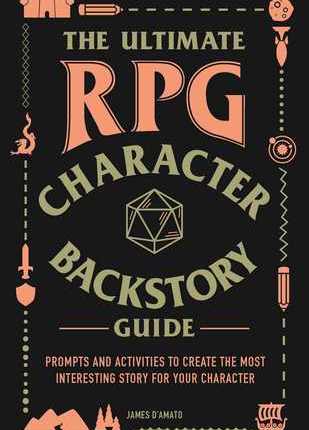
The Ultimate RPG Character Backstory Guide is an excellent resource for anyone who is looking to create or improve their role-playing character back stories.

James D’Amato utilizes his training in impromptu theater to craft questions that guide readers through story creation. Some of the prompts are funny, most are entertaining, and all touch on essential elements of a character.

Photo by Juliana Stein on Pexels.com

The book is divided into character levels, so there’s something for beginners to the more advanced gamer.

Role playing games are fun because of the interaction between players and their characters. By taking the time to create a detailed backstory, you’re giving the gift of hours of entertainment for both yourself and your gaming buddies.

Highly recommended.

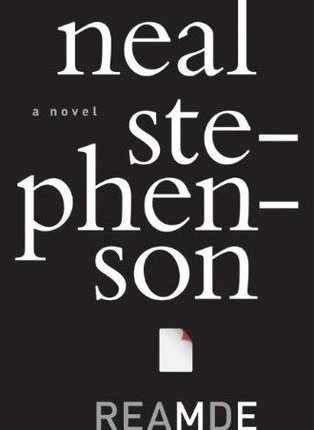
Reamde by Neal Stephenson

Reamde by Neal Stephenson

A former drug smuggler turned (mostly) straight-laced business man owns a multi-million dollar computer game, a refugee from Eritrea, a Hungarian computer hacker, a computer engineer, a further cast of international characters and the Russian mob all feature largely in Reamde. It is a science fiction novel by Neal Stephenson, but more than that.

This book will teach you about how flight paths are planned, how to properly check the safety on a firearm, and how the best laid plans of mice and men oft go astray.

“Thanks for coming all the way out from Vancouver,” Peter said. They had not introduced themselves, or shaken hands, just sized each other up and confirmed with nods that they were who they were.” pg 108, ebook.

Photo by Brayden Law on Pexels.com

Stephenson gives almost every character a full-fleshed out backstory and motivations. Sometimes he allows you into their mind to experience each nagging insecurity or existential crisis they may have.

He’s big into writing about body language, setting, and giving readers context on cultures or situations that she may not understand.

For example, the addictive quality of gaming for the non-gaming crowd: “She’d been awake for twenty-four hours. There was something deeply wrong about the situation, and the only thing that had kept her from simply running out the door of the building and flagging down the first car she saw and asking them to call 911 was the addictive quality of the game itself, her own ability to pull herself out of the make-believe narrative that she and Wallace had found themselves in.” pg 150, ebook.

Or making plans. Stephenson also enjoys writing about his characters concocting plans: “It is a classic Dilbert situation where the technical objectives are being set by management who are technically clueless and driven by these, I don’t know, inscrutable motives.” “Then we just need to scrutinize them harder. Do what those guys in the high-tech companies do.” “Which is what?” “Set expectations. Look busy. File progress reports.” pg 198, ebook.

Photo by Ekrulila on Pexels.com

And it is a long read. My ebook clocked in around 1420 pages. So, definitely not for the impatient reader. I found myself wanting more to happen and less agonizing by the characters.

That being said, if you invest the time in it, the last dozen or so chapters of Reamde are incredibly satisfying. You know the characters, you’ve been with them through all sorts of insane situations, and when Stephenson starts bringing them all together in the most unlikely and unexpected ways… it is very good.

But you have to make it that far first.

I’m not explaining this book and its attributes very well, but it may be one of those books you just have to experience for yourself. I picked it up on the recommendation of a friend and was not disappointed.

Photo by Thought Catalog on Pexels.com

But I don’t think I’m going to immediately go running for the next Stephenson epic. Or maybe I will…

If you’re into epic-length science fiction, you may want to check out The Abominable by Dan Simmons

Thanks for reading!

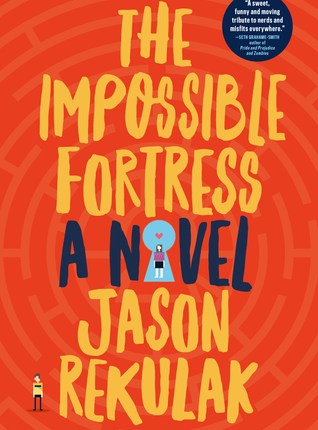
The Impossible Fortress by Jason Rekulak

The Impossible Fortress by Jason Rekulak

A cute coming-of-age novel about a boy, a computer, a Playboy magazine and first love.

Billy and his awkward friends are in love with Vanna White, the girl-next-door who flips the letters on Wheel of Fortune. When some pictures of Vanna appear in Playboy, they know they have to get that magazine, at any cost.

One problem, none of them are even close to eighteen years old.

This was the moment of truth- the moment I’d rehearsed with Alf and Clark again and again. They’d coached me to keep my pitch exactly the same- to speak the words like I used them all the time: “Just some Tic Tacs,” I said, “And a Playboy.” pg 29

Photo by Athena on Pexels.com

Part of this story is enjoying the humor and innocence of the boys in an era before the internet. The other part of this story, the one that occupied my book club, was reminiscing about technology and early computers.

We spent most of the time at book club talking about what our first computers were, who knew coding, and what were our favorite early games.

“If I was serious about Planet Will Software, I couldn’t work on a Commodore 64 much longer. Newer computers offered more memory and better graphics, and C64s would be obsolete in another year or two. I needed to upgrade to the latest technology, and the contest was my best chance to do it.” pg 43

Photo by Soumil Kumar on Pexels.com

That part of the evening seemed to entertain the older members of our book club more than me. It’s not that I didn’t have an early computer, I did, I was more interested in the coming-of-age part of this story and the heist-type scenarios the boys go through to get their dirty magazine.

I also enjoyed Billy’s struggles to understand Mary and the cute dynamic between them. I liked learning about his loyalty to his friends and his dreams for future computer programming greatness.

“I’m going to make video games,” I said. “I’m going to start my own company, and I’ll only hire cool people.” pg 81

Photo by Barik5ive on Pexels.com

If I ever start my own company, in whatever business sector that it may be (not computer programming), I’ll only hire cool people too.

Recommended for book clubs or if you just want a sweet, light read by the pool, The Impossible Fortress just may fit the bill.

Thanks for reading!

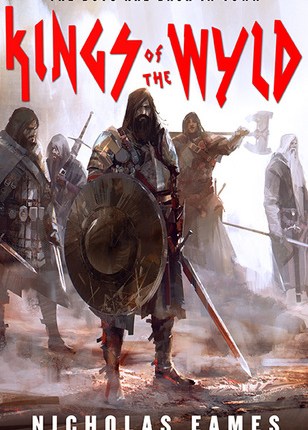
Kings of the Wyld (The Band #1) by Nicholas Eames

Kings of the Wyld (The Band #1) by Nicholas Eames

An incandescent debut novel about an aging group of warriors who have to come out of retirement to save the child of one of their members.

It is reminiscent of a dungeons and dragons campaign: you have the tanks (or front men), cleric (or shield), thief and wizard.

The band also featured a rotating series of bards because they kept losing them in various, horrific ways. It’s a continuing gag throughout the tale.

Photo by Josh Sorenson on Pexels.com

The humor is my favorite part of the story. Some of it is juvenile, but most of it is incredibly funny.

“Tell us a tale, will ya, Clay? About when you did for that necromancer up in Oddsford. Or when you rescued that princess from… that place… remember?” Which one? Clay wondered. They’d rescued several princesses, in fact, and if he’d killed one necromancer he’d killed a dozen.” pg 4

The warriors are past their prime. They were glorious monster killers once, now they’ve got bad backs, tricky knees and families who depend on them.

“But life, Clay knew, didn’t work that way. It wasn’t a circle; you didn’t go round and round again. It was an arc, its course as inexorable as the sun’s trek across the sky, destined at its highest, brightest moment to begin its fall.”pg 8.

Photo by Tobias Bju00f8rkli on Pexels.com

In many ways, the group in this story reminded me of my own group of gaming friends. Yes, maybe we’re all getting on in years, but oh the glorious adventures we have had and perhaps will still have… if we can just manage to get out the door.

“If there was anything scarier than a Heartwyld Horde, the wrath of a vengeful ex-wife might just be it.” pg 36

The humor in this story was only matched by the clever analogy of a “band of warriors” compared to a “band of musicians”.

“Fantastic. Clay mused. A spiteful queen and a vengeful booker to watch out for. As if heading into a monster-infested forest on our way to a hopelessly besieged city wasn’t trouble enough. Whoever wants us dead should just sit back and let us kill ourselves.” pg 129

Photo by Alex Fu on Pexels.com

I couldn’t help but cheer them on, every step of the way.

Highly recommended for epic fantasy fans, gamers and anyone who has shared adventures, real or imagined, with a group of friends. This book has heart and I loved it.

Thanks for reading!