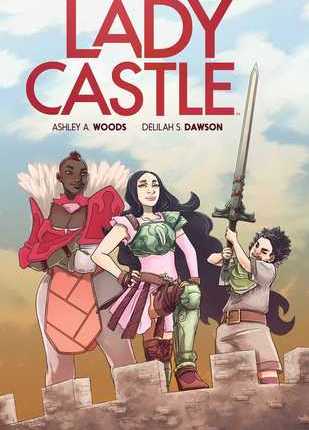
Ladycastle by Delilah S. Dawson

Ladycastle by Delilah S. Dawson

Aeve, a princess of Mancastle, is locked in a tower by her father, King Mancastle, for her refusal to chose a husband. Aeve’s younger sister, Gwyneff, is free to roam the castle, until she turns twelve and is subjected to the same fate as Aeve.

But Gwyneff doesn’t understand her sister’s choice and blames her for their father’s time-consuming efforts to find a new husband for Aeve and his absence.

“Aeve ruins everything. If she’d married, father wouldn’t go out hunting new princes. He’d be here. All the men would.”

Photo by Jeffrey Czum on Pexels.com

When King Mancastle and his men venture out to find a more suitable groom, and meet a foe they cannot overcome. One of the men returns to report to the women left behind — a curse has been laid on the castle and monsters will “be drawn as to a beacon”.

“For not only was King Mancastle cursed, but so was his domain. This castle shall be a beacon to terrifying monsters until the wizard’s curse is lifted.”

The blacksmith’s wife, Merinor, takes up the Lady of the Lake’s sword and becomes king. She and the women begin preparations to defend themselves from the approaching monsters. And thus our tale begins…

The artwork in Ladycastle is beautifully drawn with bright colors. I enjoyed the premise of the story. But Ladycastle doesn’t quite fulfill its promise in this volume.

Photo by Felix Mittermeier on Pexels.com

In the beginning of each section, the ladies’ inner monologue reads like a Disney or classic Broadway song, purposefully so. It’s distracting and derivative. I get that this work was attempting to point out the inherent bias of the other works, but I feel it takes away from the originality of this one.

The dark ages were brutal on women. I get it. Each lady in Ladycastle has a backstory of abuse or neglect from the man who ran her life, except for Gwyneff who hadn’t yet attained an age to be given away by her father for political purposes.

I liked how this comic flips that gender-issue on its head, the women rule the roost now. But the delivery of the lesson is heavy-handed, especially in the first two sections of the book.
Photo by Engin Akyurt on Pexels.com

As other readers have noted, there is a stab at diversity in this book, but no inclusion of LGBTQ characters. I can’t see any reason for this over-sight.

Recommended for readers who enjoy graphic novels, but with the reservations listed above. I felt like this topic was handled more deftly in the graphic novel for children, Princeless, Vol. 1: Save Yourself.

Thanks for reading!

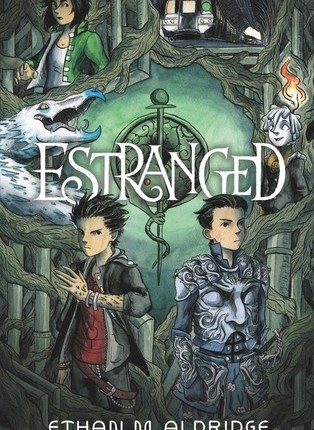
Estranged (Estranged, #1) by Ethan M. Aldridge

Estranged (Estranged, #1) by Ethan M. Aldridge

A cute graphic novel for middle graders that features a changeling, his human counterpart, their human sister and a golem made out of wax.

“There hasn’t been a human in High Court in a century. That makes you special, doesn’t it?” “Oh, they never let me forget that. It’s always ‘the human childe’.”

Photo by Danielle Reese on Pexels.com

But trouble brews when a disgruntled elf turns the king and queen of the High Court into rodents. Then, she goes after the “Childe”. In response, he seeks out his changeling twin in the world above or the real world. And that is where our adventure begins.

“The only home I’ve ever had has been taken! This was meant to be my home, my life, and it was taken before I was old enough to remember it!” “I’ve got nothing, nowhere to go! I have as much right to be here as you!”

Along the way, they have to face goblins, magic statues, a witch and a treasure-hungry dragon. The plot is a bit simplistic but it is perfect for children who like fantasy and urban fantasy.

In fact, I picked this book up at the local game shop for my daughter and she read it in one sitting, which is a miracle because she’s a reluctant reader. I’m always looking for stories or formats that appeal to someone who enjoys video games more than books.

Photo by Andrea Piacquadio on Pexels.com

She absolutely loved it and said I HAD to read it. I asked why and she said, “Because it’s just awesome.” She loved the magic and world Ethan Aldridge has created. She also loved the artwork. Her favorite character, and mine, was Whick, the brave wax golem who accompanies the Human Childe from the court below to the world above and back.

The story also touches on the sometimes difficult relationship between a brother and sister. There’s a good message about taking care of your family that I resonated with.

In conclusion, I loved that my Human Childe loved it. Highly recommended.

Thanks for reading!

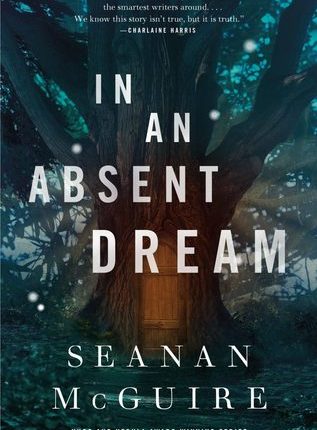
In an Absent Dream (Wayward Children, #4) by Seanan McGuire

In an Absent Dream (Wayward Children, #4) by Seanan McGuire

In this enjoyable entry in the Wayward Children series by Seanan McGuire, we learn the other-worldly wanderings of the person who calls herself Lundy and why she is the way she is.

Like the other children from this series, the world, in this case the Goblin Market, chose the child for specific reasons.

“Katherine’s remarkability took the form of a quiet self-assuredness, a conviction that as long as she followed the rules, she could find her way through any maze, pass cleanly through any storm.” pg 18

Photo by carboxaldehyde on Pexels.com

The most enjoyable aspect of this story is Lundy’s unrepentant bibliophilia. I think anyone who loves to read can empathize with much of her character.

“Mysteries in books were the best kind. The real world was absolutely full of boring mysteries, questions that never got answered and lost things that never got found. That wasn’t allowed, in books. In books, mysteries were always interesting and exciting, packed with daring and danger, and in the end, the good guys found the clues and the bad guys got their comeuppance.”pgs 27-28

But it is Lundy’s penchant for always trying to find a loophole in reality, which serves her well in reading and the Goblin Market, that eventually creates a problem.

“If she thought of this as a fairy tale that she had somehow stumbled into, she could handle it. She knew the rules of fairy tales. Most importantly of all, she knew that fairy tales ended with “happily ever after” and everything being just fine.” pg 48

Photo by Guilherme Rossi on Pexels.com

Like McGuire’s other entries in this series, nothing is simple in this tale and there are decisions far more complex than a child can easily make. That’s part of the brilliance of it. These worlds that the children stumble into are dangerous and sometimes innocent people get hurt.

“What’s the Goblin Market?” “It is a place where dreamers go when they don’t fit in with the dreams their homes think worth dreaming.” pgs 56-57

Highly recommended for readers who like their fairy tales told with just enough reality to make it feel real. The Wayward Children series is a treat.

My other reviews in the series:

Every Heart a Doorway

Down Among the Sticks and Bones

Beneath the Sugar Sky

Thanks for reading!

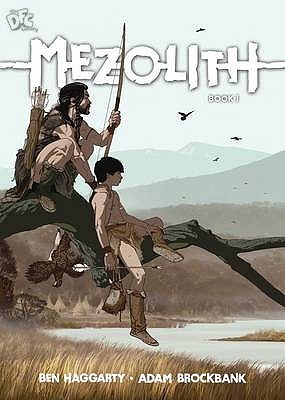
Mezolith by Ben Haggarty, Adam Brockbank

Mezolith by Ben Haggarty, Adam Brockbank

A beautifully illustrated coming-of-age tale about a boy who lives with his stone age tribe. Reality and mythology are mixed in his life to create something else, something that feels true though it couldn’t possibly be.

“Poika, at the heart of the world there is a cave and in that cave there are countless urgas, all sleeping… all dreaming… and when one dreams that a brother has been destroyed he wakes. Crawls into the world. Finds some humans and cries pitifully near them… until someone comes to care for him…”

Photo by Rozemarijn van Kampen on Pexels.com

How do you imagine that Stone Age peoples explained phenomena that scientists today have only begun to unravel? Where does love come from? What brings a fever or trouble? They explained these things by telling stories.

There’s the story of a man who fell in love with a woman who was actually a swan, so he travels to the end of the world to convince her father, the Swan King, to let her live with him.

There’s a demon who conceals itself as a baby and then in the night, if you take it into your tribe, it wakes and consumes everything in its path.

There’s a woman who should have died, but survived, and now has an uncanny relationship with crows and can see through their eyes… and more.

Photo by Pixabay on Pexels.com

It’s magical and strange, and Adam Brockbank has illustrated Ben Haggarty’s stories beautifully. It is easy to see why this was a Times pick for Best Graphic Novel.

Despite this excellence, only one library in my enormous, interconnected library system owned this book. I was surprised. It has appeal for both young adults and the young-at-heart. The violence in it isn’t overly graphic. The themes are appropriate and intriguing for reluctant readers.

If any librarians read this review, please consider buying a copy of Mezolith for your shelves. I think your patrons would enjoy it. I certainly did.

Thanks for reading!

Shades of Magic Vol. 1: The Steel Prince by V.E. Schwab

Shades of Magic Vol. 1: The Steel Prince by V.E. Schwab

V.E. Schwab has penned a graphic novel about Maxim Maresh, one of the ancillary characters from The Shades of Magic series.

I was very excited to read this. The tidbits Schwab dropped about Maxim in the trilogy were enticing. We learned he had a storied past. He fought notable outlaw figures. Somehow he developed an extraordinary control of his powers, which others had not been able to mimic.

Under his reign, a certain magician opened the doors between the worlds to act as emissaries and messengers. But also, exposed the worlds to the greatest danger that they had ever faced.

Photo by Aidan Roof on Pexels.com

“Before he was the King of Arnes, Maxim Maresh was a young, head strong prince with a penchant for metal magic and a lot to learn about the world beyond Red London. Banished by his own father to Verose, a city on the dangerous Blood Coast, Maxim was plunged into a world of danger and adventure.” Foreward, by V.E. Schwab.

So, who was this man? This graphic novel series sheds some light on an enigmatic figure.

“Why would you see those doors pried open again?” “Because sooner or later, all spells fail. And one day the doors to those worlds will open whether we wish it or not.”

What did I think of it? It was the first in a series. It’s hard to give all of the contextual information of a new story without it turning into an info dump or neglecting to develop the characters.

Schwab does a good job of avoiding these pitfalls, but I wanted more depth and development.

We do get to see something of “bone magic,” one of the more terrifying of the magics from Schwab’s stories. Bone magic, unlike the elemental basis of the other magics, allows the user to literally control the actions of those around them.

Photo by Pixabay on Pexels.com

Bone magicians can make you throw yourself onto their enemies or your friends. Hold still while you’re tortured. Stick a knife in your own eye.

Bone magic, the removal of free will, is the idea that has continued to haunt me from the Shades of Magic series and Schwab uses it to good effect in this story.

That being said, Maxim, at first, acts like a brat and doesn’t understand the complexities of real life, running headlong into the “royalty removed from the world” trope. This focus of his character doesn’t lend itself to likability. Perhaps that will change as the series goes along. Also, we get to see so very little of his extraordinarily abilities and more of his mediocrity.

However, the artwork is stunning. I hope to read and enjoy the next volume. But I can’t say I was knocked off my feet by this installment.

Recommended, of course, for fans of the Shades of Magic series.

Thanks for reading!

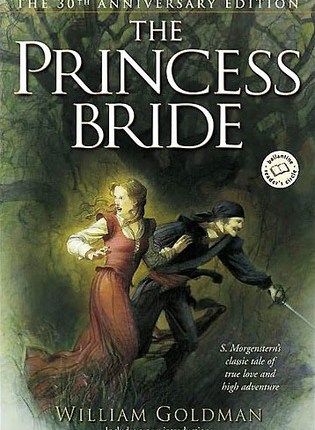
The Princess Bride by William Goldman

The Princess Bride by William Goldman

** spoiler alert ** Please be aware: major spoilers ahead if you have not read the book or watched the film. Consider yourself warned.

A new classic tale about a woman named Buttercup, the man she loves named Westley, a giant who loves to rhyme named Fezzik and Inigo, a Spanish swordsman out for revenge.

Of course, like many, I’ve seen the film The Princess Bride about a bajillion times, but I’d never read the book. It was time to rectify that error. Because the book is always better than the movie, right?

“I love you,” Buttercup said. “I know this must come as something of a surprise, since all I’ve ever done is scorn you and degrade you and taunt you, but I have loved you for several hours now, and every second, more.” pg 59, ebook.

Photo by Charles Pragnell on Pexels.com

But not this time, friends. I know, I was shocked too.

That’s not to say the book isn’t charming, because it is. There’s all of the characters you love and they deliver the classic lines from the film, plus you get the backstory and additional humorous injections from William Goldman. Goldman created a story within a story — he acts as if he’s simply editing a book by S. Morgenstern and has created an entire history around this idea.

He’s so convincing, in fact, that I immediately googled Goldman to make sure I hadn’t missed something.

My favorite part of the book was exploring Prince Humperdinck’s “Zoo of Death”, which we only get to see in passing in the movie.

“The fifth level was empty. The Prince constructed it in the hopes of someday finding something worthy, something as dangerous and fierce and powerful as he was. Unlikely. Still, he was an eternal optimist, so he kept the great cage of the fifth level always in readiness.” pg 68, ebook.

Photo by Daniel Torobekov on Pexels.com

Honestly, some of the scenes in the book go on a bit too long. The part where Westley challenges Prince Humperdinck “to the pain” instead of “to the death” comes off as creepy in the book, whereas, I felt, in the film it was kind of awesome. I’m not entirely certain what the difference is, except his speech is more to the point in the film.

“It means that I leave you to live in anguish, in humiliation, in freakish misery until you can stand it no more; so there you have it, pig, there you know, you miserable vomitous mass, and I say this now, and live or die, it’s up to you: Drop your sword!” pg 225

Those are all just quibbles compared to the ending, which was the most shocking point of all.

Ok, as we all know, in the movie, it ends with a kiss and they all live happily ever after.

In the book, not so! Here are the last lines in the “official story” not counting a few more comments by Goldman:

However, this was before Inigo’s wound reopened, and Westley relapsed again, and Fezzik took the wrong turn, and Buttercup’s horse threw a shoe. And the night behind them was filled with the crescendoing sound of pursuit… pg 228, ebook.

Photo by Min An on Pexels.com

That’s it. I nearly fell out of my chair when I read it. Here’s what our author said about it a few paragraphs later:

“I’m not trying to make this a downer, understand. I mean, I really do think that love is the best thing in the world, except for cough drops. But I also have to say, for the umpty-umpth time, that life isn’t fair. It’s just fairer than death, that’s all.”

It’s such an unsatisfying ending. I can see why they changed the film because I don’t think audiences would have stood for it, which probably says more about film-going audiences than readers, but still. Don’t readers deserve a happy ending too?

Thanks for reading!

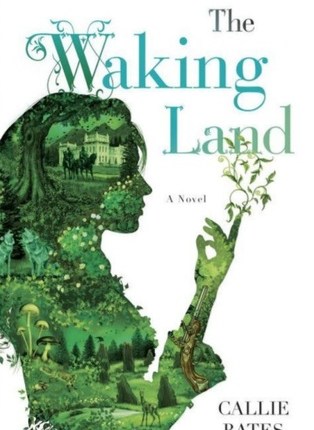
The Waking Land by Callie Bates

The Waking Land by Callie Bates

A fantasy novel about a young woman who was raised away from her home who is destined to become something greater than anyone ever imagined she could be.

There were shades of Irish mythology in this story with magic surrounding standing stones and a midnight ritual about “marrying the land”.

Overall, I just felt like I had read this book before in some form or another. It stuck to so many forms — heroine who doesn’t know her own strength, falls in love with a man who may help her or betray her, trusts everyone she shouldn’t and doesn’t trust everyone she should.

Photo by WARREN BLAKE on Pexels.com

There were so few unexpected moments. Even the big stuff is heavily foreshadowed. Take this passage:

“I can do nothing. I am a botanist, not a sorcerer. Botanists have a place in this world — a respectable place. As the emperor of Paladis likes to remind us, sorcerers are worse than nothing — their impious actions are a mockery of the gods, and their historical conviction that they could rule kingdoms presented a threat to civilization itself, a danger that had to be exterminated.” pg 22

Ok, now guess what is going to happen in this book… you’re probably right. And that blurb is from the first chapter.

I’m on to the next book… and thanks for reading!

And the Ocean Was Our Sky by Patrick Ness

And the Ocean Was Our Sky by Patrick Ness

“But now, here, once and for all, I set down my tale. I am not who I was then. I said I was ignorant, and I am not wrong, though by that point I had learned that men lived upside down from us, that for them the ocean was below, the Abyss above, our gravities only meeting at the surface.” pg 15

Photo by Emiliano Arano on Pexels.com

Patrick Ness weaves a re-telling of Moby-Dick, or, the Whale from the point of view of the whales. It falls some what short of his usual magic.

I think the trouble with re-telling major stories or fairy tales, (as I’ve discussed in previous reviews, Dorothy Must Die comes to mind) is that unless the remake is extraordinary in some way, it won’t surpass the original story. It’s exciting to revisit beloved worlds or, in this case, a classic tale and upend reader’s expectations. Using the point of view of the whales is unique, but the story seems to stall there.

The original Moby Dick gives us obsession and memorable characters. Bathsheba, the young apprentice whale in this tale, is a confused mess most of the time. That doesn’t lend itself to either greatness or memorability.

Ness is at his best when he’s describing Bathsheba’s world. I wish he had gotten more into how they respected and feared the depths of the ocean, which they considered the opposite of the ‘Abyss’ in our world. I also wish he had taken readers through one of the cities constructed by the whales. He hinted at a civilization beyond the hunt, but we never quite got there.

Photo by Andre Estevez on Pexels.com

I guess he was trying to build tension with the hunt for Toby Wick. I wanted a more layered fantasy tale.

“Maybe it takes a devil to fight a devil,” I said. “But at the end of the fight, Bathsheba,” he said, “Don’t only devils remain?” And for a moment in the ocean, there was only blackness. We were alone. Even with ourselves. And whatever devils lurked, unseen. pg 99

The artwork by Rovina Cai is beautiful and spare, utilizing very few colors or many fine details beyond shading. I think she conveys the idea that most of the story takes place underwater very well. I liked the illustrations perhaps more than I liked the story.

If you must read And the Ocean Was Our Sky, may I suggest borrowing it from your local library.

Thanks for reading!

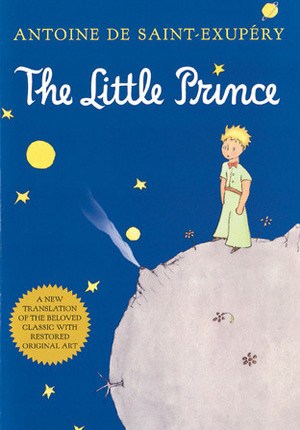
The Little Prince by Antoine de Saint-Exupéry

The Little Prince by Antoine de Saint-Exupéry

Similar to The AlchemistThe Little Prince is a metaphorical tale that people seem to love or not.

“In the face of an overpowering mystery, you don’t dare disobey. Absurd as it seemed, a thousand miles from all inhabited regions and in danger of death, I took a scrap of paper and a pen out of my pocket.” pg 4

Photo by Alex Andrews on Pexels.com

A pilot crashes in the desert and discovers a child wandering around who claims to be from another planet. His planet is so small that the prince can see multiple sunsets by simply moving his chair. And there’s a rose with four thorns that the prince loves. But he left this planet because of a disagreement with the rose. After a series of adventures where he meets dysfunctional adults on other planets, sees that his rose isn’t the only rose in the universe and learns about love from a fox, the prince decides he wants to go back home.

How he’s going to do that is not really clear.

So that’s the literal story.

The allegorical part has to do with how differently children perceive life than adults, what love is or means and how growing up, change or death affects love… among other things.

Here is my secret. It’s quite simple: One sees clearly only with the heart. Anything essential is invisible to the eyes.” pg 63

Photo by Jovana Nesic on Pexels.com

I felt like there were layers to this story that I haven’t grasped yet. I suppose this could also be about a man contemplating his inner child. Then again, I suppose this story could be about a lot of things.

This was the first time I’ve ever read it and, to my amusement, when I checked it out from the library, my 12-year-old said she has already read it. I asked her what she thought of it and she just shrugged her shoulders. I liked it more than a simple shoulder shrug, but, in conclusion, I think there was stuff I was missing.

This book has been adapted for the screen a couple times. One of the latest was in 2015.

Thanks for reading!