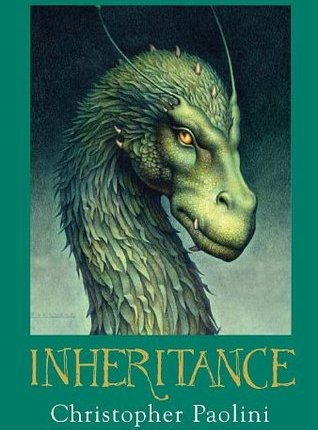
Inheritance (The Inheritance Cycle, #4) by Christopher Paolini

Inheritance (The Inheritance Cycle, #4) by Christopher Paolini

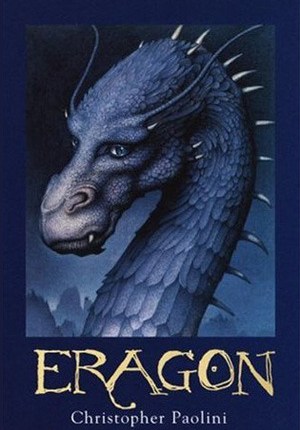
Christopher Paolini brings his fantasy series for young adults to an end with Inheritance, the fourth and final book in The Inheritance Cycle.

Eragon, Saphira, the Varden and their various allies including elves, dwarves and urgals, make their way to Uru-baen, the capital of the evil Galbatorix’s empire, in a thrilling set of battles that bring a conclusion to the struggle between the characters of this world.
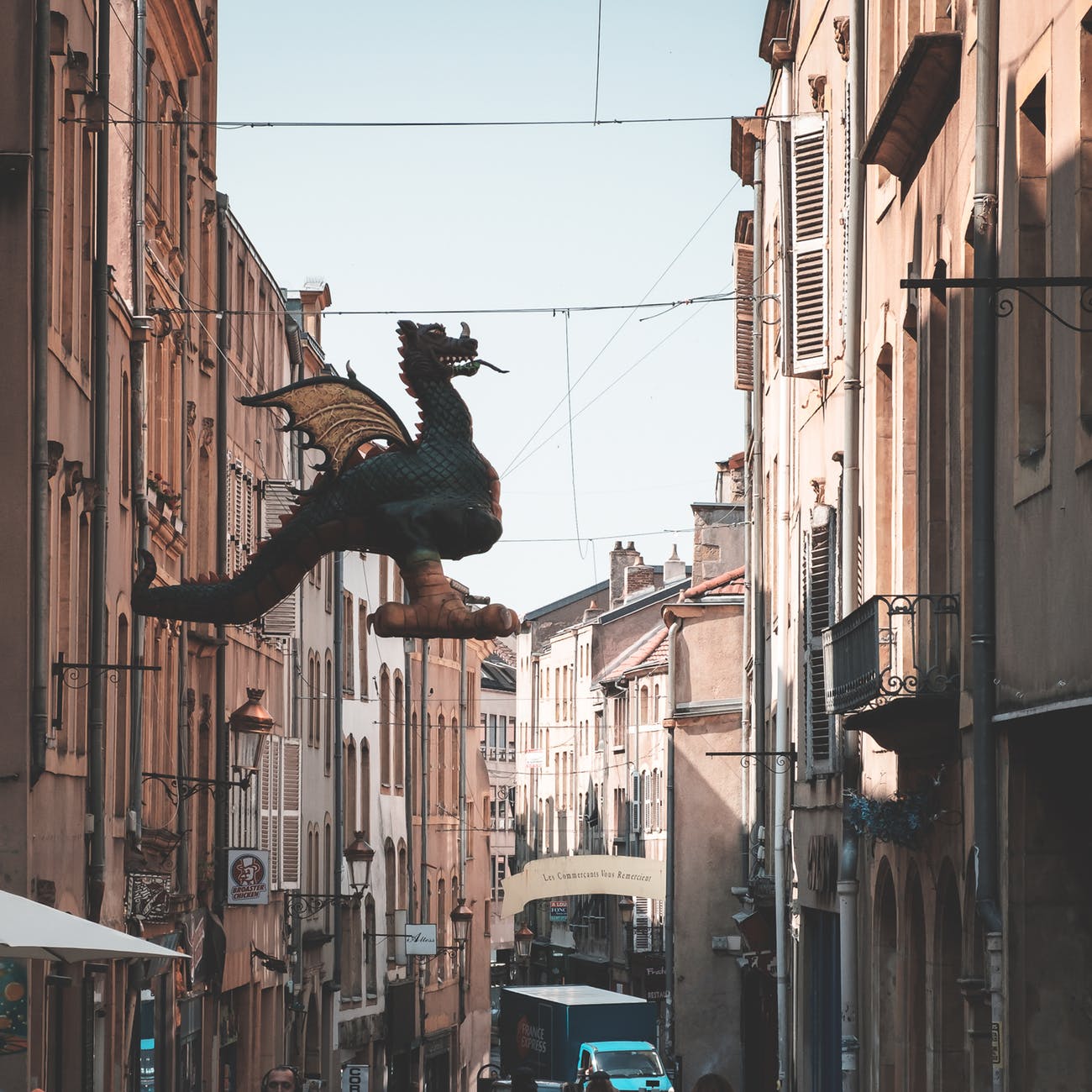
Photo by Rene Asmussen on Pexels.com

If you’ve been following my reviews as I made my way through this series, you’ll note that this is the highest rating (four stars) I’ve given any of the books. I could tell that Paolini brought all of the skills that he learned in writing the first three books to this one.

The characters are well-developed as he’s had thousands of pages to make them that way. The battles are nail-bitingly awesome.

The fallout after the main confrontation is long enough to tie up loose ends, but not so long that I was tired of reading about the world.

And it is a fun world to visit. Paolini took his cues from the classics of fantasy to craft his own world so that it feels familiar in a comforting way to fans of fantasy fiction.

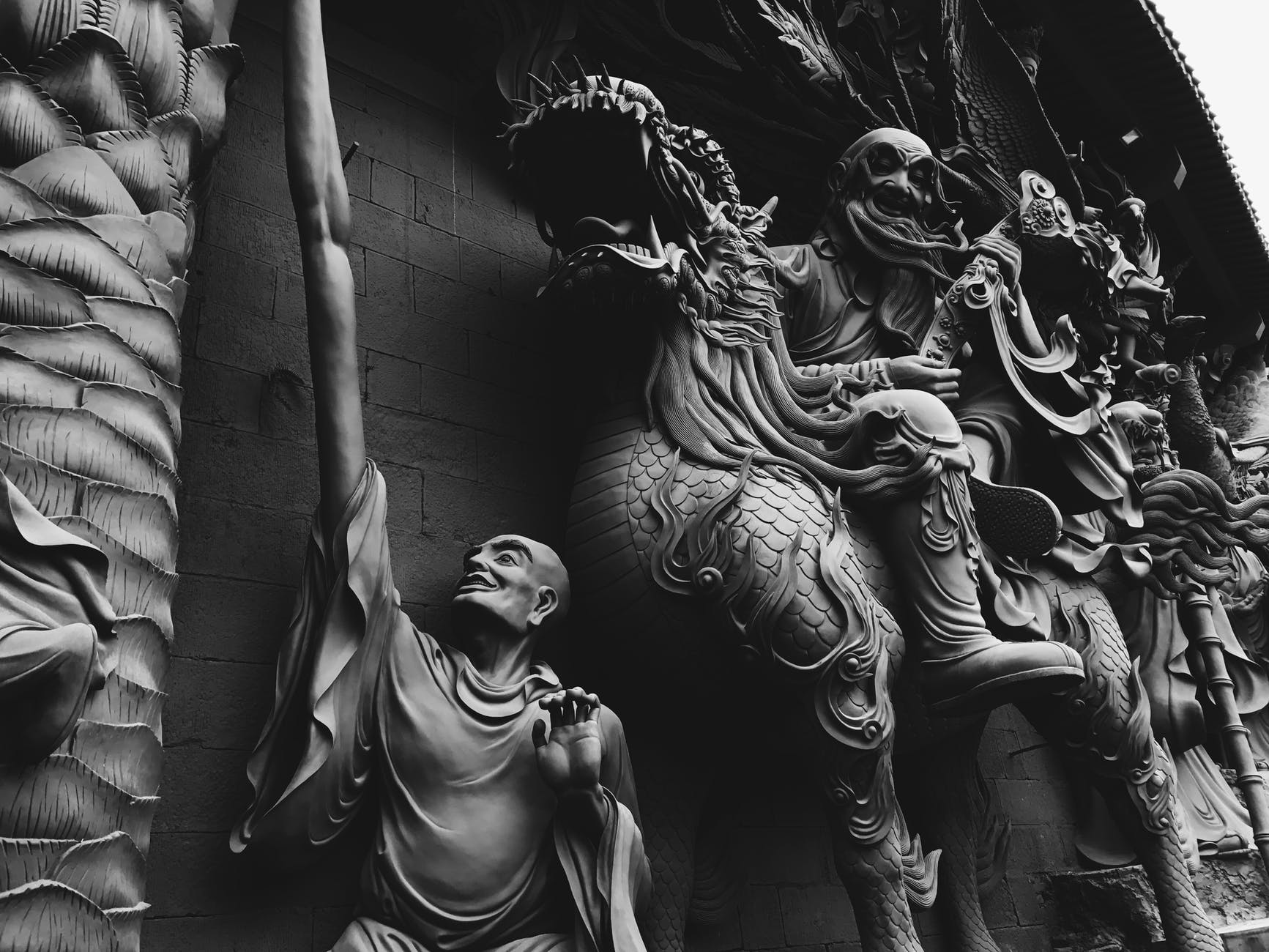
Photo by Lukas Rodriguez on Pexels.com

But that familiarity cuts both ways. Paolini doesn’t move far from the expected tropes in the creation of his story. There were a few large reveals in Inheritance that I wanted to be more imaginative than the twists that Paolini crafted.

That being said, I did enjoy this book more than all the others. Once I started the final hundred pages, I couldn’t put the book down.

I think this series could be a lot of fun for young readers. Despite its predictability, there is much to enjoy in The Inheritance Cycle. Older readers or the young at heart might want something that veers a little more off of the expected paths.

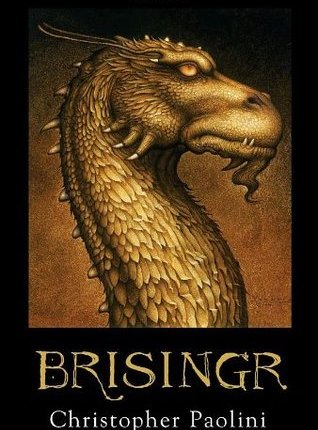
Brisingr (The Inheritance Cycle, #3) by Christopher Paolini

Brisingr (The Inheritance Cycle, #3) by Christopher Paolini

In Book 3 of The Inheritance Cycle, our hero Eragon and his numerous allies continue to inch their way towards the final confrontation with Galbatorix and his dragon, Shruikan.

Photo by Dapo Abideen on Pexels.com

Unlike the first two books in the series, I felt Paolini’s pacing was off. Everything is moving much too slowly. And then, when one of the leaders of the Varden sends Eragon off on a secret mission after the armies finally begin engaging each other, I actually groaned. 

Yes, I realize there’s more to this fantasy story than endless battles and sieges. But they’re the fun part!

I also realize that I’m not the intended audience for this series, crafted for young adults. But that’s never stopped me from reading a book that looks entertaining. And these targeted young adult readers deserve better plot development than the sudden appearance of ancient artifacts or obscure dragon anatomy that changes the entire course of the story in the final chapters of a 600+ page book.

Photo by Pixabay on Pexels.com

I think that is my main quibble with this series. It was written over such a long period of time that Paolini wasn’t able to build levels into his tale with foreshadowing. Important elements like Eragon’s mysterious parentage feel almost tacked on or added as after thoughts.

On the other hand, I do like the way Paolini has continued to develop the Rider/dragon relationship between Eragon and Saphira and her growing maturity as a character. And, despite my complaints with some story elements and pacing, I will continue on to the final book in the series.

I hope he does the ending justice.

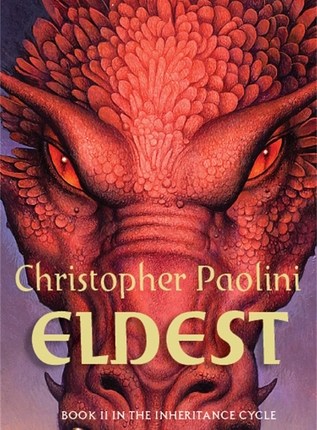
Eldest (The Inheritance Cycle, #2) by Christopher Paolini

Eldest (The Inheritance Cycle, #2) by Christopher Paolini

Eldest is an enjoyable follow up to Eragon, a fantasy tale about a young man, his dragon, and a desperate fight to save the world from an evil immortal.

The best part about this entry of The Inheritance Cycle is that portions of it follow Roran, Eragon’s non-magical cousin, as he struggles to keep his village alive during the fall out of Eragon’s actions from the previous book.

“As he walked, he continued to order his thoughts. After Garrow’s death, Roran had abandoned his job at Dempton’s mill in Therinsford and returned to Carvahall.” pg 37, ebook

Photo by Spencer Selover on Pexels.com

I’ve often wondered about the relatives and neighbors of the magical heroes that are featured in most fantasy tales. What happens to them while earth-shattering events are going on, rings are being melted, and orcs, or ‘urgals’ in this tale, plunder and pillage?

Eldest begins to tell that forgotten story through Roran’s eyes.

“After the last mournful note faded into silence, family members praised the feats and traits of those they had lost. Then the bodies were buried.” pg 111, ebook

Photo by sergio souza on Pexels.com

Christopher Paolini writes at a pace that engages younger readers but doesn’t leave adult readers, like myself, wanting more depth. He carefully constructs scenes and backstories for characters with enough context to make you care about what happens next.

“A tingle of awe and joy shuddered along Eragon’s spine. This was where he belonged, as a Rider. Of all the things in Alagaesia, he had been lucky enough to be joined with this. pg 132, ebook

A funny quibble I have with this book, like in the last one, is I don’t particularly like how Paolini writes the character of Eragon’s dragon, Saphira. He makes her out to be occasionally insecure or jealous, and I’ve always pictured dragons as wise, free and powerful spirits of nature. But those are my preconceived visions of what dragons should be like and I understand how not every reader will have my sort of view on the matter.

Photo by Lachlan Ross on Pexels.com

I also don’t like Paolini’s take on elves. In some ways, the elves in Eldest come off as pretentious and pompous jerks. I get that he was going for a type of removed, immortal elegance, but it didn’t quite work for me.

All that being said, I will be continuing on to the next book. Young adult fantasy readers will most likely enjoy this read too.

Eragon by Christopher Paolini

Eragon by Christopher Paolini

Eragon follows the exploits of a boy, a dragon, and their fight against an evil king, and his henchmen, who would plunge the world into darkness.

Prophecies of revenge, spoken in a wretched language only he knew, rolled from his tongue. He clenched his thin hands and glared at the sky. The cold stars stared back, unwinking, otherworldly watchers.” pg 14, ebook

Photo by carol wd on Pexels.com

Though it is written for children, Eragon is a charming tale that I thoroughly enjoyed as an adult reader. The pace was snappy, the characters were written quite well, and the story itself was a fun, adventure and fantasy.

“Eragon found the stone both beautiful and frightening. Where did it come from? Does it have a purpose? Then a more disturbing thought came to him: Was it sent here by accident, or am I meant to have it?” pg 16, ebook

Photo by Dids on Pexels.com

I did a little research about the author, Christopher Paolini, and was surprised to discover that this was one of the first books he published and he was in his teens when he wrote it. How impressive is that?

“Dragons will constantly amaze you. Thing… happen around them, mysterious things that are impossible anywhere else.”

There were a couple things I didn’t enjoy about Eragon, but they didn’t ruin my appreciation for the overall story. For example, I wanted Saphira the dragon to have a different personality. She has some character traits that I felt were incongruous with how an immensely powerful, magical being would act.

Photo by Andre Moura on Pexels.com

When I think carefully about it, what a silly quibble to have with a story based in fantasy. But readers will have their preferences, and I like to picture dragons as either wise and benevolent, Buddha-like beings or demonic treasure hoarders along the lines of Smaug.

Paolini’s version of them is different from both of these extremes. He makes dragons fallible, like humans. Which, at the end of the day, makes this a better story for children. A lesson like, even the most powerful among us can make mistakes or experience unpleasant emotions like jealousy, is a good lesson to learn.

“These books are my friends, my companions. They make me laugh and cry and find meaning in life.” pg 153, ebook

Photo by Pixabay on Pexels.com

Highly recommended for young adult fantasy readers or the young-at-heart.

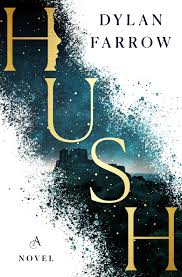
Hush (Hush, #1) by Dylan Farrow

Hush (Hush, #1) by Dylan Farrow

In the world of Hush, ink, the suspected origin of a deadly plague, has been declared the enemy of humankind and outlawed. The keepers of the law, High House and its magical soldiers called bards, roam the world, rooting out those who break the law and rewarding those who bend to their will.

“Our history shows that vigilance and caution are tantamount to survival. Burn the ink from the page. Turn away from forbidden words, toxic tales, and deadly symbols. Cleanse the country of this malignant blight. Join us.”

Photo by Dids on Pexels.com

Shae lost her brother to the mysterious plague early in her life and her family has been outcast from her small village since. When tragedy once again darkens her family’s doorstep, what will Shae do not only to seek justice for her brother but, potentially, the whole world?

The premise of Hush had some interesting ideas, but this debut, young adult novel suffers from wooden characters and predictable plot twists.

“The Bards arrive today.” The Bards. Suddenly I feel as though the house has been encased in ice. The town elders say there’s power in words- that certain phrases can change the world around you.”

Photo by Polina Zimmerman on Pexels.com

Weakness in the character development aside, Shae is a strong protagonist who struggles to create her own reality which differs quite markedly from the reality that her small town has imagined for her. Teens might connect with her more strongly than I did, which is to say, not at all.

I’m not sure what it was. Maybe I’m suffering from YA dystopian reading burnout?

Instead of appreciating Shae for her flaws which include falling in love too quickly, trusting everybody and pushing all her friends away the moment she could really use their help, I found myself annoyed with her.

“I spent countless nights lying awake, staring at the austere wooden beams of the ceiling, trying to figure out if I was mad or cursed- or both.”

Photo by Joshua on Pexels.com

Be smarter, I thought. The odds are stacked against you, and you need to pay attention, not fall for the first stranger you meet who has a dreamy pair of eyes.

But as I said, I’m definitely not the intended audience for the book.

Here’s the author, Dylan Farrow, talking about Hush:

Thank you to NetGalley and the publisher for an advance reader copy. And thank you for reading!

Peanuts Treasury by Charles M. Schulz

Peanuts Treasury by Charles M. Schulz

Some works of fiction, after enchanting countless readers, become classics, a touchstone of culture for generations. I would submit “Peanuts”, created by Charles Schulz, as one of these classics.

The existential struggles of the boy named Charlie Brown, the adventures (real and imagined) of his beagle, Snoopy, and the rest of the Peanuts gang, seem timeless.

Charlie Brown wants to fly his kite, but it is always getting “eaten” by the “kite-eating tree.” He pitches for a baseball team that never wins. He tries to kick a football, but it is always removed at the last moment.

Photo by erdinu00e7 ersoy on Pexels.com

And yet, Charlie Brown soldiers on.

I first read Peanuts in dusty paperback books kept in the spare bedroom at my grandparents’ house. Through lazy Sunday afternoons or the occasional sleepover, I learned the names of all the Peanut characters and their defining traits.

My favorite was Schroeder, the virtuoso on his tiny piano. I even had a watch with piano keys on the plastic band and Schroeder on the watch face, pounding out his music as the second hands ticked by. I loved that watch so much – I wore through the plastic wristband, replaced it, and wore through it a second time.

Photo by Timo Piredda on Pexels.com

When I read Peanuts Treasury, it transported me back to a time when my biggest concern was finishing my homework before the end of the weekend and to a sense of comfort that family members who loved me were just in the next room. It was a nice escape from the current reality, where my biggest concerns seem so impossibly out-of-my-hands and loved ones are all in their separate spaces.

Recommended for readers who are looking to spend a few hours away from this world and in the life of a boy who never succeeds and never ever gives up.

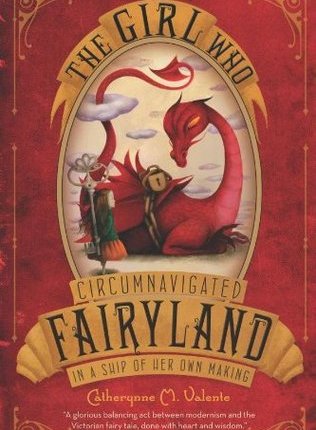
The Girl Who Circumnavigated Fairyland in a Ship of Her Own Making by Catherynne M. Valente

The Girl Who Circumnavigated Fairyland in a Ship of Her Own Making by Catherynne M. Valente

The Girl Who Circumnavigated Fairyland in a Ship of Her Own Making is a modern take on more traditional fairy tales wherein a child finds a way to another world and comes back changed.

Photo by Pixabay on Pexels.com

I first read the title of this book in Catherynne Valente‘s much more adult novel, Palimpsest. I think it was mentioned as sitting on someone’s book shelf. I remember thinking how I wish I could read that book too. Imagine my surprise to discover it was actually a book in the real world. Of course, I had to pick it up.

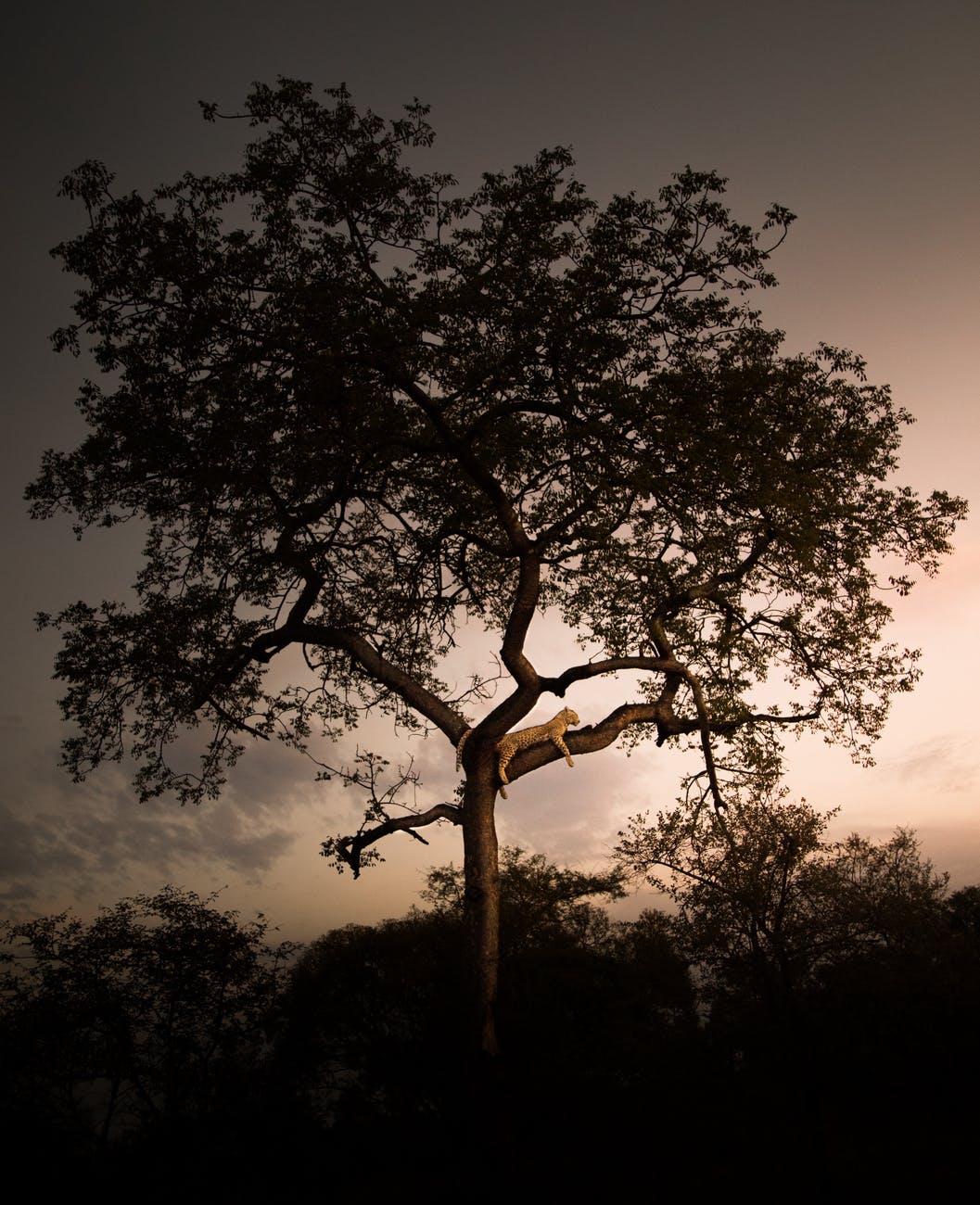
“You seem an ill-tempered and irascible enough child,” said the Green Wind. “How would you like to come away with me and ride upon the Leopard of Little Breezes and be delivered to the great sea, which borders Fairyland?” pg 2

Photo by Geran de Klerk on Pexels.com

How could any heroine refuse an invitation like that?

The main character of this tale, a girl with the curious name of September, has read enough books to know a once-in-a-lifetime chance when she sees it. Though she doubts, at first, that she is the appropriate girl for the adventure.

“In stories, when someone appears in a poof of green clouds and asks a girl to go away on an adventure, it’s because she’s special, because she’s smart and strong and can solve riddles and fight with swords and give really good speeches, and… I don’t know that I’m any of those things.” pg 14

Photo by Ksenia Chernaya on Pexels.com

Part of Valente’s fairytale, like most good fairytales, is how September realizes how special she actually is — one of the conclusions heroes tend to arrive at during their various journeys.

September’s journey is a danger-filled jaunt through a land under the thumb of a smartly-hatted villain named the Marquess. September meets curious characters along the way including a trio of witches, a wyvern who claims his father is a library, and a boy from under the ocean with dark eyes and a secret.

The story contains plenty of winks and nods to anyone who loves reading: “Stories have a way of changing faces. They are unruly things, undisciplined, given to delinquency and the throwing of erasers. This is why we must close them up into thick, solid books, so they cannot get out and cause trouble.” pg 36

Photo by Zichuan Han on Pexels.com

And: “She sounds like someone who spends a lot of time in libraries, which are the best sorts of people.” pg 55

They are the best sorts, aren’t they.

Recommended for young adults, the young-at-heart, or anyone who enjoys quirky portal fantasy reads. I thought this book was charming.

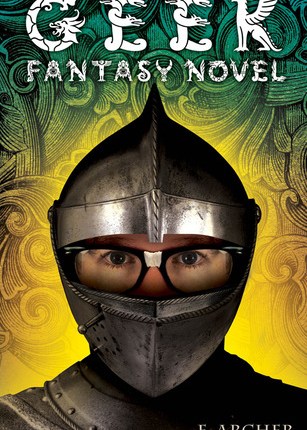
Geek Fantasy Novel by E. Archer

Geek Fantasy Novel by E. Archer

This book is a meandering, young adult novel that takes the reader into weird fantasy worlds through the power of wishes and on an epic quest by an unexpected hero who strives to make everything right, when things continually go wrong.

Along the way, you experience fairies, snow queens, the undead, and plenty of teen angst.

“(Ralph’s parents) were, in fact, endlessly tolerant — except when it came to their one ironclad rule: Ralph must never, ever, make a wish. Not under any circumstances whatsoever.” pg IV

Photo by Isabella Mariana on Pexels.com

I thought I would enjoy this story more than I did. The trouble is I don’t feel like the author successfully managed to tie the different pieces of the story together. It was disjointed and strange, but not in a good way.

That might appeal to some readers, but not me.

“I think she really wants to be the characters she reads about.” “Well, I guess that’s the point of it all,” Ralph said, out of dork solidarity. pg XXIV

Some of the details of the fantasy worlds were amusing and most certainly will appeal to young adult and reluctant readers.

“These tree-homes are lovely to look at, but so intricate that fairies spend almost all of their waking hours building and maintaining and getting lost in them. Which is a shame, really, since that leaves them so much less time for gamboling about meadows, visiting wishing wells, leaving money in return for teeth, and such.” pg CVII

Photo by Javon Swaby on Pexels.com

In the way it wandered through completely different fantasy worlds, it reminded me of The 13½ Lives of Captain Bluebear… until the unexpected ending.

“In a wish, when one is pursuing one’s greatest desires, one isn’t killed by microbes. One is killed by monsters. That’s what makes it so great.” pg CXXII

Recommended, with reservations, for young adult readers who are more interested in the journey than character building.

Thanks for reading!

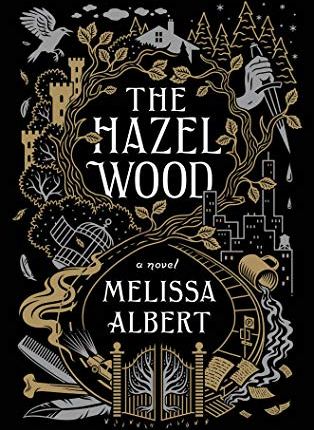
The Hazel Wood by Melissa Albert

The Hazel Wood by Melissa Albert

Alice and her mother live their lives on the road. Everywhere they go, they’re haunted by misfortune. Alice calls it bad luck. It could be something worse.

“We moved at least twice a year and sometimes more, but the bad luck always found us.” pg 12, ebook

Her grandmother, Althea Proserpine, was the creator of a whispered-about collection of fairy tale stories. For almost her entire life, Alice has wanted to read the collection but her mother forbids it and copies are impossible to find. Althea lives the life of a hermit on a secluded property called the Hazel Wood.

Photo by veeterzy on Pexels.com

“My grandmother’s estate, which I’d only seen in photos, felt like a place I remembered from some alternate, imaginary childhood. One where I rode horses and went to summer camp.” pg 10, ebook

One day, Alice’s mother disappears and, in order to find her, Alice is going to have to go into the Hazel Wood, a place that holds secrets darker than she’s ever imagined.

“My situation hit me hard. Homeless. Without my mom. Being stalked, by something I couldn’t see the breadth of or understand.”pg 79

Melissa Albert has created a fairy tale for young adults that I think would have been more fun if she’d gone the non-YA route.

My favorite parts were the fantasy stories themselves within the story. I found them to be very reminiscent of Catherynne Valente, whom Albert lists as one of her favorite authors in the back of this book.

They’re hard-edged, glittering things. These are creepy fairy tales, not made for children.

Photo by Maria Orlova on Pexels.com

“On a cold day in a distant kingdom, a daughter was born to a queen and king. Her eyes were shiny and black all over, and the midwife laid her in the queen’s arms and fled.” pg 69

I can understand why some readers didn’t like this book with its twisted stories. They’re unnerving, popping in and out of the narrative. And, as I said before, I felt like this book twisted itself into knots trying to be a young adult read when, in reality, I think it could have just been dark fantasy.

There’s a love interest who, I thought, sort of gets in the way except as a young adult plot device. 

The main character, Alice, is a cold young woman with little concern for anyone in her life except her mother. I can also see why readers didn’t warm up to her, but it didn’t bother me all that much. I figured, with someone moving around as much as she did, how would Alice figure out how to have normal relationships? It fit.

Photo by Rachel Claire on Pexels.com

In conclusion, I liked The Hazel Wood but didn’t love it. Personally, I think it’s worth the read for the interesting short fantasy stories alone. But if you’re not into that kind of thing, this book probably won’t appeal.

Thanks for reading!